


The term “cold-blooded killer” takes on a literal meaning in the animal kingdom. Unlike mammals and birds that maintain constant body temperatures, reptiles, amphibians, fish, and invertebrates are ectothermic—their body temperature fluctuates with their environment. But beyond this physiological trait, many of these creatures have evolved into remarkably efficient predators with hunting capabilities that would make even the most sophisticated human technologies seem primitive. From venomous attacks to elaborate ambushes, the strategies employed by these animals showcase nature’s ingenuity in the eternal dance of predator and prey. Let’s explore 18 of the most fascinating cold-blooded killers that prowl our planet’s diverse ecosystems.
13. Komodo Dragon The Living Fossil Assassin
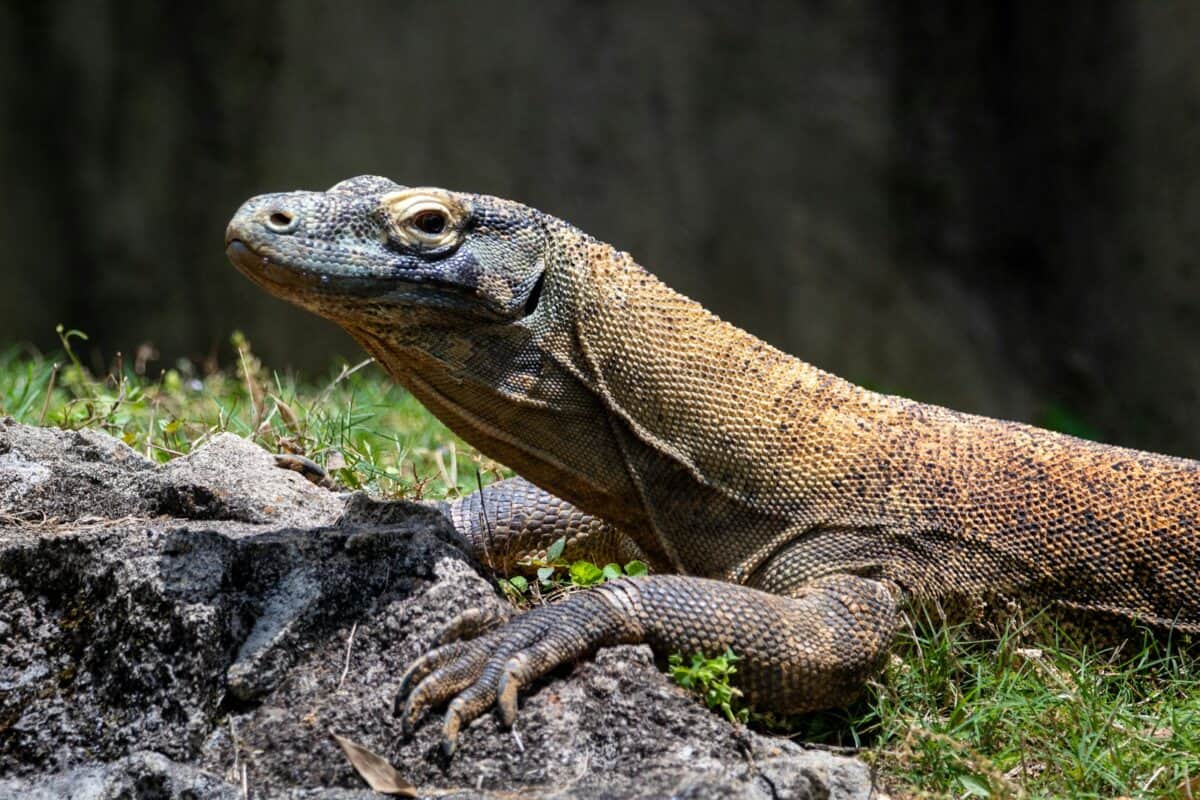
The Komodo dragon (Varanus komodoensis) stands as the world’s largest lizard, reaching lengths of up to 10 feet and weighing over 300 pounds. Native to Indonesia’s Lesser Sunda Islands, these formidable predators employ a hunting strategy that combines patience with devastating efficiency. Contrary to previous beliefs about toxic bacteria in their mouths being their primary killing method, recent research confirms they possess complex venom glands. When a Komodo dragon bites its prey, this venom prevents blood clotting and induces shock, allowing the lizard to track wounded animals for miles before they succumb to the effects. Their hunting success rate is astounding—approximately 70% of their attacks result in a kill, making them among the most effective predators in the reptile world. Perhaps most chilling is their occasional cannibalistic behavior, with larger dragons sometimes consuming younger individuals, demonstrating nature’s unsentimental approach to survival.
12. Box Jellyfish The Transparent Terror

Despite its ethereal appearance, the box jellyfish (Chironex fleckeri) is one of the most lethal marine creatures on Earth. Its transparent bell-shaped body, which can grow up to 12 inches in diameter with tentacles extending 10 feet, contains an estimated 5,000 stinging cells per square centimeter. Unlike many jellyfish that drift aimlessly, box jellyfish can actively swim at speeds up to 4 mph and navigate around obstacles using 24 rudimentary eyes grouped in clusters of six on each side of their bell. The venom delivered through their tentacles attacks the heart, nervous system, and skin cells simultaneously, causing excruciating pain and potentially death within minutes. A single box jellyfish contains enough venom to kill 60 adult humans. Most alarmingly, victims may go into cardiac arrest so quickly that they drown before reaching shore, making this seemingly fragile creature one of the ocean’s most efficient killers.
11. Saltwater Crocodile The Aquatic Ambush Master

The saltwater crocodile (Crocodylus porosus) has earned its reputation as nature’s perfect killing machine through 200 million years of evolutionary refinement. As the largest reptile on Earth, males can reach over 20 feet in length and weigh more than 2,000 pounds. Their bite force measures an astonishing 3,700 pounds per square inch—powerful enough to crush a human skull as easily as a grape. These prehistoric predators employ the “death roll,” a hunting technique where they drag prey underwater, spinning violently to tear off manageable chunks of flesh. Their metabolism is remarkably efficient, allowing them to survive up to a year without a substantial meal. Perhaps most impressive is their patience—a saltwater crocodile can remain motionless for hours, with only their eyes and nostrils breaking the water’s surface, before lunging at prey with explosive speed of up to 20 mph. Their hunting success rate exceeds 50%, making them more efficient predators than most large cats.
10. Blue-Ringed Octopus The Deadly Decorator
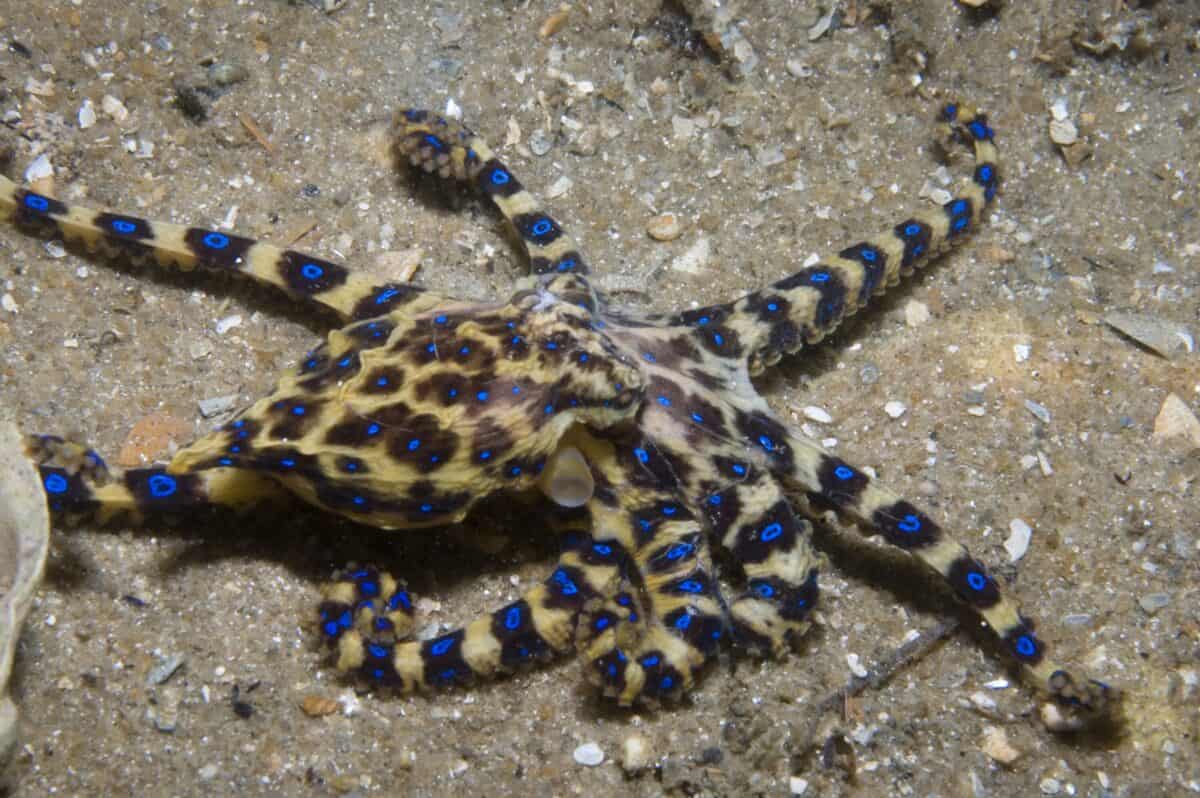
The blue-ringed octopus (genus Hapalochlaena) represents a deadly contradiction—a creature small enough to fit in a human palm yet carrying enough venom to kill 26 adults within minutes. Native to the tide pools and coral reefs of the Pacific and Indian Oceans, these octopuses measure just 5 to 8 inches but contain tetrodotoxin, a neurotoxin 1,200 times more potent than cyanide. When threatened, their normally brown bodies display vibrant blue rings as a warning—one of nature’s most beautiful yet ominous signals. Their hunting technique is both elegant and terrifying; they envelop small crabs, shrimp, and fish with their arms before delivering a nearly painless bite through their parrot-like beak. The venom rapidly causes respiratory arrest while victims remain fully conscious, unable to speak or move as paralysis sets in. What makes these creatures particularly dangerous is their lack of known antivenom, with medical intervention limited to placing victims on ventilators until the toxin naturally clears from their system—a period that can last up to 24 agonizing hours.
9. Great White Shark The Ocean’s Perfect Predator

The great white shark (Carcharodon carcharias) represents the pinnacle of oceanic predation, having evolved over 16 million years into a hunting specialist that dominates marine ecosystems worldwide. Growing up to 20 feet long and weighing over 4,000 pounds, these apex predators possess sensory capabilities that border on the supernatural. They can detect a single drop of blood in 25 gallons of water and sense electrical fields generated by the beating hearts of potential prey. Each great white has multiple rows of serrated teeth—up to 300 at any time—that are continuously replaced throughout their lifetime, producing up to 20,000 teeth over decades. Their initial attack strategy often involves a “test bite” from below, which unfortunately can be catastrophic for humans despite not being their intended prey. Their hunting efficiency is enhanced by countershading—dark coloration on top and light underneath—making them nearly invisible both from above and below. Perhaps most impressive is their “breach attack” technique, where they can propel their massive bodies entirely out of water at speeds of 25 mph while catching seals, demonstrating an athletic prowess that belies their substantial size.
8. Inland Taipan The Precision Striker
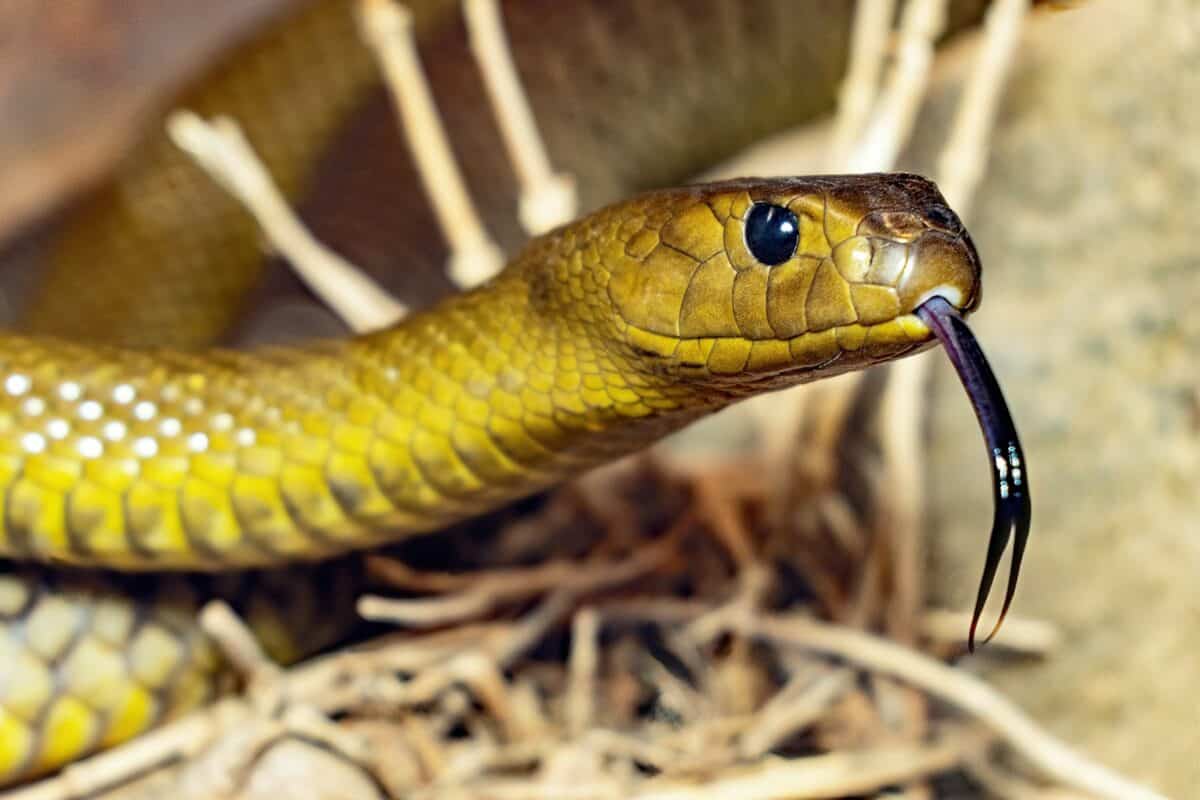
The inland taipan (Oxyuranus microlepidotus), also known as the “fierce snake,” holds the distinction of possessing the most toxic venom of any terrestrial snake. Native to the arid regions of central east Australia, this reclusive reptile delivers a precisely calibrated neurotoxic cocktail that can kill an adult human within 45 minutes if left untreated. A single bite contains enough venom to kill approximately 100 humans or 250,000 mice. What makes the inland taipan particularly lethal is its hunting efficiency—it strikes with near-perfect accuracy, often delivering multiple rapid bites in a single attack. Their venom has evolved specifically to kill warm-blooded prey instantly, containing a mixture of neurotoxins, myotoxins, and procoagulants that simultaneously attack the nervous system, muscles, and blood. Despite their deadly potential, inland taipans are remarkably shy and rarely encounter humans, preferring to retreat when possible. Their hunting technique involves a calculated series of strikes followed by patient tracking of their prey—usually small mammals—which typically die within minutes before being consumed whole.
7. Electric Eel The Living Taser

Despite its name, the electric eel (Electrophorus electricus) is not a true eel but a knifefish, representing one of nature’s most remarkable examples of bioelectricity as a hunting mechanism. Native to the murky waters of the Amazon and Orinoco river basins, these creatures can grow to 8 feet long and generate electrical discharges of up to 860 volts—enough power to stun a horse. Their specialized organs make up 80% of their body, functioning essentially as a living battery. When hunting, electric eels emit two types of electrical discharges: low-voltage pulses for navigation and detecting prey, and high-voltage shocks for stunning or killing targets. Recent research has revealed their sophisticated hunting strategy: they can cause involuntary muscle contractions in hidden prey, forcing them to twitch and reveal their location. Even more remarkably, when facing larger threats, electric eels can leap partially out of water to directly shock predators, concentrating the electrical current rather than allowing it to dissipate in water. This deadly efficiency allows them to capture multiple prey items in rapid succession without the energy expenditure required by pursuit predators.
6. Black Mamba The Lightning-Fast Assassin

The black mamba (Dendroaspis polylepis) has earned its reputation as Africa’s most feared snake through a combination of speed, aggression, and potent venom. Despite its name, this elapid snake isn’t actually black but ranges from olive to grayish-brown, with the black referring to the color of its mouth lining, which it displays when threatened. Growing up to 14 feet long, black mambas can travel at speeds of up to 12.5 mph across open ground—faster than most humans can run. Their hunting style emphasizes precision and overwhelming force; they can strike multiple times in rapid succession, injecting neurotoxic venom that attacks the nervous system and causes respiratory paralysis. Without antivenom, the mortality rate approaches 100% within 7 to 15 hours. What makes black mambas particularly effective predators is their calculated aggression—when cornered, they will actively pursue and attack threats rather than retreating. Their venom delivery system is remarkably efficient, with hollow fangs connected to venom glands that can inject up to 400 mg of venom in a single bite—enough to kill 25 humans. These adaptations have made the black mamba virtually unchallenged in its ecosystem, capable of subduing prey ranging from birds to hyraxes and other mammals.
5. Portuguese Man o’ War The Colonial Killer
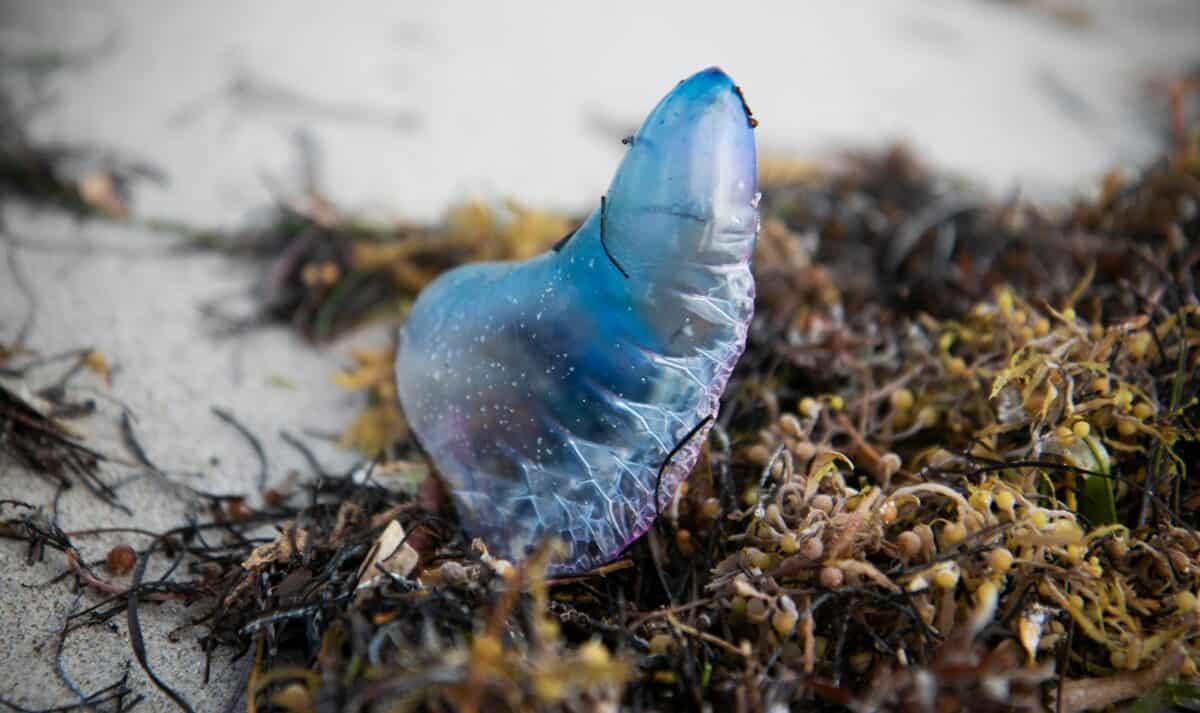
The Portuguese man o’ war (Physalia physalis) represents one of nature’s most fascinating evolutionary developments—not a single organism but a colonial hydrozoan composed of specialized individual animals called zooids working in perfect coordination. Its distinctive blue-purple gas-filled bladder, which can reach 12 inches in length, acts as a sail allowing it to travel ocean currents while its venomous tentacles, extending up to 100 feet, trail below the surface. These tentacles contain an estimated 750,000 cnidocytes (stinging cells) that inject a complex neurotoxin upon contact. Unlike many predators that actively hunt, the Portuguese man o’ war employs a passive “drift fishing” strategy, capturing fish, squid, and crustaceans that become entangled in its tentacles. The venom immobilizes prey while specialized feeding zooids digest the captured organisms and distribute nutrients throughout the colony. What makes this creature particularly dangerous is its persistence—even detached tentacles washed ashore remain venomous for days. While rarely fatal to humans, its sting causes excruciating pain described as feeling like being branded with hot metal, along with welts that can last for weeks. This efficient, energy-conserving hunting method allows these colonial organisms to thrive across all tropical and subtropical oceans.
4. Nile Crocodile The Patient Perfectionist

The Nile crocodile (Crocodylus niloticus) has perfected the art of ambush predation through millions of years of evolutionary refinement, making it Africa’s largest freshwater predator and second only to the saltwater crocodile in size among living reptiles. Growing up to 20 feet and weighing over 1,650 pounds, these ancient reptiles employ a hunting strategy based on supreme patience and explosive action. They can remain nearly motionless for hours, with only their eyes and nostrils breaking the water’s surface, before launching an attack that can reach speeds of 22 mph over short distances. Their jaws exert a bite force of 5,000 pounds per square inch—the strongest of any animal ever measured—allowing them to drag prey as large as wildebeest and zebra beneath the water. What distinguishes Nile crocodiles as particularly efficient killers is their cooperative hunting behavior; they have been observed working together to herd fish into shallow waters and even sharing large carcasses in what researchers describe as “communal feeding.” Perhaps most chilling is their adaptability—during annual wildebeest migrations across the Mara River, they’ve learned to position themselves strategically at crossing points, resulting in mass feeding events that sustain them for months. With approximately 200 human fatalities annually attributed to Nile crocodiles, they remain one of Africa’s most successful and feared predators.
3. Stonefish The Camouflaged Poisoner

The stonefish (genus Synanceia) has elevated camouflage to an art form, transforming its body into a near-perfect replica of a rock or coral outcropping that conceals one of the ocean’s deadliest venomous systems. Native to the coastal regions of the Indo-Pacific, these ambush predators grow to about 12 inches long and possess 13 dorsal spines, each connected to two venom glands that inject toxin when pressure is applied—typically when stepped on by unsuspecting prey or humans. Their venom contains stonustoxin, a protein that causes excruciating pain, tissue necrosis, and potentially death if left untreated. Unlike active hunters, stonefish employ a sit-and-wait strategy, remaining motionless on the seabed for days until suitable prey—typically small fish or crustaceans—passes within striking distance. When a target approaches, they can strike in as little as 0.015 seconds—faster than the blink of a human eye. Their mouth expands to create a powerful vacuum that sucks prey in before they can react. What makes stonefish particularly successful predators is their energy efficiency; they expend minimal calories while waiting and can survive for extended periods between meals. Their evolutionary adaptation has been so successful that they’ve remained virtually unchanged for millions of years, a testament to the effectiveness of their hunting strategy in marine ecosystems.
2. Cone Snail The Underwater Harpoonist

The cone snail (family Conidae) represents one of nature’s most surprising predators—a seemingly innocuous mollusk that has evolved one of the most sophisticated venom delivery systems in the animal kingdom. With over 600 species inhabiting tropical waters worldwide, these slow-moving hunters have developed a specialized hollow tooth that functions as a harpoon, capable of being projected at nearby prey with remarkable precision. The venom they inject, conotoxin, is a complex cocktail of up to 100 different compounds, each targeting specific parts of the victim’s nervous system. Different cone snail species have evolved specialized hunting techniques: fish-hunting cones release a small component of their venom into the water that acts as a net, paralyzing multiple fish simultaneously, while mollusk-hunting species drill through the shells of their prey before injecting venom. What makes cone snails particularly remarkable is the potency of their toxins—a single drop could kill up to 20 humans. The venom acts so quickly that prey fish don’t even have time to flex their muscles before complete paralysis sets in, leading to the cone snail’s nickname “cigarette snail”—purportedly because after being stung, you only have enough time to smoke a cigarette before dying. Ironically, these deadly compounds have become valuable in medical research, with conotoxin derivatives being developed into powerful non-addictive painkillers thousands of times stronger than morphine.
1. Assassin Bug The Insect Liquefier

The assassin bug (family Reduviidae) embodies its name through hunting techniques that would be at home in a horror film. With over 7,000 species worldwide, these predatory insects have evolved a specialized curved proboscis that serves as both weapon and feeding tube. Their hunting method is particularly macabre—they inject saliva containing powerful digestive enzymes that liquify their prey’s internal organs and tissues into a digestible soup, which they then extract through the same proboscis. Some species, like the masked hunter, enhance their camouflage by covering themselves with dust, soil, or even the corpses of their victims. The ambush bugs, a subfamily of assassin bugs, can remain motionless for days on flowers, waiting for pollinators to approach before seizing them with modified forelegs designed specifically for grasping. Perhaps most remarkable is their ability to tailor their venom composition based on prey type—using different chemical cocktails for

As a little kid, I fell in love with nature, wildlife, and animals. Living in the USA, South Africa, Italy, China and Germany gave me the opportunity to discover the world's Wildlife. My favorite animals are Mountain Gorillas, Siberian Tigers, and Great White Sharks.
I'm a certified PADI Open Water Diver, went to Everest Base Camp and Trekked Gorillas in Uganda. I hold a Master of Science in Economics and Finance.
Please send any feedback to feedback@animalsaroundtheglobe.com
- 12 Longest-Living Creatures in the U.S. - July 23, 2026
- Top 10 Animals and Wildlife in Thailand - July 23, 2026
- 13 Most Exotic Animals Hiding in Americas Backyards - July 23, 2026