


Nature is full of deception. In the relentless struggle for survival, many creatures have evolved remarkable strategies to fool predators, capture prey, or gain reproductive advantages. From elaborate camouflage to sophisticated mimicry and behavioral deception, these survival tricks showcase the incredible adaptability of life on Earth. This fascinating aspect of natural selection has produced some of the most ingenious biological solutions to life’s challenges. Let’s explore 20 remarkable creatures that have mastered the art of deception to thrive in their environments.
The Mimic Octopus Master of Disguise
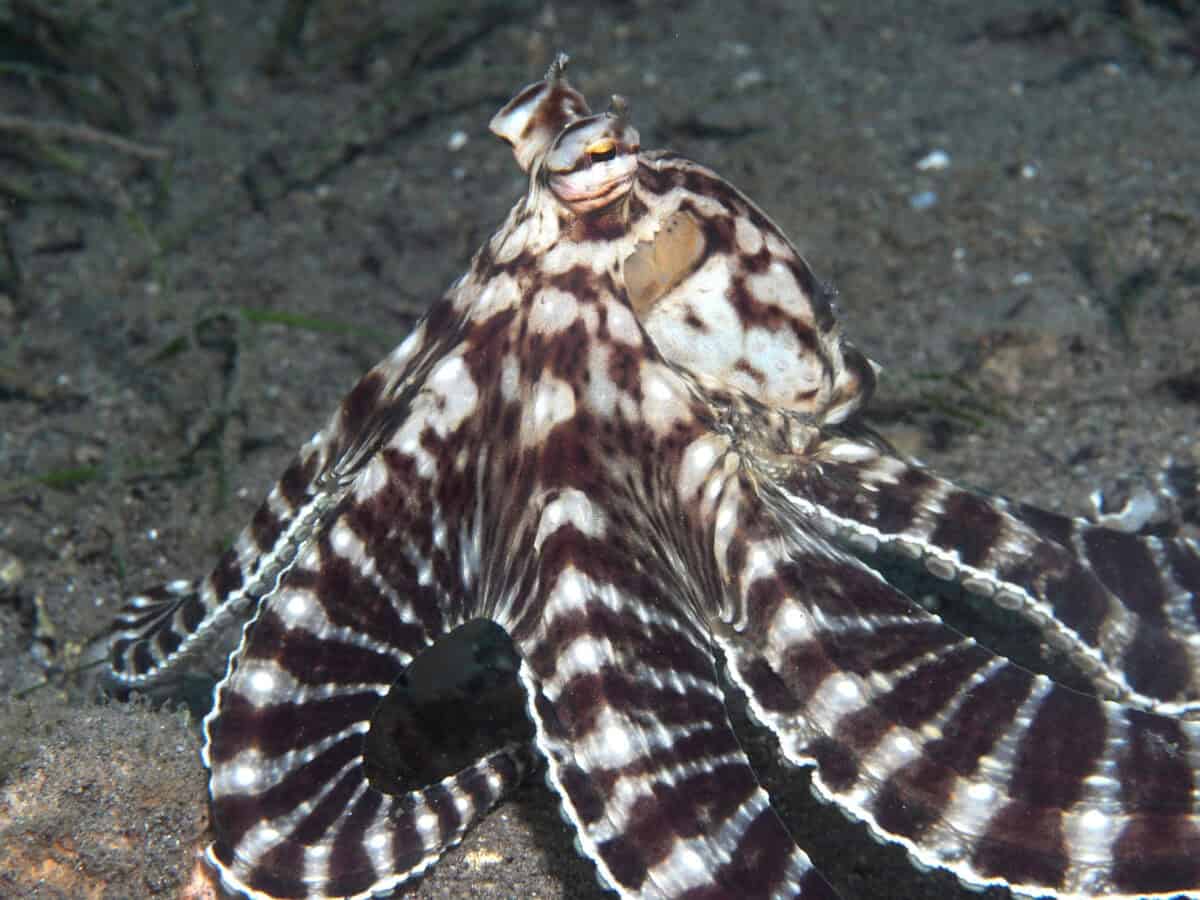
The mimic octopus (Thaumoctopus mimicus) represents perhaps the pinnacle of deceptive abilities in the animal kingdom. Discovered in 1998 in the coastal waters of Indonesia, this remarkable cephalopod can impersonate at least 15 different marine species. Unlike other octopuses that simply change color, the mimic octopus transforms its entire body shape, movement patterns, and behaviors to convincingly portray venomous or dangerous creatures like sea snakes, lionfish, and flatfish. When threatened, it might flatten its body and undulate its arms to mimic a venomous sole fish, or extend six of its arms to imitate the toxic banded sea snake. This sophisticated mimicry allows the relatively defenseless octopus to deter potential predators by assuming the identity of animals they’ve learned to avoid, creating a remarkable evolutionary advantage in the competitive underwater environment.
The Cuttlefish’s Mesmerizing Display

Cuttlefish employ some of the most sophisticated visual trickery in the animal kingdom. These remarkable cephalopods possess specialized skin cells called chromatophores, leucophores, and iridophores that allow them to change color, pattern, and even texture almost instantaneously. Male cuttlefish have evolved an astonishing reproductive deception—they can display female patterns on one side of their body while showing male coloration on the side facing a female. This clever disguise allows them to mate with females while avoiding aggression from competing males. During courtship, males can also produce hypnotic, pulsating color patterns that seemingly mesmerize females. Perhaps most remarkably, cuttlefish can create complex moving patterns on their skin that resemble passing waves of shadow, confusing predators about their actual location and movement direction. Their skin can also mimic the texture of coral, sand, or rocks, providing near-perfect camouflage in various environments.
The Death Feigning Beetle’s Dramatic Performance
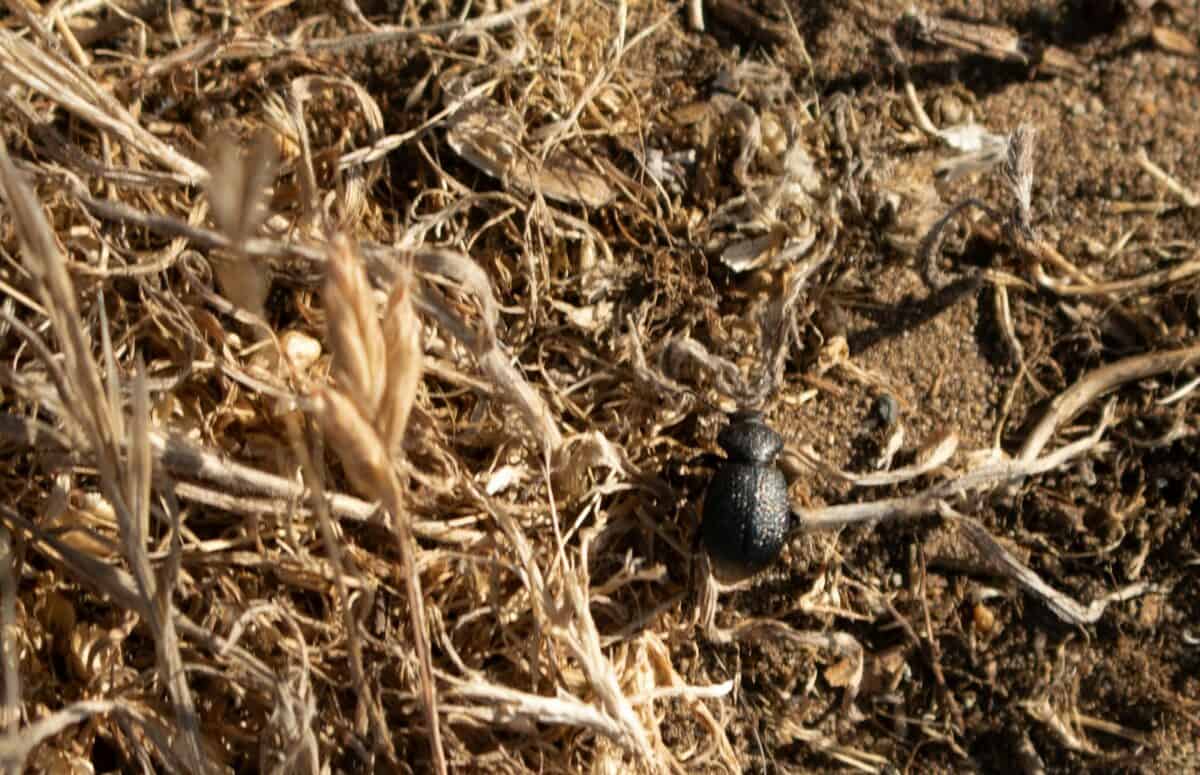
The death feigning beetle (Cryptoglossa verrucosa) employs one of the oldest tricks in nature’s playbook with exceptional commitment. When threatened, this beetle doesn’t merely play dead—it puts on an Oscar-worthy performance. Upon detecting danger, it immediately flips onto its back, pulls its legs tightly against its body, and becomes completely motionless, sometimes for hours. This behavior, known as thanatosis, exploits the fact that many predators are triggered to hunt by movement and show little interest in already-dead prey. The beetle enhances its deception by releasing chemicals that mimic the scent of decaying insects, further convincing predators that it’s inedible. What makes this beetle’s strategy particularly effective is its patience—it will maintain its death pose long after a predator has lost interest, ensuring the threat has truly passed before “coming back to life.” This simple yet effective survival mechanism has evolved independently in numerous animal groups, highlighting its effectiveness as an anti-predator strategy.
The Orchid Mantis’s Floral Facade

The orchid mantis (Hymenopus coronatus) represents one of nature’s most beautiful deceptions. Native to the rainforests of Southeast Asia, this remarkable insect has evolved to resemble an orchid flower with stunning accuracy. Its body is flattened and petal-like, with legs featuring flattened lobes that resemble flower petals. The mantis’s coloration typically ranges from white to pink, perfectly matching the orchids in its habitat. This deception works on two levels: it provides excellent camouflage against predators, and more importantly, it attracts pollinating insects that mistake the mantis for a flower. Research has shown that the orchid mantis is actually more effective at attracting certain insects than real flowers, suggesting this is an aggressive mimicry strategy rather than simple camouflage. When an unsuspecting pollinator approaches the “flower” seeking nectar, the mantis strikes with lightning-fast reflexes, capturing its prey with its powerful front legs. This evolutionary masterpiece demonstrates how natural selection can produce incredibly specialized adaptations for both defense and predation.
The Anglerfish’s Luminous Lure

In the crushing darkness of the deep sea, the female anglerfish employs one of the most effective hunting deceptions known. The most distinctive feature of this unusual fish is its modified dorsal spine that extends over its mouth like a fishing rod, complete with a bioluminescent tip that serves as bait. This glowing appendage, called an esca, contains light-producing bacteria housed in specialized tissues. The anglerfish has evolved a symbiotic relationship with these bacteria, providing them with nutrients while they produce light that attracts prey in the otherwise pitch-black environment. When curious fish approach the glowing lure, the anglerfish strikes with remarkable speed, engulfing prey with its disproportionately large mouth lined with needle-like teeth. Some species can even expand their jaws and stomachs to swallow prey twice their size. This specialized form of aggressive mimicry, where the predator imitates a food source rather than another species, has allowed anglerfish to thrive in one of Earth’s most extreme environments. Interestingly, male anglerfish are tiny parasites that permanently fuse to females, another unusual adaptation to the challenges of finding mates in the vast darkness of the deep ocean.
The Leafy Seadragon’s Perfect Disguise

The leafy seadragon (Phycodurus eques) represents camouflage perfected to an art form. Native to the southern Australian coastline, this marine relative of seahorses has evolved elaborate leaf-like appendages across its entire body that create an uncanny resemblance to the seaweed and kelp among which it lives. These appendages, called dermal filaments, aren’t used for swimming but serve exclusively for camouflage. The seadragon’s yellowish-brown to olive coloration further enhances its disguise among the marine vegetation. Unlike many camouflaged animals that can change color, the leafy seadragon’s strategy relies on behavioral adaptations—it moves extremely slowly, drifting with the ocean currents in a way that mimics seaweed swaying in the water. This gentle movement makes it nearly invisible to both predators and prey. The deception is so effective that these creatures can be almost impossible to spot even when you’re looking directly at them. While their camouflage primarily serves as protection from predators, it also allows them to be ambush predators, using their tube-like snouts to quickly suck up small crustaceans before they realize the danger.
The Bird-Dropping Spider’s Disgusting Disguise

The bird-dropping spider (Celaenia excavata) employs perhaps one of the most unappetizing but effective disguises in the animal kingdom. Native to Australia and New Zealand, this arachnid has evolved to look remarkably like fresh bird excrement on leaves or branches. Its abdomen is bulbous and colored white and brown in irregular patterns, perfectly mimicking the appearance of bird droppings. During daylight hours, the spider pulls its legs close to its body and remains motionless on exposed surfaces where real bird droppings would naturally fall. This disguise serves a dual purpose: predators like birds avoid what appears to be waste matter, while the spider gains an advantageous hunting position. Unlike most spiders that actively hunt or build webs, the bird-dropping spider employs an unusual hunting strategy. At night, it produces a silken thread containing pheromones that mimic those released by female moths. Male moths, following this false chemical trail, fly directly to the spider, which captures them with specialized front legs. This combination of visual mimicry to avoid predators and chemical mimicry to attract prey demonstrates the sophisticated evolutionary adaptations that can develop under selective pressure.
The Viceroy Butterfly’s Toxic Impersonation

The viceroy butterfly (Limenitis archippus) has evolved one of the most studied examples of mimicry in the natural world. At first glance, it appears nearly identical to the monarch butterfly, with similar orange and black patterns adorning its wings. This resemblance is no coincidence—it represents a sophisticated case of what scientists once considered Batesian mimicry, where a harmless species mimics a toxic one to deter predators. Monarchs feed on milkweed plants, which contain cardiac glycosides that make them poisonous to most predators. Birds that have attempted to eat monarchs quickly learn to associate their distinctive coloration with an unpleasant experience. The viceroy, once thought to be perfectly edible, benefits from this learned aversion without having to invest in producing actual toxins. However, modern research has revealed that viceroys are actually somewhat unpalatable themselves, containing salicylic acid from their larval willow tree diet. This has led scientists to reclassify this relationship as Müllerian mimicry, where two or more harmful species resemble each other to mutual benefit. This evolutionary strategy effectively distributes the cost of predator education across multiple species, as predators need only encounter one variety to learn to avoid both. The viceroy-monarch relationship demonstrates how deception in nature often involves complex evolutionary dynamics that can continue to surprise scientists even after decades of study.
The Assassin Bug’s Deadly Disguise

The assassin bug (particularly those in the genus Acanthaspis) employs a macabre form of camouflage that doubles as a psychological weapon against its prey. These predatory insects cover themselves with the corpses of their victims, primarily ants, creating a ghoulish “backpack” of dead bodies. After killing an ant with its powerful proboscis, the assassin bug injects digestive enzymes that liquefy the insect’s internal tissues, which it then consumes. Rather than discarding the empty exoskeleton, the bug carefully attaches it to specialized hook-like structures on its back using a sticky secretion. This gruesome collection serves multiple purposes: it provides physical camouflage that breaks up the bug’s outline, masks the assassin’s scent with that of dead ants, and may even create a chemical disguise. Most ingeniously, when approaching an ant colony, the layer of dead ants confuses living ants, who don’t recognize the assassin as a threat until it’s too late. Some researchers theorize that the corpse camouflage may also deter larger predators like spiders and lizards. This strategy of using victims as camouflage represents one of the more unsettling examples of evolution’s capacity to produce effective, if disturbing, survival adaptations.
The Alligator Snapping Turtle’s Tongue Trap

The alligator snapping turtle (Macrochelys temminckii) employs one of the most patient hunting deceptions in the animal kingdom. This prehistoric-looking reptile, which can weigh over 200 pounds, possesses a specialized appendage on its tongue that resembles a small pink or red worm. When hunting, the turtle opens its jaws wide and lies motionless on the riverbed, often partially buried in mud or camouflaged among aquatic vegetation. Then, in a display of remarkable patience, it wriggles this worm-like lure while keeping the rest of its body completely still. The movement of this appendage, combined with its color, creates a convincing imitation of a worm or small fish in distress. Curious fish approaching this apparent easy meal quickly find themselves in the powerful jaws of the turtle, which can close with remarkable speed and force. What makes this strategy particularly effective is the turtle’s patience—it may remain motionless with its mouth open for hours, waiting for prey to approach. This specialized form of aggressive mimicry, called piscatory (fish-eating) behavior, allows these large, slow-moving reptiles to capture quick prey without expending significant energy, an important adaptation for a creature with such a slow metabolism. The alligator snapping turtle can live up to 100 years in the wild, giving it plenty of time to perfect this deceptive hunting technique.
The Stick Insect’s Remarkable Resemblance

Stick insects (Phasmatodea) represent one of nature’s most committed examples of evolutionary mimicry. These remarkable creatures have adapted their entire body structure, behavior, and life cycle to resemble twigs and branches with extraordinary precision. Their bodies are typically elongated and cylindrical, with limbs that extend at angles mimicking small branches. The resemblance goes beyond simple shape—many species have irregular body outlines and coloration that imitate bark texture, lichen growth, or leaf buds. Their commitment to this disguise extends to their behavior; when threatened, stick insects become completely motionless, often positioning themselves at angles typical of the plants they mimic. Some species enhance this deception by swaying gently, mimicking a branch moving in the breeze. This elaborate camouflage evolved primarily as a defense against visual predators like birds. The disguise is so effective that predators often literally look right at them without recognition. Female stick insects further extend this deceptive strategy to their eggs, which often resemble plant seeds in both appearance and dispersal methods. Some species’ eggs even have appendages that attract ants, who carry them to their nests, providing protection until they hatch. The evolutionary commitment to this single deceptive strategy has made stick insects successful across multiple continents, with over 3,000 species recognized today.
The Portia Spider’s Intelligent Deceptions

The Portia spider (genus Portia) employs perhaps the most intellectually sophisticated deception in the arachnid world. Unlike most spiders that rely on webs or ambush tactics, these jumping spiders actively hunt other spiders using a combination of stealth, mimicry, and what appears to be planning. When approaching a web-building spider, Portia creates vibrations that mimic those of various scenarios—a small insect caught in the web, a mate seeking courtship, or even the breeze moving debris. The Portia carefully adjusts these deceptive signals based on the target species and the responses received, effectively “playing” the web like an instrument to manipulate its prey. If the web owner investigates the disturbance, Portia attacks with remarkable precision. What makes these spiders particularly fascinating is their apparent problem-solving ability—they can devise novel hunting strategies for unfamiliar prey and remember successful techniques. With brains no larger than a poppy seed, they can plan complex detours to approach prey from advantageous angles, sometimes taking up to an hour to execute these plans. Research suggests these spiders possess cognitive abilities more comparable to vertebrates than to typical invertebrates. This combination of deceptive mimicry and cognitive flexibility makes Portia spiders among the most sophisticated arthropod predators on Earth, demonstrating that advanced deceptive capabilities can evolve even in small-brained creatures.
The Zone-Tailed Hawk’s Vulture Impression

The zone-tailed hawk (Buteo albonotatus) employs a cunning form of behavioral mimicry that takes advantage of other animals’ learned expectations. This predatory bird, native to the Americas, bears a striking resemblance to the turkey vulture, with similar size, coloration, and even a comparable silhouette in flight. What makes this resemblance particularly deceptive is how the hawk has adapted its flying behavior to match that of vultures. Zone-tailed hawks will deliberately join groups of soaring vultures, mimicking their distinctive rocking, unsteady flight pattern and holding their wings in the same shallow V-shape posture. This deception exploits the fact that turkey vultures pose no threat to living animals—they feed exclusively on carrion. Small mammals and birds have learned to disregard vultures circling overhead, allowing them to continue their normal activities without alarm. The zone-tailed hawk takes advantage of this learned complacency, suddenly breaking from its vulture-like soaring to execute a swift, deadly attack on unsuspecting prey below. This sophisticated form of mimicry demonstrates evolutionary opportunism—the hawk has developed not just physical resemblance but behavioral adaptations that exploit an existing ecological relationship to improve its hunting success. The strategy is so effective that the zone-tailed hawk can successfully hunt in areas.
Conclusion:

The natural world is a masterclass in deception. Across oceans, forests, deserts, and skies, creatures have evolved astonishing tricks to outwit predators, lure prey, and secure their place in the harsh theater of survival. From the mimic octopus impersonating venomous sea creatures to the zone-tailed hawk masquerading as a harmless scavenger, these examples of biological trickery highlight the extraordinary creativity of evolution. Some use camouflage so perfect they’re virtually invisible; others deploy mimicry so cunning it borders on theatrical. These adaptations aren’t mere curiosities—they are lifelines, forged through countless generations of trial and error, where only the most convincing illusions endure. In studying these deceptive creatures, we gain not only a deeper appreciation for their survival strategies but also a profound respect for nature’s ingenuity. Deception, in this context, isn’t dishonesty—it’s adaptation at its most elegant.

As a little kid, I fell in love with nature, wildlife, and animals. Living in the USA, South Africa, Italy, China and Germany gave me the opportunity to discover the world's Wildlife. My favorite animals are Mountain Gorillas, Siberian Tigers, and Great White Sharks.
I'm a certified PADI Open Water Diver, went to Everest Base Camp and Trekked Gorillas in Uganda. I hold a Master of Science in Economics and Finance.
Please send any feedback to feedback@animalsaroundtheglobe.com
- 13 Most Threatened Species You Can Still See in America - July 20, 2026
- The Zombie Fungus That Turns Animals into Mindless Puppets - July 20, 2026
- 13 Weirdest Creatures Living in Florida - July 20, 2026