


Australia’s diverse marsupial family includes many fascinating creatures, but koalas stand out as particularly unique members. While sharing the fundamental marsupial characteristic of raising young in pouches, koalas have evolved distinct traits that set them apart from their marsupial cousins like kangaroos, wombats, and possums. These differences span everything from diet and anatomy to behavior and habitat preferences. Understanding what makes koalas special within the marsupial classification helps us appreciate their evolutionary adaptations and conservation needs. This article explores thirteen key differences that distinguish koalas from other members of the marsupial family, highlighting why these iconic animals deserve their special place in Australia’s wildlife heritage.
Specialized Eucalyptus Diet

Perhaps the most distinctive difference between koalas and other marsupials is their highly specialized diet. Koalas are folivores that feed almost exclusively on eucalyptus leaves, with individuals typically selecting from only 30-50 varieties of the 700+ eucalyptus species in Australia. This level of dietary specialization is unmatched among marsupials. By comparison, other marsupials like kangaroos are primarily grazers consuming grasses, wombats eat a variety of vegetation including roots and grasses, and possums maintain a varied omnivorous diet including fruits, leaves, insects, and small vertebrates. The koala’s specialized digestive system allows them to detoxify the poisonous compounds in eucalyptus leaves that would kill most other animals, representing an extreme evolutionary adaptation not seen in their marsupial relatives.
Unique Pouch Configuration

While all female marsupials possess a pouch for rearing young, the koala’s pouch is distinctly different in its orientation and structure. Unlike kangaroos and most other marsupials that have pouches opening toward the head (forward-facing), the koala’s pouch opens downward and backward toward the rear. This special configuration protects the joey when the mother climbs trees and gathers eucalyptus leaves. The backward-facing pouch prevents the baby from falling out during the koala’s arboreal activities. Additionally, the koala pouch contains two teats rather than four or more found in many other marsupial species, reflecting their tendency to raise only one offspring at a time compared to some marsupials that may care for multiple young simultaneously.
Arboreal Lifestyle and Adaptations

Unlike most marsupials that are primarily ground-dwelling, koalas have evolved as specialized arboreal (tree-dwelling) mammals, spending 95% of their lives in eucalyptus trees. Their bodies show remarkable adaptations for this lifestyle that aren’t found in ground-dwelling marsupials. Koalas possess unusually strong limbs with long, sharp claws for climbing and gripping branches. They have developed rough, textured paw pads that provide additional grip while climbing. Most distinctively, koalas have evolved specialized digits with two opposing thumbs on their front paws and a separated first and second digit on their hind feet that function as a grooming claw. These adaptations for tree life stand in sharp contrast to terrestrial marsupials like kangaroos, which have developed powerful hind legs for hopping, or wombats, with their strong digging claws adapted for burrowing.
Reduced Brain Size and Unique Skull

Koalas possess a remarkably small brain relative to their body size compared to other marsupials, with their brain cavity filled with cerebrospinal fluid. This evolutionary adaptation is believed to be an energy-conservation mechanism that supports their low-energy lifestyle and nutrient-poor diet. The koala’s brain accounts for just 0.2% of its body weight, whereas most mammals have brains that are around 2% of their body weight. Additionally, the koala skull has several unique features, including unusually large orbits, a shortened face, and specialized dental structures for processing tough eucalyptus leaves. These skull adaptations aren’t seen in other marsupials and represent specific evolutionary responses to their specialized diet and lifestyle requirements.
Distinctive Fingerprints

In a remarkable evolutionary parallel with humans, koalas have developed fingerprints that are virtually indistinguishable from human fingerprints, even under an electron microscope. This characteristic is not shared with other marsupials, which generally lack the distinctive ridge patterns found on koala fingertips. These fingerprints likely evolved independently to improve the koala’s grip while climbing trees and selecting eucalyptus leaves. This convergent evolution—where similar traits develop independently in different species—demonstrates how similar environmental pressures can produce similar adaptations even in distantly related animals. Forensic scientists have noted that koala fingerprints could potentially be confused with human prints at crime scenes, a peculiarity not shared with any other marsupial species.
Low-Energy Lifestyle
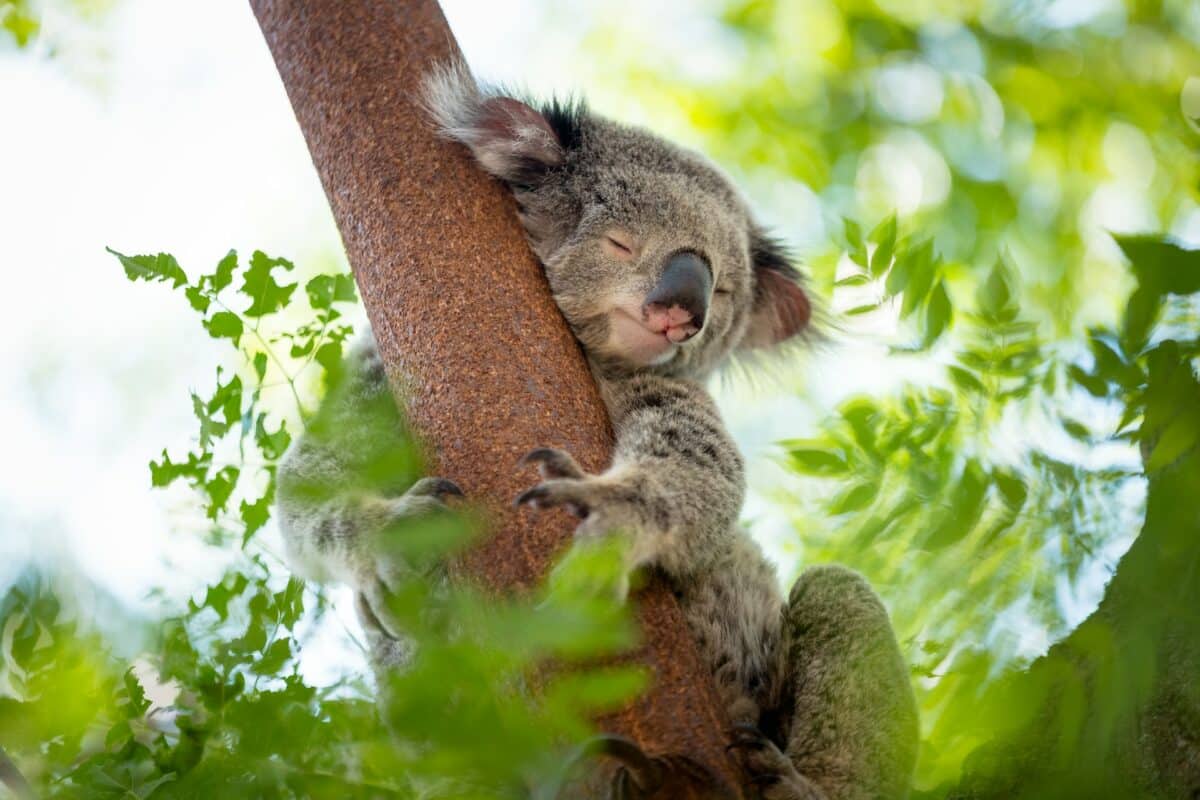
Koalas have developed an exceptionally low-energy lifestyle that distinguishes them from most other marsupials. They sleep or rest for up to 22 hours per day, far exceeding the rest periods of other marsupials like kangaroos or Tasmanian devils, which are more active. This sedentary behavior is a direct adaptation to their eucalyptus diet, which is low in nutrients and high in toxins that require significant energy to digest. Koalas have the lowest metabolic rate of any mammal, approximately 50% lower than would be expected for an animal of their size. This energy conservation strategy allows them to survive on their nutritionally poor diet. By comparison, other marsupials like kangaroos and wallabies have much higher activity levels and metabolic rates, often covering large distances daily in search of food, water, and mates.
Water Intake Habits

Unlike most other marsupials that regularly drink water, koalas have evolved to obtain almost all of their moisture from eucalyptus leaves, rarely drinking free water even during droughts. The name “koala” is thought to derive from an Aboriginal term meaning “no drink.” Koalas can go their entire lives without drinking water if conditions are favorable, extracting sufficient moisture from their leafy diet. This adaptation is particularly unusual among marsupials, as even desert-adapted species like the red kangaroo must drink occasionally. Only during extreme heat waves or in cases of disease do koalas typically seek supplementary water sources. Climate change is challenging this adaptation, however, as increasing temperatures and reduced leaf moisture content are forcing koalas to leave trees more frequently to find water, exposing them to predation and road hazards.
Vocal Communication

Koalas possess a unique vocal communication system that sets them apart from other marsupials. Male koalas produce a distinctive bellowing sound during breeding season that is remarkably loud and deep for an animal their size, resembling the roar of an animal many times larger. This bellow is produced by a specialized extra pair of vocal cords not found in other marsupials. These additional vocal cords are located outside the larynx and produce the deep, resonating calls that can travel up to one kilometer through forest environments. In contrast, kangaroos communicate primarily through soft clicks and clucks, Tasmanian devils use harsh screams and growls, and possums typically communicate with high-pitched chattering sounds. The koala’s specialized vocal anatomy represents another unique evolutionary adaptation not shared with their marsupial relatives.
Solitary Social Structure

Koalas maintain a predominantly solitary lifestyle with minimal social interaction outside of breeding, distinguishing them from many other marsupial species. Unlike kangaroos that form complex social groups called mobs, or possums that may share nests, koalas establish individual territories marked by scent glands and generally avoid direct contact with other koalas. Each koala typically maintains a home range of 1-2.5 square kilometers, with male territories often overlapping those of several females. This solitary behavior correlates with their specialized diet—the low nutritional value of eucalyptus leaves cannot support groups of koalas feeding in close proximity. This contrasts sharply with more social marsupials like wallabies, which often form small groups, or wombats, which may share burrow systems. Even mothers and offspring separate relatively quickly, with joeys becoming independent at around one year of age.
Vestigial Tail
Unlike most marsupials that possess functional tails, koalas have evolved a vestigial tail that is so reduced it’s virtually non-existent. This makes them stand out dramatically from their marsupial relatives like kangaroos, which use their powerful tails for balance and locomotion, or possums, which have prehensile tails for climbing. The koala’s ancestor likely had a tail, but through evolutionary adaptation to their specialized arboreal lifestyle, the tail became redundant and eventually reduced. Instead of relying on a tail for balance or climbing assistance, koalas depend entirely on their powerful limbs and specialized claws to move through trees. This tail reduction represents another example of the koala’s highly specialized evolution compared to other marsupials, which have generally maintained their tails as important functional appendages.
Dental Adaptations

Koalas possess highly specialized dental adaptations that distinguish them from other marsupials. Their dentition is perfectly suited for their eucalyptus diet, featuring sharp incisors for snipping leaves and large molars with complex ridges that efficiently grind tough eucalyptus foliage. Most notably, koalas have a substantial gap (diastema) between their incisors and molars, similar to rodents but unlike most other marsupials. This specialized dental arrangement allows them to process up to one pound of eucalyptus leaves daily. Additionally, koala teeth continue to grow throughout their lifetime to compensate for the significant wear caused by the abrasive eucalyptus diet—a feature not common among other marsupials. By comparison, omnivorous marsupials like possums have more varied dentition for handling different food types, while carnivorous marsupials like Tasmanian devils have sharp, shearing teeth specialized for meat consumption.
Distinctive Reproduction Rate

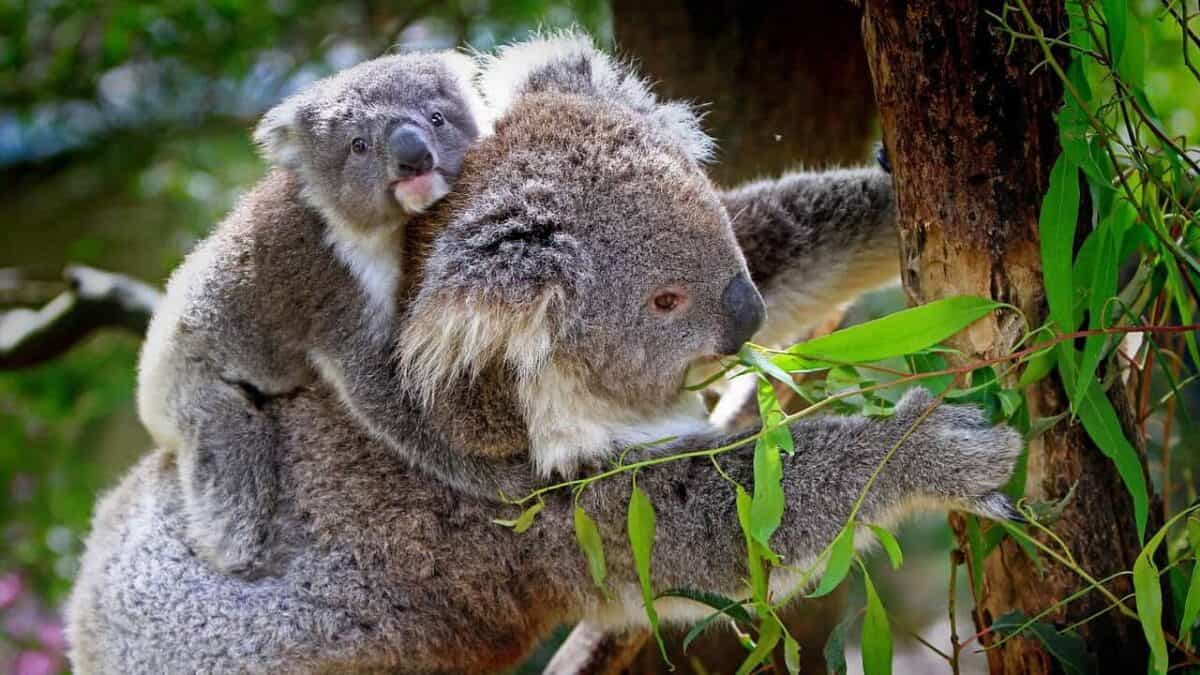
Koalas have one of the lowest reproductive rates among marsupials, producing typically only one offspring every 1-2 years, compared to some marsupials that produce multiple young annually. Female koalas reach sexual maturity around 2-3 years of age and usually give birth to a single joey after a brief 35-day gestation period. This tiny, bean-sized newborn then develops in the mother’s pouch for about six months before emerging, and remains dependent on the mother for nearly another six months. This slow reproductive rate makes koala populations particularly vulnerable to threats compared to more prolific marsupials like possums, which can produce multiple litters annually, or kangaroos, which can simultaneously nurture young at different developmental stages through a reproductive strategy called embryonic diapause. The koala’s limited reproductive capacity reflects their specialized ecological niche and the significant parental investment required to raise young in their challenging dietary environment.
Unique Disease Susceptibility
Koalas suffer from distinctive disease vulnerabilities not commonly found in other marsupials, most notably their high susceptibility to chlamydia. This bacterial infection affects up to 100% of some koala populations, causing blindness, infertility, and death—representing one of the most significant health threats to wild koalas. What makes koalas unique is that they are the only known wild animal population so severely impacted by this disease. Additionally, koalas are particularly susceptible to retrovirus infections, with the Koala Retrovirus (KoRV) being incorporated into the koala genome in northern populations, making them genetically predisposed to certain cancers and immunodeficiency conditions. These disease vulnerabilities aren’t typically seen in other marsupials and represent another way in which koalas differ from their marsupial relatives, potentially reflecting their reduced genetic diversity due to population bottlenecks and their specialized immune systems adapted to processing toxic eucalyptus compounds.
Conclusion

While koalas share the fundamental marsupial characteristic of pouch-rearing young, they have evolved into remarkably specialized creatures that differ significantly from their marsupial relatives in almost every aspect of their biology and behavior. From their highly specialized eucalyptus diet and unique digestive system to their distinctive arboreal adaptations and reproductive strategies, koalas represent an extraordinary example of evolutionary specialization within the marsupial family. These differences highlight why conservation efforts for koalas must be specifically tailored to their unique needs rather than applying general marsupial conservation approaches. Understanding these distinctions not only enhances our appreciation of marsupial diversity but also emphasizes the irreplaceable ecological role koalas play in Australia’s forest ecosystems and the particular challenges they face in a changing world.

As a little kid, I fell in love with nature, wildlife, and animals. Living in the USA, South Africa, Italy, China and Germany gave me the opportunity to discover the world's Wildlife. My favorite animals are Mountain Gorillas, Siberian Tigers, and Great White Sharks.
I'm a certified PADI Open Water Diver, went to Everest Base Camp and Trekked Gorillas in Uganda. I hold a Master of Science in Economics and Finance.
Please send any feedback to feedback@animalsaroundtheglobe.com
- 11 Weather Records That Still Haven’t Been Broken - July 23, 2026
- 12 Most Adorable Dog Breeds That Melt Hearts - July 23, 2026
- 10 Laws That Changed Animal Rights Forever - July 23, 2026