
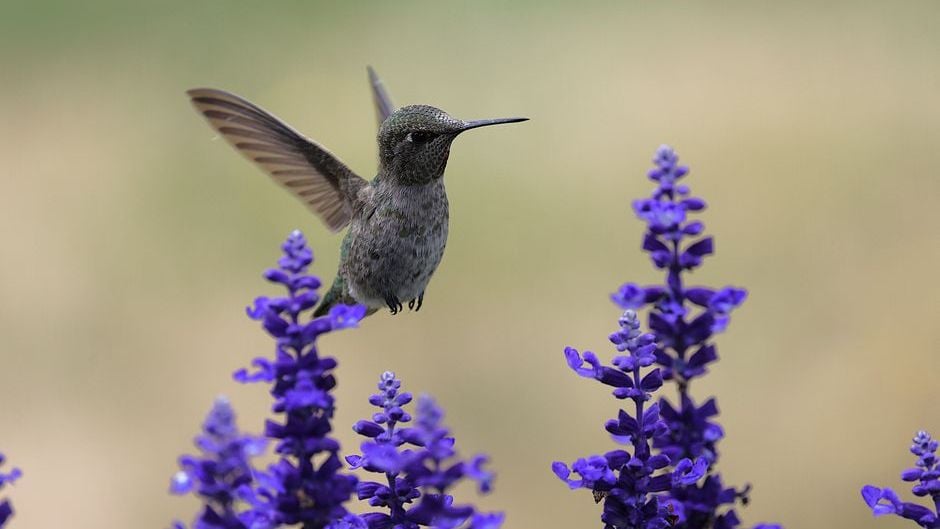
There’s a particular kind of quiet that settles over a garden when hummingbirds stop coming. You remember the flash of green, the electric whir, the way they’d hover inches from your face as if sizing you up – and then one season they just didn’t show. You put out feeders. You bought the red flowers at the grocery store checkout. Nothing. Years passed. If that story sounds familiar, you’re not alone, and more importantly, you’re not out of options.
What experienced gardeners have figured out – often after years of trial, error, and empty feeders – is that certain specific plants do something generic flowers simply can’t: they rebuild the invisible map hummingbirds use to navigate a landscape. The 13 plants below aren’t random pretty additions. They’re the ones veteran growers return to again and again when they want to bring the birds back for real, and a few of them will genuinely surprise you.
Fast Facts: Know Your Visitor
- A hummingbird’s heart beats up to 1,260 times per minute during migration – they arrive at your yard running on empty.
- Ruby-throated hummingbirds reach the Gulf Coast by early March, northern states and Canada not until April or May.
- Males always arrive 10 to 14 days ahead of females – the first bird you see is almost always a scout.
- Hummingbirds are known to return to the same garden, even the same feeder, year after year.
- Before migration, they gain 25 to 40% of their body weight in stored fat for the journey – your plants are the fuel stops that matter most.
#1 – Cardinal Flower: The Standout Native That Turns Skeptics Into Believers
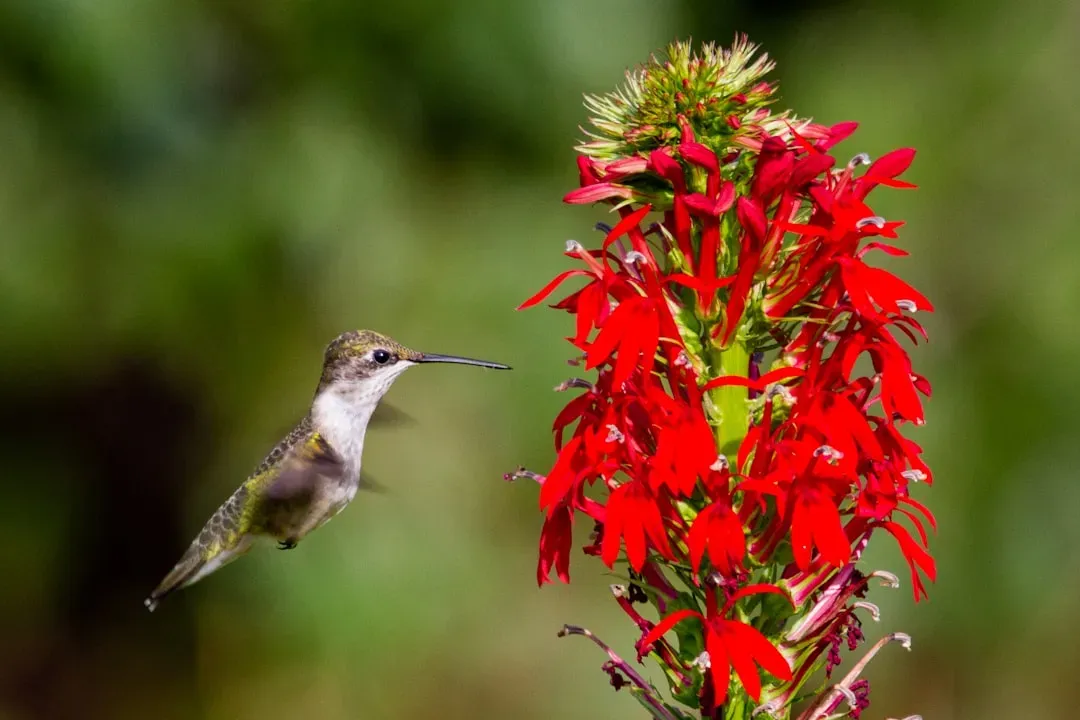
Flashy hanging baskets get the Instagram attention, but when you talk to gardeners who’ve actually reversed years of hummingbird absence, one plant comes up more than any other: cardinal flower. Its blazing red spikes – standing two to four feet tall near a stream bank or moist garden bed – produce nectar in quantities that keep birds hovering and visibly returning multiple times a day. Long-term growers in eastern and midwestern yards describe a near-immediate response once the first bloom opens, sometimes within 48 hours of a plant hitting full flower. The color is not incidental. That particular shade of red sits at the exact frequency hummingbirds are most drawn to, and in a yard that’s been quiet for years, it functions like a signal flare.
What makes cardinal flower a true investment rather than a one-season experiment is its habit of slowly spreading by offsets. You plant one, and within a few seasons you have a colony. Birds don’t just visit colonies – they claim them, defend them, and return to them year after year as anchor points on their route. It thrives in the moist corners most gardeners consider problem spots: beside downspouts, along low-lying edges, near water features. If you only add one plant from this entire list, experienced growers say make it this one. Everything else builds from here.
#2 – Bee Balm: The Classic That Still Tops Most Veteran Lists Despite the Hype
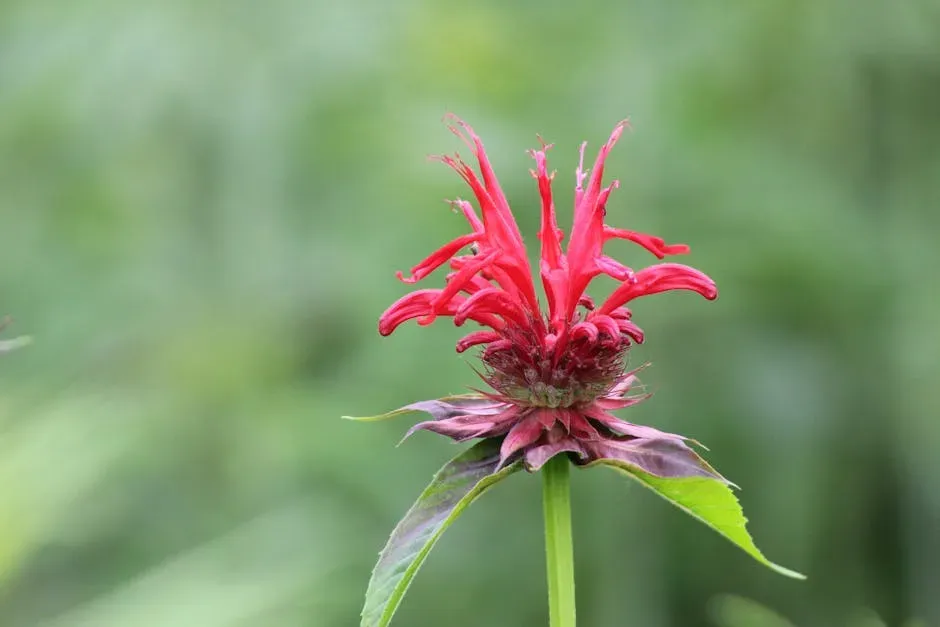
Bee balm gets recommended so often it starts to feel like background noise, but the gardeners who’ve actually watched it revive a dead zone will tell you the hype is justified – with one critical caveat. The shaggy, wild-looking blooms in red and hot pink produce nectar that hummingbirds seek out actively, not passively. They’ll fly past a feeder to get to a healthy bee balm clump. The plant also hosts the small insects hummingbirds hunt alongside nectar, effectively turning a single planting into a full-service feeding station. The key word, though, is “healthy.” Old cultivars and poorly sited plants collapse under powdery mildew by midsummer, leaving birds with nothing but a dead stub.
Experienced growers steer hard toward mildew-resistant natives and modern cultivars like ‘Jacob Cline’ or ‘Raspberry Wine’ – varieties that stay lush and productive through August heat. Moist, well-drained soil with good air circulation makes the difference between a plant that performs and one that disappoints. Dividing clumps every two or three years keeps nectar production at its peak rather than letting the center go woody and quiet. When bee balm is right, it’s one of the most reliable mid-to-late-summer bridges on this list, and it pairs beautifully with what comes next.
#3 – Salvia: The Workhorse Genus That Experts Rank Highest for Season-Long Reliability
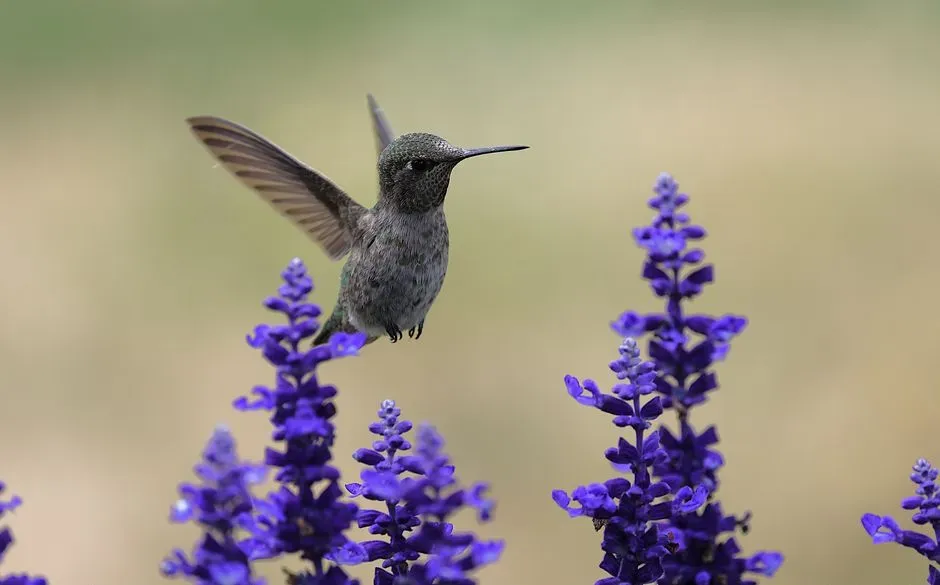
Most people try one salvia, decide it’s fine but not spectacular, and move on. The gardeners who’ve cracked the code know that salvia’s real power is in using it as a system rather than a single plant. Perennial types like deep-blue Salvia guaranitica ‘Black and Blue’ and the dramatic purple-black ‘Amistad’ produce dense nectar-rich spikes that hummingbirds revisit obsessively. The aromatic foliage naturally discourages certain pests, meaning the plants stay cleaner and more productive without much intervention. In warm zones, these salvias bloom from late spring all the way to the first hard frost – a window that covers nearly the entire hummingbird season.
The real strategy, and the one veteran growers emphasize, is stacking early, mid, and late-season salvia varieties so there’s never a gap. A yard that goes quiet in August because one plant fades is a yard that loses its returning visitors. Stack the bloom times and you eliminate that failure point entirely. Annual types fill holes in colder zones where perennials won’t overwinter. Hummingbirds that find a reliable, never-empty salvia corridor will return the following spring before almost any other flowers have opened – a loyalty that builds year over year until the visits feel less like luck and more like clockwork.
At a Glance: Top Salvia Picks for Hummingbirds
- Salvia guaranitica ‘Black and Blue’ – Cobalt blue spikes, blooms late spring to frost, zones 7-10
- ‘Amistad’ – Deep purple-black flowers, outstanding nectar output, heat-tolerant
- Salvia coccinea – Bright red annual, perfect for colder zones that can’t overwinter perennials
- ‘Jacob Cline’ Bee Balm (bonus pairing) – Plant beside salvia to eliminate mid-summer nectar gaps
- Anise Sage (S. guaranitica) – Can reach 5 feet tall, starts blooming in late spring and runs until first frost
#4 – Canna Lily: The Bold Tropical That Delivers Volume When Summer Heat Peaks
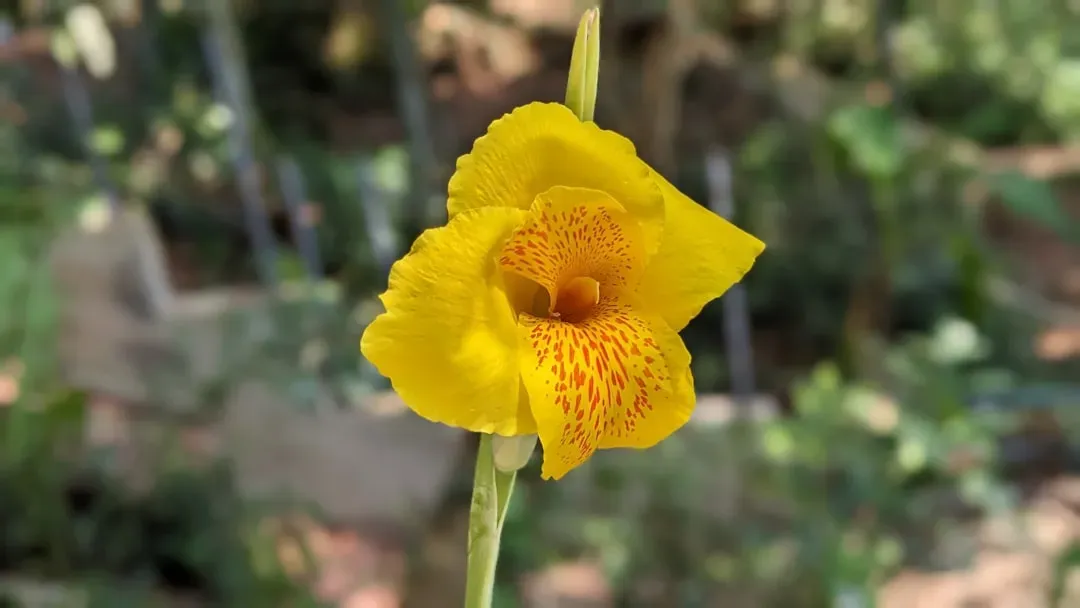
Cannas have a reputation for being high-maintenance divas, but growers in warm zones who’ve used them to flood a garden with color during peak summer will argue that reputation is overblown. The large, theatrical blooms in fire-engine red and deep orange are exactly the visual markers hummingbirds use to locate feeding zones from a distance. They’re tall – sometimes reaching six feet – which means they function as landmarks as much as food sources, visible from far enough away to pull birds in from routes they’ve abandoned. During the intense heat of July and August, when many other nectar plants are struggling or spent, cannas are at full throttle.
The practical upside growers love is that the rhizomes multiply on their own underground, expanding the planting and the nectar supply without any extra investment. What starts as a modest grouping becomes a substantial feeding corridor within two or three seasons. In colder zones, the rhizomes need to be dug and stored before frost – a minor inconvenience that most gardeners who’ve seen the results consider well worth it. Pair cannas with lower-growing salvias and you create both the visual beacon and the accessible nectar at multiple heights, which keeps birds working a spot longer rather than hitting one flower and moving on.
#5 – Columbine: The Delicate Native That Reseeds and Keeps Birds Loyal Through Spring
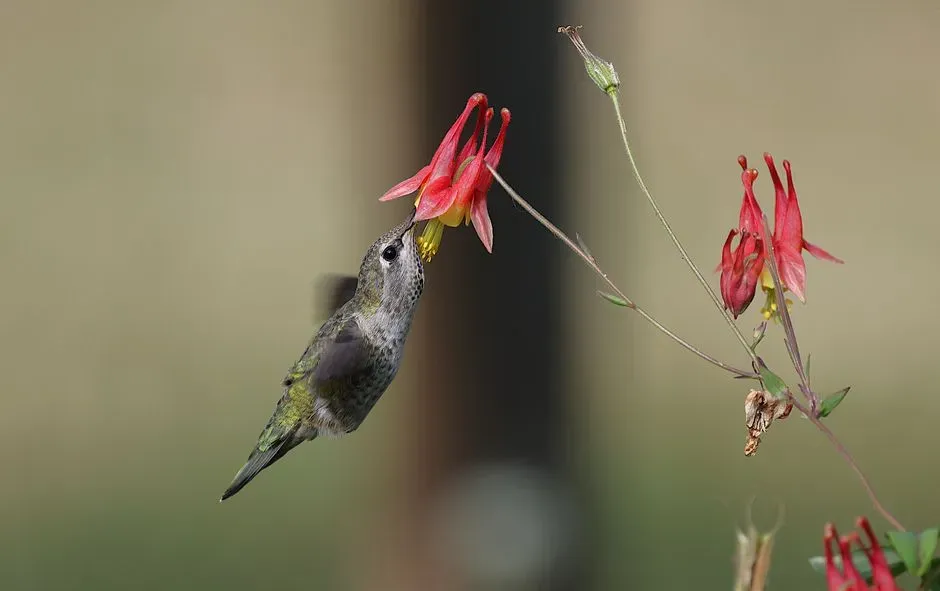
Columbine has a reputation for being short-lived and fussy, and in isolation that reputation has some truth to it. But experienced growers have learned to play a different game with it: let it reseed. The spurred, nodding flowers – designed as if nature built them specifically to be reached by a hummingbird’s curved bill – bloom in early spring, right when returning migrants are desperately hungry and very few other nectar sources exist. Eastern columbine in particular is timed almost perfectly to the northward migration of ruby-throated hummingbirds, and growers who’ve planted it near woodland edges report birds arriving and settling into the yard days earlier than in previous years.
The self-sowing habit is the real secret weapon. Individual columbine plants may only live two or three years, but a patch that’s allowed to drop seed builds a permanent, self-sustaining colony that doesn’t require replanting. Birds learn those locations precisely and return to them season after season – not because they remember individual plants, but because the patch is reliably there every spring. Once you have columbine working as an early anchor, later-blooming plants on this list have a much easier job. The birds are already in the yard, already comfortable, already on a route. You’re not starting from scratch; you’re extending a season that columbine already opened.
#6 – Red Buckeye: The Early-Blooming Tree That Sets the Tone for the Entire Season
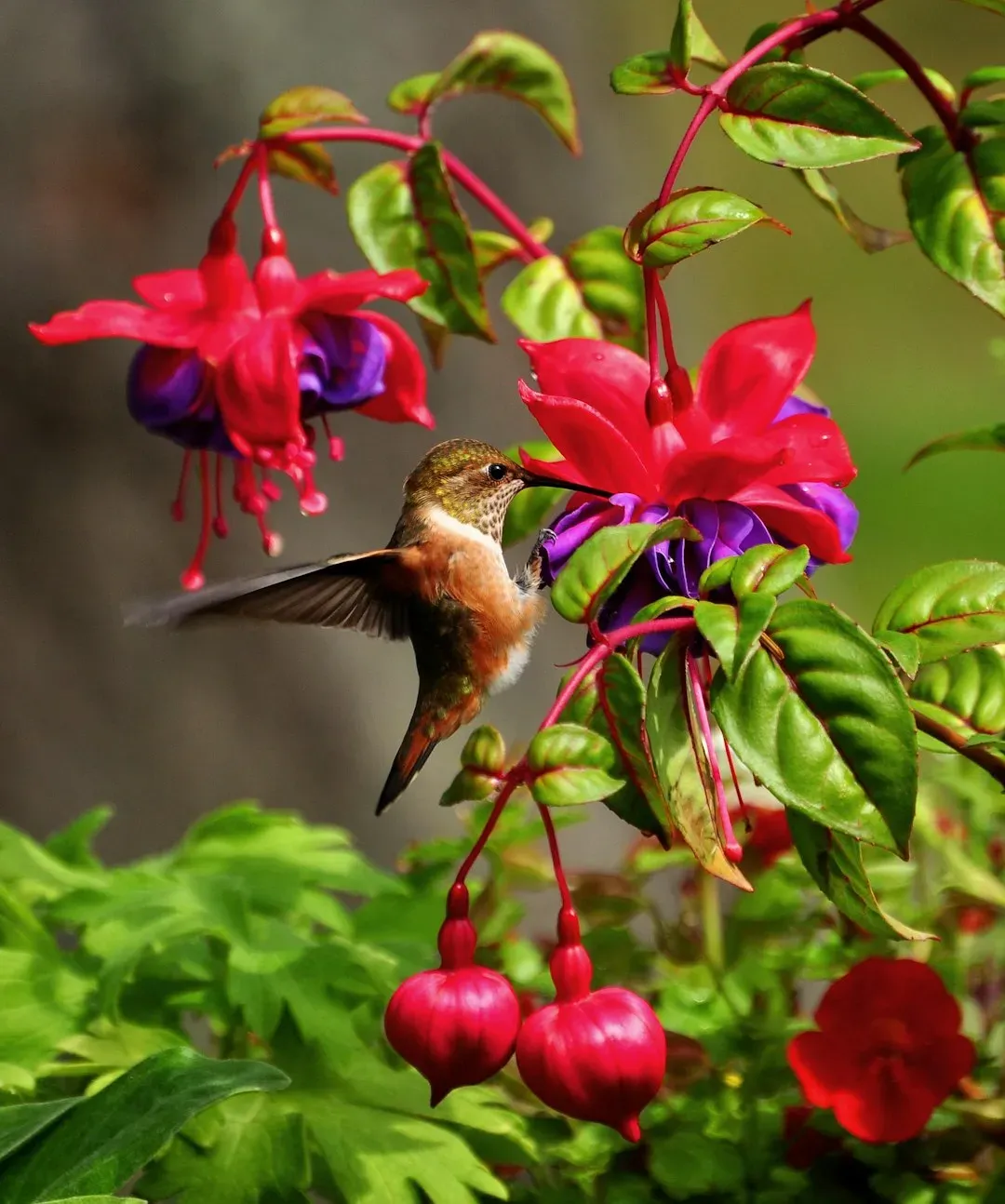
Most gardeners building a hummingbird garden focus entirely on summer and miss the most critical window of all: early spring arrival. Red buckeye blooms in April and May – often before most perennials have woken up and while trees are still mostly bare – and its clusters of tubular red flowers are one of the first substantial nectar sources returning migrants encounter. In eastern gardens, this timing is almost magical. Birds that have been flying north from Central America arrive exhausted and hungry, and a red buckeye in full flower is the kind of discovery that causes a hummingbird to simply stop and stay instead of passing through.
The tree stays manageable – typically reaching 10 to 15 feet – which makes it realistic for yards that can’t accommodate something like a mature oak. Its early bloom has a compounding effect on the rest of your planting plan: once birds find the buckeye, they expand their exploration and discover the columbines, the salvias, the bee balm. They build a mental map of your property rather than treating it as a one-stop. Growers who’ve added red buckeye to existing gardens often report that hummingbird arrival dates shift earlier by a week or more – and that the total season length increases meaningfully as a result.
Worth Knowing: Why Bloom Timing Changes Everything
- Gaps in bloom = lost hummingbirds. When nectar disappears for even a week, birds reroute permanently.
- Bloom succession – early spring through fall frost – is widely considered the #1 design priority in any serious hummingbird garden.
- Red buckeye and columbine cover the critical April-May arrival window when almost nothing else is open.
- By May, ruby-throated hummingbirds are widespread across most of the central and eastern U.S. – your early bloomers determine whether they stop or pass through.
- Spreading plants across multiple garden zones allows several birds to feed without triggering territorial fighting.
#7 – Penstemon: The Tubular Perennial That Thrives Where Other Plants Quietly Give Up
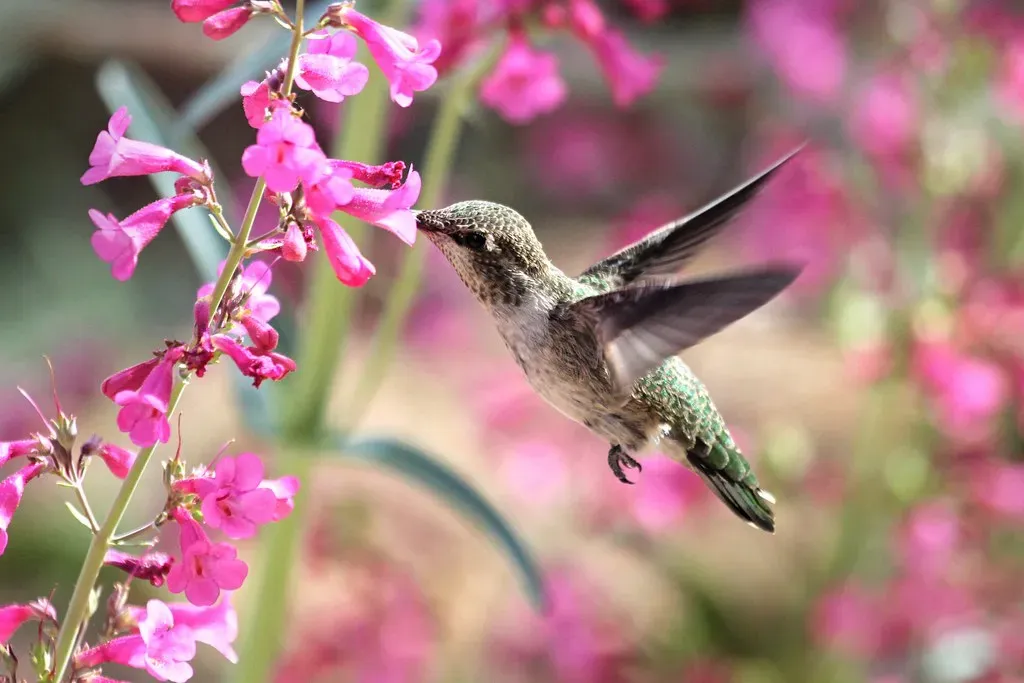
Penstemon gets skipped by a lot of gardeners who assume it’s difficult, and in the wrong conditions it can be. But those who’ve sorted out its basic needs – good drainage, full sun, and patience through the establishment year – describe it as one of the most consistent hummingbird draws in western and prairie gardens, including in spots that have been completely birdless for years. The bell-shaped flowers are essentially shaped by evolution to accept a hummingbird’s bill, and they produce nectar in serious volume. Species like Penstemon digitalis handle poor, rocky soil once established in ways that would defeat most of the plants on this list.
The practical trick that keeps penstemon productive is deadheading. Remove spent flower spikes before they go to seed and the plant redirects energy into producing more blooms – extending the feeding window by weeks. In western gardens where drought pressure eliminates many nectar options by midsummer, a healthy penstemon planting becomes the last reliable food source standing, which means it gets heavy, concentrated traffic from birds that have run out of alternatives. That concentrated attention is exactly the kind of behavior that gets hummingbirds into the habit of including your yard on their daily route instead of just passing through it.
#8 – Anise Hyssop: The Native That Quietly Outlasts Flashier Imported Options
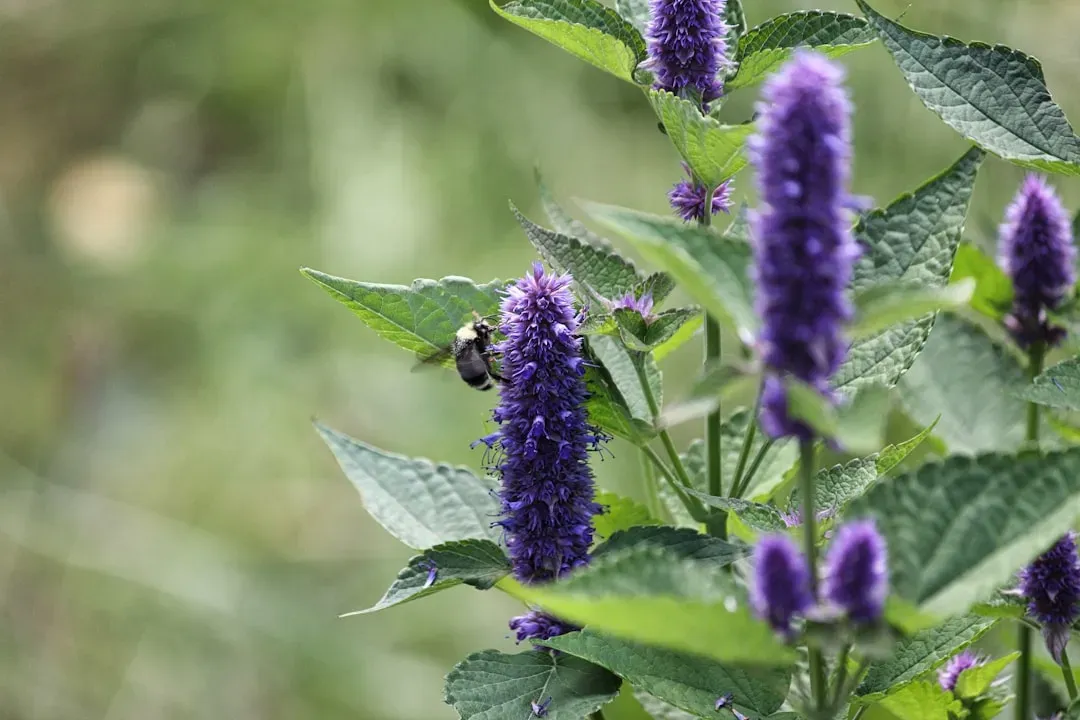
Anise hyssop – agastache, to use its botanical name – doesn’t have the dramatic visual punch of cardinal flower or the tropical flair of canna, and that’s probably why it gets overlooked. But veterans consistently circle back to it for one simple reason: it works when other things don’t. Its long spikes of small lavender-to-purple flowers bloom from midsummer deep into fall, filling the gap after early perennials have finished and before the last salvias close out. The plant tolerates dry spells better than almost anything else on this list, which matters enormously in the late-summer heat when gardeners stop watering as frequently and other plants start visibly declining.
There’s also a behavioral dimension that growers appreciate. Hummingbirds learn anise hyssop locations quickly and defend them – a sign that the plant is delivering enough reward to be worth guarding. In gardens that have reseeded it across a wider area over several seasons, the birds develop what amounts to a patrol pattern, cycling through the patch multiple times an hour. The licorice scent is pleasant for the gardener, irrelevant to the bird, and oddly repellent to some of the insect pests that plague flashier plants. It’s the dependable middle reliever in a bullpen – not the closer, not the opener, but the one that keeps the season intact when everything else is wavering.
#9 – Garden Phlox: The Fragrant Perennial Most People Never Think to Plant for Hummingbirds
The fragrance is what throws people. Garden phlox smells wonderful, and that scent makes most gardeners file it under “butterflies and aesthetics” rather than hummingbirds. But long-time growers who’ve paid close attention know its tubular individual florets are exactly the right architecture for hummingbird feeding, and when tall varieties like ‘David’ or native-type phlox are planted in large drifts, they pull birds in during mid-summer lulls when the early rush has faded and before the late-season surge. The visual mass matters as much as the individual flowers – a drift of white or deep pink phlox is visible and compelling from far enough away to redirect a bird mid-flight.
The non-negotiable requirement is mildew resistance. Older phlox varieties are notorious for collapsing into a gray, powdery mess by August, and a diseased plant produces essentially no nectar and no reason for a bird to stay. Choosing resistant cultivars from the start saves the frustration of a plant that looks promising in June and is useless by August. When the plant stays clean and healthy, it contributes something genuinely valuable to the overall garden plan: a mid-border anchor that provides nectar volume during the weeks when many other plants have peaked and declined, keeping birds engaged and on-route through the harder stretch of summer.
Quick Compare: Midsummer Nectar Gap Solvers
- Garden Phlox – Tall drifts, visual beacon from a distance, requires mildew-resistant cultivar
- Anise Hyssop – Drought-tolerant, reseeds freely, birds actively defend established patches
- Penstemon – Best for dry/rocky western gardens, deadhead to extend bloom by weeks
- Bee Balm – Hosts insects alongside nectar; choose ‘Jacob Cline’ or ‘Raspberry Wine’ for mildew resistance
#10 – Fuchsia: The Shade Surprise That Brings Hummingbirds to Corners You’ve Written Off
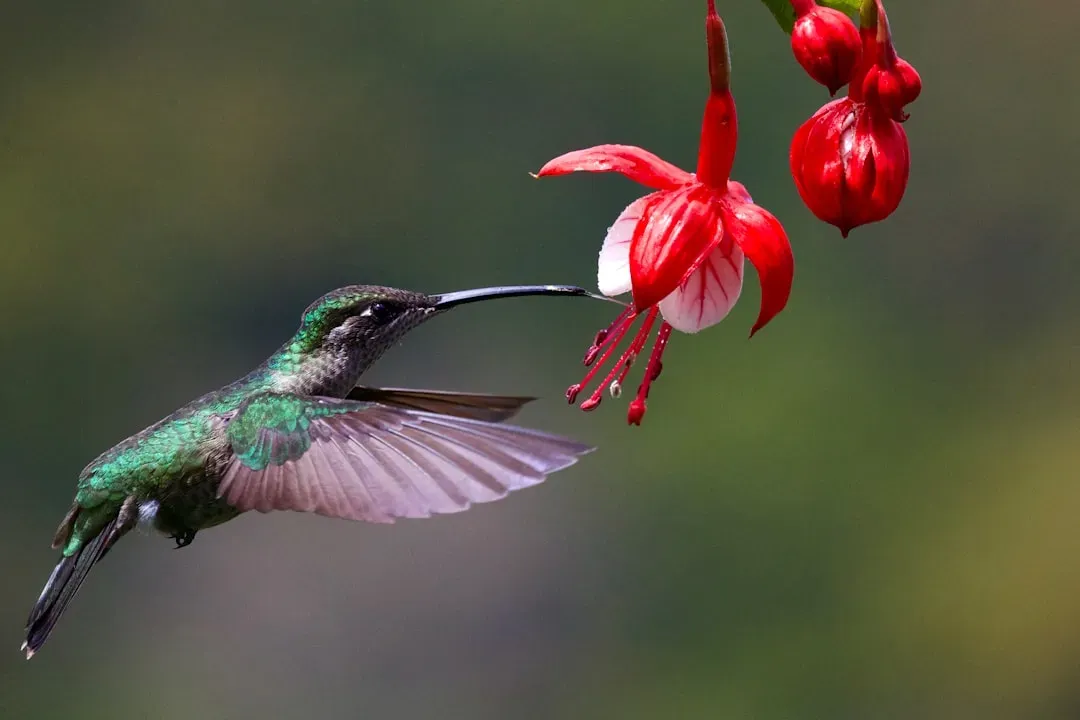
The assumption that hummingbirds only visit sunny, open spaces keeps a lot of gardeners from utilizing their best secret weapon: fuchsia. Experienced northern and coastal growers have long known that hanging fuchsia baskets in shaded spots – under a porch overhang, beneath a canopy of trees, beside a north-facing wall – create private, low-competition feeding stations that birds actually prefer during the heat of the day. The dangling, two-toned tubular flowers look almost artificially designed for hummingbird feeding, and the plants produce blooms continuously through the cooler months that would stall everything else on this list.
The behavioral benefit is subtle but real. Shaded feeding stations see less competition from aggressive species – both other hummingbirds defending sunny prime spots and bees working the open-garden flowers. A quieter spot means more relaxed, longer feeding visits, which in turn means birds learn the location faster and return more reliably. For urban gardeners with limited sunny real estate, or for anyone with a north-facing yard who assumed they were simply out of luck, fuchsia rewrites the rules. Pair a couple of hanging baskets with a small feeder nearby and you’ve essentially built a hummingbird sanctuary in a space most people have completely written off.
#11 – Petunia and Calibrachoa: The Container Plants That Prove Small Spaces Are Never a Dealbreaker
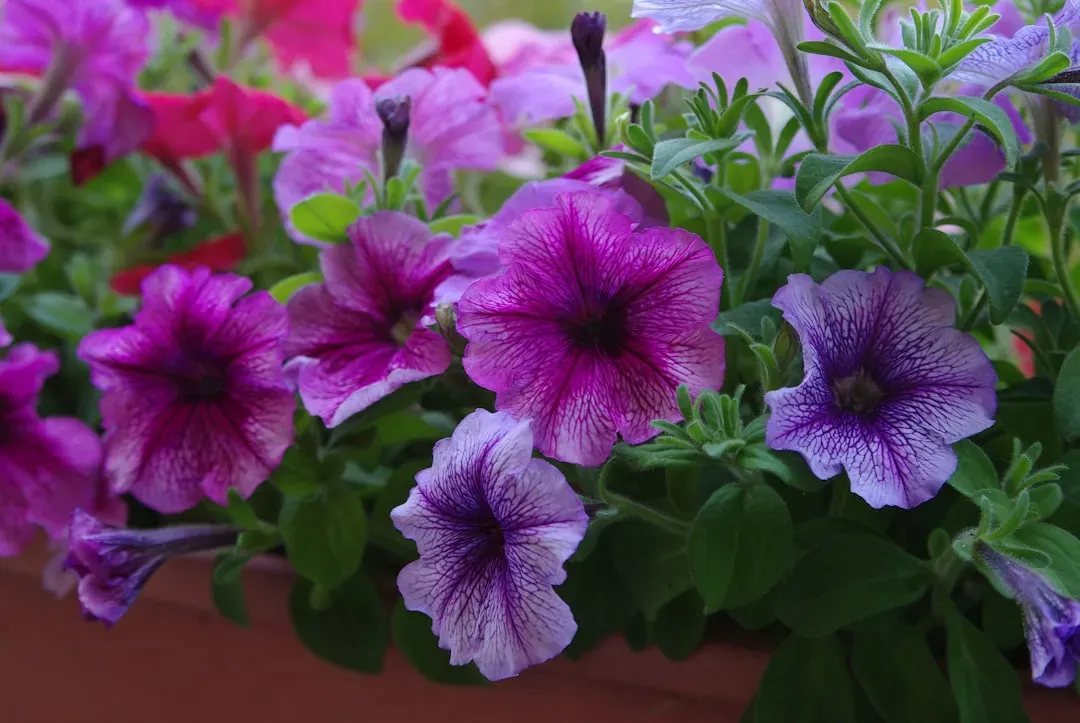
It’s easy to dismiss hanging baskets and patio containers as decorative afterthoughts, too small to influence a hummingbird’s route in any meaningful way. Experienced urban and patio gardeners have learned otherwise. Trailing petunias and calibrachoa – especially modern heat-tolerant types like the Superbells series – produce trumpet-shaped blooms that are perfectly sized for quick, efficient hummingbird nectar hits. A densely planted basket doesn’t offer the volume of a garden bed, but it offers something else: proximity. On a balcony, a narrow patio, or a small urban backyard, a well-chosen hanging basket can be the only hummingbird habitat within half a block, which makes it enormously valuable during migration.
The mistake most people make is buying older, heat-sensitive petunia varieties that turn to mush by July and stop blooming entirely. Modern calibrachoa and heat-tolerant petunias push through summer without the ugly midsummer stall, which is what keeps the birds coming back on a daily basis rather than discovering the basket once and moving on. Pairing a basket with a feeder nearby amplifies the effect further – the plant provides the color signal that draws birds in from a distance, the feeder provides a reliable backup when blooms are between flushes. In a small space, that combination does nearly everything a full garden bed accomplishes on a larger property.
#12 – Lantana: The Heat-Tough Shrub That Revives Traffic in the Spots Where Almost Nothing Else Survives
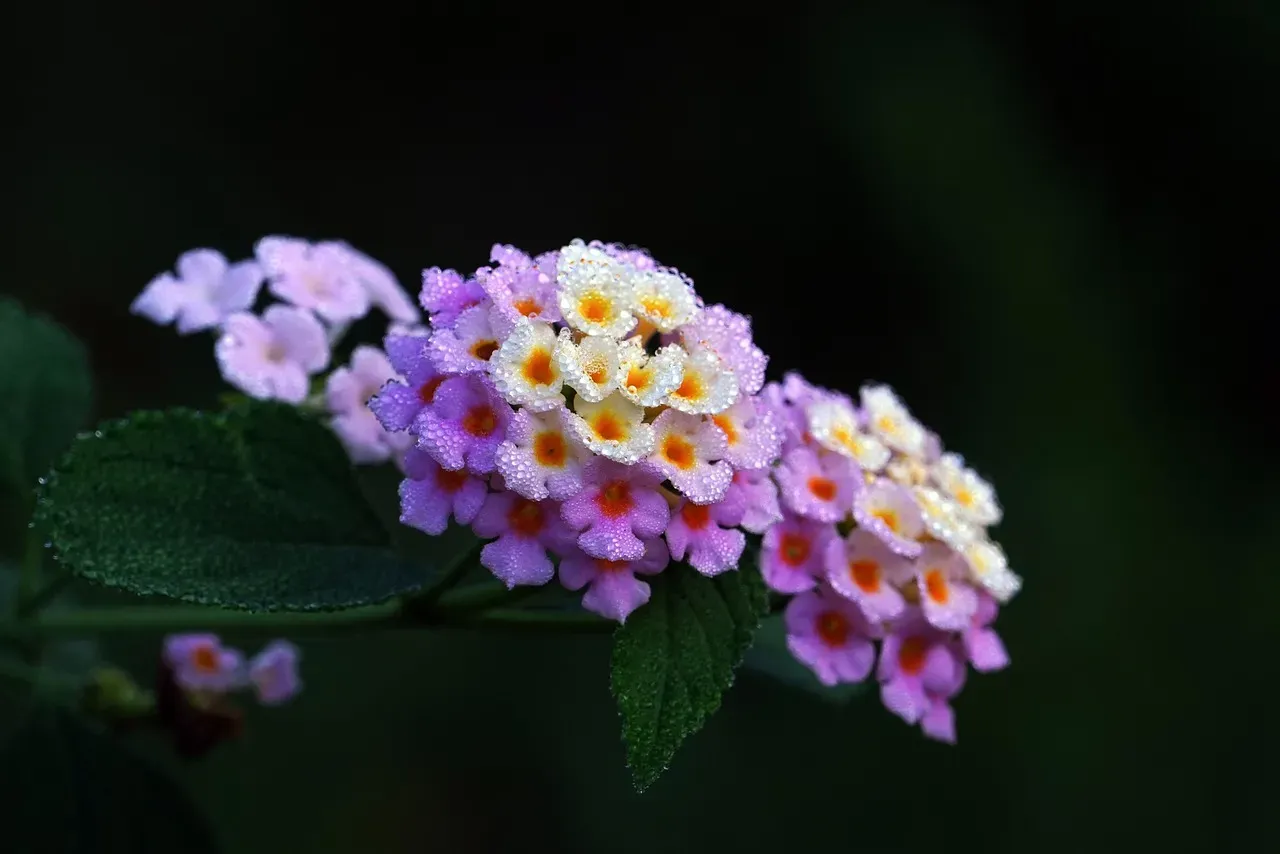
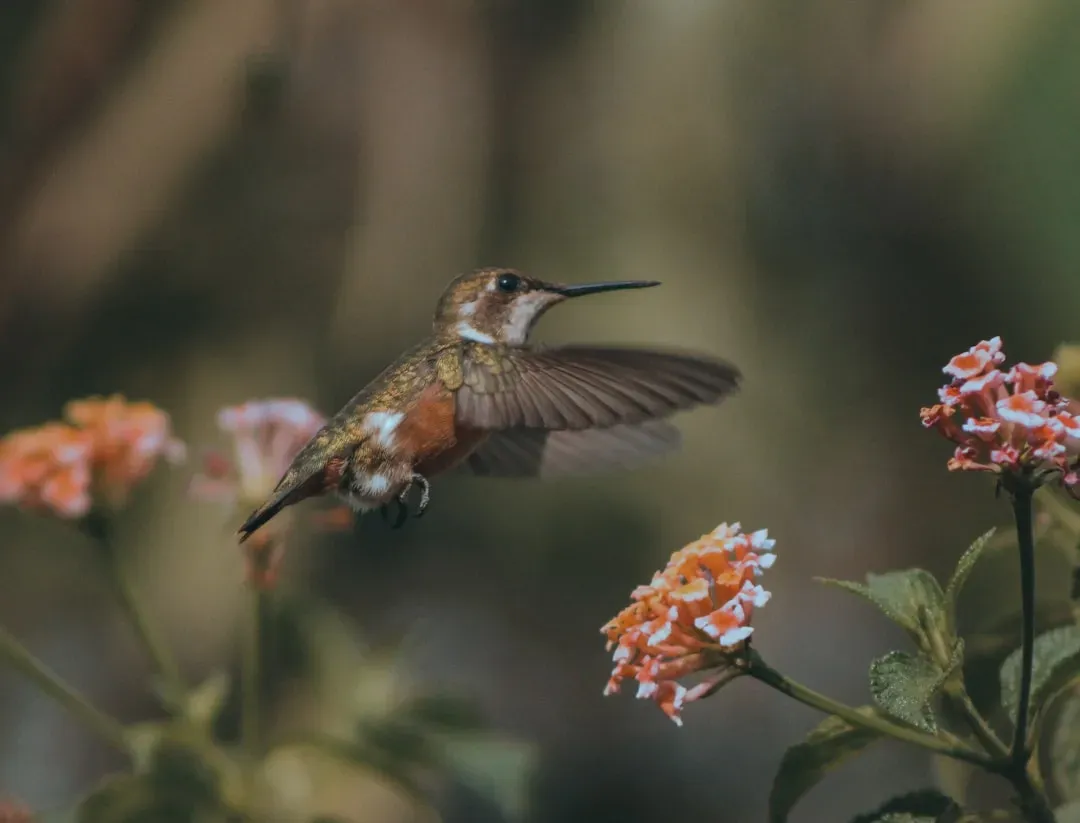
Lantana has a reputation as a butterfly plant, and that reputation is completely fair – butterflies love it. But gardeners in hot, dry southern and western zones who’ve struggled to keep anything alive through brutal summers have discovered it does double duty as a hummingbird magnet in conditions that would destroy most of the other plants on this list. Its clusters of tiny tubular flowers pump out nectar relentlessly from spring through the first frost in warm areas, and the plant doesn’t require babying. Poor soil, full desert sun, inconsistent watering – lantana handles all of it without the nectar output ever really dropping off. That reliability in hostile conditions is what earns it a spot on veteran lists even though it rarely gets top billing.
The surprising detail that growers in the know share is about color selection. Most people instinctively reach for the solid red varieties, assuming that’s what hummingbirds want. Experienced growers have noticed that the mixed-color varieties – which shift from yellow to orange to pink as individual flowers mature – actually sustain longer visits, because birds work through the cluster more methodically rather than hitting the red flowers and leaving. The shrub’s dense, sprawling habit also creates the kind of sheltered cover that makes birds feel secure enough to feed without constant vigilance. In a yard that’s been empty for years, a large lantana in full midsummer bloom is often the first plant that generates repeat visits.
[article_quiz]#13 – Zinnia: The Underestimated Annual That Quietly Saves the Fall Migration Window
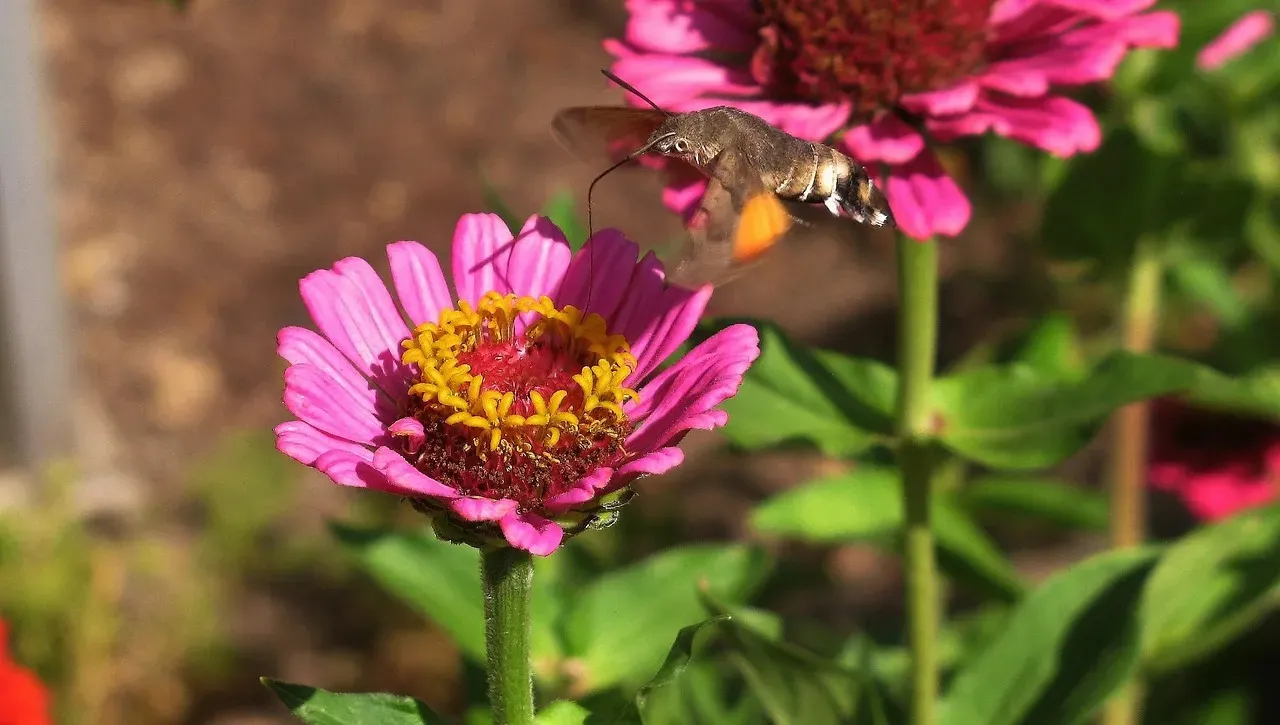
Zinnias are so familiar, so available at every garden center checkout, so associated with elementary school butterfly gardens, that serious gardeners tend to overlook them. That’s a mistake with real consequences. During the fall migration window – when hummingbirds are fueling up intensively before their long journey south – most perennials have already peaked and faded. Zinnias haven’t. Tall varieties like ‘Benary’s Giant’ in deep red and orange are in full, heavy bloom through September and into October in most zones, producing abundant nectar right when birds need it most and when the competition from other flowers has largely dropped out of the picture.
What makes zinnias especially valuable during this window is that they do more than just provide nectar. Their open blooms attract the tiny insects hummingbirds actively hunt during fall migration – protein sources that matter enormously to birds preparing for a multi-day journey. A mass planting of tall zinnias essentially becomes a drive-through diner: nectar, insects, color signal, and easy access all in one patch. Experienced gardeners who’ve added large zinnia blocks to their fall garden report hummingbirds lingering for days or even weeks at what used to be a brief stopover. For a plant that costs almost nothing and requires virtually no skill, that return is hard to argue with.
Why It Stands Out: The Fall Migration Feeding Window
- By August and September, hummingbirds are moving south – fueling hard in the morning, traveling midday, foraging again in the afternoon.
- Fall migration can bring more visitors than spring – juveniles born that summer travel alongside adults, swelling numbers significantly.
- Zinnias and lantana are among the only nectar sources still fully productive when September arrives and most perennials have faded.
- Hummingbirds gain 25 to 40% of their body weight before the southward push – your fall garden is a critical fueling station, not an afterthought.
- Keeping feeders up at least two weeks after your last fall sighting ensures late-migrating birds aren’t left without support.
Here’s the honest opinion most gardening content is too polite to give you: the people who struggle to bring hummingbirds back aren’t doing it wrong because they’re bad gardeners. They’re doing it wrong because they’ve been sold a simplified version of what these birds actually need. A single red feeder and a pack of mixed wildflower seed isn’t a habitat – it’s an optimistic gesture. The plants on this list work because they were selected, by real observation over real seasons, to deliver nectar at the right times, in the right forms, with the right reliability. Start with cardinal flower and salvia. Add columbine for early spring. Let the anise hyssop reseed. Stack the bloom times so there’s never a dead week. Do that, and the quiet in your garden won’t last much longer.
