
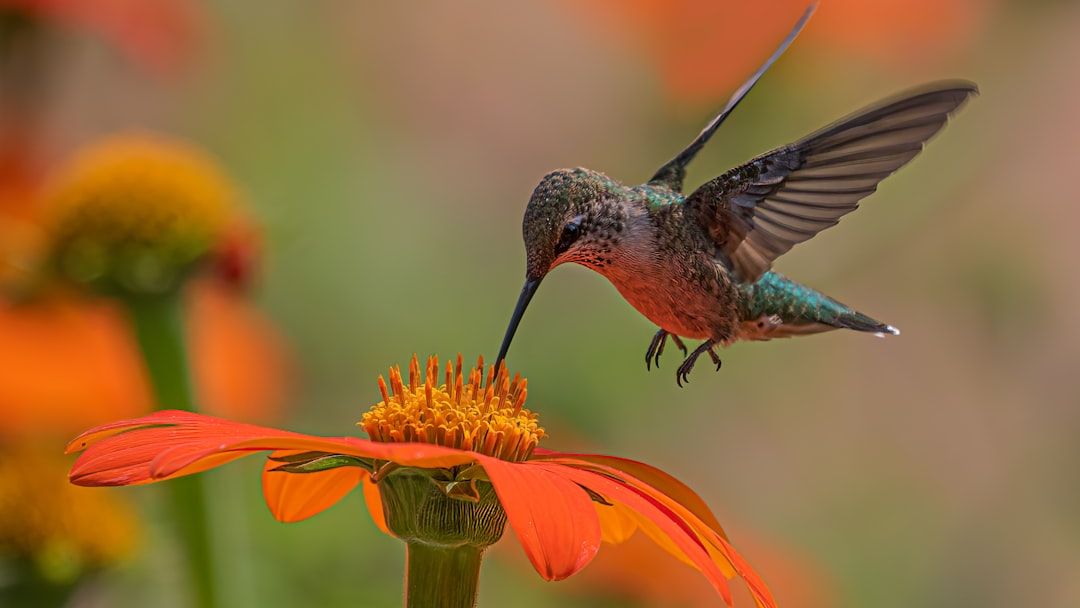
Most people hang a feeder, plant a few red flowers, and then spend the whole summer wondering why hummingbirds never seem to stick around longer than thirty seconds. What nobody tells you is that a hummingbird isn’t just passing through – it’s conducting a full inspection. Before a single ruby-throated scout commits to your yard, it has already run a detailed mental checklist that covers color, bloom shape, insect density, water movement, perch safety, spider webs, nesting potential, and more. These birds burn through so much energy that they must eat every 10 to 15 minutes and visit hundreds of flowers a day. They cannot afford to waste time on a garden that doesn’t pass.
Here’s where it gets interesting: most of what hummingbirds are actually looking for has nothing to do with the things backyard birders obsess over. The feeder is almost secondary. What these birds are scanning for is something deeper – a habitat that signals safety, abundance, and long-term reliability all at once. Some of what they notice will surprise you. A few items on their checklist will make you rethink everything you thought you knew about attracting them.
#1 – The Color of Your Flowers (They Clock Red From 50 Feet Away)
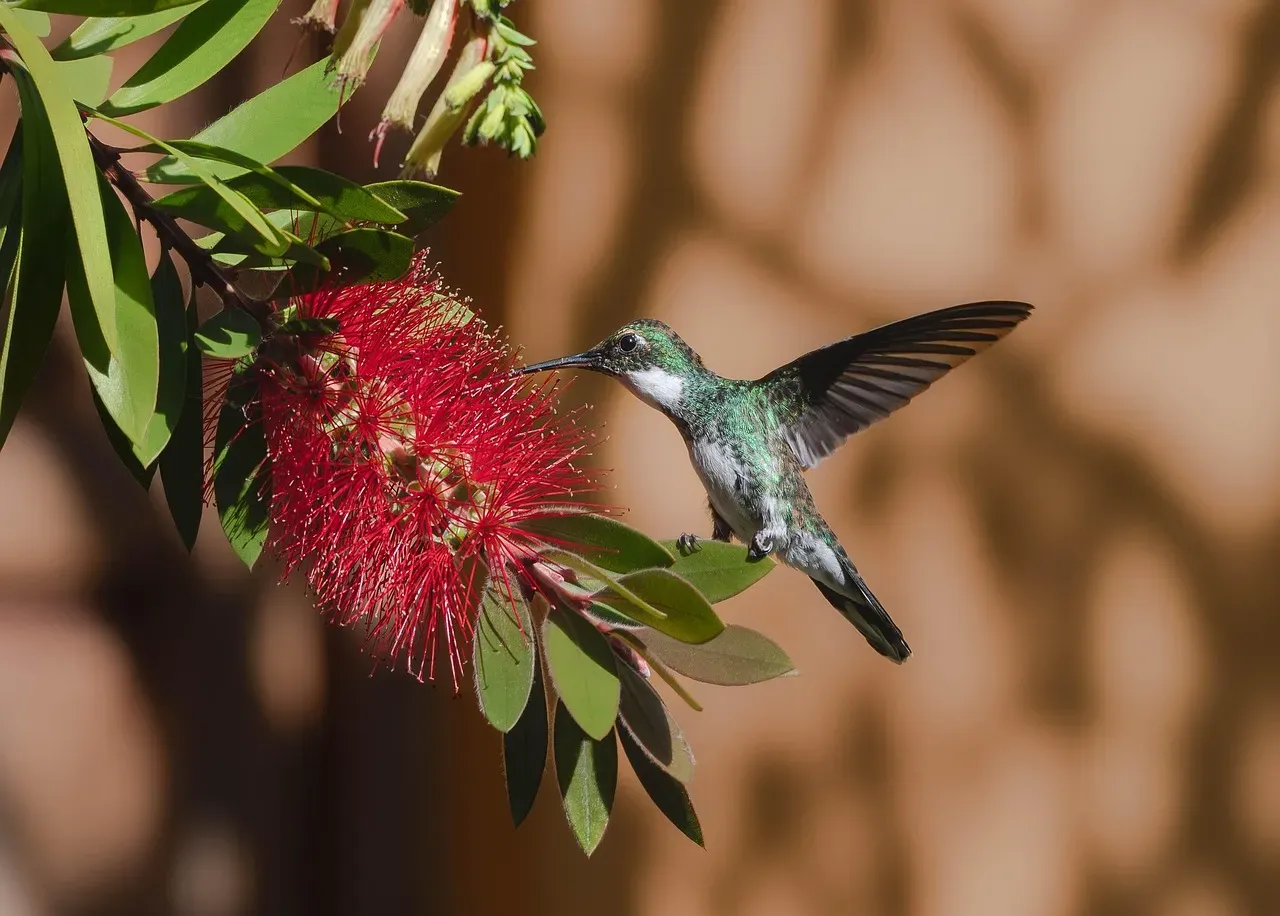
Hummingbirds navigate entirely by sight, not smell – which means the color palette of your garden is the very first thing a scout processes during a flyover. Red is the dominant trigger, but bold oranges, hot pinks, and deep purples register strongly too. A garden without vivid, saturated blooms gets skipped on the initial pass before the bird ever gets close enough to evaluate anything else. Color isn’t decoration here – it’s the admission ticket.
What most gardeners never consider is that it’s not just about having a red flower somewhere in the yard. It’s about having enough of them, grouped in visible clusters, so a hummingbird cruising at altitude registers your garden as genuinely worth investigating. A single red salvia tucked in the corner of a beige landscape is easy to miss. A bold sweep of scarlet blooms visible from the street? That’s a landing signal. Start with color density, and everything else becomes possible.
Fast Facts
- Hummingbirds detect red, orange, and hot pink from remarkable distances during flyovers.
- They navigate entirely by sight – scent plays no role in flower selection.
- Clusters of 3 or more same-colored plants register far more strongly than scattered singles.
- Bold, saturated colors outperform pale or pastel blooms every time.
- A visible sweep of color from the street is one of the strongest initial attractors you can create.
#2 – The Shape of Your Blooms (Tubular Flowers Are a Private Cafeteria)
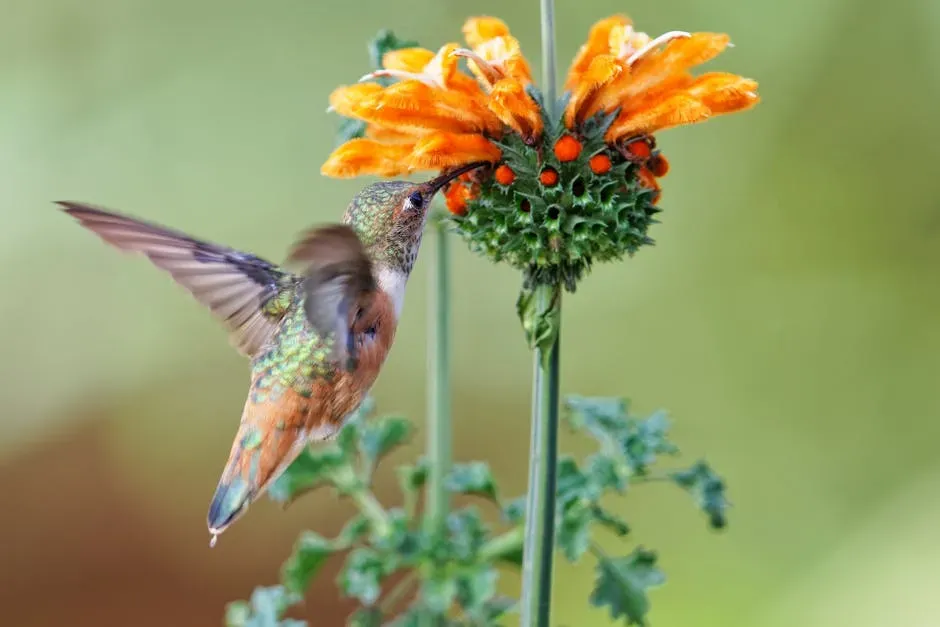
Color gets a hummingbird to your garden. Flower shape is what makes it stay and feed. Hummingbirds are drawn powerfully to tubular blooms – trumpet-shaped flowers that fit their long, slender bills like a key in a lock. This isn’t a casual preference. Their bills and grooved tongues literally evolved over millions of years to probe those narrow chambers, reaching nectar that most insects can’t even access. It’s one of nature’s more elegant arrangements.
Think about what that means practically: a garden full of flat, open blooms is a garden where every bee, butterfly, and moth is competing for the same nectar. A garden of tubular flowers – bee balm, salvia, cardinal flower, trumpet honeysuckle – is essentially a private cafeteria that hummingbirds have nearly all to themselves. Less competition means more energy retained per visit. For a creature running on a caloric knife-edge, that difference isn’t trivial. It’s the difference between a garden worth returning to and one worth abandoning.
Quick Compare
- Tubular natives (bee balm, cardinal flower, salvia): High nectar yield, low insect competition, hummingbird-exclusive access
- Flat open blooms (daisies, zinnias, marigolds): Nectar shared with bees, butterflies, and moths – lower energy return per visit
- Hybridized ornamentals (many garden center varieties): Bred for looks; nectar often reduced or absent
- Native tubular vines (trumpet honeysuckle, cross vine): Vertical real estate, long bloom windows, dense nectar – top-tier choice
#3 – Whether Your Garden Blooms Across Multiple Seasons
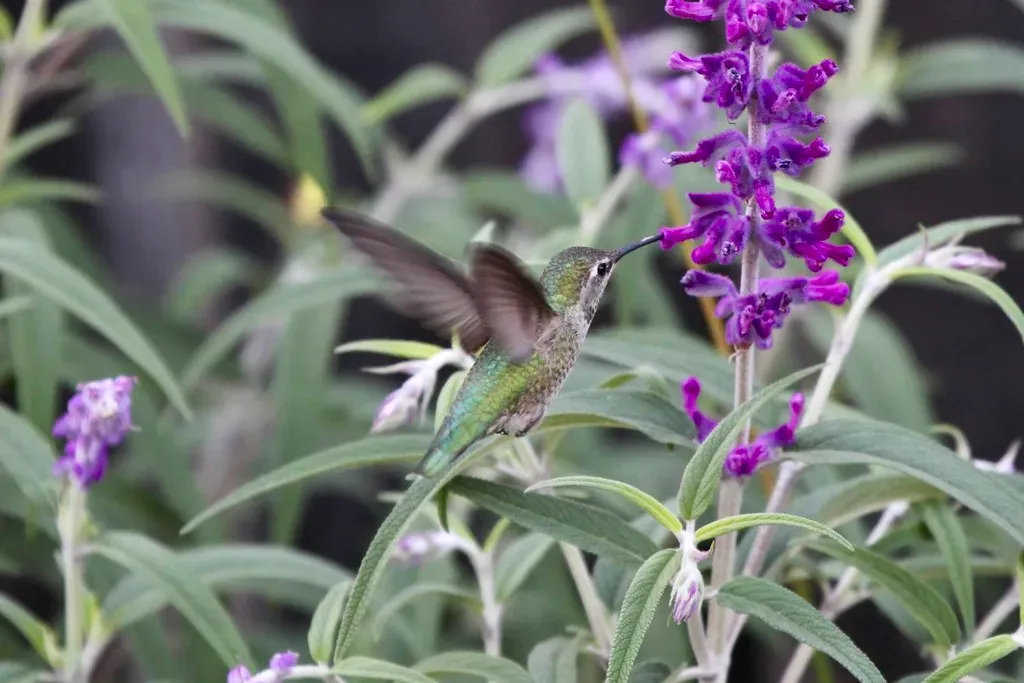
Here’s the mistake that quietly derails more hummingbird gardens than any other: planting for summer and only summer. Hummingbirds begin scouting in early spring, and the last migrants push through well into fall. A garden that peaks in July and goes dark in August sends a clear signal – unreliable food source, not worth the mental real estate. These birds are building migration maps and territorial routes based on what they find, and a garden that can’t deliver in April or September gets quietly dropped from the itinerary.
The solution is a deliberately layered bloom calendar. Early-season columbine and native azaleas welcome the first scouts. Mid-season bee balm, salvia, and penstemon carry the summer rush. Late-season cardinal flower and autumn sage keep the fueling stations open for southbound migrants. When hummingbirds find a garden that reliably offers something fresh every few weeks across the whole season, they stop treating it like a rest stop and start treating it like a home base. That shift – from occasional visitor to regular – is entirely a function of bloom continuity.
[article_quiz]#4 – Your Native Plant Ratio (Exotics Don’t Fool Them for Long)
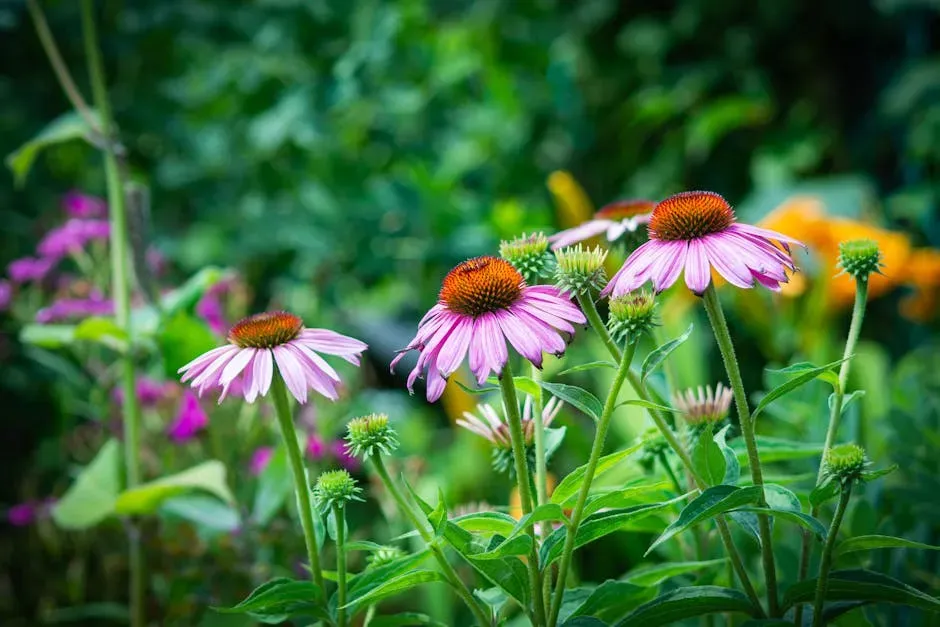
This is where well-intentioned garden center impulse buys quietly sabotage an otherwise good setup. Many ornamental cultivars – the showy, hybridized plants bred for big petals and long vase life – have had the nectar essentially bred out of them. They look like hummingbird heaven and deliver almost nothing. A bird that burns thousands of calories a day doesn’t get a second chance to learn from a bad investment. It moves on and mentally files your garden as low-yield.
Native plants like trumpet honeysuckle, bee balm, hummingbird sage, and wild columbine produce dramatically more nectar than most of their hybridized counterparts – and they carry a hidden second benefit. Native plants support a far richer insect population than exotic ornamentals do, and insects, as you’re about to find out, are a much bigger part of a hummingbird’s diet than most people realize. When a hummingbird scans your garden, it isn’t just counting flowers. It’s reading the entire food web. Natives send a signal that says “this place can actually sustain me.”
#5 – The Insect Population in Your Garden
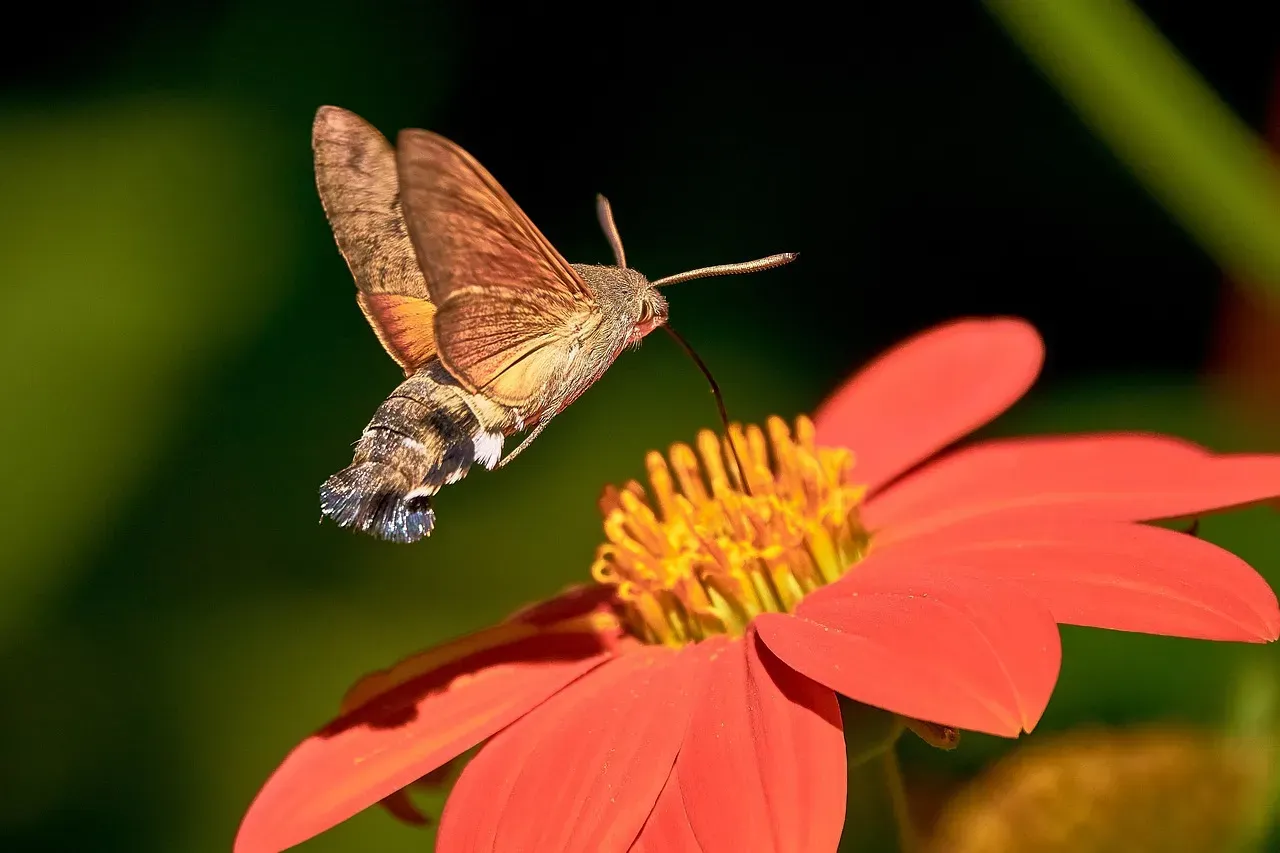
This is the fact that genuinely shocks people: hummingbirds are not primarily nectar drinkers. Insects make up a significant and often underestimated portion of a hummingbird’s actual diet. Let that land for a moment. A large share of what these birds need to survive, build muscle, and grow new feathers comes not from your feeder or your flowers – but from the tiny, flying, crawling protein sources living inside your garden’s ecosystem.
Hummingbirds are specialized aerial hunters. They can pluck gnats, aphids, and small spiders from mid-air with remarkable precision, and they actively scout for gardens where those food sources are dense and accessible. A yard that has been thoroughly treated with pesticides and herbicides – no matter how lush and colorful it looks from the outside – reads to a hummingbird as a protein desert. Beautiful, but empty in the ways that matter most. This is why the most attractive hummingbird gardens are rarely the most “perfect” ones. They’re the ones that are alive with small, crawling, flying things that most gardeners are trying to eliminate.
Worth Knowing
- Insects provide the protein, fats, and minerals that nectar alone cannot supply.
- Gnats, midges, aphids, small flies, and spiders are all actively hunted mid-flight.
- Insect needs spike during nesting season, when chicks require almost pure protein to grow.
- Leaving overripe fruit out can attract fruit flies and gnats – a legal, easy protein boost.
- A pesticide-treated yard may look lush but reads as a nutritional dead zone to a scouting bird.
#6 – The Presence (or Absence) of Pesticides
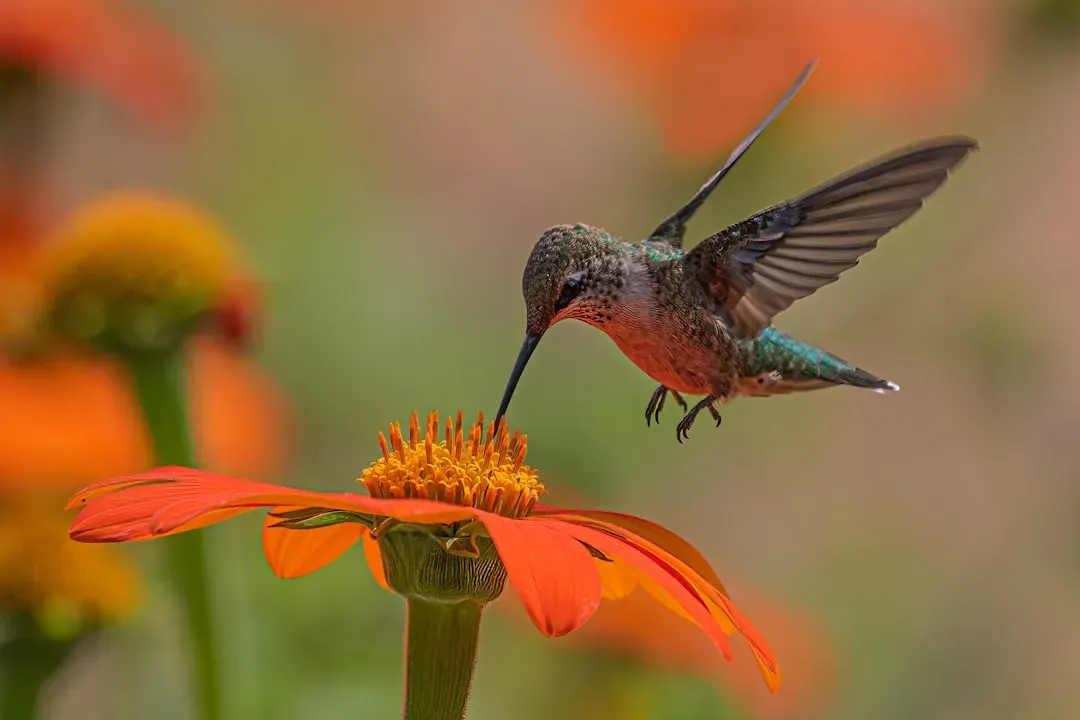
Pesticide chemicals don’t discriminate. They eliminate the pest insects gardeners dislike and the beneficial insects hummingbirds depend on in equal measure, dismantling the food web from the bottom up. Beyond the insect population crash, residual pesticide chemicals can also accumulate on the surfaces of nectar-producing flowers – meaning a hummingbird that feeds from a treated plant isn’t just getting less nutrition, it may be ingesting something actively harmful.
Here’s the uncomfortable reality: many of the gardeners who are most frustrated by a lack of hummingbirds have the cleanest, most manicured, most pest-free yards in the neighborhood – and that pristine condition is precisely the problem. A healthy, chemically untreated garden supports hummingbirds at every level simultaneously: more insects for protein, safer nectar, and a richer spider population for nest building. Making peace with a few aphids and gnats isn’t a gardening failure. From a hummingbird’s perspective, it’s the whole point.
#7 – Whether There Is Moving Water
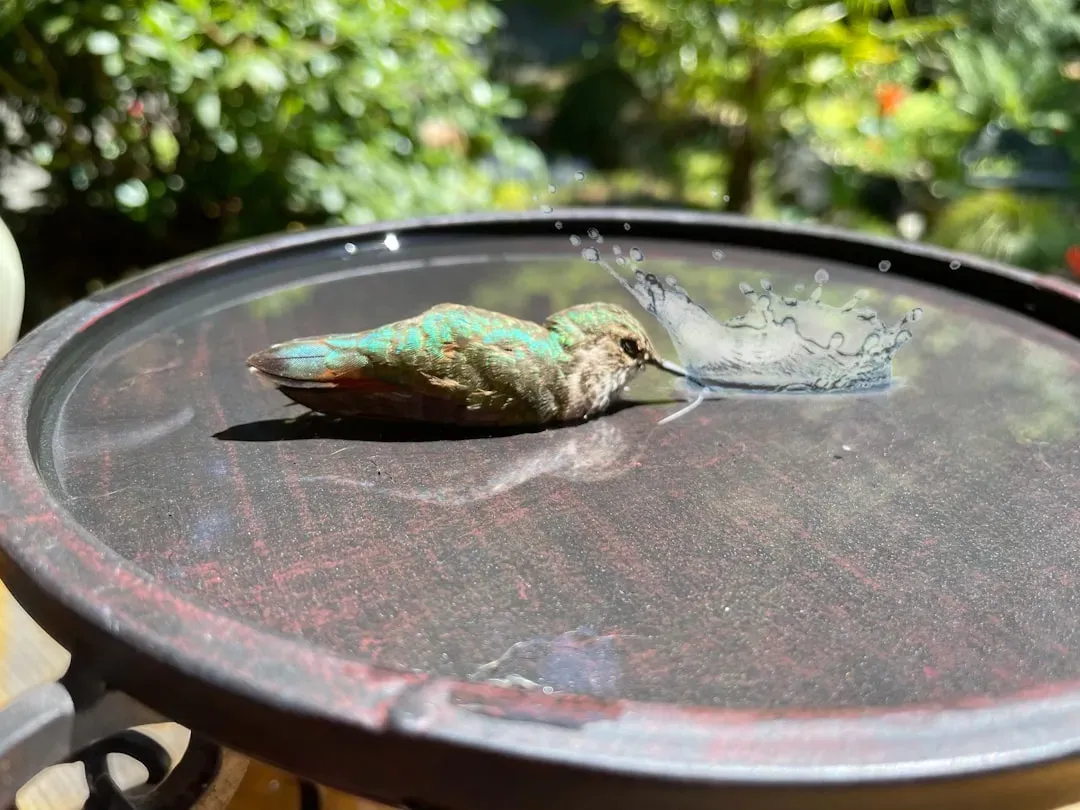
Most people who want to attract hummingbirds set out a standard birdbath and wonder why it never gets used. The issue isn’t the water – it’s the stillness. Hummingbirds bathe frequently, even playing in the droplets that pool on broad leaves after rain, but they are drawn specifically to moving water. A misting device or drip fountain attachment catches the light, creates sound, and signals from a distance in a way that a flat, static pool simply cannot.
The reason this matters beyond simple hygiene is that hummingbirds rely on clean, well-maintained feathers for flight efficiency – and flight efficiency is survival. A mister or fine-spray fountain becomes one of the strongest repeat-visit triggers in a garden, entirely separate from food. Hummingbirds have been observed returning to the same misting station dozens of times in a single day, hovering in the spray, darting through and returning, in what looks unmistakably like play. Water that moves isn’t just functional. It’s irresistible.
#8 – The Availability of Safe Perches
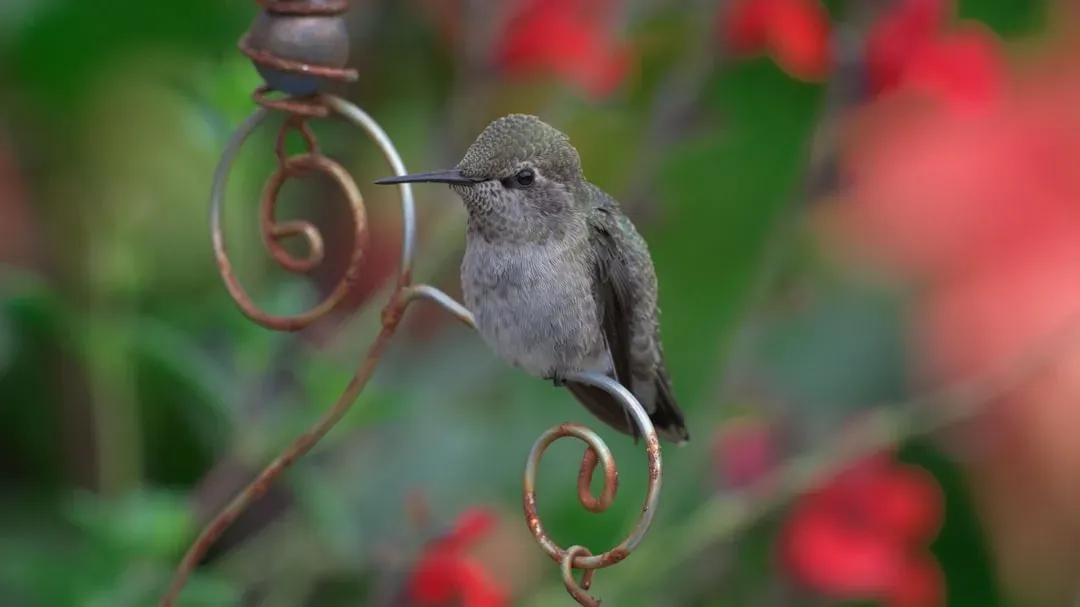
A garden with no accessible perches is a garden where a hummingbird can visit but never truly settle. These birds need elevated, exposed perches to rest between feeding bursts, preen their feathers, and monitor their territory. Dominant males, especially, use high, visible perches as watchtowers – scanning for rival males to chase off and tracking the locations of the best flowers and feeders below. A garden without this infrastructure feels, to a hummingbird, permanently incomplete.
The ideal setup includes both open perches for territorial surveillance and sheltered, hidden spots where birds can roost undisturbed and stay buffered from cool overnight temperatures. Dead branch tips, thin wire supports, and the bare upper twigs of tall shrubs are all used naturally. Most gardeners think of perches as a charming optional add-on. Hummingbirds treat them as a non-negotiable feature of a livable space. Remove the perches and you have a drive-through. Add them back and you have a neighborhood.
#9 – Your Garden’s Structural Layers
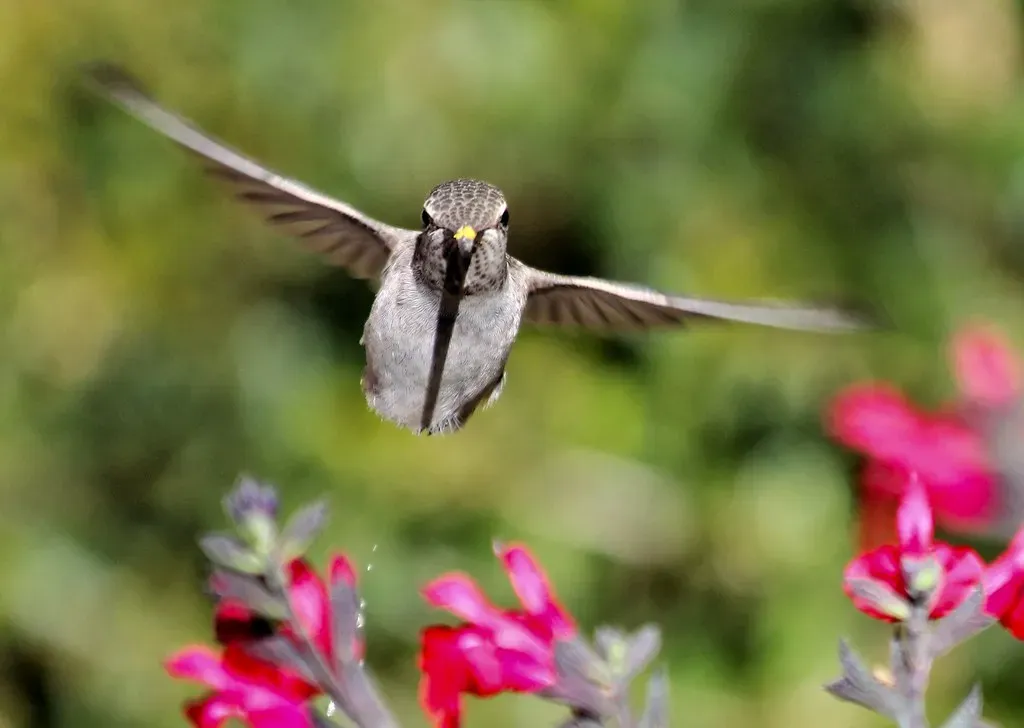
Hummingbirds move through a garden the same way we move through a well-designed house – different spaces serve different functions, and a space with only one room eventually stops feeling worth inhabiting. A flat garden of uniformly sized plants reads as one-dimensional from the air. It might offer food, but it doesn’t offer the layered complexity that signals complete habitat. Tall sheltering trees and shrubs, mid-height perennials at prime feeding level, and low ground-cover plants each play distinct roles in a hummingbird’s daily routine.
Think in vertical zones when you’re designing or rethinking your space. The upper canopy offers surveillance perches and overnight shelter. The middle tier – roughly waist to shoulder height – is prime feeding territory where most tubular blooms should be concentrated. The lower layer supports hover-feeding and insect foraging. When all three tiers are present and planted thoughtfully, a hummingbird doing a fast reconnaissance pass registers something it rarely finds: a place that can meet every need without requiring the bird to leave. That’s the threshold between a garden worth visiting and a garden worth defending.
#10 – The Presence of Spider Webs
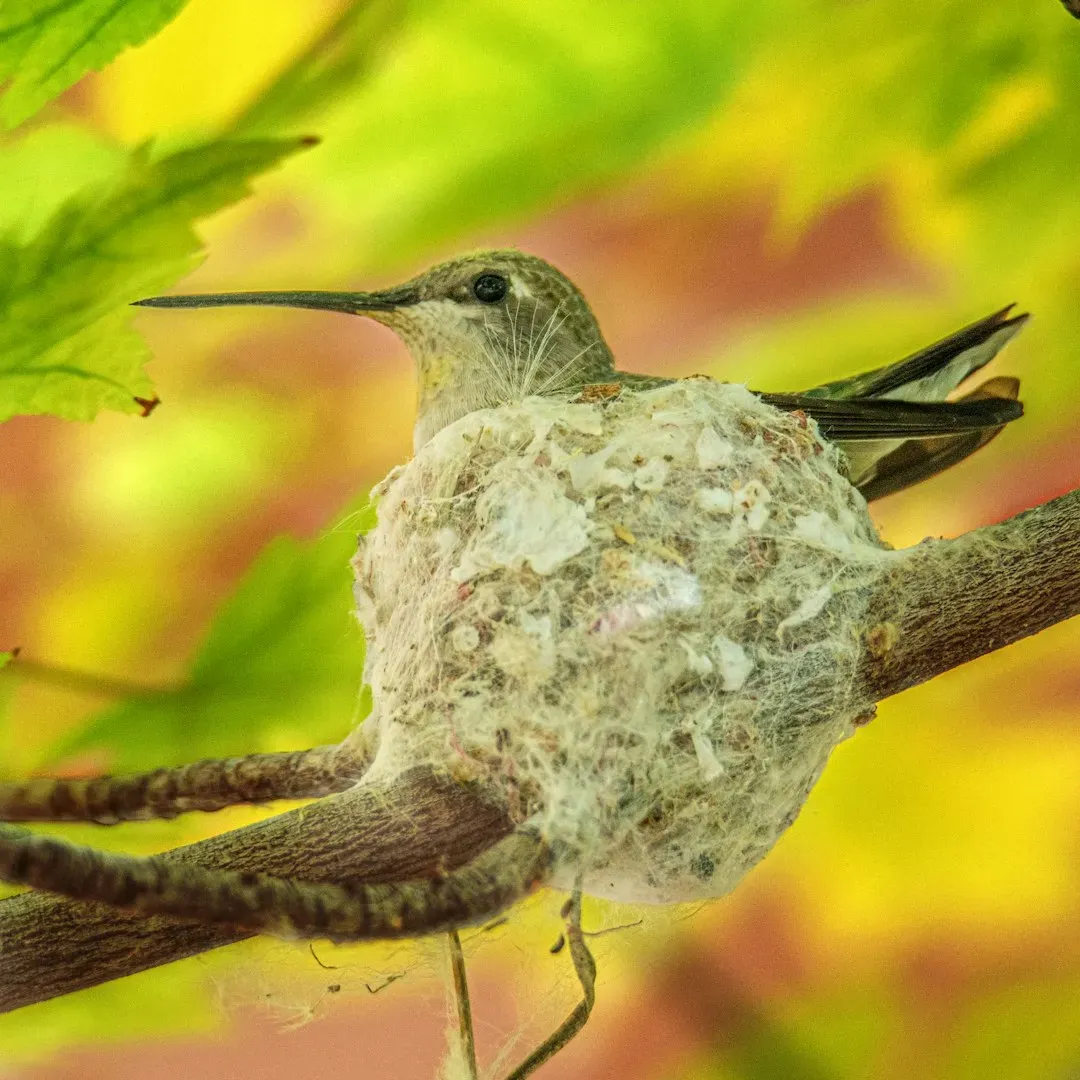
This is the one that stops most gardeners cold – because most of us have been methodically destroying one of the most valuable resources a hummingbird needs. Spider silk is the primary structural material in a hummingbird’s nest. A female will gather strands from active webs and use them to bind plant fibers, lichen, and moss into a tiny, flexible cup that can expand as the nestlings grow from jellybean-sized hatchlings to fully feathered fledglings in just a few weeks. No other material does what spider silk does.
Research from the Arizona-Sonora Desert Museum found that without spider silk to bind the structure together, hummingbird nests simply fall apart – and when the nest fails, so do the eggs. This means that a female hummingbird actively scouts for web availability before committing to nesting in a location. She isn’t just looking for food and water. She’s looking for building materials. During nesting season especially, leaving spider webs undisturbed – in the corners of your porch, along your fence line, between shrub branches – can be the single deciding factor in whether a hummingbird moves in permanently or moves on.
At a Glance: The Spider Silk Story
- Spider silk is the primary binding material in every hummingbird nest – nothing else substitutes.
- The silk’s elasticity allows the walnut-sized nest to expand as chicks grow over just a few weeks.
- A female ruby-throated hummingbird collects silk by pressing it directly onto her beak and breast.
- Nesting season runs roughly March through July across most of the U.S. – leave webs alone during this window.
- Hummingbirds also pluck trapped insects directly from spider webs as a protein bonus.
#11 – Whether Nectar Sources Are Grouped Together
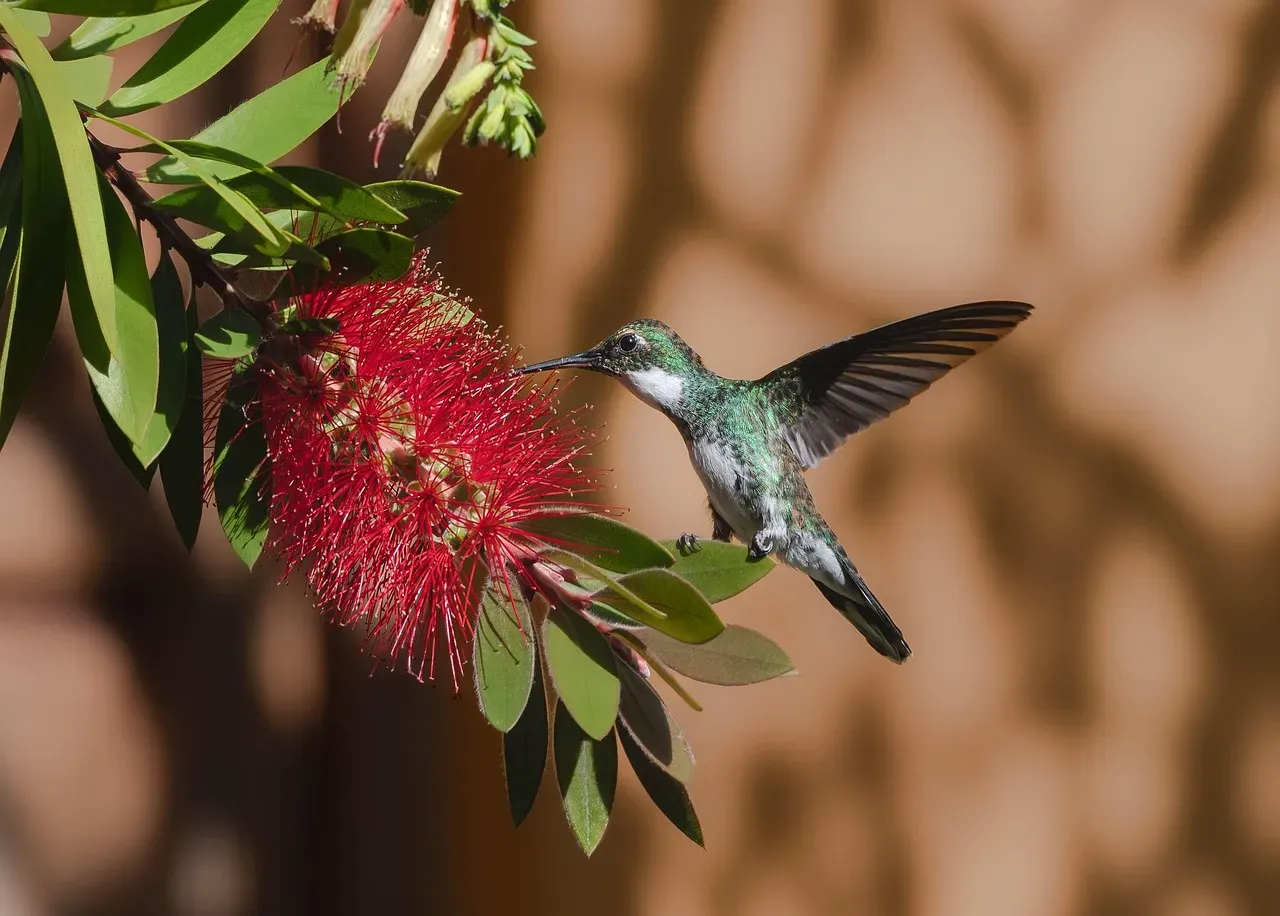
Scattering plants individually across a large yard might look pleasingly designed from a human perspective, but from a hummingbird’s perspective it creates an exhausting feeding circuit. A bird that must fly twenty feet between each food source is spending precious energy on transit that it cannot afford. At the caloric burn rate these birds maintain, distance between food sources isn’t inconvenient – it’s a genuine metabolic cost that affects whether a garden is worth the effort.
The solution is counterintuitively simple: cluster your plants in groups of three or more, placing species with complementary bloom times next to each other. Three bee balm plants in a dense cluster are energetically worth far more than ten bee balm plants scattered individually across a wide bed. Grouped plantings signal abundance from the air, reduce travel distance per calorie gained, and create the kind of visual density that makes a hummingbird commit to an extended feeding session rather than a quick, suspicious sip. Proximity and density are the garden design principles that matter most – and they’re almost never mentioned.
#12 – The Cleanliness and Freshness of Your Feeders
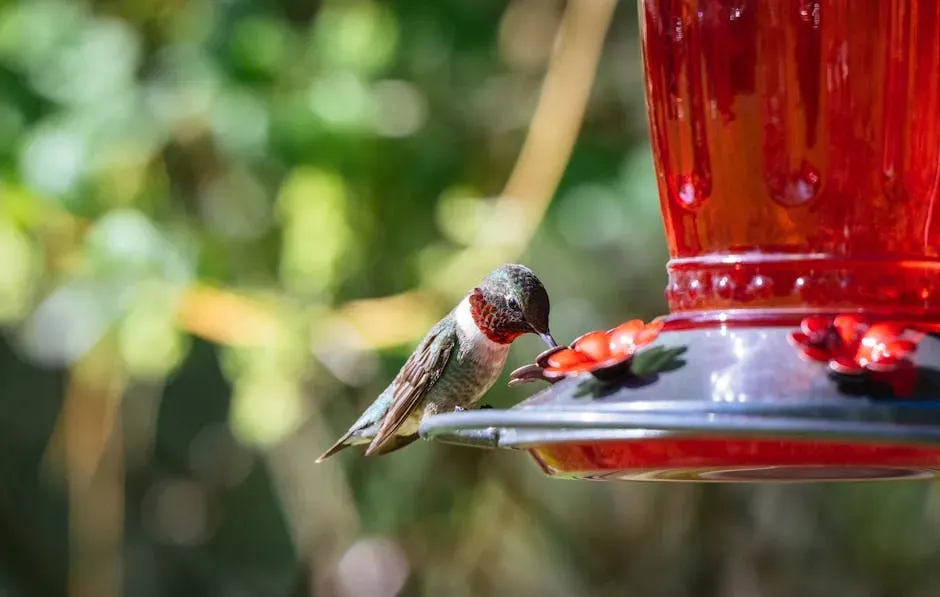
Hummingbirds have been documented returning to the exact same feeder location year after year, guided by precise spatial memory. And they’ve also been documented abruptly abandoning feeders they had used reliably for seasons – usually because fermented, cloudy, or mold-contaminated nectar got past the gardener’s notice. A hummingbird that sips bad nectar doesn’t give your feeder a second chance. It marks the location as unsafe and routes around it, potentially for years.
The maintenance schedule matters more than most people realize. In spring, change nectar at least once a week. In summer heat, every two to three days is the standard – and if the liquid ever looks cloudy or discolored, change it immediately regardless of when you last refilled it. The feeder should be scrubbed clean at every change, not just topped off. A dirty, fermented feeder isn’t just uninviting – it’s actively dangerous to a bird whose immune system is already taxed by migration, breeding, and the extraordinary physical demands of daily life at hummingbird speed.
Why It Stands Out: Feeder Maintenance That Actually Works
- Spring: Change nectar at least once per week – cooler temps slow fermentation but don’t stop it.
- Summer heat: Change every 2 to 3 days; if the nectar looks cloudy, change it immediately.
- Cleaning method: Use warm water and a small amount of white vinegar – avoid soap residue.
- Nectar recipe: 1 part plain white sugar to 4 parts water. Never add red dye, honey, or brown sugar.
- Placement: Hang in partial shade to slow fermentation and extend freshness between changes.
#13 – Whether Your Garden Has an Established Memory With Them
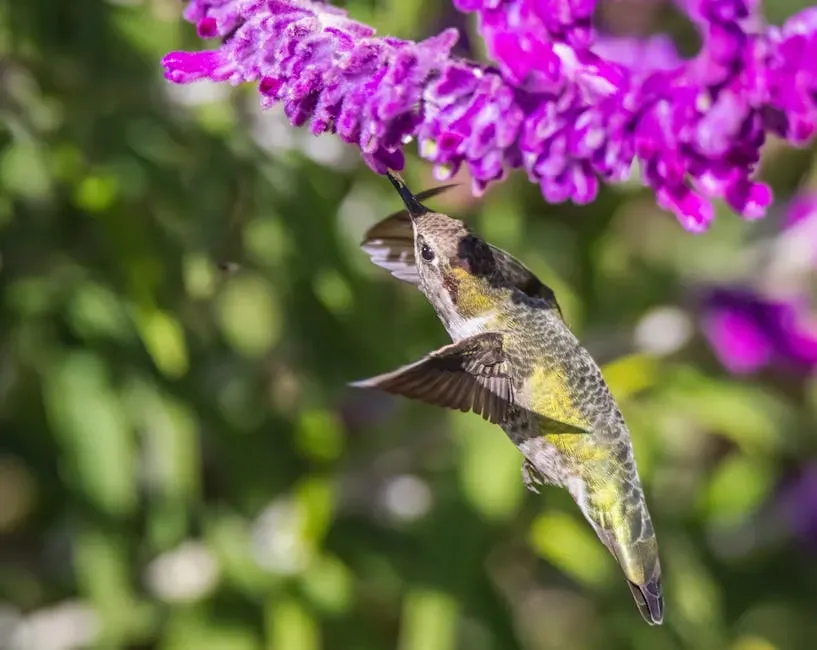
This last one is, quietly, the most remarkable thing on the entire list. Hummingbirds possess exceptional spatial memory – and they use it to maintain precise mental maps of every reliable food source they’ve ever visited. These birds are not wandering randomly on migration. They are following remembered routes, checking in on specific gardens, specific feeders, specific clusters of flowers that passed inspection in previous seasons. The garden that earned their trust last year is already on this year’s itinerary before they’ve even crossed the state line.
What this means in practical terms is that every good season you offer is a long-term deposit in a relationship that compounds over time. A garden that passes inspection once gets revisited. A garden that passes inspection consistently, year after year, eventually becomes a fixed point on a hummingbird’s territorial and migration map – a place it defends, returns to, and potentially nests in for the rest of its life. But consistency cuts both ways: if the feeders aren’t out when the scouts arrive in spring, or the garden goes suddenly bare, a hummingbird will reroute and may not return for years. The final and most underestimated thing hummingbirds notice about your garden is whether you showed up last time. Because they absolutely remember.
[article_quiz]“This allows them to remember what yards have the best flowers and feeders, and what territories with abundant nectar and insect populations are best to return to year after year.”
Maria Kincaid, Ornithologist
The Honest Truth About Hummingbird Gardens
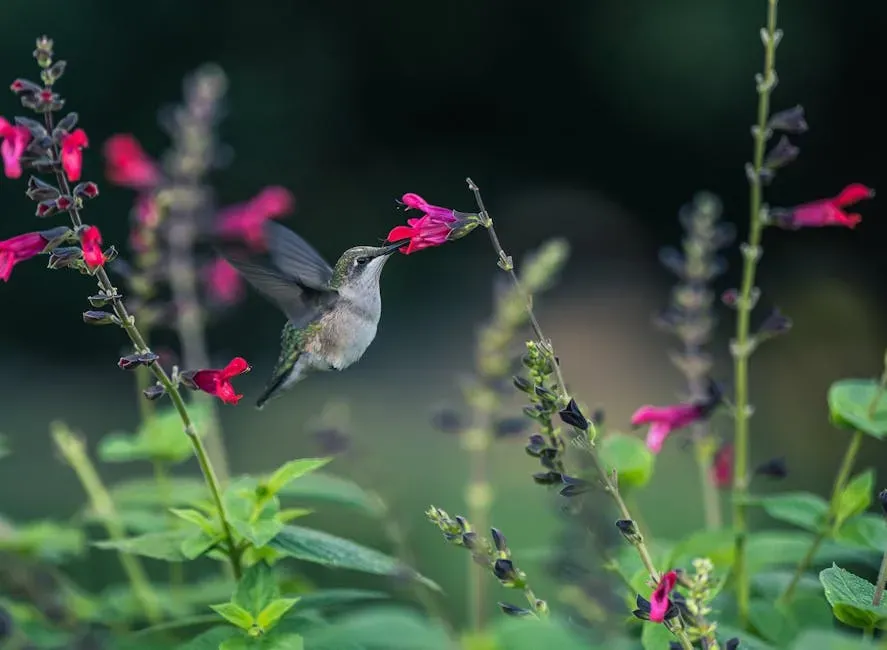
Most people approach hummingbird gardening as a single gesture – hang a feeder, add some red flowers, and wait. But what this list makes clear is that hummingbirds are evaluating a system, not a single feature. They’re simultaneously reading your color density, bloom architecture, insect ecology, water movement, structural layers, chemical history, spider web availability, and your track record of reliability across multiple seasons. No single element wins them over. It’s the convergence of many elements that tips a garden from “worth a quick visit” to “worth staying.”
The genuinely good news is that most of what hummingbirds want costs nothing extra and asks you to do less, not more – skip the pesticides, leave the spider webs alone, let the garden get a little wild and layered and alive. The gardens that hold hummingbirds longest are rarely the most manicured. They’re the ones that most honestly replicate the layered complexity of natural habitat. Earn a hummingbird’s memory once, maintain the things it’s looking for, and you haven’t just attracted a bird. You’ve become a landmark on a migration route that may outlast your own garden by decades. That, in my opinion, is one of the most quietly extraordinary things a backyard can achieve.

- 7 Surprising Benefits of Spending Time Outdoors With Your Dog Every Day - July 10, 2026
- 7 Costly Mistakes When Starting a Hobby Farm - July 10, 2026
- 9 Animals Making a Comeback Across Missouri - July 10, 2026