

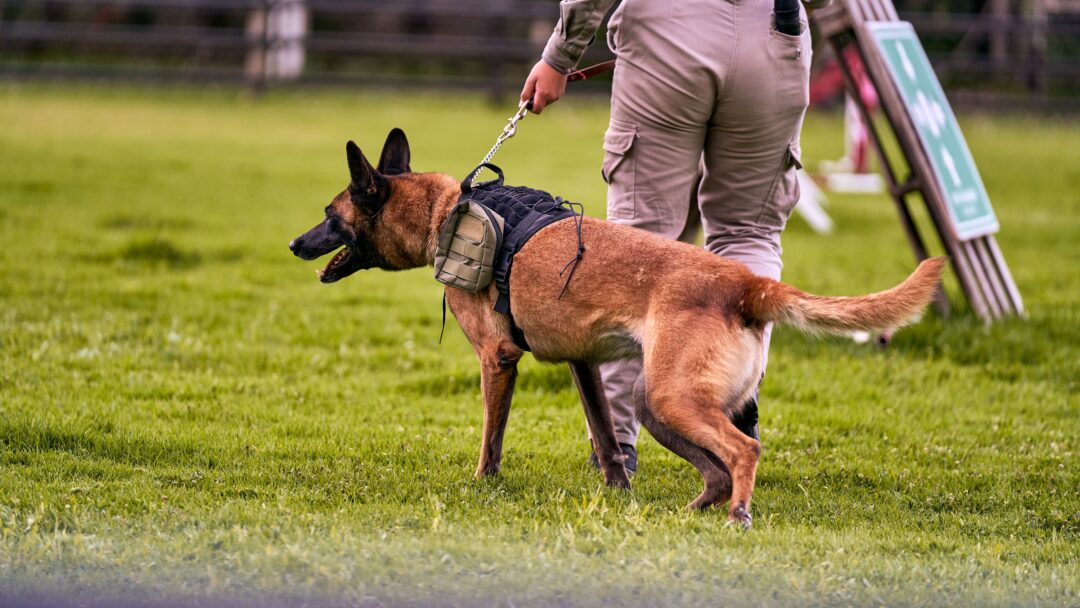
Picture a golden-eyed Lab curled up on a suburban couch, tail thumping, looking every bit like the family pet in the photo on the fridge. Then a delivery driver walks up with a backpack slung over one shoulder, and the dog’s whole body changes. Ears lock forward. Breathing slows. It doesn’t bark. It doesn’t move. It just stares, unblinking, until the bag is out of sight.
That’s not a quirky personality trait. That’s a career that never technically ended. Bomb-detection dogs don’t get a going-away party and a clean slate when their handler hangs up the leash – the training rewires how they experience the world, and pieces of it stay lit up for years. Here are the 14 habits that tend to outlast the uniform.
#14 – The Unshakable Odor Imprint
🔥 Would you like to save this?
We'll email this post to you, so you can come back to it later!
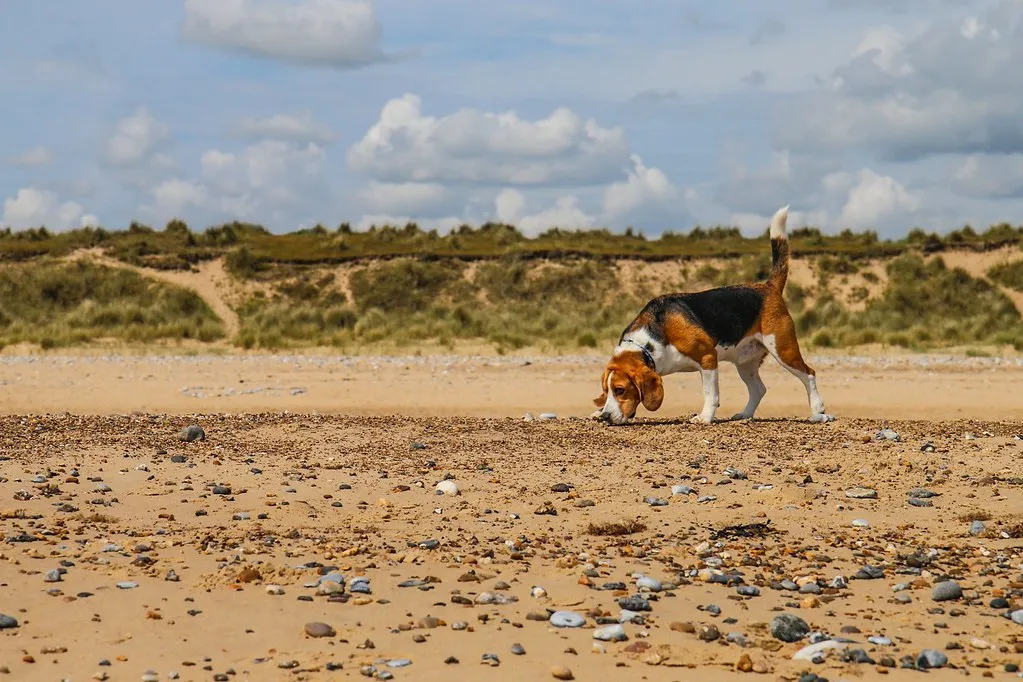
These dogs carry something close to a photographic memory for chemical signatures, built during the most impressionable months of their training. Years later, trace compounds in fertilizer, certain cleaning products, or even some foods can trigger the exact same reaction they were taught to give in the field.
This isn’t confusion. It’s precision. Thousands of repetitions during critical developmental windows locked those scent associations in place far more permanently than anything a typical house pet ever experiences.
Some retired dogs will still deliver a full, textbook alert to an odor they haven’t encountered in over five years. Handlers who’ve stayed close to their former partners describe watching it happen in real time and getting chills.
- Persistent interest in vehicle tires or undercarriages during walks
- Freezing near construction sites with familiar raw materials
- Fixation on specific grocery items that share trace compounds with training aids
#13 – Ritualized Search Patterns in New Spaces
🔥 Would you like to save this?
We'll email this post to you, so you can come back to it later!
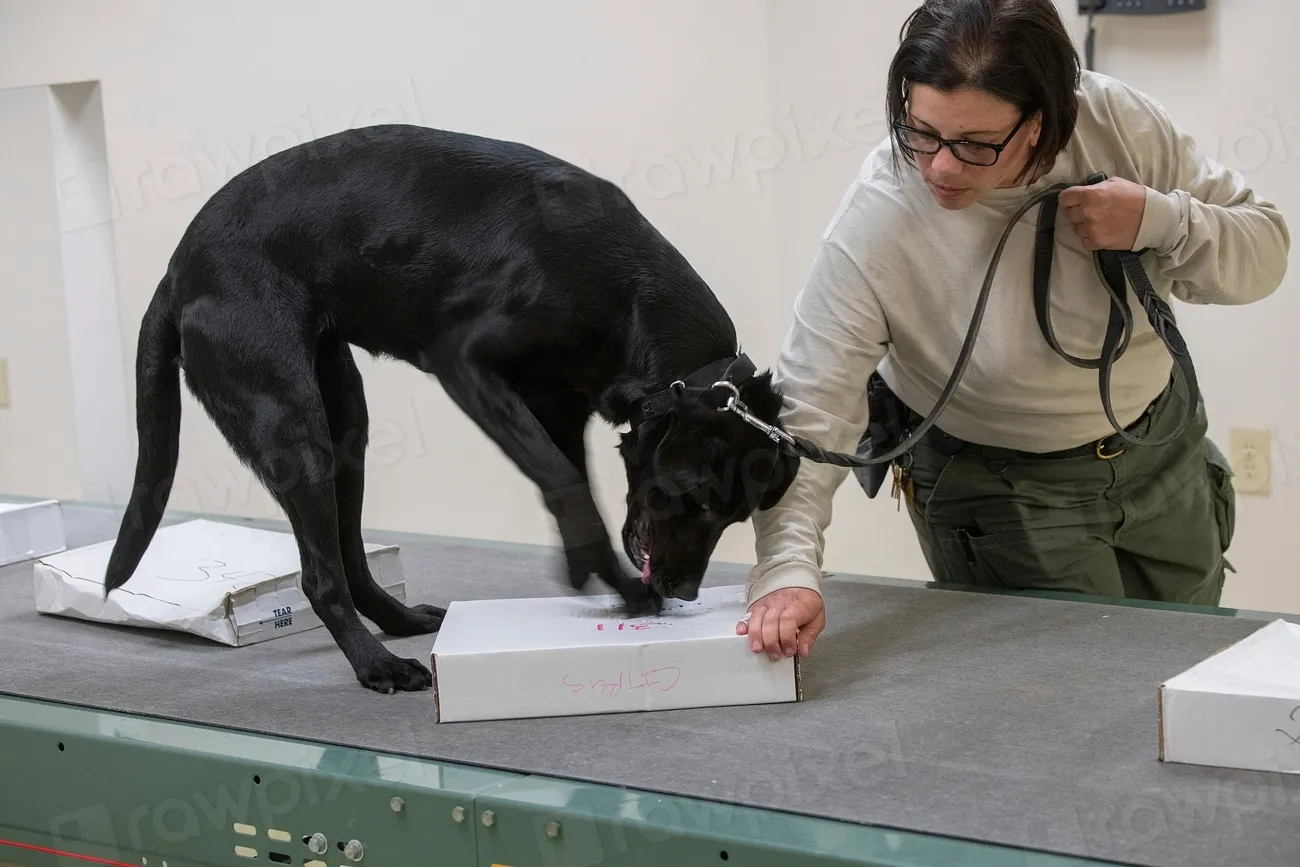
Walk a retired detection dog into an unfamiliar room and watch closely. Instead of the usual chaotic pet-sniffing tour, many of them fall into a methodical grid or circular pattern, nose skimming baseboards and furniture legs like they’re clearing a checkpoint.
It looks strange to new owners, sometimes even a little sad, like the dog can’t just relax. But this is muscle memory from daily drills that rewarded thoroughness over curiosity.
Owners often notice their dog pause at doorways, almost like it’s waiting for permission to enter – a leftover from years of “clearing” a space before anyone else was allowed in. Trainers who’ve tried to erase the habit say it rarely goes away completely. The drive is simply wired too deep.
Fast Facts
- A dog’s nose carries up to 300 million olfactory receptors, compared to about six million in humans, which explains why search patterns become so deeply ingrained.
- Estimates put a dog’s sense of smell at 10,000 to 100,000 times more sensitive than that of a human.
- The part of a dog’s brain devoted to analyzing smell is roughly 40 times larger, proportionally, than the same region in humans.
- Training programs expose dogs to chemicals drawn from thousands of explosive formulas so they can isolate real threats from everyday clutter.
#12 – Heightened Vigilance Toward Strangers Carrying Bags
🔥 Would you like to save this?
We'll email this post to you, so you can come back to it later!
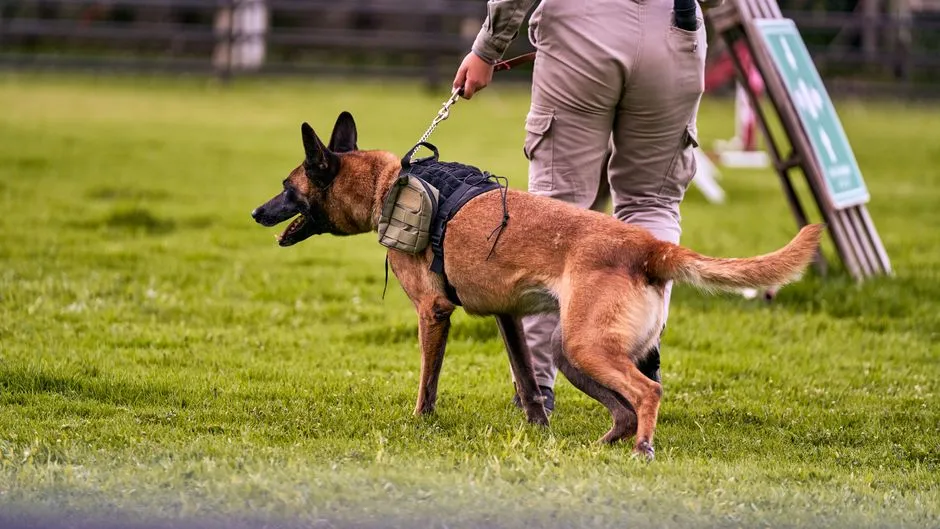
Long after the badge comes off, these dogs keep scanning people the same way they scanned travelers at a checkpoint. Backpacks, suitcases, bulky jackets – anything that could be concealing something pulls their focus instantly.
While a typical family dog greets a stranger with tail wags and enthusiasm, a retired K9 might circle quietly or plant itself between the visitor and the family until the item is mentally “cleared.”
One documented case involved a retired dog that positioned itself between its new owner and every delivery driver for months after adoption, without a single growl or aggressive move. It wasn’t hostility. It was a professional doing the only job it had ever known how to do.
#11 – Specific Toy and Reward Associations
🔥 Would you like to save this?
We'll email this post to you, so you can come back to it later!
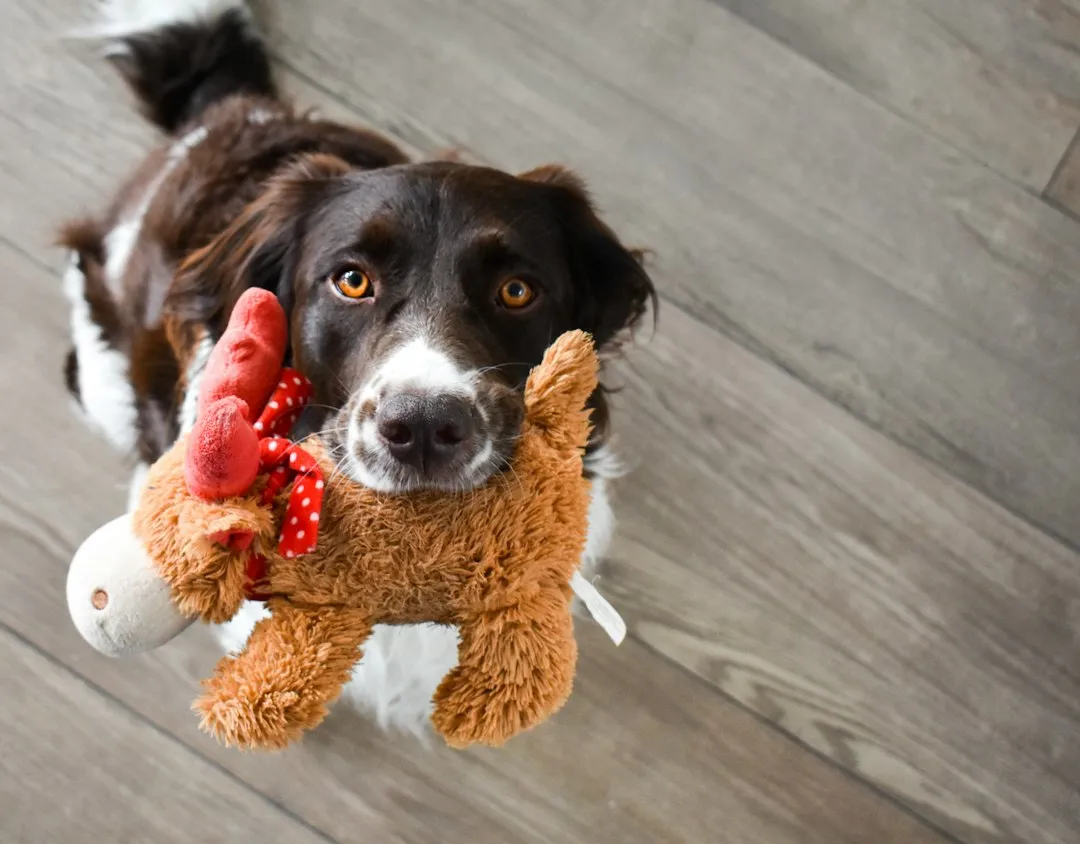
Somewhere in a box of dog toys, there’s usually one that the retired K9 treats like treasure while ignoring everything else. That particular shape or texture likely matches the training aids used during active service, back when finding it meant praise, treats, and the thrill of a successful alert.
New owners often try swapping it out for something shinier or squeakier, only to watch the dog walk right past it. The old toy isn’t just a plaything – it’s tied to a memory of success that took years to build.
These attachments can take a long time to fade, sometimes never fully disappearing. It’s a small, oddly touching reminder of how precisely the reward system shaped the dog’s emotional world.
#10 – Command Word Triggers From Past Handlers
🔥 Would you like to save this?
We'll email this post to you, so you can come back to it later!
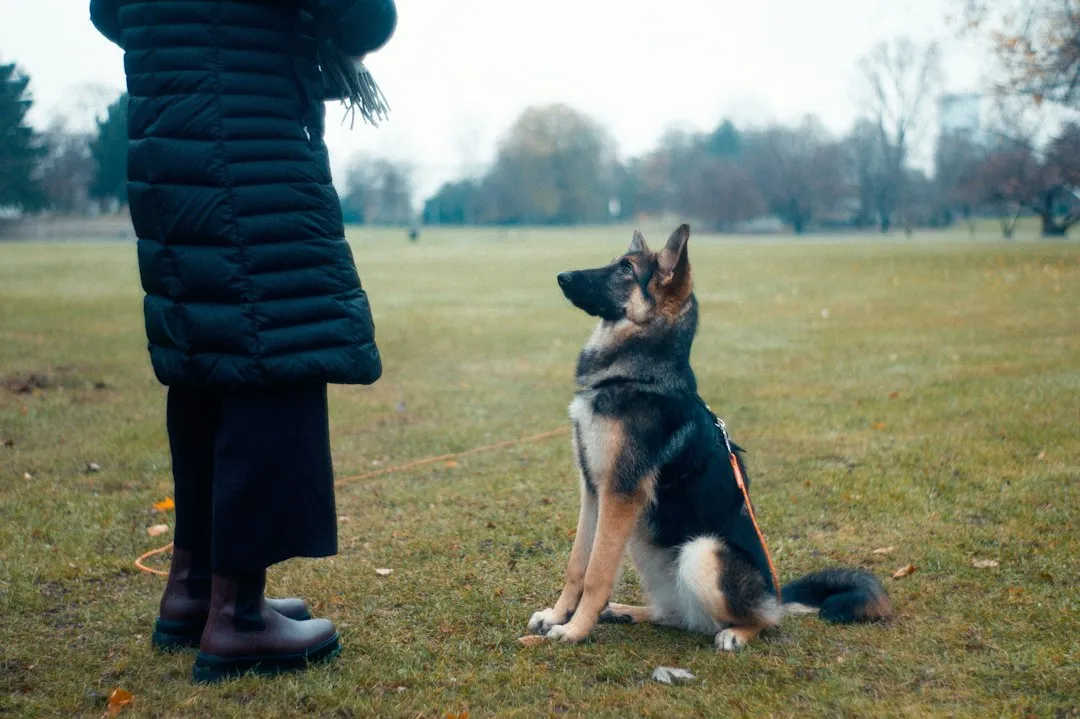
Say “sit” to a retired detection dog and you might get a slow blink and nothing more. But say the exact operational phrase its original handler used – sometimes in another language, sometimes a made-up code word – and the dog snaps into a crisp, immediate response.
These commands were drilled under pressure and tied to outcomes that actually mattered, so they bypass ordinary obedience training entirely. It’s not that the dog is ignoring its new family; the old cues simply carry more weight.
Some handlers who stay in touch after retirement will test this during visits, just to see if the old magic still works. It almost always does. Families adopting these dogs are often encouraged to learn a handful of legacy commands just to avoid confusing mixed signals early on.
#9 – Physical Alert Postures in Daily Life
🔥 Would you like to save this?
We'll email this post to you, so you can come back to it later!
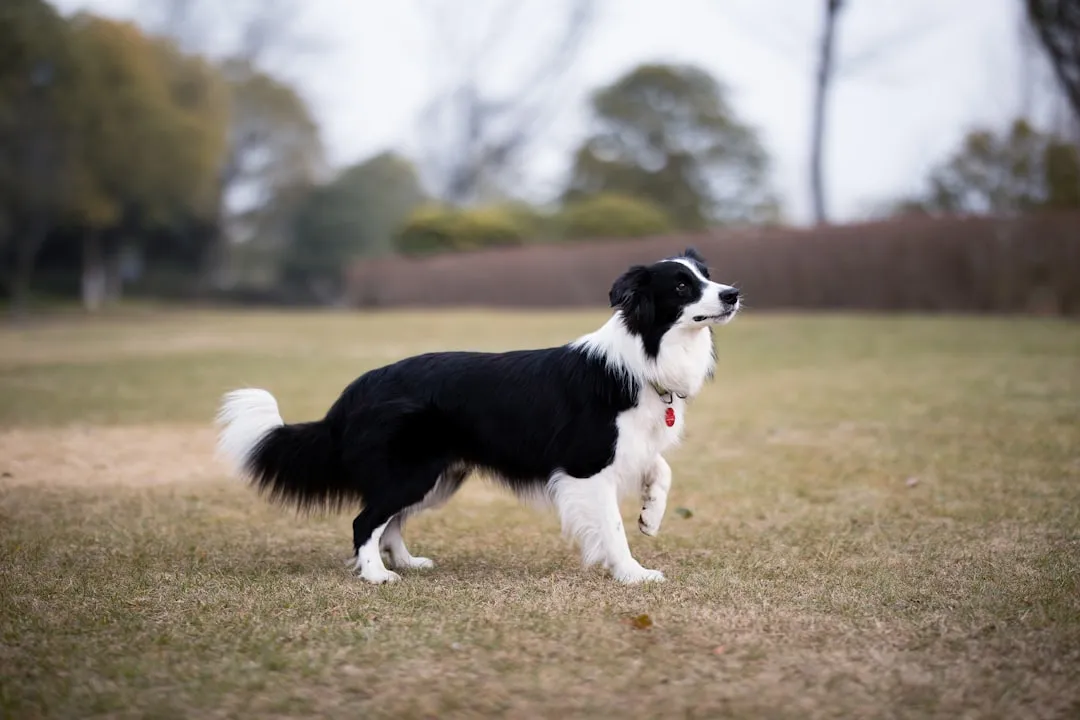
The classic rigid freeze – body still, eyes locked, tail motionless – was the dog’s entire language on the job. It’s how they told a handler “I found something” without a single sound.
That posture doesn’t retire. Owners describe their dogs holding the stance near parked cars, trash cans, or oddly placed objects, sometimes for uncomfortably long stretches, waiting for a signal that will never come again.
It can look unsettling if you don’t know the backstory. But it’s simply the most reinforced behavior of the dog’s entire working life, surfacing on autopilot in a world that no longer needs it.
#8 – Preference for Structured Daily Routines
🔥 Would you like to save this?
We'll email this post to you, so you can come back to it later!
Service life ran on a strict schedule: feeding times, work blocks, rest periods, all tightly controlled to keep focus sharp. That predictability becomes part of the dog’s internal clock, and civilian life’s looser pace can feel unsettling.
A retired K9 might pace at the exact time it once expected a briefing, or refuse to fully settle until some invisible “shift” feels complete. Most pets adjust to flexible schedules within days. These dogs often don’t.
When owners impose loose, spontaneous routines, some dogs respond by creating their own structure through repeated little rituals – a quiet way of restoring the order their bodies still expect.
At a Glance
- In 2025, TSA deployed 1,076 transportation security specialist canine teams and traditional explosives detection canine teams to conduct over 430,000 explosives sweeps.
- That same year, those teams logged 160,000 hours to intensive training exercises – a pace that builds serious habit strength.
- Canine teams are continuously assessed on recognizing explosive odors, interpreting the canine’s change of behavior, the ability to conduct logical and systematic searches, and locating the source of an odor.
- That level of daily structure doesn’t just vanish the moment a leash changes hands.
#7 – Selective Socialization With Other Working Breeds
🔥 Would you like to save this?
We'll email this post to you, so you can come back to it later!
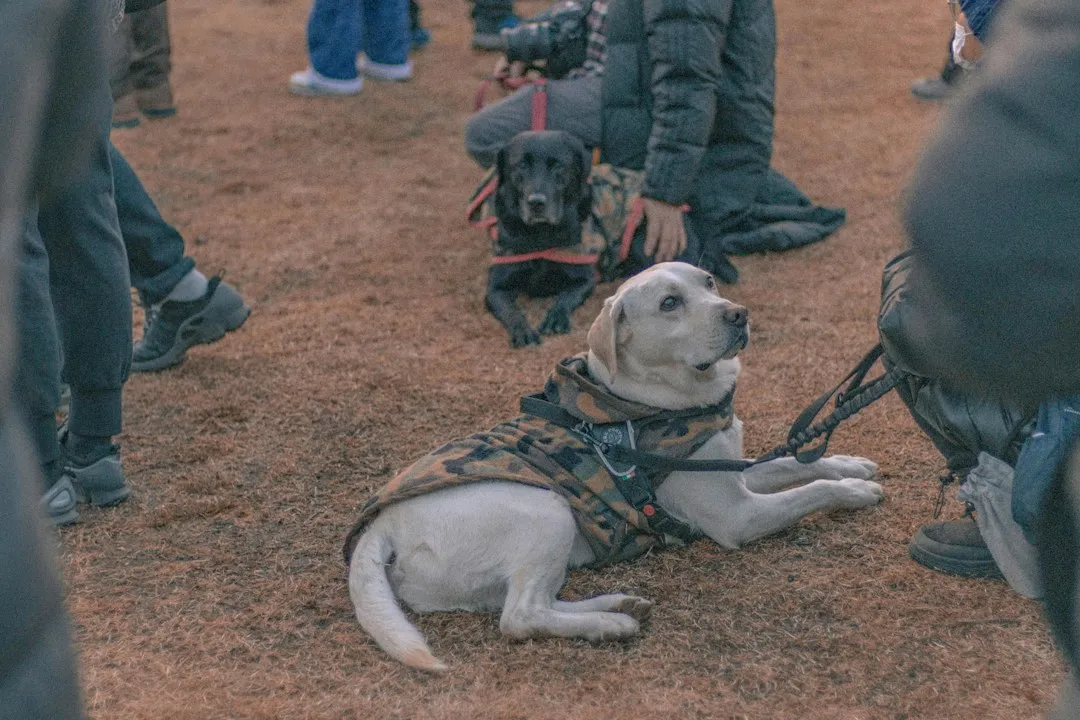
Put a retired detection dog in a dog park full of bouncing puppies and watch it check out almost immediately. But introduce it to another former military or police dog, and something shifts – calmer energy, mutual recognition, almost a professional courtesy.
This preference comes from years spent in kennels and deployments surrounded by other working dogs who understood the same unspoken rules. Casual play styles feel foreign and overwhelming by comparison.
Instead of roughhousing, these dogs often default to parallel walking or quiet scent-sharing with dogs who feel familiar. It’s less about being antisocial and more about seeking out the only kind of companionship that ever made sense to them.
#6 – Instinctive Luggage and Package Inspection
🔥 Would you like to save this?
We'll email this post to you, so you can come back to it later!
New suitcase in the hallway? New delivery box by the door? Expect a quick, businesslike sniff before anything else happens. This isn’t nosiness – it’s the ghost of thousands of cargo and vehicle checks from a former career.
The inspection is usually brief and followed by immediate relaxation once the item passes the dog’s internal test. It rarely escalates into a full alert unless the scent profile matches actual training material.
Owners notice it most around the holidays or right after a trip, when suitcases suddenly appear everywhere. It’s a small, almost comforting habit once you understand where it comes from – the dog is still, in its own quiet way, doing a final security sweep of home.
#5 – Heightened Awareness of Environmental Changes
🔥 Would you like to save this?
We'll email this post to you, so you can come back to it later!
Move a chair three inches to the left and a retired detection dog might notice before you do. Training rewarded catching anomalies that could hide a threat, and that hyper-awareness doesn’t switch off just because the threats are gone.
A shifted rug, a new lamp, an unfamiliar smell drifting in from an open window – all of it can trigger a slow, deliberate inspection circuit around the room.
Families often mistake this for simple curiosity, but it’s closer to muscle memory from years of scanning for irregularities. Remarkably, the habit can persist well into a dog’s senior years, long after its joints have slowed down everywhere else.
#4 – Bonded Response to Handler’s Voice or Scent
🔥 Would you like to save this?
We'll email this post to you, so you can come back to it later!
Even with a loving new family, something changes in these dogs when an old handler’s voice comes through a phone speaker or a familiar scent lingers on a jacket. The reaction is immediate – ears up, body relaxed, sometimes an excited spin that hasn’t been seen in months.
That bond was forged during some of the most intense, high-stakes experiences of the dog’s life, and it leaves a kind of imprint that new relationships simply build alongside, not over.
Handlers who visit their retired partners years later often describe the same striking moment: the old working enthusiasm flooding back instantly, as if no time had passed at all.
#3 – Resistance to Certain Retraining Attempts
🔥 Would you like to save this?
We'll email this post to you, so you can come back to it later!
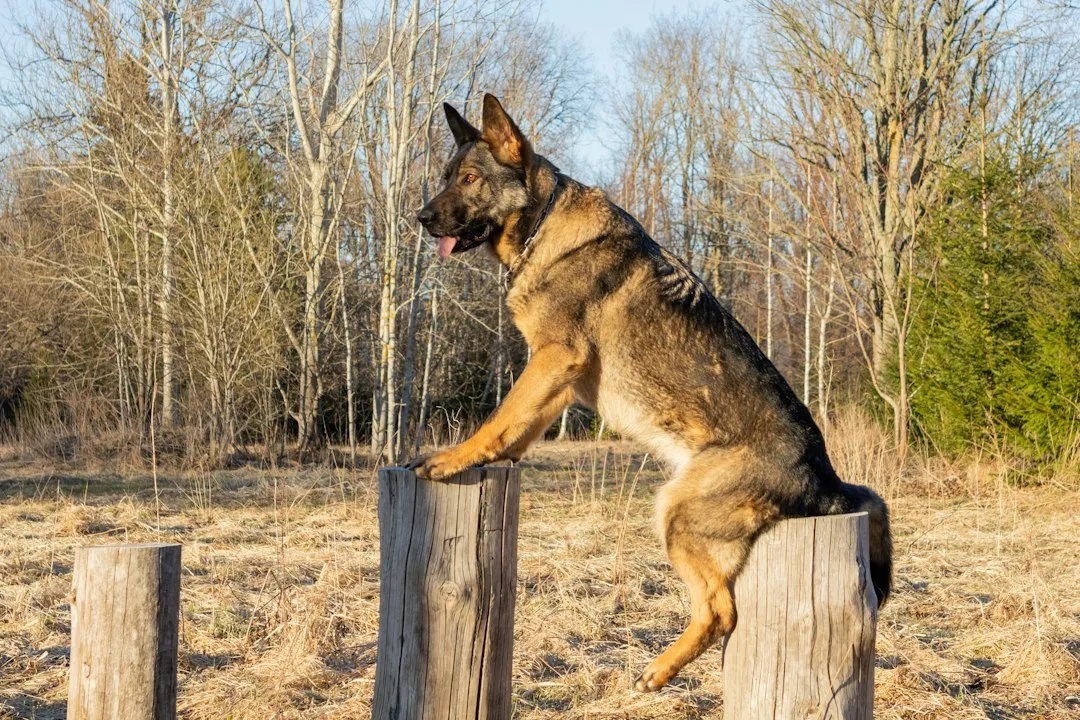
Try to fully erase an old alert response or search pattern, and you’ll often hit a wall. The original conditioning was paired with high-arousal states and powerful reinforcement, and that kind of learning doesn’t unwind easily under low-stakes civilian training.
Sometimes attempts to suppress the behavior backfire, creating odd conflict behaviors instead of a clean fix. This is why retirement specialists, not standard obedience trainers, are usually recommended for these dogs.
It’s not stubbornness. It’s a fundamentally different learning history, built under pressure most house pets will never experience.
Worth Knowing
- Original alert conditioning is paired with high-value rewards and high-arousal moments, making it far “stickier” than everyday obedience cues.
- Suppressing an old behavior too aggressively can trigger stress-related conflict behaviors instead of resolving anything.
- Retirement transition specialists, rather than general trainers, tend to get the best results with former working dogs.
- Patience beats correction – most of these habits soften with time and structure, not punishment.
#2 – Sustained Physical Fitness Expectations
🔥 Would you like to save this?
We'll email this post to you, so you can come back to it later!
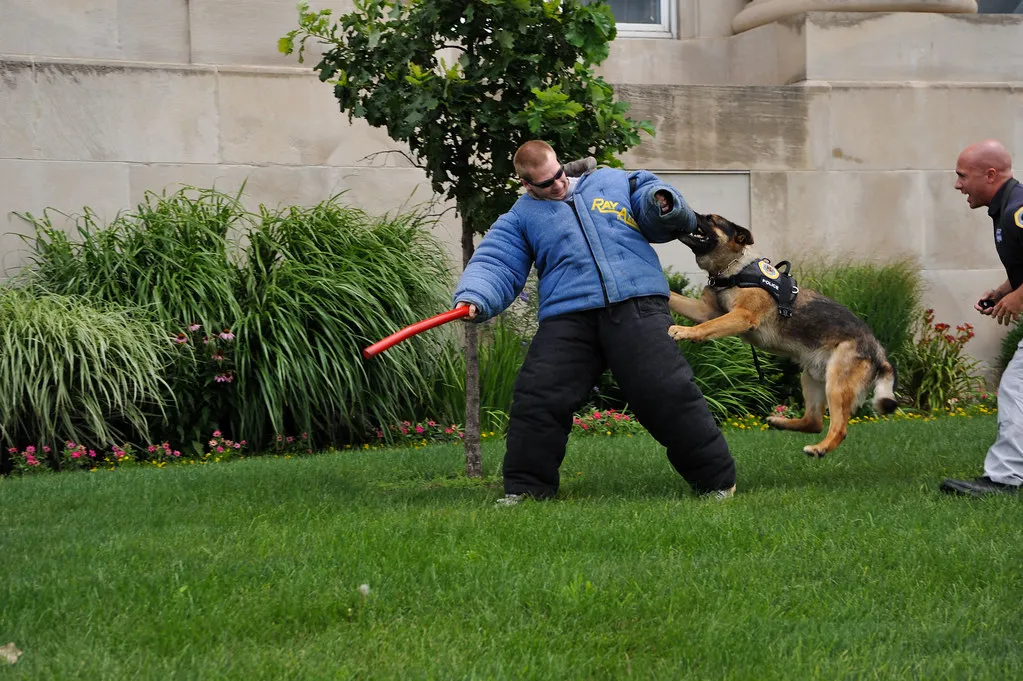
These dogs often carry more muscle tone and stamina than pets the same age, simply because their bodies were conditioned to a professional standard for years. That conditioning doesn’t disappear just because the mission does.
A retired K9 might push for longer walks or ask for structured play well past the point where the family expected to slow down. It’s not restlessness for its own sake – it’s a body still calibrated for peak performance.
Owners who cut exercise too abruptly sometimes notice new behavioral issues creeping in. The fix is usually simple: give the body the outlet it still expects, even in retirement.
#1 – The Enduring Sense of Purpose and Duty

🔥 Would you like to save this?
We'll email this post to you, so you can come back to it later!
Every habit on this list points to the same underlying truth: these dogs never stopped believing they have a job to do. It shows up as quiet vigilance by the front door, gentle positioning near a child at the park, or simply refusing to fully relax until everyone in the house is accounted for.
Most pets are content chasing comfort. Retired detection dogs keep scanning for ways to be useful, even without anyone asking them to.
It’s why so many of them thrive in homes that hand them a small, meaningful “job” – carrying in the mail, checking on the kids, watching the door. It’s the deepest, most quietly moving legacy of everything their training built, and it shapes every single day of their retirement.
Why It Stands Out
- Quiet vigilance near doors, windows, and entryways
- Instinctive protective positioning around children
- Reluctance to fully settle until the household feels “accounted for”
- Visible contentment when given a small, purposeful task
The Bottom Line
🔥 Would you like to save this?
We'll email this post to you, so you can come back to it later!
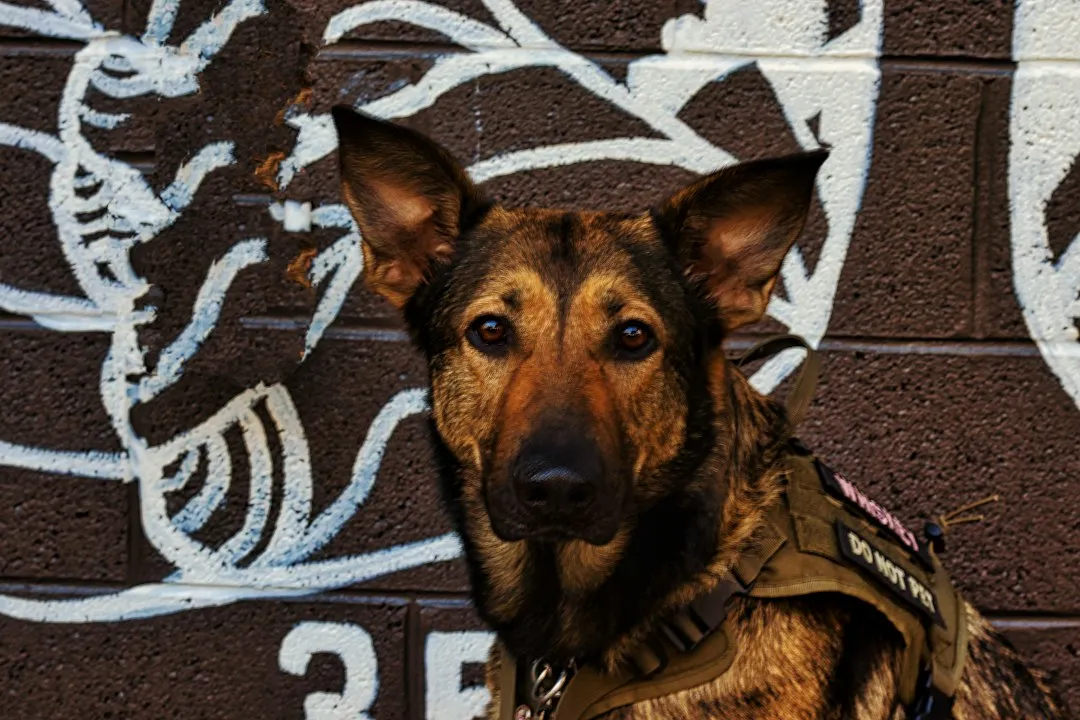
These 14 habits aren’t quirks to be trained out. They’re proof that a bomb-detection dog’s career doesn’t end when the leash gets handed to a new family – it just goes quiet. The scent memory, the search patterns, the freeze at the sight of a backpack, the loyalty that outlasts the job itself: none of it fades on command, because none of it was ever just a job to the dog.
If you ever adopt one of these retirees, don’t try to erase what’s left of the working dog underneath the pet. Understand it, respect it, and give it somewhere useful to go. That’s the least these dogs deserve after spending their best years keeping people safe without ever once being asked if they wanted the job.

- 14 Wildlife Permits Waived for Americans the Year They Turn 62 - November 5, 2026
- Machu Picchu’s Engineering Feats Were Far Ahead of Its Time - November 5, 2026
- 12 Most Beautiful American Cities To See Before You Die - November 4, 2026