

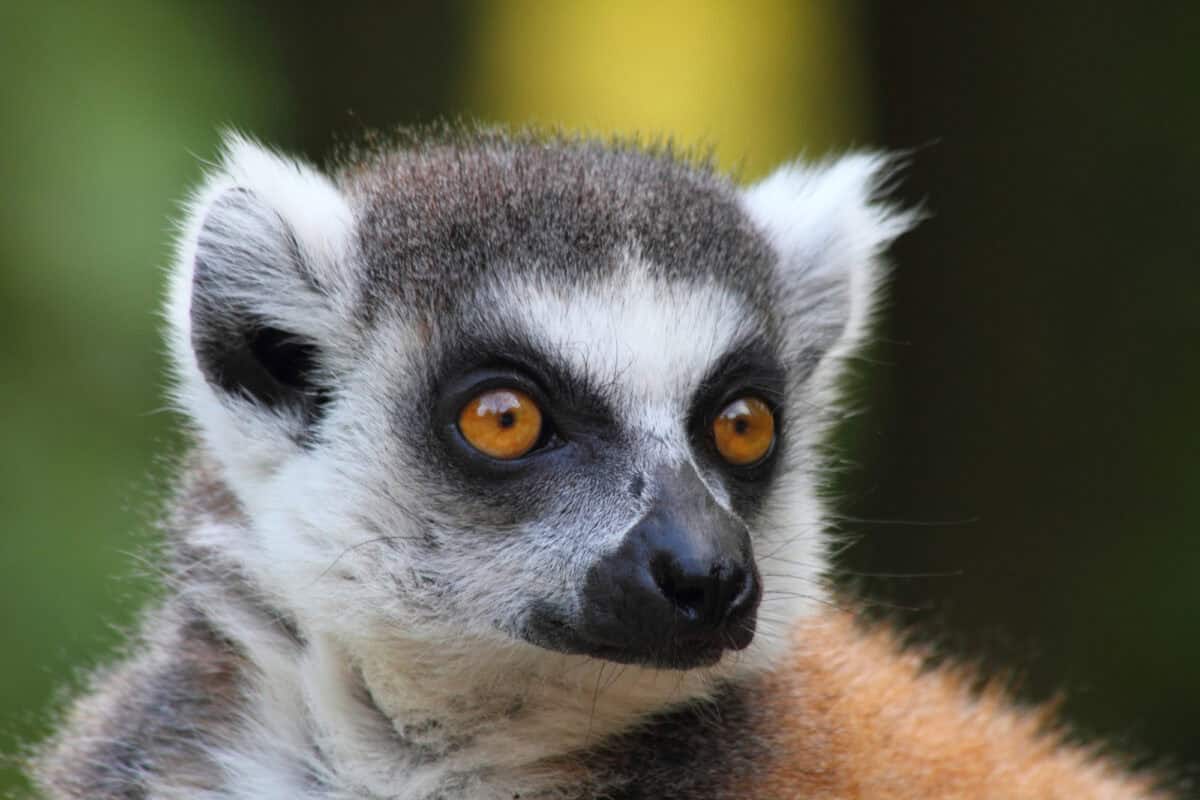
Mother Nature has a remarkable talent for creating bizarre and sometimes frightening creatures that seem to have jumped straight from the pages of a horror novel. These animals, with their unusual appearances, behaviors, and adaptations, often appear more fictional than real. Yet, these extraordinary beings exist in our oceans, forests, and even our backyards. From the depths of the ocean to remote wilderness areas, here are 14 real creatures that look like monsters but have evolved their unusual appearances for survival, hunting, or defense mechanisms. Let’s explore these fascinating organisms that remind us just how strange and wonderful our natural world can be.
14. The Goblin Shark Ancient Deep-Sea Predator

The goblin shark (Mitsukurina owstoni) looks like something from your deepest nightmares with its protruding blade-like snout and extendable jaws filled with needle-sharp teeth. This rare deep-sea creature is often called a “living fossil” because it belongs to a family dating back 125 million years. What makes the goblin shark particularly monstrous is its feeding mechanism: when prey is detected, its jaws can shoot forward at remarkable speed, almost like an alien creature from science fiction films. With pale, almost translucent pinkish-gray skin and an average length of 10-13 feet, these sharks typically lurk at depths between 890 and 3,150 feet below the surface. Their ghostly appearance is the result of blood vessels visible through their skin—an adaptation to their low-light environment that gives them an even more unearthly appearance.
13. The Giant Isopod Oversized Deep-Sea Scavenger

Imagine a roly-poly bug the size of a football, and you’ll have an idea of what the giant isopod (Bathynomus giganteus) looks like. These creatures are essentially enormous woodlice, reaching lengths of up to 16 inches and weighing up to 3.7 pounds. With their armored exoskeletons, multiple legs, and compound eyes, giant isopods resemble prehistoric monsters or creatures from an alien world. They inhabit the cold, dark floors of the Atlantic, Pacific, and Indian Oceans at depths ranging from 550 to 7,020 feet. As scavengers, they can go for years without eating, but when food is available—typically in the form of dead whales, fish, and squid that sink to the ocean floor—they gorge themselves until their bodies become bloated and they can barely move. Their frightening appearance is made even more unsettling by their behavior: they’ve been known to attack live, slow-moving prey when food is scarce.
12. The Aye-Aye Madagascar’s Nocturnal Odd-Ball
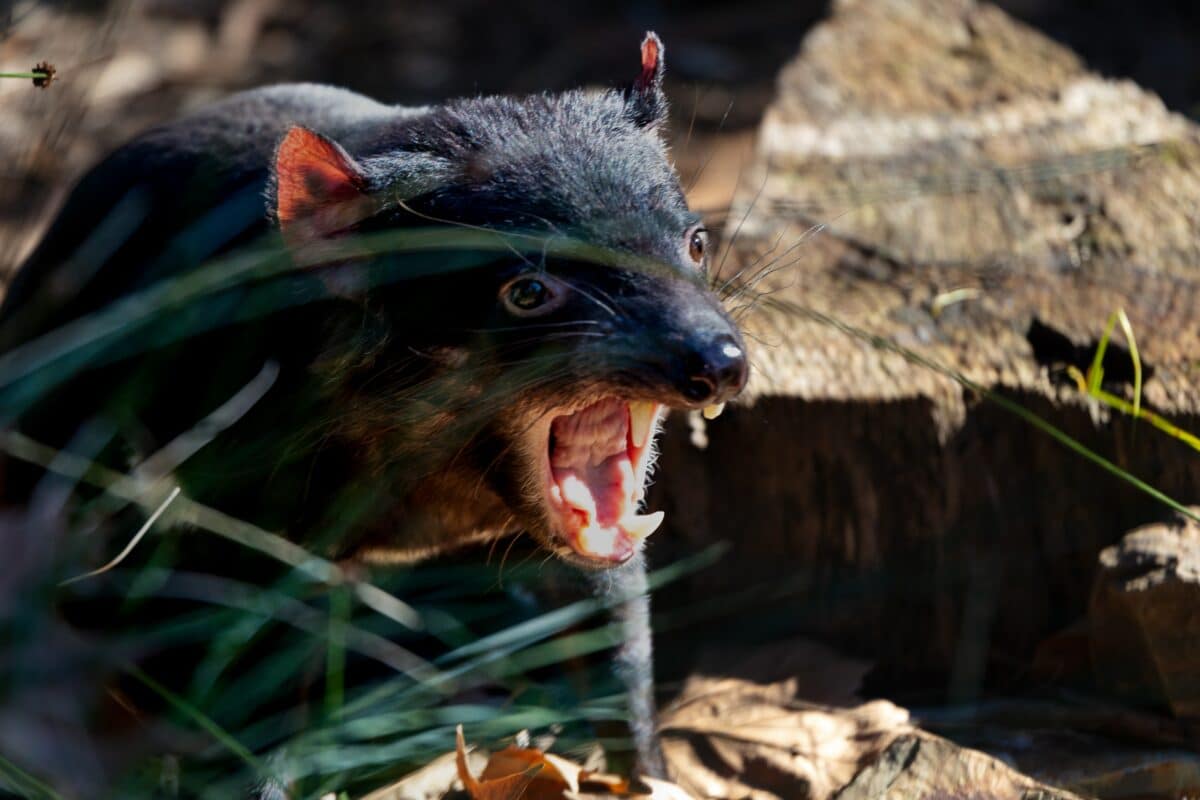
The aye-aye (Daubentonia madagascariensis) might be the most unusual primate on Earth, with an appearance so bizarre that locals in Madagascar have traditionally viewed it as an omen of death. This nocturnal lemur has several monster-like features: enormous bat-like ears, constantly growing incisors, and a skeletal middle finger that can be up to three times longer than its other digits. This specialized finger is used for tap-foraging—the aye-aye taps on trees to find hollow areas containing grubs, then uses its elongated digit to extract the insects. With large, glowing yellow eyes, scraggly fur that resembles a poorly maintained witch’s wig, and an eerie, high-pitched call, it’s no wonder the aye-aye has been persecuted by superstitious humans. Unfortunately, this unique creature is now endangered, with only an estimated 1,000 to 10,000 individuals remaining in the wild.
11. The Japanese Spider Crab Ocean Giant With Menacing Reach

The Japanese spider crab (Macrocheira kaempferi) holds the record for the largest arthropod leg span in the world, with some specimens reaching an astonishing 12 feet from claw to claw. Native to the waters around Japan, these massive crustaceans can weigh up to 42 pounds and live for 100 years. Their elongated, spindly legs combined with a relatively small body give them an alien, spider-like appearance that can be truly startling when encountered in their natural habitat. The Japanese spider crab’s body is covered with bumps and spines that help it blend in with the rocky ocean floor, and they often decorates themselves with sponges and other marine organisms for added camouflage. Despite their monstrous appearance, these giants are non-aggressive scavengers that feed primarily on dead animals and algae. Their population has declined due to overfishing, as they’re considered a delicacy in Japanese cuisine.
10. The Lamprey Prehistoric Parasitic Nightmare
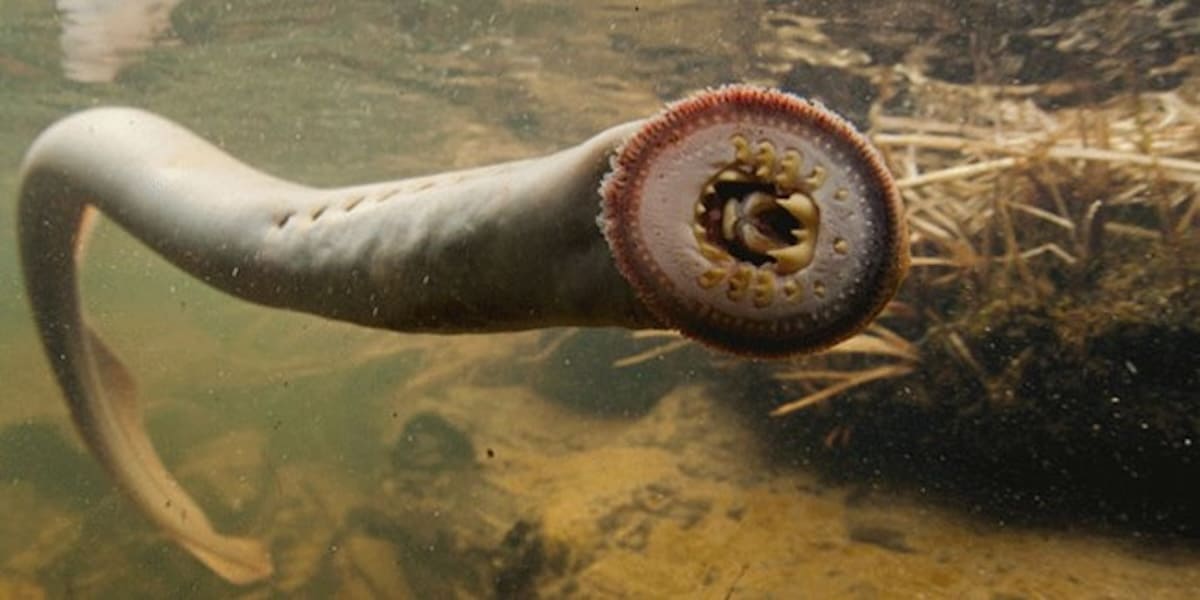
Few creatures embody the stuff of nightmares quite like the lamprey. These jawless fish have remained virtually unchanged for 360 million years and feature a circular mouth filled with concentric rows of razor-sharp teeth. Instead of jaws, lampreys use their toothed, funnel-like mouths to attach to other fish, where they use their rasping tongue to bore through the victim’s skin and feed on blood and body fluids. Some species, like the sea lamprey (Petromyzon marinus), can grow up to 3 feet long and have devastated fish populations in the Great Lakes after being accidentally introduced in the early 20th century. Their primitive body plan includes no scales, no true fins, and no bones—just cartilage, adding to their alien appearance. The lamprey’s lifecycle is equally fascinating; they begin as filter-feeding larvae buried in stream sediments before metamorphosing into their parasitic adult form.
9. The Star-Nosed Mole Tentacled Underground Hunter

The star-nosed mole (Condylura cristata) sports what might be the most bizarre nose in the animal kingdom: a ring of 22 fleshy, mobile tentacles surrounding its nostrils. This peculiar nasal structure is actually an incredibly sensitive tactile organ containing more than 100,000 nerve fibers—six times more than in the human hand, packed into an area the size of a fingertip. Native to wetlands and moist soils in northeastern North America, these small mammals use their star-shaped nose to identify and consume prey in as little as 120 milliseconds, making them the world’s fastest eaters. The star-nosed mole’s front paws are also enlarged and adapted for digging, with prominent claws that help them navigate through soil and swim underwater. Despite their monstrous appearance, they’re tiny creatures, typically weighing only 1.5 to 2 ounces. Their bizarre looks are purely the result of evolutionary adaptations for their underground, semi-aquatic lifestyle.
8. The Barreleye Fish Transparent-Headed Deep Sea Oddity
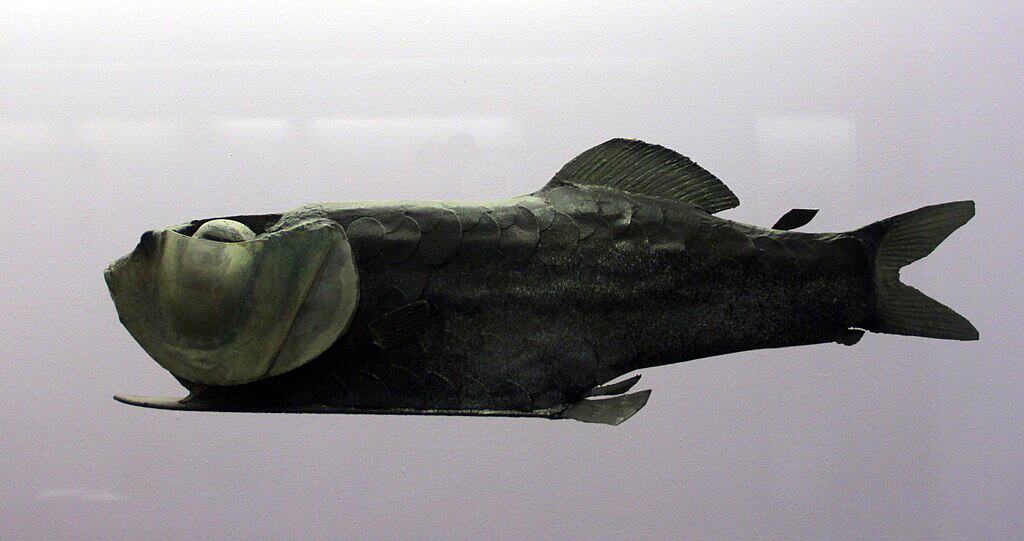
The barreleye fish (Macropinna microstoma) looks like something from a science fiction film, with a transparent head filled with jelly-like fluid and tubular eyes that point upward inside its see-through cranium. These deep-sea fish typically live at depths between 2,000 and 2,600 feet, where the only light comes from bioluminescent organisms. Their unusual eyes can rotate within their transparent shield, allowing them to look upward to spot potential prey or forward to see where they’re going. The barreleye’s mouth is also unusual, with a small slit that can be extended to capture prey. First discovered in 1939, these fish remained mysterious until 2009, when researchers were able to observe live specimens and discover that their eyes could rotate. Their ghostly appearance is completed by small fins and a dark body contrasting with the transparent dome, giving them a distinctly alien silhouette against the dark waters of the deep ocean.
7. The Shoebill Stork Prehistoric-Looking Marsh Predator
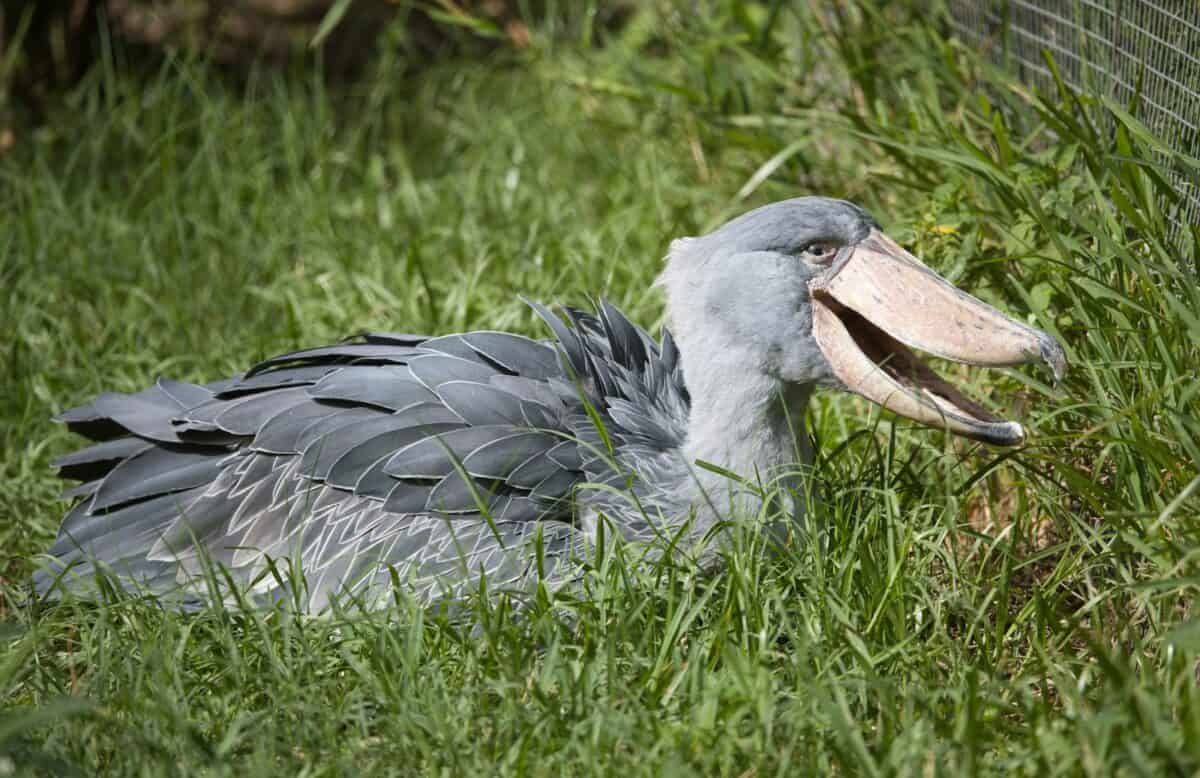
Standing up to 5 feet tall with a massive, shoe-shaped bill that can grow over 7 inches wide and 9 inches long, the shoebill stork (Balaeniceps rex) looks like a creature from the dinosaur era. Native to the marshlands of East Africa, this imposing bird is known for its intimidating stare and statue-like hunting technique, where it can stand motionless for hours waiting for prey. The shoebill’s bill is designed for catching lungfish, tilapia, eels, and even baby crocodiles and snakes. Their hunting method is brutal—they decapitate or dismember prey before swallowing it whole. Adding to their monstrous image is their unusual behavior: shoebills rarely make noise, but when they do, it’s a machine-gun-like bill-clattering sound that resembles unearthly laughter. With a wingspan of up to 8 feet and a slow, deliberate movement style, encountering a shoebill in the wild can be an unsettling experience, like meeting a creature from another time.
6. The Hagfish Slime-Producing Sea Monster
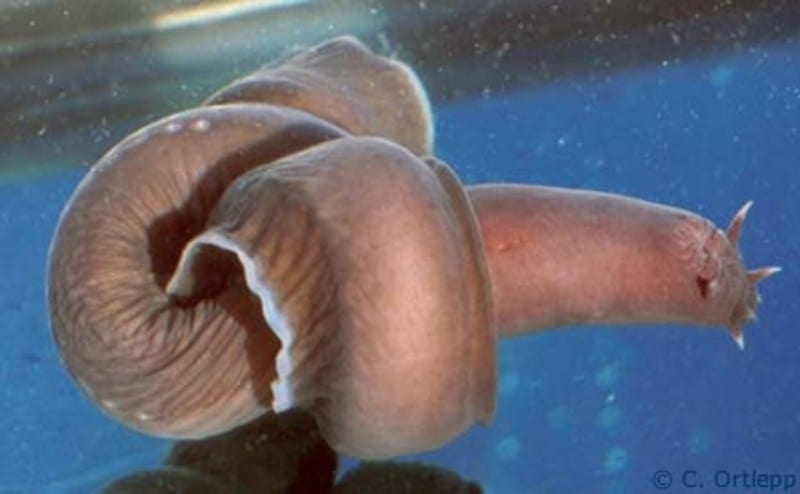
The hagfish might be the most revolting creature in the ocean, with defense mechanisms straight out of a horror movie. When threatened, these eel-like creatures produce copious amounts of slime—a single hagfish can fill a 5-gallon bucket with slime in minutes. This slime expands when it contacts seawater, clogging the gills of potential predators. Hagfish also lack jaws but have a rasping plate with two comb-shaped rows of teeth made of keratin. They feed by burrowing into dead or dying fish through any available opening and consuming them from the inside out. With no eyes (just simple eyespots), no stomach, and a partial skull made of cartilage, hagfish are considered the most primitive vertebrates alive today. They can tie themselves in knots to provide leverage when feeding or to escape from their own slime. There are about 60 species of hagfish living in oceans worldwide, and some can grow up to 2 feet long.
5. The Tarsier Bug-Eyed Nocturnal Hunter
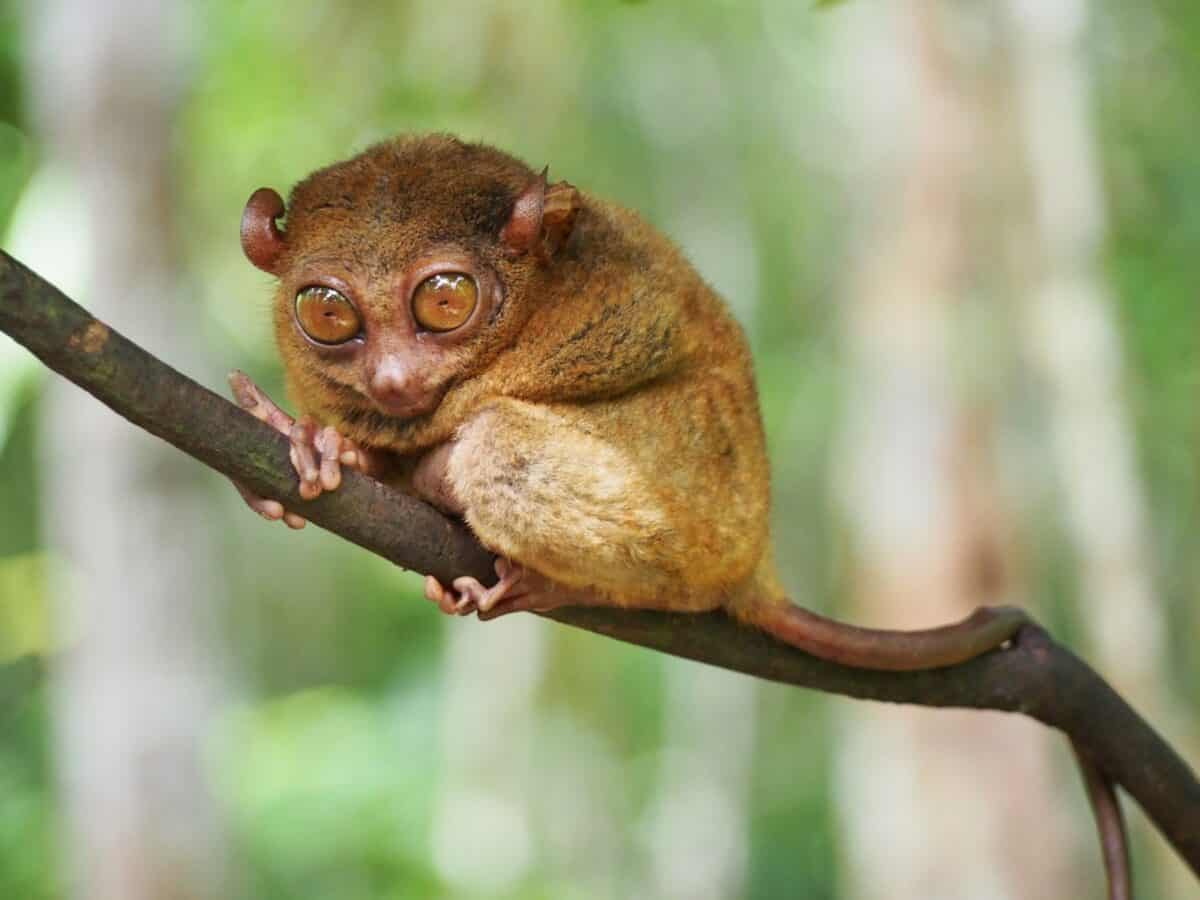
Tarsiers possess the largest eyes relative to body size of any mammal on Earth—each eyeball is approximately the same size as their brain. These nocturnal primates cannot move their enormous eyes within their sockets, but can rotate their heads nearly 180 degrees in either direction, owl-style. Found in the islands of Southeast Asia, tarsiers are tiny creatures, typically weighing between 80-150 grams, but their diminutive size doesn’t make their appearance any less unsettling. Their fingers end in expanded pads for gripping, and they have elongated ankle bones (tarsals, which give them their name) that allow for powerful jumping. Tarsiers are carnivorous primates that feed exclusively on insects and small vertebrates, catching prey with their hands in mid-leap. What makes them particularly monster-like is their ability to hear ultrasonic sound and their piercing, ghost-like vocalizations that humans can barely detect. Their large, unblinking eyes, combined with their ability to sit motionless for hours while surveying their surroundings, give them an undeniably alien appearance.
4. The Bobbit Worm Ambush Predator of the Ocean Floor

Named after the infamous Lorena Bobbitt case, the Bobbit worm (Eunice aphroditois) is one of the ocean’s most terrifying predators. These segmented worms can grow up to 10 feet long, though most are around 3 feet, and possess sharp, scissor-like jaws capable of slicing prey in half. What makes them particularly monstrous is their hunting strategy: they bury themselves in the ocean floor with only a small portion of their bodies exposed, waiting for unsuspecting fish to swim by. When prey comes close enough, the Bobbit worm lunges with such speed that it sometimes cuts fish in half, and its jaws contain a toxin that can stun or kill. These creatures have five antennae to sense passing prey and can live for up to 20 years. Their bodies are covered in bristles that contain venom and can cause permanent numbness if they puncture human skin. Perhaps most disturbing is that they’re sometimes accidentally introduced into home aquariums as hitchhikers on live rock, where they can grow unseen for years while decimating fish populations.
3. The Frilled Shark Living Fossil From the Depths

Looking like a cross between an eel and a shark with a prehistoric twist, the frilled shark (Chlamydoselachus anguineus) has remained virtually unchanged for 80 million years. This deep-sea dweller gets its name from its six pairs of gill slits that create a frilled appearance around its throat. Growing up to 6.5 feet long, the frilled shark has an elongated, eel-like body that allows it to bend and lunge at prey with remarkable flexibility. Its mouth contains 300 three-pronged teeth arranged in 25 rows, designed to trap squid, fish, and other sharks with little chance of escape. Typically found at depths between 390 and 4,200 feet, frilled sharks are rarely seen by humans and were only first filmed in their natural habitat in 2004. They’re also unusual among sharks for their long gestation period—up to 3.5 years, one of the longest of any vertebrate. Their primitive appearance, combined with their sudden, snake-like striking method and tooth-filled jaws, makes them appear like monsters from a bygone era.
2. The Giant Squid Legendary Deep-Sea Behemoth

The giant squid (Architeuthis dux) has been the stuff of maritime legends for centuries, inspiring tales of the kraken and other sea monsters. These elusive cephalopods can reach lengths of up to 43 feet, including their tentacles, with eyes the size of dinner plates—the largest in the animal kingdom. Their massive eyes are adapted for detecting the faint light in the deep ocean where they dwell, typically at depths of 1,000 to 3,000 feet. Giant squid possess eight arms plus two longer feeding tentacles equipped with hundreds of powerful suction cups lined with serrated rings of chitin that function like teeth, leaving circular scars on sperm whales, their main predators, after battles. Their parrot-like beaks are strong enough to slice through fish and even ship hulls according to sailor lore. The giant squid’s enormous size, rarely-seen nature, and ferocious hunting equipment have made it the perfect candidate for monster status throughout history. It wasn’t until 2004 that a live giant squid was first photographed in its natural habitat, and it wasn’t filmed until 2012, maintaining their mysterious status in the modern era.
1. The Platypus Nature’s Unlikely Combination
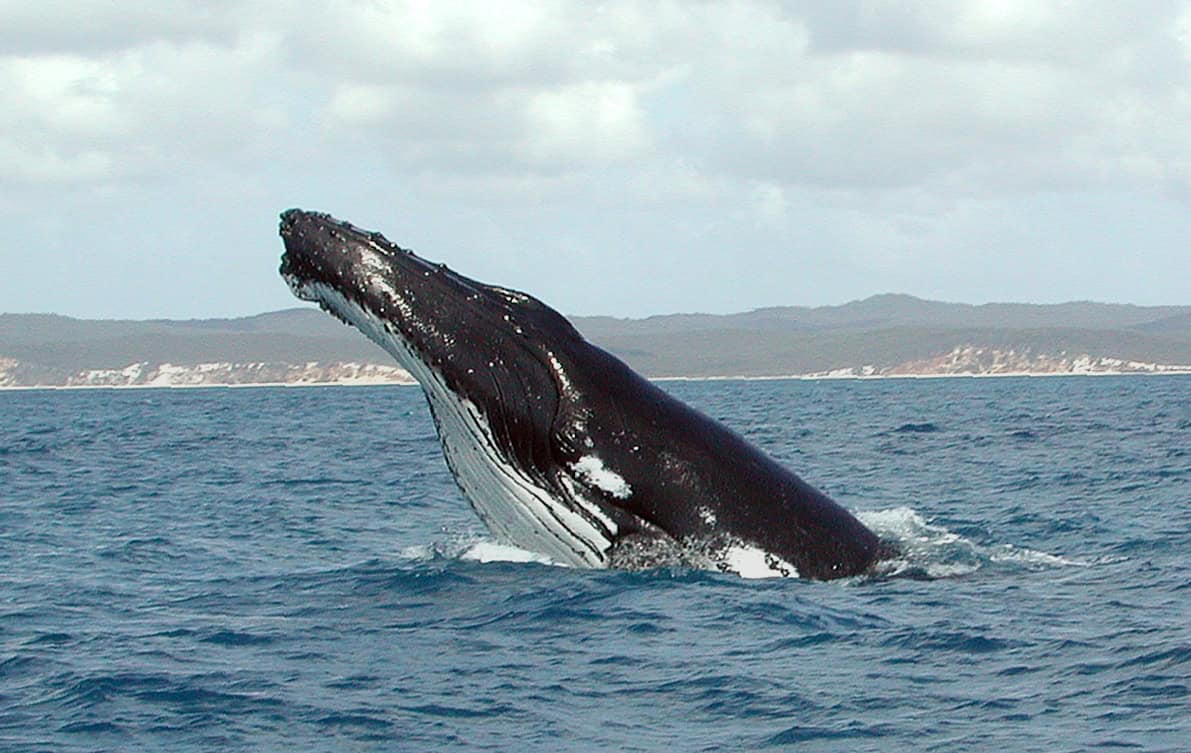
The platypus (Ornithorhynchus anatinus) might seem cute rather than monstrous, but this bizarre creature was so unbelievable that when European naturalists first encountered it, they thought it was a hoax—a taxidermied creation combining parts from different animals. This strange mammal lays eggs, has a duck-like bill, beaver-like tail, and otter-like feet and fur. Adding to its monster credentials, male platypuses possess venomous spurs on their hind legs that can cause excruciating pain in humans. The platypus bill is not hard like a duck’s but soft and flexible, filled with electroreceptors that can detect the electrical fields generated by the muscular movements of their prey. They close their eyes, ears, and nostrils underwater and hunt using only these electromagnetic sensors. They’re one of the few mammals that detect electrical fields, and one of only five mammal groups that lay eggs rather than giving live birth. The platypus genome further reveals its chimeric nature, containing genes from birds, reptiles, and mammals, making it truly one of nature’s most extraordinary and improbable creations.
Conclusion: Nature’s Monstrous Masterpieces

These 14 creatures remind us that truth can indeed be stranger than fiction. Their unusual adaptations, though seemingly monstrous to human eyes, represent millions of years of evolutionary success and specialization for their unique ecological niches. From the depths of the ocean to remote forests, these animals challenge our perceptions of what life on Earth can look like.

As a little kid, I fell in love with nature, wildlife, and animals. Living in the USA, South Africa, Italy, China and Germany gave me the opportunity to discover the world's Wildlife. My favorite animals are Mountain Gorillas, Siberian Tigers, and Great White Sharks.
I'm a certified PADI Open Water Diver, went to Everest Base Camp and Trekked Gorillas in Uganda. I hold a Master of Science in Economics and Finance.
Please send any feedback to feedback@animalsaroundtheglobe.com
- 15 Unique Dog Breeds Built for Surviving Extreme Weather - July 23, 2026
- Top 14 Weirdest Looking Fish Ever Discovered - July 23, 2026
- A Tribute How Wolf 907 F Outlived Her Lifespan to become Yellowstone’s Queen of Wolves - July 23, 2026