
Walk into any garden center and you’ll find shrubs wrapped in cheerful tags promising to “save the bees” or “attract butterflies.” Most of that is marketing, not biology. Plenty of those glossy, color-coordinated ornamentals do almost nothing for a hungry chickadee, a frozen-out mason bee, or a caterpillar looking for a place to eat.
Meanwhile, the shrubs that lifelong gardeners actually trust are usually the scruffy, unglamorous ones you’ll never see on a big-box sale rack. They’re the backbone plants – the ones feeding caterpillars, sheltering fledglings, and keeping native bees alive through the leanest months of the year. Here’s what ecologists and dirt-under-the-nails gardeners really say about the 14 shrubs doing more for wildlife than almost anything you can buy at a typical nursery.
#14 – Serviceberry (Amelanchier): The Spring Buffet Birds Line Up For
🔥 Would you like to save this?
We'll email this post to you, so you can come back to it later!
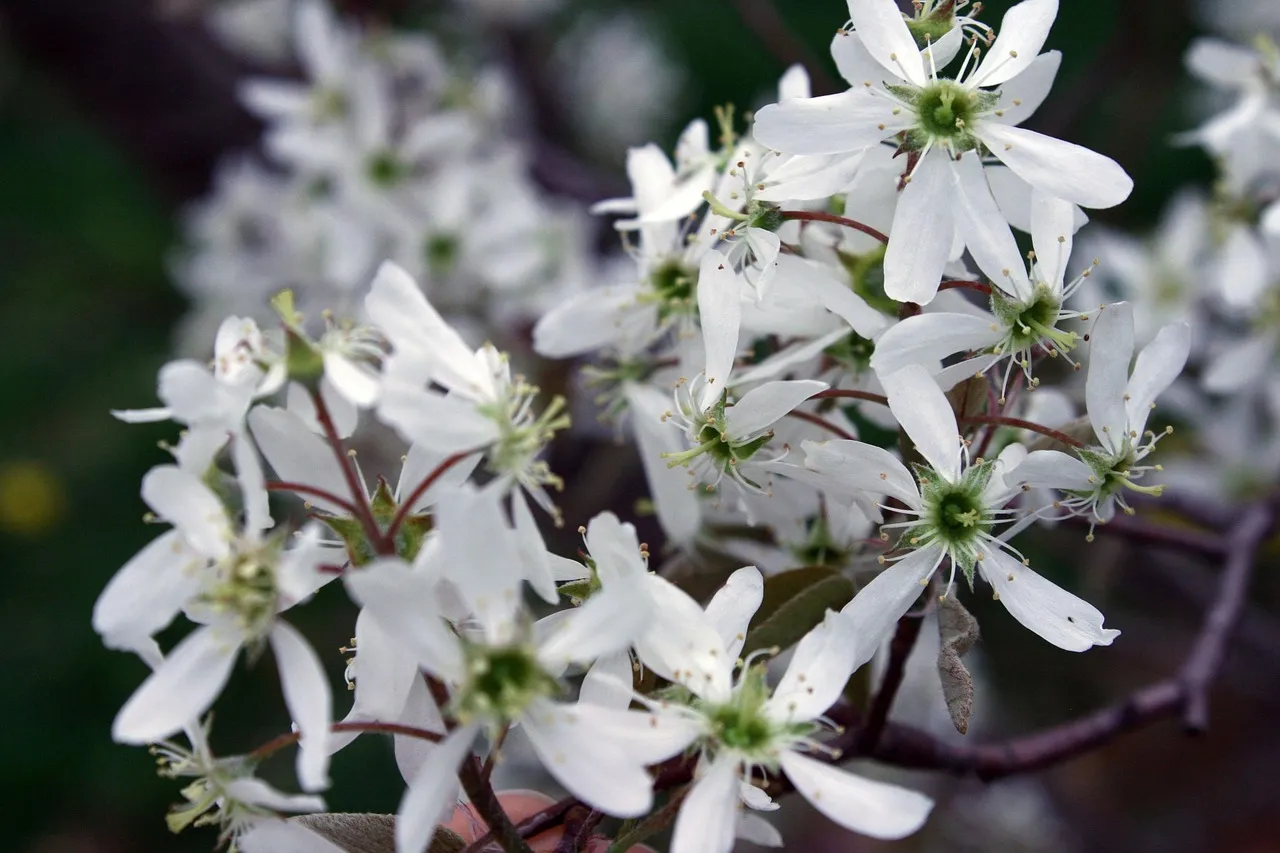
Serviceberry looks delicate, almost ornamental, but it behaves like a wildlife engine. It’s one of the first shrubs to flower and fruit in early spring, arriving right when food is scarcest and everything hungry is desperate for a lead.
Most people don’t realize that over 90% of land birds feed their young insects, not seeds. So while decorative shrubs with sterile blossoms look pretty on a patio, they’re basically furniture during nesting season. Serviceberry, by contrast, is like flipping on the lights at a diner – those white blooms pull in native bees, tiny solitary wasps, and early butterflies like mourning cloaks and commas.
Fast Facts
- Blooms among the earliest of any native shrub, often before its own leaves fully unfurl
- Fruit ripens fast in early summer, sometimes turning from green to purple within days
- Draws a wide range of migratory songbirds right during peak nesting season
- Dense branching doubles as safe nesting structure, not just a food source
By early summer, the berries ripen in waves, and robins, catbirds, cedar waxwings, and thrushes strip them clean in days. Gardeners who grow serviceberry often never taste a single ripe fruit – the birds beat them to it every single time, which is exactly the point if you’re gardening for wildlife instead of dessert.
There’s a quieter payoff too: dense branching gives nesting birds safe perches, and the leaf litter underneath shelters ground beetles and overwintering insects all winter long. It’s a shrub doing three jobs while looking like it’s only doing one.
#13 – American Hazelnut (Corylus americana): Squirrels Love It, But So Do Songbirds
🔥 Would you like to save this?
We'll email this post to you, so you can come back to it later!
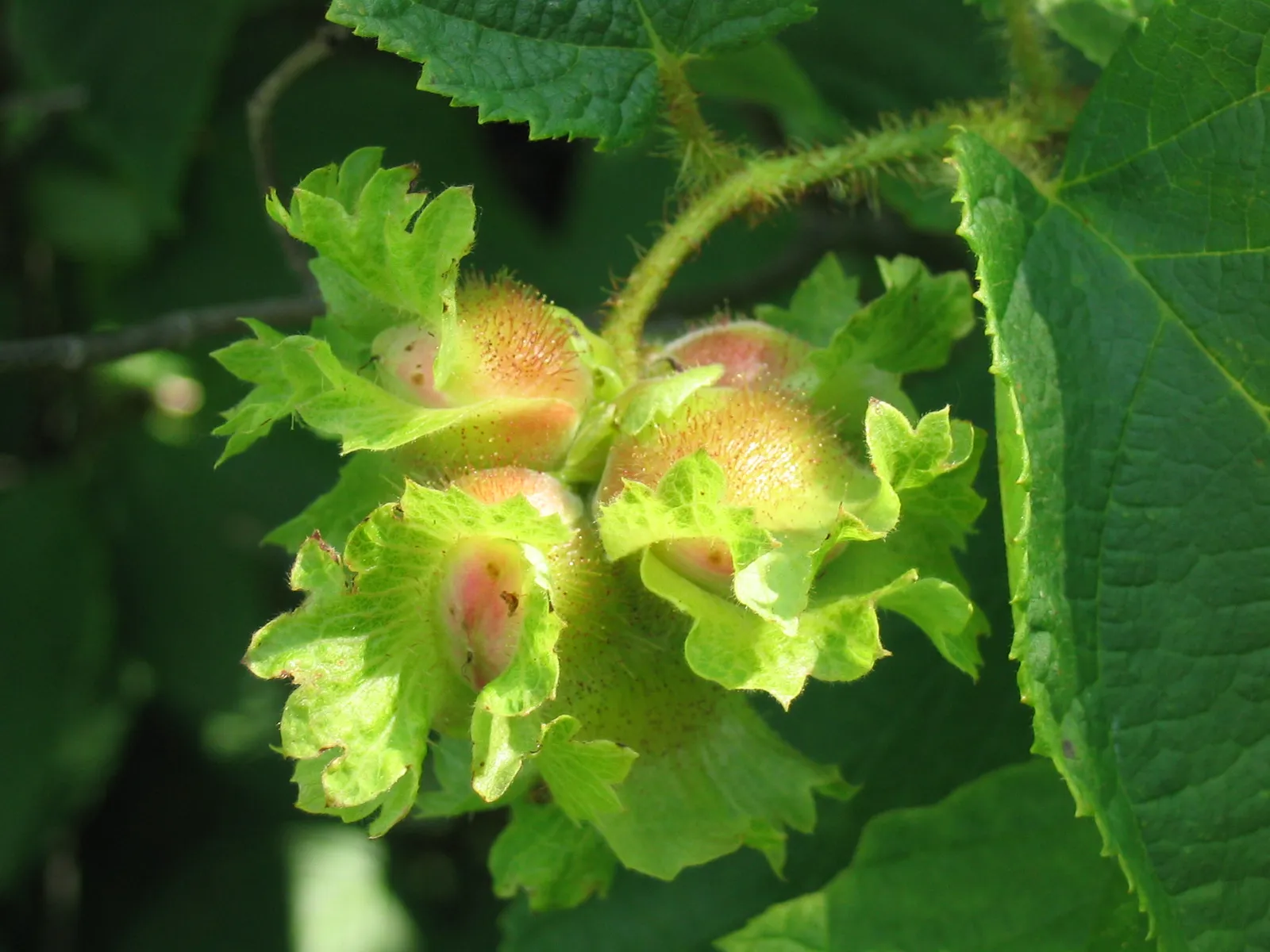
Most people plant hazelnut and picture squirrels burying nuts under it. What they miss is that American hazelnut is quietly one of the most layered wildlife shrubs you can put in the ground – it feeds mammals, insects, birds, and even the soil, all at once.
The catkins appear in late winter, long before most shrubs have even woken up. That early pollen is a lifeline for native bees emerging on the first warm days of the year. Honeybees get the headlines, but many of your local bees are solitary species that depend on exactly this kind of off-season food – miss it, and they may not survive long enough to pollinate anything come spring.
The foliage feeds several moth species as larvae, and the dense, suckering growth habit creates outstanding cover. Rabbits and ground-nesting birds like towhees and sparrows tuck into hazelnut thickets to hide from hawks and neighborhood cats, while songbirds cache and eat the nuts during lean winters when ornamental berries have long since rotted away.
There’s a bonus for the humans too. A well-established American hazelnut can yield genuinely flavorful, edible nuts of its own. It’s one of the rare shrubs where you, the wildlife, and the soil all come out ahead.
#12 – Wild Black Cherry (Prunus serotina): The Caterpillar Factory
🔥 Would you like to save this?
We'll email this post to you, so you can come back to it later!
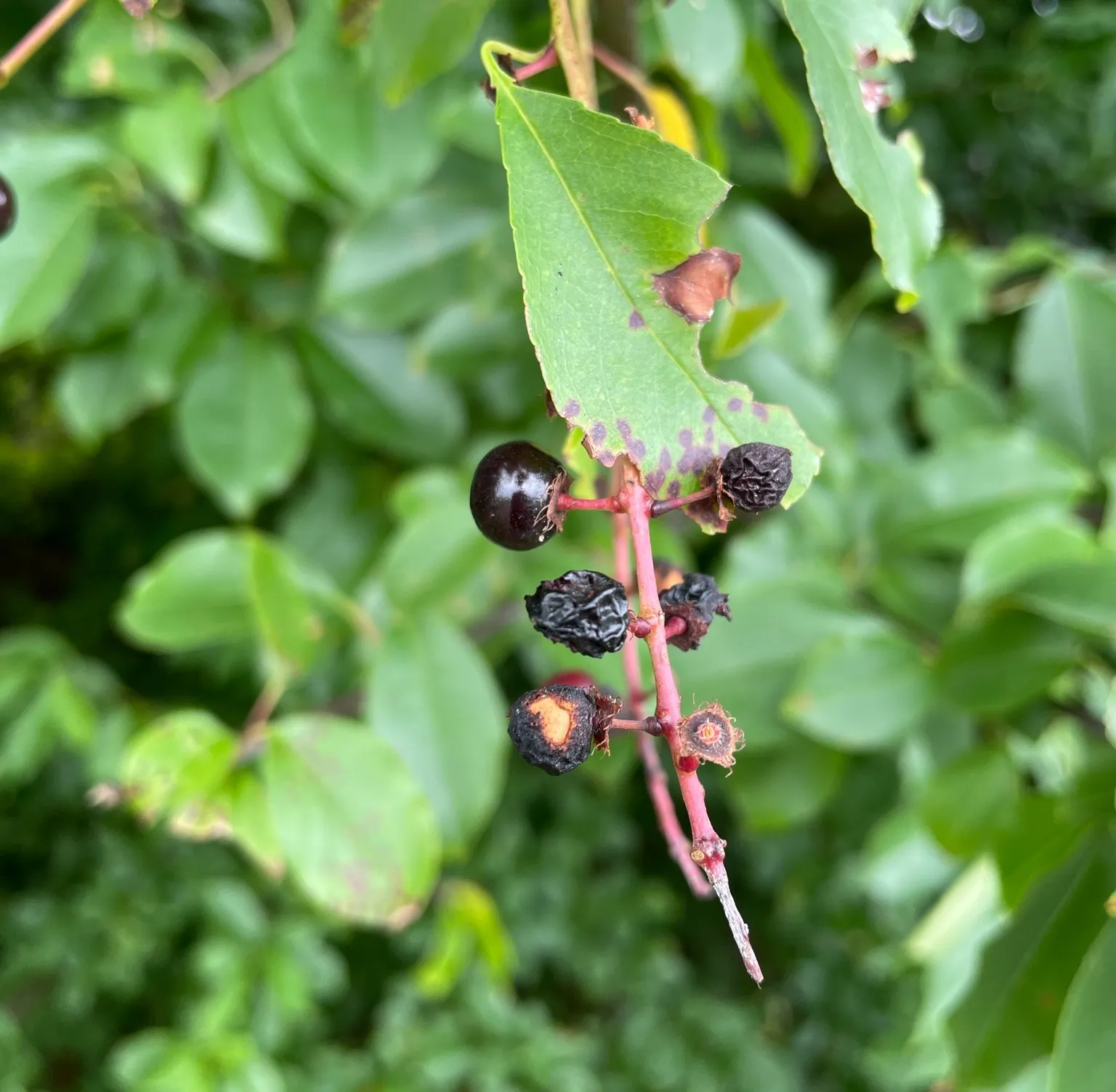
Ask any bird biologist which woody plants matter most, and native cherries almost always land near the top of the list. Wild black cherry rarely gets planted on purpose because people worry about “messy” fruit or volunteer seedlings. That mess is exactly why it’s a wildlife powerhouse.
Entomologists have documented that native cherries can host well over a hundred species of caterpillars in many regions. Those caterpillars are the protein bars of the bird world – a single brood of chickadees can require thousands of them before the fledglings ever leave the nest. A shrub that doesn’t host insects simply cannot contribute at that scale, no matter how nice it looks.
Insects are the little things that run the world.
E.O. Wilson
The small blossoms draw native bees, hoverflies, and predatory wasps – the same insects that keep pest populations in check naturally. Later, dark cherries hang in dense clusters. To us they taste bitter, but to thrushes, tanagers, orioles, and waxwings, they’re a five-star feast, and birds will follow a fruiting hedgerow of black cherry like it’s a highway with exits.
Let it grow as a large shrub or small tree along a back fence, and it becomes the plant that finally answers the complaint every birder makes at some point: “nothing interesting ever visits my feeder.”
#11 – Elderberry (Sambucus canadensis): The Summer Supermarket
🔥 Would you like to save this?
We'll email this post to you, so you can come back to it later!
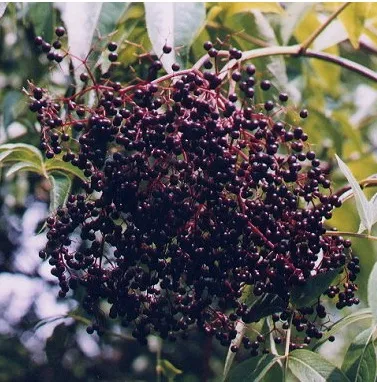
Most gardeners know elderberry vaguely from syrups and cough remedies. In a wildlife garden, though, it behaves like a fully stocked supermarket that never closes.
In early summer, huge flat-topped flower clusters explode with nectar and pollen, pulling in an astonishing range of insects – native bees, hoverflies, beetles, and butterflies all pile in at once. Those insects then attract insect-eating birds, which means elderberry doesn’t just feed wildlife directly; it recruits prey right into your yard. That’s the subtle ecological magic most nursery shrubs never manage to pull off.
The dense structure also gives cardinals, catbirds, and wrens somewhere to hide while they hunt. Then come the berries – thousands of them on a single shrub – and catbirds, robins, bluebirds, and waxwings will gorge until the clusters are picked bare.
Many songbirds in eastern North America actually time their late-summer movements around elderberry and shrubs like it. If you’re growing it hoping to make your own jam, be warned: the birds will spot ripening clusters before you do, which is really just your sign that you planted the right shrub for the right reasons.
#10 – Buttonbush (Cephalanthus occidentalis): The Pollinator Magnet Nobody Talks About
🔥 Would you like to save this?
We'll email this post to you, so you can come back to it later!
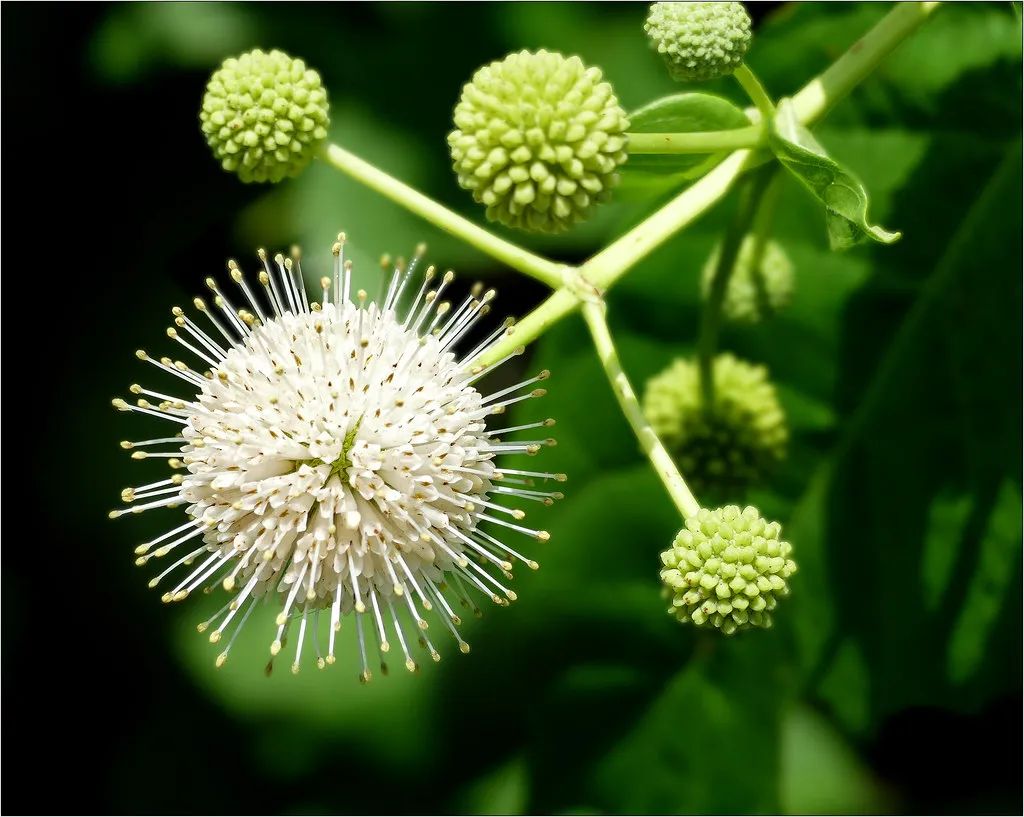
Buttonbush is one of those shrubs veteran naturalists rave about while big-box nurseries almost completely ignore it. That’s a genuine mistake. If you’ve got a damp corner, a rain garden, or the edge of a pond, this might be the single best pollinator shrub available to you.
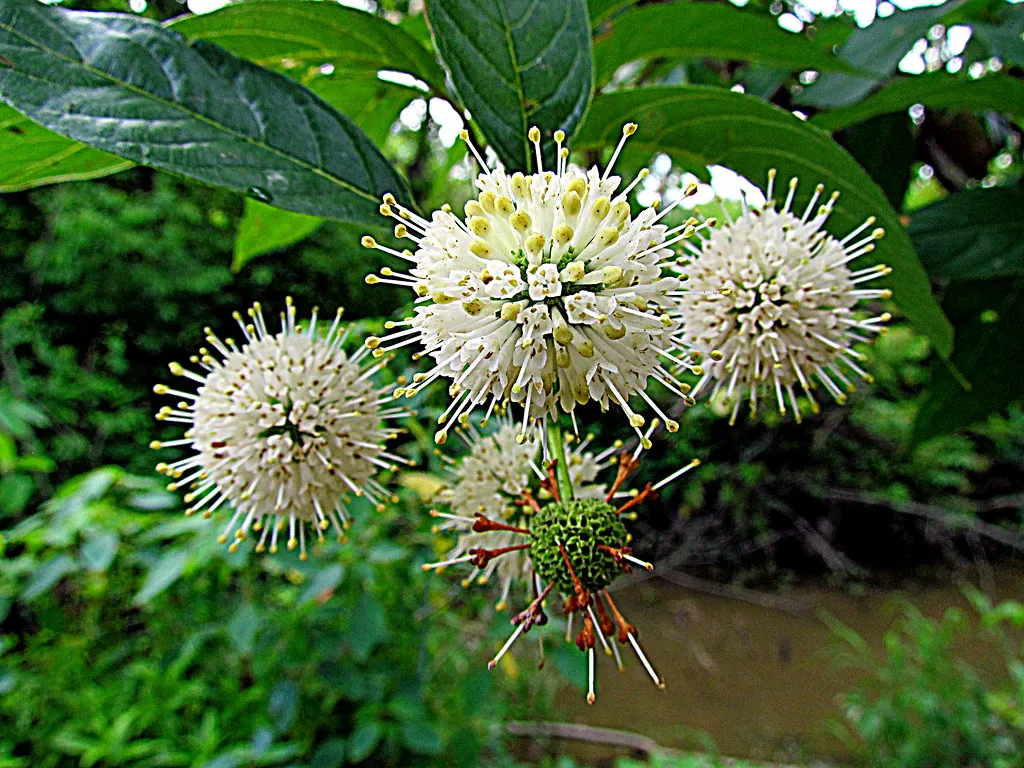
The flower clusters look like tiny white pincushions, and up close you’ll see something almost chaotic: every inch of those globes can be covered in bees, butterflies, and wasps. Swallowtails, skippers, bumblebees, metallic green sweat bees – all crowding the same bloom at the same time. Very few ornamental shrubs pull that kind of traffic.
Buttonbush also hosts several moth and butterfly species as larvae, and if you’re near water, ducks and shorebirds will use it as cover while songbirds hide inside its tangled branching. The seeds feed waterfowl and songbirds later in the season, so in one plant you get nectar, larval habitat, shelter, and seed.
Quick Compare
- Buttonbush (native): Feeds larvae, adult pollinators, waterfowl, and songbirds across multiple seasons
- Butterfly Bush (non-native): Offers nectar to passing adults but hosts no caterpillars and produces seed birds rarely touch
- The takeaway: One supports a full life cycle; the other offers a quick pit stop and nothing more
People love to argue that glossy exotics like butterfly bush do more for pollinators. In side-by-side comparisons, native shrubs like buttonbush usually attract more diverse and more specialized insects – the very ones most at risk of disappearing. It’s the difference between a fast-food drive-through and a full-service restaurant.
#9 – Red Osier Dogwood (Cornus sericea): Four Seasons of Wildlife Support
🔥 Would you like to save this?
We'll email this post to you, so you can come back to it later!
Red osier dogwood usually gets sold for its striking red winter stems, but that’s actually the least interesting thing about it once you look at the whole year. Let it spread into a proper thicket and it becomes a genuine habitat machine.
In spring, white dogwood flowers bring in native bees and small butterflies, with flat clusters that act as easy landing pads for short-tongued bees that struggle with deep, tubular blooms. By summer, dense foliage shelters nesting birds and small mammals, and sparrows, towhees, and thrashers weave nests into the tangle where predators have a hard time reaching.
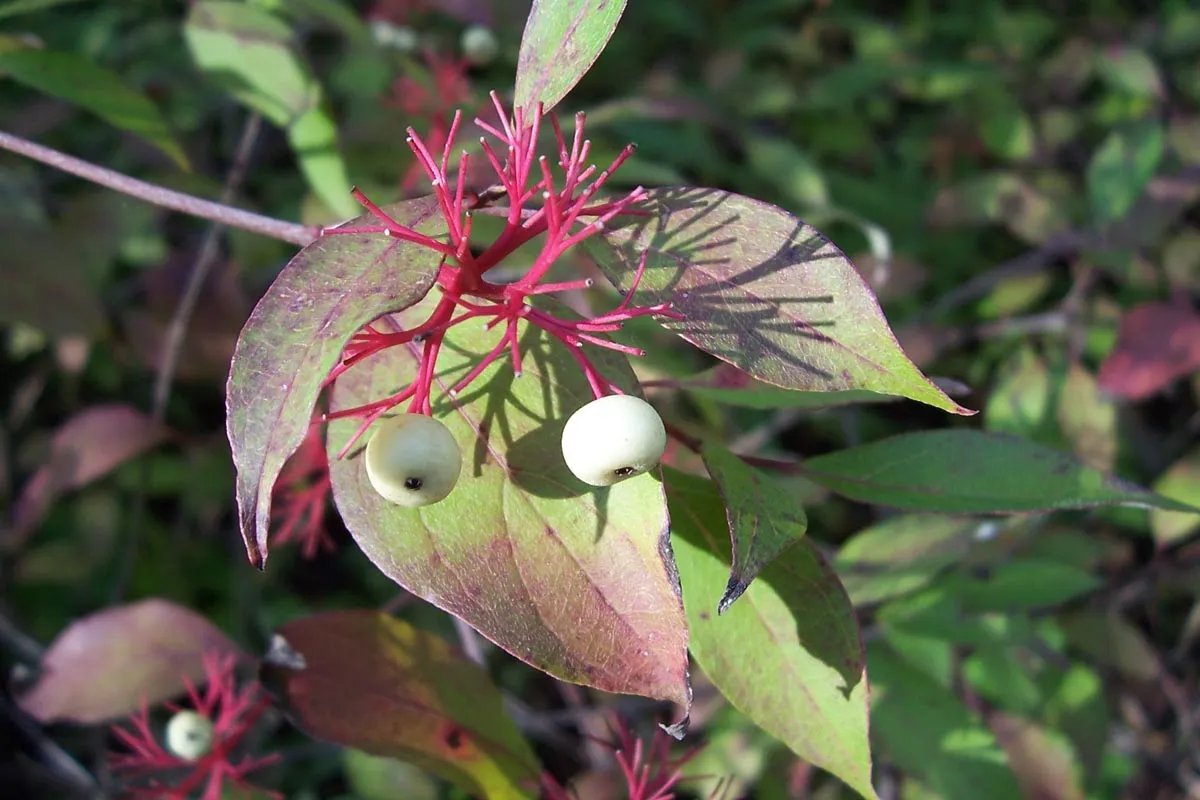
Late summer and fall bring clusters of white or bluish berries – high-energy fuel for migrating birds. Warblers, vireos, and thrushes refuel on dogwood fruit before crossing major migration barriers, and that fall fruit can genuinely be the difference between survival and exhaustion on a long flight.
Come winter, the red stems finally get their moment for us humans, but even then those branches are catching snow and blocking wind for ground-dwelling wildlife. Compare that to one lonely ornamental shrub sitting on a lawn island, and the gap in ecological value is almost embarrassing.
#8 – Ninebark (Physocarpus opulifolius): The Workhorse Hidden in Plain Sight
🔥 Would you like to save this?
We'll email this post to you, so you can come back to it later!
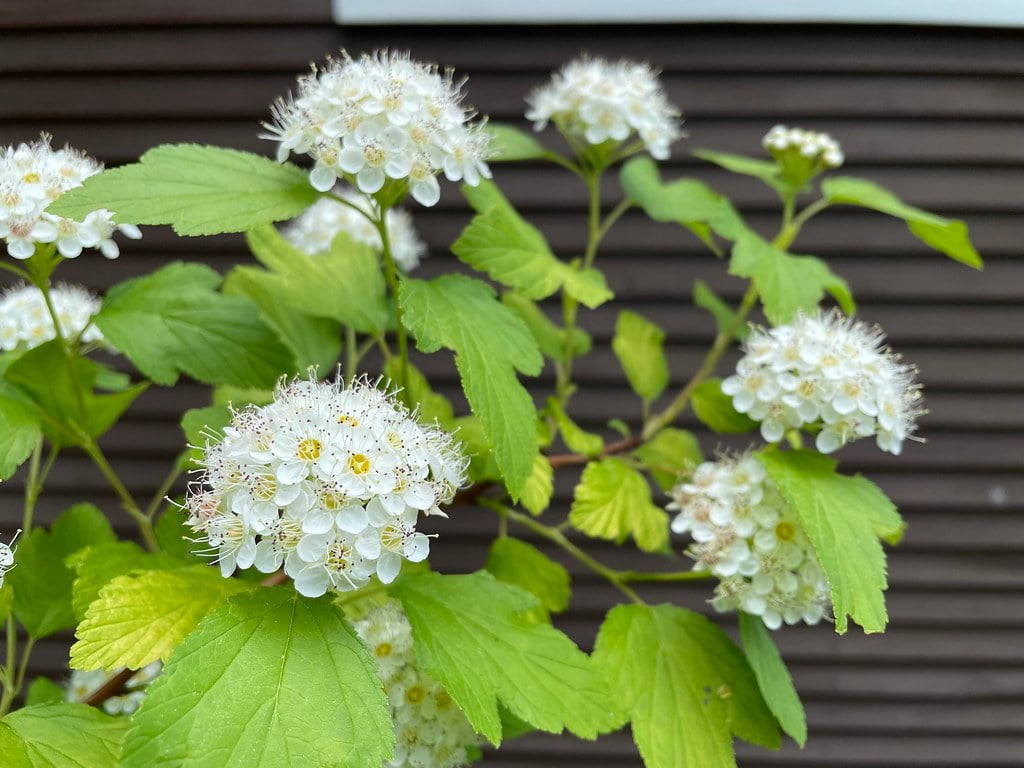
Ninebark has quietly gone trendy in landscaping thanks to its colorful foliage cultivars, but the straight native species is the real prize for wildlife. It’s a rugged, low-drama shrub that feeds insects, shelters birds, and shrugs off neglect that would kill something fussier.
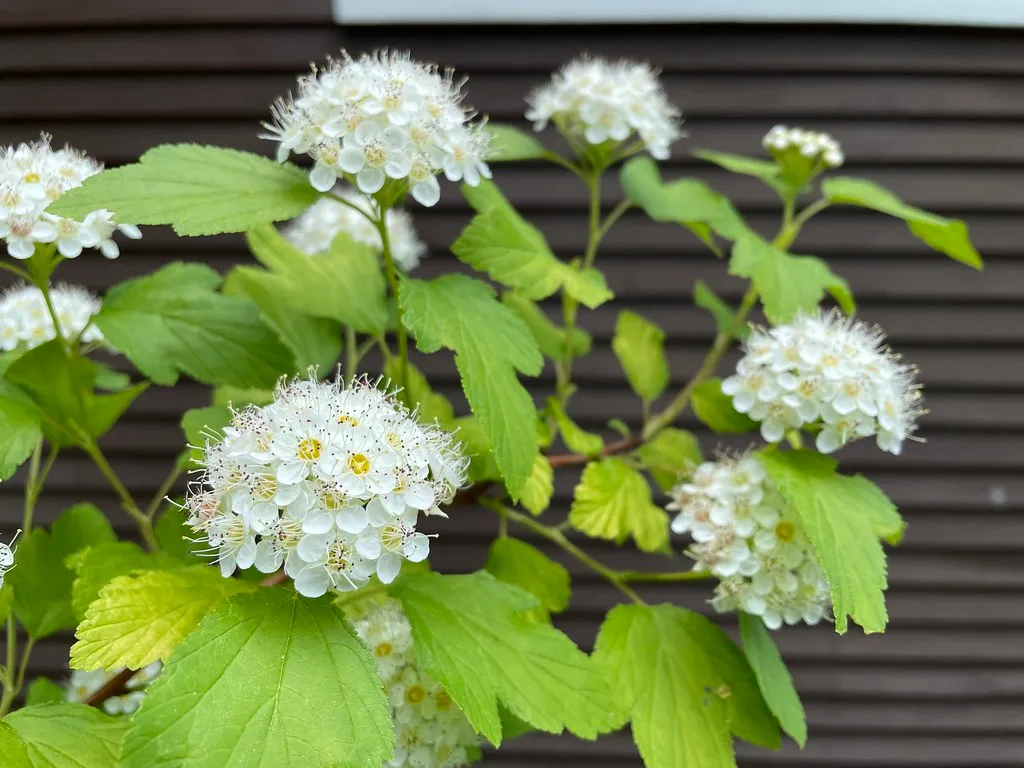
In late spring, clusters of small white or pinkish flowers absolutely buzz with native bees, flies, and tiny beetles. Because there are so many blooms packed together, pollinators can stay put and feed for a long time without burning extra energy hopping between plants.
The peeling, multi-layered bark that gives ninebark its name also creates tiny micro-habitats for insects and spiders. Those small creatures then become food for chickadees, nuthatches, and warblers – a reminder that subtle structural features like bark texture matter more to biodiversity than most gardeners realize.
Ninebark’s dense branching makes it ideal for hedgerows and windbreaks, and it tolerates a wide range of soils and moisture levels. If you want wildlife habitat that doesn’t collapse the first week you forget to water, ninebark earns its spot on the list.
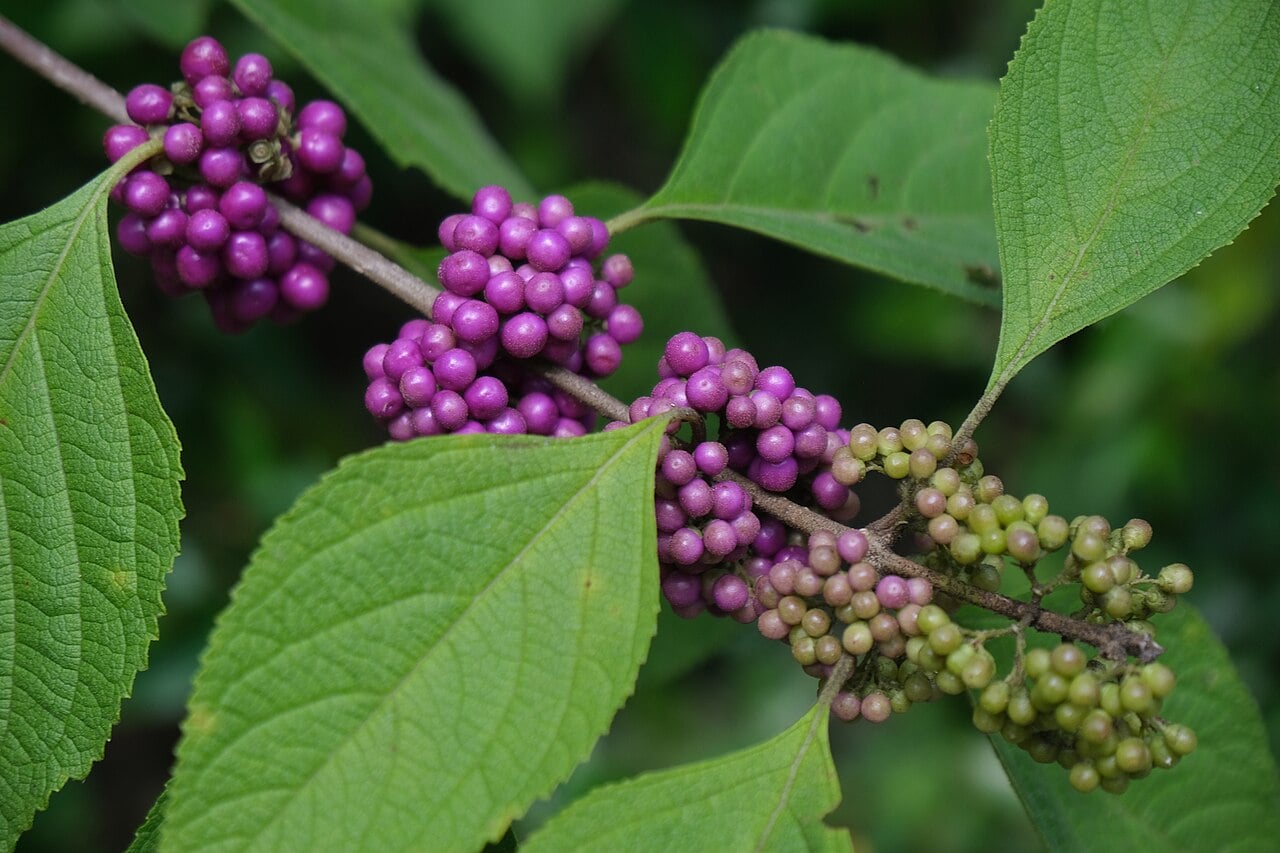
#7 – American Beautyberry (Callicarpa americana): The Fall Fruit Show Birds Can’t Ignore
🔥 Would you like to save this?
We'll email this post to you, so you can come back to it later!
American beautyberry tends to go viral every few years thanks to its unbelievable neon-purple berries. What those viral posts almost never mention is how important those berries are for fall and early-winter birds.
When most of the landscape has already gone brown, beautyberry is still loaded with fruit along its arching stems. Mockingbirds, cardinals, towhees, and catbirds feast on it, especially through the Southeast and lower Mid-Atlantic, and in years when natural food crops fail elsewhere, these shrubs can be a literal lifeline.
The small summer flowers draw in native bees and small butterflies, and because they’re tucked along the stems rather than out in the open, they offer insects a more protected place to feed. The shrub’s loose, open structure also lets birds move through it easily while foraging – and birds waste less energy when food and cover are tightly linked instead of scattered.
Some gardeners dismiss beautyberry as “too wild” for a tidy front yard. Ironically, that slightly loose shape is exactly why so many species use it. Planted in groups or along a fence line, it turns a dead zone into a genuinely busy foraging corridor.
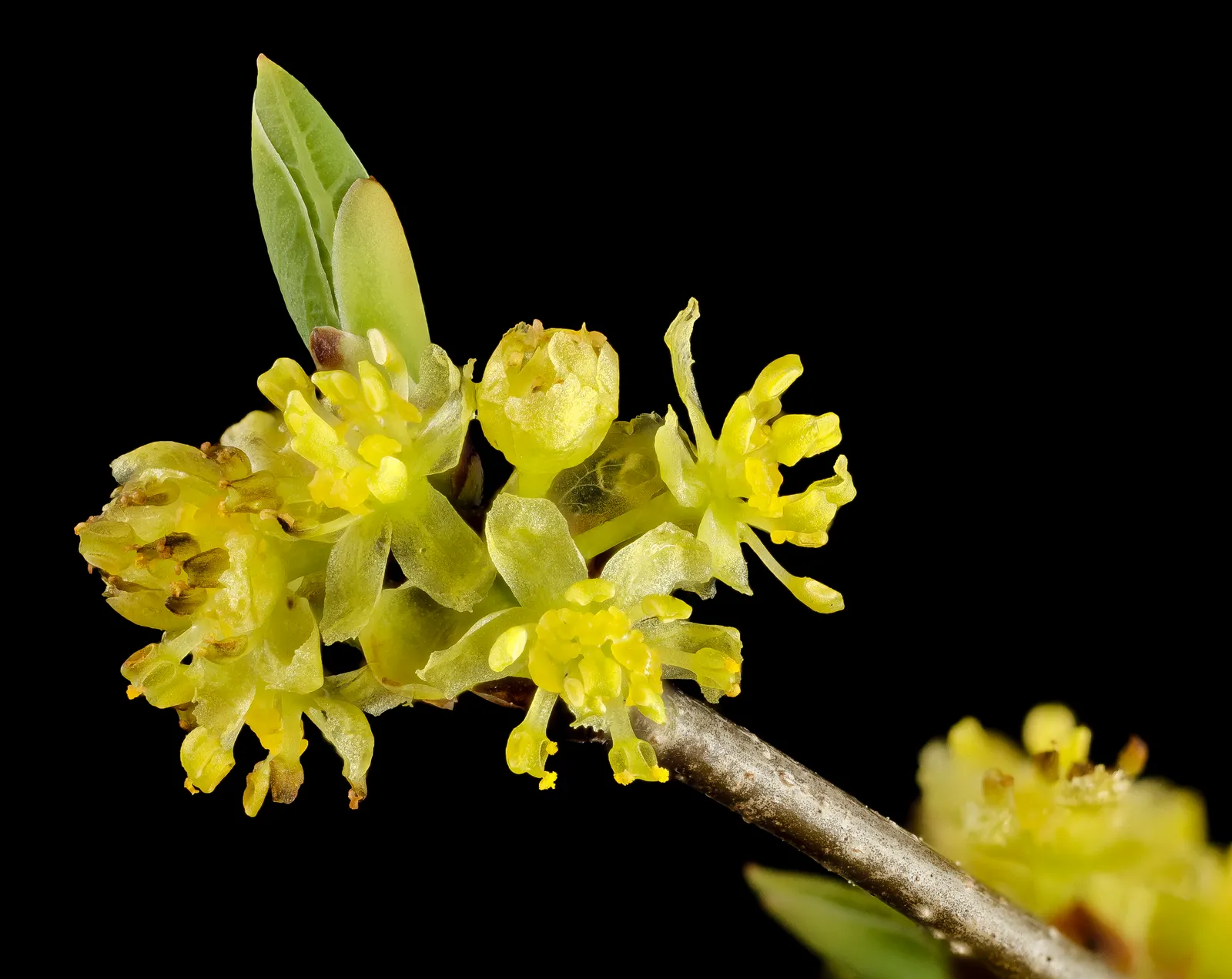
#6 – Spicebush (Lindera benzoin): The Secret Hero of Shady Yards
🔥 Would you like to save this?
We'll email this post to you, so you can come back to it later!
If you’ve got a shady, damp corner where everything else sulks and struggles, spicebush is your new best friend. Most ornamental shade shrubs are nearly useless ecologically – spicebush is the exact opposite.
This plant is the primary host for the spicebush swallowtail butterfly, whose green, snake-eyed caterpillars have become minor social-media celebrities in their own right. Without native Lindera species, many local swallowtail populations simply can’t persist, which alone makes spicebush more valuable than a dozen generic shade evergreens combined.
Worth Knowing
- Primary larval host for the spicebush swallowtail butterfly
- Blooms in very early spring, often before its own leaves even open
- Female plants produce bright red berries prized by thrushes and catbirds
- One of the few wildlife shrubs that genuinely thrives in shade
Tiny yellow flowers bloom in very early spring, often before the leaves even open, providing one of the first nectar and pollen sources in a woodland garden. They attract native bees emerging from winter torpor, along with early flies and beetles, and later in the season female plants develop bright red berries that thrushes, catbirds, and other forest-edge birds depend on.
Spicebush also has fragrant leaves and twigs traditionally used for teas and flavorings, and when left to form a loose thicket, it creates the exact kind of shade-side structure birds and small mammals use as cover. If you’ve resigned yourself to a lifeless dark corner under the trees, this is the shrub that proves you wrong.
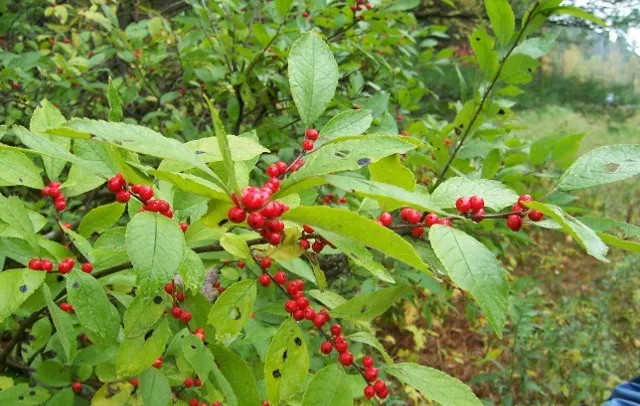
#5 – Winterberry Holly (Ilex verticillata): Winter Survival, in Shrub Form
🔥 Would you like to save this?
We'll email this post to you, so you can come back to it later!
Most nursery hollies get chosen for glossy leaves and a tidy shape. Winterberry holly, a deciduous native, ditches the glamour entirely and goes straight for function – and wildlife notices immediately.
Once the leaves fall, bare stems studded with bright red berries become a magnet for hungry birds. Cedar waxwings, robins, bluebirds, mockingbirds, and even woodpeckers will descend on a fruiting winterberry the moment snow covers everything else. Those berries persist deep into winter in many regions, acting almost like slow-release calorie capsules exactly when insects have vanished and days are short and brutal.
Earlier in the year, small white flowers feed native bees and other pollinators. You do need both male and female plants for a heavy berry set, but that’s a small price to pay for months of reliable bird food – smart gardeners simply tuck a male plant in the back of a hedge and let the females take center stage.
Unlike many ornamental hollies, winterberry tolerates wet soils and fluctuating water tables, which makes it ideal for rain gardens and low spots. It’s one of the few shrubs capable of turning a soggy problem area into a genuine winter bird hotspot, proving that natural forage still beats a feeder for supporting real diversity.
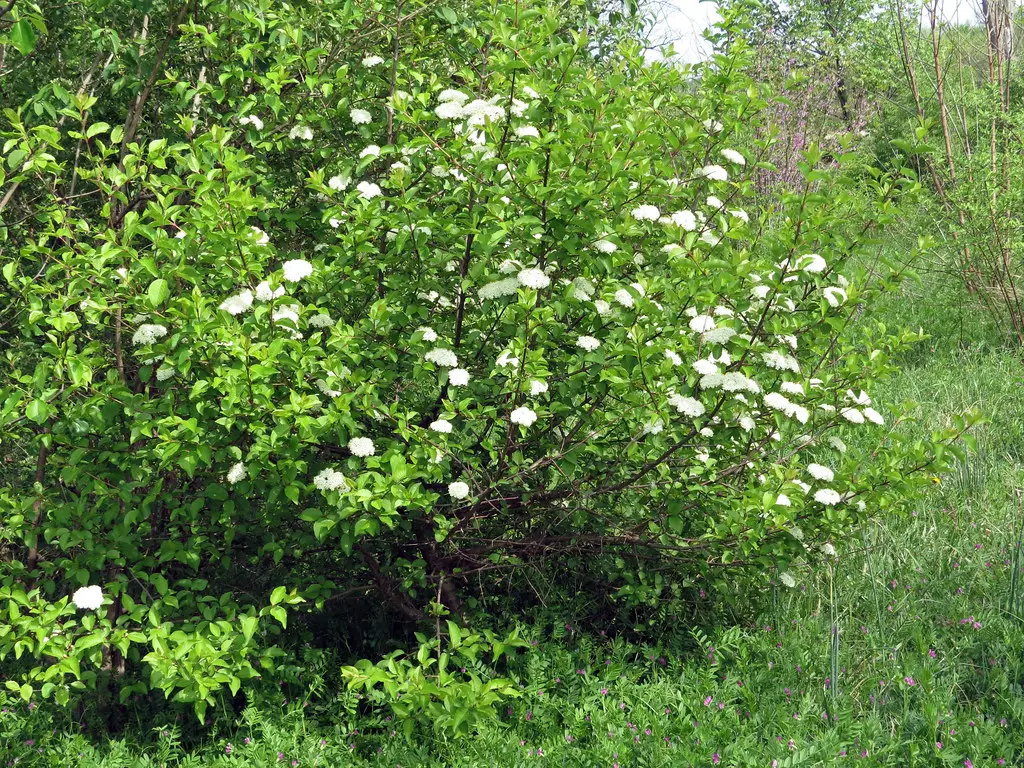
#4 – Blackhaw Viburnum (Viburnum prunifolium): The Overlooked Powerhouse
🔥 Would you like to save this?
We'll email this post to you, so you can come back to it later!
Viburnums get plenty of love in general, but blackhaw viburnum flies under the radar compared to its flashier cousins. That’s a real shame, because this species is wildlife gold across much of eastern North America.
In spring, it produces flat-topped clusters of creamy white flowers buzzing with native bees, hoverflies, and beetles. Many gardeners report that when their blackhaw is in full bloom, you can actually hear it humming from several feet away, and over the summer the foliage supports various moth larvae that add directly to the insect biomass feeding young birds.
The real star, though, is the fruit. Blue-black drupes are relished by robins, bluebirds, cedar waxwings, and other songbirds, and they’re technically edible for humans too, with a sweet, date-like flavor once fully ripe. In lean autumns, birds will strip a blackhaw completely bare in a single day.
Its natural habit as a large shrub or small tree makes it perfect for multi-layered hedgerows and soft edges between lawn and wilder ground. Gardeners who want a tidy, high-impact wildlife shrub that never looks weedy tend to fall hard for blackhaw once they’ve watched it perform through a full year.
#3 – New Jersey Tea (Ceanothus americanus): Tiny Shrub, Outsized Impact
🔥 Would you like to save this?
We'll email this post to you, so you can come back to it later!
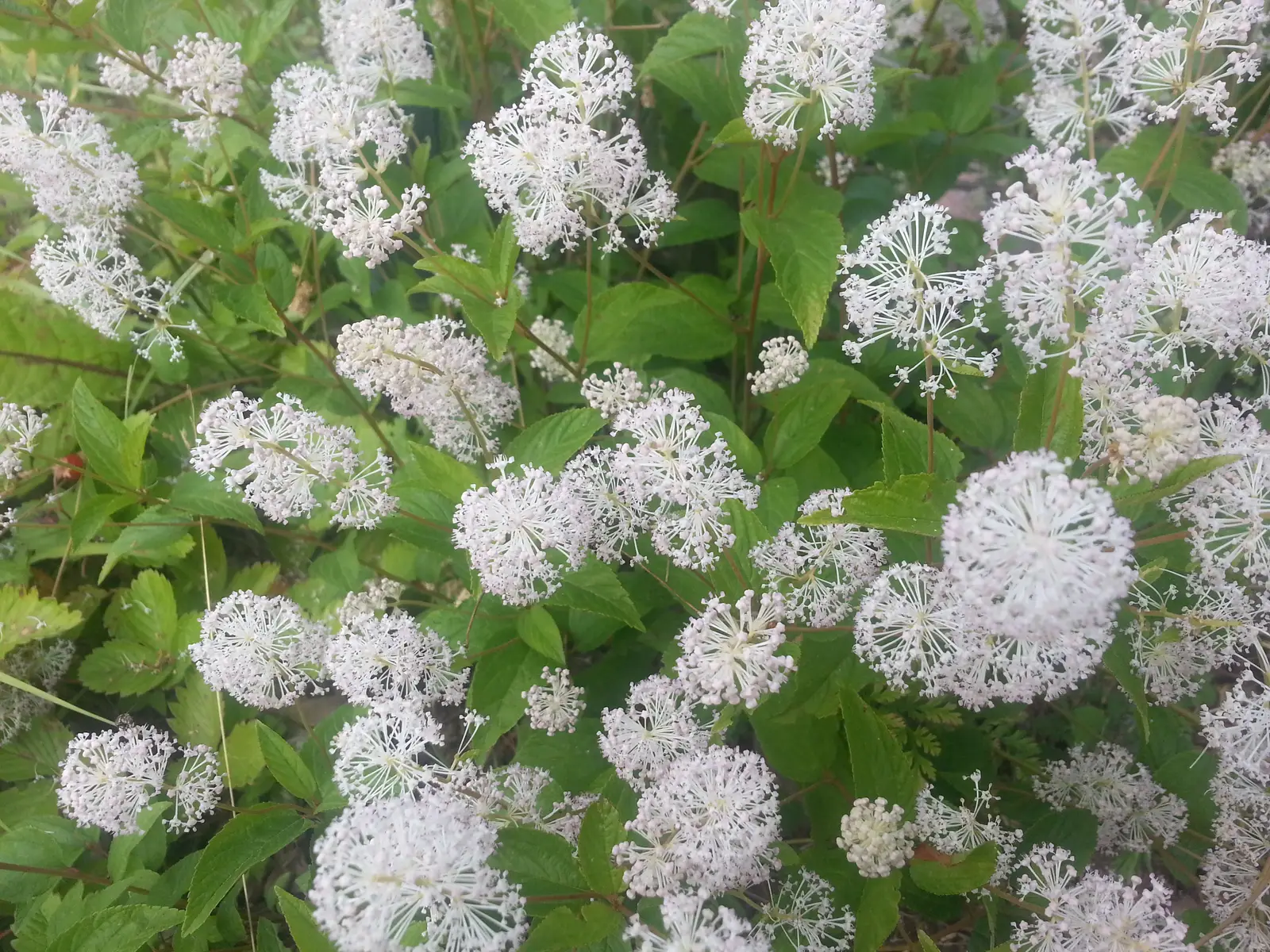
If you assume only big shrubs matter for wildlife, New Jersey tea will change your mind fast. This compact native proves that small plants can play huge roles, especially for specialized pollinators and butterflies.
White flower clusters bloom in early to mid-summer and are intensely attractive to a wide variety of native bees, wasps, and butterflies. Field naturalists have counted over a dozen insect species visiting a single shrub in just a short observation window – a remarkable amount of biodiversity packed into a plant that barely reaches knee height.
New Jersey tea also hosts several butterfly species, including the mottled duskywing in many regions, and its deep root system helps stabilize soil on dry slopes where other shrubs give up entirely. This is one of the few wildlife shrubs that actually thrives in hot, lean, well-drained soil most gardeners consider a lost cause.
Because it stays small, you can plant several in a sunny border, along a path, or even as a low formal hedge, and it still looks clean enough for a front yard. It functions ecologically like a mini pollinator preserve – which is exactly why veteran ecologists recommend it first to anyone who claims they don’t have enough space to garden for wildlife.
#2 – Red Chokeberry (Aronia arbutifolia): Beauty, Birds, and Real Ecological Muscle
🔥 Would you like to save this?
We'll email this post to you, so you can come back to it later!
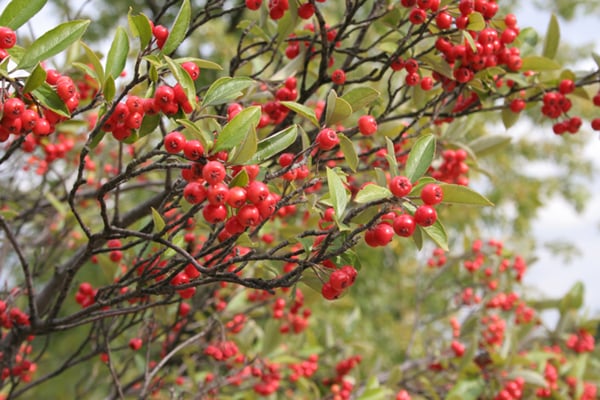
Red chokeberry is usually sold as an ornamental for its fall color and bright berries. Ironically, most homeowners buy it purely for looks and accidentally install a major wildlife resource without ever realizing what they’ve done.
In spring, it bears clusters of white flowers that draw in small bees, flies, and beetles, and in a mixed hedge those blossoms help bridge the gap between early spring and peak summer bloom, giving pollinators a steady food chain instead of feast-or-famine.
The glossy red berries are the main event, though. Too astringent for most people to eat raw, birds treat them like energy bars – thrushes, catbirds, bluebirds, and many other species rely on Aronia fruit through fall and early winter. Unlike softer fruits that rot quickly, chokeberries often persist deep into the cold months, becoming crucial backup food exactly when the weather turns hardest.
Red chokeberry tolerates everything from damp edges to moderately dry slopes and handles some shade, so you can tuck it into places where fussier shrubs fail and stitch together a wildlife corridor through existing plantings. Some gardeners complain it suckers too much; ecologists quietly smile, because more stems just mean more flowers, more fruit, and more habitat.
#1 – Native Shrub Willows (Salix spp.): The Underrated Wildlife Superstars
🔥 Would you like to save this?
We'll email this post to you, so you can come back to it later!
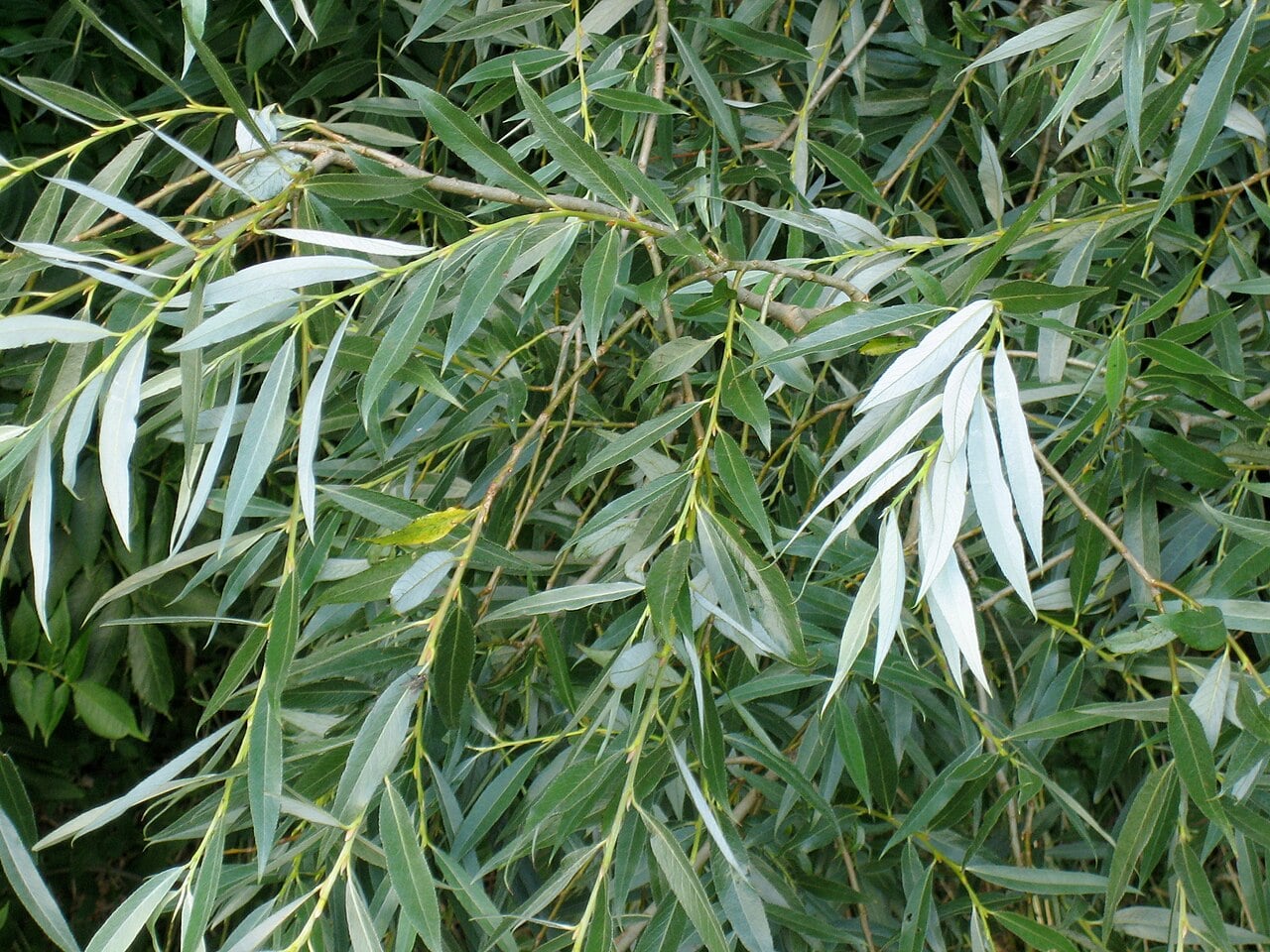
If there’s one group of shrubs professional ecologists consistently put at the very top of the wildlife list, it’s native willows – and home gardeners almost always underestimate them. Forget the giant weeping willows drooping over ponds; we’re talking about shrubby native Salix species that can be pruned, managed, and kept in bounds.
Why are they so powerful? Willows rank among the highest host plants for caterpillars anywhere in North America and Europe, right up there with oaks and cherries. Hundreds of moth and butterfly species use willow as larval food, which translates directly into meals for nestling birds, bats, and other insectivores that would otherwise go hungry.
At a Glance
- Ranks among the top woody plants for caterpillar diversity in North America and Europe
- Catkins emerge earlier than most shrubs, fueling the first wave of native bees
- Dense stems provide nesting cover in otherwise open landscapes
- Stabilizes soil and buffers streambanks, ditches, and low wet spots
They also leaf out and flower earlier than almost anything else around them. Their catkins provide critical early-season pollen and nectar for native bees and hoverflies, and many solitary bees actually time their emergence to willow bloom. In some habitats, remove the willows and you essentially erase the spring food base for entire pollinator guilds in one move.
Shrub willows are also excellent at stabilizing soil, soaking up excess water, and creating cool, humid microclimates along streams, ditches, and low spots, while their dense stems offer top-tier cover and nesting sites for songbirds in otherwise open landscapes. Yes, they’re a little messy – they drop leaves, they sucker, they hum with insects. That’s precisely why wildlife flocks to them, and precisely why serious habitat gardeners consider a shrub willow the single highest-impact plant they can put in the ground.
The Bottom Line
🔥 Would you like to save this?
We'll email this post to you, so you can come back to it later!
Strip away the marketing labels and the Instagram trends, and a blunt truth appears: most glossy nursery shrubs are decoration, while these 14 natives are infrastructure. They feed the caterpillars that feed the nestlings. They bridge the food gaps between early spring and deep winter. They turn “empty” corners – wet ditches, shady fences, scruffy slopes – into working habitat that actually earns its space.
The most shocking part, honestly, is how consistently the messier, less fashionable shrubs beat the expensive imports on every ecological metric that matters. You don’t need a huge property or a botany degree to make a difference. You need a handful of the right shrubs, and the willingness to see chewed leaves and stripped berries as proof your yard is finally working, not proof that something’s wrong.
Some gardeners will keep chasing sterile ornamentals and perfect lawns, and that’s their call. But if you actually want birds, bees, and butterflies to treat your yard like home instead of scenery, these are the shrubs that will outperform almost anything sitting in a big-box parking lot. Which one are you brave enough to plant first – and what would you add to this list?

- 23 Warm Corners an Elderly Cat Keeps Returning To All Winter - October 29, 2026
- 16 Behaviours Showing a Cat Considers a House Permanent Now - October 29, 2026
- 15 Wildlife Programmes a Lifetime Pass Holder Over 62 Can Join Free - October 29, 2026