
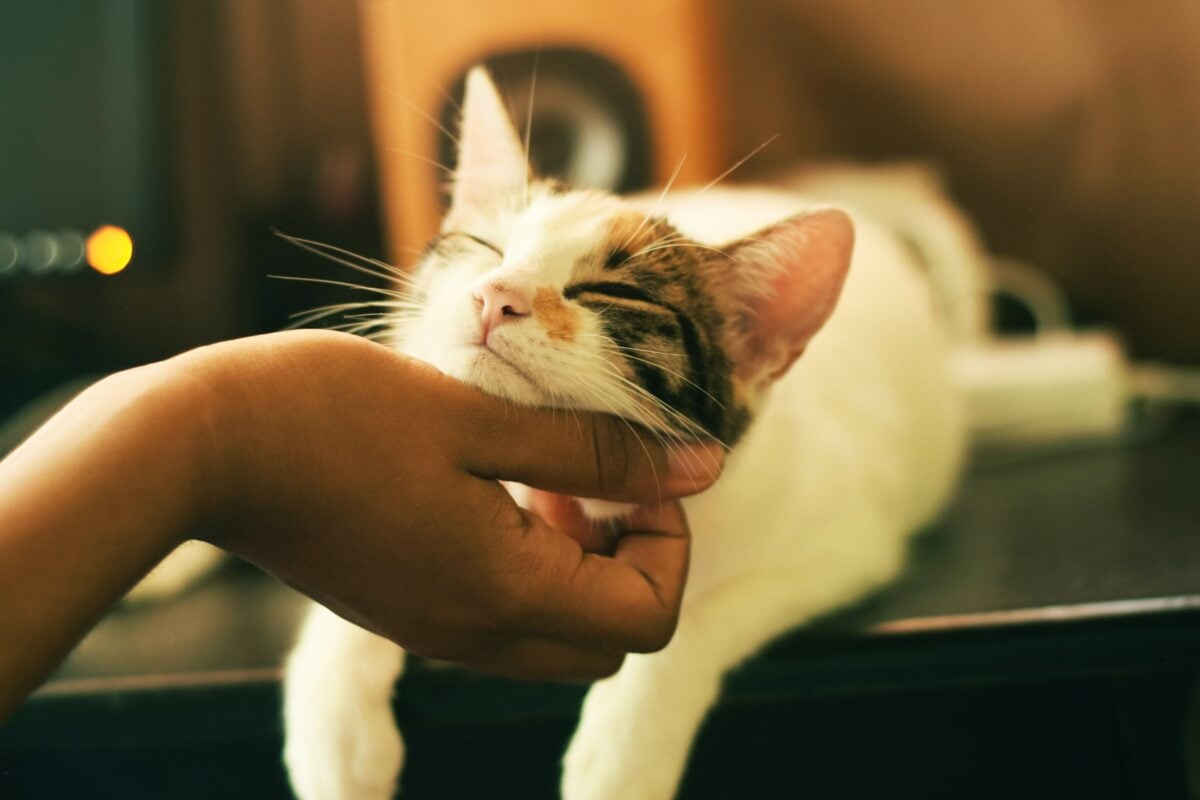
Your cat finally came out from under the bed. She’s eating normally, and she even yawned in front of you. It feels like the moment she decided this is home, but it isn’t quite. Those are signs that she stopped panicking, not that she moved in for good.
The real signs of a cat who thinks the house is permanent are quieter and stranger, and easy to miss. They show up in scent, posture, and tiny daily rituals that build over weeks. Below are 16, counted down from the subtle to the heartfelt. Number #1 isn’t the cuddly one you’d guess, and it may change how you read your cat the next time you pick up your keys.
#16: They Rub Their Cheeks Along Every Door Frame Like They’re Signing the Deed
🔥 Would you like to save this?
We'll email this post to you, so you can come back to it later!
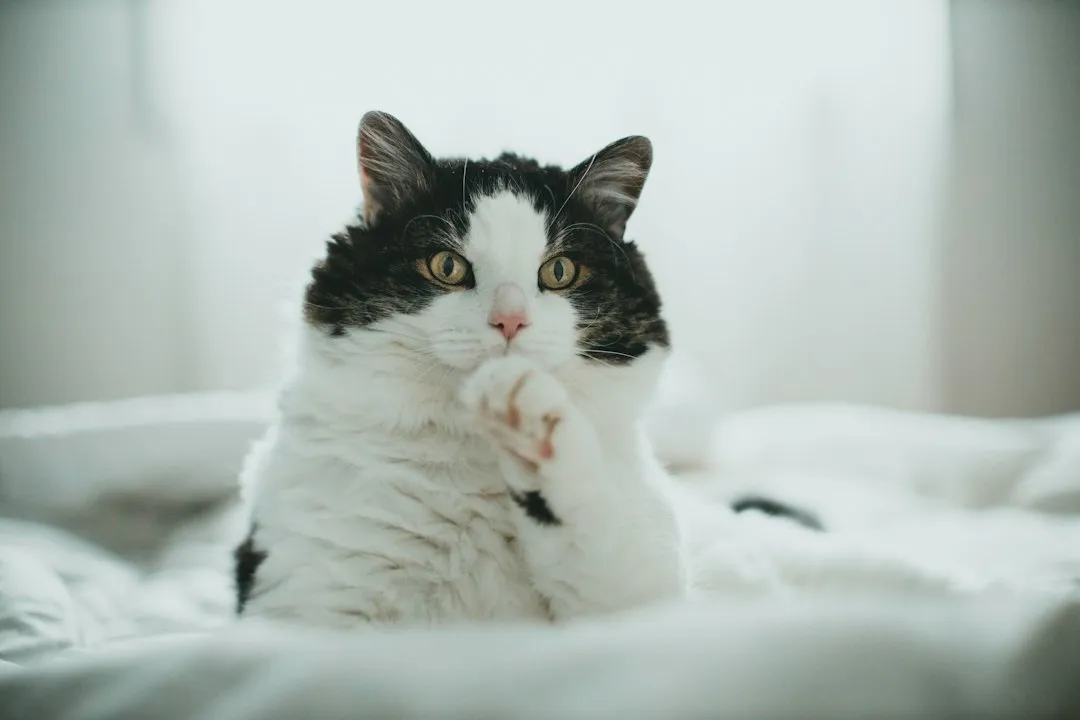
A cat who has claimed your house treats vertical surfaces like personal billboards. She pauses at a doorway, presses her cheek into the wood or plaster, and moves on, satisfied. That’s bunting, and it leaves behind facial pheromones that humans can’t smell but other cats can.
The scent blends with the home’s existing odors and turns neutral space into something that smells like her. A new arrival tends to sniff everything. A settled cat adds her own signature to it.
Watch for the repetition. She’ll hit the same corners and thresholds on the same routes, day after day, without damaging a thing. Many owners write it off as casual affection, but it works more like quiet real-estate paperwork.
- Rubbing repeats along high-traffic paths
- Corners and entry points get special attention
- Cheek rubs are often combined with full flank rubs
The Science Behind This: Facial scent is thought to have a calming effect on the cat who left it. When she re-encounters her own scent, the space feels familiar and safer, which is why she keeps topping it up.
#15: They Scratch the Same Spots With Slow, Purposeful Strokes
🔥 Would you like to save this?
We'll email this post to you, so you can come back to it later!
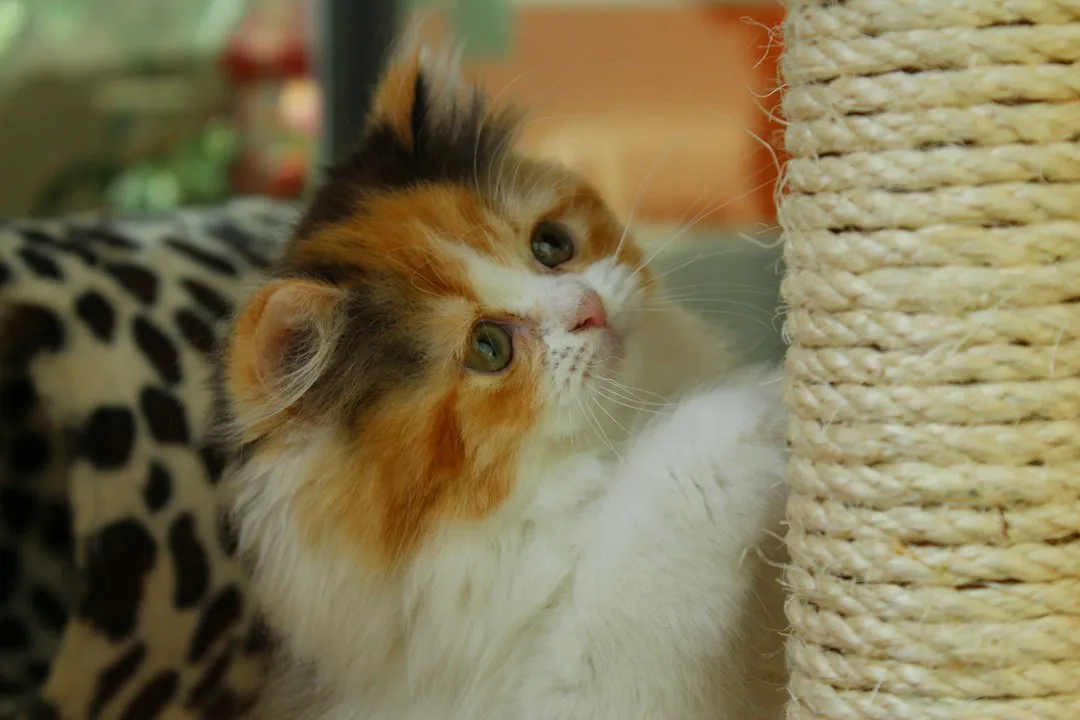
Early scratching is mostly claw maintenance, a bit random and a bit frantic. Once a cat feels permanent, it changes into something more deliberate. She picks a post, a rug edge, or a corner near her sleeping area or a doorway, and she keeps coming back to it.
Scratching leaves a visible mark, and cats also have scent glands in their paws. So each session is both a sign and a signature. It tells any potential rival that someone lives here.
There’s a stretch in it too. Many cats do a full-body lengthening as they scratch, which is probably a stress-relieving bonus.
This is different from anxious shredding of random furniture. A settled cat is consistent, choosing the same targets like boundary markers. Many behaviorists argue that this open claiming can reduce the need for stress signals like spraying.
Insider Tip: Place a sturdy scratching post exactly where fresh scratches are starting. Cats rarely switch once a spot feels claimed.
#14: They Nap Belly-Up in the Middle of Open Floor
🔥 Would you like to save this?
We'll email this post to you, so you can come back to it later!
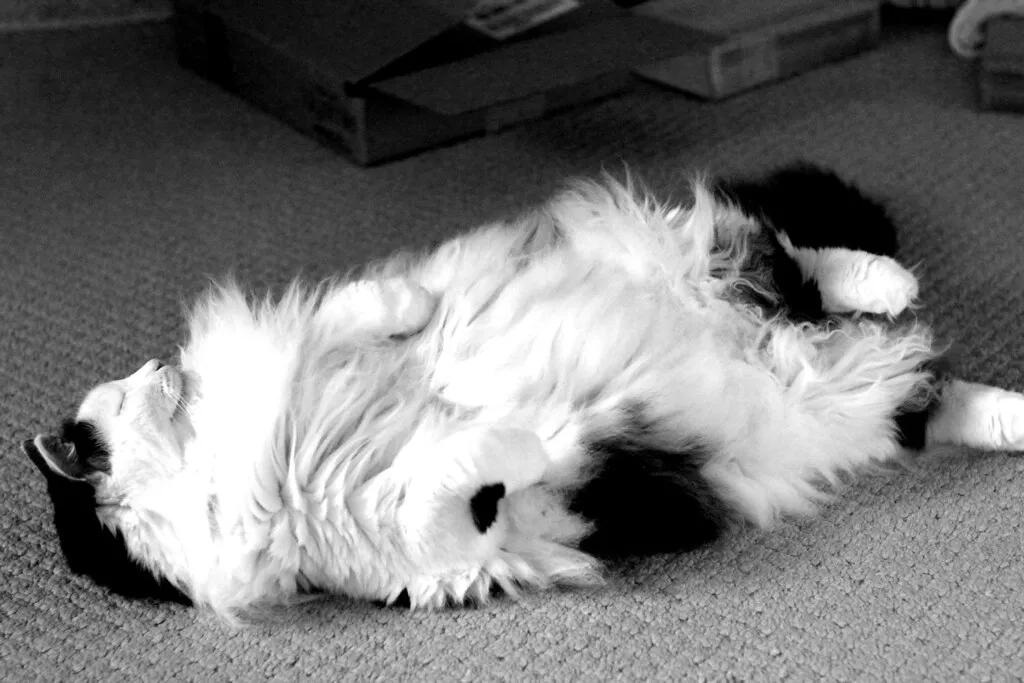
This one surprises people because it looks careless. A cat sprawled on the living-room rug or hallway runner, with her paws in the air, is making a bold statement. In the wild, wide-open sleeping spots get you eaten, so a cat doesn’t do this unless she feels completely safe.
Early on, most cats choose the edges: under furniture, behind the couch, inside a box. They want a wall at their back and a quick exit. Napping in the open means she has stopped scanning for threats, even in her sleep.
Look for the full relaxed package: loose muscles, slow breathing, and ears in a neutral position. Many owners treat early hiding as the only comfort clue, but public relaxation says far more.
- Often settles in after several weeks of consistent safety
- Sleeping spots shift from edges to the middle of rooms
- Bolder breeds may get there sooner, but the pattern follows environment more than genetics
#13: They Give You Slow, Sleepy Blinks
🔥 Would you like to save this?
We'll email this post to you, so you can come back to it later!
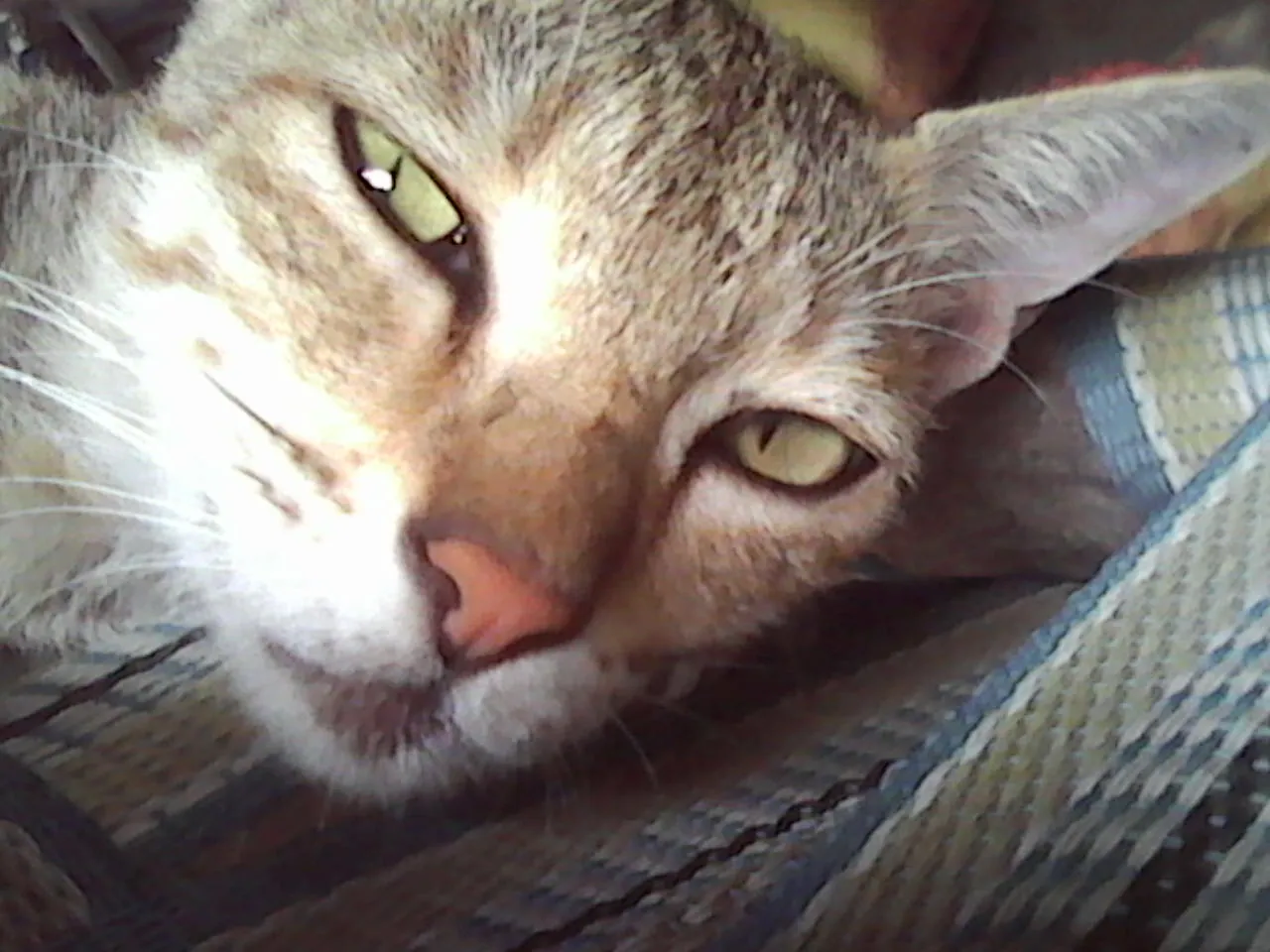
You know the look: she locks eyes with you, then slowly closes and reopens them as if she’s falling asleep mid-thought. That slow blink is one of the clearest trust signals cats have. It rarely shows up with strangers or in unfamiliar places.
Direct staring is a challenge in feline language, so softening it means overriding an instinct. She’s telling you she doesn’t see you as a threat. In 2020, researchers at the University of Sussex found that cats were more likely to approach a person who slow-blinked at them.
Try blinking back slowly. Many cats answer with another blink, or wander over to you. It’s a tiny conversation that only happens once the setting feels safe.
Fast Facts
- The classic version is a soft half-close, a brief pause, then a slow narrowing of the eyes
- It lands best when you sit a few feet away and angle your face slightly to the side
- Relaxed whiskers and a soft face usually come with the real thing
- Skip the blinking game if her ears are flattened or her pupils look wide and dark
Don’t confuse it with constant, unblinking staring. The soft, intermittent version carries the real weight.
#12: They Knead Your Lap or Favorite Blanket Like It’s Dough
🔥 Would you like to save this?
We'll email this post to you, so you can come back to it later!
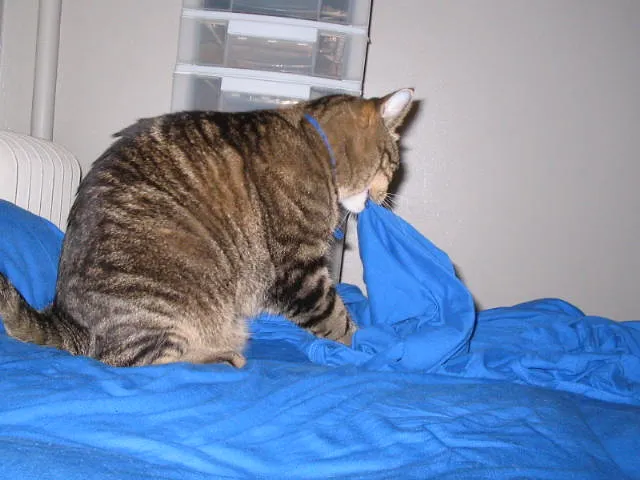
Kneading goes back to kittenhood, when pushing at mom’s belly helped bring the milk down. Adult cats keep the habit, and it now means comfort and ownership. Cats have scent glands in their paw pads, so every push leaves a little personal mark.
The target matters. A settled cat kneads your lap, your blanket, or your bed rather than a random cushion. She’s treating you as part of the safe core of her world.
The pace often slows as she gets drowsy, with half-closed eyes and sometimes a bit of drool. It rarely appears in stressed or transient cats, which is why behaviorists see regular kneading on people as a sign of deep inclusion.
Why It Works: Kneading marks the chosen spot or person as hers, blending her identity with her comfort zone. Yes, the claws are annoying. A folded blanket between you and her toes helps.
#11: They Groom Your Hair or Hands
🔥 Would you like to save this?
We'll email this post to you, so you can come back to it later!
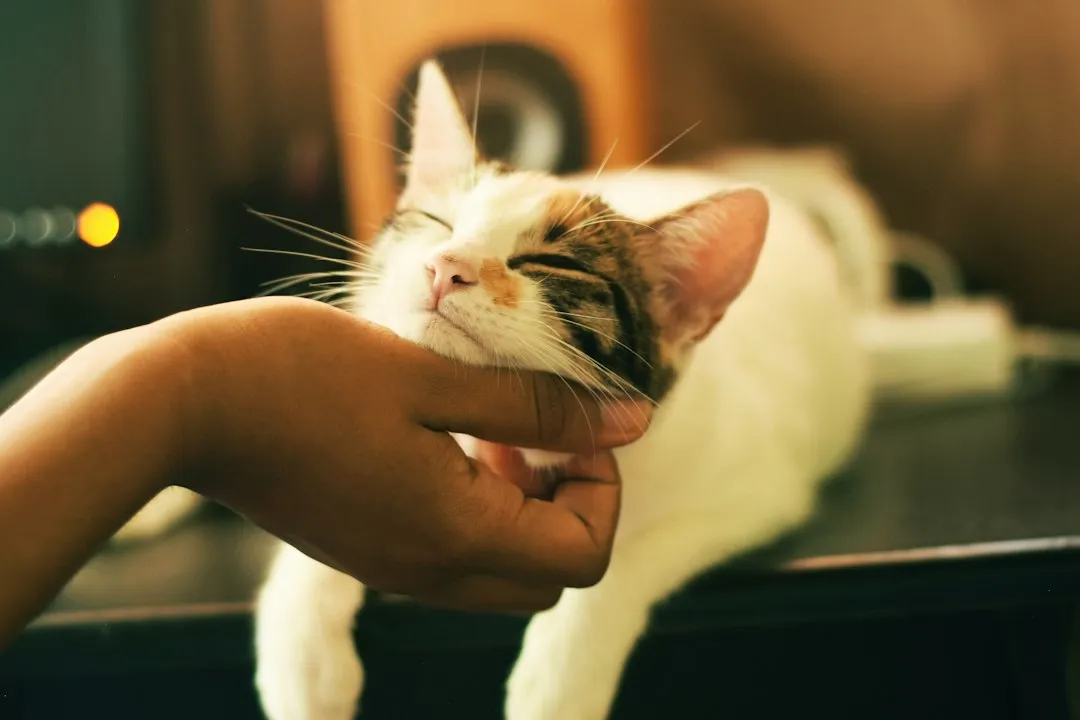
When your cat licks your hair or nibbles gently at your fingers, she’s doing something cats normally reserve for cats they trust. This is allogrooming, social grooming between members of a group. You’ve been moved inside the circle.
It usually develops after weeks of positive routine and rarely targets visitors. Sessions tend to happen when you come home or during quiet evenings on the couch. Grooming spreads shared scent around, so it’s bonding and territory sharing at the same time.
Most people assume grooming is about hygiene. In this case it’s more like a neighborhood handshake: you now smell like us.
Editor’s Note: It’s one of the best counters to the myth that cats are solitary loners who just tolerate people. A cat who grooms you has made a social decision.
#10: They Leave Toys or Prey in Places You Can’t Miss

🔥 Would you like to save this?
We'll email this post to you, so you can come back to it later!
A toy mouse dropped by your chair at 6 a.m. isn’t random. A cat who deposits her catch near you in plain view is sharing resources with a member of her group. The gift is placed to be found, not hidden away like a private stash.
This rarely happens with casual visitors or in temporary housing. It takes a settled sense of who belongs here, and she has decided it includes you.
The offerings often change over time. She may adjust what she brings based on how you react, which means she’s paying attention to you.
- Gifts appear in high-traffic spots like doorways and near your bed
- She may announce the delivery with a distinctive yowl
- The habit tends to repeat for months or years once established
Yes, the gift might be a half-dead moth. Take it as the compliment it is.
#9: They Rotate Between Three or Four Fixed Anchor Spots
🔥 Would you like to save this?
We'll email this post to you, so you can come back to it later!
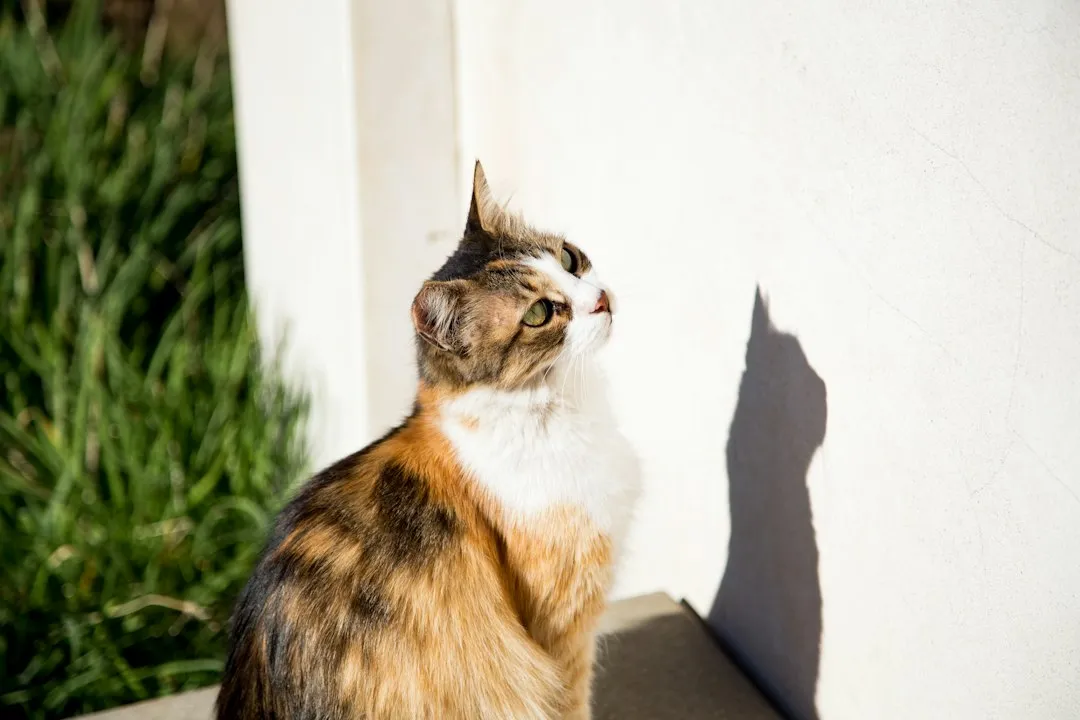
Permanent residents don’t wander randomly. They keep a mental map of prime real estate: a favorite windowsill, a couch corner, a sun patch that moves across the floor. You’ll start to notice the cat in the same places at roughly the same times each day.
The spots usually line up with light, warmth, and household rhythms. She might be on the sunny rug in the morning and the bedroom chair by evening. Sometimes she’ll quietly block access to a spot with her body.
A newer cat explores more diffusely and tries lots of places before narrowing down. Watching for this over a month reveals the shift from guest to property holder. The spots often stay the same through seasons and minor furniture moves.
Try This: Note the exact locations and times for one week. If the pattern is predictable, the territory feels stable to her.
#8: They Patrol the Same Route Through Every Room
🔥 Would you like to save this?
We'll email this post to you, so you can come back to it later!
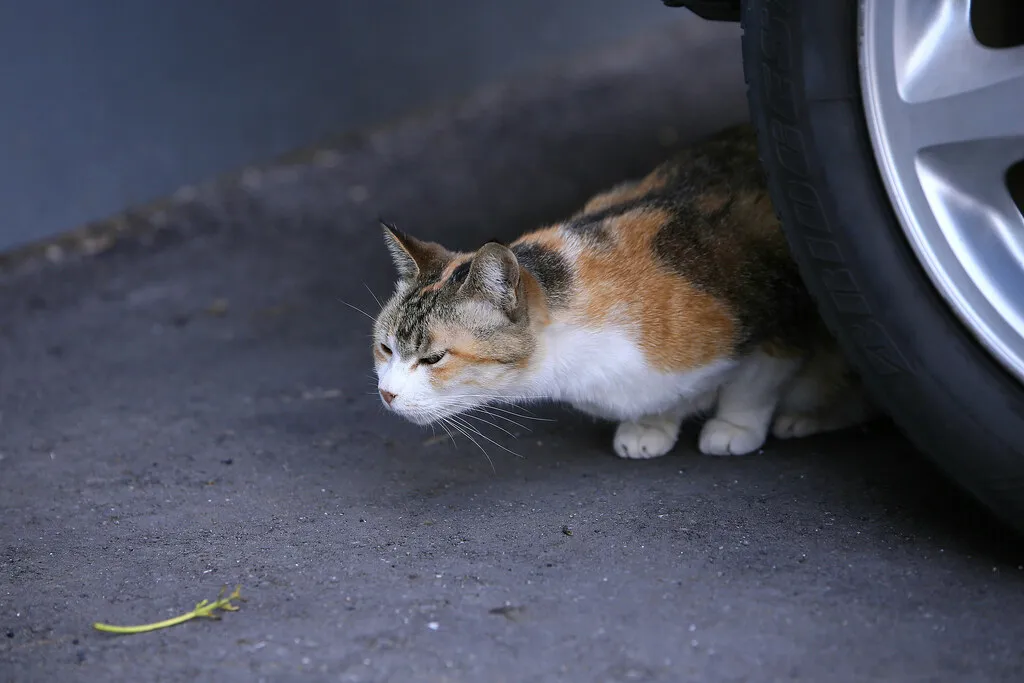
Nervous cats hug walls and skip open areas. A settled cat crosses the floor with her tail up, pauses at windows and doorways, then carries on. It looks like a security guard making rounds, and in a way it is.
This circuit usually covers every major room and often ends at a preferred resting spot. She’s checking that the boundaries remain intact and that nothing has changed since last time. The route gets stronger after she has mapped every exit and resource.
Quick Compare
- Newcomer: stays low, hugs walls, and moves in short dashes between hiding spots
- Settled resident: crosses open floor with a raised tail and stops to look out windows
- Reaction to noise: the newcomer freezes or bolts, while the resident glances over and keeps walking
Some people read it as boredom, but it’s more like low-effort territory maintenance. She isn’t searching for anything. She’s confirming that everything is where she left it.
The Science Behind This: Familiar environments tend to be less stressful for cats than novel ones, and calm patrolling reflects that lower baseline stress.
#7: They Show Their Belly While Lying Near You
🔥 Would you like to save this?
We'll email this post to you, so you can come back to it later!
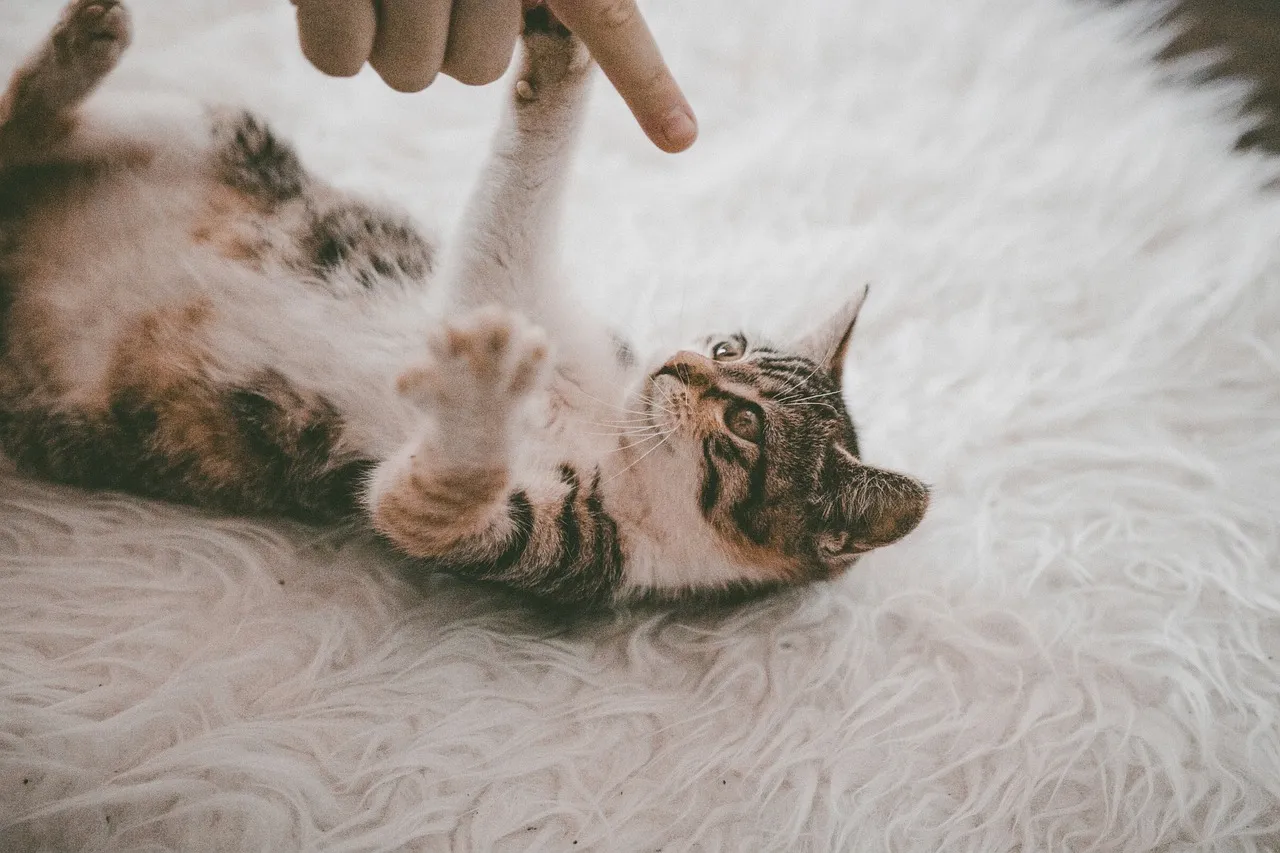
This is different from the belly-up nap on the rug in #14. Here, the location ties directly to you. She stretches out sideways or on her back a few feet from where you’re sitting, trusting that nothing sudden will happen.
It’s a double message: physical vulnerability plus social closeness. She’s relaxed enough to expose her softest spot, and she wants to do it near you.
Here’s the twist. For many cats, a belly display isn’t an invitation to rub it. Plenty of cats will grab your hand with all four paws if you try. The posture communicates security, not a request for touch.
It tends to appear consistently only after weeks of positive handling and stable surroundings.
Insider Tip: Enjoy the display without reaching. Interrupting it can delay further trust signals.
#6: They Meet You at the Door With a Straight, Quivering Tail
🔥 Would you like to save this?
We'll email this post to you, so you can come back to it later!
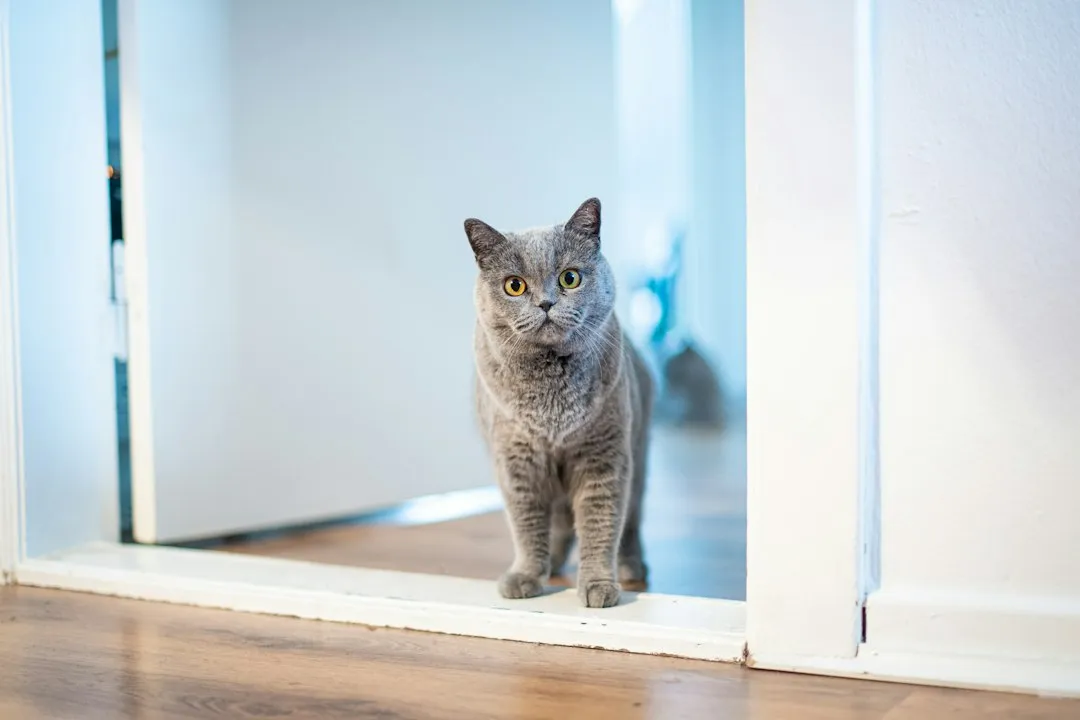
Watch what happens when your key hits the lock. A cat who treats the house as permanent often appears at the door and greets you with her tail straight up. If the very tip trembles, that’s excitement and recognition.
She may chirp, meow, or walk straight to your legs. This rarely happens with delivery people or strangers, so the greeting is aimed at you specifically. You’re a valued return to her territory, not an interruption.
Over time, the ritual becomes automatic and even happens after short absences. The cat chooses a spot where she can monitor arrivals, treating the threshold as part of her domain.
Did You Know: Research on cat-owner attachment suggests many cats show more proximity-seeking after their person returns, which fits the idea of a familiar human as a secure base.
#5: They Follow You From Room to Room Without Asking for Food
🔥 Would you like to save this?
We'll email this post to you, so you can come back to it later!
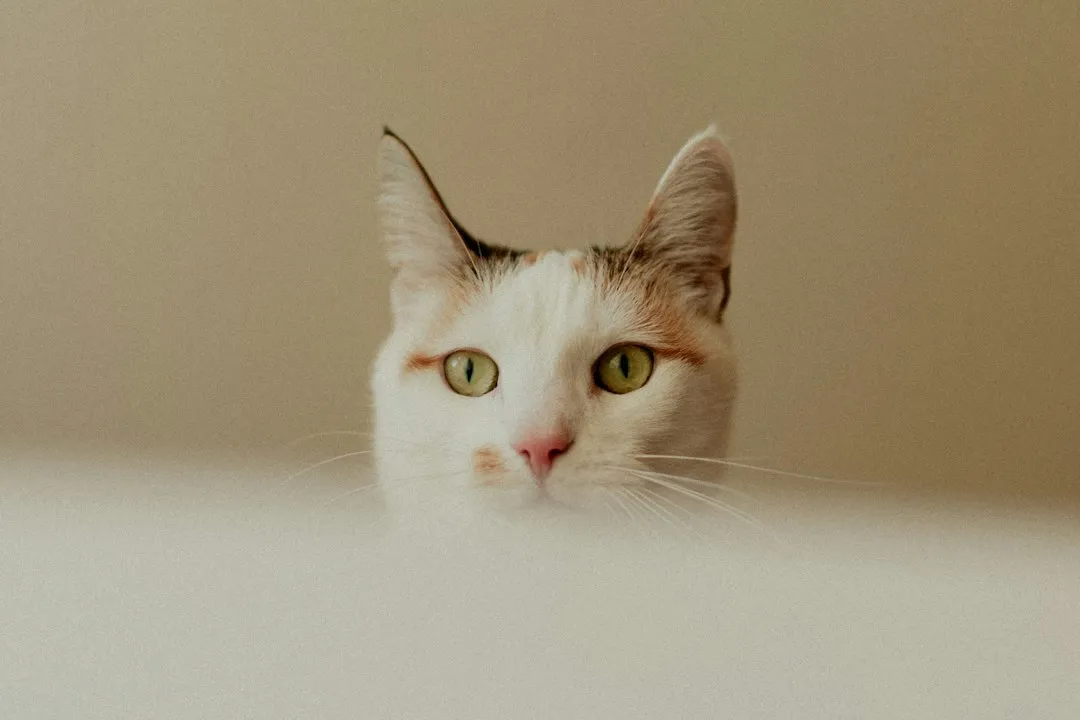
Following you to the kitchen at dinnertime proves nothing. Following you to the bathroom, then the laundry room, then settling nearby while you fold socks is different. There’s no payoff, and she does it anyway.
She keeps a comfortable distance, lies down when you stop, and gets up when you do. It persists outside feeding times, so it can’t be about the bowl. She has folded you into her daily flow.
This habit builds gradually as she confirms that your movements are predictable and harmless. Some owners find it endearing. Others dismiss it as simple curiosity, but the consistency is the clue.
Why It Works: Proximity without need suggests you’ve become part of her predictable, low-stress environment. Your presence is part of what makes the place feel like home.
#4: They Purr Specifically When You Touch Them
🔥 Would you like to save this?
We'll email this post to you, so you can come back to it later!
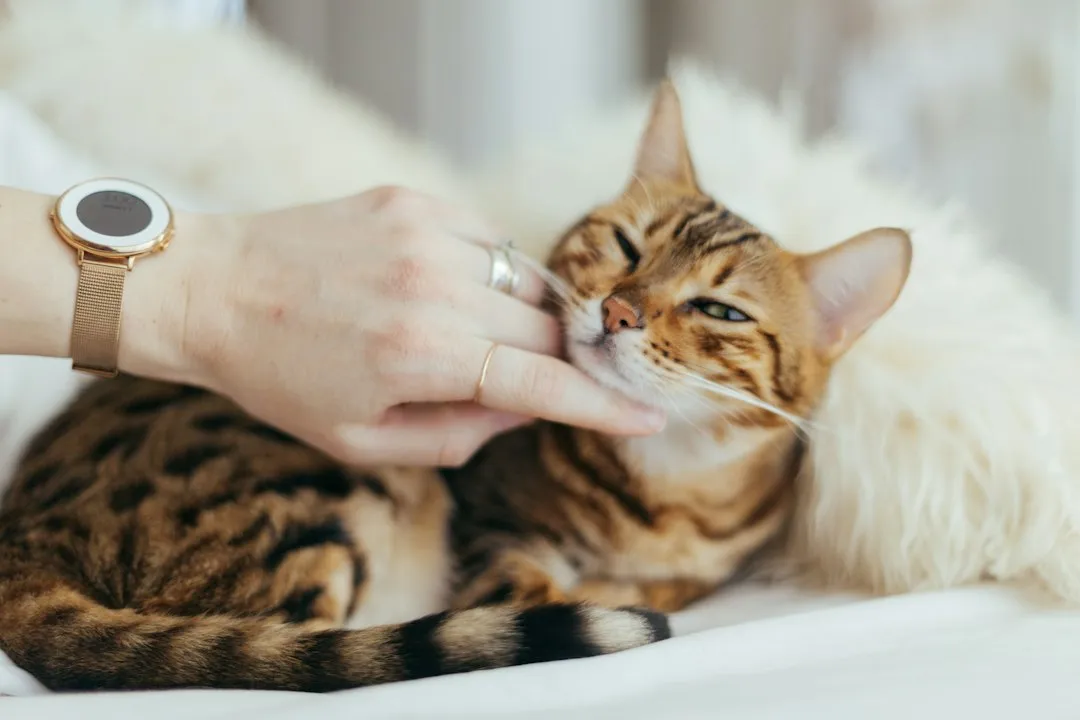
Cats purr for many reasons, including when they’re stressed or hurt. So the purr itself isn’t the clue. The context is.
A settled cat purrs during petting, on your lap, or right after contact, often starting softly and building. It’s frequently combined with kneading or slow blinking. That reliable link between human touch and purring tells you the contact registers as rewarding rather than neutral or stressful.
Worth Knowing
- A cat’s purr is commonly measured in roughly the 25 to 150 Hz range
- Kittens begin purring within their first few days of life
- Cats also purr when frightened, in pain, or at the vet, so body language matters
- The happy version comes with loose muscles, soft eyes, and often kneading
Transient or insecure cats tend to purr more randomly, or when they’re alone and seeking comfort. The behavior strengthens with time in the home and positive handling history.
The Psychology Behind This: Purring is associated with comfort and self-soothing, and a cat who purrs around you has linked you with safety. That social trigger carries real weight when judging how permanent the home feels.
#3: They Investigate Changes Instead of Fleeing From Them
🔥 Would you like to save this?
We'll email this post to you, so you can come back to it later!
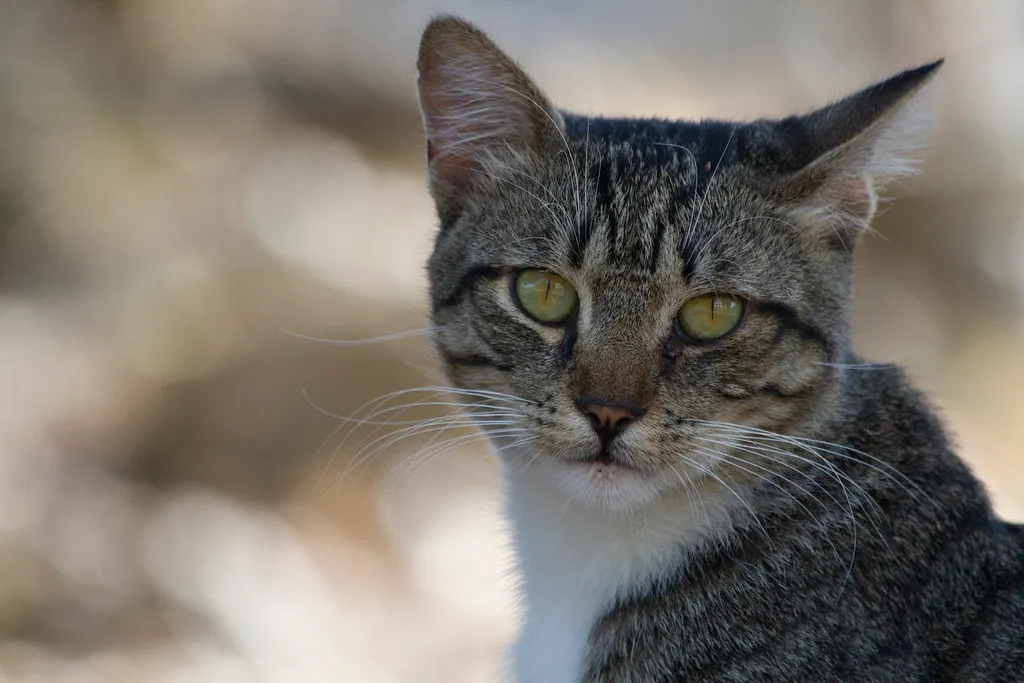
You move the couch, drop a cardboard box in the hallway, or put up holiday decorations. A cat who is still unsure of her place might avoid the area for days. A permanent resident marches over to sniff it, paw it, or climb on top within minutes.
That confidence shows she sees the whole house as mapped safe ground. A rearranged room reads as an opportunity, not a danger. This is one of the clearest signs of reduced vigilance across the entire environment.
- Sniffing and pawing new items within minutes instead of days
- Perching on or inside the change
- No lingering hiding or tense, crouched posture
Some cats are naturally cautious, so a slower reaction doesn’t mean failure. But quick acceptance is a strong sign of environmental mastery.
Editor’s Note: This undercuts the idea that cats hate all change. Settled cats can tell routine variation from true disruption.
#2: They Head-Bunt You When You Come Home or Sit Quietly
🔥 Would you like to save this?
We'll email this post to you, so you can come back to it later!
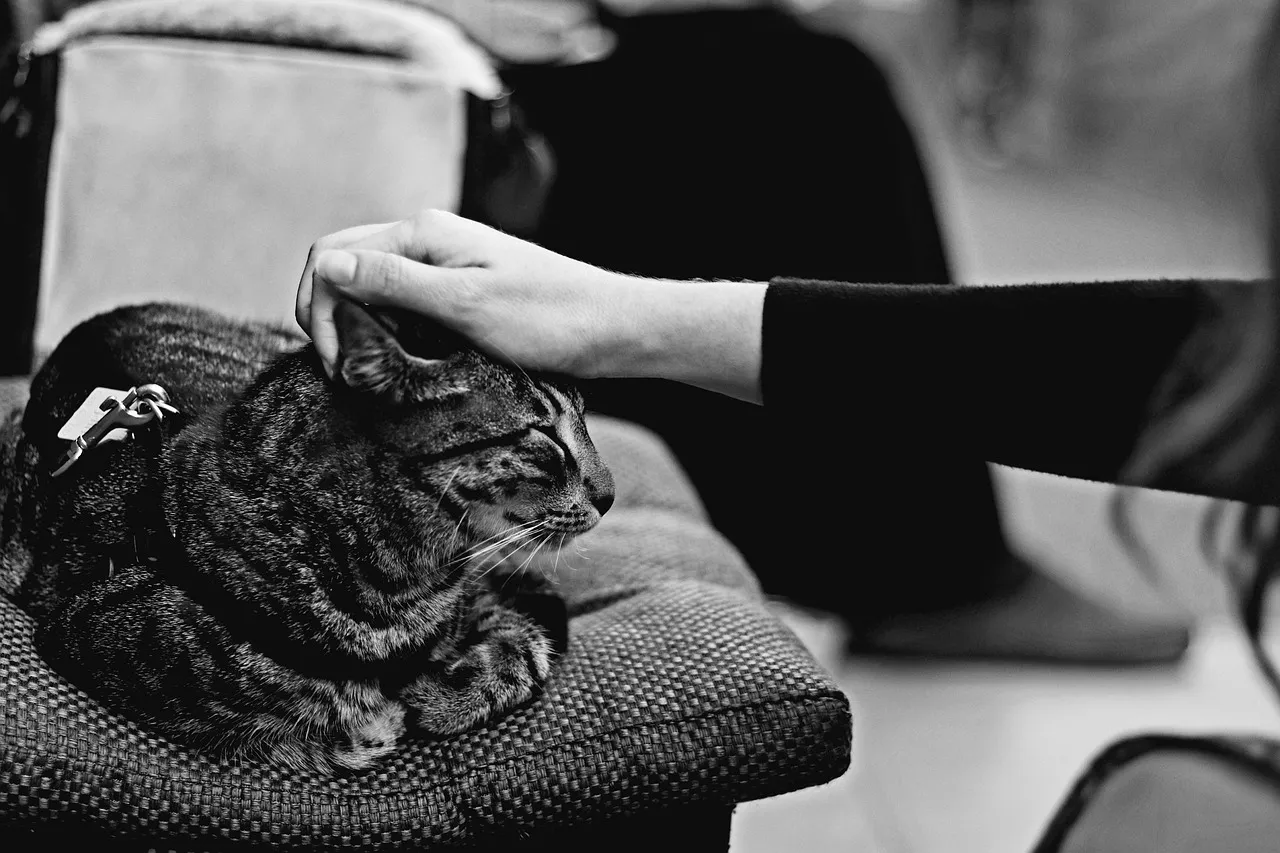
When your cat presses her forehead or cheek into your hand, leg, or face, she’s doing to you what she did to the door frames in #16. She’s depositing facial pheromones, and you’re now on the list of things that belong to her.
The motion often includes a slight push or a pause to hold the contact, mixing scents and building a shared group odor. It grows stronger after consistent positive history and rarely targets casual acquaintances.
It also tends to increase after separations. That means it’s both affection and a reassertion of belonging, a way of saying you smell like us again.
Here’s why it matters. In #16, she claimed the house. In #2, she claims you as part of it.
By The Numbers: Researchers who study cat greetings have documented rubbing as a common part of how cats reunite with their owners.
#1: They Notice When You Leave but Stay Calm in the House
🔥 Would you like to save this?
We'll email this post to you, so you can come back to it later!
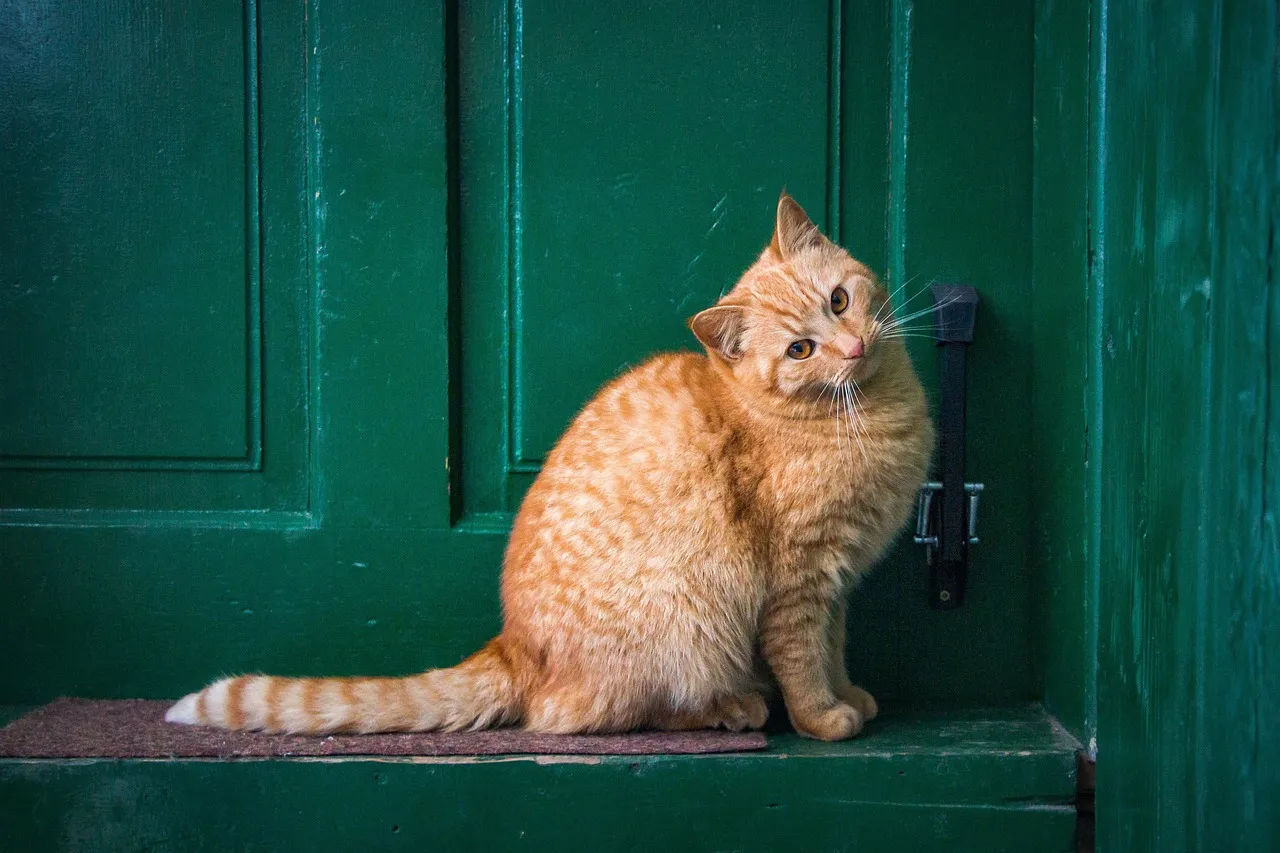
This is the strongest marker, and it’s the least obvious. A cat who feels permanently at home reacts to your absence but not to the building. She might wait by the door, glance at the window, or give a mournful meow when you go. When you’re gone, she stays composed. She eats, naps, and plays.
That combination means two things. You’ve become part of what makes the place emotionally stable, and the house itself feels like hers. Researchers call this secure-base behavior, and it’s been tested in cats, with owner presence helping many animals explore and relax.
The pattern appears more reliably in long-term home cats than in cats in shelter settings.
At a Glance
- Healthy bond: a brief meow or glance as you leave, then she eats, naps, and plays
- Warning signs: nonstop crying, destruction, skipped meals, or accidents outside the litter box
- The research angle: a 2019 Oregon State University study found roughly 64% of cats showed secure attachment to their owners
One caution matters here. A mild reaction when you leave and a happy greeting when you return is a bond. Constant frantic crying, destructive behavior, or refusing to eat while you’re gone is distress, not a sign of attachment, and it deserves a vet or behaviorist conversation.
The Science Behind This: Secure-base research suggests familiar people can help reduce stress and encourage exploration in cats, as in other social species.
Here’s my take: we’re all watching the wrong signs. Most of us wait for the lap cat moment, the big cuddly proof of love, and treat everything else as background noise. But the cat who ignores you in a sunbeam in the middle of the living room floor has paid you a far bigger compliment than one who climbs on you in a crisis.
Those quiet, boring habits are the real evidence. The rubbing, the patrols, the same three favorite spots, the casual naps in the open. Nobody has to tell a cat that a place is home. She decides, one tiny ritual at a time.
So stop waiting for a grand gesture. If she’s rubbing your door frames, blinking slowly, and sleeping belly-up in the hallway, she’s already told you. Did we miss one? Drop it in the comments.

- 23 Warm Corners an Elderly Cat Keeps Returning To All Winter - October 29, 2026
- 16 Behaviours Showing a Cat Considers a House Permanent Now - October 29, 2026
- 15 Wildlife Programmes a Lifetime Pass Holder Over 62 Can Join Free - October 29, 2026