


The bald eagle, America’s national bird and a symbol of freedom and strength, is far more fascinating than what most of us learned in elementary school. While we might recall that these majestic birds grace the Great Seal of the United States, there’s an extraordinary world of bald eagle facts that typically don’t make it into standard curriculum. From their impressive physical capabilities to their surprising behaviors and remarkable conservation story, bald eagles represent one of North America’s most captivating wildlife success stories. Let’s soar into 15 amazing facts about these iconic raptors that will deepen your appreciation for these magnificent birds of prey.
15. Their “Bald” Name Is Actually a Misnomer

Despite their name, bald eagles aren’t actually bald at all. The term originates from the Old English word “balde,” meaning white, referring to the distinctive white feathers on their head and neck that contrast sharply with their chocolate-brown body. This white plumage doesn’t develop until they’re about 4-5 years old. Before reaching maturity, young bald eagles have mostly brown heads and bodies with mottled white patterns on their wings, making them easily mistakable for golden eagles by inexperienced observers. This transformation is one reason why juvenile bald eagles were once mistakenly classified as a different species altogether by early naturalists.
14. They Build the Largest Nests of Any North American Bird

Bald eagles are record-setting architects in the avian world. They construct the largest nests of any North American bird, creating massive structures called “aeries.” These nests average about 4-5 feet in diameter and 2-4 feet deep, but they can grow much larger over time. Eagles often return to the same nest year after year, adding new materials each breeding season. The largest documented bald eagle nest was discovered in St. Petersburg, Florida, measuring 9.5 feet in diameter, 20 feet deep, and weighing over two tons! This extraordinary nest was used continuously for nearly 30 years. Some nests become so heavy that they break the branches supporting them, forcing the eagles to rebuild elsewhere.
13. Their Eyesight Is Extraordinarily Powerful

Bald eagles possess vision that is truly remarkable by human standards. Their eyesight is estimated to be four to seven times stronger than that of people, allowing them to spot a rabbit-sized meal from nearly two miles away. This exceptional visual acuity comes from having more light-sensitive cells in their retinas and a higher concentration of visual nerve connections to the brain. Eagles also have two foveae (areas of acute vision) in each eye compared to our single fovea, giving them both forward-facing and peripheral vision capabilities simultaneously. Additionally, they can see ultraviolet light, helping them track prey that leaves urine trails visible in the UV spectrum. This extraordinary vision is essential for their hunting success from high altitudes.
12. They’re Swimming Champions Among Birds of Prey

Unlike most raptors, bald eagles are surprisingly adept swimmers. When hunting, they sometimes catch fish too heavy to lift out of the water, but rather than abandoning their prey, they use a powerful butterfly-like stroke with their wings to swim to shore while gripping the fish in their talons. This unusual ability has been documented numerous times, with eagles swimming distances of up to a quarter mile. Their hollow bones provide buoyancy, while their large, powerful wings act as effective paddles. Young eagles develop this skill naturally without parental teaching, demonstrating an innate swimming capability that sets them apart from most other birds of prey who avoid water except for bathing and drinking.
11. Their Grip Strength Is Formidable

The talons of a bald eagle exert an astonishing amount of pressure when they grip their prey. Their crushing power measures around 400 pounds per square inch (psi) in each foot—nearly ten times stronger than the average human hand grip. This tremendous force allows them to carry prey weighing up to half their body weight during flight and to instantly immobilize fish and other animals they catch. Each talon is equipped with a sharp, curved claw that can measure over two inches long. Their feet also feature specialized scales and spicules (small, pointed projections) that help them maintain their grip on slippery fish. This powerful grasp is so strong that there have been documented cases of eagles drowning after grabbing fish too large to lift, refusing to release their prey even at the cost of their lives.
10. They Were Once Critically Endangered

The bald eagle represents one of America’s greatest wildlife conservation success stories, but few people realize how close they came to extinction. In 1963, the population had plummeted to just 417 nesting pairs in the lower 48 states, primarily due to DDT pesticide contamination that caused eagles to lay eggs with shells too thin to support embryonic development. Their numbers had declined by approximately 90% from historical levels. After DDT was banned in 1972 and the species received protection under the Endangered Species Act in 1973, a remarkable recovery began. Intensive conservation efforts, habitat protection, and breeding programs gradually rebuilt their numbers. By 2007, bald eagles had recovered sufficiently to be removed from the endangered species list, with populations now exceeding 300,000 individuals across North America. This dramatic comeback from the brink of extinction demonstrates the potential success of focused conservation efforts.
9. They Form Remarkably Long-Term Pair Bonds
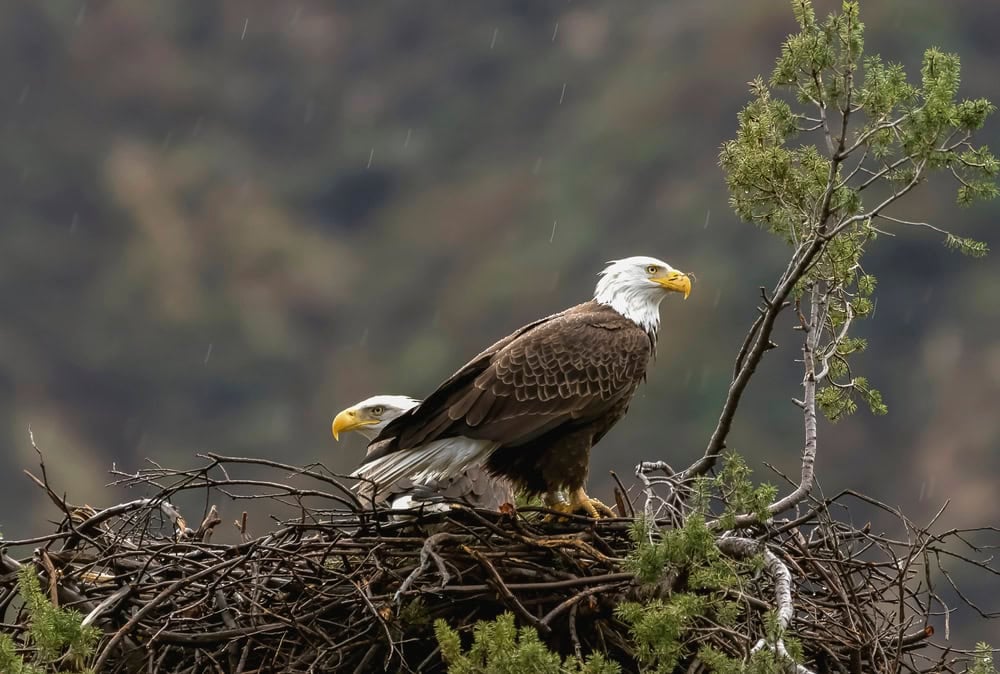
Bald eagles are among the most faithful birds in the animal kingdom, typically mating for life unless one partner dies. These pair bonds can last over 20 years in the wild, with couples returning to the same nesting territory annually. Their courtship displays are spectacular, featuring the famous “cartwheel display” where two eagles fly to great heights, lock talons, and spin toward the earth in a free-fall, separating just before impact. This dramatic behavior tests the strength and courage of potential mates. Once paired, eagles work cooperatively to build nests, incubate eggs, and raise young, with both parents sharing hunting and childcare responsibilities equally. Their synchronized behaviors extend to territorial defense, where pairs coordinate attacks against intruders, demonstrating remarkable communication and cooperation between mates.
8. They Have a Complex Vocal Repertoire

Contrary to popular culture, which often dubs over bald eagle images with the more impressive scream of a red-tailed hawk, real bald eagles have a somewhat less majestic vocalization. Their primary call is a series of high-pitched, whistling or chirping notes that might surprise those expecting a powerful screech. However, bald eagles actually possess a sophisticated vocal repertoire consisting of at least three distinct call types used in different contexts. They employ a “chatter” call for territorial claims and during nest defense, a “peal” call during courtship and pair bonding, and various contact calls between mates and offspring. Eagles also communicate through body language, using postures and feather positions to convey intentions. Young eagles are particularly vocal, using persistent begging calls to solicit food from parents, while adults tend to be more selective about when they vocalize.
7. Their Body Temperature Runs Unusually Hot

Bald eagles maintain an internal body temperature of approximately 106°F (41°C), significantly higher than the human average of 98.6°F (37°C). This elevated temperature supports their high metabolism required for flight and hunting activities. To regulate this heat, eagles employ several adaptations, including holding their wings away from their bodies to release excess warmth and panting to increase evaporative cooling. During extreme cold, they can reduce blood flow to their unfeathered legs and feet through a specialized circulatory system called “rete mirabile” that allows them to stand on ice without freezing. Their thick plumage provides exceptional insulation, with over 7,000 feathers covering their body. This high body temperature also helps them efficiently digest prey and resist certain pathogens that cannot survive at elevated temperatures.
6. They’re Opportunistic Hunters and Scavengers

While we often picture bald eagles dramatically plucking fish from water surfaces, their feeding habits are much more diverse and opportunistic than commonly portrayed. Fish typically constitute about 60% of their diet, but eagles readily scavenge carrion and even steal food from other predators like ospreys and otters—a behavior called kleptoparasitism. During winter months when water bodies freeze, they may switch to hunting waterfowl, small mammals, and even turtles. In some regions, particularly near landfills or fishing ports, eagles have adapted to human activities by scavenging discarded fish waste. They’ve been documented gathering by the hundreds at salmon runs in Alaska and at dams where fish congregate. This dietary flexibility has been a key factor in their successful recovery and adaptation to changing environments.
5. They Can Fly at Remarkable Speeds and Heights

Bald eagles are aerial athletes capable of reaching speeds of 35-43 mph during level flight and diving at over 100 mph when stooping toward prey. Their wingspan, typically between 6 and 7.5 feet, allows for efficient soaring using thermal updrafts and wind currents, enabling them to stay aloft for hours with minimal energy expenditure. Eagles can reach altitudes exceeding 10,000 feet, though they typically hunt from heights of 250-500 feet. Their hollow bones reduce weight while maintaining strength, and their specialized wing shape provides both lift for soaring and maneuverability for hunting. During migration, some bald eagles travel hundreds of miles, though many are partially migratory, moving only as needed to find open water for fishing. Their flight capabilities develop gradually in juveniles, who often spend weeks strengthening their wings and practicing takeoffs and landings before achieving full flight proficiency.
4. Their Beaks Grow Throughout Their Lives
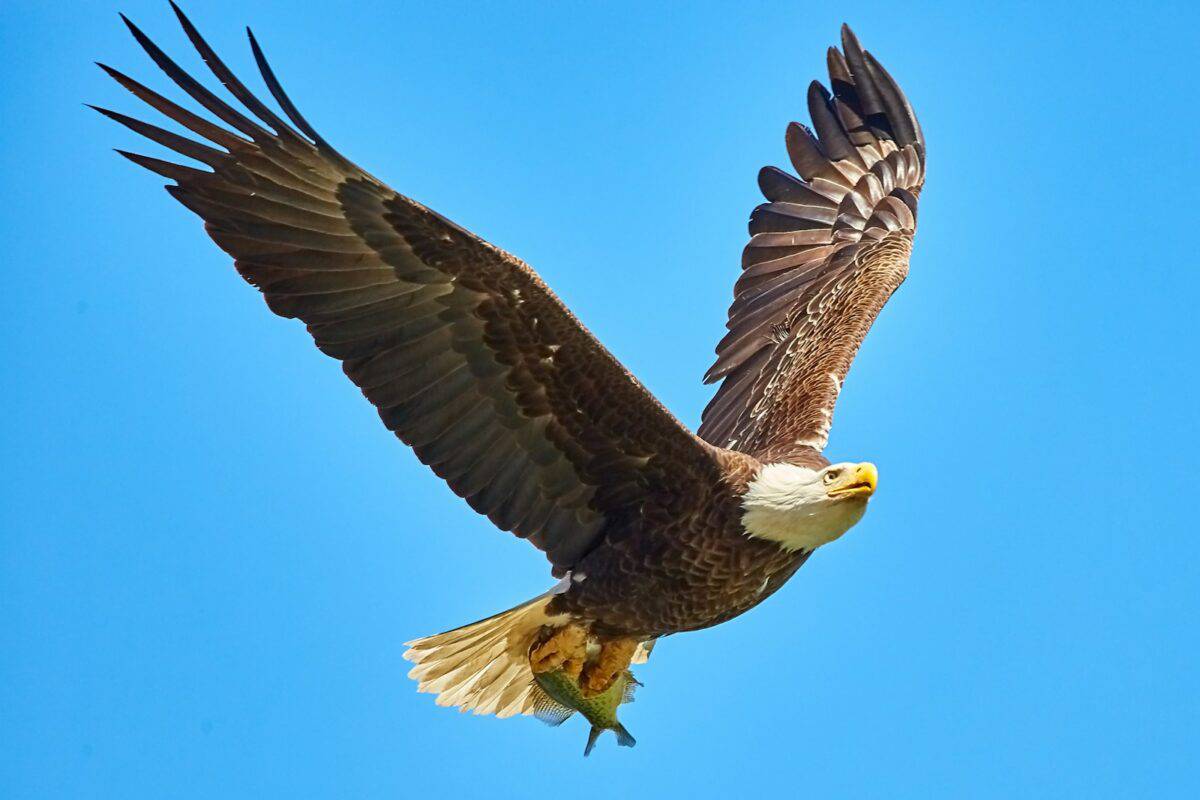
The distinctive hooked yellow beak of the bald eagle is composed of keratin (the same material as human fingernails) and continues growing throughout the bird’s lifetime. To maintain its proper shape and sharpness, eagles must regularly wear down their beaks through normal feeding activities and by rubbing against rough surfaces. This powerful beak exerts enough force to tear through tough animal hides and break apart large prey into manageable pieces. The sharp hook at the tip is perfectly adapted for tearing meat, while the serrated edges assist with gripping slippery fish. Young eagles have dark beaks that gradually turn yellow as they mature at around 4-5 years of age. The beak also contains numerous sensory receptors that help eagles assess their food, particularly important when feeding on carrion where detecting spoilage is crucial for avoiding illness.
3. They Undergo a Dramatic Color Transformation

The transformation of bald eagles from juvenile to adult plumage is one of the most dramatic color changes in the bird world. Newly hatched eaglets have light gray down that changes to chocolate brown feathers within their first weeks of life. Young eagles develop a mottled pattern of brown and white feathers that changes gradually over several years through a process called molting. Their distinctive adult plumage with the pure white head and tail emerges gradually between their fourth and fifth years. During this transition, they pass through several identifiable sub-adult plumage phases that experienced birders can use to determine approximate age. Interestingly, their eyes also change color, starting as dark brown in juveniles and eventually becoming pale yellow in adults. This lengthy maturation process corresponds with sexual maturity, with most eagles beginning to breed only after achieving their adult plumage.
2. Their Average Lifespan Is Remarkably Long

Bald eagles are among the longest-lived birds in North America, with a wild lifespan averaging 20-30 years. The oldest confirmed wild bald eagle lived to 38 years, though captive individuals have survived into their 50s. This longevity is particularly impressive considering the challenges they face, including predation risks as juveniles, habitat loss, and human-related threats like collisions with vehicles, power lines, and wind turbines. The mortality rate is highest during their first year, with approximately 50% of eaglets not surviving to their first birthday. Those that reach adulthood typically breed annually for 10-15 years, though reproduction often becomes less successful in their later years. Their long lifespan is supported by few natural predators as adults, a diverse diet that ensures consistent nutrition, and their ability to store fat reserves during times of abundant food, helping them survive temporary shortages.
1. Remarkable Facts About Bald Eagle Families

Bald eagle family dynamics reveal fascinating behaviors rarely covered in educational settings. Eagle parents share incubation duties nearly equally, with each taking shifts of 1-3 hours to keep their eggs at the optimal temperature of approximately 99°F (37°C). Once hatched, eaglets develop at an astonishing rate, growing from about 3 ounces at birth to nearly 10-12 pounds in just three months—an increase of over 50 times their hatching weight. Interestingly, eagles practice a form of natural population control through sibling competition. When food is scarce, the older, stronger eaglets may prevent younger siblings from receiving food, ensuring that at least some offspring survive rather than all starving. Parents do not intervene in this process. After fledging at around 10-12 weeks, young eagles often remain dependent on their parents for food and protection for an additional 4-12 weeks while perfecting their flying and hunting skills. The complex family behaviors demonstrate sophisticated evolutionary adaptations that maximize survival in varying environmental conditions.
Conclusion: America’s Bird Beyond the Classroom
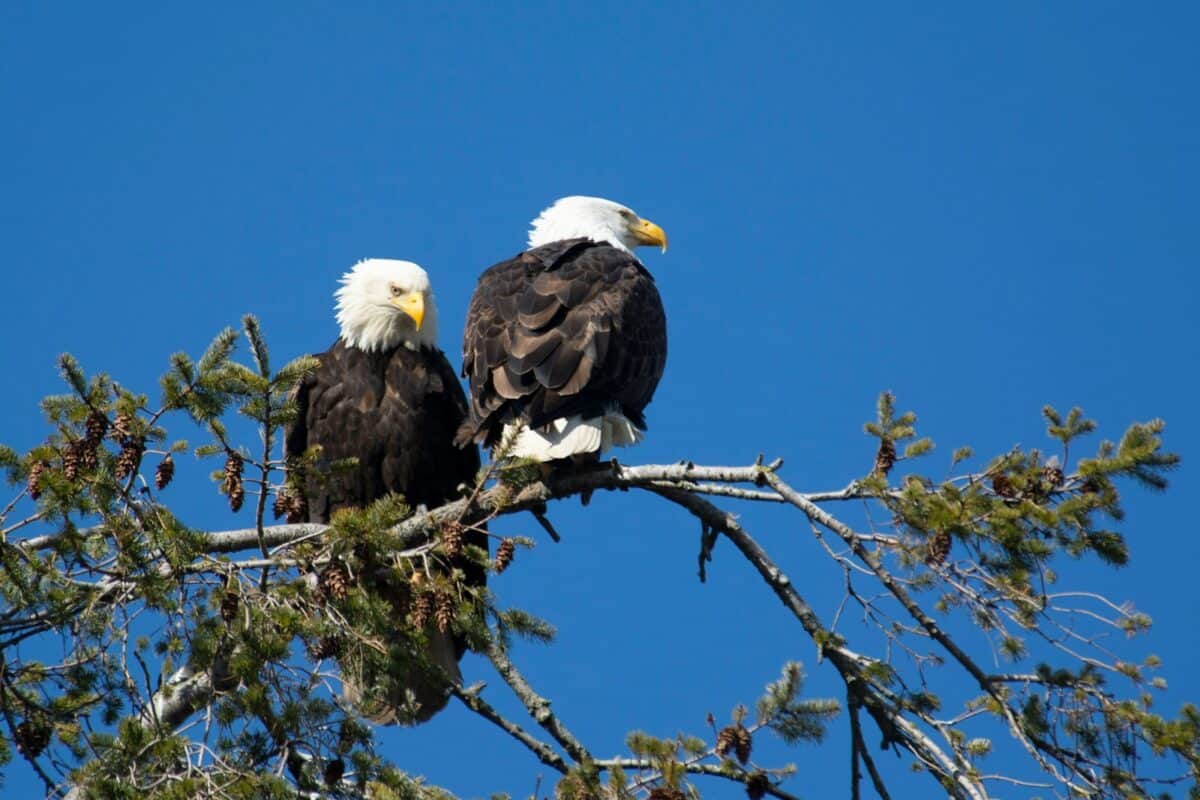
The bald eagle’s story extends far beyond the simplified narratives often presented in school textbooks. As we’ve discovered through these 15 remarkable facts, these birds possess extraordinary physical capabilities, complex social behaviors, and a conservation history that represents both human environmental failures and remarkable recovery successes. Their near-extinction and subsequent recovery stand as a powerful reminder of both our impact on wildlife and our capacity to reverse damage when committed to conservation. Understanding these magnificent birds more deeply enhances our appreciation not just for the species itself, but for the delicate ecological balance they represent in North American ecosystems. The bald eagle continues to serve not only as a national symbol but as a living testament to the resilience of nature when given the protection and respect it deserves.

As a little kid, I fell in love with nature, wildlife, and animals. Living in the USA, South Africa, Italy, China and Germany gave me the opportunity to discover the world's Wildlife. My favorite animals are Mountain Gorillas, Siberian Tigers, and Great White Sharks.
I'm a certified PADI Open Water Diver, went to Everest Base Camp and Trekked Gorillas in Uganda. I hold a Master of Science in Economics and Finance.
Please send any feedback to feedback@animalsaroundtheglobe.com
- 10 Most Unique Reptiles You will See in the US - July 21, 2026
- 3 Dangerous Invasive Species the USA Must Eradicate - July 21, 2026
- 10 Things That Calm Cats And 4 That Make Them Nervous - July 21, 2026