

Imagine walking through a dense rainforest or arid desert and suddenly locking eyes with a creature that looks like it just stepped off a spaceship. Lizards, with their bizarre shapes, electrifying colors, and outlandish features, can seem more like cosmic inventions than earthbound animals. Some of these scaly beings are so unique, they could easily inspire the next big blockbuster in science fiction. Let’s dive into the awe-inspiring world of fifteen lizards that truly look like they belong in another universe.
The Satanic Leaf-Tailed Gecko Nature’s Master of Disguise

The Satanic Leaf-Tailed Gecko isn’t just a mouthful to say—it’s a jaw-dropper to behold. Native to Madagascar, this lizard perfectly mimics a dead leaf, down to its jagged edges and vein-like markings. Its tail, twisted and frayed, adds to its eerie illusion, making predators think it’s nothing more than forest debris. The gecko’s bulging red eyes and flattened body only enhance its alien appearance. When threatened, it can flatten itself even more, blending seamlessly into the forest floor. This stealthy camouflage is its main defense, but up close, its haunting look is nothing short of sci-fi magic. If ever there was a lizard that looked like it could vanish into thin air, this is it.
Flying Dragon The Real-Life Glider

The Flying Dragon, or Draco volans, looks like a miniature dragon ready to soar across alien worlds. With elongated ribs supporting wing-like flaps of skin, this lizard can glide from tree to tree in search of food or mates. Its colorful “wings” display vibrant hues of orange, blue, and yellow, flashing in the sunlight as it leaps. The Flying Dragon’s ability to glide up to thirty feet is both a survival tactic and a dazzling spectacle. Its head is crowned with a throat flap, or dewlap, that fans out dramatically, making it seem even more exotic. Watching one in action, it’s hard not to imagine a world where dragons really do exist—just at a much smaller scale.
Thorny Devil: The Spiky Survivor

The Thorny Devil, with its armor of sharp spikes, looks like it’s wearing a suit made for battle on a distant planet. Found in the harsh Australian Outback, this lizard’s entire body is covered in conical spikes that deter predators and help it blend into its sandy surroundings. Its coloration shifts from golden brown to reddish, depending on the temperature and environment. The Thorny Devil’s gait is a jerky, robotic walk, making it seem even more otherworldly. Its “false head” on the back of its neck confuses attackers, while grooves in its skin channel water directly to its mouth. This lizard’s design is so intricate and bizarre, you’d swear a science fiction artist dreamed it up.
Armadillo Girdled Lizard The Living Bracelet

The Armadillo Girdled Lizard looks like a creature forged from ancient armor. When threatened, it curls into a tight ball, biting its own tail and transforming into a living, spiky bracelet. Its overlapping, bony scales resemble medieval chainmail, offering protection from predators. This South African native is social, often seen basking in groups on rocky outcrops. Despite its fierce appearance, it feeds mainly on ants and other small insects. Its defensive posture is not just effective—it’s visually stunning and almost mechanical in its precision. The Armadillo Lizard’s unique look makes it a star among reptile enthusiasts and anyone who loves creatures that seem touched by fantasy.
Jackson’s Chameleon The Three-Horned Wonder

Jackson’s Chameleon could easily pass as a tiny dinosaur or a visitor from a prehistoric planet. What sets this chameleon apart are the three prominent horns jutting from its head, reminiscent of a Triceratops. Native to East Africa, it uses its independently moving eyes to scan for insects, giving it a constantly alert, almost robotic demeanor. The chameleon’s skin can shift through shades of green, yellow, and blue, adapting to its environment and mood. Its slow, deliberate movements and tongue that shoots out like a sci-fi gadget add to the surreal experience of watching one. Jackson’s Chameleon is a living relic, a reminder that our world still harbors creatures that defy belief.
Giant Leaf-Tailed Gecko The Ultimate Illusionist

The Giant Leaf-Tailed Gecko takes camouflage to a level that borders on supernatural. Larger than its satanic cousin, this gecko sports a broad, flat tail that looks exactly like a decaying leaf. Its skin is mottled with spots and stripes, mimicking the textures of bark and moss. Native to Madagascar’s rainforests, it spends its days hidden in plain sight, only becoming active at night. Its eyes are huge and lidless, reflecting light with a ghostly sheen. When threatened, it can open its mouth wide to reveal a startling red interior, scaring off would-be predators. The Giant Leaf-Tailed Gecko’s uncanny disguise is so convincing, it often goes unnoticed even by experienced herpetologists.
Mexican Alligator Lizard The Emerald Jewel

The Mexican Alligator Lizard looks like it was sculpted from bright green glass. Its vibrant, metallic scales shimmer in the sunlight, giving it an almost artificial appearance. Native to the cloud forests of Mexico, this lizard is arboreal, spending most of its life climbing through dense foliage. Its stocky body and strong limbs resemble those of its namesake, the alligator, but on a much smaller scale. The lizard’s piercing blue eyes and electric coloration make it seem straight out of a fantasy world. Despite its stunning looks, it is threatened by habitat loss—a reminder that even the most magical creatures need protection.
Frilled-Neck Lizard The Dramatic Performer

The Frilled-Neck Lizard is famous for its startling display: when threatened, it unfurls a massive, colorful frill around its head and bolts away on two legs. This dramatic act, reminiscent of a sci-fi creature defending its territory, can make it look twice its normal size. Native to northern Australia and New Guinea, the frill’s bright orange, red, and yellow hues are both a warning and a spectacle. The lizard’s ability to sprint upright adds to its alien charm, making it look like a miniature dinosaur in action. Its normal demeanor is much calmer, as it spends most of its time hunting insects or basking in the sun. The Frilled-Neck Lizard’s combination of flair and function is truly out of this world.
Crocodile Skink The Miniature Dragon

If you’ve ever dreamed of owning a pet dragon, the Crocodile Skink is as close as it gets. With its spiny, armored back and angular, fierce-looking head, this lizard looks like it was sculpted for a fantasy epic. Native to the rainforests of New Guinea, the Crocodile Skink sports dark, almost black scales with striking orange rings around its eyes. Its slow, deliberate movements and preference for hiding in moist leaf litter make it both mysterious and enchanting. Despite its fierce looks, it’s a shy creature, often playing dead when disturbed. The Crocodile Skink’s magical appearance has made it a favorite among reptile enthusiasts worldwide.
Mossy Leaf-Tailed Gecko The Master of Moss

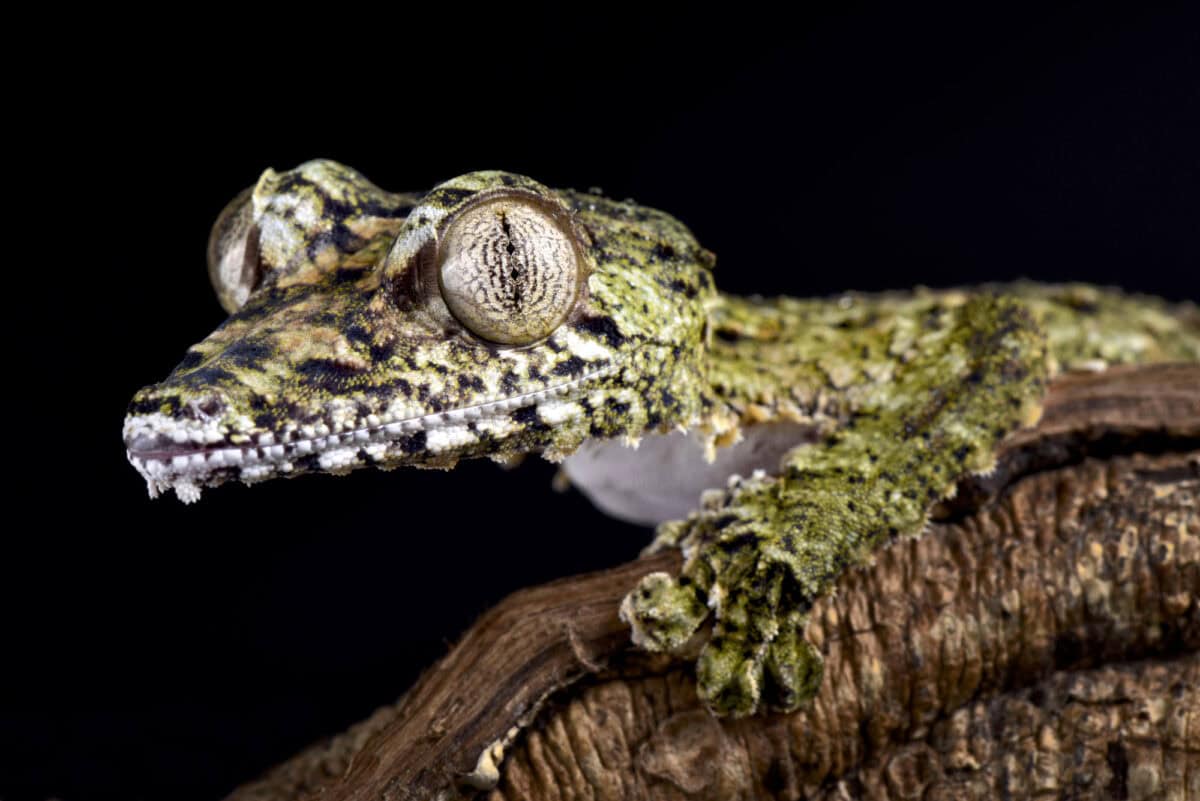
The Mossy Leaf-Tailed Gecko is a true chameleon of the lizard world, designed to vanish among moss and lichen. Its rough, green and brown skin mimics the textures of mossy tree bark, making it nearly invisible when at rest. Native to Madagascar, this nocturnal lizard is famous for its leaf-shaped tail and fringed skin, which break up its outline against the forest background. Its wide, lidless eyes give it a perpetually surprised look, adding to its surreal appearance. When threatened, it flattens its body and remains motionless, relying on its camouflage to escape detection. The Mossy Leaf-Tailed Gecko is so well-adapted, it often seems more like a figment of imagination than a real animal.
Blue Crested Lizard The Electric Stunner

The Blue Crested Lizard, found in Southeast Asia, looks like a living sculpture painted in electric blue and turquoise. Its vibrant crests run along its head and back, creating a striking silhouette against the green jungle. During the breeding season, males become even more colorful, using their dazzling hues to attract mates and intimidate rivals. The lizard’s agile movements and ability to change shades make it both mesmerizing and elusive. Its bright coloration also serves as a warning to predators, signaling that it is not an easy meal. The Blue Crested Lizard’s dazzling appearance could easily fit into a futuristic landscape filled with neon lights and alien lifeforms.
Komodo Dragon The Monstrous Giant

The Komodo Dragon is the largest lizard on Earth, and it looks every bit like a creature from a monster movie. Native to a handful of Indonesian islands, these giants can grow up to ten feet long and weigh over 150 pounds. Their muscular bodies, rough skin, and piercing eyes give them a prehistoric, menacing aura. Despite their size, Komodo Dragons are skilled hunters, capable of taking down large prey with their powerful jaws and venomous bite. Watching one move through its natural habitat is like witnessing a dinosaur come to life. The sheer size and presence of the Komodo Dragon make it a true titan of the lizard world.
Green Basilisk The Jesus Lizard

The Green Basilisk, often called the “Jesus Lizard,” has a superpower that seems ripped from the pages of science fiction—it can run on water. This Central American native sports a tall, sail-like crest on its head and back, adding to its striking profile. When fleeing predators, the basilisk sprints across the surface of ponds and streams, using its long toes to slap the water and stay afloat. Its vibrant green scales and alert yellow eyes make it look perpetually on edge, as if ready to bolt at any moment. The Green Basilisk’s combination of speed, agility, and unique appearance makes it seem almost magical.
Gila Monster The Toxic Beauty

The Gila Monster is one of the few venomous lizards in the world, and its chunky, beaded body looks both beautiful and dangerous. Native to the deserts of the southwestern United States and Mexico, the Gila Monster’s skin is covered in bright orange and black patterns, warning would-be predators to steer clear. Its slow, lumbering gait hides a potent bite, which delivers neurotoxic venom. Despite its fearsome reputation, the Gila Monster spends most of its life underground, emerging only to feed and bask in the sun. Its bold coloration and unique defensive tactics make it a true oddity, perfectly suited for a sci-fi setting.
La Palma Giant Lizard The Lost Giant

The La Palma Giant Lizard was once believed to be extinct, but rediscoveries in recent decades have brought this prehistoric-looking giant back into the spotlight. Native to the Canary Islands, this lizard can grow over two feet long, with a stocky body and thick, powerful tail. Its rugged scales and somber coloration give it a primeval look, as if it’s a survivor from a forgotten epoch. The lizard’s diet consists of fruits, insects, and small animals, and it plays a vital role in its island ecosystem. The story of its rediscovery is almost as remarkable as its appearance, proving that even the most fantastic creatures can still surprise us.
Tokay Gecko The Neon Night Stalker

The Tokay Gecko is a nocturnal marvel, famous for its loud, distinctive calls and vibrant coloration. Its skin is a patchwork of electric blue, gray, and orange spots, making it look like a creature designed for a neon-lit cityscape. Native to Southeast Asia, the Tokay Gecko is a fierce predator, hunting insects and small animals with lightning-fast reflexes. Its strong jaws and vocal prowess make it both a formidable and fascinating presence in its habitat. The Tokay’s otherworldly appearance and piercing gaze have earned it a place in folklore and legend throughout its range. Every encounter with a Tokay Gecko feels like meeting a creature from another dimension.

As a little kid, I fell in love with nature, wildlife, and animals. Living in the USA, South Africa, Italy, China and Germany gave me the opportunity to discover the world's Wildlife. My favorite animals are Mountain Gorillas, Siberian Tigers, and Great White Sharks.
I'm a certified PADI Open Water Diver, went to Everest Base Camp and Trekked Gorillas in Uganda. I hold a Master of Science in Economics and Finance.
Please send any feedback to feedback@animalsaroundtheglobe.com
- 13 Cat Breeds That Get Along with Dogs - July 20, 2026
- The 12 Largest Dog Breeds That Still Love to Cuddle - July 20, 2026
- 12 Pet Habits That Secretly Mean They Love You - July 20, 2026