
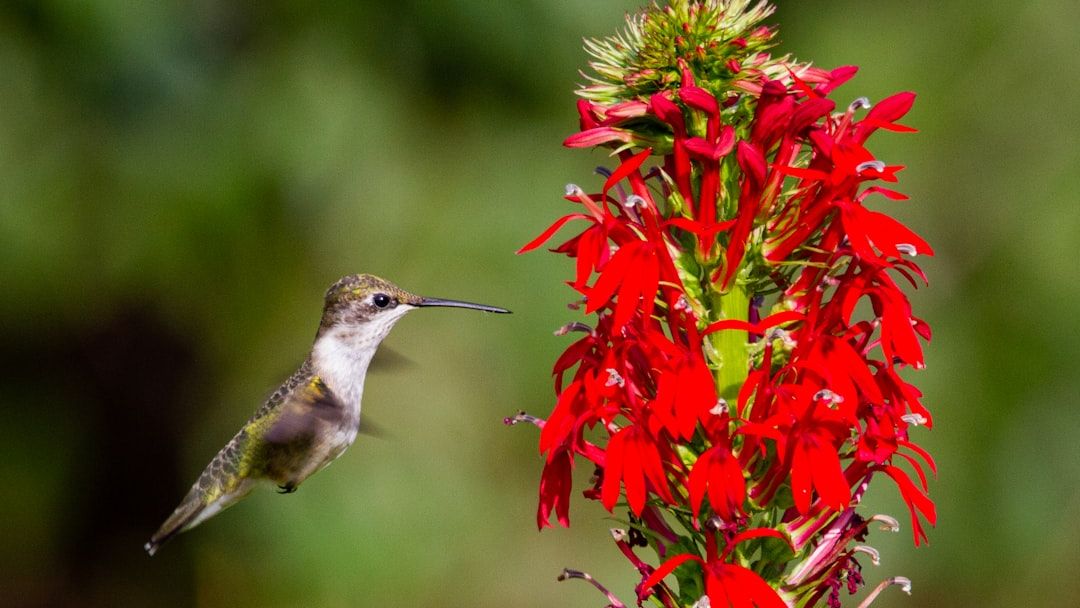
You hung the feeder. You filled it with fresh nectar. You waited. And maybe a hummingbird stopped by once or twice before disappearing for the rest of the season. Sound familiar? The truth is, a plastic feeder alone is rarely enough to hold hummingbirds in your yard for long. What actually keeps them coming back all summer is something far more alive, far more beautiful, and far easier to achieve than most gardeners realize.
The real secret is planting the right flowers – the ones that mimic exactly what hummingbirds are hardwired to find in the wild. Tubular blooms, rich nectar, staggered bloom times, and a riot of red, orange, and purple. Get the plant selection right and your garden won’t just attract hummingbirds. It will become their territory. Here are 15 plants that will make that happen, from reliable old favorites to a few that might genuinely surprise you.
15 – Lantana
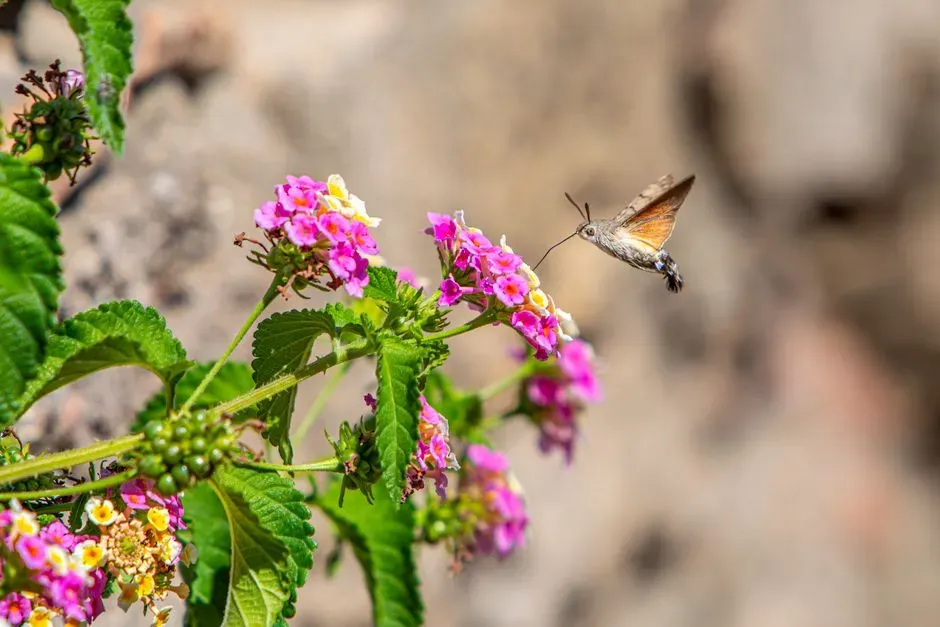
If you want one plant that absolutely refuses to stop performing all summer, lantana is it. Those dense, multicolored flower clusters – cycling through gold, orange, pink, and red as they age – are essentially a neon sign for hummingbirds cruising your neighborhood. Lantana blooms from late spring straight through to the first hard frost, which means it bridges the gaps when other plants are resting. It thrives in full sun, shrugs off drought, handles heat that would wilt lesser plants, and asks almost nothing in return.
What makes lantana genuinely special in a hummingbird garden is its stamina. Many showier plants bloom for a few weeks and then fade. Lantana just keeps going. Plant it along a sunny border, let it spill over a retaining wall, or grow it in containers on a hot patio – hummingbirds will find it regardless. Butterflies show up for it too, turning the whole area into a living, buzzing, flickering spectacle from July straight into fall.
Fast Facts
- Blooms late spring through first hard frost – one of the longest seasons on this list
- Thrives in full sun with little to no supplemental watering once established
- Color clusters shift from gold and orange to pink and red as individual flowers age
- Pulls in both hummingbirds and butterflies simultaneously – a true dual-purpose plant
- Grows well in containers, borders, and retaining wall spill-overs
14 – Bee Balm (Monarda)
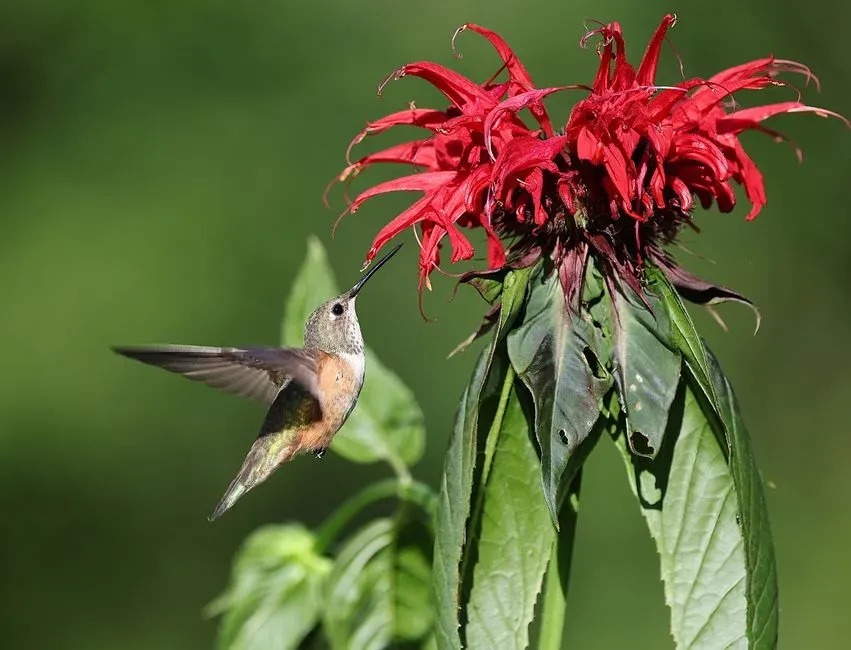
Bee balm looks like something a hummingbird would design if given the chance – wild, spiky, explosively red, with dozens of narrow tubular florets radiating from a central head like a firework frozen mid-burst. It blooms from mid-summer into early fall, right when some of the spring bloomers are winding down, which makes it a crucial piece of the puzzle for keeping hummingbirds engaged through the long heat of August. It prefers moist, well-drained soil and does well in full sun to partial shade.
Beyond its hummingbird credentials, bee balm earns its place in the garden twice over. Its aromatic foliage repels deer – a genuine blessing if you garden in areas where deer pressure is real. Regular deadheading keeps the blooms coming, and dividing clumps every few years prevents the center from dying out. The native red variety, Monarda didyma, is the strongest draw for hummingbirds specifically, though the pink and purple cultivars attract them too. Once it’s established, it spreads cheerfully and rewards very little effort with a lot of drama.
13 – Salvia
Salvia might be the single most hummingbird-reliable genus on this entire list. That’s not a small claim – there are hundreds of species and cultivars, and the best ones for hummingbirds produce tall, dense spikes of tubular flowers in the exact shades hummingbirds are most drawn to: scarlet red, deep purple, vivid blue. They bloom from late spring all the way through fall, and unlike some showier plants, they don’t need coaxing. Full sun, decent drainage, and they just perform.
Salvia guaranitica ‘Black and Blue’ – with its near-black calyxes and cobalt blue flowers – is one of the most jaw-dropping plants you can grow specifically for hummingbirds, and it’s barely as well known as it deserves to be. Salvia splendens lights up containers in burning red. Native salvias like Salvia coccinea self-seed through a garden and return reliably year after year. All of them are drought-tolerant, deer-resistant, and attractive to bees and butterflies alongside the hummingbirds. Prune them back by a third mid-season and they’ll flush again with a second wave of blooms.
Why It Stands Out
- Salvia’s tubular flower structure physically excludes most insects – nectar is reserved almost exclusively for hummingbirds
- Salvia coccinea ‘Lady in Red’ stays compact at 18–24 inches and blooms slightly earlier than the straight species
- Hardy in USDA zones 7–10; grown as a reliable annual everywhere else
- Deadheading mid-season triggers a fresh flush – more blooms, more hummingbird visits
- Deer-resistant and drought-tolerant once established – low-maintenance, high-reward
12 – Trumpet Vine (Campsis radicans)
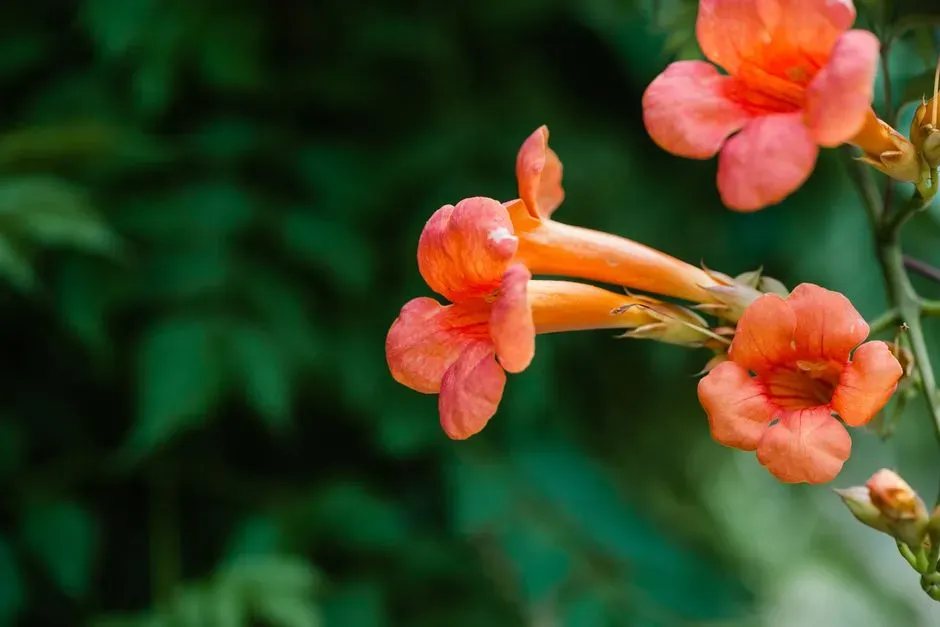
If you have a fence, a trellis, an old shed, or a pergola that needs covering, trumpet vine will handle that job with spectacular enthusiasm – and hummingbirds will thank you for it. The flowers are enormous by hummingbird-plant standards: wide, flared, orange-red trumpets that open in clusters and pour out nectar in quantities that smaller flowers simply can’t match. It blooms from summer well into fall, and once a hummingbird discovers it, that vine becomes a daily stop on their territorial circuit.
Fair warning: trumpet vine is genuinely vigorous, and that’s putting it politely. It can cover a two-story wall in a few seasons, sends up suckers through nearby lawn, and will find its way under roof shingles if you let it grow unchecked against a house. Plant it somewhere it has room to move, prune it hard every winter, and it’s an extraordinary garden asset. Ignore it for a few years and it becomes a project. The payoff for managing it well is a living hummingbird magnet that blooms heavily and looks frankly spectacular.
11 – Cardinal Flower (Lobelia cardinalis)
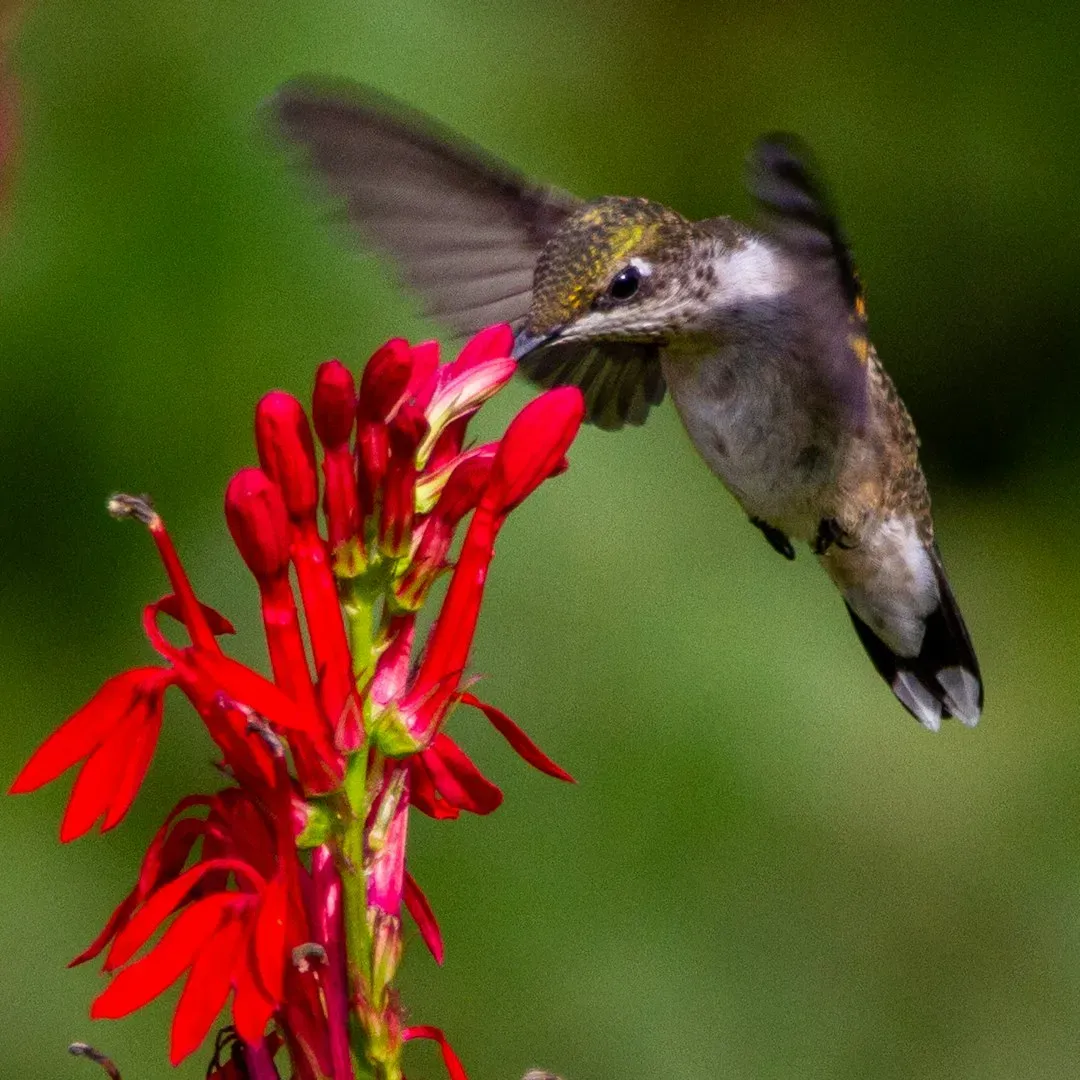
There is almost nothing in the summer garden as purely, intensely red as a cardinal flower in full bloom. The color is so saturated it almost looks artificial – and it turns out that specific shade of red is precisely what hummingbird vision is most sensitive to. While bees largely ignore cardinal flower (its nectar sits too deep in the tube for them to reach), hummingbirds are built for it. The long, slender flower tubes are a perfect fit for their bills, which means cardinal flower is essentially a plant that evolved in partnership with hummingbirds. It blooms from mid-summer to early fall.
Cardinal flower prefers consistently moist soil and tolerates partial shade better than most hummingbird plants, which makes it ideal for the shadier corners of a garden, along stream edges, or near a water feature. It’s a short-lived perennial in most climates, but it self-seeds reliably if you let a few flower spikes go to seed at the end of the season. Plant several together for maximum visual impact and a nectar source substantial enough to anchor a hummingbird’s territory around your yard. Once you’ve seen a ruby-throated hummingbird hovering in front of a four-foot cardinal flower spike, you’ll understand why this plant belongs on every list.
At a Glance
- One of the only summer plants where bees are physically excluded – the nectar tube is too deep for them
- Tolerates partial shade better than nearly any other plant on this list
- Self-seeds freely when a few spikes are left standing at season’s end
- Plant in groups of 3 or more for enough nectar volume to anchor a hummingbird’s home territory
- Ideal near water features, rain gardens, or consistently moist border edges
10 – Fuchsia
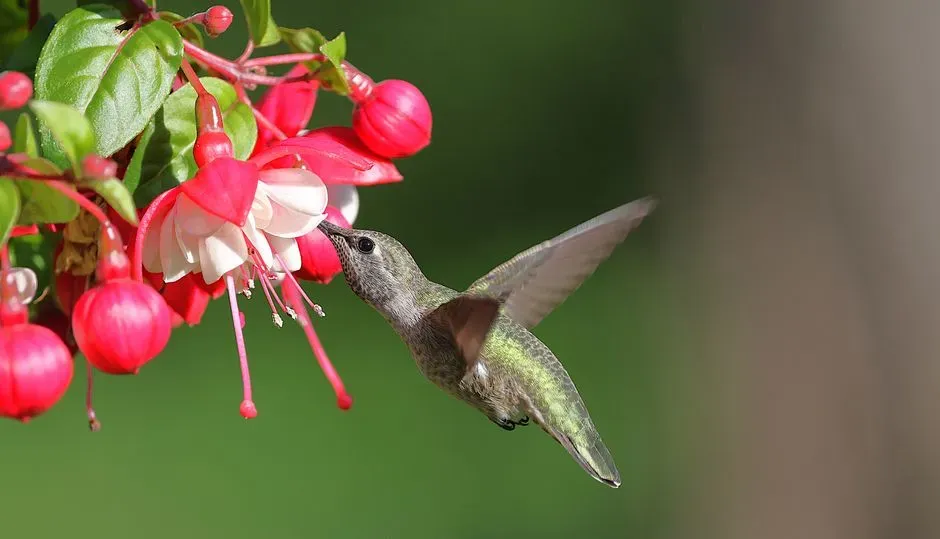
Fuchsia is the hanging basket plant that hummingbirds genuinely lose their minds over. Those pendulous, two-toned flowers – typically deep magenta and purple, or red and white, dangling like tiny ornaments – are perfectly designed for a hovering bird feeding from below. Fuchsia blooms from late spring straight through to frost in cooler climates, and its preference for partial shade makes it the go-to choice for patios, covered porches, and the shadier spots where most other hummingbird plants refuse to perform.
In warmer zones, fuchsia can be grown as a perennial shrub and reaches impressive sizes. In cooler regions, it’s treated as an annual or overwintered indoors. Either way, hanging two or three baskets of double-flowered fuchsia near a window or outdoor seating area is one of the most reliable ways to get hummingbirds close enough to watch at arm’s length. Keep the soil consistently moist, feed every couple of weeks with a balanced fertilizer, and fuchsia will reward you with months of dense, dramatic blooms that seem almost too lush to be real.
9 – Penstemon
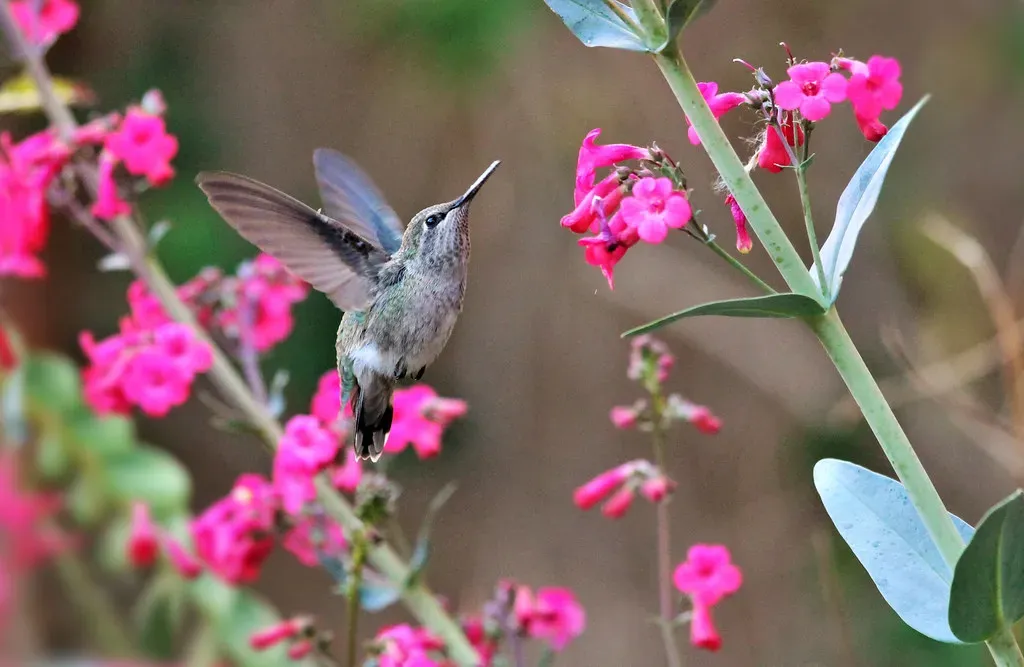
Penstemon – often called beardtongue – is one of those native wildflower genera that gardeners are finally giving the attention it deserves. The tubular flowers come in brilliant reds, deep pinks, and soft purples, clustered along tall wiry stems that sway in the breeze and catch hummingbirds’ attention from a distance. It blooms from late spring through mid-summer, and while that’s not the longest season on this list, it fills a critical window before the summer standbys hit their stride. Plant it in full sun with sharp drainage and it asks for almost nothing beyond that.
What makes penstemon particularly compelling is how naturally it fits into a hummingbird garden design. The upright stems create vertical structure, the flower colors complement warmer-toned plants like salvia and lantana, and the drought tolerance means it thrives in exactly the kind of lean, sunny conditions that push other plants to their limits. Western native species like Penstemon eatonii (firecracker penstemon) and Penstemon barbatus are especially beloved by hummingbirds and have been used in wildlife-friendly gardens for decades. Deadhead spent spikes to encourage a second flush, and divide clumps every three years to keep plants vigorous.
8 – Zinnia
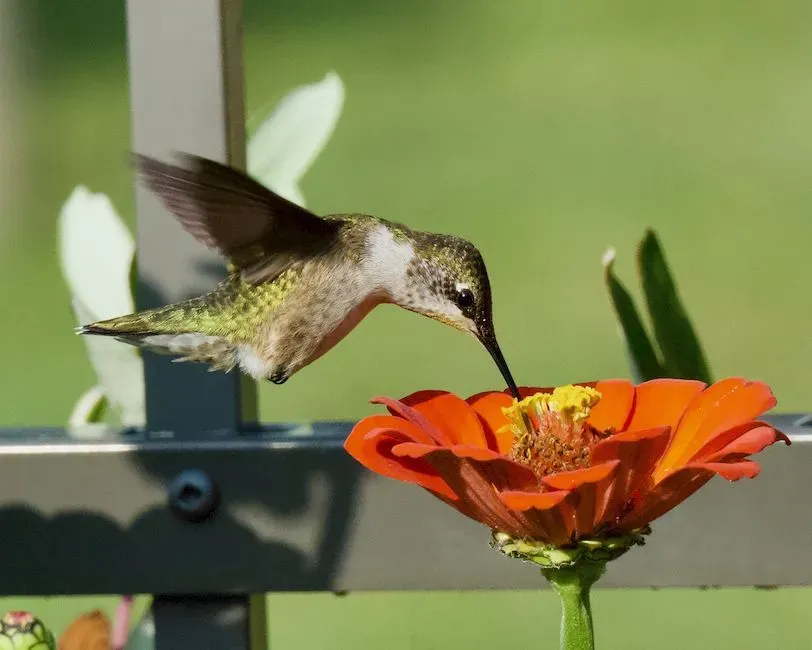
Zinnias might not be the first plant you think of for hummingbirds – butterflies usually get top billing with this one – but hummingbirds visit them regularly and enthusiastically, especially the larger single-flowered varieties in hot reds and oranges. They bloom from early summer until the first frost, they grow fast from seed, they thrive in full sun and heat, and they come in a color range that is genuinely difficult to rival for sheer cheerfulness. A mass planting of mixed zinnias in the high heat of July is one of summer gardening’s most satisfying sights.
For hummingbird appeal specifically, choose the taller, single-flowered forms over the doubled varieties – the single blooms expose nectar more readily and are easier for hummingbirds to access. Zinnias are drought-tolerant once established, extremely easy to direct-sow, and virtually pest-free in dry weather. They’re also an ideal filler between slower-establishing perennials, covering bare ground while the rest of the garden matures. Deadhead regularly to prevent the plants from going to seed too early, and keep a second sowing going for continuous late-season color.
Quick Compare: Single vs. Double Zinnia Flowers for Hummingbirds
- Single-flowered zinnias – open center, nectar fully accessible, easiest for hummingbirds to hover into
- Double/ruffled zinnias – showier but nectar is buried deep; butterflies prefer these over hummingbirds
- Best colors for hummingbirds – hot red, orange, and coral outperform pastels and whites
- Best varieties – tall ‘Benary’s Giant’ and ‘Oklahoma’ series for single-bloom hummingbird appeal
7 – Agastache (Hummingbird Mint)
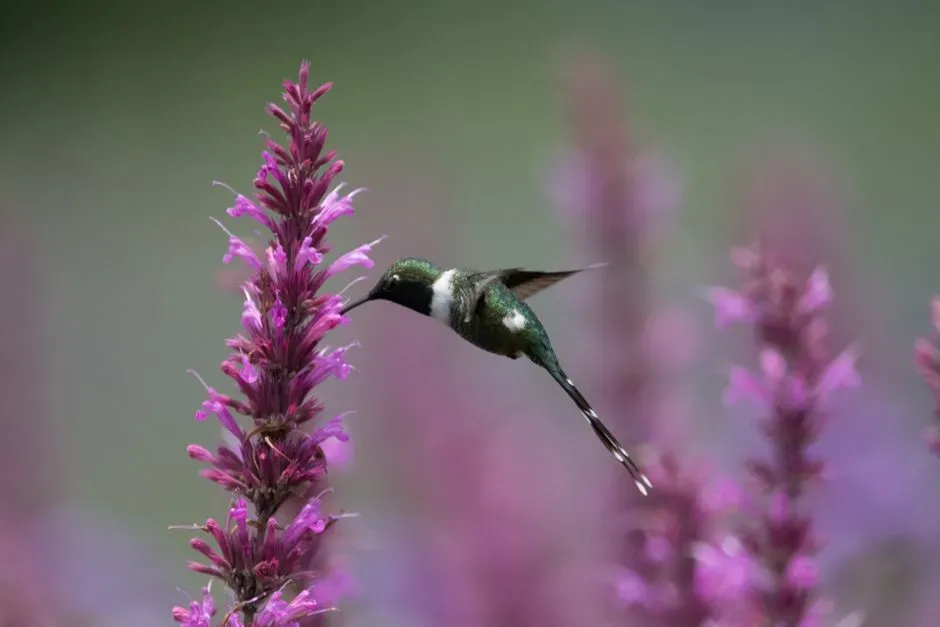
The name says everything: hummingbird mint. Agastache was practically built for this list. The tall, densely flowered spikes in blazing orange, sunset pink, and deep purple bloom from mid-summer all the way into fall, giving hummingbirds a rich nectar source exactly when they need it most – in the weeks before migration. The flowers are tubular, the colors are perfectly in the hummingbird sweet spot, and the anise-scented foliage deters deer and most browsing pests while adding a surprising fragrance to the garden on warm evenings.
Agastache thrives in full sun and fast-draining soil, which makes it an excellent choice for raised beds, gravel gardens, and dry slopes where other plants struggle. It’s genuinely drought-tolerant once established, which is more than most showy perennials can claim. Varieties like ‘Ava’ and ‘Kudos Coral’ have become deservedly popular in wildlife-focused garden design for their dense bloom production and long season. The plants also hold their shape well, providing structure alongside the color. This is one of those plants that looks better the more you learn about it, and hummingbirds figured that out long before gardeners did.
6 – Columbine (Aquilegia)
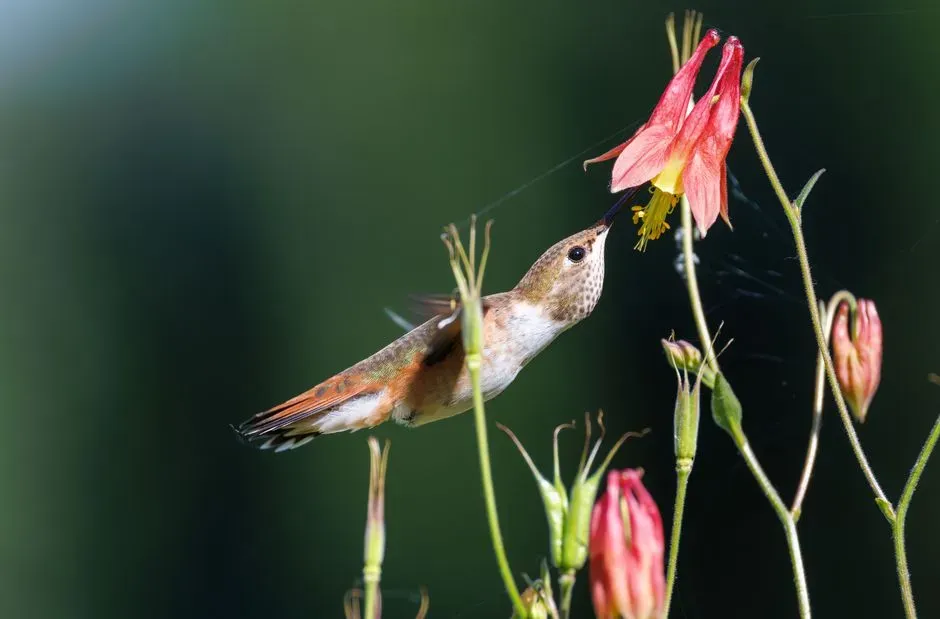
Columbine blooms in late spring to early summer, which makes it one of the first real hummingbird magnets to open in the garden each year – and that timing matters. Early-arriving hummingbirds, fresh from migration and desperately refueling, will zero in on columbine before much else is blooming. The flowers are genuinely strange and beautiful: those backward-pointing spurs are specifically evolved to hold nectar, and their length corresponds almost precisely to a hummingbird’s bill. It’s not a coincidence. Native columbines and hummingbirds have been co-evolving for a very long time.
Columbine does best in partial shade with moist, well-drained soil, and its delicate, ferny foliage is attractive even when the plant isn’t in bloom. Red and yellow native varieties like Aquilegia canadensis are especially powerful hummingbird draws, though the hybrid colors are appealing too. Columbines self-seed freely and will naturalize quietly through a garden over several seasons, popping up in unexpected spots and gradually filling gaps. They’re deer-resistant, relatively short-lived as individual plants, but so enthusiastic about self-seeding that the colony essentially replaces itself. Once you plant columbine, you’ll always have it.
5 – Lupine
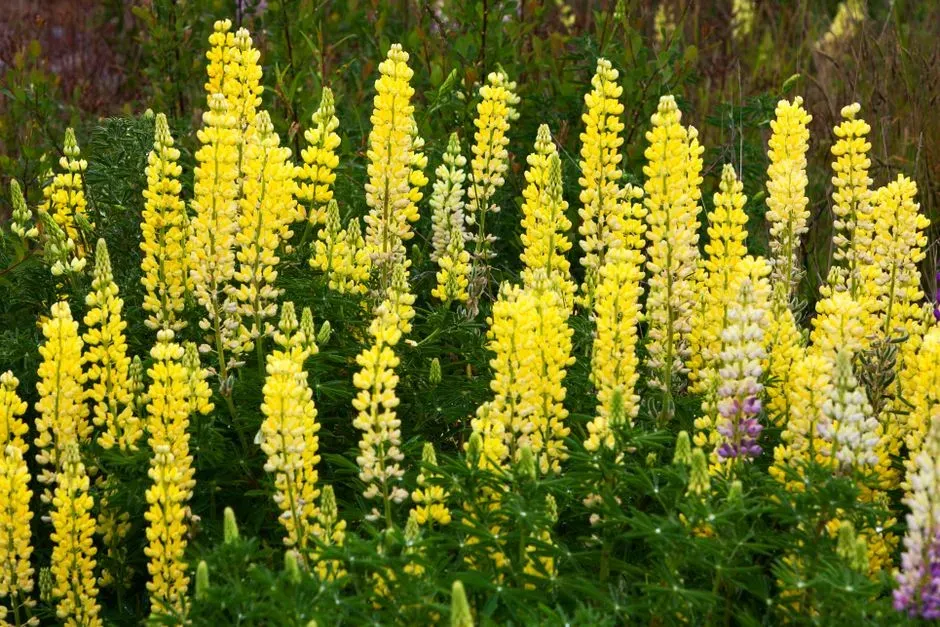
Lupine spikes are architectural and dramatic in a way that few perennials can match – those dense, towering columns of pea-like flowers in electric blue, deep purple, hot pink, and creamy white can easily reach four feet tall and stop people mid-stride. Hummingbirds are drawn to the red and pink varieties in particular, hovering methodically up and down the spike as they work each individual floret. Lupines bloom in late spring to early summer, making them another critical early-season nectar source when hummingbirds most need the energy after migration.
Lupines prefer full sun and well-drained, slightly acidic soil, and they’re notably better in cooler climates than in the hot, humid South. One underappreciated bonus: lupines are nitrogen-fixing legumes, meaning their roots work with soil bacteria to pull nitrogen from the air and release it into the ground, quietly improving soil fertility for neighboring plants. They can be short-lived perennials or grown as annuals depending on your climate, but they self-seed reliably in conditions they like. The Russell Hybrid series produces some of the most spectacular colors available, and the native western lupine species are outstanding choices for wildlife-focused plantings.
Worth Knowing
- Hummingbirds can drink their entire body weight in nectar in a single day – a garden like this is critical fuel
- A single hummingbird may also consume up to 2,000 small insects daily for protein alongside nectar
- Nectar flowers continuously replenish from glands called nectaries as long as blooms remain open
- The ideal nectar sugar concentration for hummingbirds is 20–25% sucrose – what well-grown tubular flowers naturally produce
- Hummingbirds remember individual flowers, their nectar quality, and refill rates – they will return to your best plants on a schedule
4 – Butterfly Bush (Buddleja)
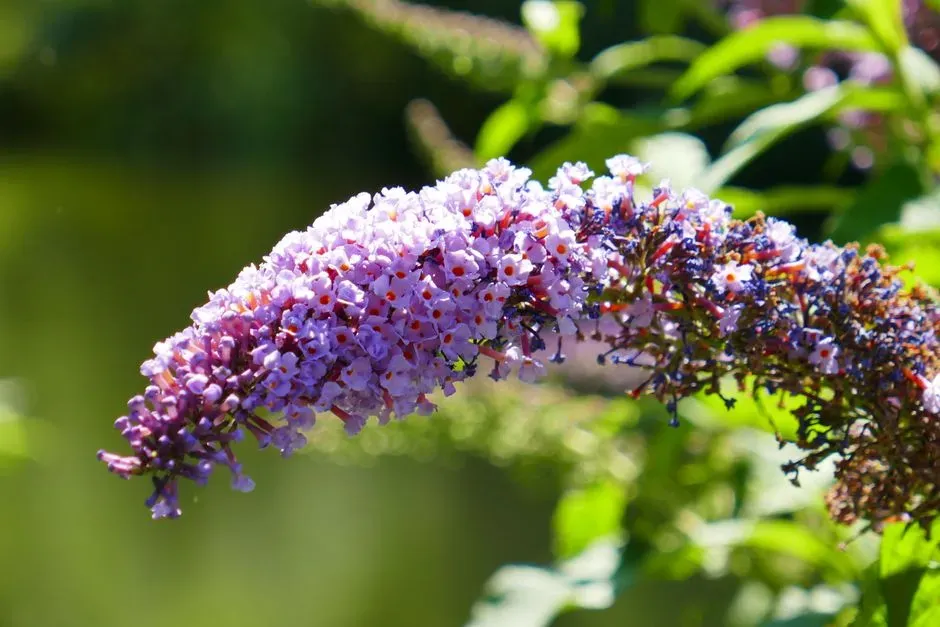
Butterfly bush has a polarizing reputation among gardeners – loved for its extraordinary attractiveness to pollinators, criticized in some regions for its tendency to self-seed aggressively outside its native range. Set the debate aside for a moment and just consider what it offers: massive, cone-shaped flower panicles up to a foot long, dripping with nectar, blooming from summer deep into fall in shades of purple, pink, white, and burgundy. Hummingbirds visit it with the same enthusiasm as butterflies, hovering along those long spikes and feeding at dozens of individual florets per visit.
If you garden in a region where butterfly bush is not invasive, or if you choose one of the newer sterile cultivars specifically bred to minimize seed production, it’s genuinely one of the most rewarding shrubs you can plant for wildlife. Fast-growing, drought-tolerant, and blooming on new wood, it responds well to hard pruning in early spring, which keeps it tidy and encourages the largest, most productive flower spikes. The ‘Lo and Behold’ series produces compact, sterile plants that deliver all the hummingbird appeal with a far smaller ecological footprint – a reasonable solution for gardeners who want the beauty without the spread.
3 – Petunia
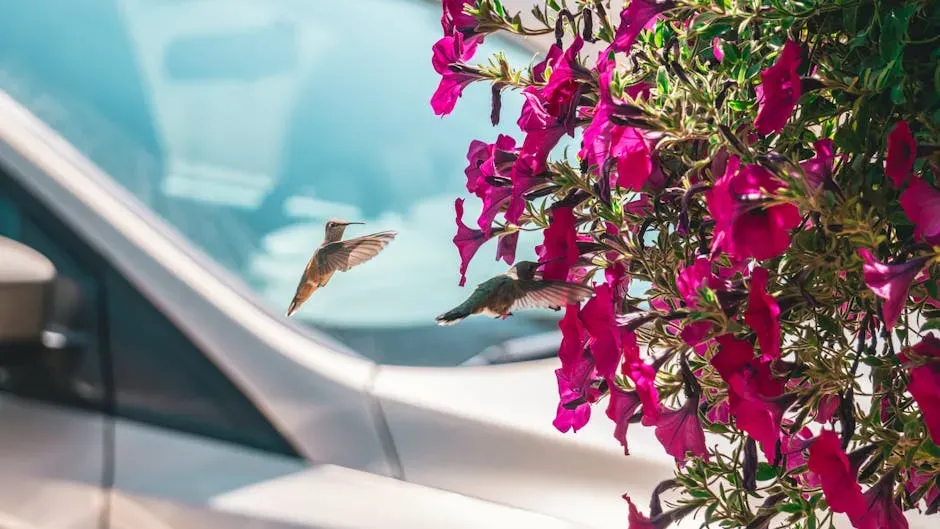
Petunias are one of the most widely planted annuals in the world, and most people grow them without ever realizing they’re planting a genuine hummingbird magnet. The large, trumpet-shaped flowers are a near-perfect match for a hummingbird’s bill – wide enough to hover into, deep enough to hold real nectar, and available in blazing reds, hot pinks, and deep purples that hummingbirds find impossible to ignore. They bloom continuously from late spring until frost, they tolerate heat, and they perform in containers, window boxes, and hanging baskets just as well as in the ground.
For maximum hummingbird appeal, lean toward the single-flowered varieties in hot colors rather than the ruffled doubles, which can be harder for hummingbirds to access. Wave petunias and Supertunia varieties have exceptional vigor and bloom production, and a single container of deep red or magenta petunias placed near a sitting area can bring hummingbirds within a few feet of you on a regular basis. Feed them every week or two with a bloom-boosting fertilizer, trim them back by a third if they get leggy mid-season, and they’ll reward you with months of dense, vivid color that practically glows in the afternoon sun.
2 – Honeysuckle (Lonicera)
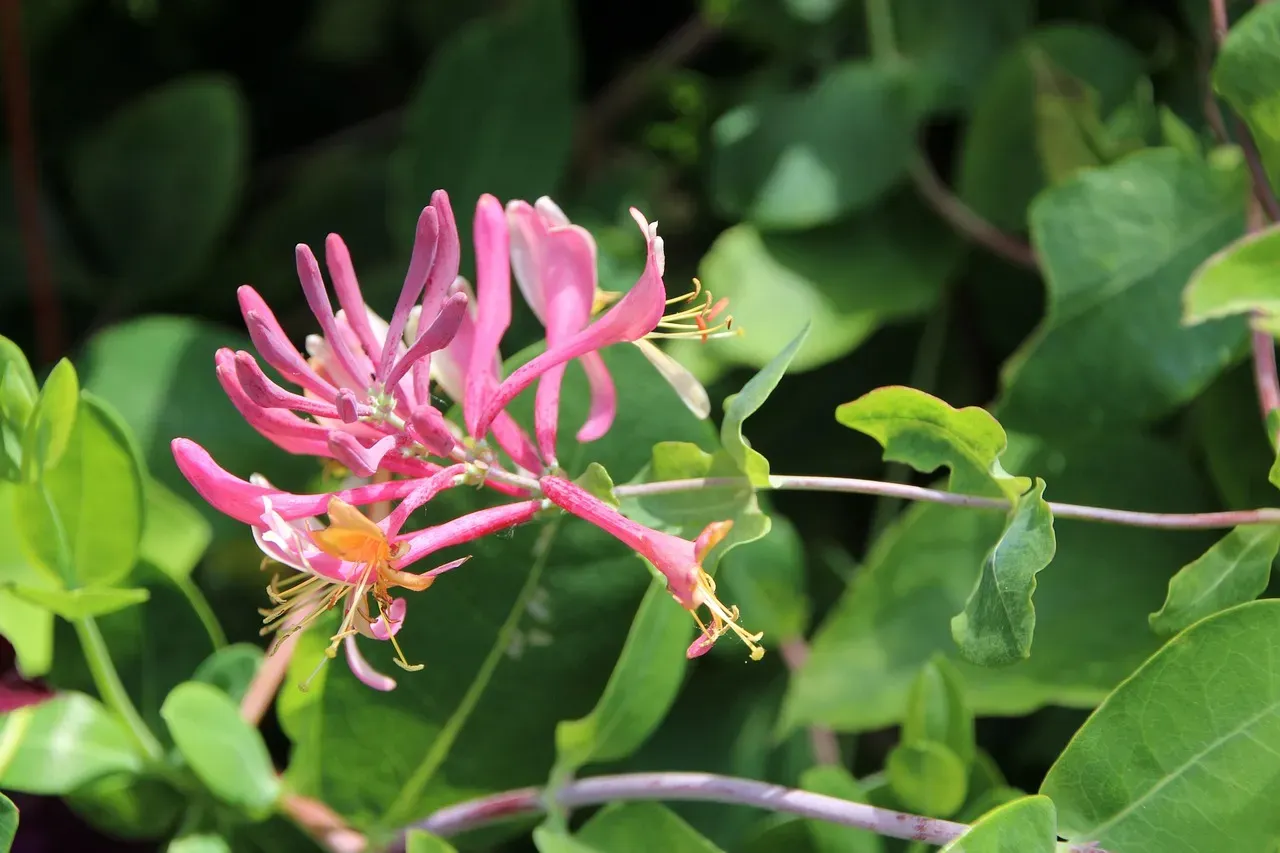
If there is a more classically hummingbird-associated plant than native honeysuckle, it’s hard to name one. Coral honeysuckle (Lonicera sempervirens) in particular – with its long, tubular, scarlet and yellow flowers clustered at the tips of twining stems – seems to exist in perfect biological partnership with hummingbirds. The flower tubes are precisely the right length for a hummingbird’s bill. The nectar is rich and abundant. The bloom season runs from spring through summer and often into fall in warmer climates. And unlike its invasive Japanese cousin, native coral honeysuckle is a well-behaved, wildlife-friendly vine that belongs in North American gardens.
Coral honeysuckle grows vigorously on a trellis, fence, or arbor, covering a structure with cascading color and providing both nectar and shelter. It’s tolerant of a range of conditions – full sun to partial shade, various soil types – and it’s virtually pest-free. The red tubular flowers are followed by bright red berries that attract birds through fall and winter, meaning the plant pulls double duty across multiple seasons. If you plant only one vine specifically for hummingbirds, make it this one. It is one of the closest things to a guaranteed result in hummingbird gardening.
At a Glance: Native Coral Honeysuckle vs. Japanese Honeysuckle
| Coral Honeysuckle (L. sempervirens) | Japanese Honeysuckle (L. japonica) | |
|---|---|---|
| Native? | Yes – North America | No – invasive in many U.S. states |
| Hummingbird appeal | Very high – tubular, red/yellow flowers | Lower – flowers suit insects more |
| Wildlife value | Nectar + fall red berries for birds | Minimal structured wildlife benefit |
| Behavior | Well-behaved, manageable vine | Aggressive spreader, hard to remove |
1 – Salvia guaranitica ‘Black and Blue’
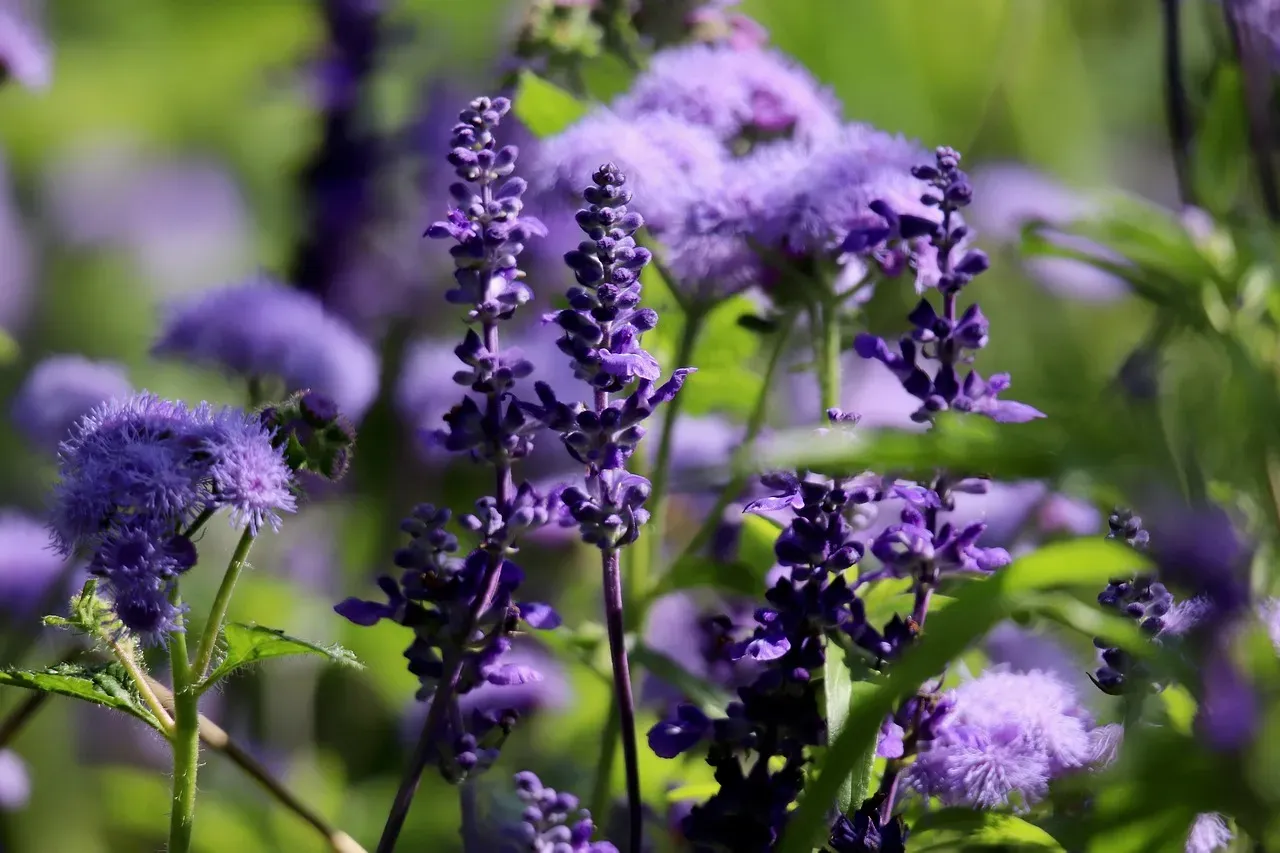
Everything about ‘Black and Blue’ salvia feels slightly unreal the first time you see it in person. The calyxes – the small structures cradling each flower – are a deep, near-black purple. The flowers themselves emerge from that darkness in a shade of cobalt blue so saturated and vivid that it looks like someone turned up the color saturation on the garden itself. The contrast is extraordinary. The stems are tall and architectural, often reaching four to five feet. And hummingbirds absolutely go wild for it. This is one of those plants where you plant it once, watch a hummingbird arrive within days, and immediately start planning where to put three more.
‘Black and Blue’ blooms from mid-summer through fall – exactly the stretch when migrating hummingbirds need high-energy fuel most urgently. It thrives in full sun, handles heat without complaint, and is drought-tolerant once established. In warmer climates it’s perennial; in cooler regions it’s grown as a tender annual but grows fast and blooms abundantly within a single season. It makes a stunning vertical accent at the back of a border and pairs beautifully with orange agastache and red lantana in a hummingbird-focused planting. If you take only one recommendation from this entire list, let it be this one – because once a hummingbird finds it, they will not leave your garden alone.
Fast Facts: Salvia guaranitica ‘Black and Blue’
- Blooms June through frost – up to 6 months of continuous nectar production in mild climates
- Grows 3–5 feet tall and 3–4 feet wide; use it as a bold back-of-border vertical accent
- Hardy perennial in USDA zones 7–10; grown as a vigorous annual in cooler zones
- Deer and rabbit resistant – the anise-scented foliage keeps browsers away
- Received the Royal Horticultural Society Award of Garden Merit
- Pairs exceptionally with orange agastache, red lantana, and yellow rudbeckia for a full-season hummingbird border
Here’s the honest conclusion most gardening content won’t give you: a single feeder hanging from your porch is a fine gesture, but it’s not a hummingbird garden. Real hummingbird gardens are layered, alive, and blooming from May through October – with early columbine passing the baton to bee balm, bee balm giving way to agastache and salvia, and ‘Black and Blue’ carrying the whole thing through into fall migration. The plants on this list aren’t interchangeable decorations. They’re a functional ecosystem. Plant enough of them, stagger the bloom times, and you won’t just see hummingbirds. You’ll watch them establish territory, defend flowers, chase each other through the garden, and return year after year to a place they’ve decided belongs to them. That’s not a feeder. That’s a garden worth building.

- The 6 Zodiac Signs Whose Spirit Animals Reveal Their Darkest Secrets - August 15, 2026
- 10 Things You Should Never Do Around Cats (Even If You Think They Like It) - August 15, 2026
- What Legendary Animal Are You According to Your Zodiac Sign - August 15, 2026