


Have you ever wondered what it would be like to spot a bird that exists nowhere else on Earth? North America is home to some truly extraordinary avian wonders—birds so unique and rare that seeing one can feel like discovering a hidden treasure. From the forests of the Pacific Northwest to the deserts of the Southwest, these feathered gems have adapted to their special corners of the continent. Each bird has a story: some cling to survival in shrinking habitats, while others dazzle with colors or calls that stir the soul. Whether you’re a seasoned birdwatcher or simply curious, these rare birds are a testament to the wild beauty that still thrives all around us—if you know where to look.
California Condor

The California Condor is North America’s largest land bird, and its wingspan can stretch nearly ten feet wide. These majestic scavengers once soared across the western skies in great numbers, but their population plummeted by the 1980s due to poaching, lead poisoning, and habitat destruction. Now, after intensive conservation efforts, a small number of wild condors glide over California, Arizona, and Utah. Spotting a condor in the wild is a heart-stopping experience—watching them ride thermals high above can feel almost prehistoric. Their bald heads and inquisitive eyes give them an almost ancient aura, connecting us to a time when giants ruled the skies. Despite their comeback, they remain one of the rarest birds in North America, relying on human intervention for survival. Their story is both a warning and a hope, reminding us of the delicate balance between extinction and recovery.
Gunnison Sage-Grouse

Found only in the southwestern corner of Colorado and a sliver of Utah, the Gunnison Sage-Grouse is a true North American original. With its plump body, spiky tail feathers, and distinctive white ruffs, this bird performs one of nature’s most fascinating mating dances. Males gather on “leks” and puff up their chests, popping strange, bubble-like sounds to impress females. Their unique courtship rituals are as entertaining as they are crucial for the species’ survival. Unfortunately, the Gunnison Sage-Grouse’s range has shrunk drastically, mostly due to habitat loss from agriculture and development. Conservationists are racing against time to preserve the sagebrush landscapes these birds call home. Seeing one in the wild is both a privilege and a powerful reminder of the fragile beauty hidden in North America’s open spaces.
Kirtland’s Warbler

The Kirtland’s Warbler is a small, bright songbird with a striking yellow belly and a sweet, whistling song. This bird breeds only in the young jack pine forests of Michigan, making it one of the continent’s rarest warblers. For decades, Kirtland’s Warbler numbers were dangerously low, teetering on the brink of extinction due to habitat loss and nest parasitism by brown-headed cowbirds. Thanks to dedicated efforts, including controlled burns and cowbird management, their numbers have slowly climbed. Today, lucky visitors to Michigan’s forests might catch a glimpse of these secretive birds flitting through the pines. Their return is a story of hope and collaboration, showing that even the rarest creatures can make a comeback with the right help. The Kirtland’s Warbler remains a symbol of resilience and the magic of North America’s forests.
Island Scrub-Jay

The Island Scrub-Jay is found nowhere else in the world except Santa Cruz Island off the coast of California. Larger and bluer than its mainland relative, this jay is a striking sight as it hops through oak woodlands and chaparral. Its loud calls echo through the island, and its bold personality makes it a favorite among birders. With a population of just a few thousand, the Island Scrub-Jay is highly vulnerable to threats like habitat loss, disease, and climate change. Because it’s restricted to a single island, any disaster could wipe out the species entirely. Protecting this bright blue gem is a race against time, making every sighting feel like a small miracle. The jay’s story is a vivid reminder of how isolation can shape unique and irreplaceable wildlife.
Florida Scrub-Jay

Unlike its island cousin, the Florida Scrub-Jay lives only in the sandy, scrubby habitats of central Florida. This bird’s soft blue plumage and friendly curiosity make it a delight to encounter. It’s the only bird species found exclusively in the state of Florida, and it depends on fire-maintained scrublands to survive. Unfortunately, as development and agriculture have eaten away at its habitat, the Florida Scrub-Jay’s numbers have dwindled. Families of scrub-jays work together, with young birds helping their parents raise new chicks—a rare behavior among birds. Conservationists are working hard to protect remaining scrub patches and restore lost habitat. Every time you see a Florida Scrub-Jay, you’re witnessing a rare and special piece of the state’s natural heritage.
Red-cockaded Woodpecker

The Red-cockaded Woodpecker is as unique as it is rare, living only in the pine forests of the southeastern United States. Unlike most woodpeckers, this bird carves its nesting cavities in living pine trees, a process that can take years. Its tiny red “cockade” is difficult to spot, but its black-and-white stripes and sharp calls make it a distinctive presence. Decades of logging and fire suppression nearly wiped out these woodpeckers, making them one of the first birds listed under the Endangered Species Act. Restoration of longleaf pine habitat and controlled burns have helped some populations recover. Watching a Red-cockaded Woodpecker at work is a lesson in patience and persistence, both for the bird and for those trying to save it. Their survival is a testament to the power of focused conservation.
Ivory-billed Woodpecker

The Ivory-billed Woodpecker is often called the “Lord God Bird” because its size and striking appearance inspired awe in early observers. With glossy black and white feathers and an enormous ivory bill, it was once found in bottomland forests across the Southeast. Tragically, widespread logging and hunting drove this magnificent bird to near extinction. For decades, it was thought to be lost forever, but occasional unconfirmed sightings have fueled hope that a few may still survive deep in remote swamps. The Ivory-billed’s story is both haunting and mysterious, a symbol of what can be lost—and perhaps, with luck, rediscovered. Its possible existence continues to inspire passionate debate and adventurous searches among bird lovers.
Apapane

Native to the highland forests of Hawaii, the Apapane is a small, nectar-loving bird with brilliant crimson feathers. Its curved bill is perfectly designed for sipping nectar from native Hawaiian flowers, especially the ʻōhiʻa blossom. Sadly, the Apapane’s numbers have been reduced by habitat destruction and the spread of avian diseases carried by mosquitoes. Despite these threats, the Apapane still brings flashes of color and song to Hawaii’s rainforests, flitting through the canopy with remarkable agility. Its importance as a pollinator makes it vital for the survival of native plants. The Apapane’s continued existence is a delicate dance with changing landscapes and invasive species, making every sighting an enchanting experience for those who seek it out.
Yellow-billed Magpie

The Yellow-billed Magpie is a true California original, living only in the Central Valley and surrounding foothills. With its striking black-and-white plumage and bright yellow bill, this magpie is instantly recognizable. Highly social, they gather in noisy flocks, chattering and flying together in tight formations. They are often seen foraging in open fields or perched on fences, always alert and curious. Disease outbreaks, such as West Nile virus, have taken a heavy toll on their numbers in recent years. Conservation efforts focus on protecting their oak savanna habitat and monitoring disease impacts. The Yellow-billed Magpie’s lively presence is a reminder of California’s wild heart.
Mexican Jay

The Mexican Jay is found primarily in the sky islands of southeastern Arizona, southwestern New Mexico, and parts of Texas—isolated mountain ranges surrounded by desert. These jays live in tight-knit family groups, helping each other raise young and defend territory. Their blue and gray feathers shimmer in the dappled light of oak and pine forests. Because their habitat is so fragmented, each population is like a tiny kingdom, vulnerable to changes in climate and land use. Mexican Jays are playful and intelligent, often seen carrying acorns or calling to one another from treetops. Their cooperative behavior makes them fascinating to observe, and their survival depends on protecting the unique “island” forests of the American Southwest.
Colima Warbler

The Colima Warbler is a tiny, olive and yellow songbird famous among birdwatchers for its rarity in the United States. It nests almost exclusively in the remote canyons of Big Bend National Park in Texas, with most of its range in Mexico. Reaching its breeding grounds requires a challenging hike through rugged terrain, making every sighting a hard-won reward. The Colima Warbler’s secretive habits and limited range make it vulnerable to habitat loss and forest fires. Its song—a clear, sweet trill—echoes through mountain oak forests each spring. For many birders, spotting a Colima Warbler is a bucket-list achievement, a testament to perseverance and the thrill of discovery.
Spruce Grouse

The Spruce Grouse is a master of camouflage, blending perfectly into the dense spruce and pine forests of the northern United States and Canada. In the U.S., they are found mostly in northern states like Maine, Minnesota, and Montana. These birds are rarely seen, as they freeze motionless when approached, relying on their mottled plumage to avoid predators. They feed almost exclusively on the needles of conifer trees, adapting to the harsh winters of the boreal forest. Spruce Grouse are indicators of healthy, intact forests, as they cannot survive in fragmented habitats. Their elusive nature and specialized diet make them a rare and special sight for those patient enough to seek them out.
Dusky Grouse

Dusky Grouse inhabit the mountainous forests of the western United States, from the Rockies to the Sierra Nevada. Males are known for their dramatic spring displays, fanning their tails and puffing out air sacs to attract females. Their gray and brown feathers offer perfect camouflage against tree trunks and rocky hillsides. Dusky Grouse are highly adapted to life at high elevations, moving between dense forests in summer and open slopes in winter. Human activities like logging and development have reduced their available habitat. Despite these challenges, Dusky Grouse continue to thrive in some of the West’s wildest places, embodying the spirit of rugged mountain wilderness.
Santa Catalina Island Fox Sparrow

The Santa Catalina Island Fox Sparrow is found only on Santa Catalina Island off the coast of southern California. With its rich, rusty colors and melodic song, this sparrow is a favorite among local birders. It prefers shrubby hillsides and canyons, where it forages on the ground for seeds and insects. Because of its limited range, the Fox Sparrow is vulnerable to habitat changes, invasive species, and natural disasters like fire. Ongoing habitat restoration and invasive species control are essential for its survival. Seeing a Fox Sparrow on Catalina feels like a step into a world apart, where nature’s secrets are carefully guarded.
Black-capped Vireo
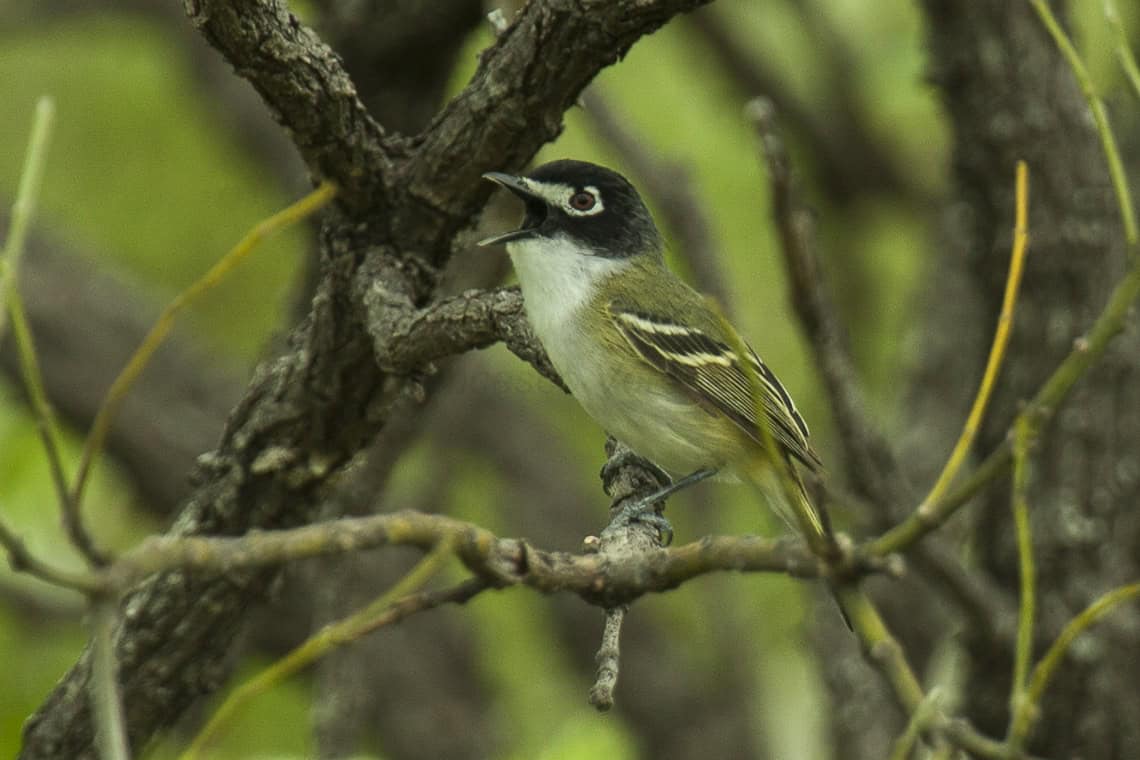
The Black-capped Vireo is a small, striking songbird with a black crown, white spectacles, and olive-green back. It breeds only in scattered patches of Texas, Oklahoma, and northern Mexico, preferring shrubby, open habitats that are increasingly rare. For years, its population declined due to habitat loss and cowbird parasitism, but dedicated conservation has helped numbers rebound. Black-capped Vireos flit energetically among low branches, singing their bright, buzzy songs. Their recovery stands as a shining example of how targeted efforts can bring species back from the brink. Every chirp from a Black-capped Vireo is a celebration of resilience and hope for North America’s rarest birds.
Red-faced Warbler

The Red-faced Warbler is a striking little bird with a vivid scarlet face and a gray back, found only in the high mountain forests of Arizona and New Mexico during the summer months. They prefer cool, shady canyons filled with fir and pine trees, where they search for insects among the leaves. Their fiery faces make them easy to spot—if you know where to look. Red-faced Warblers are sensitive to changes in their mountain habitats, which are threatened by drought, fire, and climate change. Birders make special trips each year just to catch a glimpse of this rare and beautiful warbler. Its presence is a reminder of the vibrant life hidden within North America’s wildest peaks.

As a little kid, I fell in love with nature, wildlife, and animals. Living in the USA, South Africa, Italy, China and Germany gave me the opportunity to discover the world's Wildlife. My favorite animals are Mountain Gorillas, Siberian Tigers, and Great White Sharks.
I'm a certified PADI Open Water Diver, went to Everest Base Camp and Trekked Gorillas in Uganda. I hold a Master of Science in Economics and Finance.
Please send any feedback to feedback@animalsaroundtheglobe.com
- 11 Things Dogs Crave From Their Owners And 3 They Do Not Want - July 24, 2026
- 14 Signs Your Pet Is Happier Than You Think - July 24, 2026
- 9 Things That Trigger a Komodo Charge And 3 That Make It Retreat - July 24, 2026