
There is a moment, familiar to anyone who has ever locked eyes on a hummingbird in the wild, when your brain genuinely refuses to process what it’s seeing. Something that small simply should not glow that bright. Something that fast should not be wearing what looks like a jeweled crown. Nature, it turns out, has absolutely no interest in playing it safe.
Hummingbirds exist only in the Americas, found exclusively in the Western Hemisphere, from the southern tips of South America to as far north as Alaska. There are about 338 different species of hummingbirds, and their ability to hover for extended periods of time and even fly backwards makes them unique in the entire bird world. Among those hundreds of species, a select few are so visually extraordinary, so impossibly rare, that they look less like birds and more like creatures dreamed up for a fantasy novel. Let’s dive in.
#1 The Marvelous Spatuletail: Nature’s Most Theatrical Performer
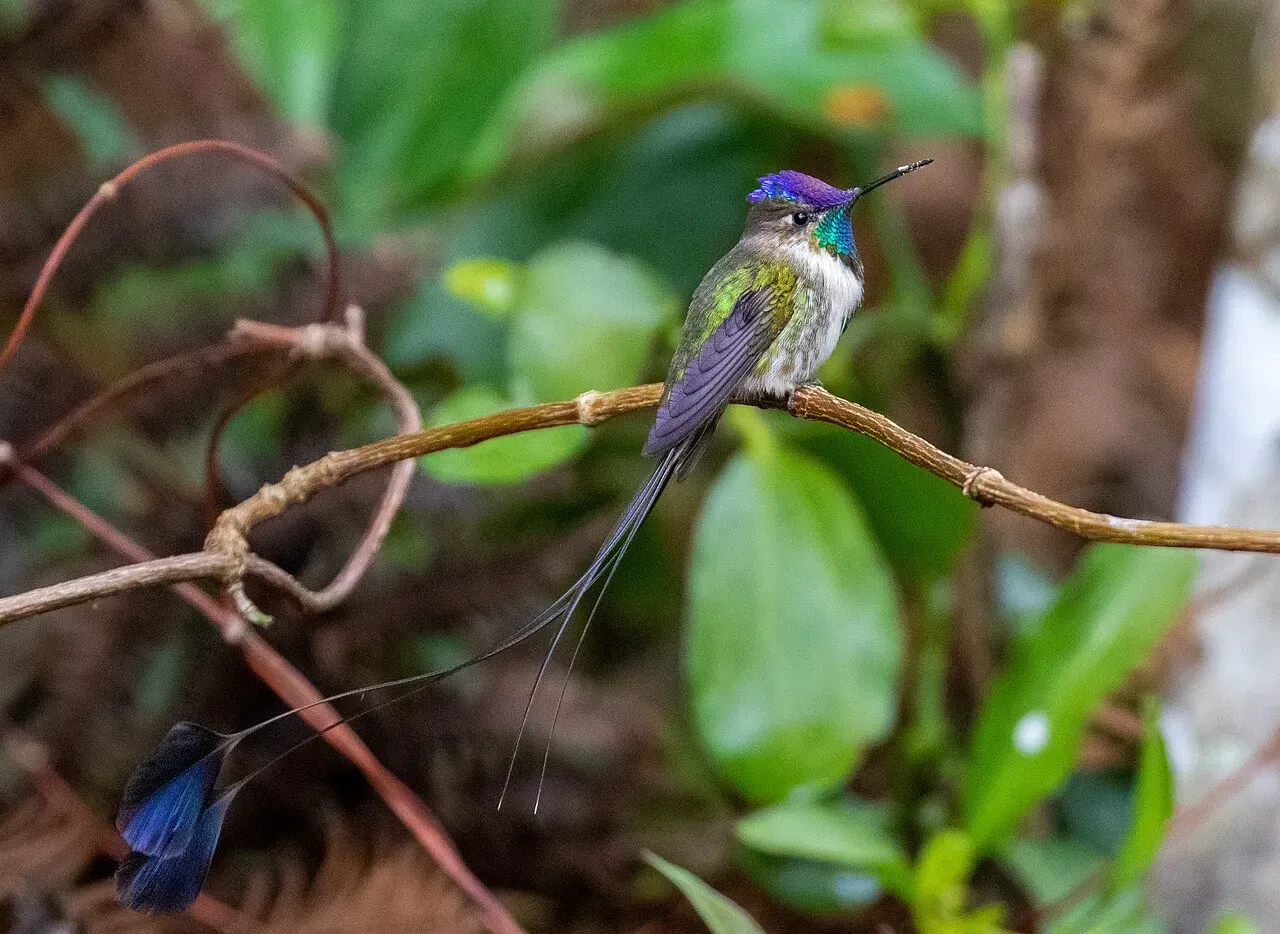
Honestly, if you described the Marvelous Spatuletail to someone without showing them a photo, they would think you were making it up. This beautiful little hummingbird shines in shades of white, green, and bronze, while the male also sports vivid blue crest feathers, a brilliant turquoise throat, a distinctive black streak down his white underparts, and a uniquely bizarre tail.
The tail is the showstopper, literally. Males of this species have only four tail feathers, two of which are long, racquet-shaped outer feathers that crisscross and culminate in large discs, also known as spatules, which are the same color as their crown, and these tail feathers can be moved independently as part of their mating ritual. Found only in remote areas of the Maranon region in northern Peru, this bird is as endangered as it is spectacular, with habitat loss and illegal hunting pushing it toward the edge. It is, without question, one of nature’s most theatrical creations.
#2 The Santa Marta Sabrewing: Lost to Science for Decades
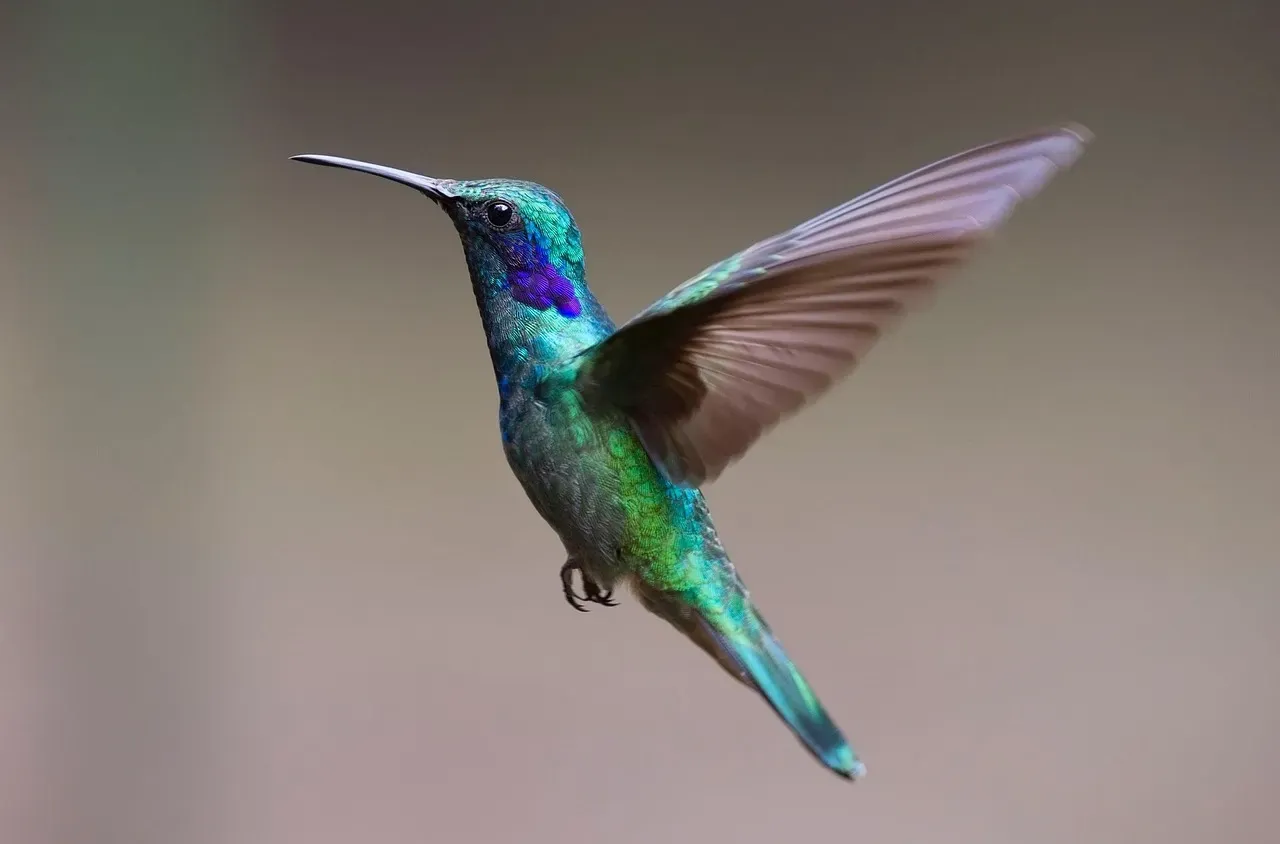
There are birds that are rare, and then there are birds that basically ghost the entire scientific community for over half a century. Lost to science for more than six decades until it was photographed in 2010, the Santa Marta Sabrewing is one of the rarest hummingbirds in the world. Named for its home region in the Sierra Nevada de Santa Marta mountains of northern Colombia, the iridescent sabrewing is exceedingly difficult to spot in part because of its limited range.
The Santa Marta Sabrewing is a beautiful blue and green hummingbird that was unexpectedly rediscovered in 2022 after 64 years as a lost species. There is strong evidence that the bird is extremely range-restricted, with its presence limited to four nearby localities, all of them on the southeastern slope of the Sierra Nevada de Santa Marta, along the Guatapurí river basin. In a world where we think we know every inch of the planet, a bird this gorgeous hiding in plain sight is nothing short of astonishing.
#3 The Sword-billed Hummingbird: The Bird With a Bill Longer Than Its Body
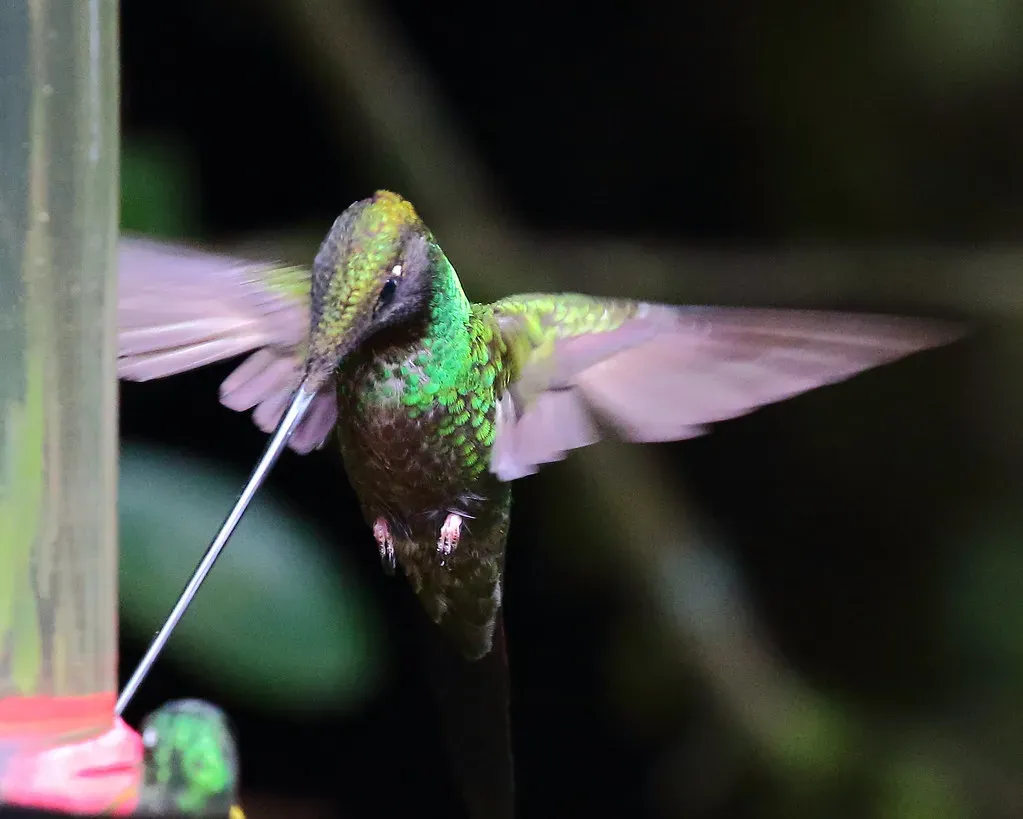
Here’s the thing about the Sword-billed Hummingbird: it shouldn’t work. On paper, a bird carrying a bill longer than its entire body sounds like an evolutionary joke. The sword-billed hummingbird is the only known bird whose bill is longer than the rest of the body, excluding the tail, and that bill is black, heavy, and slightly upturned.
The extremely long bill helps the species feed on flowers with long corollas that are inaccessible to other species. So it essentially has the market cornered on certain flowers, like having a key that only fits one lock in the entire forest. This remarkable species is found throughout the cloud forest of the Andes, from Venezuela to Bolivia, and the male’s throat may show a bluish or purplish sheen depending on subspecies. It looks like something out of a fantasy novel, and somehow it is entirely, gloriously real.
#4 The Blue-Throated Hillstar: Discovered Just Yesterday (Almost)
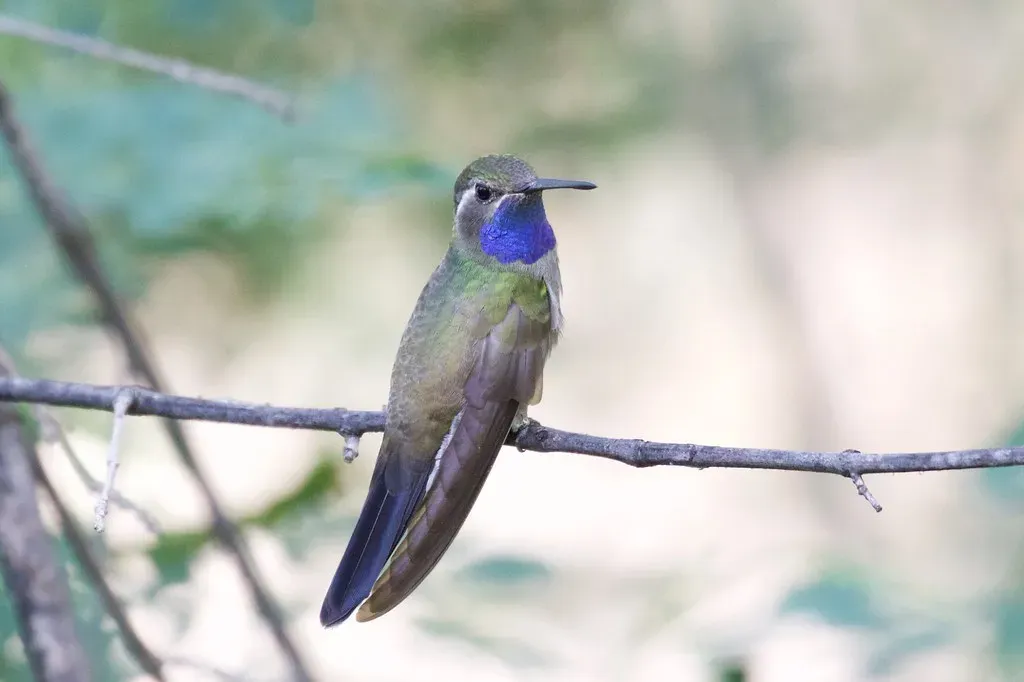
I think there’s something deeply humbling about the fact that scientists are still finding entirely new hummingbird species in the 21st century. The blue-throated hillstar is a recently discovered hummingbird, described in 2018 and restricted to a small stretch of the Chilla-Tioloma-Fierro Urco mountain range in southwestern Ecuador. That’s less than a decade ago. A brand new jewel, hidden in plain sight.
Surveys indicate that the species occupies an estimated 62.7 square kilometers of fragmented paramo habitat, and the total number of mature individuals is estimated at only 80 to 110 birds, making it one of the world’s rarest hummingbirds. The population is small, localized, and declining due to habitat loss and degradation, and this species depends on high-elevation paramo shrubland dominated by Chuquiraga jussieui, its primary nectar source. It is achingly beautiful, and it is barely hanging on.
#5 The Gorgeted Puffleg: The Bird in Fancy Pants
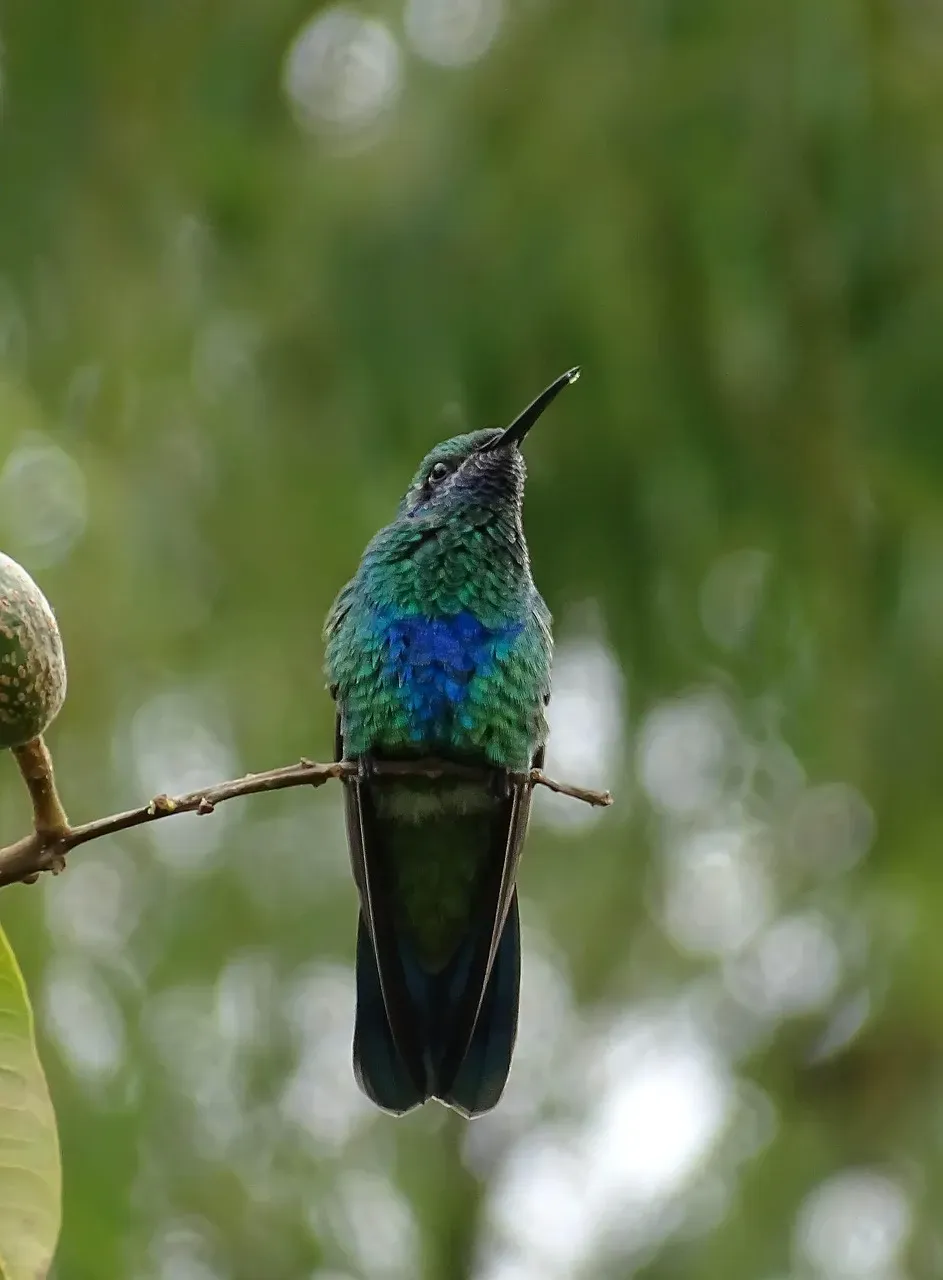
If hummingbirds were fashion icons, the Gorgeted Puffleg would be at the front row of every show. The Critically Endangered Gorgeted Puffleg is as rare as it is beautiful, and this hummingbird was only first discovered in 2005, confirmed as a species in 2007. The male Gorgeted Puffleg stands out among the puffleg tribe because of its multicolored gorget, a throat patch of sparkling violet-blue edged with glowing green.
Both sexes have relatively short, straight black bills and bright white leg puffs, which are really tufts of dense, short feathers, making the Gorgeted Puffleg and other relatives look like they’re wearing fancy pants. Let’s be real, that description is exactly as delightful as it sounds. The Gorgeted Puffleg can only be found in the Andes of southwestern Colombia, where it is confined to a few areas, making every sighting an extraordinary event.
#6 The Turquoise-Throated Puffleg: Possibly the Rarest Bird Alive
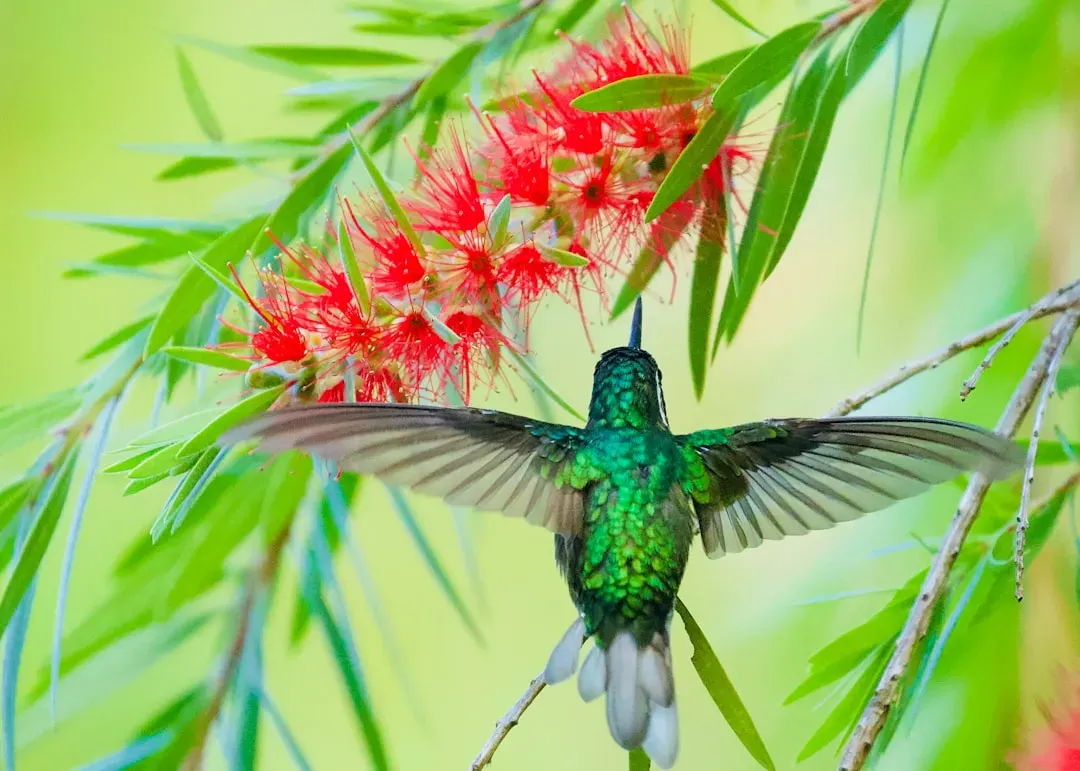
The turquoise-throated puffleg is currently the world’s rarest hummingbird, with possibly fewer than 50 individuals remaining, if it still survives at all. That sentence should stop you in your tracks. We might be talking about a species that is, right now, on the final edge of existence. The tragedy feels almost impossible to hold.
The historical habitat of the turquoise-throated puffleg has suffered severe degradation, with most of the arid montane forest at the type locality cleared or heavily altered, and small remnants persist in narrow stream-cut ravines that remain outside protected zones. The ecology of the species is entirely unknown, with no data on behavior, diet, or breeding. A creature this rare, this mysterious, with turquoise shimmering at its throat like a tiny living gemstone, may be gone before we truly understand it.
#7 The Blue-Bearded Helmetcrest: Missing for Nearly 70 Years
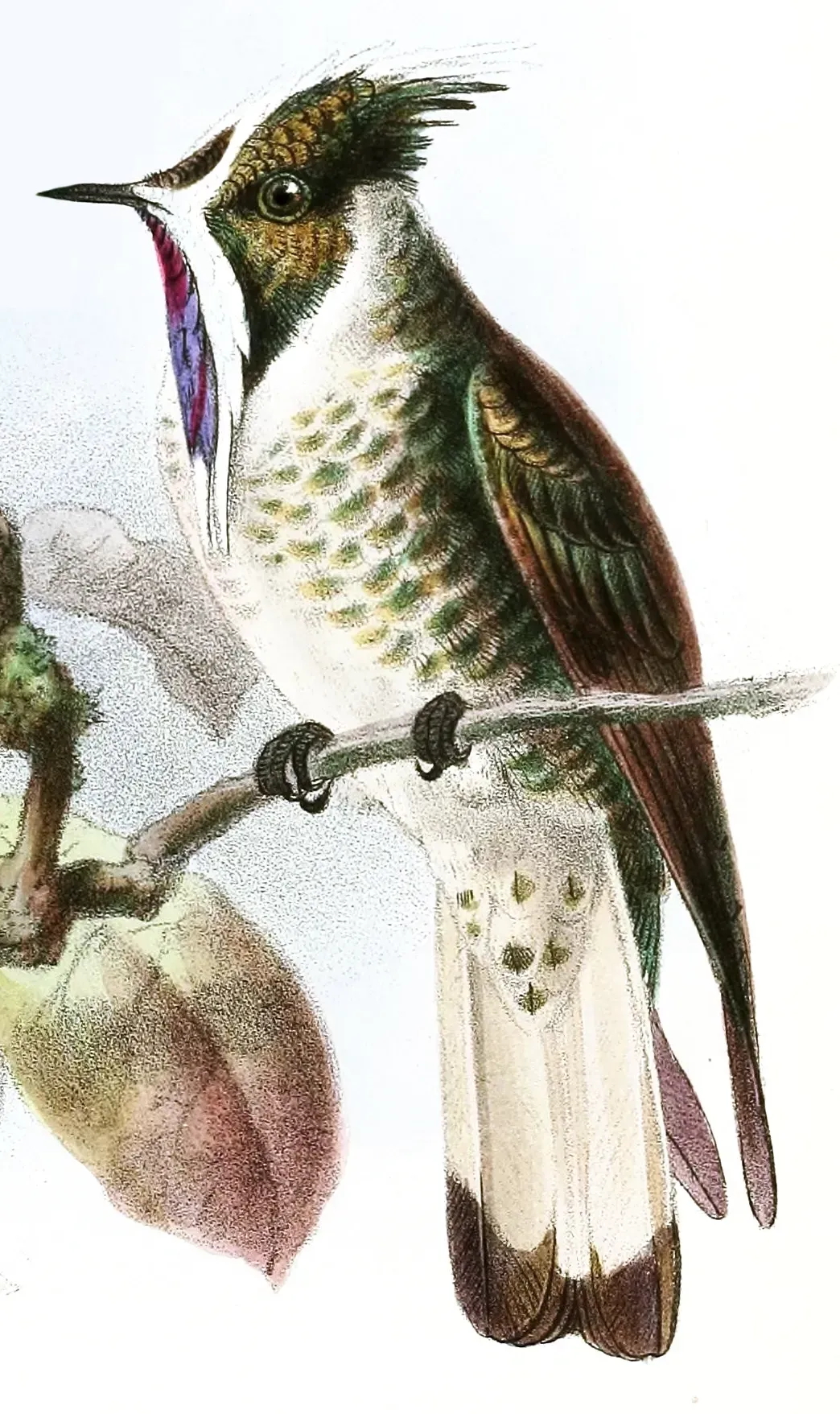
Some stories in the natural world read like detective fiction. The Blue-bearded Helmetcrest was discovered in the Sierra Nevada de Santa Marta as early as 1880 and was recorded for the last time in 1946 before disappearing for nearly 70 years. Seventy years. That is longer than most people live.
This spectacular species of hummingbird was last recorded in 1946 and has been rediscovered in the only place it is known to occur: at high elevations in a remote part of the Sierra Nevada de Santa Marta mountains, in northern Colombia. The distinctive bird has a short crest, a dark mask, and a purplish-blue beard bordered in white. Its population is estimated at fewer than 250 mature individuals and is believed to be declining. This is a ghost, resurrected, adorned in dark velvet and electric blue.
#8 The Glittering Starfrontlet: A Crown of Living Jewels
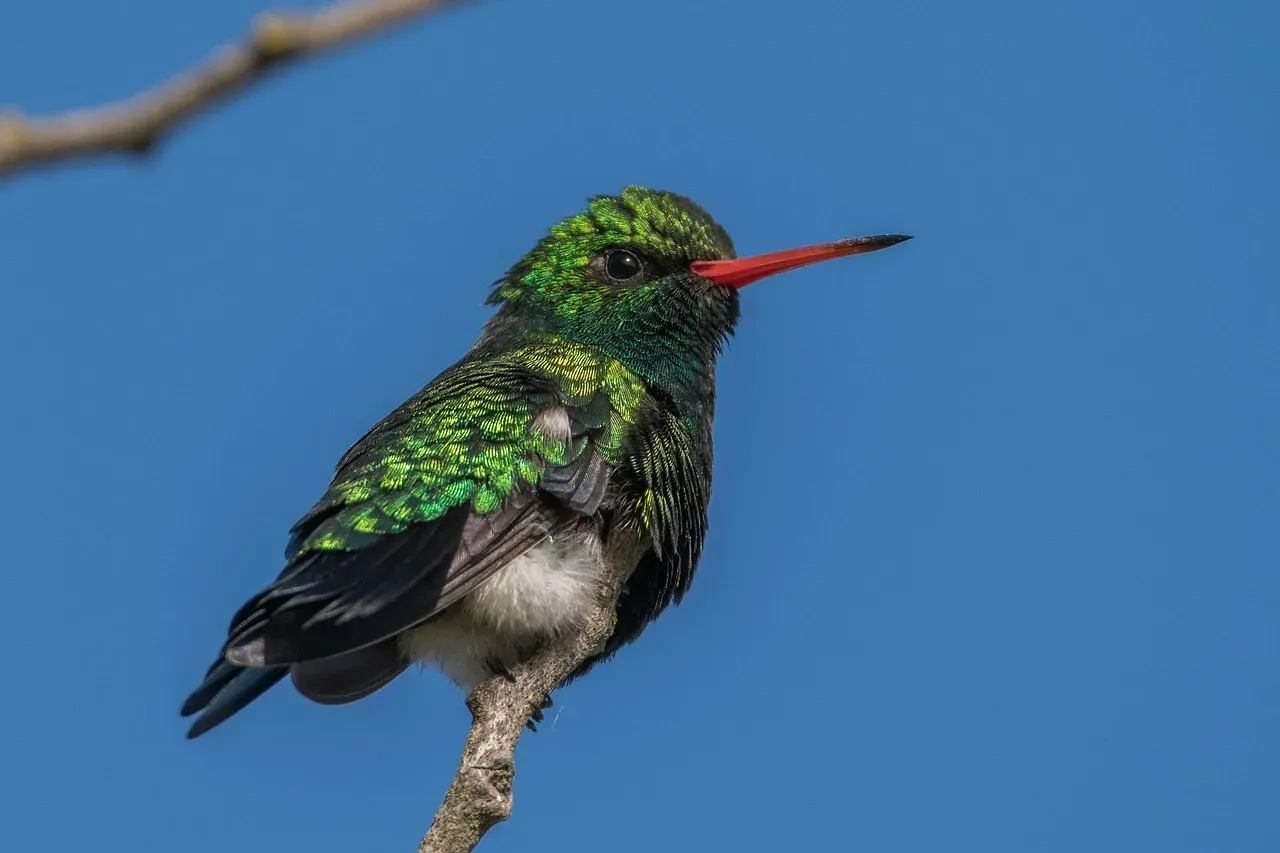
The name alone earns its place on this list. The male Glittering Starfrontlet is a large hummingbird with a black head bejeweled with an iridescent emerald patch on its forehead, a deep blue throat patch, and a glittering greenish gold belly. Imagine wearing all of that simultaneously. The bird somehow pulls it off with complete confidence.
Previously known as the Dusky Starfrontlet, this hummingbird of Colombia’s western Andes was known only from a single specimen collected in 1951 until it was rediscovered near the Colombian city of Urrao in 2004. That is more than half a century of silence from a bird so dazzling it looks like it fell through a portal from another dimension. Its rediscovery stands as one of the great ornithological moments of the early 21st century.
#9 The Colorful Puffleg: A Name That Does Not Exaggerate
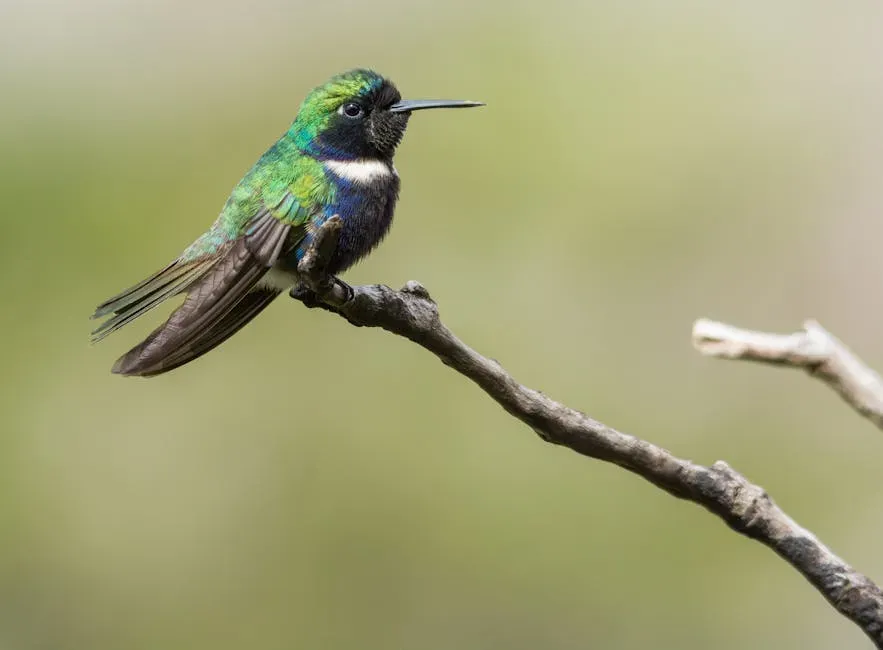
You know a species means business when the scientists who discovered it simply named it the “Colorful” Puffleg. No further adjectives needed. The colorful puffleg is a rare and range-restricted hummingbird endemic to Colombia’s western Andes, known historically from a small area near Cerro Charguayaco, and was feared lost until rediscovery in 1997, since recorded at four sites including Munchique National Park.
Despite these discoveries, the species remains highly localized and scarce, with a fragmented distribution and an estimated population of fewer than 1,000 mature individuals. The colorful puffleg prefers undisturbed cloud forest but can be found at edges and in clearings, particularly where native vegetation dominates. It is the kind of bird that birdwatchers plan entire trips around, and the kind of creature that, once seen, rewires your understanding of what is possible in nature.
#10 The Fiery-Throated Hummingbird: An Explosion of Color in Cloud Forest
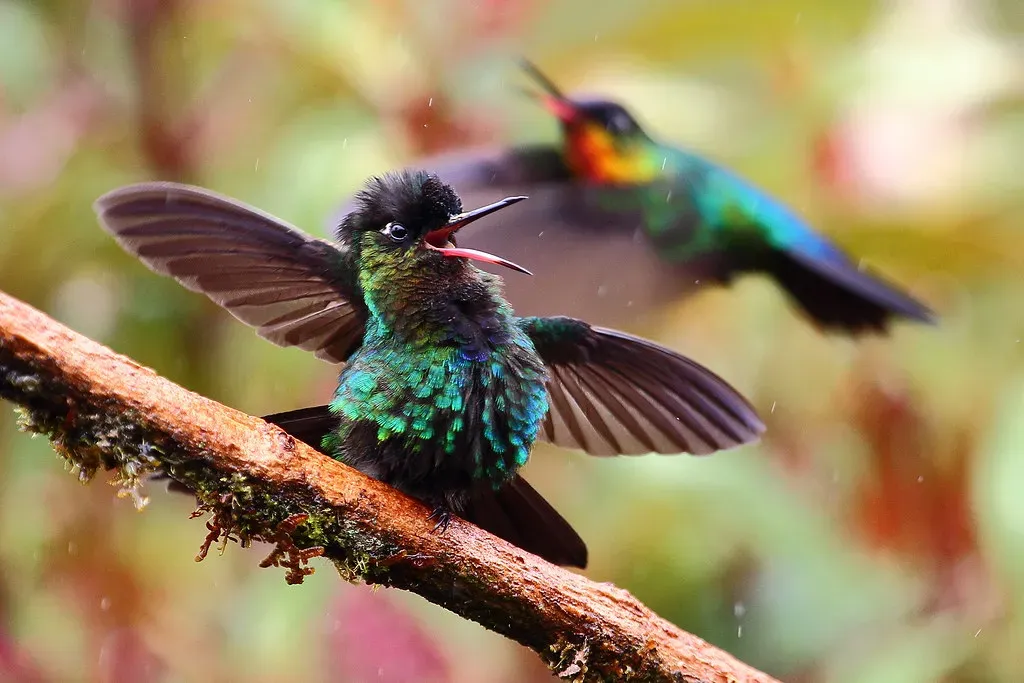
There are few other birds that rival the spectacular iridescence of the Fiery-throated Hummingbird. That is not an overstatement. The Fiery-throated hummingbird is vibrant, striking, and found in western Panama and Costa Rica in the cloud forests, and the males have an iridescent green body with a throat covered in fiery red, which transitions to a shiny blue gorget.
Think about the audacity of that color combination: fire red bleeding into electric blue, wrapped in metallic green, all packed into something smaller than your hand. It almost short-circuits the visual cortex. The Fiery-Throated Hummingbird is the sole member of the genus Panterpe and is endemic to the highlands of Costa Rica and western Panama, making it a spectacularly unique evolutionary achievement confined to a remarkably small slice of the world.
#11 The Royal Sunangel: Jewel of the Sandy Ridge Forests
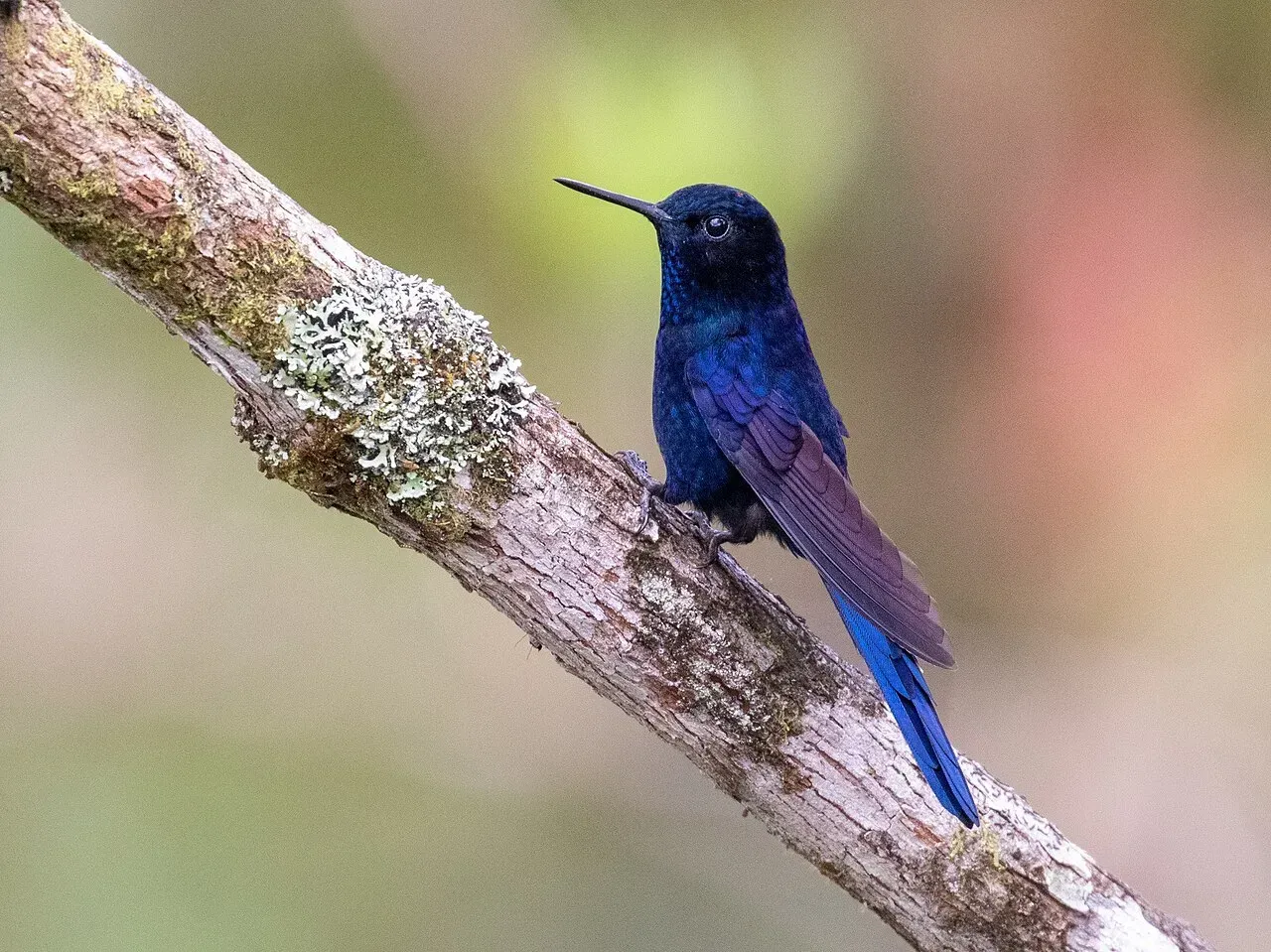
There is something almost mythological about a bird called the Royal Sunangel, and the reality lives up to every syllable of that name. The Royal Sunangel was first described for science in 1979 and has since been found to range from extreme southeastern Ecuador through northern Peru, inhabiting stunted forests growing on sandy soils and ridges.
It’s estimated that between 2,500 and 10,000 of these Endangered birds survive. That might sound like a reasonable number, but spread across two countries of steep Andean terrain, with shrinking forest patches, it is a precarious existence. This rare hummingbird has inspired conservation efforts in northern Peru, including creation of the Abra Patricia Reserve. A bird regal enough to spur an entire nature reserve into existence? That is, simply put, a royal bird.
#12 The Glow-Throated Hummingbird: Panama’s Elusive Highland Gem
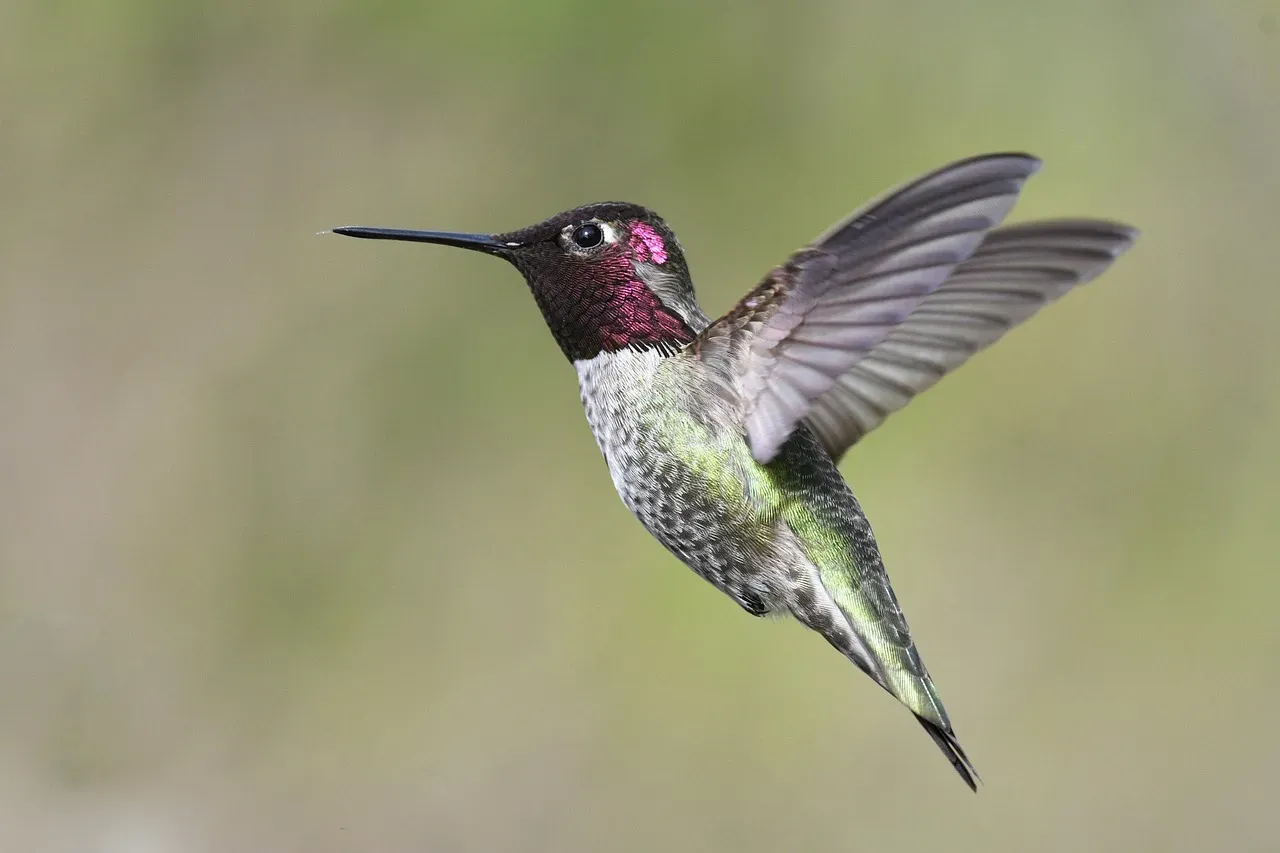
The Glow-Throated Hummingbird sounds like something from a children’s story, except it is very real and very hard to find. The glow-throated hummingbird is restricted to a narrow range in the highlands of Panama, where it has been documented on Cerro Colorado, Cerro Humo, and Cerro Tute, and although it can survive in secondary and disturbed forests, it is dependent on intact habitats near mountaintops.
Recent population estimates suggest between 2,000 and 12,000 mature individuals, but it is likely closer to the lower end of this range due to the bird’s rarity and patchy presence. Though overall forest loss across its range remains low, deforestation for cattle pastures, coffee plantations, and subsistence agriculture poses a significant threat, and the species is also likely vulnerable to upslope range shifts caused by climate change. A bird named after the quality of its glow, quietly disappearing into the mountain mist.
#13 Wire-crested Thorntail
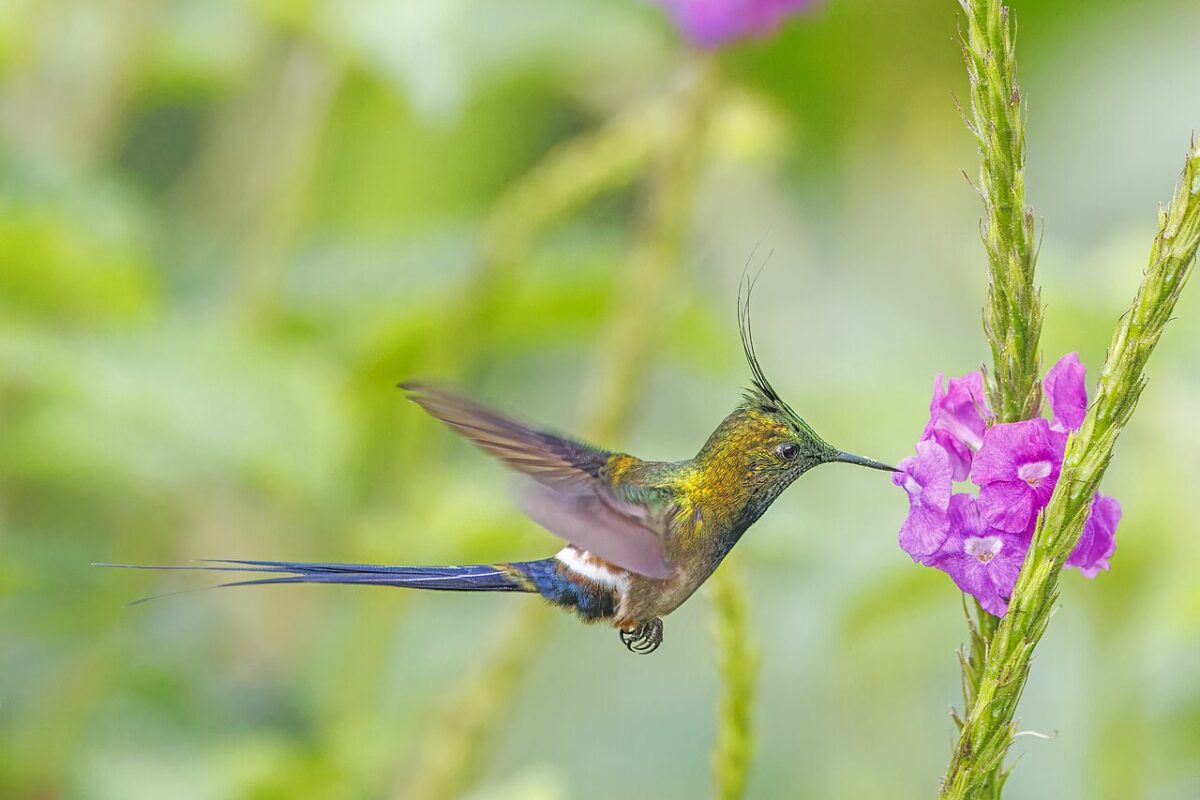
Wire crested thorntail: Charles J. Sharp, CC BY-SA 4.0, via Wikimedia Commons
The Wire-crested Thorntail is one of the most visually striking hummingbirds found in the Andean regions of South America. The male is instantly recognizable by its delicate, wire-like crest that extends forward from its head, ending in tiny paddle-shaped tips that seem almost unreal. Combined with its shimmering green plumage and long, slender tail, the bird looks more like a living piece of art than a typical hummingbird. Despite its ornate appearance, it is agile and energetic, darting through forest edges and feeding on nectar with remarkable precision, often hovering effortlessly among flowers.
#14 Long-tailed Sylph
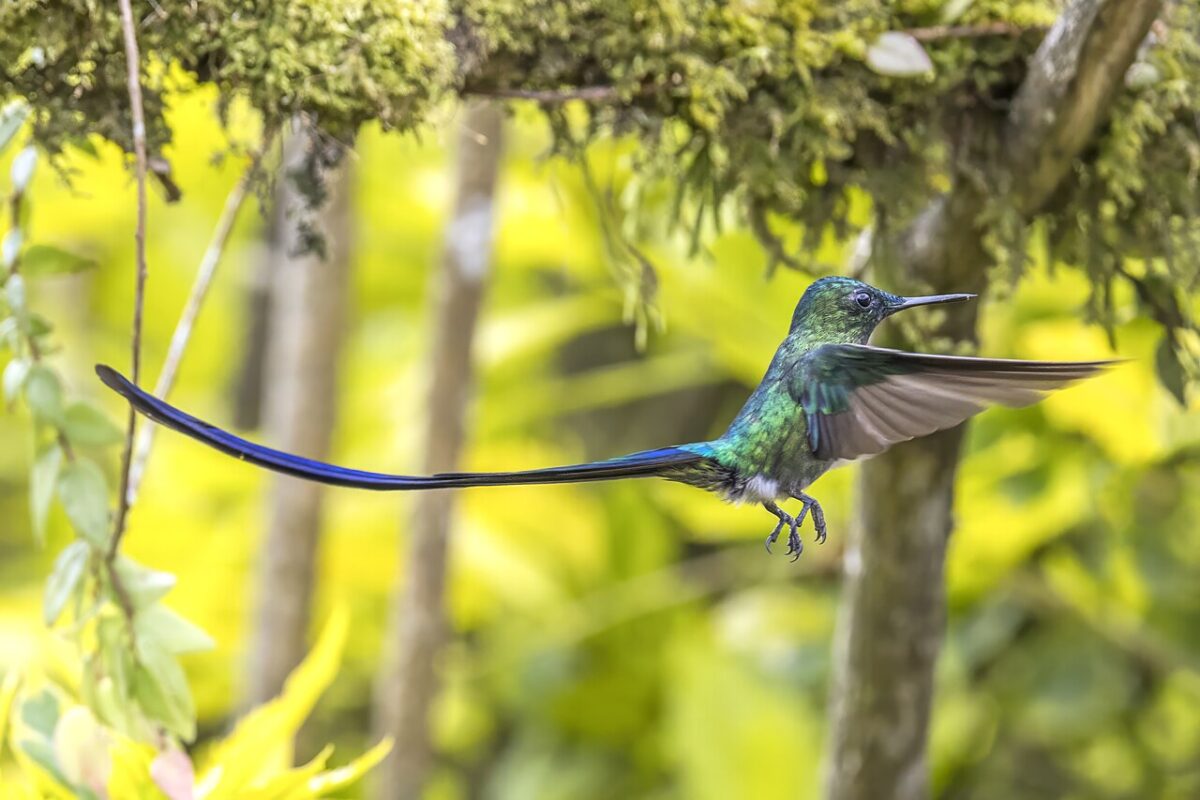
Long tailed sylph: Charles J. Sharp, CC BY-SA 4.0, via Wikimedia Commons
The Long-tailed Sylph is equally breathtaking, known for the male’s extraordinarily long, flowing tail that can be several times the length of its body. Native to cloud forests in countries like Ecuador and Colombia, this hummingbird glows with iridescent green and blue hues, while its trailing tail feathers ripple behind it in flight like ribbons in the wind. The female, more understated in appearance, lacks the dramatic tail but shares the same grace and speed. Watching a Long-tailed Sylph move through misty mountain forests feels almost magical, as if a flash of color and motion briefly appeared and vanished among the trees.
#15 Lucifer Hummingbird
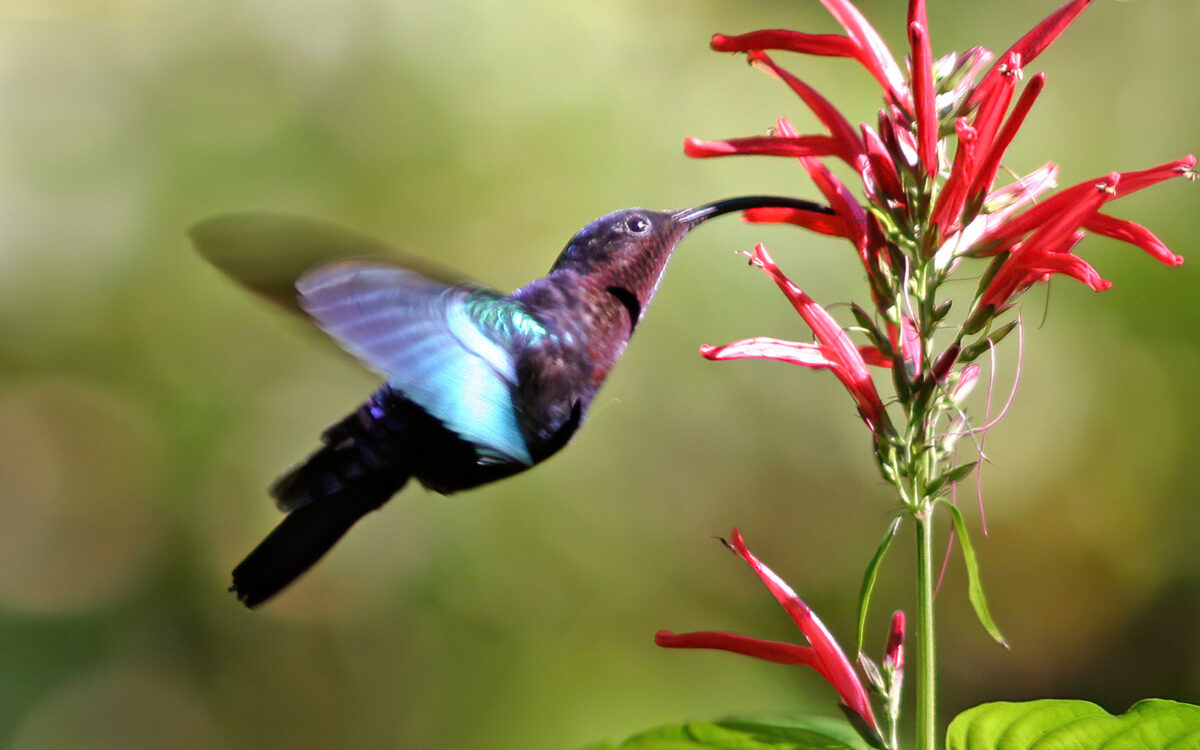
The Lucifer Hummingbird is a small yet striking hummingbird found in the arid regions of the southwestern United States and northern Mexico. The male stands out with a vivid, iridescent throat that flashes shades of magenta and purple depending on the light, contrasting beautifully with its muted green and gray body. Its slightly curved bill is perfectly adapted for feeding on tubular desert flowers, allowing it to thrive in harsh, dry landscapes where few birds can compete. Despite its delicate size, the Lucifer Hummingbird is incredibly resilient, migrating long distances and navigating rugged terrain with ease, bringing bursts of color and life to some of North America’s most unforgiving environments.
Conclusion: Wings of Wonder, Running Out of Time
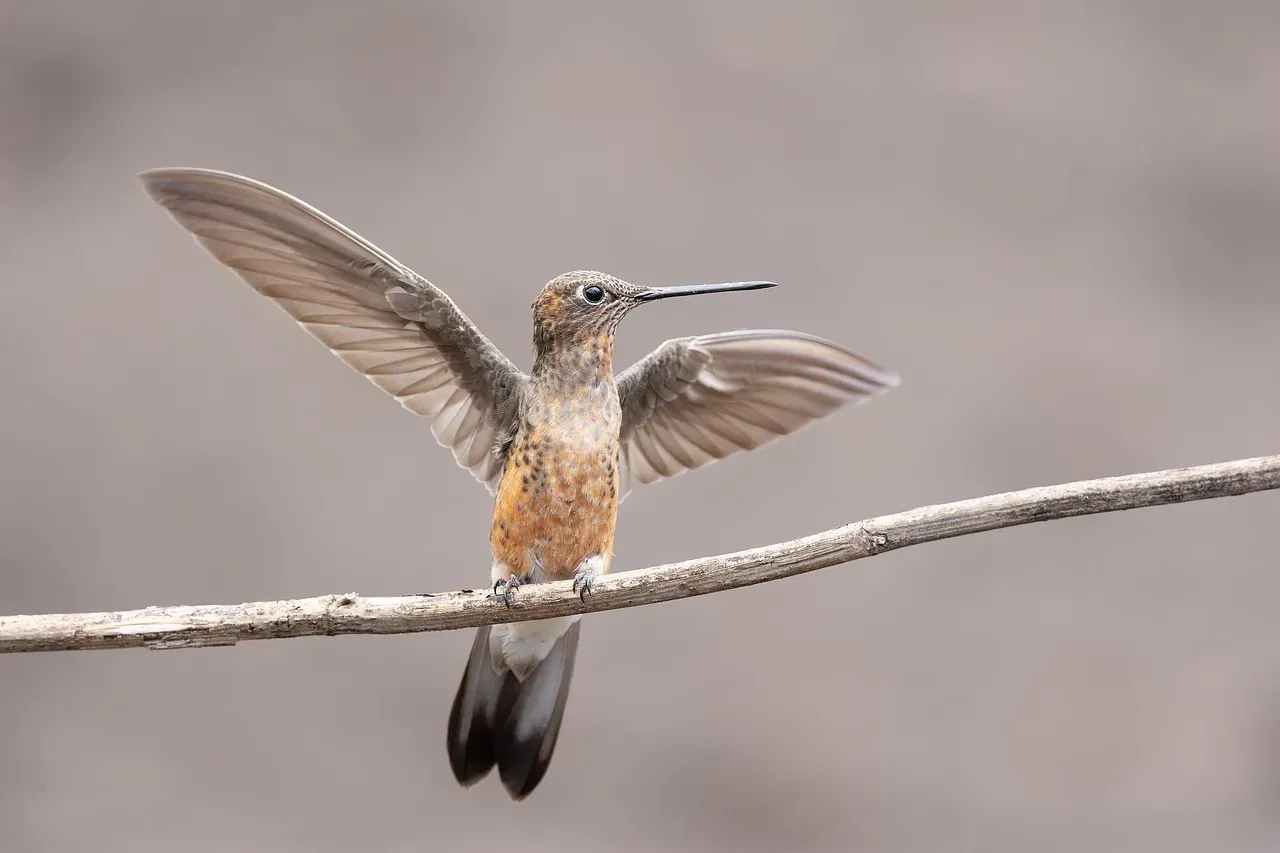
These fifteen species represent something far beyond the reach of any nature documentary. They are proof that the natural world still holds astonishments, still shelters creatures that strain the limits of what we think is real. Though tiny, male hummingbirds are among the most flashy birds in the world, often sporting an array of iridescent feathers used to attract mates. The rarest among them take that quality and amplify it to something almost supernatural.
Yet the shadow over all of this beauty is undeniable. Habitat loss, glass collisions, cat predation, pesticides, and possibly climate change affecting food availability, migration signals, and breeding are factors that may contribute to declining hummingbird numbers. Habitat destruction, agricultural expansion, illegal cultivation, and climate change continue to threaten these species. The fantasy is real, but it is fragile.
Every single one of these birds is a reminder that the most extraordinary things on Earth are often the most invisible, the most overlooked, and the most vulnerable. If we do not pay attention, we may lose these living jewels forever, not to legend, but to negligence. What would you do differently if you knew you had just one chance to see one? Think about it.

- 7 Ways Your Dog Shows Affection Without Touch - July 30, 2026
- 11 Incredible Facts About the African Fish Eagle: Africa’s Sky Monarch - July 30, 2026
- What Horse Breed Are You According to Your Zodiac Sign - July 30, 2026