

Imagine a world where gigantic dinosaurs roamed, volcanoes erupted, and meteors threatened all life. Now, picture the daring survivors—the underdogs of the ancient world—who managed to outlive the mighty T. rex and the towering Brachiosaurus. It’s almost unbelievable, but some reptiles from the age of dinosaurs are still with us today, quietly gliding through rivers, basking on sunlit rocks, and watching the world change over millions of years. Their survival stories are not just impressive—they’re downright inspiring. Let’s journey into the world of these living fossils and meet 15 reptiles that witnessed the rise and fall of dinosaurs and still call Earth home.
15 Tuatara

Hidden away on remote New Zealand islands, the tuatara is often mistaken for a lizard, but it’s actually from an entirely separate ancient lineage. This quirky reptile has barely changed since the Jurassic period, making it a true living fossil. Tuataras possess a mysterious “third eye” on the top of their heads, which isn’t for seeing but helps regulate their body cycles. They’re slow movers and even slower growers—some live over 100 years. Unlike most reptiles, tuatara babies hatch from soft eggs after a mind-blowing 12-15 months of incubation. Their existence is nothing short of miraculous, considering they’ve watched continents drift and climates shift since the time of the dinosaurs.
14 Crocodile

Crocodiles are the ultimate survivors, having outlasted the dinosaurs for more than 80 million years. With armored skin and an attitude to match, these reptiles are practically built for survival. Crocodiles can hold their breath underwater for over an hour and have a bite force that could crush bones with ease. Their patience as ambush predators is legendary—they’ll wait motionless for hours before striking with lightning speed. It’s easy to see why these river monsters have barely changed since the Cretaceous period. Their resilience through mass extinctions and ice ages is a testament to their adaptability and sheer toughness.
13 Alligator

The alligator is a close cousin to the crocodile, but with its own unique flair. These armored giants first appeared around 37 million years ago, but their ancestors date back much further, sharing territory with dinosaurs. Alligators have a broad snout, which sets them apart from their crocodilian relatives, and they’re surprisingly good parents. Mothers fiercely guard their nests and even help babies reach water. Despite their fearsome appearance, alligators are shy around humans and prefer to keep to marshes and swamps. Their survival shows just how well ancient designs can stand the test of time.
12 Leatherback Sea Turtle

Leatherback sea turtles are the heavyweights of the turtle world, growing up to 2,000 pounds and measuring over six feet long. What’s more astonishing is that their family lineage stretches back over 110 million years. These turtles have a unique leathery shell instead of the usual hard one, allowing them to dive deeper than any other turtle—sometimes more than 4,000 feet. Leatherbacks migrate thousands of miles each year, crossing entire oceans in search of jellyfish feasts. Their incredible navigation skills and adaptability have helped them survive since the days when dinosaurs ruled the seas.
11 Gharial

With its long, narrow snout and rows of razor-sharp teeth, the gharial looks like something straight out of a prehistoric painting. Native to the rivers of India and Nepal, this fish-eating crocodilian has been around for at least 80 million years. Gharials are masters of the water, using their uniquely shaped jaws to snatch slippery fish with astonishing accuracy. Sadly, they’re now critically endangered, with only a few hundred left in the wild. Their survival thus far is a testament to their specialized design, but their continued existence hangs by a thread.
10 Green Sea Turtle

The green sea turtle is a gentle giant of the ocean, gliding gracefully through tropical waters. With ancestors that paddled alongside marine reptiles during the age of dinosaurs, green sea turtles have an impressive evolutionary history. They can live for over 80 years, and some scientists believe their lineage is more than 100 million years old. These turtles travel vast distances between feeding grounds and nesting beaches, guided by Earth’s magnetic field. Their endurance and navigational prowess are nothing short of awe-inspiring.
9 Komodo Dragon

Komodo dragons may not have lived alongside T. rex, but their ancestors certainly did. These gigantic lizards, native to a few Indonesian islands, are the closest thing we have to living land dragons. Growing up to 10 feet long and weighing over 150 pounds, Komodo dragons are formidable predators. They have toxic saliva packed with bacteria and venom, making their bite deadly. Despite their fearsome reputation, Komodo dragons are vulnerable to habitat loss. Still, their continued survival makes them a stunning example of ancient power in the modern world.
8 Snapping Turtle

Snapping turtles are like the armored tanks of North America’s rivers and ponds. With their spiky shells, powerful beaks, and surprisingly long necks, they look like something that crawled out of the Jurassic. Their ancestors appeared about 90 million years ago, coexisting with duck-billed dinosaurs. Snapping turtles are notorious for their aggressive defense, especially on land, where they feel most threatened. Underwater, they’re calm and patient hunters, waiting for fish or frogs to wander too close. Their tough attitude and adaptability have kept them thriving for ages.
7 Gavial

The gavial, or false gharial, shares a similar story to its cousin, the gharial, but with some unique twists. Found mainly in Southeast Asia, the gavial has a long, slender snout filled with needle-sharp teeth. These remarkable reptiles are superb swimmers, using their tails to propel them swiftly through slow-moving rivers. Their lineage dates back over 80 million years, making them true relics of a lost world. Gavials are shy and elusive, rarely seen by people, which may have helped them escape the fate of more conspicuous creatures.
6 Loggerhead Sea Turtle

Loggerhead sea turtles get their name from their massive, blocky heads and strong jaws. Their roots trace deep into the past, back to when gigantic marine reptiles dominated the oceans. Loggerheads are seasoned travelers, crossing entire oceans in their lifetimes. Their hard shells protect them from most predators, and their powerful jaws help them crush hard-shelled prey like crabs and mollusks. These turtles have survived dramatic changes in sea levels and climate, proving their ancient blueprint is tough to beat.
5 Bearded Dragon

The bearded dragon may be a favorite among pet owners today, but its ancestors have a much wilder story. Originating in the deserts of Australia, these adaptable lizards hail from a group that’s been around for hundreds of millions of years. Their ability to “beard up”—puffing out their throat and displaying spiky scales—helps deter predators and rivals. Bearded dragons are masters at surviving tough conditions, basking in the sun to regulate their body temperature and eating almost anything they can catch or find. Their resilience is a living echo of prehistoric survival.
4 Red-Eared Slider

Red-eared sliders are among the most recognizable freshwater turtles, famous for the bright red streak behind their eyes. While the species itself may be relatively young, their turtle family dates back more than 200 million years. These turtles are highly adaptable, thriving in ponds, lakes, and even city parks worldwide. Their omnivorous diet and hardy nature have helped them persist through changing environments. The sheer adaptability of red-eared sliders is a reminder that flexibility is often the key to survival.
3 Monitor Lizard

Monitor lizards are the ultimate survivors, with a lineage stretching back to the time of dinosaurs. These intelligent reptiles come in all sizes—from tiny tree dwellers to the mighty Komodo dragon. Monitors are known for their sharp claws, keen eyesight, and relentless hunting skills. They inhabit a wide range of environments, from jungles to deserts, displaying remarkable adaptability. Some even exhibit problem-solving abilities, hinting at an intelligence that likely helped their ancestors outwit extinction. Their story is one of curiosity and cunning.
2 Aldabra Giant Tortoise

The Aldabra giant tortoise might remind you of a walking boulder, but beneath its slow gait lies an ancient survivor. These tortoises can live well over 100 years, and their kind has been roaming the Earth for millions of years. They’re native to the Aldabra Atoll in the Indian Ocean, where they graze on grasses and shrubs. Their massive shells protect them from predators, and their sturdy legs carry them on slow but steady journeys across the islands. The Aldabra giant tortoise is a living symbol of patience and endurance.
1 Saltwater Crocodile

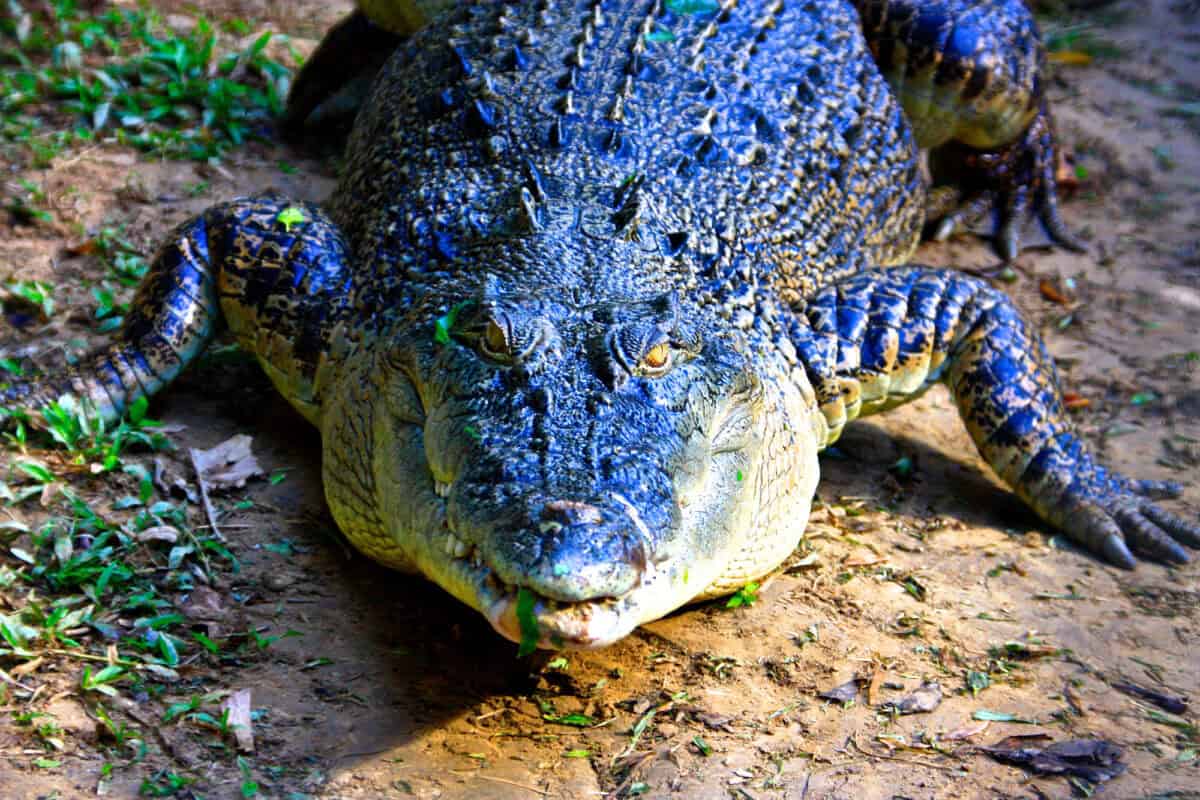
Saltwater crocodiles are the undisputed kings of the reptile world, with ancestors that outlived the dinosaurs and still reign supreme across Asia and Australia. These fearsome reptiles can grow over 20 feet long and weigh more than a ton. Their ability to live in both salt and freshwater, combined with their powerful swimming skills, make them the ultimate aquatic predators. Saltwater crocodiles are known for their cunning ambush techniques and incredible strength. Their survival through countless earth-shattering events is nothing short of legendary.
Conclusion

The survival of these 15 remarkable reptiles is a testament to nature’s resilience and ingenuity. Through mass extinctions, shifting continents, and dramatic climate changes, they have managed to adapt, endure, and thrive where so many others have vanished. Their ancient stories connect us to a world long gone, reminding us that sometimes, the quietest survivors hold the most extraordinary secrets. Looking at these living fossils, one can’t help but wonder—what other ancient marvels are still hiding in plain sight?

As a little kid, I fell in love with nature, wildlife, and animals. Living in the USA, South Africa, Italy, China and Germany gave me the opportunity to discover the world's Wildlife. My favorite animals are Mountain Gorillas, Siberian Tigers, and Great White Sharks.
I'm a certified PADI Open Water Diver, went to Everest Base Camp and Trekked Gorillas in Uganda. I hold a Master of Science in Economics and Finance.
Please send any feedback to feedback@animalsaroundtheglobe.com
- 14 Most Beautiful Bird Songs You Can Hear in America - July 15, 2026
- The Longest Snake Ever Found Slithering in the U.S. - July 15, 2026
- Why Humpback Whales Are Singing Louder Off U.S. Shores - July 15, 2026