

Most dog owners look at their aging dog and see a dog that’s just… getting older. A little more napping. A little less chasing the ball. Easy to explain away, easy to accept. But veterinary specialists see something different when they look at those same everyday behaviors – they see a brain quietly misfiring, organs beginning to slow, and internal systems sending out signals that most families miss entirely until it’s already been months.
The 15 behaviors below aren’t dramatic. They’re not emergencies. That’s exactly what makes them so easy to overlook – and so important to know. Some of what’s on this list will feel familiar in a way that stops you mid-scroll. Keep reading, because a few of the later signs are the ones vets say owners almost never catch in time.
#15 – They Nap Through the Day Instead of Staying Alert

When a dog starts sleeping through the afternoon like it’s their full-time job, most families chalk it up to the easy luxury of senior life. But there’s often something more specific happening beneath the surface: the brain’s internal sleep-wake clock is losing its rhythm. Dogs with early cognitive dysfunction don’t just sleep more – they sleep at the wrong times, because nighttime restlessness has already quietly exhausted them before sunrise.
This shift is gradual enough that it rarely raises alarms on its own. A dog that used to greet you at the door now barely lifts its head when you walk in. Vets flag heavy, misplaced daytime sleep as one of the earliest red flags in dogs that still look physically healthy – because the body can appear fine while the brain’s internal clock is already misfiring. It’s not laziness. It’s the first quiet signal.
Fast Facts
- Canine cognitive dysfunction (CCD) affects an estimated 14–22.5% of dogs over age 8, according to the American Animal Hospital Association’s 2023 Senior Care Guidelines.
- Prevalence climbs steeply: roughly 28% of dogs aged 11–12 show at least one sign of cognitive decline.
- By ages 15–16, that figure rises to approximately 68% of dogs.
- Despite how common it is, studies suggest only about 1.9% of affected dogs ever receive a formal veterinary diagnosis.
- The odds of CCD increase by roughly 52% with each additional year of age, per a large Dog Aging Project study.
#14 – They Pace or Wander the House at Night
You wake up at 2 a.m. to the sound of nails clicking back and forth across the hardwood. The dog doesn’t need to go outside – they just went two hours ago. They’re not responding to a sound. They’re just… moving. This nighttime wandering is one of the most disruptive and misunderstood signs of cognitive decline in dogs, closely mirroring the “sundowning” seen in people with dementia. When light fades and visual anchors disappear, a brain that’s already struggling has even less to hold onto.
The dog isn’t being stubborn or anxious in a garden-variety way – they are genuinely disoriented inside a house they’ve lived in for years. Familiar rooms feel unfamiliar. The internal sense of “where I am” and “what time it is” has started to dissolve. Families lose sleep over it without realizing the behavior is a clinical marker, not a phase. It rarely resolves on its own without some form of intervention.
#13 – Accidents Happen Indoors Despite Perfect Training

A perfectly house-trained dog suddenly soiling inside the home sends most owners straight to the vet looking for a bladder infection or kidney issue – and ruling those out first is absolutely the right call. But when the physical tests come back clean, what’s left is often more unsettling: the dog simply forgot. The routine that was locked in for a decade is no longer loading reliably. The signal travels from body to brain and gets lost somewhere in between.
What makes this sign particularly hard to accept is the pattern. These dogs don’t have accidents randomly – they often soil in the exact spots they were most carefully trained to avoid, as though the internal map of “good” and “offside” zones has been quietly erased. It isn’t regression or spite. It’s the brain losing its geography of home. That distinction matters enormously for how families respond to it.
#12 – They Get Stuck Behind Furniture or in Corners

The first time it happens, it’s almost funny. The dog has wedged itself between the couch and the wall and is standing there, motionless, apparently unsure how to back out. You help them out, they shake it off, and everyone moves on. But when it’s happening every few days – in corners they’ve navigated thousands of times – the humor fades and something more serious takes its place.
This isn’t a coordination problem or arthritis stiffness. A dog with sore joints knows exactly where they are – they just hurt getting there. A dog with cognitive spatial decline looks genuinely lost, as though the room has rearranged itself. The internal ability to calculate “I need to turn around” has slowed below the threshold required for simple navigation. It’s a small daily trap that signals bigger brain changes ahead.
At a Glance: Nighttime CCD Warning Signs
- Pacing in circles or back and forth – with no apparent destination or trigger
- Monotone barking or howling directed at walls, corners, or empty space
- Getting stuck behind furniture in rooms navigated thousands of times before
- Panting and inability to settle despite being physically comfortable
- Crashing into objects – senior dogs often experience reduced nighttime vision alongside cognitive changes
#11 – Interest in Toys and Games Drops Sharply

A senior dog ignoring their tennis ball gets explained away in a hundred reasonable ways – sore legs, boredom with the same toy, just not in the mood today. Sometimes that’s true. But when a dog that used to erupt with joy at the sound of a squeaky toy now watches it land on the floor without moving a muscle, something deeper is often at work. The reward pathways in the brain – the circuits that fire with anticipation and pleasure – have started to dim.
Play requires motivation, and motivation requires a brain that still connects action to reward. When that internal loop weakens, play stops feeling worth the effort. The dog may still watch. They may even sniff the toy. But initiation is gone. Owners often interpret this as physical limitation, when what’s actually declining is the mental drive that once made play feel irresistible. The legs may be fine. It’s the spark that’s going quiet.
#10 – They Become Suddenly Clingy or Completely Withdrawn

Personality changes in aging dogs get dismissed as moodiness, or explained as the dog “just getting more affectionate in old age.” But when the shift is sharp and inconsistent – a dog who was independent for ten years now following you to the bathroom, or a famously velcro dog suddenly preferring to be alone in a dark hallway – it’s worth paying closer attention. Cognitive dysfunction rewrites the brain’s social map, and the result can swing in either direction.
Both extremes can appear in the same dog on different days, which makes the pattern especially confusing. The dog isn’t being difficult. They’re experiencing something closer to internal emotional static – a disruption in how they process security, connection, and their place in the household. Vets flag sudden, unexplained personality shifts as meaningful evidence that emotional regulation is eroding, not just behavior changing. It’s one of the most heartbreaking items on this list precisely because it changes the relationship itself.
#9 – Random Barking or Howling Starts for No Reason

A quiet dog suddenly barking at a blank wall at midnight is alarming enough that most owners circle the yard looking for an intruder. They find nothing. The dog settles. It happens again two nights later, aimed at a corner of the living room that holds nothing but a houseplant. This isn’t hearing loss causing them to miss sounds – it’s often the opposite problem. The brain is generating threats that aren’t there, misfiring on familiar stimuli and flagging the ordinary as dangerous.
The vocalizations come and go without pattern, which makes them easy to dismiss as stubbornness or a phase. But the frequency tends to increase quietly over weeks. The dog isn’t trying to communicate something specific – they’re internally unsettled in a way they can’t resolve. A brain that’s losing its ability to correctly process the environment will manufacture uncertainty, and barking is one of the most visible releases of that internal confusion.
#8 – They Hesitate or Go to the Wrong Side of Doors
This one sounds almost too small to matter. The dog approaches the back door and pushes the hinge side. You redirect them, they go through, everyone forgets about it. But when it’s happening multiple times a day – at doors they’ve used ten thousand times – the accumulation is telling a story. An action that was once pure muscle memory now requires conscious processing, and the aging brain is struggling to supply it reliably.
Owners often correct the behavior with a gentle nudge and assume the dog is distracted or stubborn. What’s actually happening is that the spatial memory required to navigate a familiar threshold has started to degrade. The door hasn’t changed. The dog’s internal map of it has. It’s a small glitch in a routine so embedded it should be automatic – and that’s exactly what makes it significant.
Worth Knowing: Common Owner Mistakes That Delay Help
- Accepting nighttime pacing as “just normal aging” – it’s a clinical marker, not a personality quirk
- Getting frustrated with indoor accidents – the dog hasn’t forgotten training out of defiance; the memory itself is gone
- Assuming command-ignoring is stubbornness – the brain may simply no longer retrieve the learned response
- Overlooking vision or hearing decline – sensory loss fuels anxiety that accelerates cognitive symptoms
- Waiting for a “dramatic” sign – by then, months of early intervention opportunity have already passed
#7 – They Stare Blankly at Walls or Floors for Minutes
Every dog zones out occasionally. But there’s a specific kind of blank staring that’s different in quality – longer, deeper, and harder to interrupt. The dog isn’t watching a bug or listening for a sound. They’re just… elsewhere, fixed on a patch of wall or a section of floor for two, three, four minutes at a stretch. Vets who work with senior dogs recognize this immediately. It’s not relaxation. It’s the brain idling in a way it didn’t used to.
What makes this sign particularly easy to miss is that it happens during quiet moments, when no one’s paying close attention. It tends to occur in the same spots repeatedly, which rules out simple distraction and suggests something more systematic. Internally, the brain is experiencing processing pauses – brief lapses where normal environmental input isn’t registering. It’s the cognitive equivalent of a loading screen that used to be instant.
#6 – They Forget Basic Commands or Routines They Knew for Years
“Sit.” Nothing. Not a flicker of recognition from a dog that has responded to that word reliably for eight years. Owners assume hearing loss and start talking louder, or assume the dog is being defiant and feel a flash of frustrated betrayal. But when the same dog responds to a hand signal moments later, or remembers “treat” with full enthusiasm, the picture gets more complicated. The internal database of learned behaviors is eroding unevenly, with some memories intact and others simply gone.
This is one of the most emotionally difficult signs on the list because it reframes years of shared history. Training sessions that once felt like communication now highlight a gap. Familiar routes that used to be walked on autopilot draw hesitation. The dog isn’t ignoring you – they genuinely cannot retrieve what was once second nature. Recognizing that distinction is what separates frustration from compassion, and frustration from the right kind of veterinary conversation.
#5 – Evening Anxiety or “Sundowning” Becomes Routine

Like clockwork, as the light outside shifts from afternoon gold to early gray, something changes in the dog. Panting that wasn’t there an hour ago. Pacing a tight loop between the kitchen and the hallway. Whining at nothing visible. Families start planning their evenings around it – lowering the TV volume, turning on extra lights, sitting with the dog on the floor – without ever connecting these nightly rituals to a recognizable clinical pattern.
Dogs are not little people, but their brains age in ways that are remarkably, sometimes heartbreakingly, similar to ours.
Dr. Gary Landsberg, veterinary behaviorist
What’s happening internally is a convergence of two failing systems: the brain’s internal clock losing its calibration, and the visual processing that helps anchor a dog’s sense of safety fading with the light. The result is predictable, nightly distress that follows a rhythm most owners recognize only in hindsight. It differs from general anxiety because of that clockwork timing. And it tends to worsen gradually, not plateau.
#4 – Eating Slows or Appetite Shifts Without Obvious Cause

A dog that once inhaled dinner before the bowl hit the floor now stands over it, sniffs, takes a few bites, and walks away. Owners cycle through food brands, add toppings, try warming the meal – anything to reignite the enthusiasm that used to be automatic. Sometimes there’s a physical explanation: dental pain, nausea, metabolic changes worth investigating. But when the vet visit comes back unremarkable, the appetite change often points to something happening further upstream in the brain.
Hunger signals depend on neurological pathways that can weaken with age and cognitive decline. For some dogs, the act of finding and approaching the bowl becomes genuinely confusing on certain days – they circle it, forget why they’re there, and drift away. This small daily change is easy to explain away and easy to miss as a pattern. But vets often note it as an early indicator that bigger shifts are building quietly in the background.
#3 – They Startle Easily at Normal Household Sounds

The refrigerator hums. The dog flinches. A cabinet closes in the next room and the dog scrambles to its feet, heart visibly pounding, scanning for a threat. This is a dog that spent years sleeping through thunderstorms and backyard fireworks without blinking. The sounds haven’t changed. The dog’s ability to process and filter them correctly has. A brain that’s slowing down can’t distinguish quickly between “that’s just the fridge” and “that’s a threat,” so everything lands harder than it should.
This heightened reactivity builds gradually and surprises everyone because it seems to contradict the dog’s entire history. Owners sometimes assume new hearing problems – but the dog is clearly hearing fine. The issue isn’t reception; it’s interpretation. The internal filter that once caught ordinary noise and tagged it as safe is wearing thin. Daily life becomes more jarring, more effortful, and more exhausting than it used to be. The dog isn’t becoming fearful by choice.
Quick Compare: Normal Senior Aging vs. Cognitive Decline
| Normal Senior Aging | Signs of Cognitive Decline |
|---|---|
| Slower on walks, tires more easily | Gets lost on familiar walking routes |
| Sleeps more overall | Sleeps heavily by day, restless and pacing at night |
| Less interest in vigorous play | No response to favorite toys or games at all |
| Occasional house accident (physical cause) | Repeated indoor accidents after years of perfect training |
| Startle reflex slows with age | Extreme fright reaction to everyday household sounds |
#2 – Repetitive Licking or Pacing Loops Appear in Place
One paw, licked down to raw skin over weeks while the owner assumed allergies. The same oval path walked from the couch to the kitchen door and back, twenty times in an evening, without destination. These compulsive loops are easy to misread as physical symptoms – and ruling out skin conditions or pain is always the right first step. But when the medical explanations don’t hold, what often remains is a neurological pattern: the brain caught in a loop it can’t break, reaching for repetition as a way to manage internal confusion.
These behaviors fill the space that varied, purposeful activity used to occupy. A dog that once explored, played, and engaged with its environment now returns to the same fixed routine because novel input has become overwhelming or unrewarding. It’s the mind seeking order when the world inside has started to feel chaotic. Redirecting the behavior without addressing the root is like muting the alert without reading the message.
#1 – Their Overall Personality Shifts in Subtle but Consistent Ways
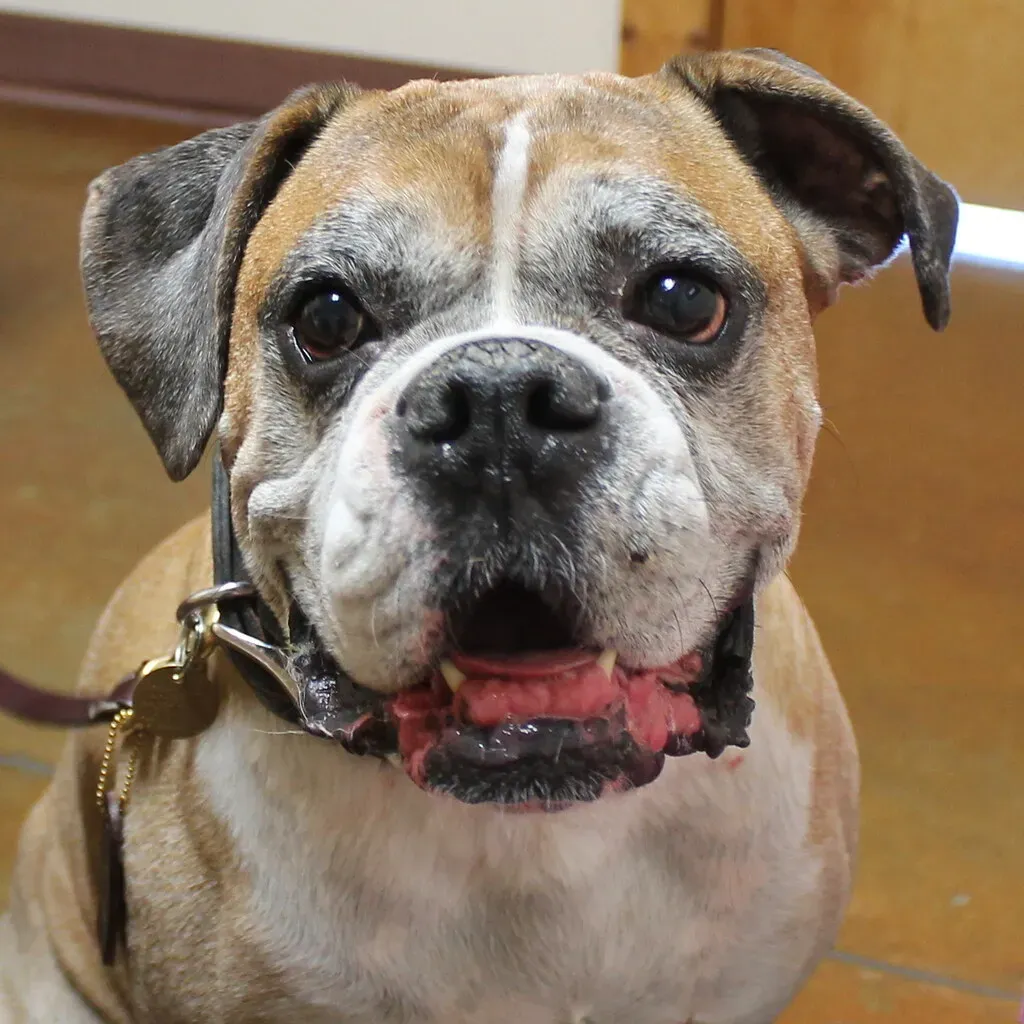
This is the one that hits hardest, and the one that takes the longest to name. It isn’t one behavior – it’s the slow accumulation of all the above, until one day you realize the dog lying in the corner is a slightly different version of the dog you’ve known for a decade. Less reactive to the things that used to excite them. Less present in the small moments. Still there, still yours – but quieter inside in a way that’s hard to articulate and even harder to grieve while they’re still alive and physically well.
Vets are consistent on one point: early recognition of these patterns changes outcomes more than any single treatment or supplement. Not because everything can be reversed, but because adjusting routines, reducing environmental stress, and opening the right veterinary conversations early can meaningfully extend quality of life. The dogs who get that chance are the ones whose owners knew what to look for. Now you do too – and that matters more than most people realize until they wish they’d known sooner.
These 15 signs aren’t a sentence. They’re a heads-up. The real mistake – the one worth avoiding – is filing all of this under “that’s just how seniors are” and moving on. Your dog doesn’t know what’s changing inside them. But you can. And that’s the whole point.

- 14 Quiet Signs Your Dog Knows Its Time Is Near and Wants You Close - July 22, 2026
- 10 Falcon Facts That Will Blow Your Mind - July 22, 2026
- 5 Incredible Migratory Journeys Animals Make Every Year - July 22, 2026