


Imagine a creature no bigger than your fingernail, capable of skills that would put superheroes to shame. That’s the world of spiders—a realm where the impossible feels ordinary. From weaving webs strong enough to catch birds to dancing hypnotically for love, spiders have evolved in ways that seem to defy all logic. If you thought you knew spiders, get ready to be surprised, amazed, and maybe a little spooked by these 15 jaw-dropping adaptations.
15. Silk Stronger Than Steel

Spiders produce silk that’s not just sticky—it’s incredibly strong. In fact, ounce for ounce, spider silk can be tougher than steel and more elastic than nylon. Some orb-weaver spiders can even create webs that stop birds mid-flight. Scientists are still trying to replicate this miracle material for use in everything from bulletproof vests to medical sutures. It’s incredible to think that such a small animal can manufacture something that outperforms many man-made materials.
14. Camouflage That Baffles Predators

Some spiders are masters of disguise. The wrap-around spider, for example, flattens itself against tree bark and molds its body to the contours, becoming almost invisible. Crab spiders can change color to match the flowers they hunt on, making them nearly undetectable to both their prey and predators. This level of camouflage is so effective, many scientists have missed these spiders entirely during field surveys.
13. Hydraulic Legs

Unlike most animals that use muscles to move their legs, spiders use a hydraulic system. They pump fluid into their legs to extend them, allowing for sudden, explosive jumps and quick escapes. If you’ve ever tried to catch a spider and it zipped away in a blur, that’s its hydraulic legs in action. This unique adaptation allows spiders to leap many times their own body length, surprising both prey and predator.
12. Ultraviolet Vision

While humans see only a narrow band of light, many spiders can see ultraviolet light. This adaptation helps them spot prey, communicate, and even find mates. Some orb-weaving spiders decorate their webs with silk that reflects ultraviolet light, making them stand out to insects but blending in with the background to birds and other predators. It’s like having a secret code only spiders and their prey can see.
11. Venomous Bite with Precision Control

Spiders are famous for their venom, but what’s less known is how precise their bite can be. Some spiders can inject just enough venom to paralyze or kill their prey without wasting a drop. Others, like the funnel-web spider, can deliver a potentially deadly bite to humans in self-defense. The diversity and complexity of spider venoms—some even used in medical research—are a testament to their evolutionary genius.
10. Ballooning Across Continents

Young spiders, called spiderlings, have a remarkable way of traveling: ballooning. They release a thread of silk into the air and let the wind carry them for miles—sometimes even across oceans. This method allows spiders to colonize new areas, avoid danger, and find food. Imagine being able to hitch a ride on the wind to a new home. It’s a superpower that would make any traveler jealous.
9. Webs with Multiple Functions

Spiders use webs for much more than catching prey. Some build webs to protect their eggs, while others create intricate retreats for hiding from predators. The bolas spider makes a single thread with a sticky ball at the end, swinging it like a lasso to catch moths. Webs are also used to communicate—some male spiders pluck the web to signal their intentions to potential mates. Every web is a multipurpose tool, customized for the spider’s needs.
8. Mimicry That Fools All

Some spiders have evolved to mimic ants, beetles, or even bird droppings. Jumping spiders in particular are known for their incredible mimicry skills, walking with jerky movements and holding their front legs up to imitate antennae. This disguise helps them avoid predators and sneak up on prey. It’s a classic case of “if you can’t beat them, become them,” and it works surprisingly well.
7. Sensory Hairs That Feel the World

Spiders have tiny hairs on their bodies and legs that pick up the slightest vibrations in the air and ground. These sensory hairs are so sensitive, they can detect the flutter of insect wings or the approach of a predator long before the spider is seen. This gives them a sixth sense that’s essential for both hunting and survival. It’s like having built-in radar, making spiders nearly impossible to sneak up on.
6. Parental Care That Surprises

While many people think of spiders as solitary, some species show extraordinary parental care. The wolf spider, for example, carries her spiderlings on her back until they’re ready to face the world alone. Others guard their egg sacs with their lives or even feed their young regurgitated food. This nurturing side of spiders challenges the stereotype of them as cold, unfeeling hunters.
5. Courtship Dances That Mesmerize
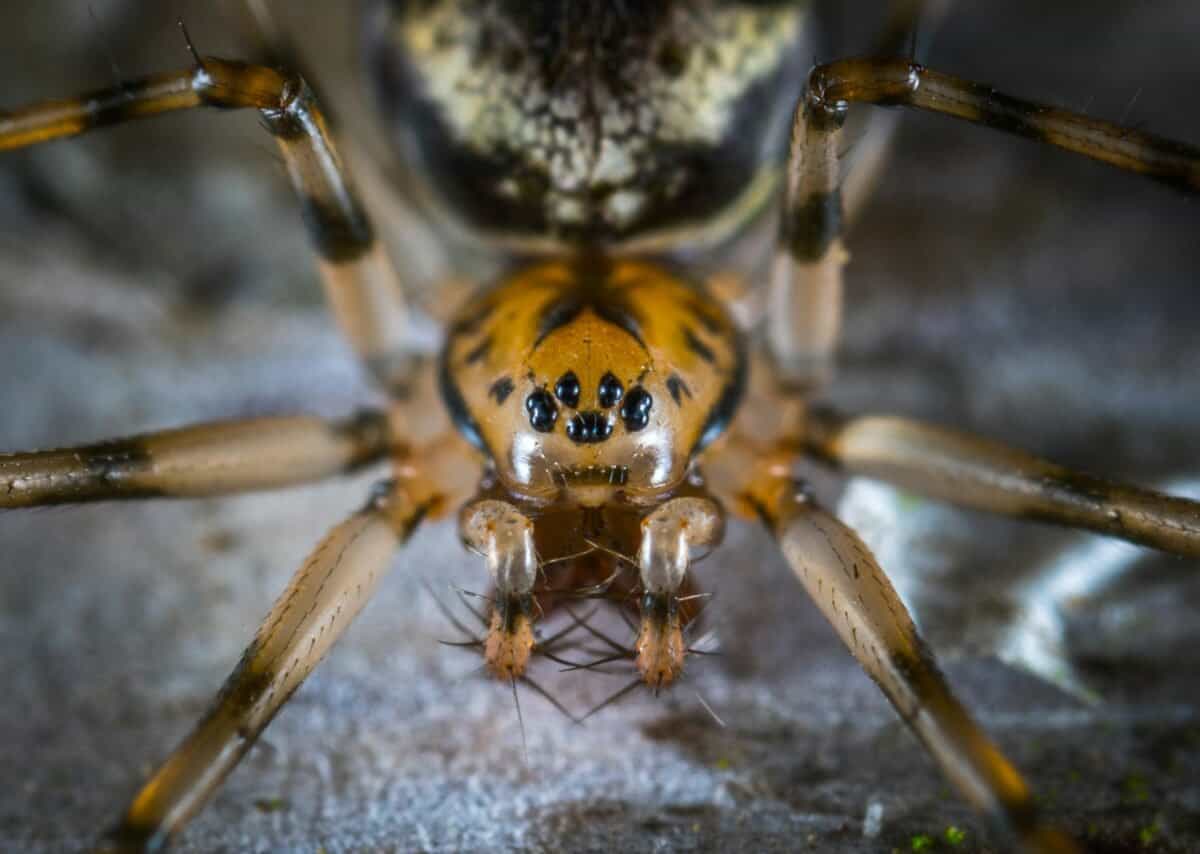
To woo a mate, some male spiders perform elaborate courtship dances. The peacock spider unfurls its colorful abdomen and dances with wild, almost comical movements that look like a miniature circus act. These displays are not just about attraction—they’re a way for the male to prove he’s not a threat. If the dance isn’t convincing, he might become the next meal instead of a mate.
4. Trapdoors and Tunnels

Trapdoor spiders build burrows with camouflaged lids, snapping them open only to ambush unsuspecting prey. These underground engineers create tunnels lined with silk and often decorate the entrances with leaves and twigs for extra disguise. When an insect passes by, the spider bursts out like a jack-in-the-box, snatching its meal with lightning speed. This adaptation turns the forest floor into a minefield of hidden hunters.
3. Social Living in Massive Colonies

Most spiders are loners, but some species live in colonies of thousands. Social spiders build giant communal webs, sharing prey and raising young together. This cooperative lifestyle is rare among spiders but offers protection from predators and environmental challenges. Imagine a sprawling spider city, buzzing with activity—it’s a side of spider life few people ever see.
2. Regeneration of Lost Limbs

Spiders can do something most animals can only dream of: regrow lost legs. If a predator grabs a spider by a limb, it can detach the leg and escape, later growing a new one through molting. This remarkable ability means spiders can survive attacks that would cripple other creatures. It’s a built-in backup plan that keeps them in the game, even after a close call.
1. Surviving Underwater for Hours

Some spiders, like the diving bell spider, have adapted to live underwater. They spin a bubble of silk that traps air, creating a tiny scuba tank where they can breathe and hunt aquatic insects. Others, like the raft spider, can run across the surface of ponds and streams, using water’s surface tension like a trampoline. These aquatic feats seem to defy the very nature of what it means to be a spider.
Conclusion

Spiders are full of surprises, packing an arsenal of bizarre and awe-inspiring adaptations into their tiny bodies. Each adaptation, from silk production to social living, shows just how creative evolution can be. Next time you spot a spider, remember: you’re looking at one of nature’s ultimate problem-solvers. Which adaptation amazed you the most?

As a little kid, I fell in love with nature, wildlife, and animals. Living in the USA, South Africa, Italy, China and Germany gave me the opportunity to discover the world's Wildlife. My favorite animals are Mountain Gorillas, Siberian Tigers, and Great White Sharks.
I'm a certified PADI Open Water Diver, went to Everest Base Camp and Trekked Gorillas in Uganda. I hold a Master of Science in Economics and Finance.
Please send any feedback to feedback@animalsaroundtheglobe.com
- 13 Cat Breeds That Get Along with Dogs - July 20, 2026
- The 12 Largest Dog Breeds That Still Love to Cuddle - July 20, 2026
- 12 Pet Habits That Secretly Mean They Love You - July 20, 2026