


The American Southwest is like nature’s secret treasure chest, hidden away in landscapes that most people think are empty wastelands. You’d be wrong to assume these harsh deserts and rugged canyons are lifeless—they’re actually teeming with some of the most remarkable creatures on Earth. From venomous lizards that glow under moonlight to tiny owls that make their homes in towering cacti, the Southwest harbors wildlife so unique and perfectly adapted that they exist nowhere else in quite the same way.
15. Giant Desert Hairy Scorpion

Picture this: you’re camping under a starlit Arizona sky when someone pulls out a black light, and suddenly the ground around you erupts with an eerie blue-green glow. Like all scorpions, the giant desert hairy scorpion will glow when exposed to an ultraviolet light due to fluorescent chemicals in their bodies. This species grows up to 5 ½ inches long and gives birth to live young that ride on their mother’s back for a week or so before venturing out on their own. Despite their intimidating size, these creatures are surprisingly gentle giants of the arachnid world. Though they are large, these scorpions’ sting doesn’t pack much punch, and their venom is not considered to be highly potent and is mostly dangerous to people with an allergy to it. The scorpion’s common name comes from the brown hairs that cover its body, and these hairs help detect vibrations in the soil. They dig elaborate burrows up to 8 feet long, and they emerge from them at night.
14. Desert Bighorn Sheep

These agile animals are well adapted to Nevada’s dry environment, going several weeks without water while living mostly off grasses and, sometimes, cacti, and the bighorns’ concave hooves allow them to climb steep, rocky desert mountains quickly and easily, helping them escape predators such as mountain lions, coyotes and bobcats. What’s truly mind-blowing about these sheep is their headgear. Older rams can have impressively curled horns measuring over three feet long and weighing as much as 30 pounds. Rams are known for head-to-head battles that can last as long as 24 hours. Imagine the sound echoing through desert canyons as these massive horns collide! Bighorn sheep numbers have also declined due to human encroachment and competition with domestic sheep and wild burros, but reintroduced populations are increasing in numbers, and the construction of artificial waterholes in some areas has helped maintain bighorn herds. Bighorn sheep are found in rugged, rocky desert mountain ranges and some canyons, and they prefer precipitous slopes and cliffs where they can be safe from predators.
13. Gila Monster

Meet America’s only venomous lizard, and trust me, it’s way cooler than its fearsome reputation suggests. The Gila monster is a species of venomous lizard native to the Southwestern United States and the northwestern Mexican state of Sonora. The Gila Monster is the largest lizard in the United States, growing to 22 inches long and weighing over a pound. The Gila monster is a small, striking lizard with black scales and an array of orange stripes and spots. They are named after the Arizona Gila River Basin, where they were first discovered. These prehistoric-looking creatures spend most of their time underground, emerging only when conditions are perfect. Gila monsters are more likely to use their venom on a predator than on prey. Think of them as the desert’s version of a grumpy old hermit who just wants to be left alone to enjoy their slow-paced lifestyle.
12. Javelina (Collared Peccary)

Don’t let their pig-like appearance fool you—javelinas are fascinating creatures with personalities as strong as their smell. Even though a javelina looks a lot like a pig, it’s not, as javelinas are actually part of the peccary family. The javelina is a medium-dog-sized animal of about 40 to 55 pounds that somewhat resembles a small wild boar. It is best to watch Javelina from a distance because they have very poor eyesight, so there is chance they could charge at you accidentally when they are trying to get away, and they smell really bad, which means you might smell them before you see them. Javelina eat roots, tubers, seeds, mesquite beans, green vegetation, cactus fruits, agaves, and prickly pear pads, and when the opportunity presents itself, they will also eat dead birds or rodents. Javelinas seem to LOVE pumpkins, so if you put a pumpkin out for fall or Halloween, be warned that a javelina may run away with it.
11. Kit Fox

The smallest canid species in North America, the San Joaquin Kit fox is endangered due to loss of habitat to farming and development. The kit fox, with its large ears for heat dissipation, and the kangaroo rat, which never drinks water and extracts moisture from seeds, are prime examples of desert adaptation. These adorable foxes look like someone took a regular fox and gave it oversized Mickey Mouse ears. Those comically large ears aren’t just for show—they work like natural air conditioners, helping these tiny predators dump excess heat during scorching desert days. Late night at the watering hole is the best time to spot kit foxes, raccoons and bobcats. Kit foxes are so perfectly adapted to desert life that they rarely need to drink water, getting most of their moisture from their prey. Think of them as the desert’s version of efficiency experts, making the most of every calorie and drop of moisture.
10. Kangaroo Rat

Desert kangaroo rats obtain all the moisture they need from seeds, which means they barely have to drink any water at all, a much-needed trait in the arid desert. One of the smallest of favorite desert mammals is the kangaroo rat, with these cute little three-to-five inch long rodents identifiable by their long tails, which have a tuft of hair at the very end. Kangaroo rats actually get their name from their long tails and long kangaroo-like feet, and like a kangaroo, they can use their tails for balance when they stand up. Hopping along on their hind legs like a kangaroo, this rodent can leap up to 9 feet to escape predators. These adorable rodents are mainly active at night so that they can avoid the harsh heat of the day, and they also burrow underground where the temperatures are a lot cooler. Their burrows can be up to 7 feet deep, cover an area of 30 square feet and be used for decades. Imagine never needing to drink a single drop of water in your entire life—that’s the kangaroo rat’s superpower!
9. Coatimundi

Often mistakenly referred to as desert monkeys because of their long tails and propensity for trees, the coati, or coatimundi is actually more closely related to a raccoon, and these social animals are great fun to watch and can be seen in several of your state parks across Arizona. The coatimundi, or coati, is a member of the raccoon family found from Arizona to South America, and it has a long snout with a flexible nose which it uses to root in the soil for grubs and other invertebrates. They can flip over rocks in search of snakes and lizards or use excellent climbing skills to forage for nuts, berries, or bird eggs in trees. These curious creatures are like the neighborhood watch of the desert—always poking their noses into everything and traveling in chattering groups. Sonoran Desert coatis are most often found in oak- and sycamore-lined canyons, or in lower elevation riparian areas in winter, and they are most active during the morning and late afternoon. Their flexible snouts work like biological metal detectors, helping them uncover hidden treasures in the most unlikely places.
8. Roadrunner

Forget everything you think you know about roadrunners from cartoons—the real deal is even more impressive. From folklore to cartoons, the greater roadrunner is the most well-known bird in the Southwest. While running, the roadrunner can achieve a speed of 15 miles per hour, and uses its tail as a rudder to change direction. Roadrunners are one of the few animals that prey on rattlesnakes and tarantula hawk wasps, and it is one of the few animals that prey on rattlesnakes and tarantula hawk wasps. A pair of roadrunners will sometimes work together to take down a rattlesnake—while one bird focuses on keeping the snake’s attention by jumping up and down and flapping its wings, the other bird circles around to attack from behind, and roadrunners rely on their agility and speed to avoid strikes while repeatedly pecking the snake or using their strong beaks to grab and kill it. Sometimes the male will dangle a food offering, such as a lizard or snake, from his beak to entice the female. Now that’s what I call a romantic dinner proposal!
7. Elf Owl

About the size of a sparrow (5 inches tall), this is one of the smallest owls in the world. As the world’s smallest owl, elf owls nest in the holes of saguaro cacti, keeping them safe from many predators. The Elf Owl occurs from western Mexico through the southwestern United States, and in our region, it may be found mostly in riparian habitats or in association with the saguaro. Like most owls, they are mainly active at night to avoid the hot days, and their diet of small mammals and insects provides them with the necessary nutrients and water. Picture a tiny feathered ball no bigger than your fist, living dozens of feet up in the arm of a giant cactus. The call consists of a variety of soft yelping notes, often running together into a high-pitched chatter. These miniature raptors are like the apartment dwellers of the desert, making cozy homes in the penthouse suites of saguaro cacti. They’re proof that good things really do come in small packages.
6. Burrowing Owl

The Burrowing Owl nests in the used burrows of other animals, most commonly ground squirrels and prairie dogs, and the white eggs number from 5 to 10, and are laid in underground nests. Burrowing Owls are one of the smallest owls in North America, and when distressed or excited they bob their head up and down. Burrowing owls typically live in grasslands, prairies, or deserts with open areas and sparse vegetation, and they spend most of their time on low perches or on the ground, and nest and brood in burrows underground. It prefers open country, prairie and desert, and it is frequently seen in desert and grassland regions, standing on mounds or fence posts during the day. Here in Phoenix, Arizona there have been efforts to protect threatened local populations by the Nina Mason Pulliam Rio Salado Audubon Center and Wild at Heart Raptor Rescue, with actions including building artificial burrows and releasing rehabilitated owls in the area to live and nest in them, and children and adults all over Arizona helped build these artificial habitats, providing homes for thousands of burrowing owls. These quirky owls are like the ground-floor tenants of the bird world, preferring subterranean living to treetop penthouses.
5. Ringtail
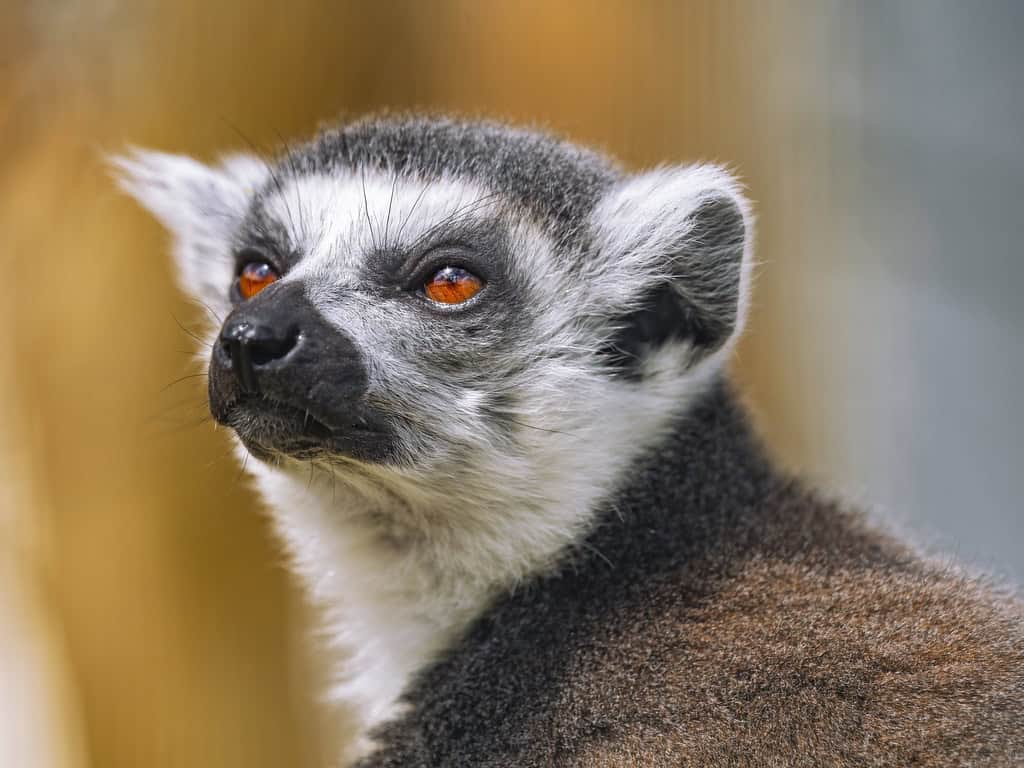
The ringtail is a mammal of the raccoon family native to arid regions of North America. The ringtail is the state mammal of Arizona. Ringtails have dark brown fur, and a well-defined black and white striped tail, and they have short, straight, semi-retractable claws on each foot. Among the most unusual, most handsomely marked, and least known of our desert animals are the procyonids — the raccoon, ringtail, and coatimundi. This sleek, nocturnal mammal is a rarely-seen resident of Colorado’s desert landscapes. The only place I have ever seen a ringtail is on my Arizona Drivers License, but I am sure they are out there, and they are related to racoons and coatimundis. These mysterious creatures are like the ninjas of the desert—incredibly agile, perfectly camouflaged, and so elusive that most people go their entire lives without seeing one. With their lemur-like tails and cat-like reflexes, they’re nature’s version of a stealth bomber.
4. Ocelot

If you’re having a tough day, look up baby ocelots on google, but sadly, the ocelot is endangered, and the ocelot is native to the southwest United States, Mexico and Central America. The bobcat and puma are found throughout the state while the jaguar is found in the southern portion of Arizona and the ocelot is found mostly in the southeast. Arizona’s top predators include the coyote, the black bear, mountain lions, three types of foxes, lynxes, and ocelots. These spectacular spotted cats are like living works of art, with coats so beautiful they look hand-painted by nature’s finest artist. Unfortunately, their stunning beauty has also made them targets for illegal wildlife trade. In the American Southwest, spotting an ocelot is rarer than finding a diamond in your backyard—there are thought to be fewer than 100 individuals remaining in the wild in the United States. These elusive cats prefer dense brush and thorny vegetation where their spotted coats blend perfectly with dappled shadows, making them nearly impossible to detect even when they’re just feet away.
3. Jaguar

A visitor might even glimpse a rare Mexican wolf, a subspecies of the gray wolf, or a jaguar. Sonoran desert wildlife is a unique mix of animals traditionally associated with the desert Southwest (like rattlesnakes and coyotes) along with animals that travel up from Central America (such as jaguars and coatimundi). Yes, you read that right—jaguars still roam the American Southwest, though they’re about as rare as winning the lottery twice. These powerful cats are the third-largest in the world, with bite forces strong enough to crush turtle shells and skulls. Charismatic animals like the Mexican gray wolf, pinyon jay, jaguar, ocelot, and sea turtles are barely hanging on as they experience direct and indirect pressures from human activity. The few jaguars that venture into Arizona and New Mexico are typically males dispersing from breeding populations in Mexico. Think of them as the ultimate wanderers, crossing international borders in search of new territory.
2. Mexican Gray Wolf
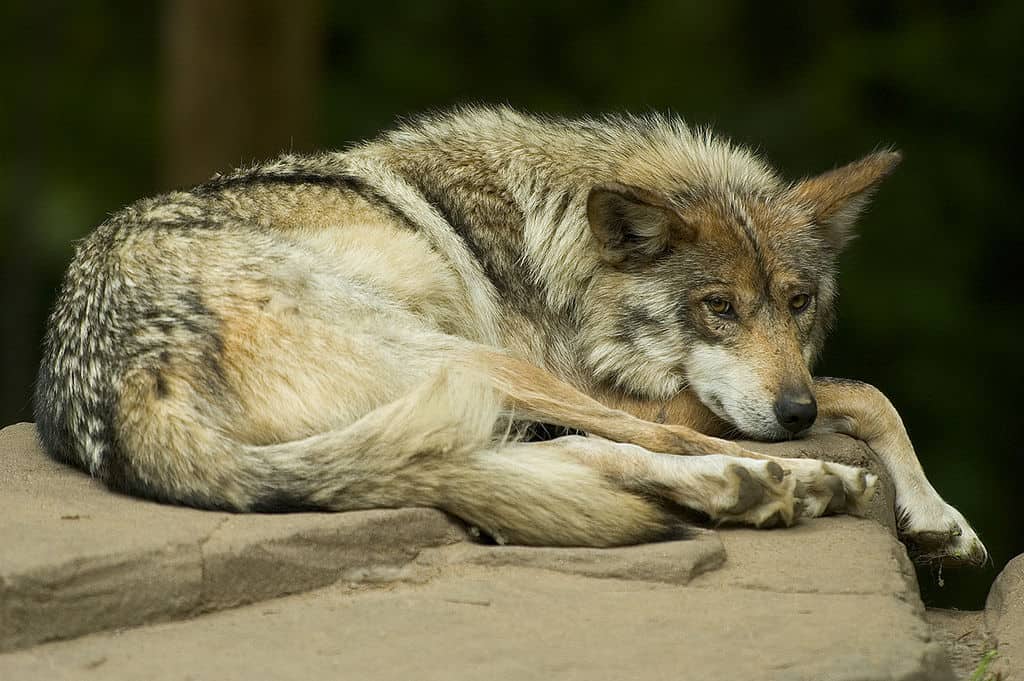
Once nearly wiped out in the wild, the Mexican gray wolf—also known as “El Lobo”—has made a slow but steady comeback in the Southwest thanks to dedicated conservation efforts. These wolves are the smallest and most genetically distinct subspecies of the North American gray wolf. Native to the mountainous regions of Arizona, New Mexico, and northern Mexico, they are shy, elusive pack animals that hunt elk, deer, and other small mammals. With thick coats of mottled gray, black, and rust, they blend perfectly into the pine forests and scrubby highlands they roam. They were reintroduced to the wild in 1998, and while their population remains small, sightings have increased. The howl of a Mexican gray wolf piercing the silence of a desert night is one of the most haunting and beautiful sounds you can hear in the American Southwest—a call of resilience echoing across a land still wild.
1. Western Diamondback Rattlesnake
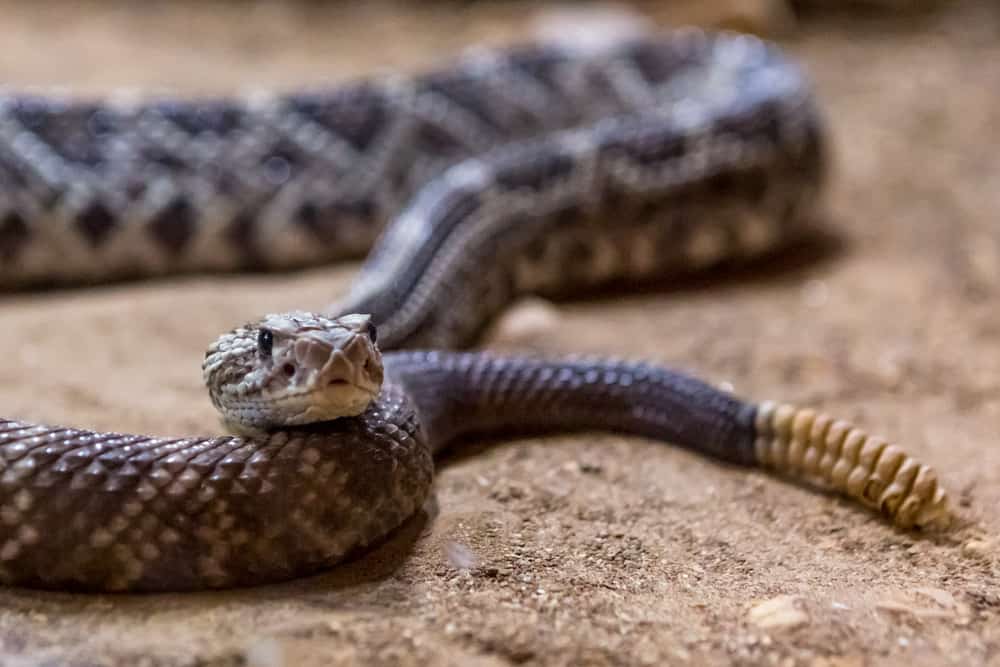
No list of Southwest creatures would be complete without the infamous Western diamondback rattlesnake. Easily recognized by the diamond-shaped patterns on its back and the iconic rattle at the end of its tail, this snake is both feared and misunderstood. Found across Texas, New Mexico, Arizona, and parts of California, this rattlesnake plays an important ecological role by controlling rodent populations. Its venom is potent, but fatalities are rare thanks to widespread access to medical care. When threatened, it coils, hisses, and rattles as a warning—it’s not looking for a fight, just space. These snakes are masters of camouflage, often blending into the desert floor, which makes them both hard to spot and easy to accidentally stumble upon. They’re like the guardians of the desert—ancient, wise, and always reminding us that in nature, respect is key.
Conclusion: A Wild Beauty Hidden in Plain Sight

The American Southwest might look like a barren stretch of rock and sand at first glance, but peer a little closer, and you’ll discover a vibrant world teeming with life. From the whispering wings of burrowing owls to the silent stalk of a jaguar through the mesquite, this landscape is anything but empty. The creatures that call this region home have adapted in ingenious, awe-inspiring ways—some barely need water, some glow in the dark, and others hold tight to existence despite centuries of environmental change.
Whether you’re watching a roadrunner dart past or listening to a distant wolf howl, remember: the desert doesn’t just survive—it thrives. And the next time someone calls it lifeless, you’ll know better. The American Southwest isn’t just a place of heat and dust—it’s one of resilience, mystery, and wild wonder.

As a little kid, I fell in love with nature, wildlife, and animals. Living in the USA, South Africa, Italy, China and Germany gave me the opportunity to discover the world's Wildlife. My favorite animals are Mountain Gorillas, Siberian Tigers, and Great White Sharks.
I'm a certified PADI Open Water Diver, went to Everest Base Camp and Trekked Gorillas in Uganda. I hold a Master of Science in Economics and Finance.
Please send any feedback to feedback@animalsaroundtheglobe.com
- The 10 Rarest Dog Breeds Making a Comeback in America - July 19, 2026
- 13 Creatures That Survived Mass Extinctions - July 19, 2026
- 12 Pets That Are Perfect for Seniors - July 19, 2026