
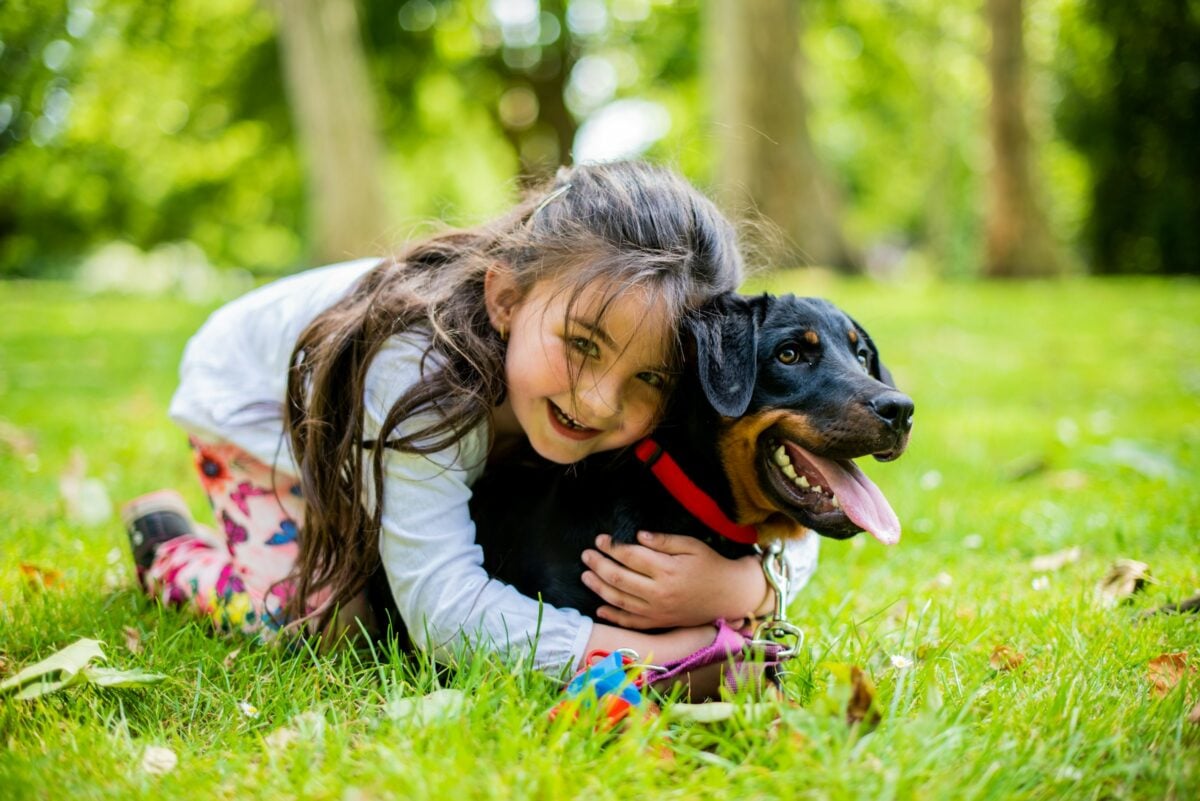
Most people think a dog either “likes kids” or “doesn’t” – end of story. But watch a truly bonded family dog quietly pick ONE grandchild to guard, and you’ll see something far more calculated than affection. There are subtle body blocks, micro-moves around doorways, even fake naps in oddly specific spots.
Owners usually wave these off as cute quirks. Behaviorists call them something else entirely: textbook protection patterns, the same instincts you’d see in a guard dog watching a flock. Here’s what’s actually happening when a dog secretly decides one small human is now its job.
#15 – The “Living Shadow” Routine
🔥 Would you like to save this?
We'll email this post to you, so you can come back to it later!
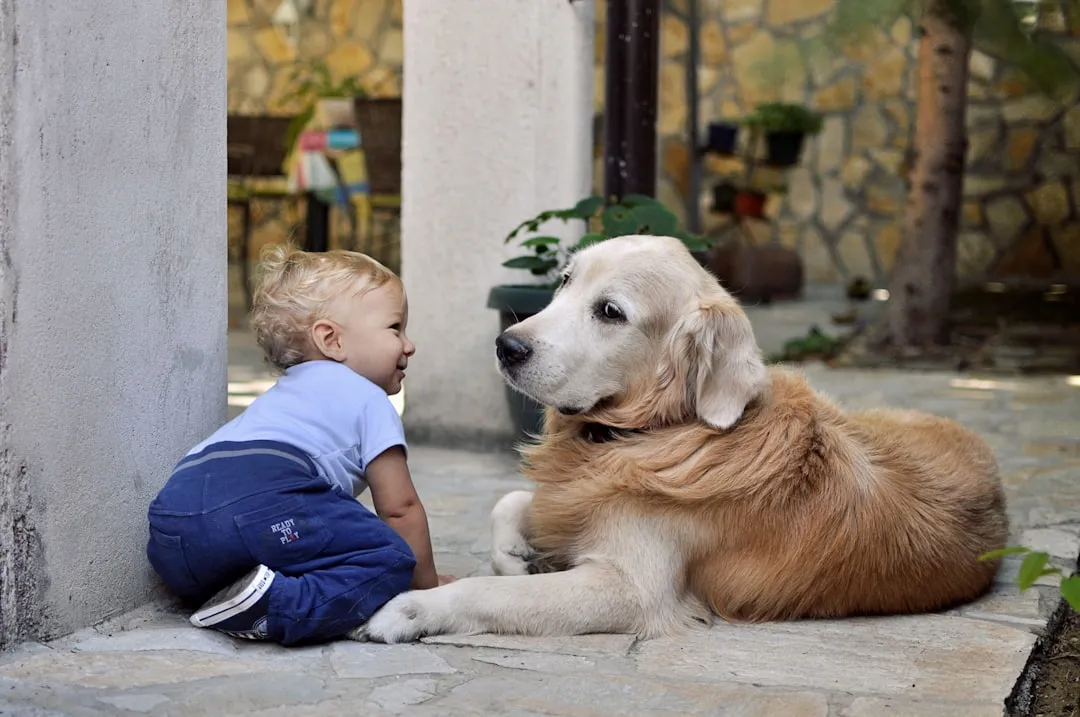
Once a dog picks a grandchild to guard, it basically becomes a four-legged shadow. It doesn’t just enjoy being near the kid – it tracks them. The second the child moves from the living room to the kitchen, the dog relocates within seconds, angling itself for a clear line of sight.
People often mistake this for separation anxiety, but there’s a simple tell: the dog doesn’t care where the adults wander off to. Only the child’s movement matters. You’ll notice the dog rarely turns its back on the kid, and it tends to park itself between the child and any doorway or hallway.
- The dog rarely has its back to the child.
- It often positions itself between the child and any doorway or hallway.
Behaviorists call this “body placement for monitoring,” and it’s the exact same setup you’ll see in livestock guardian dogs watching over a herd. It looks lazy from the couch. It isn’t. Once you spot the living shadow routine, you’ll start noticing just how many tiny decisions your dog is quietly making every minute.
#14 – Strategic Napping at the House’s “Choke Points”
🔥 Would you like to save this?
We'll email this post to you, so you can come back to it later!
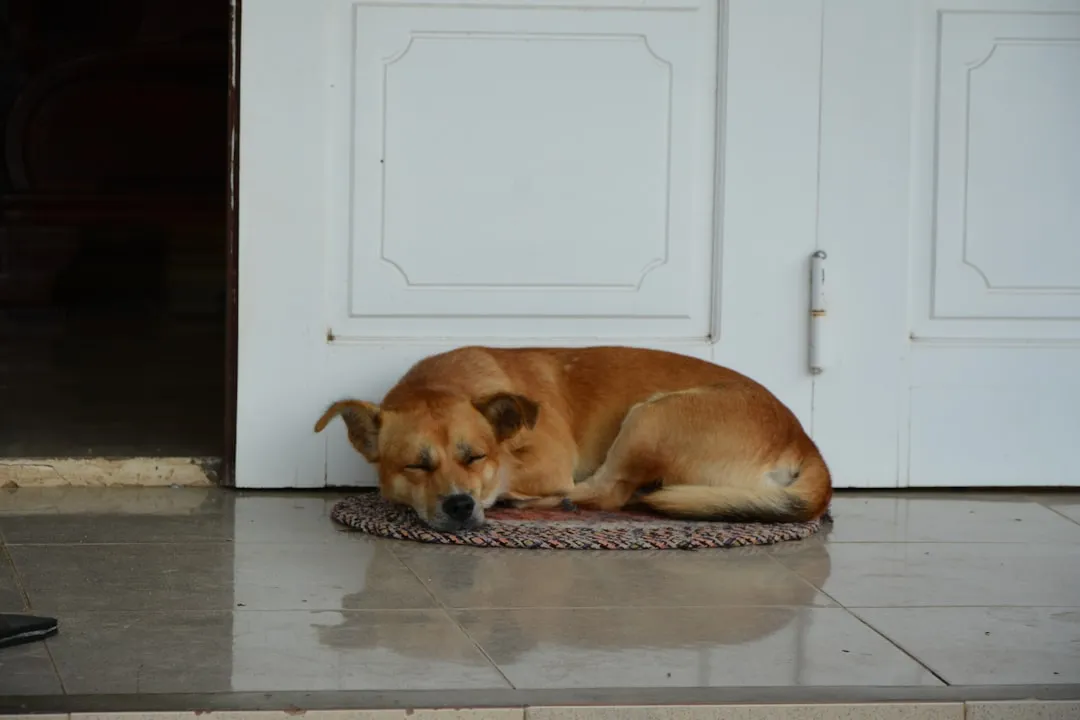
Most people assume their dog just loves that one rug by the hallway. Look closer. A protective dog tends to nap in what behaviorists call choke points – doorways, hallway intersections, the bottom of the stairs, or that weird spot between the couch and the rest of the room where everyone has to walk past.
It looks like a nap. It’s really a checkpoint. From that exact spot, the dog can see who’s approaching the child and spring up fast enough to block or investigate before anyone gets close.
- See who’s approaching the child.
- Get up quickly to physically block or investigate.
Here’s the giveaway: move the child’s play area across the room, and within a day the dog’s “favorite nap spot” mysteriously shifts too. That’s not coincidence – that’s strategy, the same kind livestock guardian dogs use when they claim high ground or gate areas out in open fields. Owners chalk it up to cute laziness. It’s actually one of the clearest signs you’re living with a self-appointed bodyguard.
Worth Knowing
- Breeds like Great Pyrenees, Anatolian Shepherds, and Maremma Sheepdogs were developed specifically to guard livestock independently, without waiting for a handler’s command.
- That same “decide on my own” instinct shows up in mixed breeds and everyday companion dogs, not just working breeds.
- Guarding behavior tends to be driven more by bond and instinct than by breed alone.
#13 – Quietly Blocking Strangers (and Over-Excited Relatives)
🔥 Would you like to save this?
We'll email this post to you, so you can come back to it later!
This is the part people don’t always love. Everyone wants a dog that’s “good with kids,” but real protection sometimes looks like the dog stepping between the grandchild and a visiting relative who approaches too fast, a delivery driver, or even a parent who swoops in loudly for a hug.
The dog usually isn’t aggressive about it. It just plants itself there – standing tall, muscles slightly tense, ears forward – and may lean its body gently against the adult’s legs like a polite blockade.
Behaviorists call this “controlled interception.” A genuinely protective dog doesn’t want to bite anyone; it wants to control space and buy itself a second to size up the situation. Some adults read that slow step-in as rudeness or dominance, but really it’s the dog saying, quite politely, “slow down, prove you’re safe” before anyone gets near the kid it’s claimed.
#12 – Locking On the Instant That One Child Makes a Sound
🔥 Would you like to save this?
We'll email this post to you, so you can come back to it later!
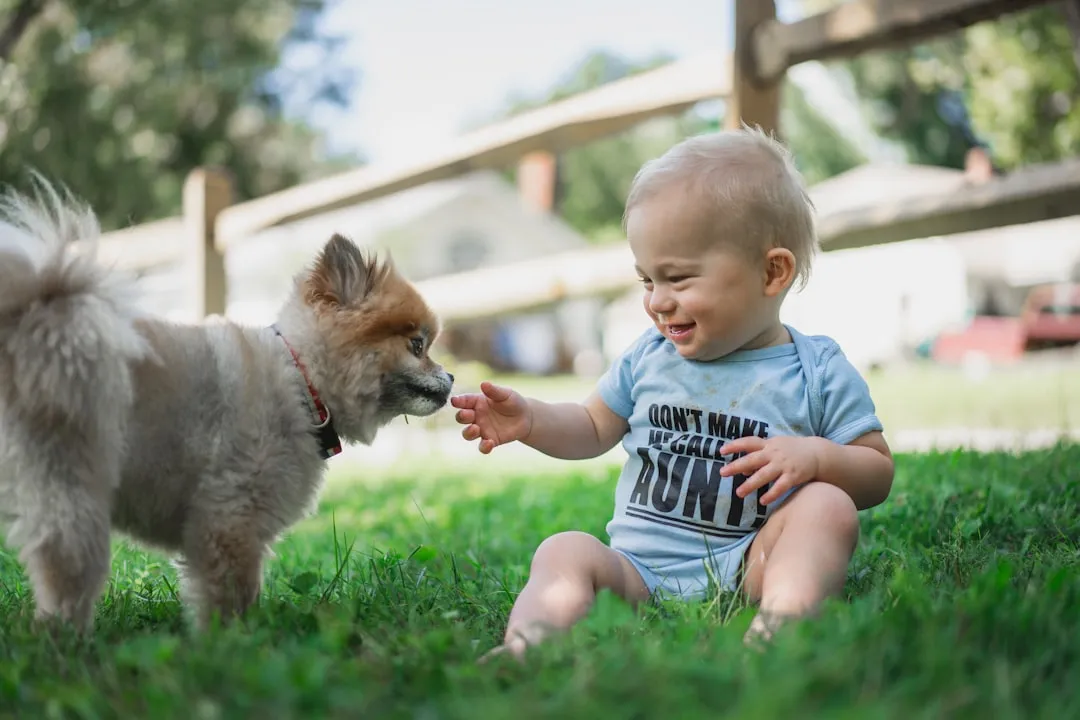
Grandparents love to explain this away as “the dog just perks up because it’s loud.” Not quite. When a dog has bonded hard with one grandchild, sudden noises from that specific kid flip a switch that adult voices simply don’t. Ears snap forward, eyes lock in, and the whole body goes on alert – faster and sharper than it reacts to the same sound coming from a grown-up.
Two tells give it away: the dog orients its entire body, not just its head, toward the child, and if it can’t actually see the kid, it gets up to go check.
- The dog orients its whole body – not just its head – toward the child.
- If it can’t see the child, it may stand up and go check.
Even mid-nap, some dogs will snap awake the instant “their” kid makes a distressed sound – the same wiring mother dogs use with whimpering puppies. Vulnerability sound equals go check, no debate. It looks so normal that most owners never clock it as evidence the dog is quietly on duty.
#11 – Soft-Herding the Kid Away From the Stairs, the Door, the Edge of the Yard
🔥 Would you like to save this?
We'll email this post to you, so you can come back to it later!
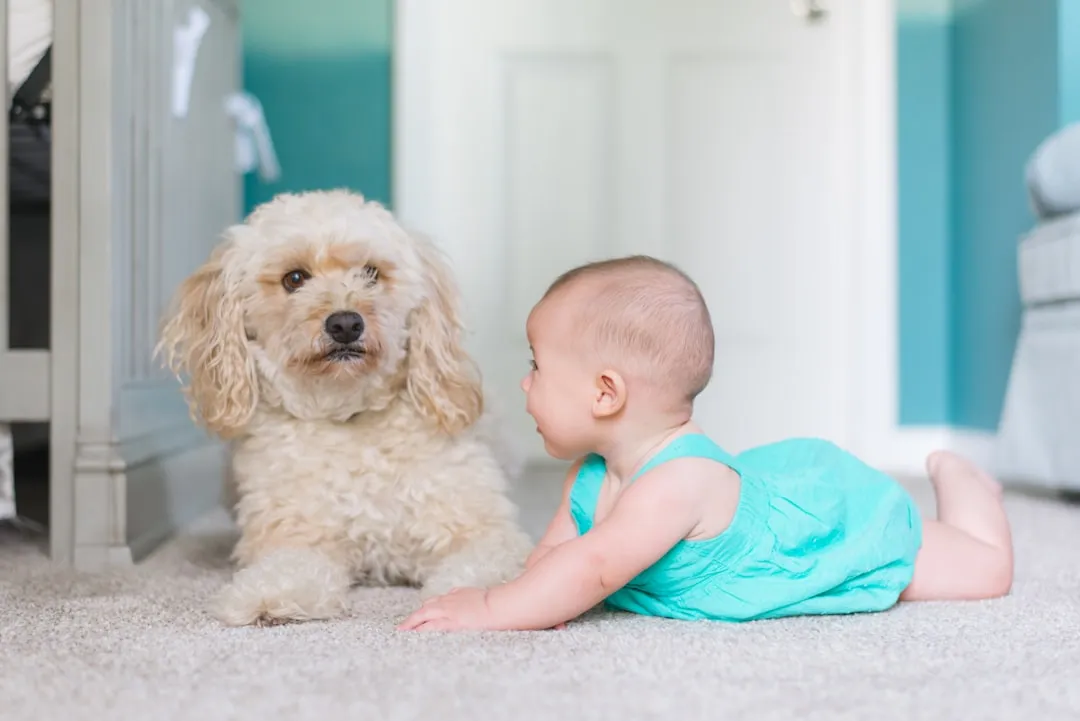
You don’t need a herding breed for this one. Watch what happens when the grandchild toddles toward the stairs, the back door, or the edge of the yard – a protective dog will often circle ahead, turn sideways, and nudge with a shoulder or hip until the kid drifts back toward safety.
There’s rarely any growling or barking involved. It’s just a quiet, almost invisible steering maneuver, the dog using its own body like a moving fence.
- Circle ahead and turn its body sideways.
- Nudge with the shoulder or hip.
- Walk slowly in a way that funnels the child back.
Adults usually misread this as the dog “getting in the way.” But close the gate or move the child somewhere safer, and the herding stops immediately – proof it was never random. Behaviorists see two instincts colliding here: keep the vulnerable one close, and block the paths that lead toward risk. Startlingly sophisticated for an animal that “just follows treats.”
#10 – Running a Completely Different Playbook Just for That Kid
🔥 Would you like to save this?
We'll email this post to you, so you can come back to it later!
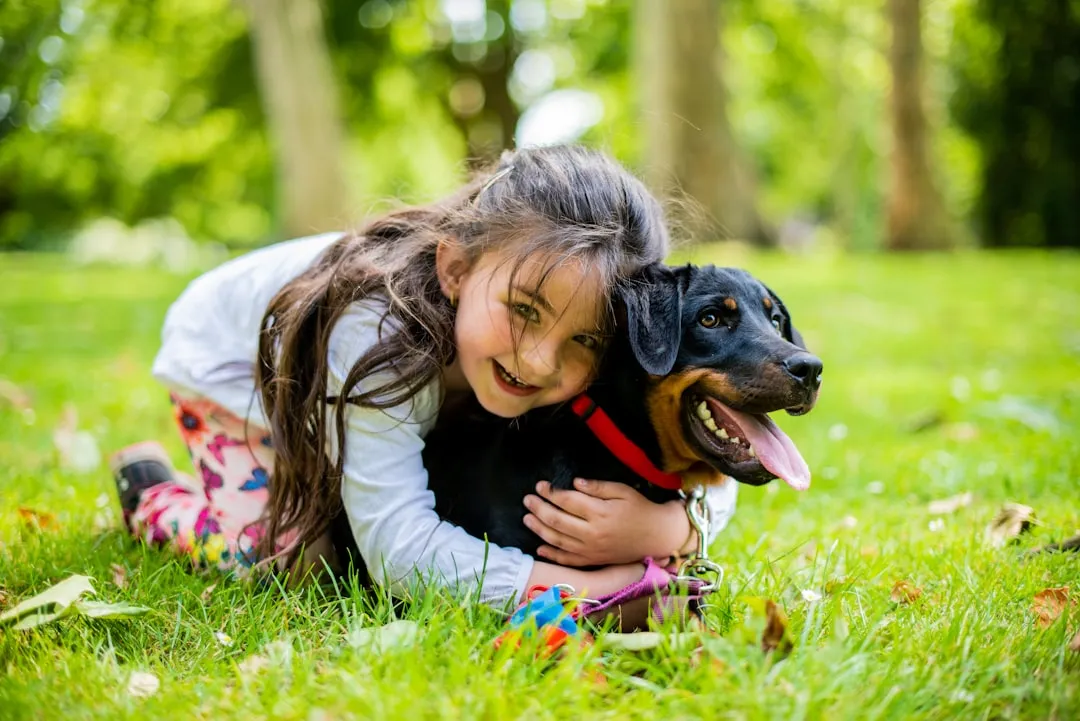
Here’s a detail almost everyone misses: dogs that have claimed a grandchild to guard often build a custom playstyle for that one child, and only that child. With adults or older kids, the same dog might wrestle, chase hard, or tug like a maniac. The second it’s with the guarded grandchild, everything dials down – slower movements, a softer mouth, longer pauses.
Behavior pros call this “self-handicapping.” The dog lies down instead of jumping, offers toys straight into the child’s hands, and stops cold if the kid stumbles or squeals.
- The dog lies down instead of jumping.
- It offers toys directly to the child’s hands.
- It stops abruptly if the child stumbles or squeals.
Some people romanticize this as “the dog just knows it’s a baby,” but it’s more precise than that – it’s constant risk calculation, tilted toward caution with this one particular human. The same dog can be an absolute lunatic at the dog park and a total angel with the one toddler it’s claimed. Once you notice that split personality, it’s impossible to unsee.
#9 – Working a Night Shift Nobody Asked It to Work
🔥 Would you like to save this?
We'll email this post to you, so you can come back to it later!
Dogs sleep a lot, but “asleep” doesn’t always mean off-duty. When the grandchild they’ve chosen to guard is in the house, many dogs sleep noticeably lighter – waking at the smallest sound or movement. You might catch that tiny huff when the kid rolls over in a crib, or feel the dog get up to check the hallway at 2 a.m.
That’s not paranoia. It’s a modified watch schedule. The dog picks a spot where it can hear both the front door and the child’s room, and it shifts position more often, facing whatever direction the sound came from.
- The dog chooses a spot where it can hear both the main door and the child’s room.
- It changes positions more often, facing toward sound sources.
In multi-dog households, it’s usually the truly bonded guardian that takes the prime “guard post” near the kid while the others sprawl out somewhere comfortable. It’s essentially the same split shift village and farm dogs have run for centuries around vulnerable group members – and that ancient wiring doesn’t just switch off because the family now lives in a quiet suburb.
Fast Facts
- Dogs naturally sleep in shorter, lighter cycles than humans, which makes it easy for them to snap awake at small sounds.
- A dog’s hearing range extends well beyond human hearing, picking up higher-pitched sounds from farther away.
- Dogs can pick up on scent and posture changes tied to stress, often noticing a bonded child is upset before anyone else in the room does.
#8 – Breaking Up Roughhousing Even When Everyone’s Laughing
🔥 Would you like to save this?
We'll email this post to you, so you can come back to it later!
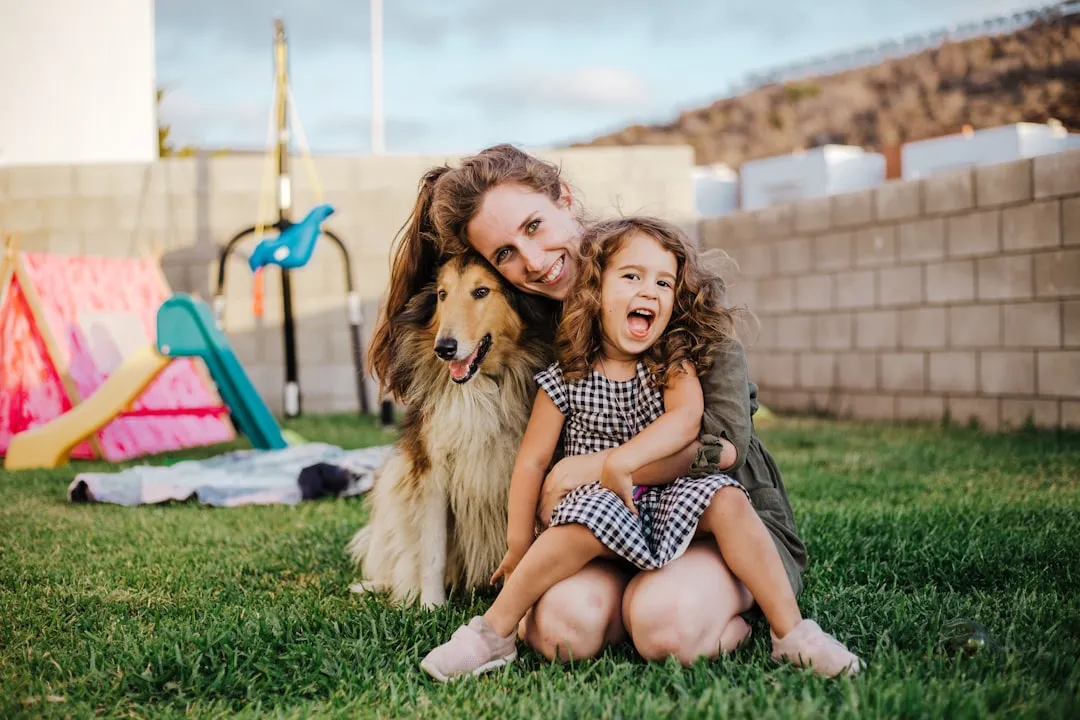
This one starts arguments at family gatherings. Plenty of dogs that have decided to guard a grandchild will step in when adults play too rough – even if the kid is having the time of their life. A tickle fight on the couch, a parent swinging the child upside down… to a protective dog, that can register as harm, not fun.
You’ll see the dog wedge itself between the adult and child, paw or nudge insistently, and in more intense cases, bark sharply at the adult’s hands.
- The dog wedges itself between the adult and child.
- It paws, nudges, or whines insistently.
- In more intense cases, it may bark sharply at the adult’s hands.
Here’s the uncomfortable part: the dog isn’t always wrong. From its point of view, the small vulnerable human is pinned down, squealing, and being handled forcefully – and biology says intervene first, sort out the social nuance later. Punishing the dog for this can backfire; a calmer fix is teaching a clear “all done” cue so it can tell play apart from real distress. Either way, the fact that it feels compelled to referee says everything about how seriously it takes the job.
#7 – Treating One Grandchild Completely Differently From All the Others
🔥 Would you like to save this?
We'll email this post to you, so you can come back to it later!
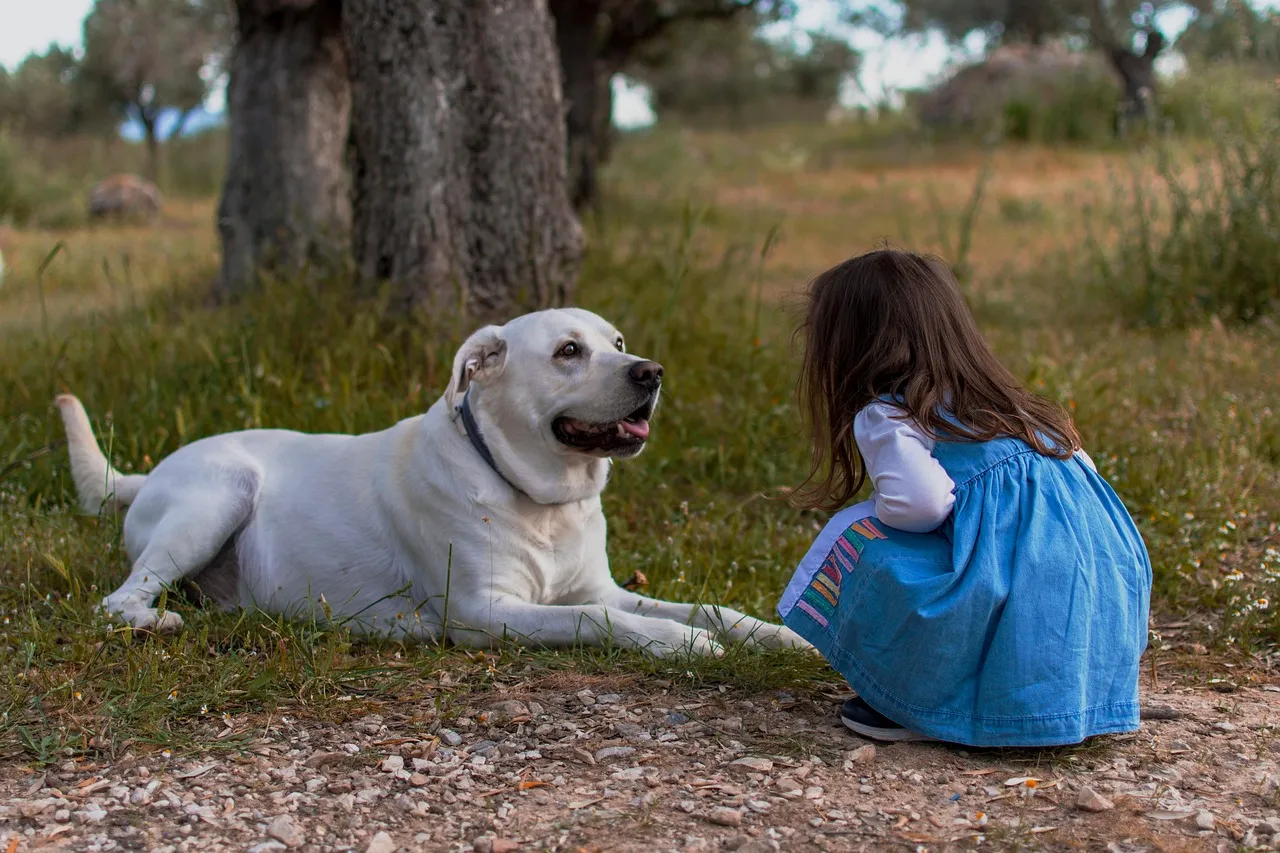
The biggest clue your dog has singled out one grandchild is the contrast. The same dog might be friendly, even playful, with other visiting kids – greet them happily, play for a few minutes, then wander off and lose interest. With the bonded grandchild, though, it stays close, monitors constantly, and steps in sooner.
Watch closely and you’ll spot patterns like the dog only tailing one specific child from room to room, or only body-blocking and herding when that particular kid drifts toward something risky.
- The dog only follows one specific child from room to room.
- It only body-blocks or herds when that child gets near hazards.
This blows a hole straight through the myth that “dogs just love all kids the same.” In reality, plenty of dogs form individual attachments and take personal responsibility for one child, shaped by early experiences, scent, and how that particular kid moves and interacts with them. Some grandparents quietly admit it feels like the dog “values” one grandchild more, which is an uncomfortable thing to say out loud – but it’s not favoritism in any human sense. It’s trust, built one interaction at a time, and once you start watching for it, the difference is unmistakable.
Quick Compare
- Visiting child: brief greeting, short play, then the dog wanders off to nap.
- Guarded grandchild: constant tracking, quick to step in, rarely wanders far.
- Visiting child: dog stays relaxed around normal noise or minor tumbles.
- Guarded grandchild: dog reacts instantly, even mid-nap.
#6 – Saving Its Bark for the Moments That Actually Matter
🔥 Would you like to save this?
We'll email this post to you, so you can come back to it later!
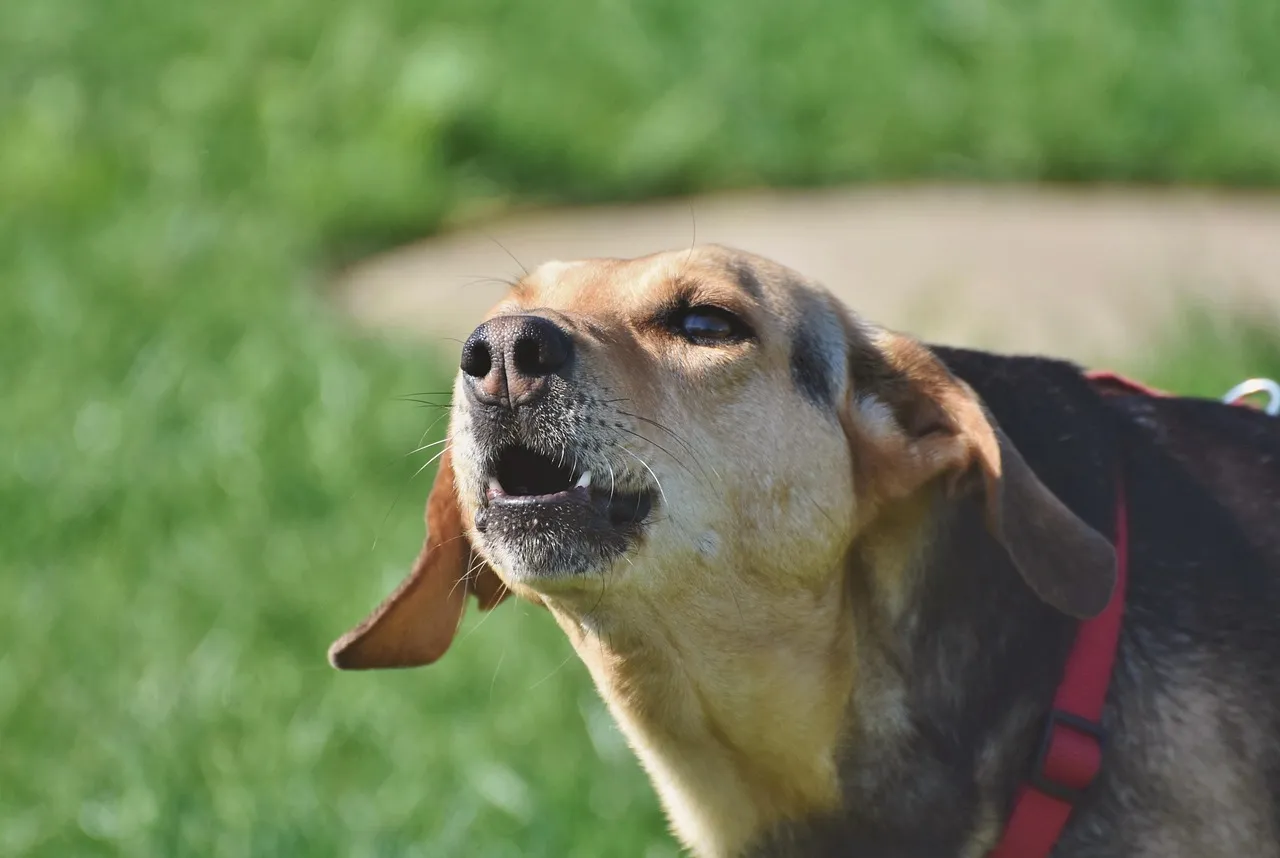
Not every protective dog is loud. Ironically, the most serious guardians around a grandchild often use less noise, not more, saving vocal warnings for the moments something genuinely crosses a line – a loud argument, banging at the door, a stranger’s sudden approach. The rest of the time, the dog relies on positioning and presence alone.
You might hear a low, brief growl when someone leans over the crib too fast, or one sharp bark when the door swings open with the child standing close by.
- A low, brief growl when someone leans over the crib too abruptly.
- One explosive bark when the door swings open and the child is close by.
These are calibrated, situational warnings, not constant background anxiety – the dog is essentially saying, “I see you, don’t push it.” People often mislabel this as unpredictable, but there’s usually a clear rule underneath it: the closer a perceived threat gets to the child’s body, the more likely the dog is to vocalize. Run the same scenario with the grandchild out of the house, and the dog barely reacts at all. That contrast tells you exactly who it thinks needs protecting.
#5 – Running a Security Sweep Before Letting the Kid Roam a New Place
🔥 Would you like to save this?
We'll email this post to you, so you can come back to it later!
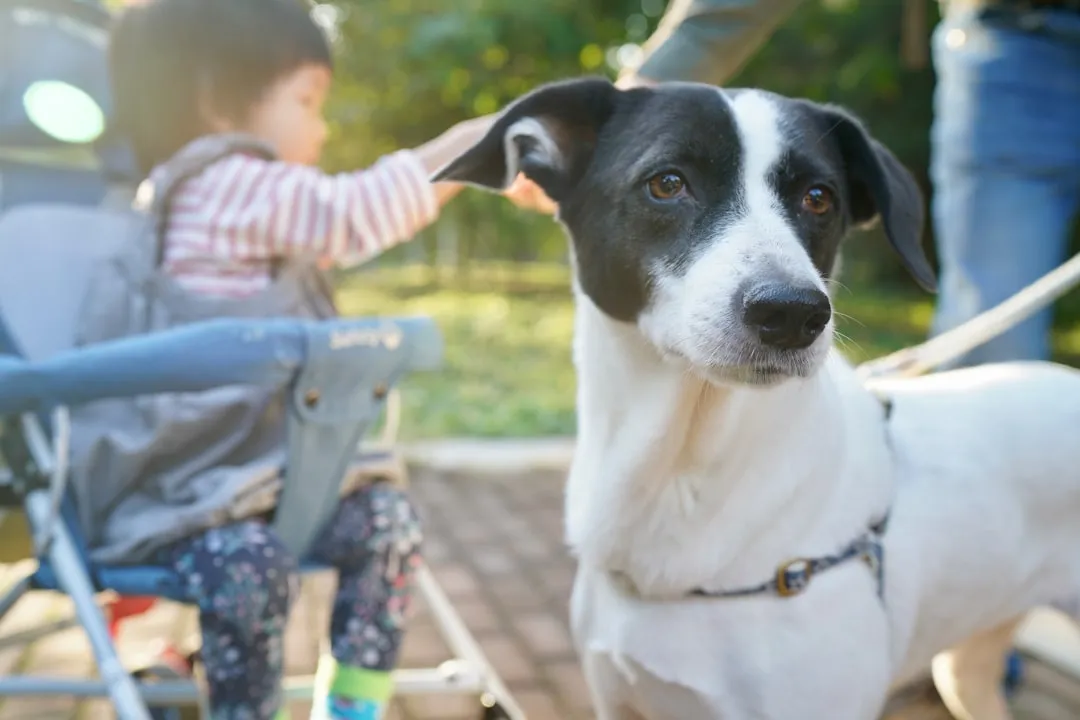
Take a protective dog and “its” grandchild somewhere unfamiliar – a park, a friend’s house, even a different room full of new furniture – and you’ll usually see a fast environmental scan happen before anything else. The dog sniffs corners, peeks behind furniture, and paces the perimeter before the child ever gets to settle in.
Behavior scientists call this “area checking,” and in a guarding context it’s really about mapping exits, sniffing out unfamiliar people or animals, and clocking any physical hazards in the space.
- Map exits and entrances.
- Sniff out unfamiliar humans or animals.
- Identify physical obstacles or hazards.
What looks like aimless wandering is really a security sweep. Only after finishing that circuit does the dog relax near the child, often choosing a vantage point with a clear view of both the kid and the main doorway. In louder, more crowded spaces, more intense guardians will repeat the patrol several times. Owners who shrug this off as “he’s just curious” are missing that the curiosity has one laser-focused question behind it: is this safe for my kid?
#4 – Panicking for a Few Seconds, Then Calming Faster Than the Humans in the Room
🔥 Would you like to save this?
We'll email this post to you, so you can come back to it later!
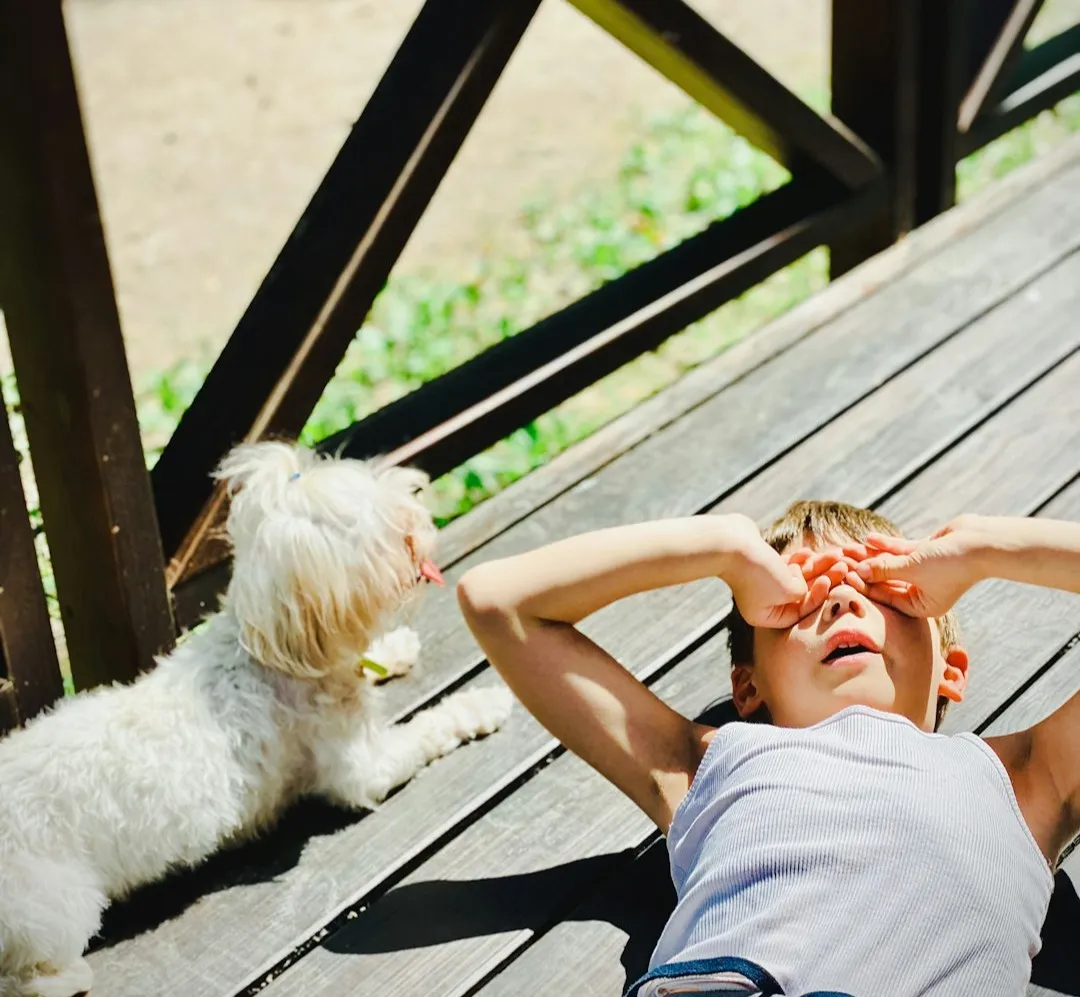
When the guarded grandchild starts crying, plenty of dogs show real stress right away – pacing, whining, lip licking, ears pinned back. But unlike anxious dogs that spiral and stay wound up, genuinely protective dogs tend to calm down fast once they’ve checked the situation and confirmed the child is being comforted.
The sequence usually goes the same way: the cry starts and the dog rushes over, tense and alert. It sees a grandparent pick the child up and soothe them. It sniffs, maybe licks, then settles a few feet away – still watching, but no longer panicking.
That’s not helpless anxiety; it’s operational concern. The dog is reacting to what is, in canine terms, a distress call from a pack member, and once it confirms competent humans are handling it, it drops back into standby mode. Dogs without that secure base tend to stay wound up, bark, or try to physically take over the situation. So if your dog looks worried at the first cry but then lies down with a sigh the moment you step in, that’s not neurosis – that’s balanced, functional protection doing exactly what it’s supposed to do.
At a Glance
- Anxious dog: stays wound up, paces, or barks long after the crying stops.
- Protective dog: reacts fast, then settles once the child is comforted.
- Anxious dog: may try to physically take over the situation.
- Protective dog: watches quietly from a few feet away, standing down once reassured.
#3 – Turning Itself Into a Human Shield the Moment You Step Outside
🔥 Would you like to save this?
We'll email this post to you, so you can come back to it later!
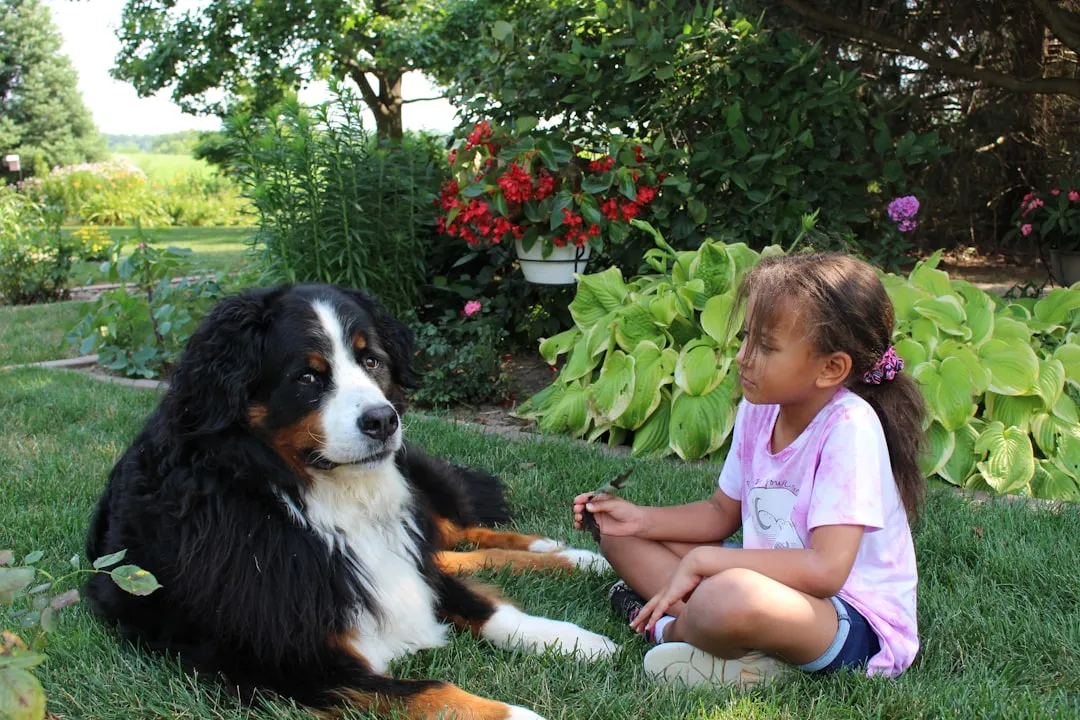
Outdoors is where this instinct really shows off. In a yard, a park, or any open area, a dog guarding a grandchild will typically plant itself on the outer edge of the child’s radius – drifting toward the street if the kid’s near the house, or hovering between the child and the open field, path, or parking lot at the park.
It behaves like a moving bubble. The child shifts left, the dog repositions left, staying on the “danger side.” A stranger walks by, and the dog seems to grow taller, squaring itself up directly in line between them and the kid.
- The child shifts left; the dog repositions left, staying on the “danger side.”
- Someone unfamiliar walks by; the dog “grows taller,” standing squarely in line.
It’s the same directional guarding you’ll see in flock guardian dogs and police K9s working alongside a handler – the dog is basically volunteering to be first contact if anything comes from that direction. Most families never consciously register this, but they feel it, usually describing it as the dog “just knowing where to be.” It’s not magic. It’s spatial intelligence sharpened over thousands of years of working alongside people in open, unpredictable spaces.
#2 – Walking Away From Food It Would Normally Inhale
🔥 Would you like to save this?
We'll email this post to you, so you can come back to it later!
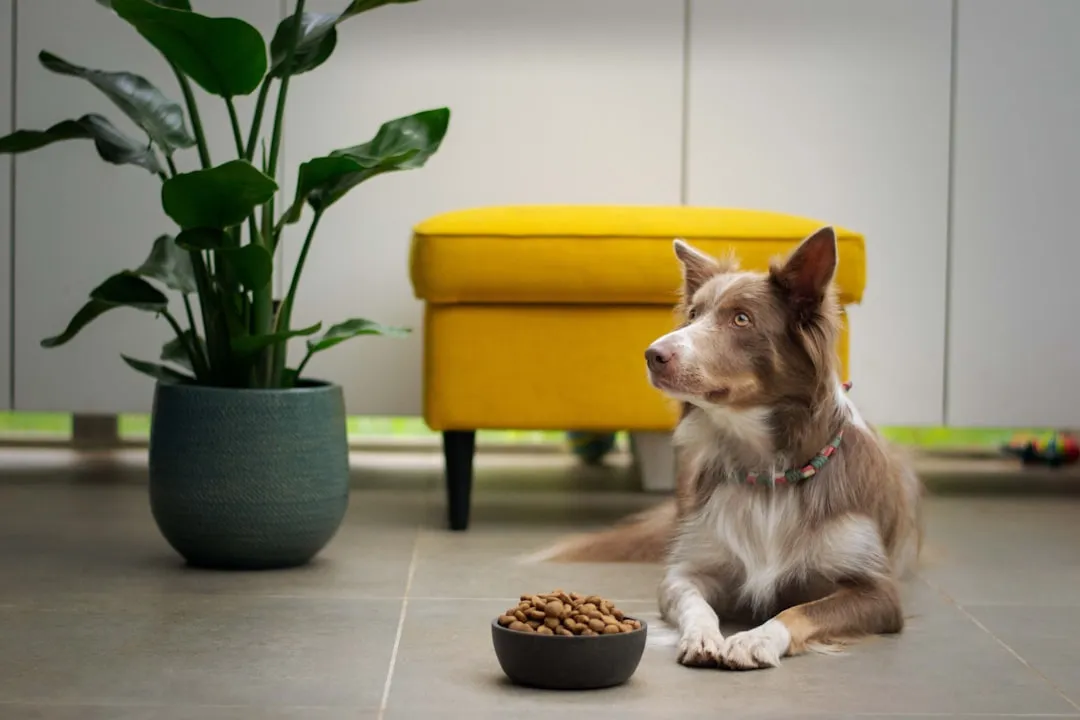
This one shocks people who assume dogs are ruled entirely by their stomachs. A dog fully committed to guarding a grandchild will sometimes ignore food, treats, or a favorite toy if the child is moving around or seems unsettled. The priority flips from “get the reward” to “maintain the watch.”
Put a bowl or a treat down, and instead of diving in, the dog glances at the food, then back at the kid, and waits until the child is calm, seated, and nearby before it finally eats.
- Glances at the food, then back at the grandchild.
- Waits until the child is sitting, calm, and close by before eating.
That delayed gratification has nothing to do with obedience training – it’s vigilance. Wolves and feral dogs show the same behavior when pups are active near potential danger, deliberately delaying feeding to stay alert. In a suburban living room, that might just look like your Lab ignoring a dropped piece of chicken until the toddler settles on the couch. People love to brag “he won’t touch a thing until we say okay,” but sometimes that’s not your training at work at all. That’s his priority list.
#1 – Putting Its Body Between the Child and Real Danger, No Hesitation
🔥 Would you like to save this?
We'll email this post to you, so you can come back to it later!
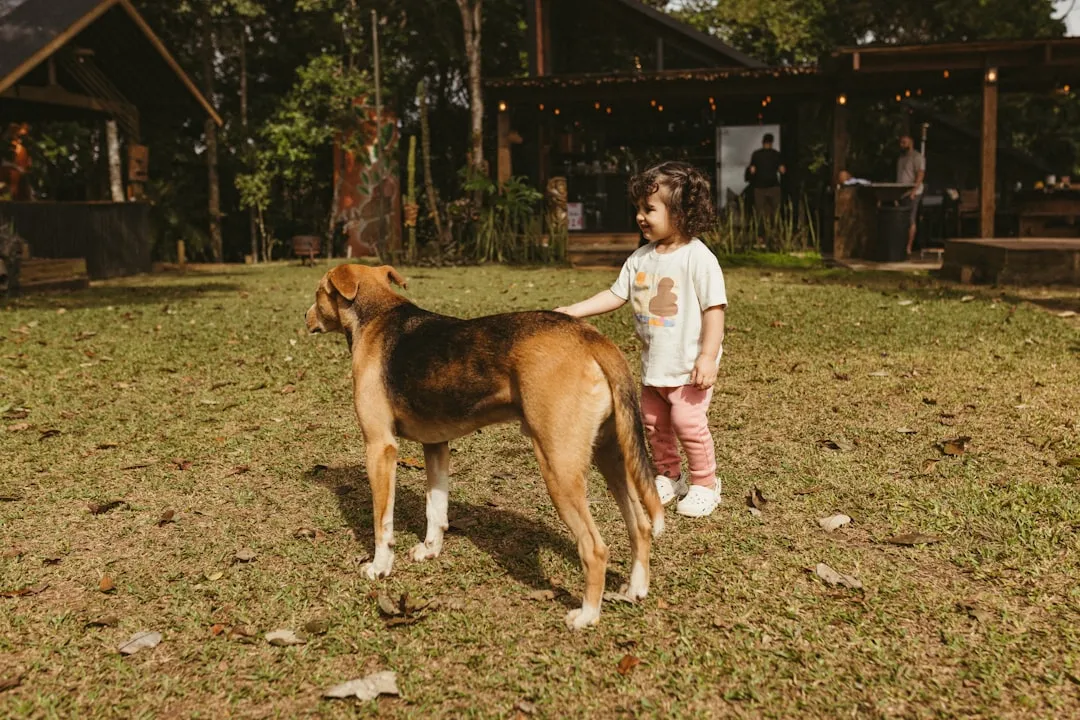
The most dramatic sign a dog has decided to guard a grandchild is also the one nobody wants to actually test: it will physically put itself between danger and the child. Sometimes that’s big and obvious, like standing firm and barking at a charging off-leash dog in the park. Sometimes it’s small and almost invisible, like absorbing a tumble on the stairs by letting the child fall into its body instead of the floor.
Grandparents describe versions of this quietly, almost like they don’t want to jinx it: the dog bolting forward to take the front position when a strange dog runs at the stroller, or covering the child’s legs the instant a door slams too loud.
In that split second, there is no calculation about pain or risk – the dog just moves.
This is where every subtle guarding behavior on this list gets distilled into a single action. Not every family dog reaches this level, and no dog should ever be deliberately put in that position to test it. But when it happens on its own, you’re watching the oldest job description in the canine world – guardian of the vulnerable – play out in real time, right in your living room.
The Bottom Line
🔥 Would you like to save this?
We'll email this post to you, so you can come back to it later!
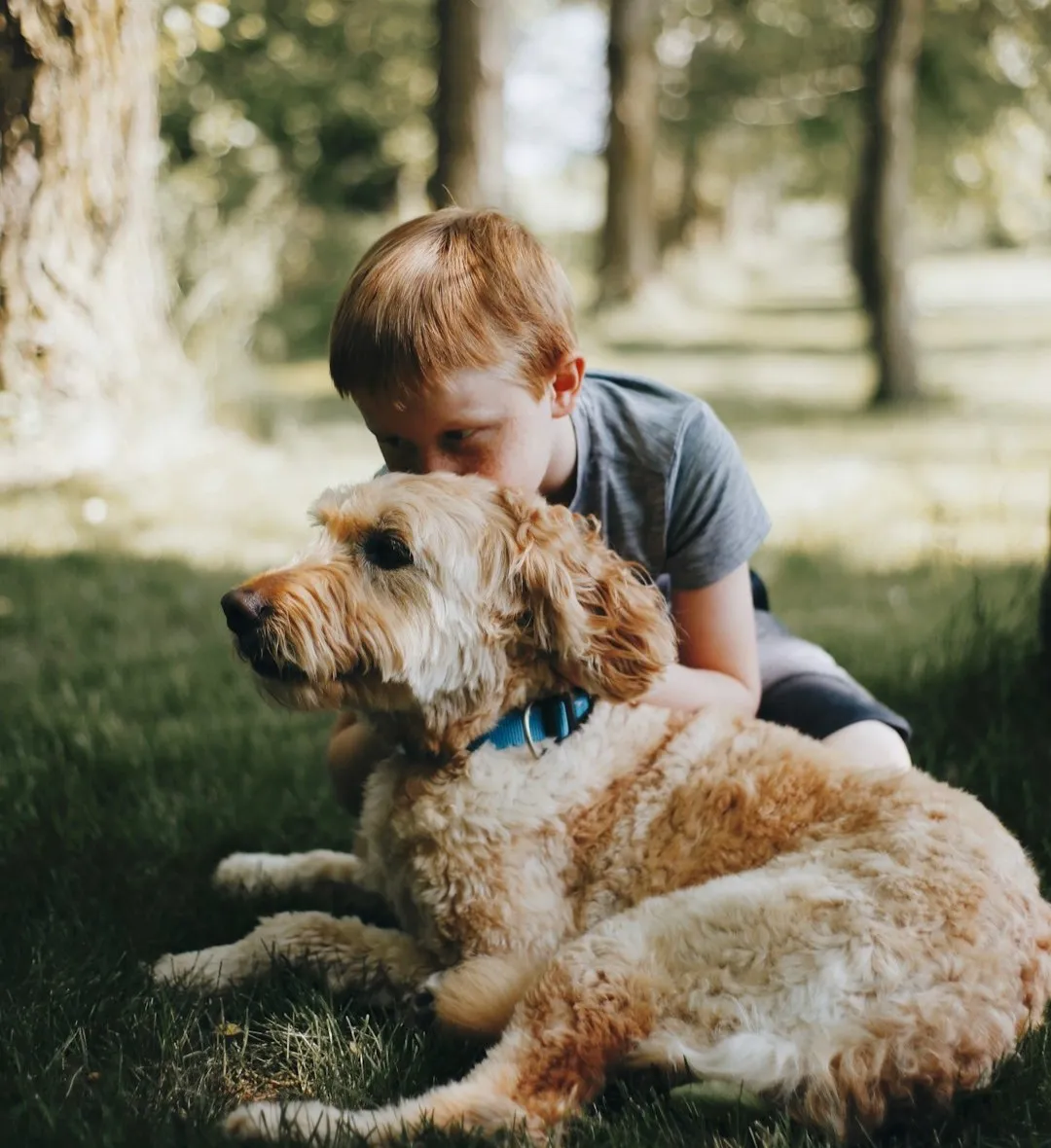
When a dog quietly decides, “this grandchild is mine to protect,” what follows isn’t random cuteness – it’s a full security protocol unfolding in slow motion. Strategic napping in doorways, subtle body blocks, selective play, lighter sleep, even skipping treats until the child settles down… none of that is quirky. It’s evidence of a brain running risk assessments around one small human, all day, every day.
Most people flatten all of this into “the dog loves kids,” and that completely misses the point. This isn’t generic affection. It’s targeted, deliberate responsibility, and honestly, some dogs step up more than others – plenty of families are quietly relying on that instinct without ever admitting it out loud.
If you’re lucky enough to have a dog that’s clearly guarding your grandchild, it deserves more than Instagram captions. It deserves respect, real supervision, and boundaries that protect both the dog and the kid – because a dog that takes the job this seriously has earned the right to be taken seriously back.
Did we nail the signs your dog shows, or did we miss a big one you’ve seen with your own grandkids? Drop your story in the comments.

- 23 Warm Corners an Elderly Cat Keeps Returning To All Winter - October 29, 2026
- 16 Behaviours Showing a Cat Considers a House Permanent Now - October 29, 2026
- 15 Wildlife Programmes a Lifetime Pass Holder Over 62 Can Join Free - October 29, 2026