

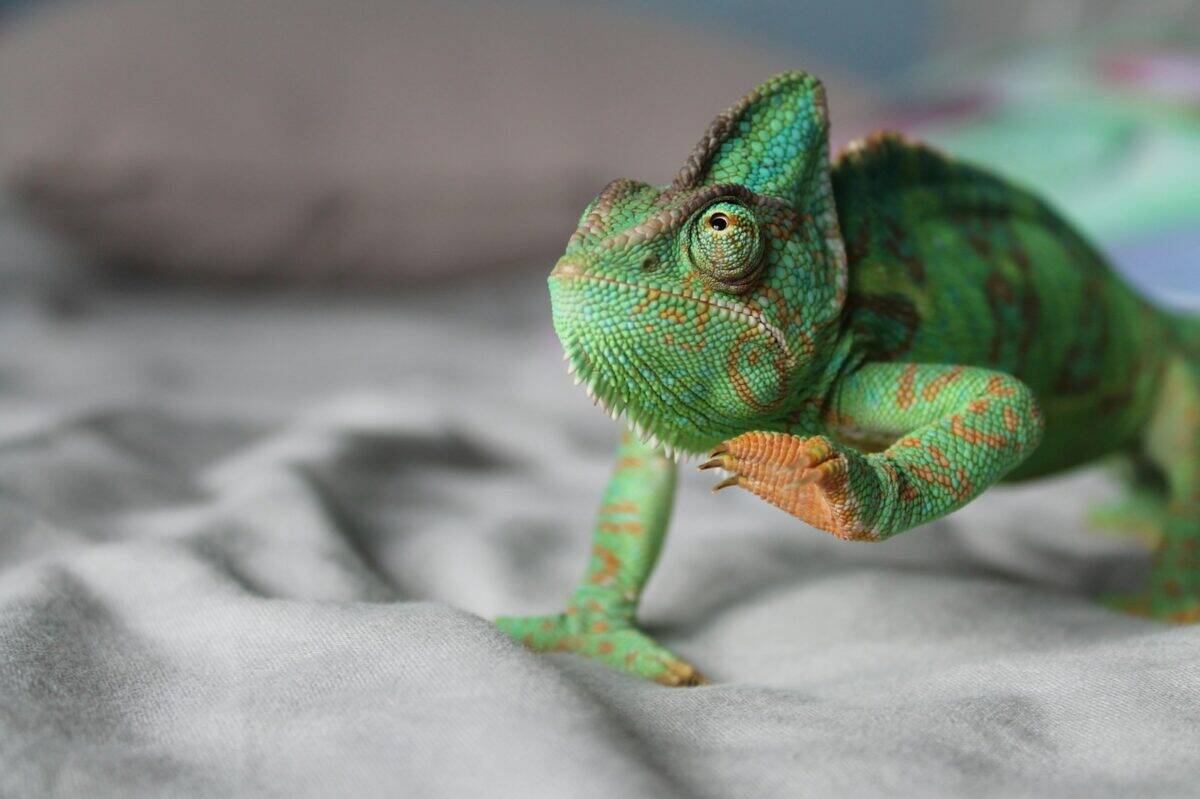
Chameleons are among nature’s most fascinating creatures, capturing our imagination with their color-changing abilities and unique adaptations. While most people recognize these reptiles for their kaleidoscopic skin, there’s much more to these remarkable animals than meets the eye. From their extraordinary vision to their highly specialized tongues, chameleons possess a remarkable array of features that have evolved over millions of years. This article delves into 15 surprising facts about chameleons that showcase why these reptiles are truly one of nature’s most astonishing creations.
Their Eyes Can Move Independently

Chameleons possess perhaps the most unique vision in the animal kingdom. Each eye can rotate and focus independently, giving these reptiles a full 360-degree field of vision. This remarkable adaptation allows chameleons to monitor two different objects simultaneously—one eye can track a potential predator while the other searches for prey. Their eyes are cone-shaped protrusions that can swivel in almost any direction, creating a bizarre but highly effective visual system. When a chameleon spots prey, it can then coordinate both eyes to focus on the target, giving it stereoscopic vision and precise depth perception right before it strikes.
They Don’t Change Color to Match Their Surroundings
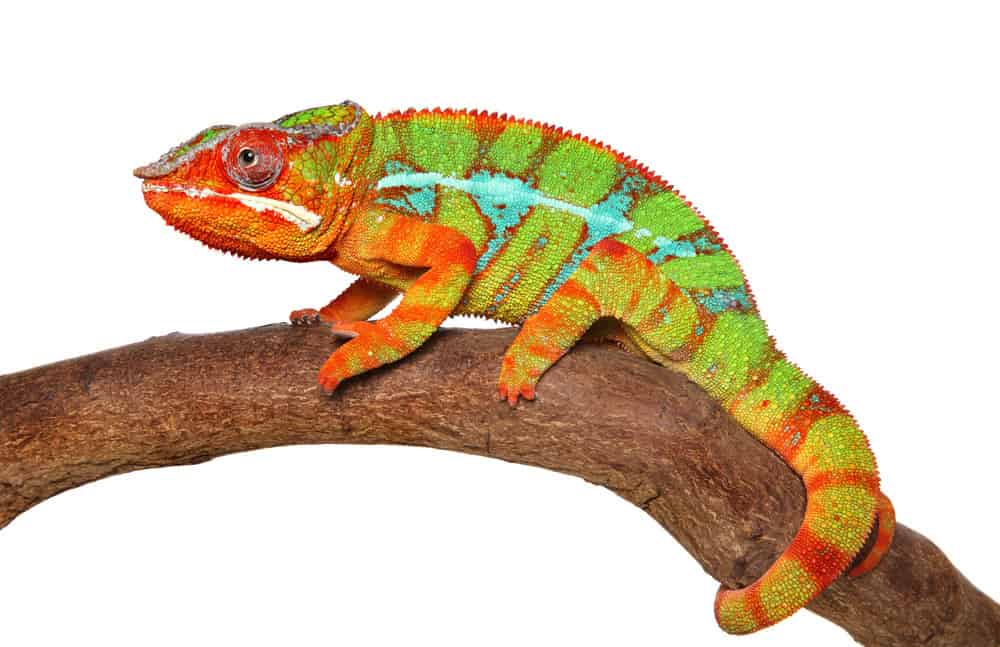
Contrary to popular belief, chameleons don’t change color primarily to blend in with their environment. Their color changes are actually triggered by mood, temperature, health, communication with other chameleons, and light exposure. For instance, a stressed or frightened chameleon might darken its color, while an aggressive male might display bright, vibrant hues to intimidate rivals or attract females. These color changes are made possible by special cells called chromatophores that contain pigments and can expand or contract to create different color displays. The misconception about camouflage likely stems from the fact that many chameleon species’ natural colors do happen to blend well with their native habitats.
Their Tongues Can Be Twice Their Body Length
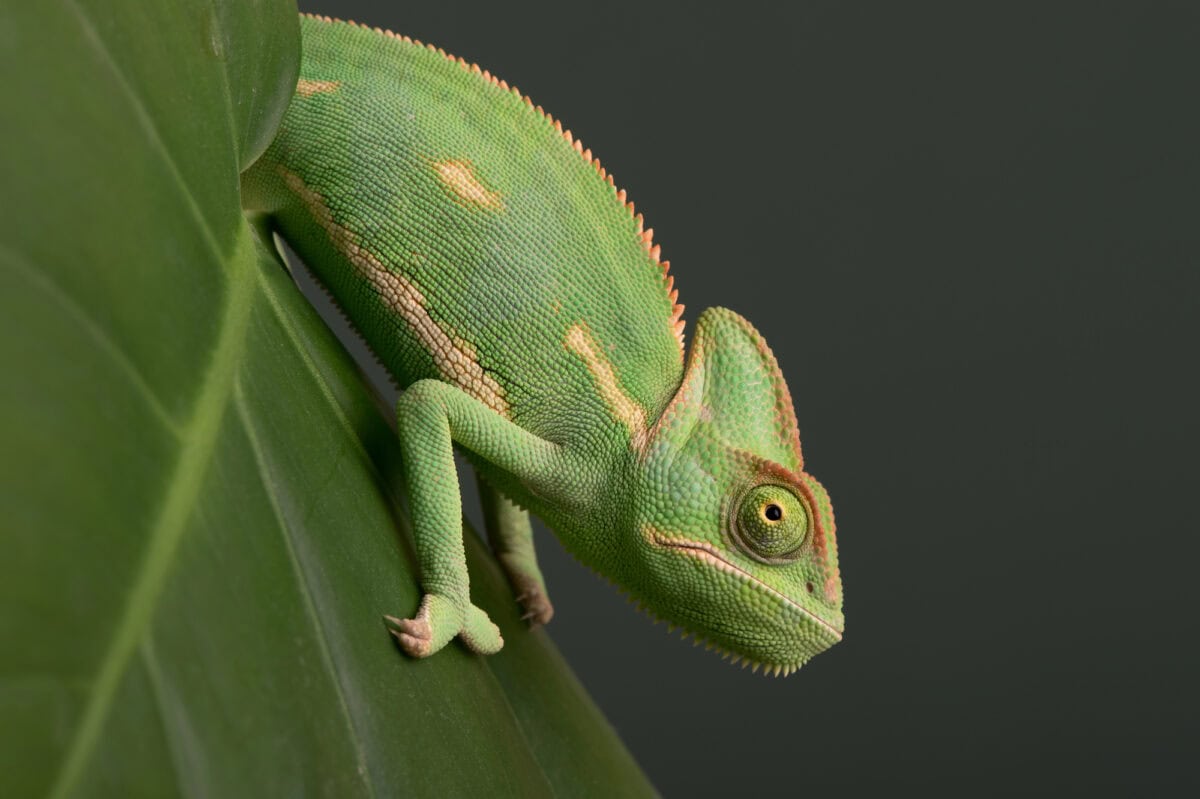
Chameleons possess one of the most extraordinary tongues in the animal kingdom. Their specialized feeding apparatus can extend to lengths up to twice their body size and can capture prey in as little as 0.07 seconds—faster than the human eye can track. The mechanics behind this lightning-fast projection involve elastic collagen tissues that store energy like a compressed spring. When a chameleon decides to strike, this stored energy is released, launching the tongue at accelerations that can exceed 41 g’s. The tip of the tongue features a muscular pad covered in sticky mucus that effectively adheres to prey, allowing the chameleon to reel in insects from remarkable distances with astonishing precision and speed.
They Have Fused Toes That Work Like Mittens

Chameleons have evolved highly specialized feet that are perfectly adapted for their arboreal lifestyle. Their toes are fused into bundles—two on the outside and three on the inside of their front feet, and the opposite arrangement on their hind feet. This unique formation, called zygodactylous feet, functions essentially like a pair of two-sided mittens or tongs, allowing chameleons to grip branches securely. This adaptation enables them to confidently navigate thin branches and twigs that might be inaccessible to other climbing animals. The gripping power of these specialized feet is so effective that chameleons can hang upside down from a single foot if necessary, providing them with exceptional mobility in their treetop habitats.
They Have No External Ears
Unlike many reptiles, chameleons lack external ear openings. They don’t have external ears or eardrums, which has led to the misconception that they’re completely deaf. However, research suggests chameleons can detect sound vibrations in specific frequency ranges, primarily through bone conduction and possibly through small scales covering their inner ears. Their hearing capabilities are quite limited compared to many animals, with studies indicating they can perceive only a narrow range of frequencies between 200-600 Hz. This sensory limitation is compensated by their extraordinary visual capabilities, which serve as their primary means of gathering information about their environment. Their specialized vision allows them to navigate and hunt effectively despite their auditory limitations.
Some Species Can Go Into Torpor

Several chameleon species have evolved the ability to enter a state of torpor—a temporary hibernation-like condition—to survive challenging environmental conditions. During periods of drought, cold weather, or food scarcity, these chameleons can significantly reduce their metabolic rate, conserving energy by lowering their body temperature and slowing their physiological processes. This adaptation is particularly important for species living in regions with seasonal variations in climate. For example, the Parson’s chameleon of Madagascar can remain in torpor for several weeks during the cooler, drier season. During this period, they remain motionless, often in an exposed position on a branch, with reduced respiratory rates and minimal energy expenditure until conditions improve.
The Smallest Reptile in the World Is a Chameleon
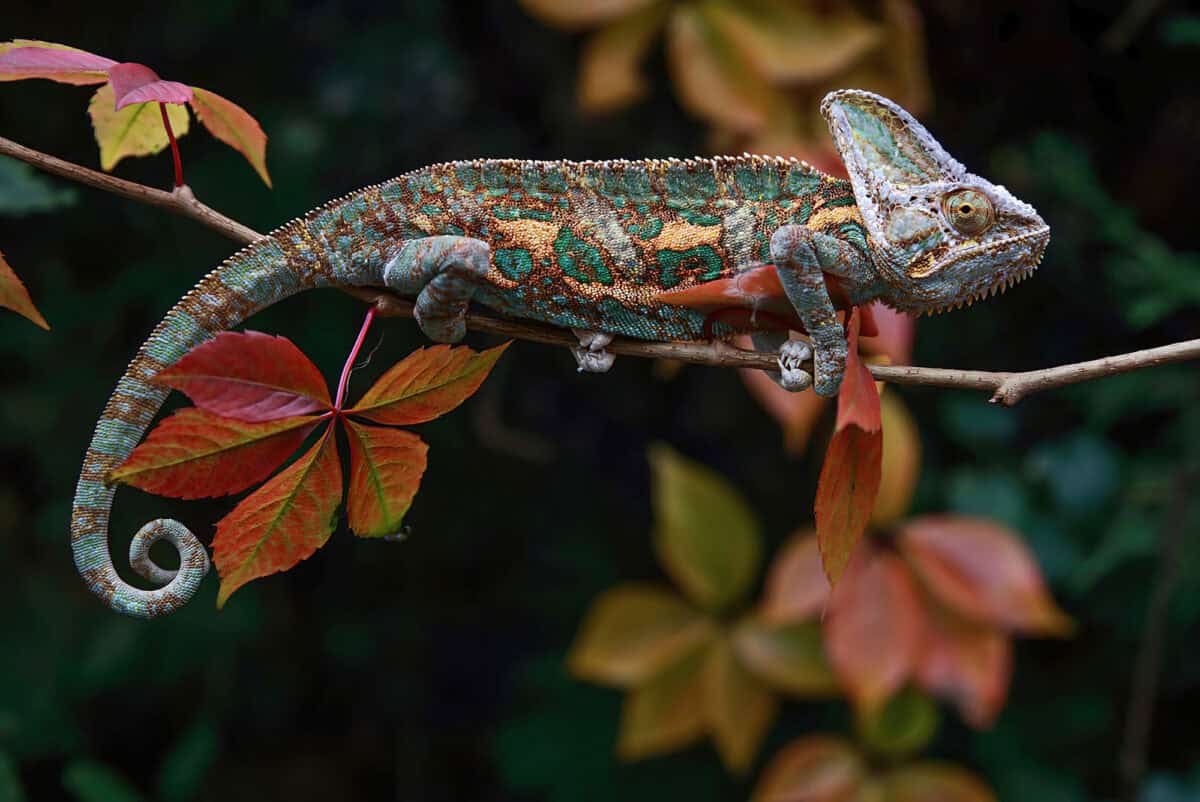
The Brookesia nana, or nano-chameleon, discovered in northern Madagascar in 2021, is considered the smallest reptile in the world. Adult males of this diminutive species measure just 13.5 millimeters (about half an inch) from snout to tail—small enough to perch comfortably on a fingertip. Despite their tiny size, these micro-chameleons possess all the specialized features of their larger relatives, including independently moving eyes, projectile tongues, and color-changing abilities, albeit on a miniature scale. The extreme miniaturization of these chameleons is thought to be an example of “island dwarfism,” an evolutionary phenomenon where species isolated on islands evolve smaller body sizes due to limited resources and specialized ecological niches.
They Have Ultraviolet Vision
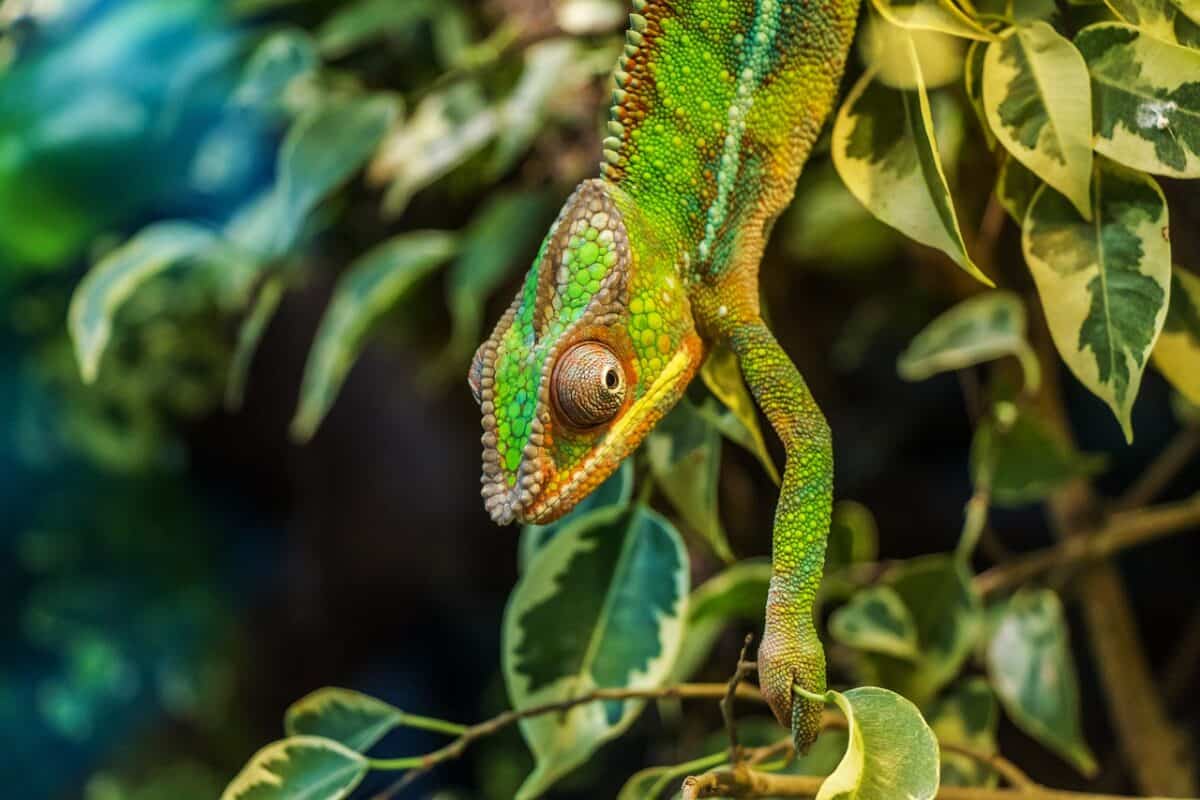
Chameleons possess a visual superpower that extends beyond the human visual spectrum—they can see in ultraviolet light. Their eyes contain specialized cone cells that allow them to perceive UV wavelengths invisible to humans. This adaptation provides chameleons with additional visual information about their environment, potential mates, and prey. Many insects reflect UV light in patterns that are conspicuous to chameleons but invisible to us. Additionally, some chameleon species have UV-reflective patterns on their bodies that play important roles in social signaling and mate selection. Male chameleons often display UV-reflective patches to attract females or intimidate rivals, creating a complex visual communication system that exists entirely outside human perception.
They’re Exclusively Old World Animals

Chameleons are exclusively native to the Old World, with the vast majority of species found in Africa and Madagascar. While some species have been introduced to other regions, their natural distribution is limited to Africa (particularly Madagascar, which hosts about half of all chameleon species), parts of southern Europe, the Middle East, India, Sri Lanka, and various islands in the Indian Ocean. Madagascar is considered the evolutionary cradle of chameleons, with extraordinary biodiversity including miniature species and the largest chameleons in the world. The isolation of Madagascar over millions of years created the perfect conditions for chameleons to diversify into numerous specialized forms. The absence of native chameleon species in the Americas, Australia, and most of Asia reflects their evolutionary history and limited natural dispersal capabilities.
They Can’t Regenerate Their Tails

Unlike many lizard species that can shed and regenerate their tails as a defense mechanism, chameleons lack this ability. If a chameleon loses part of its tail due to injury or predator attack, it remains permanently damaged or shortened. This makes chameleons more vulnerable since they can’t sacrifice their tail as a distraction to escape predators. Their tails serve crucial functions beyond defense—they act as a fifth limb for balance and stability when climbing and, in many species, as a prehensile grasping appendage that can wrap around branches for additional support. The prehensile tail is especially important for larger chameleon species that navigate through complex arboreal environments. This lack of regenerative ability means that tail injuries can significantly impact a chameleon’s mobility and survival in the wild.
Most Species Lay Eggs, But Some Give Live Birth
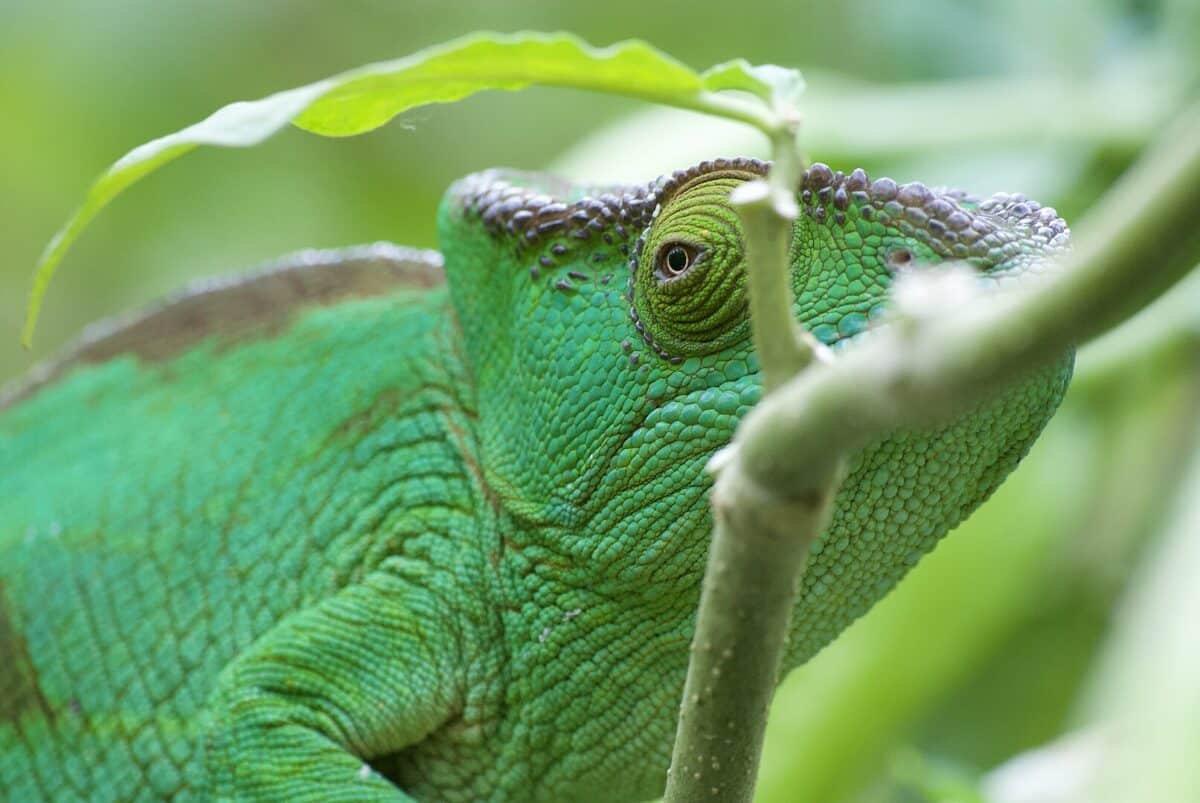
While the majority of chameleon species are oviparous (egg-laying), approximately 30% of chameleon species are ovoviviparous, meaning they give live birth to fully developed young. These live-bearing species, including the Jackson’s chameleon and the high-casqued chameleon, retain eggs inside their bodies until the embryos are fully developed. After a gestation period of four to six months, females produce litters of 8-30 fully formed miniature chameleons. This reproductive strategy is particularly common among chameleon species that live in cooler, higher-elevation habitats where external egg incubation might be challenging. Egg-laying species typically bury their clutches in soil, with incubation periods varying from 4 to 12 months depending on the species and environmental conditions. Some species, like the veiled chameleon, can lay impressive clutches of 20-70 eggs at once.
They Have Extremely Specialized Diets

Chameleons are highly specialized insectivores with dietary requirements that reflect millions of years of evolutionary adaptation. In the wild, they consume a diverse range of insects, including crickets, grasshoppers, mantids, flies, and caterpillars. Some larger species occasionally supplement their diets with small vertebrates like lizards or birds, or plant matter such as leaves and flowers. What makes their dietary needs so specialized is their requirement for proper calcium-to-phosphorus ratios and specific vitamins, particularly vitamin D3, which is crucial for calcium metabolism. In captivity, chameleons often suffer from nutritional deficiencies unless their insect prey is “gut-loaded” (fed nutritious foods) and dusted with vitamin supplements before feeding. Their specialized feeding mechanism, using their projectile tongues, further restricts their dietary options to prey items that can be captured using this unique hunting strategy.
Many Species Are Highly Threatened

Chameleons face severe conservation challenges, with approximately 36% of evaluated species classified as threatened according to the IUCN Red List. Their specialized habitat requirements make them particularly vulnerable to environmental changes, with deforestation being the primary threat to their survival. Madagascar, home to roughly half of all chameleon species, has lost over 80% of its original forest cover, devastating chameleon populations across the island. Climate change poses an additional threat, as many species have narrow temperature tolerances and specific humidity requirements. The illegal pet trade further jeopardizes wild populations, with rare and colorful species fetching high prices in black markets despite legal protections. Several species, including the Tarzan chameleon and the bizarre-nosed chameleon, were discovered by scientists only to be immediately classified as critically endangered due to their extremely limited ranges and ongoing habitat destruction.
They Have Three-Part Vision

Chameleons possess a visual system unlike any other vertebrate, featuring what scientists call “monocular spatial vision.” Their eyes can focus independently on different objects, but when they spot potential prey, they can coordinate both eyes to create three distinct types of vision. First, they use monocular vision to scan their environment with each eye independently. Once prey is detected, they switch to binocular vision, aligning both eyes on the target to gauge distance precisely. Finally, they employ stereopsis (depth perception) by comparing the slightly different images from each eye to create a three-dimensional perception that allows for incredibly accurate tongue strikes. Research indicates that chameleons can accurately judge distances within fractions of a millimeter, essential for their high-speed hunting technique. This sophisticated visual processing occurs in specialized regions of their brains evolved specifically for their unique hunting strategy.
Their Skin Contains Nanocrystals That Reflect Light

The secret behind chameleons’ remarkable color-changing ability lies not just in pigments but in an extraordinary structural adaptation at the nanoscale. Beneath their outer skin layer, chameleons possess specialized cells called iridophores that contain nanocrystals arranged in a lattice formation. These crystals selectively reflect specific wavelengths of light depending on how they’re spaced. When a chameleon changes its emotional state, specialized cells can alter the spacing between these nanocrystals, changing which wavelengths of light are reflected and thus which colors are displayed. This structural color change mechanism works in conjunction with expanding and contracting pigment cells (chromatophores) to produce their dramatic color transformations. Scientists using photonic crystals for various applications have drawn inspiration from this natural technology. This sophisticated system allows some chameleon species to display colors across the entire visible spectrum, including ultraviolet wavelengths invisible to humans but visible to other chameleons.
Conclusion: Nature’s Masters of Adaptation
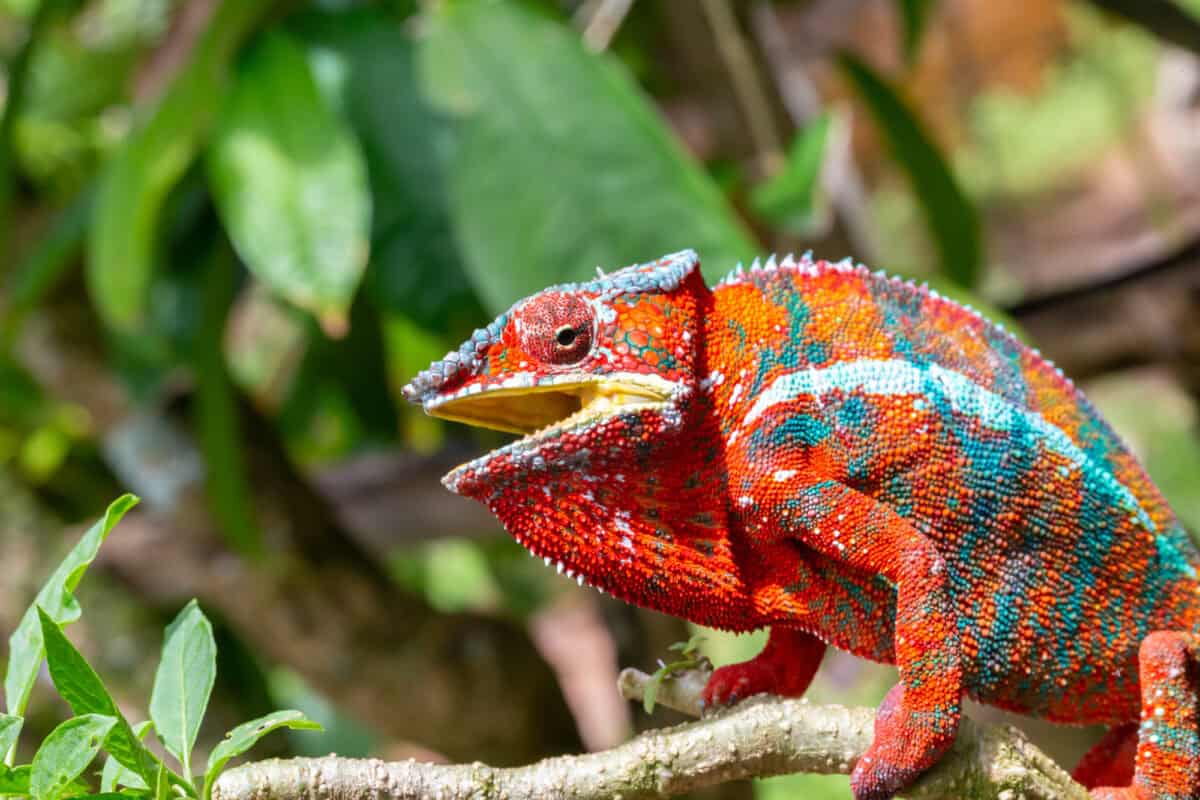
Chameleons represent one of evolution’s most remarkable experiments, combining bizarre adaptations into creatures that seem almost otherworldly in their specialization. From their independently rotating eyes and lightning-fast tongues to their color-changing nanomechanics and prehensile feet, every aspect of chameleon biology reflects millions of years of refinement for their arboreal lifestyle. These extraordinary reptiles remind us of nature’s boundless creativity and the incredible diversity that can evolve when organisms adapt to specific ecological niches. Despite their alien-like appearances and abilities, chameleons face an uncertain future due to habitat loss and climate change, making conservation efforts increasingly urgent. By understanding and appreciating these remarkable animals, we gain not only scientific insights but also a deeper appreciation for the wonders of evolutionary adaptation that surround us.

As a little kid, I fell in love with nature, wildlife, and animals. Living in the USA, South Africa, Italy, China and Germany gave me the opportunity to discover the world's Wildlife. My favorite animals are Mountain Gorillas, Siberian Tigers, and Great White Sharks.
I'm a certified PADI Open Water Diver, went to Everest Base Camp and Trekked Gorillas in Uganda. I hold a Master of Science in Economics and Finance.
Please send any feedback to feedback@animalsaroundtheglobe.com
- 13 Cat Breeds That Get Along with Dogs - July 20, 2026
- The 12 Largest Dog Breeds That Still Love to Cuddle - July 20, 2026
- 12 Pet Habits That Secretly Mean They Love You - July 20, 2026