


Bison once roamed North America in massive herds numbering in the tens of millions, shaping ecosystems and supporting countless other species. By the late 1800s, hunting and habitat destruction had reduced their population to fewer than 1,000 individuals. However, over the past century, conservation efforts have helped these magnificent animals begin to reclaim portions of their ancestral range. From national parks to tribal lands, bison are making remarkable comebacks across the continent. Their return represents not just a conservation success story, but the restoration of vital ecological processes and cultural connections. Here are fifteen significant instances where bison have returned to their native territories, reclaiming their rightful place on the landscape and reestablishing their role as a keystone species.
15. Yellowstone National Park America’s Conservation Flagship

Perhaps the most iconic bison restoration success story is that of Yellowstone National Park. By 1902, poaching had reduced Yellowstone’s once-abundant bison population to just 23 individuals. Through careful protection and management, this small remnant herd grew into what is now the largest wild, free-ranging bison population in the United States, numbering approximately 5,400 animals as of 2023. These bison are especially significant because they are among the few that have continuously lived in the wild, maintaining their natural behaviors and ecological functions. Their presence has helped restore the park’s grassland ecosystems, benefiting numerous other species and drawing millions of visitors who come to witness these magnificent animals in their natural habitat. The Yellowstone bison represent not just a population recovery but the preservation of wild bison genetics and behavior that had nearly vanished from the landscape.
14. Wind Cave National Park Protecting Pure Bison

Wind Cave National Park in South Dakota has played a crucial role in bison conservation since 1913, when 14 bison from the New York Zoological Society were introduced to the park. What makes the Wind Cave herd particularly valuable is that genetic testing has confirmed these bison as among the most genetically pure, with minimal cattle gene introgression. Today, approximately 350 bison roam the mixed-grass prairie of the park, helping to maintain the ecosystem through their grazing patterns and physical disturbance of the soil. The Wind Cave herd has also served as a source population for other restoration projects, with animals being transferred to establish new herds elsewhere. This restoration effort demonstrates how protected areas can serve as genetic reservoirs for endangered species, preserving not just the animals themselves but the integrity of their wild genetics for future generations.
13. American Prairie Reserve Creating a Prairie Sea
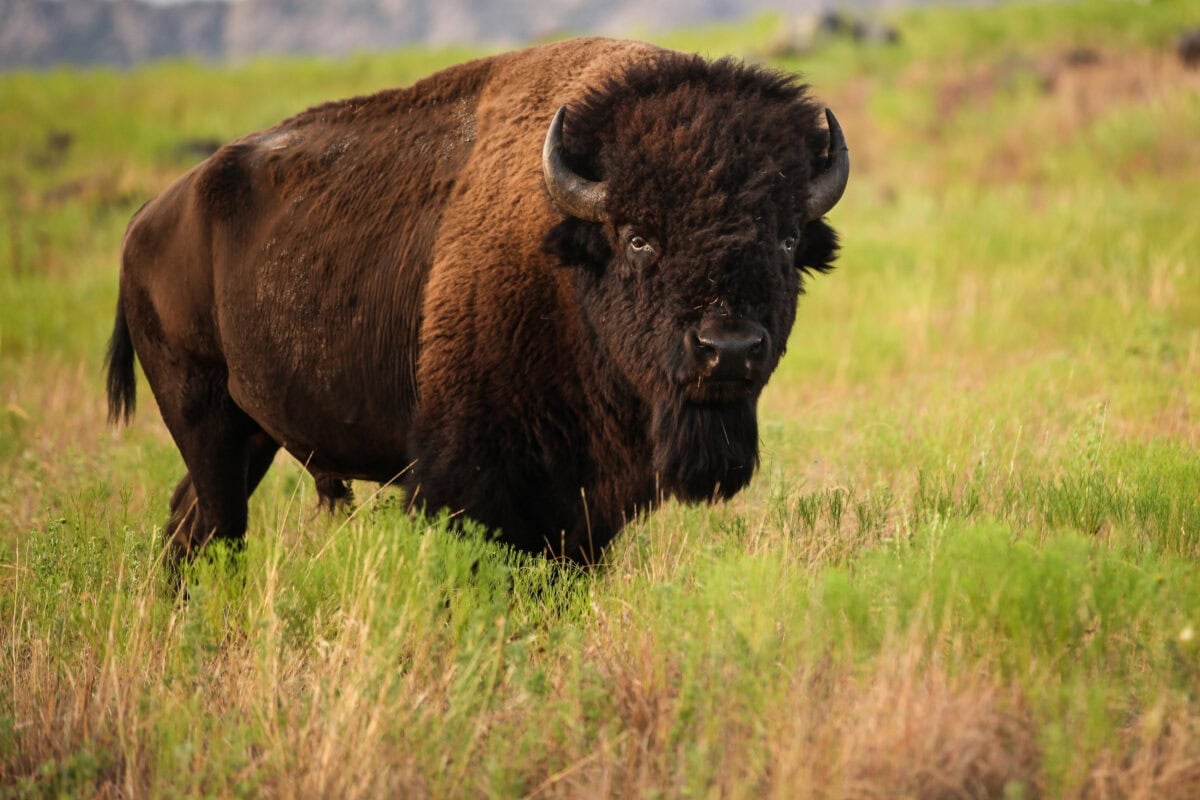
One of the most ambitious bison restoration projects is underway in northeastern Montana, where the American Prairie Reserve (now known simply as American Prairie) is working to create the largest protected area in the continental United States. Since 2005, the organization has been acquiring and connecting private lands with existing public lands, with the goal of establishing a prairie reserve of over three million acres. Their bison restoration began in 2005 with the release of 16 animals from Wind Cave National Park. As of 2023, more than 800 bison now roam approximately 63,500 acres of the reserve, with plans to grow the herd to several thousand as more habitat becomes available. This project is unique in its scale and vision, aiming to restore not just bison but an entire prairie ecosystem, complete with the full suite of native plants and animals that once thrived together. The return of bison to this landscape represents a shift from cattle ranching back to a more natural grazing regime that the prairie evolved with over thousands of years.
12. Badlands National Park Reintroduction Success

In 1963, Badlands National Park in South Dakota received 28 bison from Theodore Roosevelt National Park in North Dakota, marking the beginning of a successful reintroduction program. Today, approximately 1,200 bison thrive in the park’s rugged terrain, becoming one of the iconic wildlife species visitors hope to encounter. The Badlands bison have demonstrated remarkable resilience, adapting to the park’s challenging environment characterized by extreme temperature fluctuations, limited water sources, and sparse vegetation. Their grazing patterns have helped maintain the mixed-grass prairie ecosystem, preventing woody plant encroachment and promoting plant diversity. The bison’s physical impact on the landscape—through wallowing, horning, and trampling—creates microhabitats that benefit numerous other species, from prairie dogs to nesting birds. The Badlands reintroduction illustrates how even relatively small protected areas can support significant bison populations when properly managed.
11. Fort Peck Reservation Cultural and Ecological Restoration

In 2012, history was made when 61 genetically pure Yellowstone bison were transferred to the Fort Peck Indian Reservation in Montana, home to the Assiniboine and Sioux tribes. This marked the first time that Yellowstone bison were relocated to tribal lands, representing not just ecological restoration but cultural renewal as well. For the tribes, whose ancestors relied on bison for sustenance, shelter, tools, and spiritual practices, the return of these animals carried profound significance. The Fort Peck herd has continued to grow, with additional transfers from Yellowstone and natural reproduction bringing the population to over 350 animals. The tribes manage the herd using both traditional knowledge and modern conservation science, with some animals maintained as a conservation herd and others designated for ceremonial and subsistence purposes. This project demonstrates how bison restoration can simultaneously advance wildlife conservation goals and support Indigenous cultural revitalization, creating a model that other tribes have since followed.
10. Wichita Mountains Wildlife Refuge A Century of Recovery

In 1907, when the American bison was teetering on the brink of extinction, the Wichita Mountains Wildlife Refuge in Oklahoma became one of the first federally protected areas to receive bison as part of early conservation efforts. Fifteen bison from the New York Zoological Park (now the Bronx Zoo) were transported by train and released into the refuge, beginning what would become one of the longest-running bison restoration programs in North America. From those 15 founders, the herd has grown to approximately 650 animals that roam freely within the refuge’s 59,000 acres. The Wichita Mountains herd has not only thrived but has contributed significantly to bison conservation nationwide, with animals being transferred to establish or supplement other herds. The refuge conducts annual roundups to manage the population, maintain genetic diversity, and ensure the health of both the bison and their habitat. This century-long success story illustrates the potential for long-term recovery when bison are given adequate space and protection.
9. Neal Smith National Wildlife Refuge Prairie Reconstruction

The Neal Smith National Wildlife Refuge in Iowa represents a different approach to bison restoration—reintroducing the animals to reconstructed prairie rather than remnant natural habitat. Established in 1990, the refuge began as agricultural land that was systematically replanted with native prairie vegetation. Bison were introduced in 1996 to help maintain the restored grassland and to recreate the ecological interactions that shaped the tallgrass prairie ecosystem. Today, a herd of approximately 50-70 bison grazes within a 700-acre enclosure, contributing to the refuge’s mission of demonstrating what Iowa’s landscape looked like before European settlement. Researchers at the refuge study how bison grazing affects plant community composition, insect diversity, and soil health in this reconstructed habitat. The Neal Smith project shows that bison restoration need not be limited to large wilderness areas or existing natural landscapes—with proper management, these animals can help recover prairie ecosystems even on formerly degraded lands.
8. Blackfeet Nation Buffalo as First Teachers

For the Blackfeet Nation in Montana, the return of bison (or buffalo, as they are traditionally called) represents the restoration of a central cultural relationship that was forcibly severed in the 19th century. The tribe’s Iinnii Initiative, launched in 2009, seeks to bring free-roaming buffalo back to Blackfeet lands along the Rocky Mountain Front. In 2016, the tribe celebrated a milestone when 88 genetically pure bison from Elk Island National Park in Canada were released on Blackfeet territory. These animals are descendants of Blackfeet buffalo that had been captured on their lands in the early 1900s and taken to Canada, making their return especially meaningful—a homecoming generations in the making. The herd has since grown to over 350 animals. Beyond their ecological role, these buffalo serve as “the first teachers” in Blackfeet educational programs, helping younger generations reconnect with traditional knowledge and practices. The tribe’s buffalo restoration program exemplifies how cultural revitalization and ecological conservation can be integrated, with traditional Indigenous values guiding modern wildlife management.
7. Henry Mountains America’s Wild Bison Success

The Henry Mountains in southeastern Utah host what many biologists consider the most significant truly wild, free-roaming bison herd in the United States outside of Yellowstone. Unlike most conservation herds, these bison range freely across public lands with minimal management intervention and interact with the full suite of natural processes, including predation and natural selection. The herd’s origin dates to 1941, when 18 bison from Yellowstone were released into the area. Today, approximately 300-400 animals inhabit this rugged, remote landscape. What makes the Henry Mountains bison particularly notable is their status as a hunted population that is also subject to natural selection pressures—they must navigate challenging terrain, find water and forage year-round, and occasionally contend with predators. This combination of factors has allowed these bison to maintain wild behavioral traits that have been lost in more intensively managed herds. The success of the Henry Mountains bison demonstrates that, given sufficient space and appropriate management, bison can reestablish themselves as a functioning part of natural ecosystems.
6. Grand Teton National Park Integrating Conservation with Migration

The bison of Grand Teton National Park in Wyoming present a complex case of restoration that illustrates the challenges of managing wide-ranging species in fragmented landscapes. The park’s bison herd, established in the 1940s, shares genetics with both the Yellowstone population and a historic herd from the National Bison Range. What makes this restoration effort particularly interesting is the seasonal migration pattern these bison have developed. In summer, the approximately 500 animals graze within the park, but as winter approaches, they typically move south to the National Elk Refuge, where they share winter range with one of North America’s largest elk herds. This natural migration pattern crosses multiple jurisdictional boundaries, requiring cooperation between the National Park Service, U.S. Fish and Wildlife Service, state wildlife agencies, and private landowners. The Grand Teton bison illustrate both the ecological importance of landscape connectivity for large mammals and the social complexity of managing wildlife that don’t recognize human boundaries. Their successful reestablishment demonstrates that with collaborative management, bison can reclaim not just static territories but dynamic movement patterns across the landscape.
5. Tallgrass Prairie Preserve Keystone Species Return

In 1993, The Nature Conservancy reintroduced bison to the Tallgrass Prairie Preserve in Oklahoma, establishing what has become the largest protected remnant of tallgrass prairie in the world. Starting with 300 animals, the herd has grown to approximately 2,500 bison ranging across 39,000 acres. This restoration effort is particularly significant because it aims to recreate the ecological dynamics that historically maintained the tallgrass ecosystem. Research at the preserve has documented how bison grazing differs fundamentally from cattle grazing, creating a more heterogeneous vegetation structure that benefits biodiversity. Bison selectively graze grasses while largely avoiding wildflowers, helping maintain plant diversity. Their wallowing behavior creates depressions that collect rainwater, forming ephemeral wetlands crucial for amphibians and invertebrates. Together with the preserve’s prescribed fire program, the bison are helping restore ecological processes that had been absent for over a century. The success of the Tallgrass Prairie Preserve demonstrates the critical role bison play as a keystone species in grassland ecosystems and how their reintroduction can trigger cascading positive effects throughout the food web.
4. Konza Prairie Science-Driven Restoration

The Konza Prairie Biological Station in Kansas offers perhaps the most detailed scientific understanding of bison’s ecological impact on tallgrass prairie ecosystems. Since 1987, researchers have studied a bison herd of approximately 300 animals that graze within a 2,300-acre area of the research station. This long-term ecological research has documented how bison create habitat heterogeneity through selective grazing, wallowing, and other behaviors. Scientists have measured increased plant species diversity in bison-grazed areas compared to ungrazed or cattle-grazed areas, as well as greater abundance and diversity of grassland birds. The Konza Prairie bison research has been particularly valuable in demonstrating how bison and fire interact to shape prairie ecosystems—historically, these were the two primary ecological drivers of North American grasslands. The findings from this research site have informed bison restoration efforts continent-wide, helping managers understand how many animals are needed, how they should be distributed across the landscape, and what effects to expect from their reintroduction. The Konza Prairie bison represent a case where ecological restoration and scientific discovery advance hand-in-hand.
3. Banff National Park Return to the Canadian Rockies

After a 140-year absence, bison returned to Canada’s oldest national park in 2017, when 16 animals were reintroduced to a remote valley in Banff National Park. This marked the culmination of years of planning to restore a missing ecological process to the park’s montane ecosystems. The Banff bison project is particularly noteworthy for its careful approach to reintroducing a large mammal to a complex, multi-use landscape. The animals were initially kept in a soft-release enclosure to help them bond to their new home range before being fully released in 2018. GPS collars allow park managers to track their movements as they explore their habitat. The herd has now grown to over 80 animals through natural reproduction, and they have begun to reestablish historical movement patterns in the park’s eastern slopes. This restoration effort is helping scientists understand how bison historically used mountain environments and how their grazing and physical impact influences montane meadows and forest edges. The Banff project demonstrates that even in areas where bison have been absent for generations, these adaptable animals can successfully reclaim their ecological role when given the opportunity.
2. Cross Ranch Preserve Riparian Restoration

In 1986, The Nature Conservancy introduced bison to the Cross Ranch Preserve in North Dakota, initiating an ecological restoration project focused on the Missouri River’s riparian corridors. This 6,000-acre preserve protects one of the last free-flowing stretches of the Missouri River and the associated floodplain and upland habitats. The approximately 250 bison that now inhabit the preserve play a crucial role in maintaining the dynamic mosaic of grassland, woodland, and wetland habitats that characterize this riverine ecosystem. Their grazing helps prevent woody plant encroachment into prairie areas while their movement patterns create corridors between different habitat types. The Cross Ranch bison restoration is particularly significant for demonstrating how these animals can benefit riparian systems—the critical transition zones between aquatic and terrestrial environments that typically support the highest biodiversity in grassland regions. By maintaining open areas adjacent to woodlands and wetlands, the bison help preserve the habitat complexity that numerous species depend on. This project illustrates how bison restoration can contribute to broader landscape conservation goals beyond simply recovering the species itself.
1. Rio Mora National Wildlife Refuge Watershed Restoration

In 2012, the Rio Mora National Wildlife Refuge and Conservation Area was established in New Mexico, centered on a former cattle ranch that had already begun transitioning to bison grazing. This restoration project takes a watershed approach, recognizing that bison influence not just the grasslands they graze but the entire hydrological system. The approximately 60 bison on the refuge are managed to improve riparian health along the Mora River and its tributaries. Research has shown that compared to cattle, bison spend less time in sensitive riparian areas, reducing bank erosion and allowing vegetation to recover along waterways. Their wallowing creates small depressions that capture rainfall and reduce runoff, increasing groundwater recharge. The Rio Mora project combines bison restoration with other conservation practices, including erosion control structures, wetland restoration, and native plant reintroduction, to restore ecological function at a landscape scale.
Conclusion:

The return of bison to their ancestral homelands is more than a conservation milestone—it is a story of ecological renewal, cultural revival, and intergenerational resilience. Across grasslands, mountains, and river valleys, these animals are once again shaping the landscapes that shaped them, reawakening ancient relationships between land, people, and wildlife. Each of these fifteen restoration efforts reflects a broader shift in how we think about nature—not as something separate from us, but as something we are part of and responsible for healing. As bison reclaim their rightful place on the continent, they also restore something in us: a deeper connection to place, history, and possibility. Their journey is far from over, but it is well underway—and it invites us all to walk alongside.

As a little kid, I fell in love with nature, wildlife, and animals. Living in the USA, South Africa, Italy, China and Germany gave me the opportunity to discover the world's Wildlife. My favorite animals are Mountain Gorillas, Siberian Tigers, and Great White Sharks.
I'm a certified PADI Open Water Diver, went to Everest Base Camp and Trekked Gorillas in Uganda. I hold a Master of Science in Economics and Finance.
Please send any feedback to feedback@animalsaroundtheglobe.com
- 13 Cat Breeds That Get Along with Dogs - July 20, 2026
- The 12 Largest Dog Breeds That Still Love to Cuddle - July 20, 2026
- 12 Pet Habits That Secretly Mean They Love You - July 20, 2026