

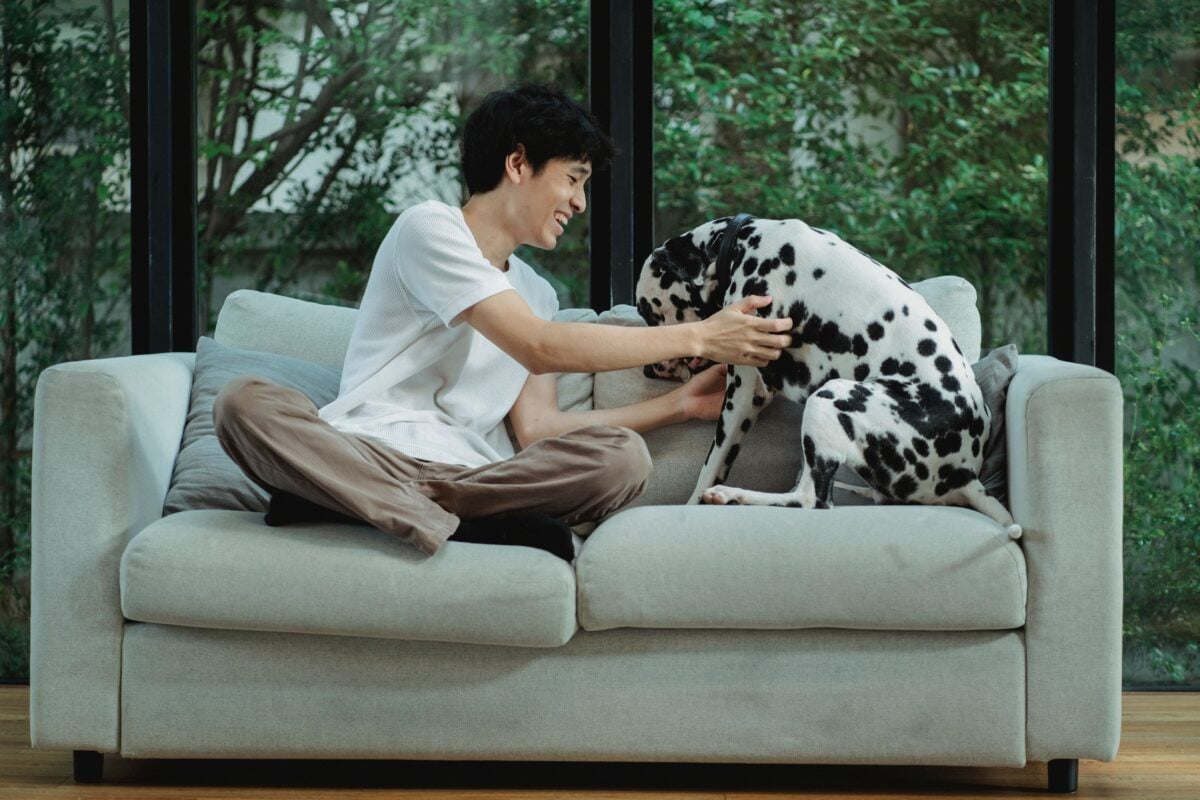
Nobody calls a family meeting about it. Nobody announces that the dog is getting old. Then one week a runner appears in the hallway, a lamp stays on all night, and the couch suddenly has a ramp. If you live with a senior dog, you’ve probably made several of these moves without saying a word.
Most people think caring for an old dog means vet visits and supplements. The biggest changes happen quietly, in the floor plan, the lighting and the daily routine. Almost every household lands on the same ones, and a few say more about your dog than you’d expect. One is the change nearly everyone makes and almost nobody admits to, so keep reading.
#16 – The Hallway Gets a Runner
🔥 Would you like to save this?
We'll email this post to you, so you can come back to it later!
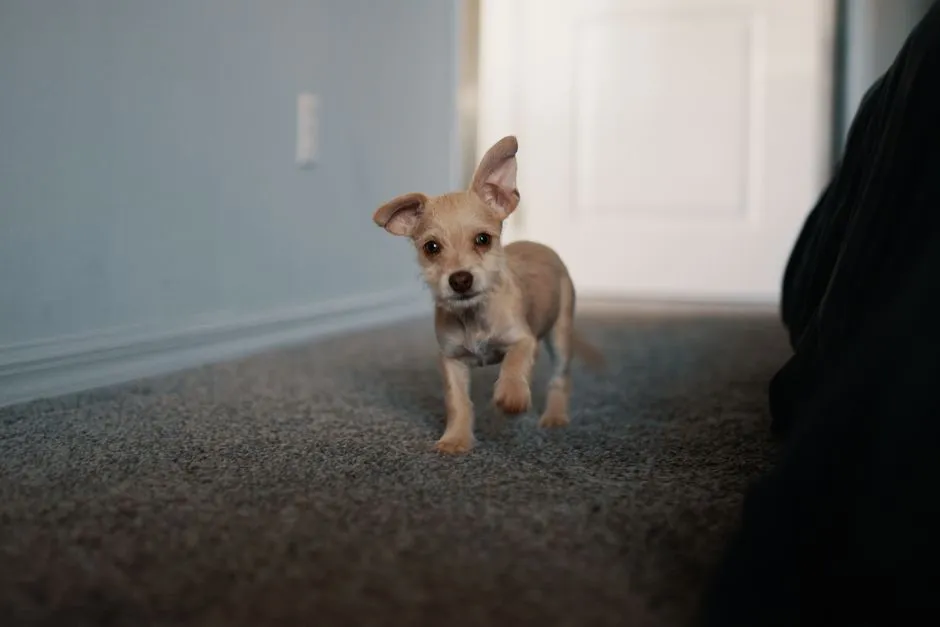
The first thing families change is almost always the floor.
Hardwood, tile and laminate can make walking painful and unstable, especially for dogs with arthritis or neurologic changes. A young dog skids and shrugs it off. An old dog can’t afford the slip. So a runner turns up along the routes that matter most: bed to door, and food bowl to yard.
Placement matters more than people realize. Runners should be laid so the dog never has to leap between small islands of grip. A scattering of small rugs can leave gaps that are as risky as bare floor. Many stiff dogs simply stop crossing a room rather than gamble on the next patch.
- Use non-slip pads underneath.
- Pick low-pile rugs with a rubber or non-slip backing.
- Yoga mats are a cheap fix on slick tile or hardwood.
But the floor is only half the story, and the next change is the one dogs notice most…
#15 – The Couch Quietly Gets a Ramp
🔥 Would you like to save this?
We'll email this post to you, so you can come back to it later!
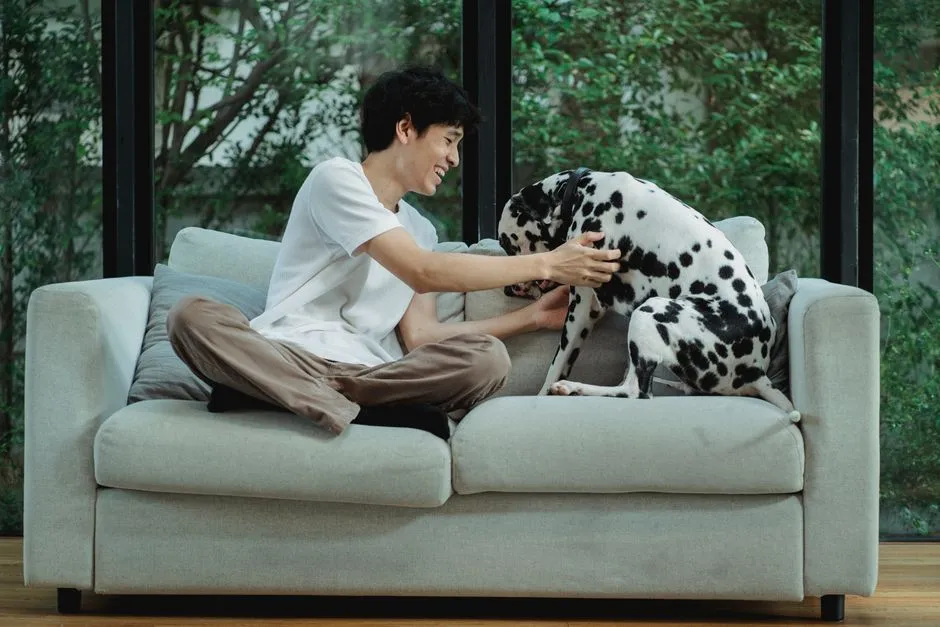
Nobody takes the couch away. They just make it reachable again.
Jumping onto furniture or into vehicles gets harder, and riskier, with age. So pet stairs show up beside the bed, ramps go against higher surfaces, and some families add a vehicle ramp for car rides. The dog keeps its spot on the sofa and its place in the family.
Location is the part families get right by instinct. The best advice is to put the ramp where the dog actually chooses to lie, not where you think they should sleep. Dogs use what fits their habits, and they ignore what doesn’t.
Here’s a point that gets debated. Some trainers swear by steps, while others prefer ramps. Research supports ramps and non-slip surfaces for safety, but there’s no universal “perfect” design. Nobody has proven a single best one.
Quick Compare
- Ramps: Gentler on stiff joints and easier for dogs with weak back legs, but they need more floor space.
- Steps: A smaller footprint that fits beside a bed, but each step asks for a lift from sore limbs.
- Either way: A non-slip surface and a spot the dog already likes matter more than the style.
Training helps too. Walk your dog up and down slowly, with treats and encouragement, until it feels normal. A ramp that sits unused is just furniture.
And while the ramp protects the joints, the bed under them is where the dog spends most of the day…
#14 – The Bed Gets an Upgrade, and a Better Spot
🔥 Would you like to save this?
We'll email this post to you, so you can come back to it later!
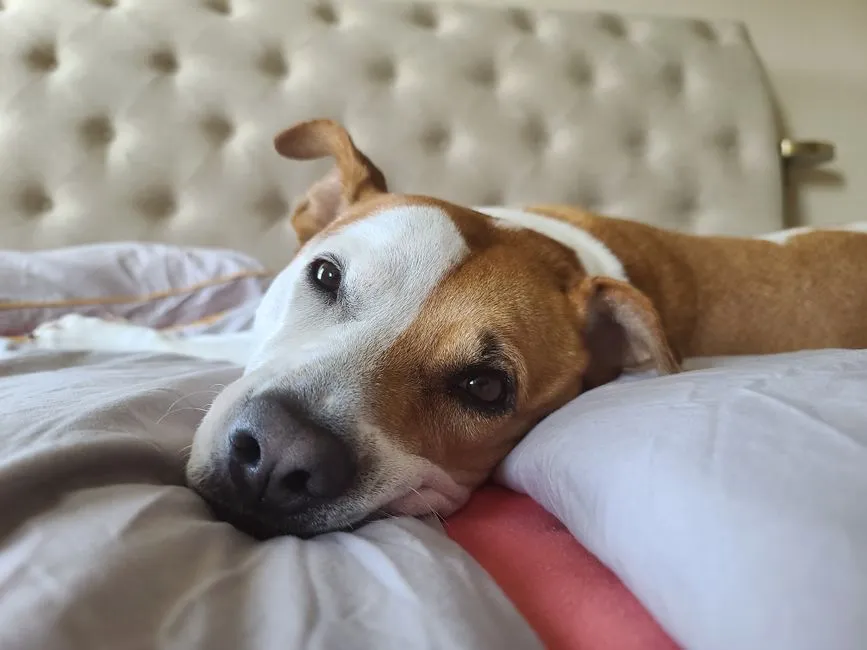
The old flat cushion is usually the first thing to go.
A supportive orthopedic or memory foam bed can cushion the joints and reduce pressure points. Dogs with joint pain feel the difference after a night on a thin pad. Getting up in the morning is often the first place it shows.
Where the bed sits matters as much as what it’s made of. A quiet, draft-free spot helps a dog feel safe and relaxed, and keeping the bed low and warm makes it easier to use.
Here’s an opinion some will dispute. A sensible spot may beat an expensive bed. A mid-priced bed in the right corner can do more than a luxury one by a drafty door. On a budget, a folded duvet under a basic bed adds extra cushion.
But comfort at bedtime brings a new problem: what happens when the lights go out…
#13 – A Lamp Stays On All Night
🔥 Would you like to save this?
We'll email this post to you, so you can come back to it later!
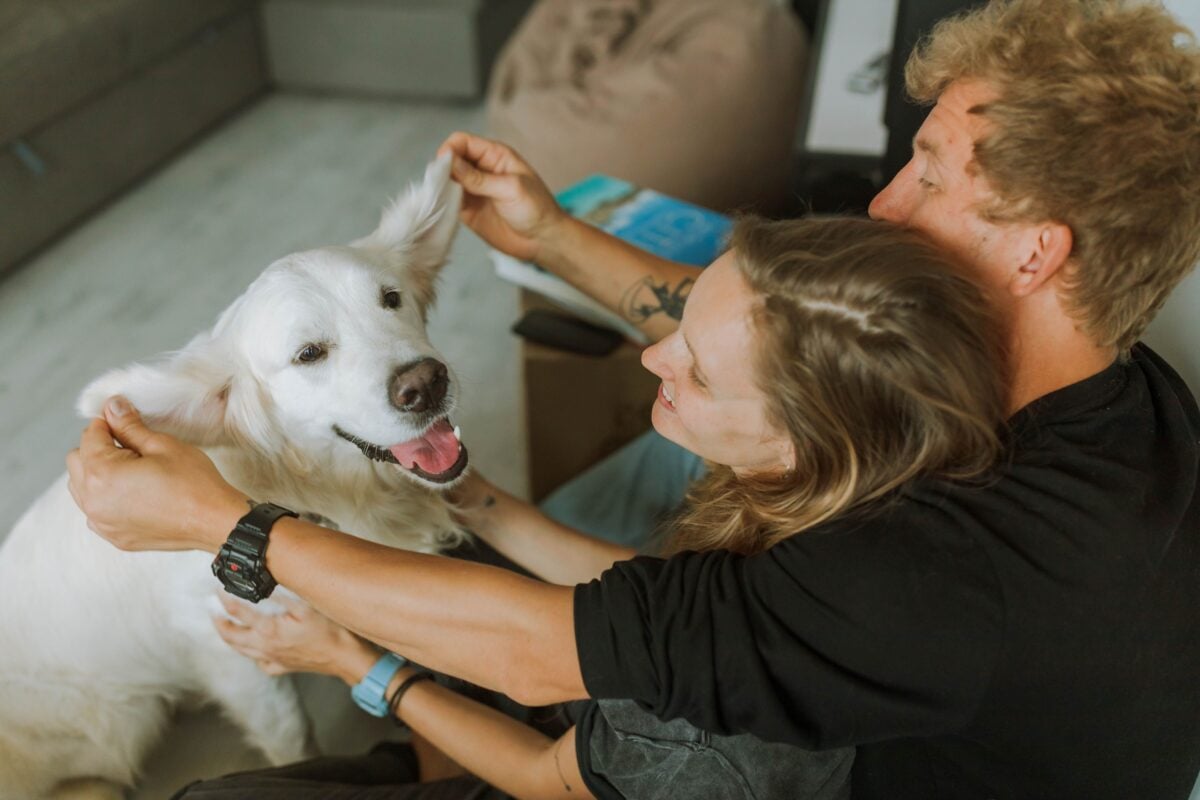
That glow in the hallway isn’t for you.
Vision changes are common in aging pets, and night is when they show. Vets recommend night lights in dark hallways and stairways, plus floodlights outside. A dog that moved confidently at noon may hesitate at the top of the stairs at 2 a.m.
Motion-activated lights suit many households. Families put them in hallways, near water bowls and by the back door. A sensor light also means a dozing senior isn’t jolted awake by sudden brightness.
There’s a second reason for the glow. Night-time confusion and pacing are classic signs of canine cognitive dysfunction. A lamp can reveal that your dog is wandering at night, not just help them while they do it.
Once the house is lit, the next stop on the nighttime route is the kitchen…
#12 – The Food Bowl Rises
🔥 Would you like to save this?
We'll email this post to you, so you can come back to it later!
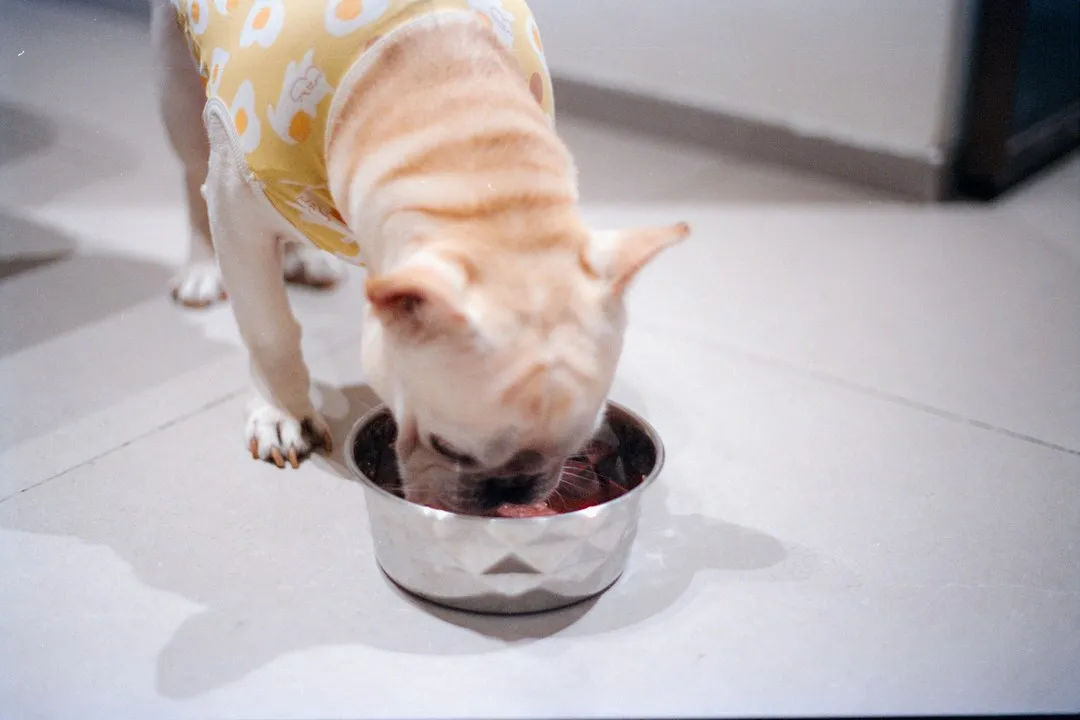
Bending down gets harder long before dogs show it.
Arthritic pets may struggle to bend, so families raise the bowls slightly and put a non-slip mat underneath. A bowl that slides is a bowl a stiff dog will give up on. Some dogs also start eating less when mealtime hurts, and that’s easy to mistake for pickiness.
Here’s where it gets contested. Raised feeders aren’t right for every dog. Advice on bowl height has long varied by breed and body type, especially for large, deep-chested dogs. Ask your vet before you buy.
Mealtime habits change too:
- Smaller portions on a schedule your vet approves
- A mat that keeps the bowl in place
- Shorter mealtimes with breaks if standing for long hurts
The food bowl is only one stop on the daily route, and the next change is hiding in plain sight…
#11 – Water Bowls Multiply
🔥 Would you like to save this?
We'll email this post to you, so you can come back to it later!
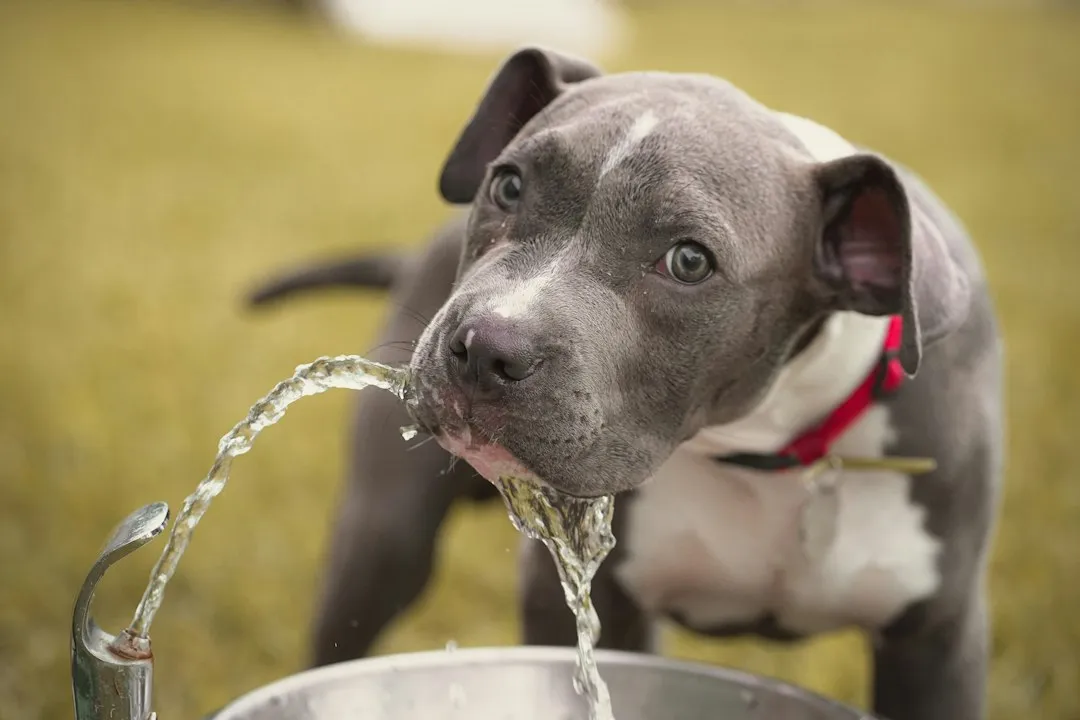
Count the water bowls in a house with an old dog. There are usually more than before.
Experts suggest multiple water stations around the home, and one guide recommends a bowl on every floor. The goal is that a dog with sore joints never has to travel far to drink.
Hydration matters more in seniors. A dog that skips the trip to a far-off bowl is a dog that may quietly drink less. Nobody notices, because nothing dramatic happens.
Extra bowls also give families a chance to notice patterns. A dog who suddenly drinks much more or less than usual is worth mentioning to the vet. Changes in thirst can have many causes, and only an exam can sort them out.
Water is easy to move. Stairs are not, and they’re next…
#10 – A Baby Gate Appears at the Stairs
🔥 Would you like to save this?
We'll email this post to you, so you can come back to it later!
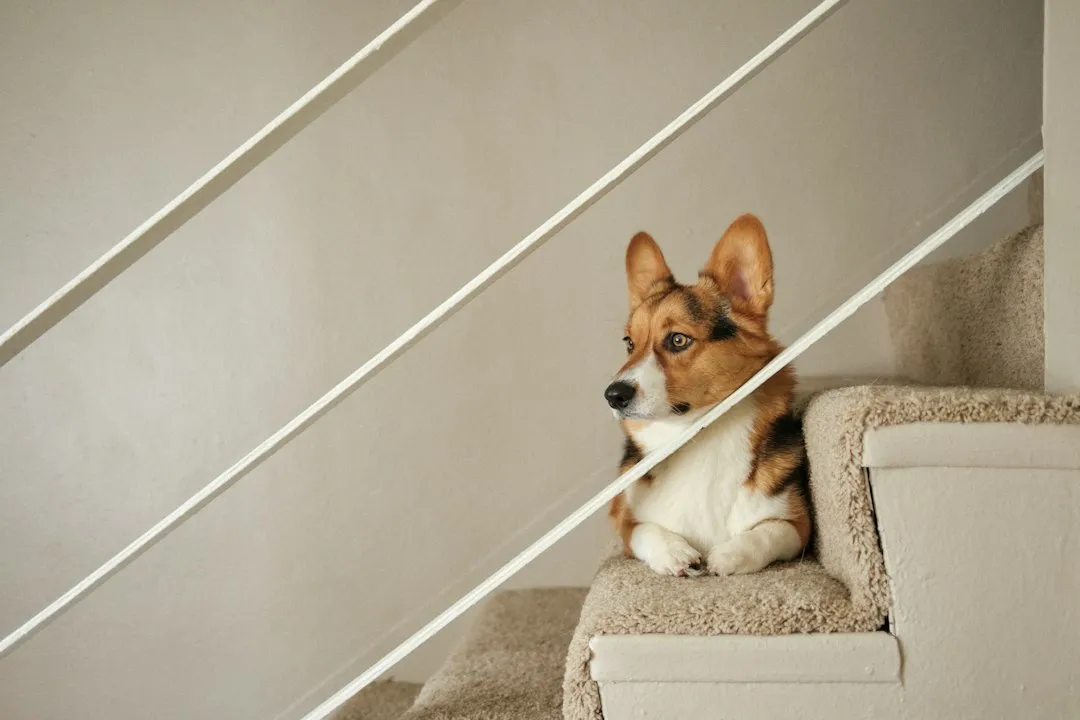
The stairs didn’t disappear. They just got a gate.
Families often block off the “red zones.” They keep essentials on one level and create quiet retreat spaces. A baby gate is one of the cheapest ways to do it, and it takes five minutes to install.
Some owners feel guilty, as if gating the stairs shrinks the dog’s world. The evidence points the other way. The idea is to preserve access without risky acrobatics, because a dog on one safe floor is still part of the family.
Think about the stairs the dog may not manage:
- Basement and upstairs stairs
- Steps down to the yard
- Any landing with a slick surface
A gate can be a trial rather than a permanent ban. Your vet can help you judge when.
Worth Knowing
- At the top of a staircase, a hardware-mounted gate is generally safer than a pressure-mounted one, which can be pushed loose.
- A gate with a small walk-through door saves you from stepping over it a dozen times a day.
- Check the bottom gap and the bar spacing, especially if your dog is small or a determined squeezer.
- A confused senior may test a new gate at night, so install it before the first bedtime and keep a night light nearby.
And once the dangerous spots are blocked, the safe ones need to stay exactly as they are…
#9 – Nobody Rearranges the Furniture Anymore
🔥 Would you like to save this?
We'll email this post to you, so you can come back to it later!
The most invisible change is that the redecorating stops.
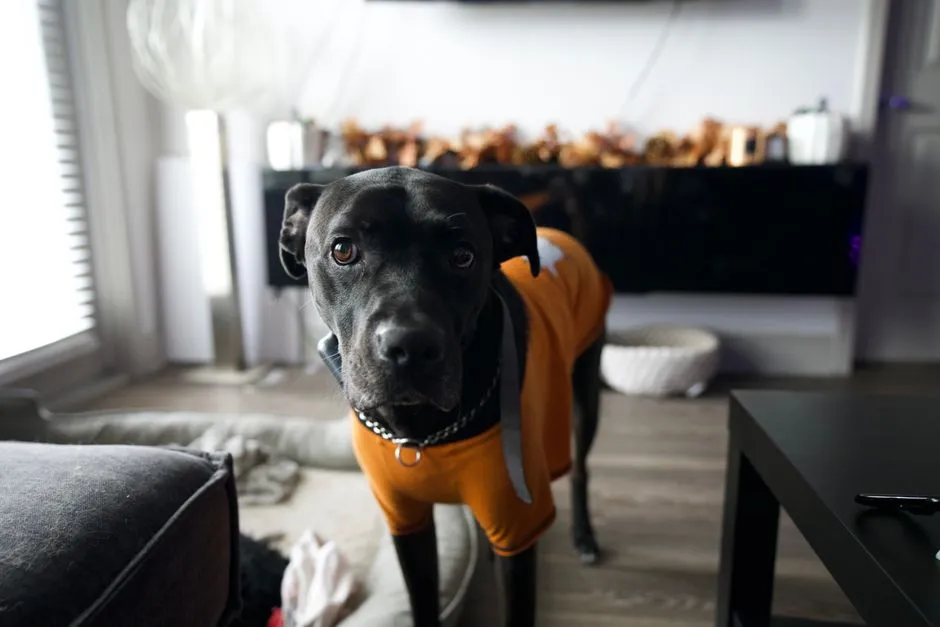
Old dogs rely on memory more than we think. Vets advise keeping furniture in consistent locations and avoiding frequent rearranging. Predictability reduces stress and prevents collisions.
This matters most when eyesight dims. A new coffee table in the middle of a familiar path is an obstacle course. A dog can navigate a dark room with failing eyes, but only if the room hasn’t changed. Families end up treating the layout like a map the dog has memorized.
- Keep walkways clear of clutter
- Leave doors open or closed consistently
- Put shoes and bags out of the main route
Keeping everything in place leads to a bigger idea about where the dog’s daily life happens…
#8 – Everything the Dog Needs Moves to One Level
🔥 Would you like to save this?
We'll email this post to you, so you can come back to it later!
Without anyone saying so, the dog’s life shrinks to a single floor.
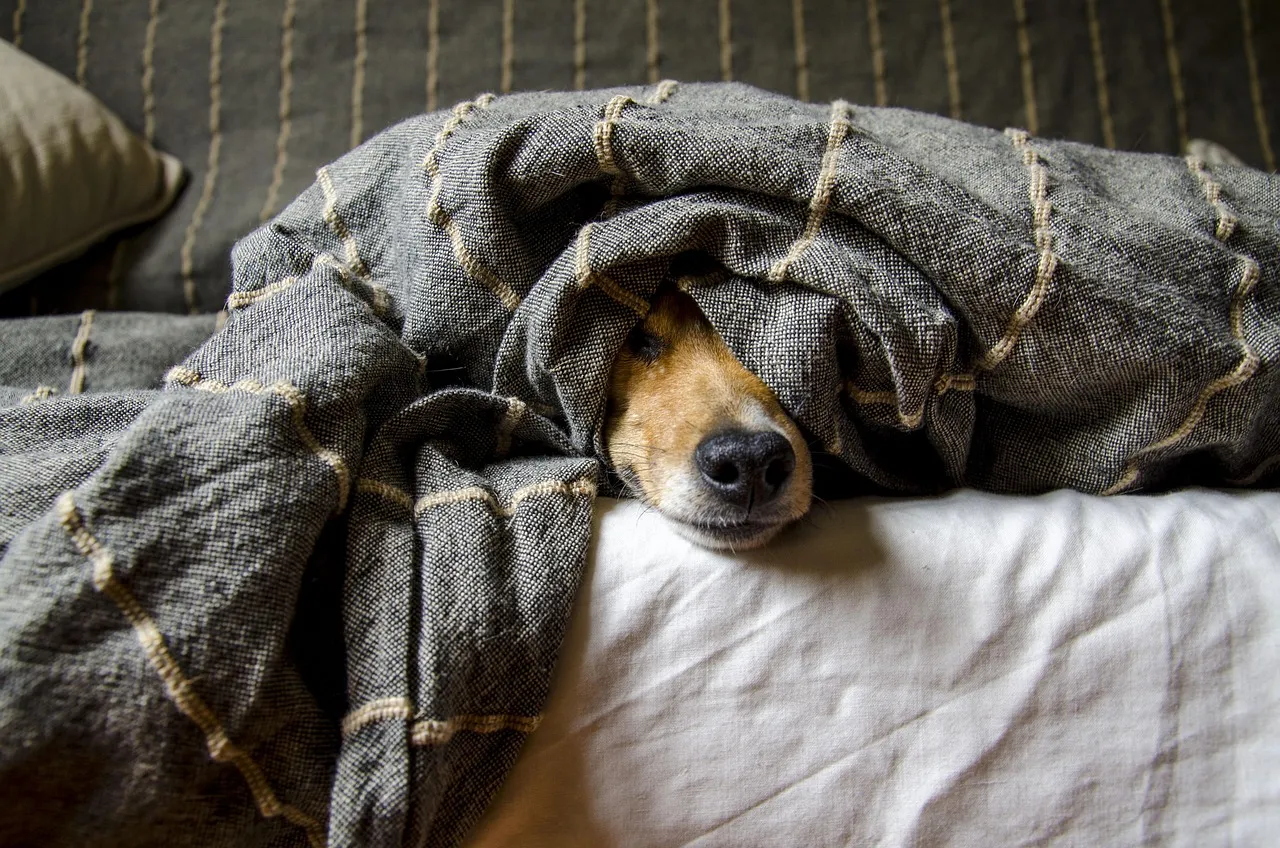
Experts recommend keeping essentials on one level. The bed, water and a way outside all end up in the same zone. It isn’t a punishment. It’s logistics.
The best versions of this stay close to the people. Keep water and a night light nearby so your dog never has to leave the zone for basics. The dog isn’t isolated. The family moves toward the dog’s zone.
That’s why you’ll see a laptop moved to the room where the dog sleeps. The household reorganizes itself around the dog’s range, one small compromise at a time.
That one-level life depends on small obstacles that most people never notice, and they’re next…
#7 – The Tiny Thresholds Get Fixed
🔥 Would you like to save this?
We'll email this post to you, so you can come back to it later!
A half-inch lip can be a wall to an old dog.
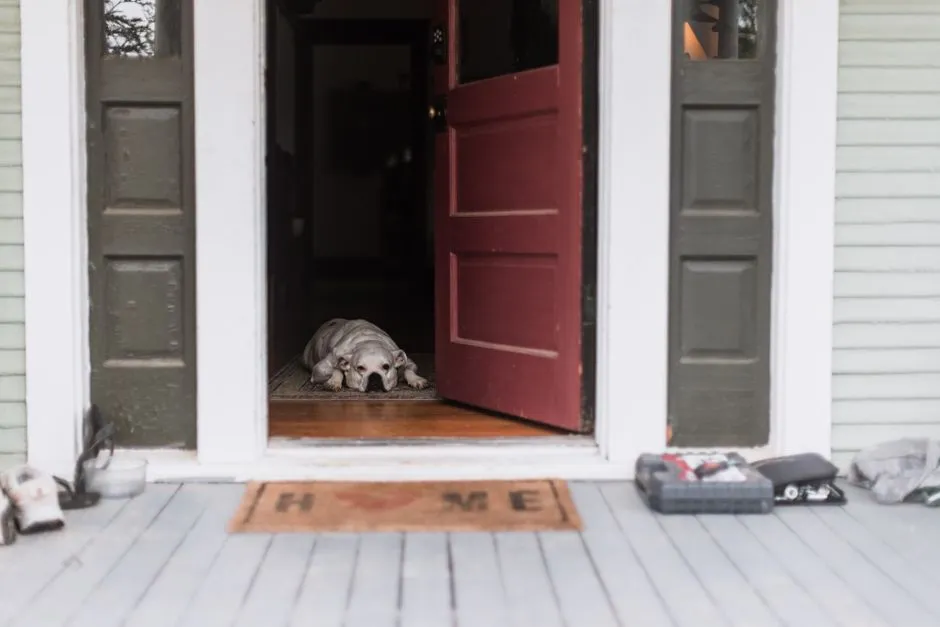
Doorway sills, rug edges and step-downs rarely bother a young dog. Arthritis guides list thresholds among the everyday obstacles worth assessing in a dog’s home. Families tend to notice them only after a dog hesitates.
Trim the rugs or tape down their edges so nobody trips. A curled rug corner can catch a weak paw and cause the fall you were trying to prevent. Rug grippers are another option.
You can walk the dog’s route yourself:
- Look for lips, bumps and loose edges
- Note any spot where the dog slows down or stops
- Fix the first one you find, then repeat
A small threshold ramp is cheap and quick. A hesitation at the same doorway every day is a clue worth acting on.
But some changes to the home aren’t visual at all, and they happen at ear level…
#6 – Everyone Learns to Approach Differently
🔥 Would you like to save this?
We'll email this post to you, so you can come back to it later!
Hearing loss changes the house in ways you can’t see.
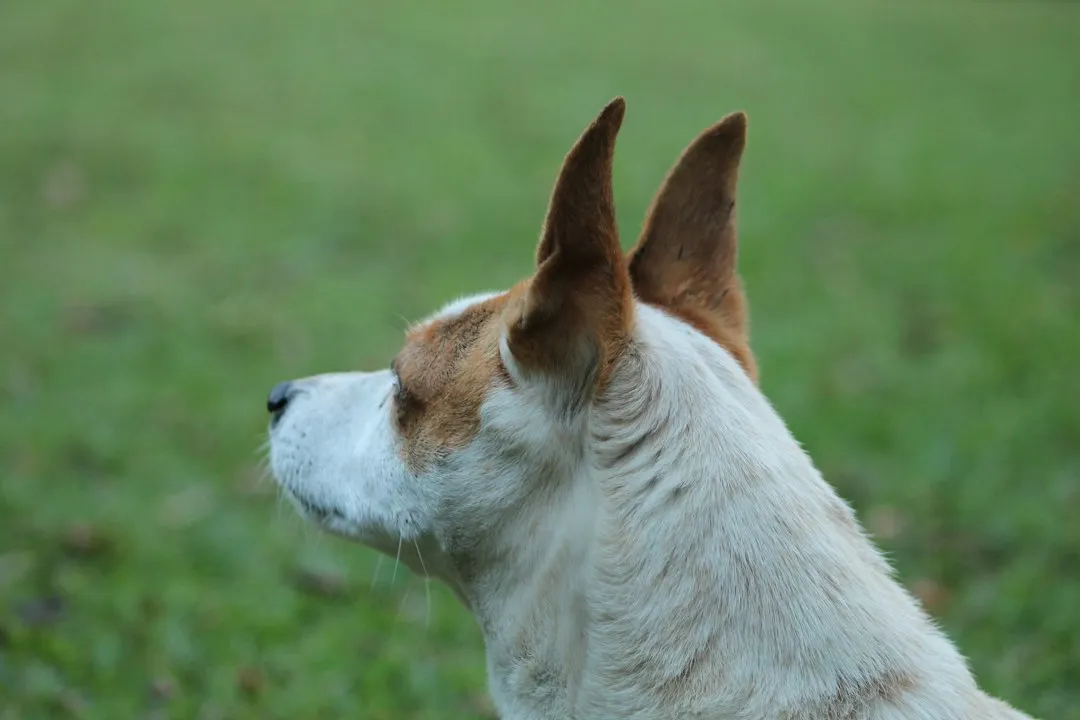
Hearing loss is one of the things that changes how a home works. A dog who can’t hear footsteps can be startled by a person who walks up from behind. The household learns, without a conversation, to approach in view.
Families often adopt small habits:
- Walk into the dog’s line of sight before touching
- Use hand signals alongside spoken cues
- Tap the floor lightly so vibration announces you
Many senior dogs that seem “stubborn” are simply not hearing the call. That’s worth a vet check before anyone assumes the dog is ignoring them.
Inside the house the dog is covered. The harder part is the back door…
#5 – The Back Door Becomes a Project
🔥 Would you like to save this?
We'll email this post to you, so you can come back to it later!
The route outside is where old dogs lose the most confidence.
Steps to the yard, wet decks and dark gardens all get harder. Families add a ramp or a rubber mat. Floodlights outside are recommended for dogs with vision problems, and a clip-on collar light lets you see your dog in the yard at night.
Outings change in rhythm as well. Senior bodies tend to handle frequent, moderate movement better than one marathon. So the long weekend hike becomes several short walks.
An old dog that suddenly has indoor accidents is rarely being “bad.” It may be pain, trouble getting outside or an underlying health issue. Take it to the vet rather than scolding.
The outdoor route is solved, but the paws carrying the dog along it need some attention…
#4 – Nails and Paws Get Attention
🔥 Would you like to save this?
We'll email this post to you, so you can come back to it later!
Grip starts at the paw, and it’s the part families overlook.
Nail maintenance is part of the senior dog checklist. Long nails push the toes up and back, and that can change how a paw meets the floor. Families trim more often, or ask the groomer to.
If traction is still poor, there are aids. Non-slip rugs and nail grips are among the first things many guides suggest, and paw grip products are another option if needed.
Many people also keep the fur between the pads trimmed, because overgrown fur can make smooth floors slicker. Even a perfect rug plan can fail if the nails are too long.
Once the paws are sorted, the household turns to something less practical and more emotional…
#3 – The Dog’s Bed Moves Next to Yours
🔥 Would you like to save this?
We'll email this post to you, so you can come back to it later!
This is the change nobody admits to making.
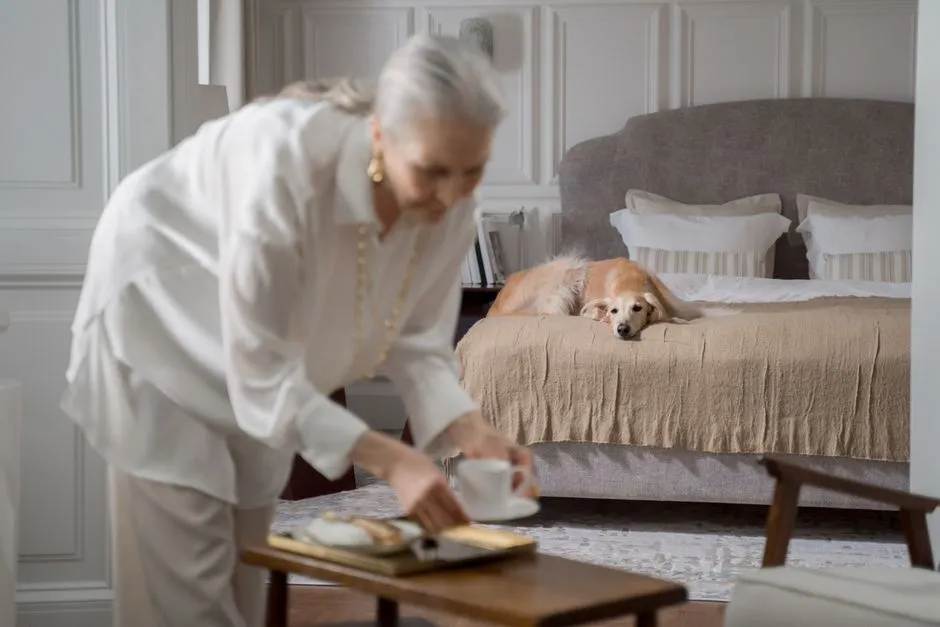
Many families create a calm place for the dog, and for many, that space ends up in their own bedroom. Rugs, night lights, a gate and a bed beside yours amount to a weekend project, not a renovation.
The reasoning is practical and emotional. A dog who wakes disoriented can find a familiar person. For some seniors, a soft night light plus the sound of your breathing is enough to settle them.
That means the person is part of the treatment. Reassurance may be the most underrated item on any senior dog checklist.
Comfort at night is one thing. Comfort in the body itself is another, and it comes next…
#2 – The House Gets Warmer in the Right Places
🔥 Would you like to save this?
We'll email this post to you, so you can come back to it later!
Stiff joints and cold floors are a bad pairing.
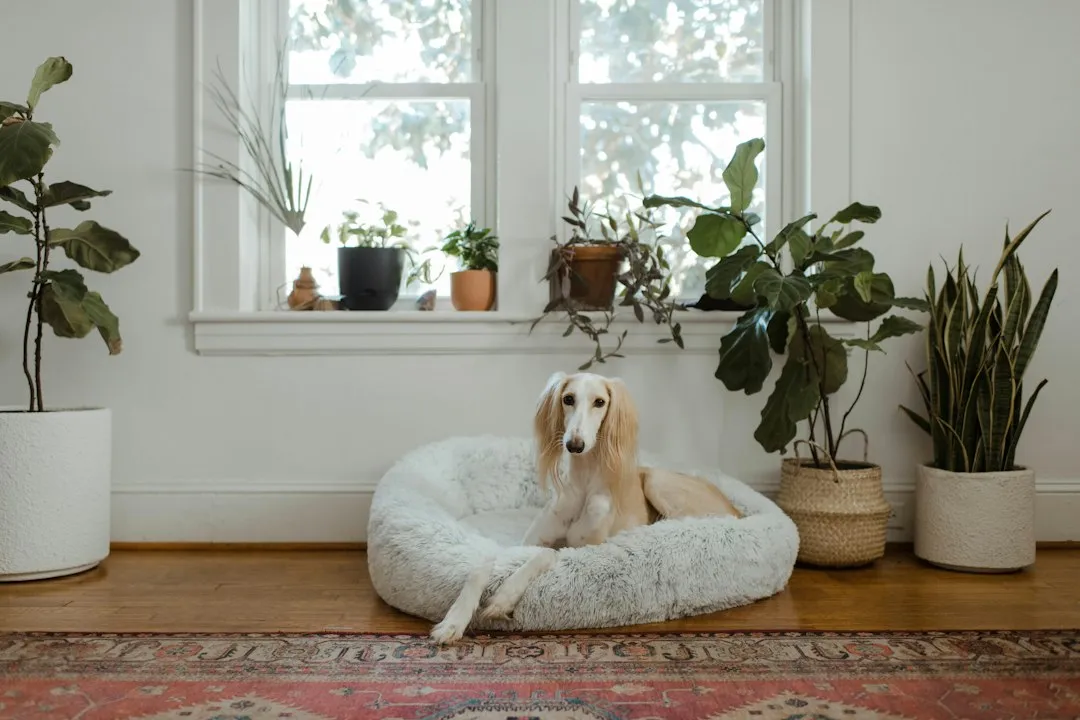
Families often move the bed away from tile and drafts. A sunny corner or a spot away from a drafty door is the usual choice, with the bed kept low so it’s easy to get in and out.
Some go further with heat. Temperature therapy can offer simple at-home relief for dogs with arthritis. But that comes with a condition. Get a thorough vet examination before starting any arthritis management strategy.
Quick Compare
- Sunny corner or draft-free spot: Free, passive and low risk, so it’s the usual starting point.
- Extra blanket or duvet layer: Adds insulation from cold floors and doubles as cushioning.
- Heating pad or warm pack: Can soothe sore joints, but only with a barrier layer, short sessions and your vet’s go-ahead.
Heat needs caution because older skin and slower reactions raise the risk of overheating or burns. Use a barrier layer, keep sessions short and follow your vet’s guidance.
The warm bed is only part of care, and the most important change is the one nobody sees…
#1 – Someone Starts Keeping Notes
🔥 Would you like to save this?
We'll email this post to you, so you can come back to it later!
The most powerful change isn’t a product. It’s attention.
In many households one person becomes the observer. A simple way to do it is to jot down daily movement so you can spot improvements or setbacks. A phone note works as well as a notebook. The aim is to catch slow changes that are easy to miss day to day.
Some signs are worth a call. Your dog is falling or slipping despite current measures, seems more confused at night, or avoids areas they used to enjoy. A dog who stops going to a favorite spot may be telling you something that nobody has said out loud.
Home changes have limits. They shouldn’t replace veterinary care. They buy comfort and safety, and the vet addresses the cause.
Here’s my take: old-dog care is mostly environmental design. A runner, a lamp, a gate and a bowl in the right place do more daily good than most gadgets. Families who make these changes without discussion aren’t being careless. They’re paying attention in the most honest way they know.
But silence has a cost, because quiet fixes can hide a dog’s decline from the people responsible for treating it. Make the changes, then write them down and show your vet. The home can protect an aging dog, but it can’t diagnose one.
Which change in your house came first, and did anyone notice why?

From exploring the marine wonders in the Azores and witnessing the vast savannas of Kenya, to delving deep into the rich biodiversity of South Africa and traversing iconic landscapes in Australia and the US like Yellowstone, Chris's experiences are vast.
With a penchant for diving alongside sharks, the ocean holds a special place in his heart.
Through his academic insights, he champions wildlife conservation, striving with 'Animals Around The Globe' to cultivate a profound connection between humans and animals, enhancing our mutual appreciation.
Connect with him at Feedback@animalsaroundtheglobe.com.
- 15 Wild Animals You Might Spot in U.S. National Parks - November 5, 2026
- Top 10 Animals and Wildlife in Hawaii - November 4, 2026
- Top 10 Animal Encounters in Europe - November 3, 2026