


The bald eagle stands as America’s national bird and a powerful symbol of freedom and strength. These majestic raptors have captured the imagination of Americans since 1782 when they were chosen to represent the newly formed United States. Despite their iconic status, many Americans are unaware of the fascinating biology, remarkable recovery story, and unique characteristics of these impressive birds. From their enormous nests to their surprising diet and near-extinction journey, bald eagles represent not just patriotic symbolism but an extraordinary conservation success story. Let’s explore sixteen essential facts about bald eagles that showcase why these birds continue to inspire awe and represent the spirit of America.
16. Not Actually Bald

Despite their name, bald eagles aren’t bald at all. The name derives from the Old English word “balde,” meaning white, referring to their distinctive white head feathers that contrast sharply with their dark brown body. This white plumage doesn’t develop until they reach about four to five years of age. Before this maturation, juvenile bald eagles are completely brown with mottled white patterns under their wings and tail, making them often confused with golden eagles. This dramatic transformation is one of nature’s most impressive makeovers, signaling the bird’s transition to adulthood and breeding capability.
15. Impressive Wingspan

Bald eagles possess truly impressive dimensions, with wingspans ranging from six to seven and a half feet (1.8 to 2.3 meters). This extraordinary wingspan allows them to soar at altitudes up to 10,000 feet, riding thermal currents with minimal energy expenditure. Female bald eagles are noticeably larger than males—a characteristic known as reverse sexual dimorphism common among raptors. A typical female weighs 10-14 pounds while males average 8-9 pounds. This size difference is believed to help with division of nesting duties, where the smaller, more agile male can hunt while the larger female provides greater protection for the nest and young.
14. Record-Breaking Nests

Bald eagles are master architects, constructing some of the largest nests of any bird species in North America. Their nests, called eyries, average 4 to 5 feet in diameter and 2 to 4 feet deep. However, since eagle pairs return to the same nest year after year, adding new materials each breeding season, these structures can grow to extraordinary proportions. The largest documented bald eagle nest was discovered in St. Petersburg, Florida, measuring 9.5 feet in diameter and 20 feet deep, weighing over two tons. This architectural marvel had been used and continuously built upon for nearly 30 years. Some nests become so heavy that they’ve been known to break the trees supporting them.
13. Remarkable Vision

Bald eagles possess some of the sharpest vision in the animal kingdom, estimated to be four to eight times more powerful than human eyesight. Their eyes are specially adapted for hunting, with a high concentration of light-sensitive cells that allow them to spot a rabbit from nearly two miles away. Eagles also have two foveae (areas of very acute vision) in each eye, compared to humans’ single fovea, enabling them to see both forward and to the side simultaneously. Additionally, they perceive ultraviolet light, helping them track urine trails of prey. This exceptional vision is protected by a transparent nictitating membrane—a third eyelid that sweeps across the eye for protection while maintaining visibility, particularly useful when diving toward water at speeds up to 100 mph.
12. Lifelong Partners
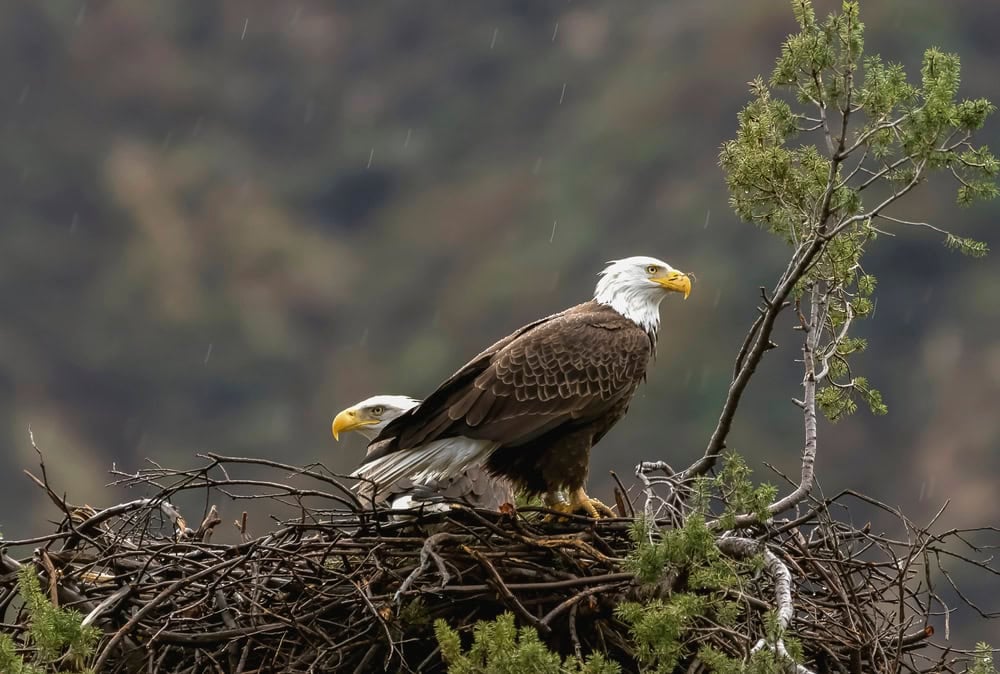
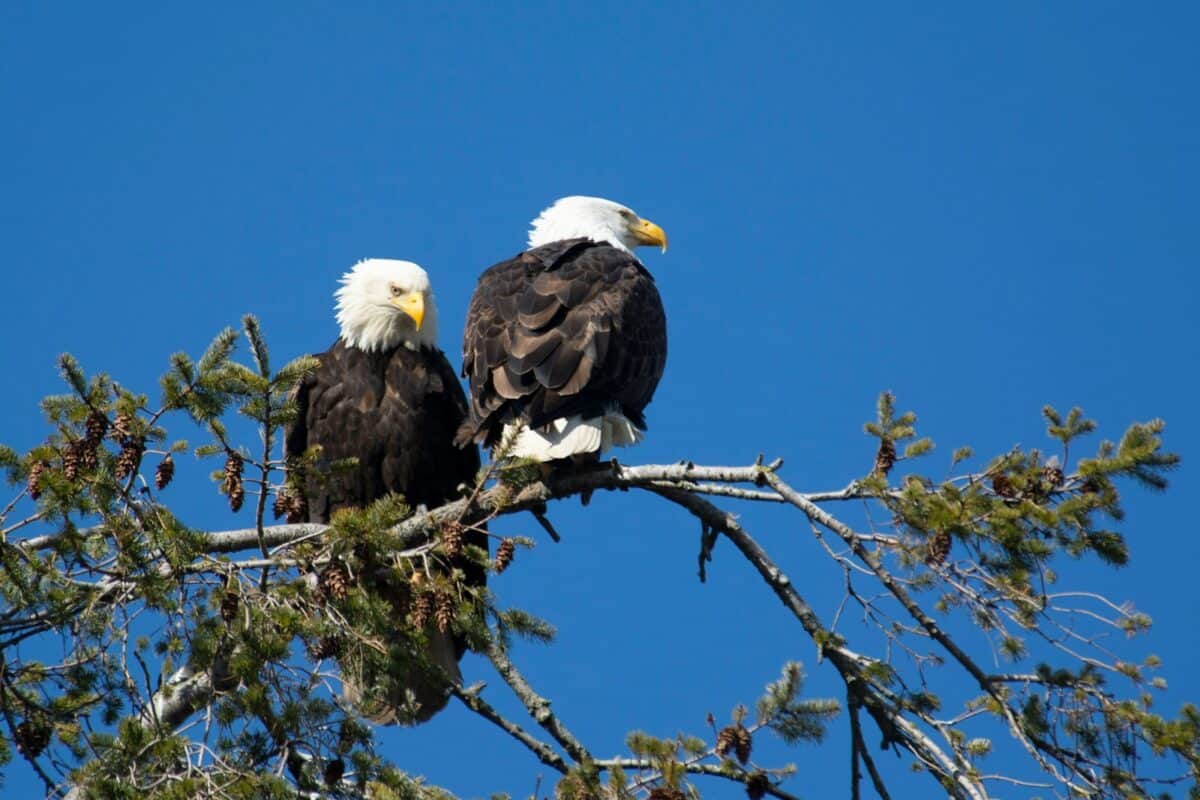
Bald eagles are among the relatively few bird species that mate for life, forming bonds that typically last until one partner dies. Their courtship displays are spectacular, involving acrobatic flight maneuvers where eagles lock talons in mid-air and spin toward the ground, separating at the last moment. This dangerous ritual, called cartwheeling, tests the strength and coordination of potential mates. Once paired, a couple will return to the same nesting territory year after year, working together to raise their young. Their cooperative parenting includes sharing incubation duties for the 35-day period and taking turns hunting to feed their eaglets. These strong partnerships contribute significantly to their reproductive success, with some documented eagle pairs remaining together for over 20 years.
11. Varied Diet Beyond Fish

While commonly perceived as primarily fish eaters, bald eagles are actually opportunistic feeders with a surprisingly diverse diet. Fish do comprise about 60-90% of their food intake where available, but these adaptable predators readily consume waterfowl, small mammals, reptiles, and even carrion. They’re known to steal food from other birds like ospreys and herons—a behavior called kleptoparasitism. During winter when water bodies freeze, eagles significantly alter their diet to target available prey. In some regions, they’ve been documented feeding heavily on road-killed animals or gathering by the hundreds at landfills. Their feeding flexibility has been crucial to their survival and recovery, allowing them to adapt to changing environmental conditions and human-altered landscapes.
10. Near Extinction and Remarkable Recovery

The bald eagle’s recovery represents one of America’s greatest conservation success stories. In the mid-20th century, these birds faced near extinction due to habitat destruction, hunting, and most significantly, DDT poisoning. This pesticide accumulated in aquatic food chains, causing eagles to lay eggs with shells so thin they broke during incubation. By 1963, only 417 nesting pairs remained in the lower 48 states. Following the 1972 ban on DDT and protection under the Endangered Species Act, bald eagle populations began a remarkable comeback. By 2007, they had recovered sufficiently to be removed from the endangered species list, with populations now estimated at more than 316,700 birds in the United States, including over 71,400 nesting pairs. This dramatic recovery demonstrates the effectiveness of conservation legislation and environmental protection measures.
9. Powerful Grip

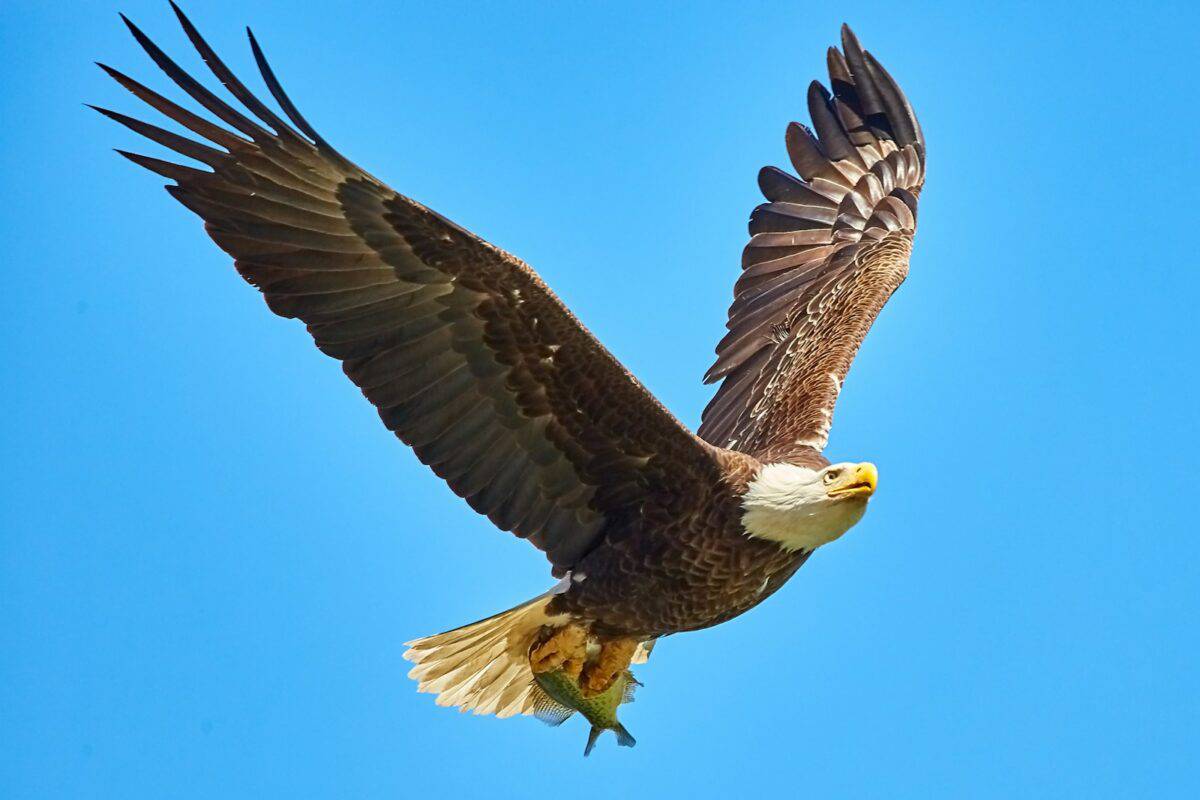
The bald eagle’s talons are formidable weapons, capable of exerting pressure of about 400 pounds per square inch—more than enough to crush the bones of their prey. For comparison, the average human hand grip strength is around 20-25 pounds per square inch. Each foot has four highly specialized talons with razor-sharp points that curve inward, perfect for capturing and securing struggling prey. Their back talon (hallux) is particularly long and powerful, used to pierce vital organs of prey animals. The scales on their feet and lower legs are equipped with small spikes called spicules that help grip slippery fish. This exceptional gripping power allows eagles to carry prey weighing up to 4 pounds during flight, though they’ve been observed swimming to shore with fish too heavy to lift completely out of water.
8. The Iconic Screech Isn’t Real

One of the most surprising facts about bald eagles involves their vocalization. The fierce, high-pitched screech commonly associated with bald eagles in movies and television is actually the call of a red-tailed hawk, dubbed over eagle images for dramatic effect. In reality, bald eagles produce a much less imposing sound—a series of weak chirping whistles and high-pitched chattering calls that might seem underwhelming compared to their majestic appearance. Adult eagles communicate with about 15 different calls, including specific vocalizations for courtship, warning, and parent-offspring communication. Their somewhat modest vocal abilities are compensated by elaborate visual displays using their impressive wingspan, head movements, and body posturing to communicate territorial boundaries, courtship interest, and threats to potential intruders.
7. Spiritual Significance to Native Americans
Long before becoming America’s national symbol, bald eagles held profound spiritual significance for numerous Native American tribes. Many indigenous cultures revere eagles as messengers between humans and the divine, believing their feathers carry prayers to the heavens. Eagle feathers remain among the most sacred objects in many tribal traditions, used in ceremonial regalia, healing rituals, and as honors bestowed for acts of exceptional bravery or wisdom. The Bald and Golden Eagle Protection Act recognizes this cultural importance by making provisions for Native Americans to possess eagle feathers for religious purposes through a federal repository system. Tribes including the Lakota, Hopi, Navajo, and many others incorporate eagle symbolism into their creation stories, viewing these birds as embodiments of courage, strength, and spiritual connection to the natural world.
6. Swimming Ability

A lesser-known talent of bald eagles is their remarkable swimming ability. When hunting, eagles sometimes capture fish too heavy to lift out of water. Rather than releasing their prey, they employ a powerful butterfly-like stroke using their wings to propel themselves to shore, sometimes swimming distances of up to a quarter mile while maintaining their grip on their catch. This adaptation allows them to pursue and capture larger prey than they could otherwise transport through air. Young eagles have even been documented swimming before they’ve mastered flight. However, this ability isn’t without risk—their feathers can become waterlogged, making it difficult to fly afterward and potentially leading to drowning if they become exhausted far from shore. Observers have occasionally witnessed eagles resting on water like ducks, though they cannot take off directly from a water surface as waterfowl can.
5. Impressive Lifespan

Bald eagles are remarkably long-lived birds, with wild individuals regularly reaching 20-30 years of age. The oldest known wild bald eagle was documented at 38 years old, identified through its leg band in New York in 2015. In captivity, where they’re protected from predators, hunting hazards, and environmental challenges, they can live even longer, with some individuals surviving into their 50s. This extended lifespan is unusual for predatory birds and contributes to their reproductive success. A healthy eagle pair might produce more than 20 offspring throughout their breeding years, typically raising 1-3 eaglets annually. Their longevity also means they’ve evolved exceptional immune systems and healing capabilities, allowing them to recover from injuries that would be fatal to many other bird species.
4. Unique Congressional Protection
Bald eagles enjoy exceptional legal protection in the United States through multiple federal laws. The Bald and Golden Eagle Protection Act of 1940 makes it illegal to possess, sell, hunt, or even disturb these birds, their nests, or their eggs without a permit. Penalties can include fines up to $250,000 and imprisonment for up to two years. Even possessing a single bald eagle feather is illegal unless you’re a member of a federally recognized Native American tribe using it for religious purposes. The Migratory Bird Treaty Act and the Lacey Act provide additional protections. These stringent measures reflect both the cultural importance of the species and the recognition of how close America came to losing its national bird forever. Development projects near eagle nests often require special permits and monitoring to ensure these protected birds remain undisturbed.
3. Alaska’s Eagle Capital

While bald eagles have recovered throughout the United States, Alaska remains their undisputed stronghold, home to approximately 30,000 birds—roughly half the world’s bald eagle population. The Chilkat River near Haines, Alaska, hosts the world’s largest congregation of bald eagles, with over 3,000 individuals gathering during the late fall salmon run. This phenomenon occurs because portions of the river remain ice-free when other water bodies freeze, creating a perfect hunting ground. The spectacle has earned the area designation as the Alaska Chilkat Bald Eagle Preserve, covering 48,000 acres of critical habitat. Photographers and wildlife enthusiasts from around the world travel to witness this remarkable concentration of eagles, sometimes seeing dozens perched in a single tree. The abundance of eagles in Alaska is so great that they’re sometimes considered nuisances in some fishing communities where they scavenge from boats and processing facilities.
2. Comeback in the Lower 48 States

The bald eagle’s recovery in the contiguous United States represents varying success levels across regions. Some of the most dramatic comebacks have occurred in states like Minnesota, Wisconsin, and Florida, which now support over 1,000 nesting pairs each. Pennsylvania has seen its eagle population grow from just 3 nesting pairs in 1983 to more than 300 today. Even heavily urbanized regions have witnessed returns, with eagles now nesting in cities like Philadelphia, Pittsburgh, and Washington D.C. This urban adaptation demonstrates the species’ resilience when protected from persecution. Some areas have become so successful that territory competition among eagles has intensified, leading to more frequent territorial disputes. Minnesota’s eagle resurgence was so successful that the state provided nestlings to reintroduction programs in other states during recovery efforts, helping spread genetic diversity throughout recovering populations.
1. America’s Conservation Legacy

The bald eagle’s journey from the brink of extinction to thriving populations represents an enduring conservation triumph that transcends partisan politics. Efforts to save the species spanned multiple presidential administrations from both major political parties, demonstrating rare bipartisan support for environmental protection. Their recovery story has inspired similar conservation efforts worldwide and serves as a powerful reminder of both human impact on wildlife and our capacity to reverse damage through concerted action. The species continues to face challenges including lead poisoning from ammunition in scavenged carcasses, habitat loss, and collisions with power lines and wind turbines. Recent studies have documented concerning levels of flame retardants, pesticides, and other pollutants in some eagle populations, indicating ongoing vigilance is necessary. Nevertheless, the bald eagle’s remarkable resilience offers hope that with proper protection, endangered species can recover and once again thrive alongside human civilization.
Conclusion

The bald eagle’s journey from national symbol to endangered species and back to abundance embodies America’s complex relationship with its natural heritage. These sixteen facts illustrate not just the biological marvel that is the bald eagle, but also how deeply intertwined these birds are with American identity, culture, and conservation history. Their recovery reminds us that environmental protection efforts can succeed even against seemingly insurmountable odds when science, policy, and public support align toward a common goal. As Americans continue to cherish these magnificent birds soaring above landscapes from Alaska to Florida, the bald eagle stands as a living monument to what we almost lost and what we can preserve for future generations with proper stewardship and respect for the natural world.

As a little kid, I fell in love with nature, wildlife, and animals. Living in the USA, South Africa, Italy, China and Germany gave me the opportunity to discover the world's Wildlife. My favorite animals are Mountain Gorillas, Siberian Tigers, and Great White Sharks.
I'm a certified PADI Open Water Diver, went to Everest Base Camp and Trekked Gorillas in Uganda. I hold a Master of Science in Economics and Finance.
Please send any feedback to feedback@animalsaroundtheglobe.com
- Why Some Animals Can Regenerate Their Entire Bodies - July 11, 2026
- 10 Behaviors That Keep Eagles Healthy And 3 That Shorten Lifespan - July 11, 2026
- 10 Myths People Believe About Snakes And 3 That Are True - July 11, 2026