


As America’s urban landscapes continue to evolve, a fascinating phenomenon is unfolding across the country’s metropolitan areas. Wildlife, once primarily restricted to rural and wilderness settings, is increasingly finding niches within our concrete jungles. Far from being barren ecological deserts, U.S. cities have become surprising havens for numerous animal species that have demonstrated remarkable adaptability to human-dominated environments. These urban adapters navigate the challenges of city life with impressive ingenuity, taking advantage of abundant food sources, reduced predator pressure, and even the urban heat island effect. From mammals and birds to reptiles and insects, these 16 creatures have not merely survived but are actively thriving amidst skyscrapers, traffic, and millions of human neighbors.
Coyotes The Ultimate Urban Adapters

Coyotes have proven themselves to be among the most successful urban colonizers in America. Once confined to the western plains and deserts, these crafty canids now inhabit virtually every major U.S. metropolitan area, including Chicago, Los Angeles, and even New York City. Research from Cook County, Illinois, estimates that approximately 4,000 coyotes live within the Chicago metropolitan region alone. Urban coyotes have adjusted their behavior to become more nocturnal, helping them avoid human contact while taking advantage of abundant food resources ranging from rodents to discarded food waste. They’ve even been documented using traffic patterns to navigate cities safely, waiting for lights to change before crossing busy intersections. Their remarkable adaptability represents one of the most successful wildlife expansions in recent history, demonstrating how even medium-sized predators can carve out territories in densely populated urban areas.
Peregrine Falcons From Endangered to Urban Success Story

Once driven to the brink of extinction by DDT pesticides in the mid-20th century, peregrine falcons have staged a remarkable comeback with cities playing a crucial role in their recovery. These magnificent raptors, capable of diving at speeds exceeding 200 mph, have found that urban skyscrapers remarkably mimic the cliff faces they traditionally nest on. Major cities like New York, Chicago, and San Francisco now host thriving peregrine populations. The abundance of pigeons and other urban birds provides a reliable food source, while tall buildings offer ideal nesting sites safe from many natural predators. Conservation initiatives, including nest boxes installed on skyscrapers and bridges, have supported this recovery. According to the American Bird Conservancy, more than 1,650 breeding pairs now exist in North America, up from just 324 pairs in 1975. Several cities even maintain webcams focused on urban peregrine nests, allowing the public to witness these magnificent birds raising their young against spectacular city backdrops.
Raccoons The Intelligent Urban Opportunists

Perhaps no creature has embraced urban living with more enthusiasm than the raccoon. These masked mammals have thrived in cities across the United States, with urban population densities often exceeding those found in natural habitats. In some urban areas, raccoon populations reach up to 20 times the density found in rural settings, with Washington D.C. and Chicago hosting particularly abundant populations. Their success stems from several advantages: incredible manual dexterity (their paws function almost like human hands), remarkable problem-solving intelligence, and an omnivorous diet that allows them to exploit everything from garbage bins to pet food left outdoors. Urban raccoons have even demonstrated evolutionary adaptations to city life, with some research suggesting they’ve developed enhanced cognitive abilities specifically for navigating human-created challenges. A University of Wyoming study found that urban raccoons outperformed their rural counterparts when solving complex mechanical puzzles, showcasing their remarkable behavioral plasticity and learning capabilities.
Red-Tailed Hawks Raptor Royalty in Urban Skies

Red-tailed hawks have established themselves as the predominant large raptor in many American cities, with famous urban residents like Pale Male in New York City’s Central Park capturing public attention for decades. These impressive birds of prey, with wingspans reaching four feet, have adapted remarkably well to urban environments where tall buildings and mature park trees provide excellent nesting and perching sites. Cities offer abundant prey, particularly pigeons, squirrels, and rats, supporting healthy urban hawk populations. Research indicates that urban red-tailed hawks often have smaller territories than their rural counterparts, suggesting the abundance of prey allows them to thrive in relatively compact urban areas. The Cornell Lab of Ornithology estimates that red-tailed hawk populations have increased by approximately 1.5% annually across North America, with urban areas contributing significantly to this growth. Perhaps most remarkably, these raptors have adjusted their hunting techniques for urban settings, using buildings to conceal their approach and traffic patterns to time their hunts.
Eastern Gray Squirrels Masters of Urban Adaptation
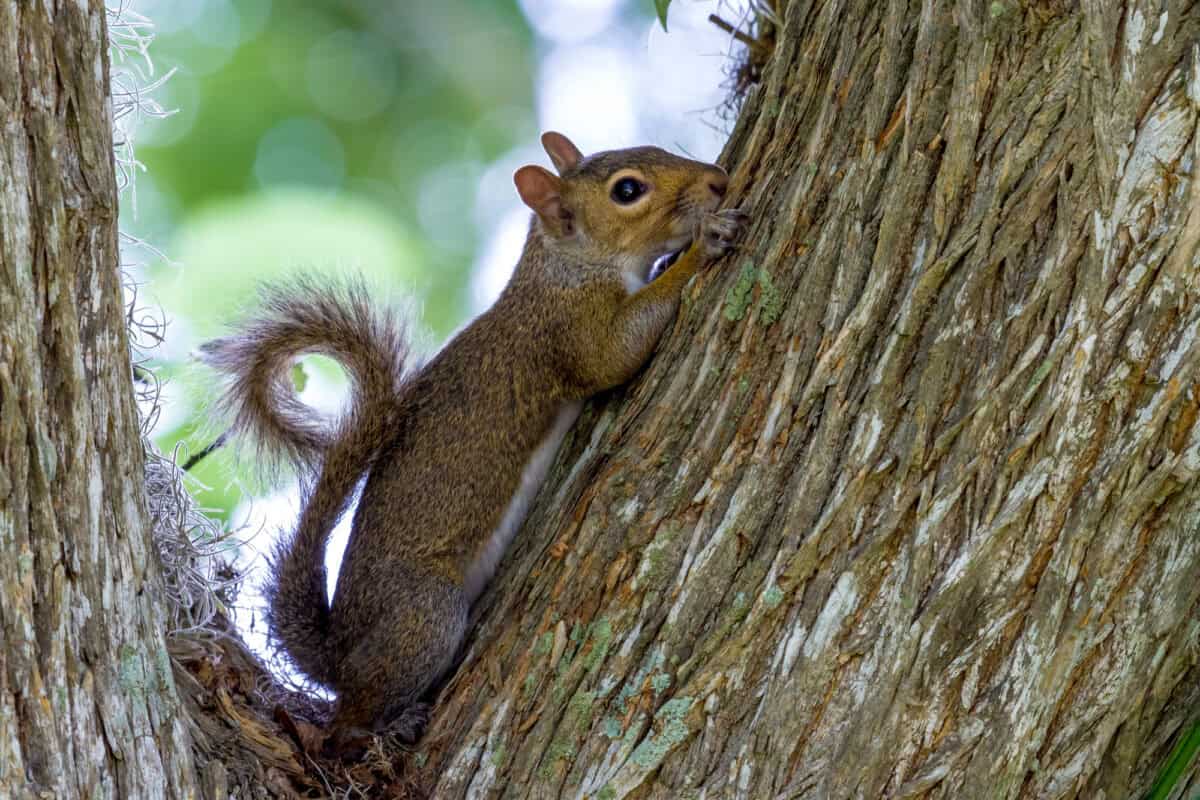
Eastern gray squirrels have become so ubiquitous in American cities that many urbanites barely register their presence anymore. These highly adaptable rodents thrive in urban parks, residential neighborhoods, and even downtown areas, with population densities in some city parks reaching 10 squirrels per acre—far higher than in natural forest habitats. Their success stems from several adaptations: a remarkable spatial memory that allows them to retrieve thousands of buried nuts, the ability to exploit human food sources, and behavioral flexibility that enables them to navigate complex urban environments. Research from Fordham University has documented that urban squirrels have developed different alarm calls for human and non-human threats, suggesting sophisticated adaptation to human coexistence. They’ve also adjusted their nesting behaviors, increasingly building leaf nests (dreys) on buildings and in artificial structures rather than just in trees. Perhaps most impressively, urban squirrels have demonstrated cognitive adaptations, with studies showing they excel at solving complex puzzles to access food—a skill particularly valuable in unpredictable urban environments.
Red Foxes The Suburban Specialists

Red foxes have emerged as particularly successful urban adapters, with populations established in metropolitan areas across the United States from Boston to Los Angeles. Urban foxes have shifted to more nocturnal habits to avoid human activity while taking advantage of abundant food resources ranging from rodents to discarded human food. Unlike their rural counterparts, which typically maintain territories of 1-2 square miles, urban foxes can thrive in territories as small as 25 acres, demonstrating their remarkable adaptability to compressed urban spaces. Research from the University of Wisconsin-Madison found that urban foxes have altered their diets significantly, with human food waste comprising up to 37% of their diet compared to less than 5% for rural foxes. They’ve also developed behavioral adaptations for city life, including decreased flight distances from humans and the ability to navigate complex road systems. Perhaps most interestingly, urban foxes have established a unique ecological niche by hunting at night in yards, parks, and golf courses, often controlling rodent populations and providing natural pest management services in residential areas.
Opossums Nature’s Urban Sanitizers

Virginia opossums have quietly become one of the most beneficial urban wildlife species in American cities, though they’re often misunderstood and underappreciated. These marsupials—North America’s only native pouched mammals—thrive in urban environments from Miami to Seattle, providing valuable ecosystem services. Opossums consume vast quantities of potential disease vectors, with a single opossum capable of eating up to 5,000 ticks per season, significantly reducing Lyme disease risk in areas where they live. They also consume carrion, rotting fruits, and various pests, effectively functioning as natural sanitation workers. Urban areas provide opossums with abundant food sources, reduced predator pressure, and multiple denning opportunities in structures like decks, sheds, and drainage systems. Research from the University of California found that urban opossum populations have increased by approximately 23% in the last decade across metropolitan areas nationwide. Additionally, their naturally high body temperature makes them poor hosts for rabies, contrary to common misconceptions, making them safer urban neighbors than many people realize.
Monk Parakeets Colorful Urban Colonizers
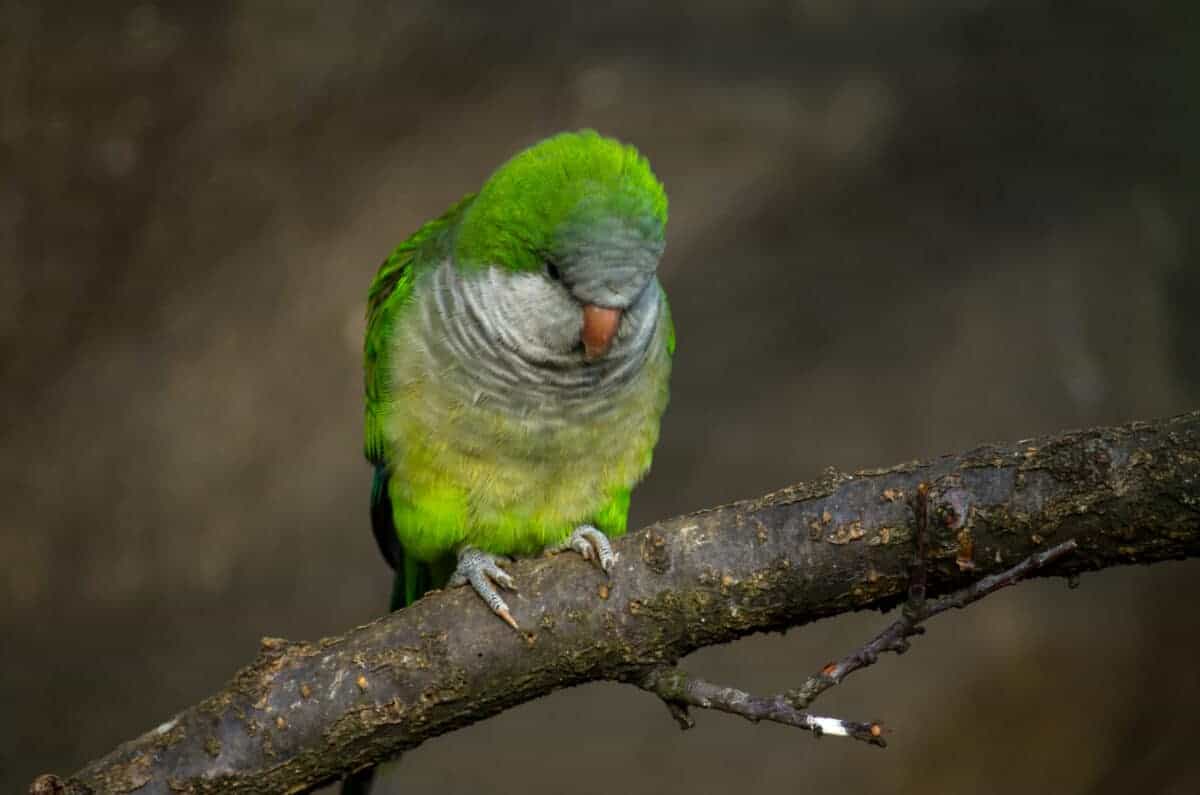
Monk parakeets represent one of the more colorful and unexpected urban wildlife success stories in American cities. Native to South America, these bright green parakeets established feral populations in numerous U.S. cities following escapes or releases from the exotic pet trade beginning in the 1960s. Today, substantial colonies thrive in cities including Chicago, Miami, Houston, and New York, with the largest populations in Florida and Texas. Unlike most parrot species, monk parakeets build elaborate stick nests rather than nesting in cavities, often constructing massive communal structures on power infrastructure, cell towers, and stadium lights. These adaptable birds have proven remarkably cold-hardy, surviving northern winters that would kill most tropical species. Urban environments offer them abundant food sources, including bird feeders, ornamental fruits, and various seeds. The National Audubon Society estimates over 100,000 monk parakeets now live in U.S. cities, with some urban colonies growing to several hundred individuals. Their distinctive chattering calls have become part of the soundscape in many neighborhoods, adding a touch of tropical flair to the urban environment.
Coypu/Nutria Invasive Urban Engineers
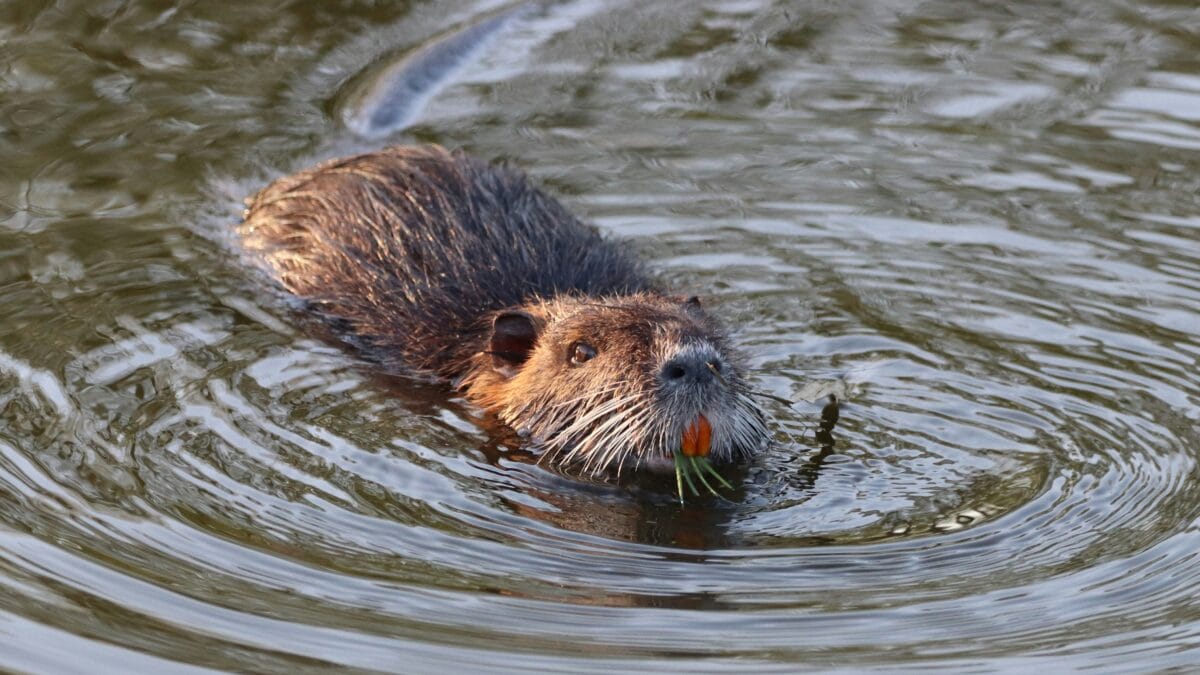
Coypu (commonly called nutria) have established themselves in urban wetland areas, canals, and waterways across several U.S. cities, particularly in coastal regions. These large, semi-aquatic rodents native to South America were introduced to the United States for fur farming in the early 20th century, but escapes and releases led to established wild populations. In cities like New Orleans, Houston, and Portland, nutria have adapted to urban wetlands, drainage canals, and park ponds, where they can reach densities of up to 20 animals per acre in optimal habitat. Their distinctive orange teeth and rat-like tails make them unmistakable swimming through urban waterways. While classified as invasive and often causing significant ecological damage through their feeding habits, nutria have nonetheless demonstrated remarkable urban adaptability. They readily consume ornamental plantings along urban waterfronts and have adjusted their behavior to be more nocturnal in heavily trafficked areas. A study from Louisiana State University found that urban nutria populations often show less fear of humans than their rural counterparts, sometimes accepting food directly from well-meaning but misguided city residents.
Northern Mockingbirds Urban Vocal Virtuosos
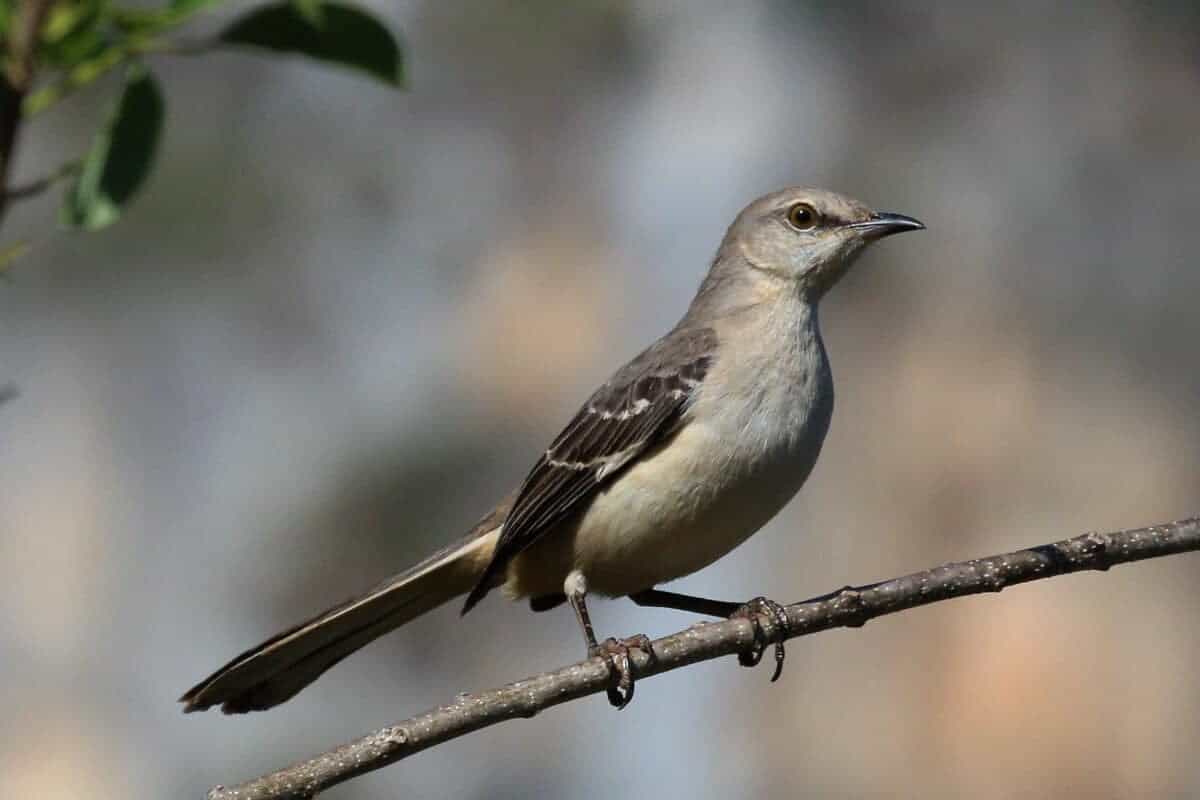
Northern mockingbirds have embraced urban environments with remarkable success, establishing themselves as one of the most common and vocally conspicuous birds in cities across the United States. These talented mimics, capable of learning and reproducing hundreds of different sounds, have adapted to use urban features to their advantage. Research from Tulane University found that urban mockingbird populations have increased by approximately 28% in major metropolitan areas over the past three decades. These adaptable birds nest readily in ornamental trees and shrubs in residential neighborhoods, office parks, and city centers. Urban mockingbirds have even incorporated city sounds into their vocal repertoires, with individuals in different cities mimicking distinctive urban noises from car alarms to construction equipment. Their diet has also adjusted to urban environments, supplementing natural foods like insects and berries with human handouts in parks and bird feeders in residential areas. Perhaps most interestingly, studies from the University of Florida have documented that urban mockingbirds can recognize individual humans who have previously approached their nests, demonstrating a sophisticated level of adaptation to life among people.
Bald Eagles America’s Symbol Returns to Cities

In one of conservation’s most remarkable success stories, bald eagles have not only recovered from near-extinction but have begun establishing territories in major U.S. metropolitan areas. Once reduced to just 417 breeding pairs in the continental United States by 1963 due to DDT poisoning and habitat loss, today more than 9,700 breeding pairs thrive nationwide—including within city limits. Urban eagles have established territories in cities including Washington D.C., Philadelphia, Pittsburgh, Portland, and Seattle, often nesting in mature trees along urban waterways. This urban colonization represents a relatively recent phenomenon, with most city eagle populations establishing in the past 15-20 years. The abundance of fish in urban rivers and lakes, many of which have been cleaned up under the Clean Water Act, provides ideal hunting opportunities. Urban eagles have adjusted their behavior to tolerate higher levels of human activity and noise than their rural counterparts. The eagles nesting along the Monongahela River in Pittsburgh have become particularly famous, with their nest visible from the city’s busy Three Rivers Heritage Trail, demonstrating how even America’s national bird has found a place in the urban landscape.
Brazilian Free-Tailed Bats Urban Aerial Insect Control

Brazilian free-tailed bats have established massive colonies in several American cities, particularly in the South and Southwest, where they provide invaluable ecosystem services through insect control. Perhaps the most famous urban bat colony resides under the Congress Avenue Bridge in downtown Austin, Texas, where approximately 1.5 million bats emerge nightly during summer months, consuming up to 20,000 pounds of insects in a single night. This spectacular emergence has become a major tourist attraction, generating an estimated $10 million annually for the local economy. Similar urban colonies have established in Houston, San Antonio, Sacramento, and other cities, often inhabiting bridges, parking garages, and building crevices. Urban environments offer these bats abundant insect prey due to artificial lighting attracting insects, while structures like bridges provide ideal roosting habitat that mimics the cave systems they traditionally use. Research from Bat Conservation International indicates that a single Brazilian free-tailed bat can consume up to its body weight in insects nightly, making these urban colonies enormously beneficial for natural pest control. Cities have increasingly recognized this value, with many now actively protecting urban bat colonies and even designing new bridges with bat habitat incorporated into the plans.
White-Tailed Deer From Forest Edge to Urban Parks

White-tailed deer have successfully colonized urban and suburban areas across the United States, often reaching higher population densities in metropolitan areas than in surrounding rural regions. From Boston to Phoenix, urban deer populations have exploded in recent decades, with some urban parks hosting densities exceeding 100 deer per square mile—far above the 15-30 deer per square mile considered ecologically sustainable in natural habitats. These adaptable ungulates thrive in the urban-suburban mosaic, taking advantage of abundant ornamental plantings, garden vegetation, and the absence of natural predators and hunting pressure in developed areas. Research from Cornell University found that urban deer have altered their behavior significantly, becoming more nocturnal and developing higher tolerance for human activity and infrastructure. They’ve also adjusted their movement patterns, using greenways, utility corridors, and railroad rights-of-way as travel routes through developed areas. While their success creates management challenges, including vehicle collisions, landscape damage, and ecological impacts, it also demonstrates the remarkable adaptability of a species once considered strictly dependent on large forest tracts.
Eastern Cottontail Rabbits Suburban Success Stories
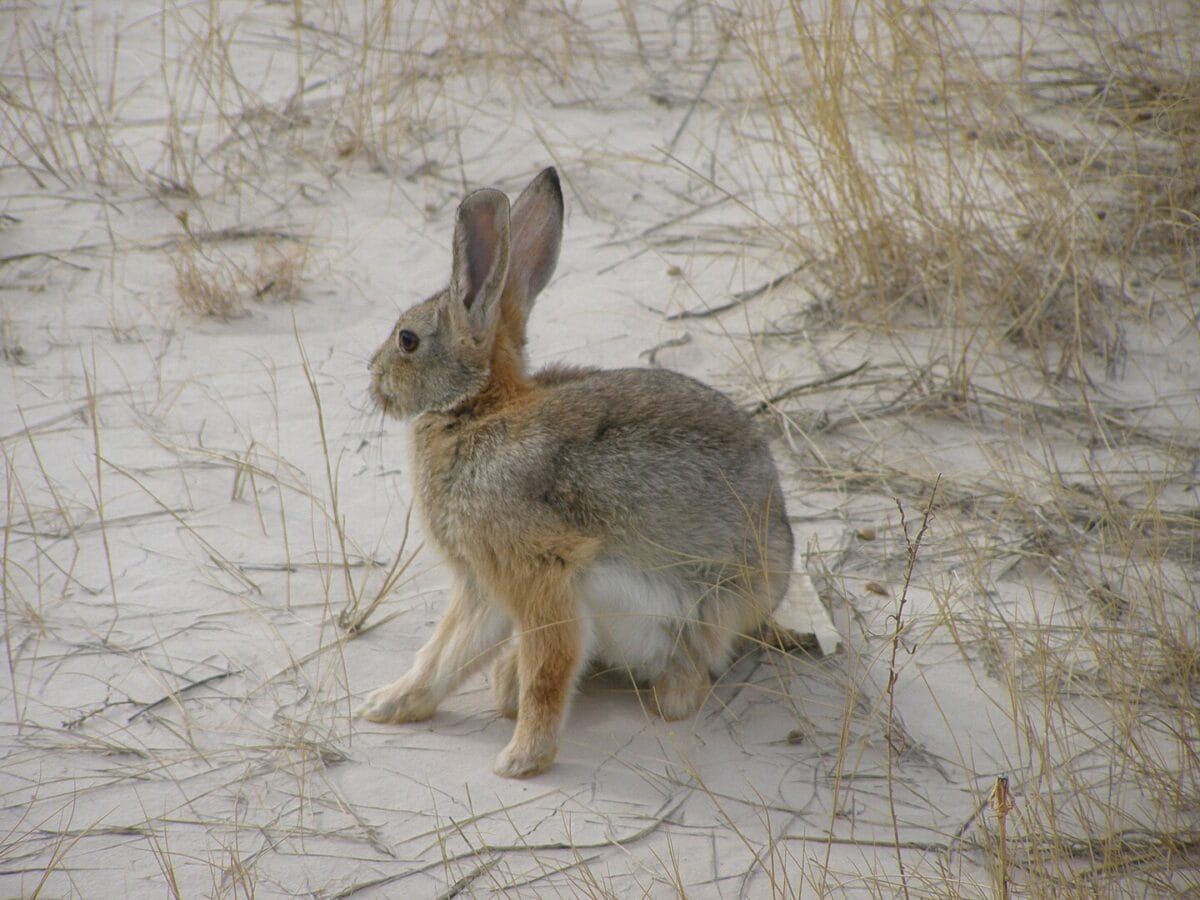
Eastern cottontail rabbits have flourished in urban and suburban environments across the United States, displaying remarkable adaptability to human-dominated landscapes. These small mammals have established populations in city parks, residential neighborhoods, office complexes, and even highway medians in metropolitan areas from Boston to San Diego. Urban environments offer cottontails several advantages: abundant food sources from landscaped areas, reduced predator pressure (particularly from coyotes and foxes in areas with high human activity), and multiple hiding spots in ornamental vegetation. Research from the Urban Wildlife Institute in Chicago found that urban cottontail populations can reach densities up to three times higher than in rural habitats, with some city parks supporting more than 15 rabbits per acre. Urban cottontails have adjusted their behavior to be more crepuscular (active at dawn and dusk) than their rural counterparts, helping them avoid peak human activity. They’ve also developed shorter flight distances from humans, often allowing much closer approach before fleeing than rural rabbits would tolerate. Their ability to reproduce quickly—with females capable of producing up to four litters annually—has enabled them to rapidly establish and maintain urban populations once they gain a foothold.
Cooper’s Hawks From Forest Dweller to Backyard Hunter

Cooper’s hawks have undergone one of the most dramatic urban transitions of any North American raptor, transforming from secretive forest dwellers to successful city predators in just a few decades. These medium-sized hawks, specialized in hunting birds, have established breeding populations in virtually every major U.S. metropolitan area, with particularly high densities in cities like Tucson, Seattle, and Milwaukee. Research from the University of Wisconsin found that urban Cooper’s hawk populations have increased by approximately 330% since the 1980s, while rural populations grew at a much slower rate. Urban environments offer these hawks abundant prey, particularly rock.
Conclusion:

As this sweeping exploration of America’s urban wildlife reveals, cities are no longer the exclusive domain of humans—they are now dynamic ecosystems where animals not only survive but flourish. From soaring raptors like peregrine falcons and red-tailed hawks to elusive coyotes and industrious raccoons, these species have adapted with remarkable resilience and ingenuity to the challenges and opportunities of urban life. Their presence enriches cityscapes with biodiversity, offers natural pest control, and reconnects urban dwellers with the rhythms of the natural world. At the same time, their success challenges outdated notions of cities as ecological wastelands, highlighting the need for thoughtful coexistence and urban planning that considers both human and non-human residents. Ultimately, these urban adapters are not just surviving in our concrete jungles—they are redefining what it means to be wild in the 21st century.

As a little kid, I fell in love with nature, wildlife, and animals. Living in the USA, South Africa, Italy, China and Germany gave me the opportunity to discover the world's Wildlife. My favorite animals are Mountain Gorillas, Siberian Tigers, and Great White Sharks.
I'm a certified PADI Open Water Diver, went to Everest Base Camp and Trekked Gorillas in Uganda. I hold a Master of Science in Economics and Finance.
Please send any feedback to feedback@animalsaroundtheglobe.com
- 10 Dogs That Love to Cuddle And 2 That Prefer Their Space - July 11, 2026
- 10 Ancient Animals That Still Exist Today - July 11, 2026
- 14 Creatures That Are Older Than Dinosaurs - July 11, 2026