

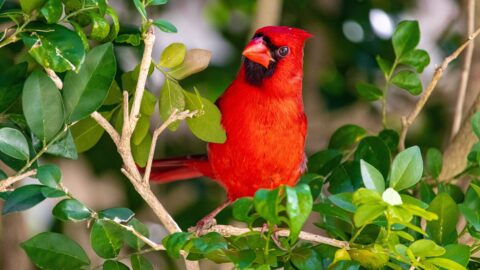
Most people assume cardinals just vanish once the cold sets in, or that they only stick around because of a bag of birdseed from the hardware store. Master gardeners know better. To them, that flash of red against the snow isn’t decoration – it’s data. Every chip, every perch change, every sudden disappearance is a bird quietly reporting on the health of your yard.
Watch closely enough, winter after winter, and you start noticing things that sound almost too specific to be real: the same male showing up at the same shrub at the same hour, a pair going dead silent seconds before a hawk appears, feathers fading in yards that quietly failed them. Here are 17 things cardinals do every winter that seasoned gardeners have learned to read like a second language – and once you see it, you won’t un-see it.
#17 – They Show Up Earlier Than Your Alarm Clock
🔥 Would you like to save this?
We'll email this post to you, so you can come back to it later!
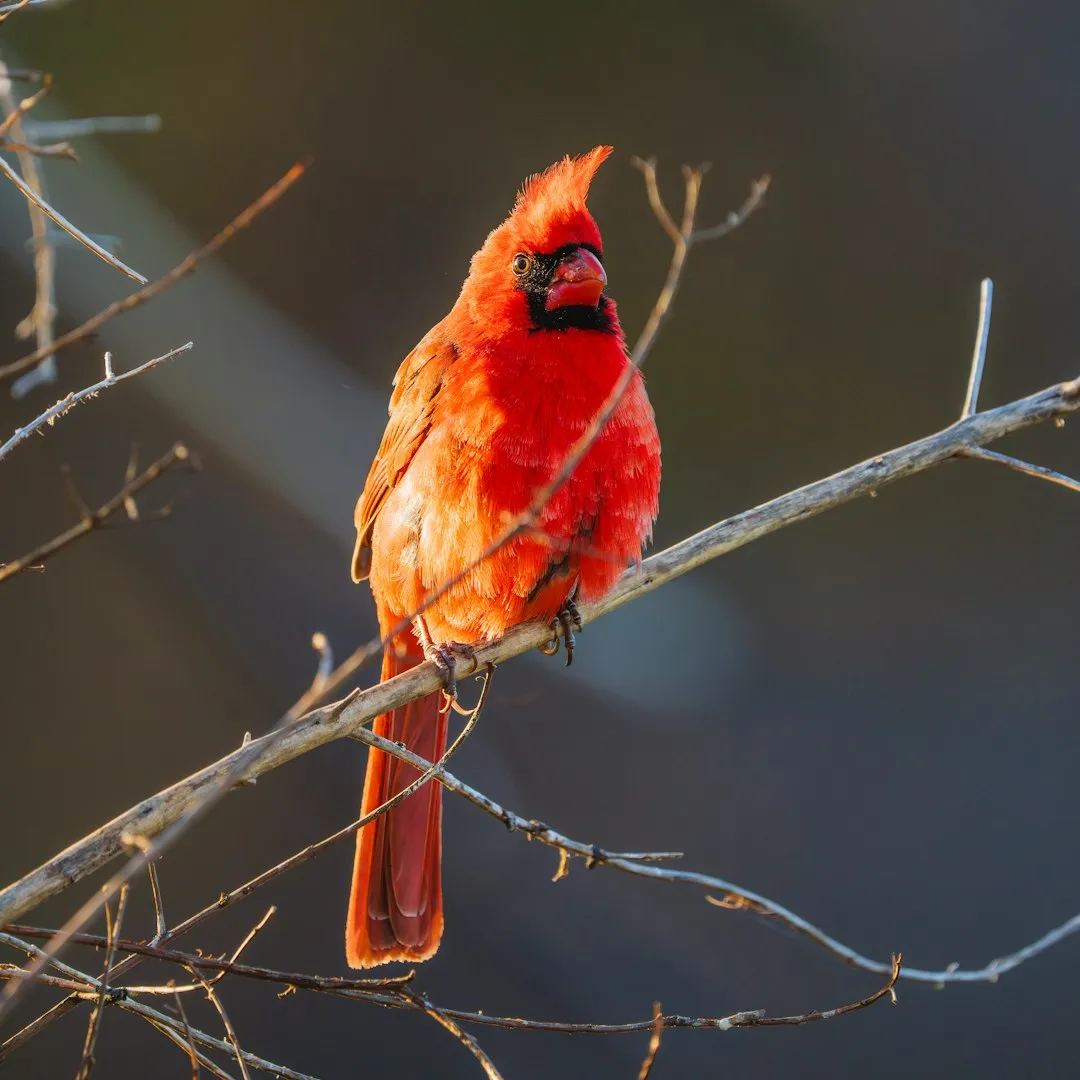
Cardinals don’t sleep in when the temperature drops. If anything, they get more predictable. That pre-dawn “chip” you hear in January isn’t random – gardeners treat it like a daily check-in, because on bitter mornings cardinals are among the first birds moving at first light.
The reason is brutally practical: they need to maximize every minute of feeding time to keep their body heat up through the night ahead. There’s no room for sleeping in when the margin between warm and frozen is that thin.
Watch long enough and a pattern emerges. Many gardeners can name the exact bird by routine alone:
- The same male appearing in the same shrub between 6 and 7 a.m.
- Hitting the same feeder in the same order, every single morning.
That’s not cuteness. That’s a bird that has calculated exactly where the highest-calorie snacks are and refuses to burn extra energy wandering. If a cardinal is wasting time in your yard, something about your setup is wrong – the good ones move like they’re on a schedule, because they are.
#16 – They Refuse the Wrong Seeds (And Judge Your Feeder)
🔥 Would you like to save this?
We'll email this post to you, so you can come back to it later!
Most people assume a bird feeder is a bird feeder. Cardinals disagree, loudly, with their beaks.
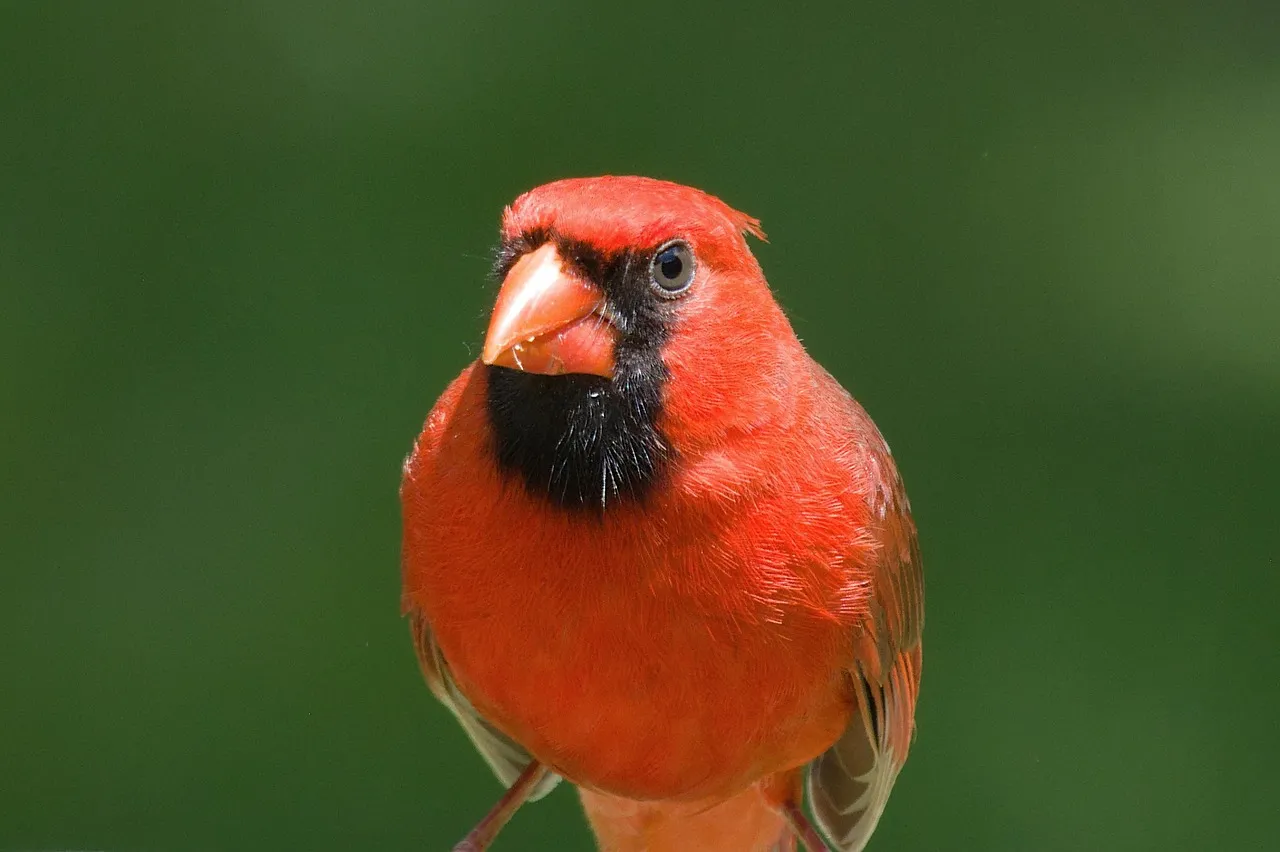
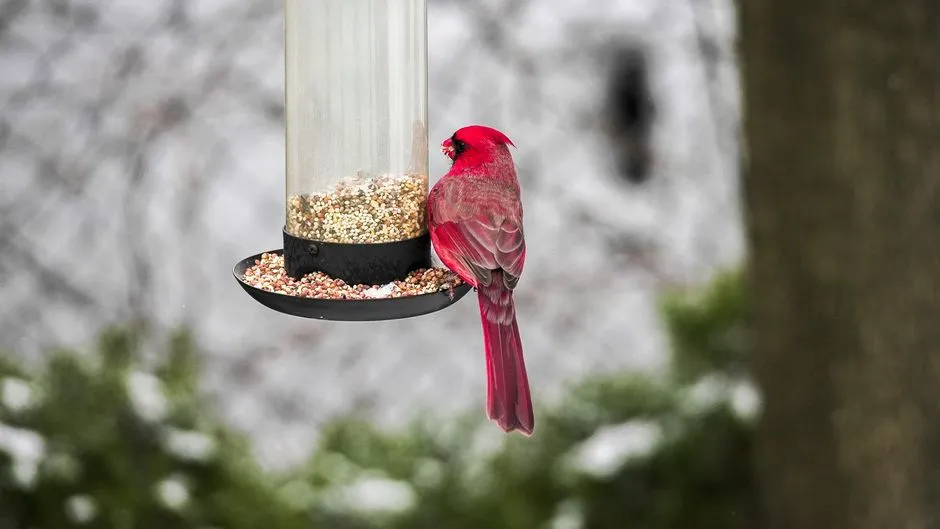
That thick, cone-shaped bill was built for cracking big, oily seeds – which is exactly why experienced gardeners swear by black oil sunflower, safflower, and the occasional handful of peanuts. Fill the feeder with cheap mixed seed loaded with milo and cracked corn, and you’ll watch a cardinal land, glance once, and leave without touching a thing.
It isn’t snobbery. It’s cold math. Every shell they crack has to pay them back in calories, or it’s a losing trade in weather that doesn’t forgive mistakes.
- If they’re tossing seed aside, your mix is low-quality and they know it.
- If they park themselves and crack seed after seed in place, you’ve hit the high-fat jackpot.
During a real cold snap, that selectiveness sharpens even more. Cardinals will ignore filler seed entirely and muscle smaller birds off the good stuff. A cardinal that lingers at your feeder in January is quietly grading your seed choices – with its own survival on the line.
#15 – They Claim “Winter Territories” That Have Nothing to Do With Romance
🔥 Would you like to save this?
We'll email this post to you, so you can come back to it later!
Most people think cardinals only get territorial in spring, when nesting is on the line. Gardeners know the red-bird drama never actually stops – it just changes its motive.
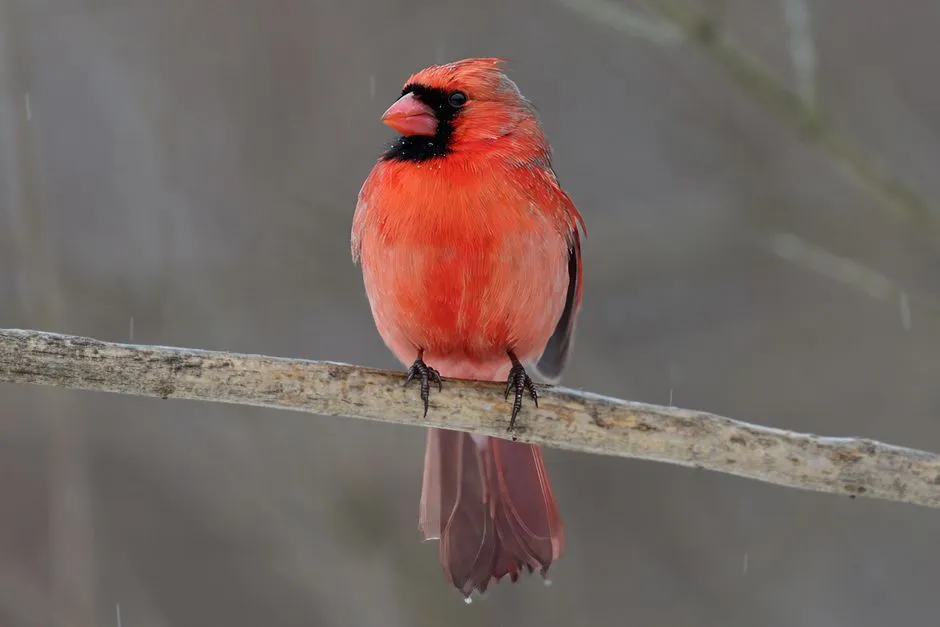
In winter, a male will still chase another cardinal off a feeder or shrub even when there’s plenty of seed to go around. From a human vantage point, it looks pointless. From the bird’s side, it’s insurance: locking down the most reliable food and shelter before another cardinal can claim it first.
Gardeners who pay attention notice the same subtle patterns repeat for weeks:
- A pair sticking to the exact same side of the yard, day after day.
- A dominant male running off newcomers right around dusk, the riskiest hour.
These winter territories tend to overlap almost exactly with the densest evergreen cover and shrubbiest tangles – the same spots a good gardener protects rather than tidies away. That’s the real reason some yards quietly become “cardinal yards” while the neighbors two doors down barely see one all season. You’re not just feeding birds. You’re hosting their borders.
#14 – They Treat Dense Shrubs Like Emergency Storm Shelters
🔥 Would you like to save this?
We'll email this post to you, so you can come back to it later!
When a snowstorm is coming, most people check their phone. Master gardeners check their viburnums.
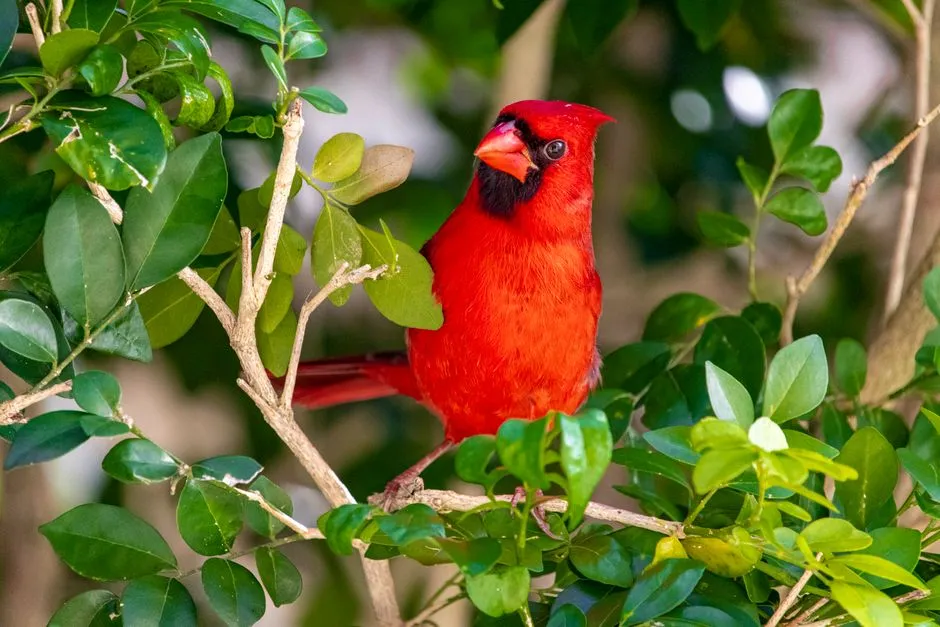
Cardinals are stubbornly loyal to specific, dense, layered shrubs in winter. When temperatures crash or the wind turns cruel, they dive into evergreens, hollies, arborvitae, and even a scruffy brush pile like it’s a pre-booked hotel room – because in a very real sense, it is.
Gardeners notice the same shrubs filling up with cardinals year after year, often hours before the weather actually turns. On a calm day, the birds work exposed perches and open feeders without a second thought:
- Hours before a front rolls in, they retreat deeper into shrub interiors, popping out only for quick bites.
- Yards with no real winter cover often lose their cardinals entirely during long cold stretches.
They’re not being unfaithful to your yard – they’re relocating to safer architecture. It’s exactly why experienced gardeners plant for structure first and worry about seed second.
#13 – They Leave “Breadcrumbs” in the Snow That Tell on Your Yard
🔥 Would you like to save this?
We'll email this post to you, so you can come back to it later!
Most people see a few footprints in fresh snow and keep walking. Master gardeners read them like a report card.
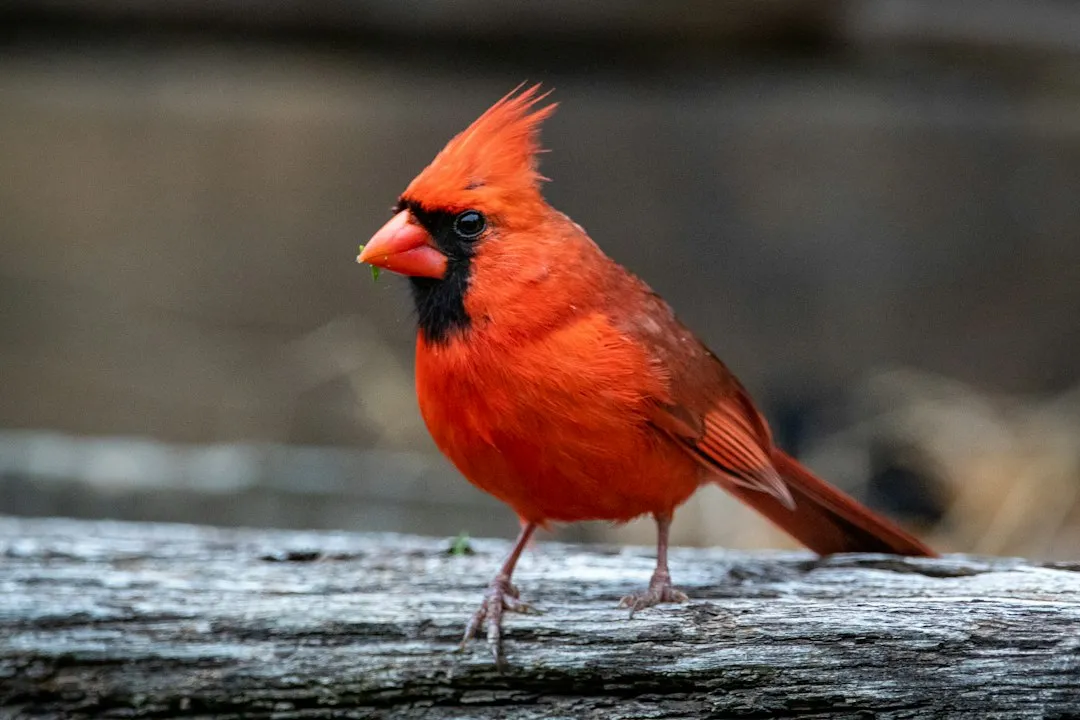
Cardinal tracks are distinctive – paired prints from those sturdy legs, sometimes with a faint drag mark from a tail or wingtip where the bird hopped and landed. Walk your yard’s edges after a fresh snowfall and the story practically writes itself.
Fast Facts
- Cardinals hop rather than walk, leaving paired prints just a couple inches apart.
- Straight, repeated tracks between perch and feeder mean the bird feels safe.
- Scattered, chaotic prints in disturbed snow usually mean a fast escape from danger.
- Tracks under shrubs but none on open lawn confirm the cover is actually being used.
Experienced eyes can tell which parts of a yard are dead zones for birds just from where the tracks stop. If every path runs straight from a high perch to one feeder and straight back to cover, your landscape is functional but thin. If tracks spider out under shrubs, along hedgerows, and through the seed heads of dead perennials, your yard is genuinely feeding birds, not just entertaining you.
The tracks reveal danger too. A sudden scatter pattern and disturbed snow under a certain tree is a cardinal’s way of telling you exactly where it doesn’t feel safe.
#12 – They Quietly Switch from Bugs to Seeds (But Never Go Fully Vegetarian)
🔥 Would you like to save this?
We'll email this post to you, so you can come back to it later!
People love to say birds just eat seeds all winter. Gardeners know that’s only half true.
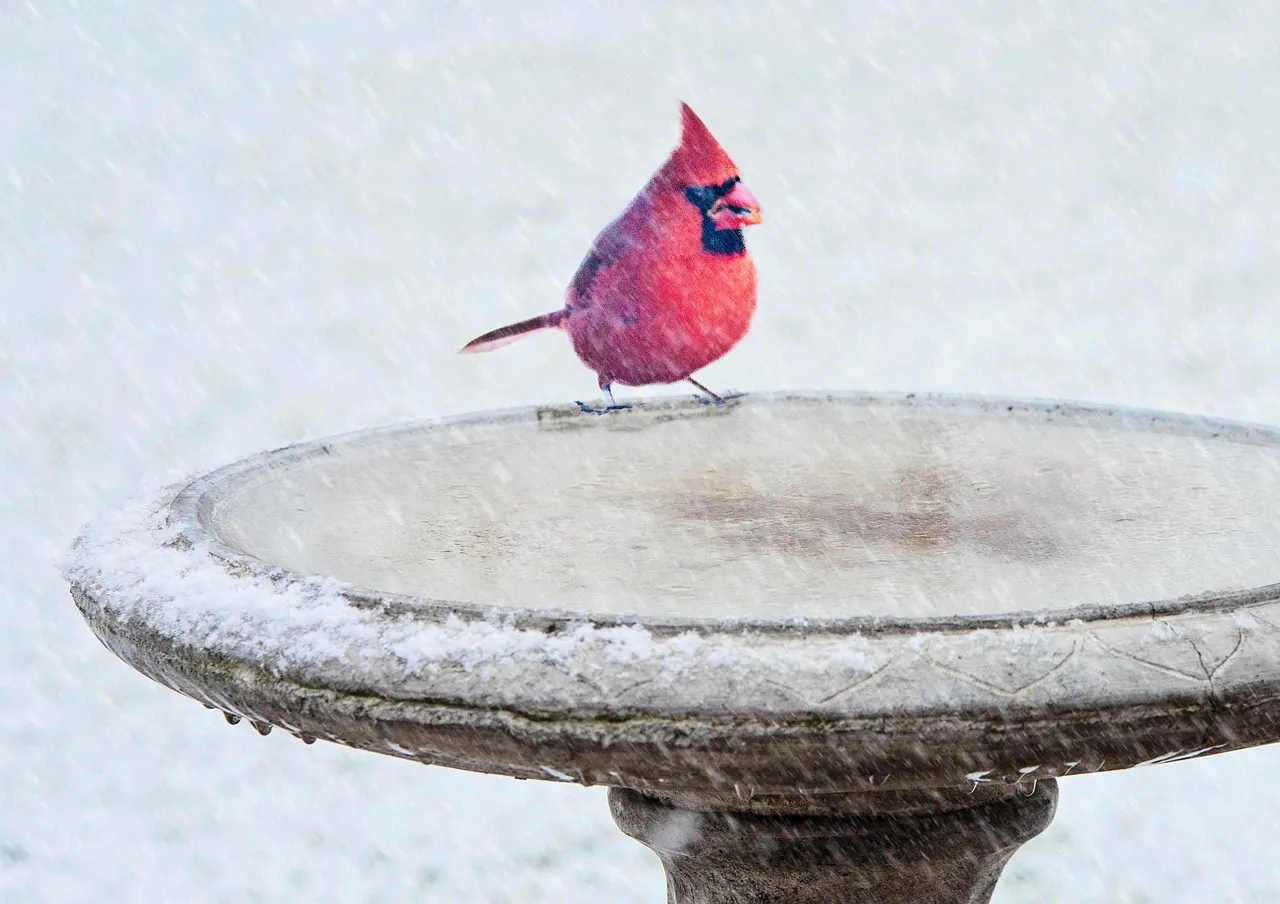
Cardinals are natural omnivores, and even in the coldest months, they don’t fully abandon animal protein. Insects are scarce, but cardinals still pick off overwintering bugs, eggs, and larvae tucked into bark, old stems, and leaf litter – if those things still exist in your yard.
That’s exactly why master gardeners refuse to “clean” their beds into sterile museum pieces every fall. They watch for:
- Cardinals working through dead sunflower heads and coneflowers for hidden insect life, not just leftover seed.
- Quick, deliberate pecks along branch crotches and under loose bark.
A cardinal hopping through your dried perennial patch is running pest control in real time. Cut everything down and bag every leaf, and that behavior drops off almost instantly – the birds still visit the feeder, but they stop “shopping” the beds altogether. Messy corners aren’t neglect. They’re a side hustle the birds are counting on.
#11 – They Use “Couple Communication” That Most People Completely Miss
🔥 Would you like to save this?
We'll email this post to you, so you can come back to it later!
To a casual observer, cardinals are just pretty red birds. To gardeners who pay attention, they’re running a full winter soap opera.
Cardinal pair bonds don’t clock out in December. Winter is thick with subtle communication – soft chipping calls, duet-like phrases, and a surprising amount of quiet coordination between male and female.
- The female calls from cover while the male ranges farther out to feed.
- Short, repeated notes that sound trivial to us act like check-in pings: “I’m here, I’m safe, where are you?”
One behavior stops veteran gardeners every time they see it: the male feeding the female seed beak-to-beak, in the snow, in the dead of winter. Most people assume that’s strictly a spring courtship move, but it shows up on the coldest days too, when energy is razor-thin. It’s bonding, sure – but it’s also logistics. A male who forages well keeps his partner alive through the worst weeks of the year. Miss this, and you miss the entire emotional life running quietly through your backyard.
#10 – They Change Where They Perch Right Before a Storm
🔥 Would you like to save this?
We'll email this post to you, so you can come back to it later!
While most people check a weather app, seasoned gardeners glance at their bird perches instead.
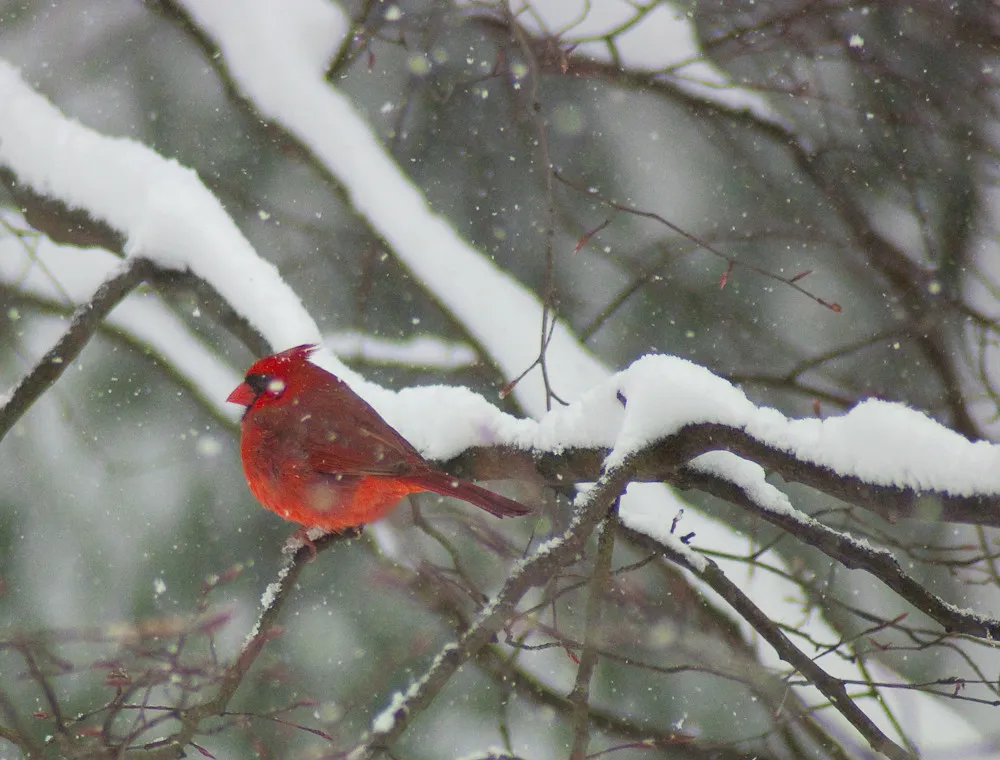
Cardinals are extremely sensitive to shifts in pressure and wind, and before a winter front arrives, their perching behavior often changes hours ahead of any visible sign of weather.
- They abandon tall, exposed branches well before the front hits.
- They suddenly prefer mid-height, interior branches inside dense shrubs or young trees.
This isn’t superstition, it’s physics. A bird clinging to a swaying, windy perch burns calories it can’t afford to lose. So when gardeners see cardinals drop lower, cluster tighter, and limit themselves to short, direct flights, they already know a storm is coming – often before the forecast catches up. Some swear cardinals hit the feeder harder the day before snow, stocking up with an almost frantic focus. It isn’t magic. It’s survival instinct tuned to changes we can’t even feel yet.
#9 – They Turn Your Evergreens into Nighttime Apartments
🔥 Would you like to save this?
We'll email this post to you, so you can come back to it later!
Most people think cardinals just “sleep in a tree.” Gardeners know they’re far pickier tenants than that.
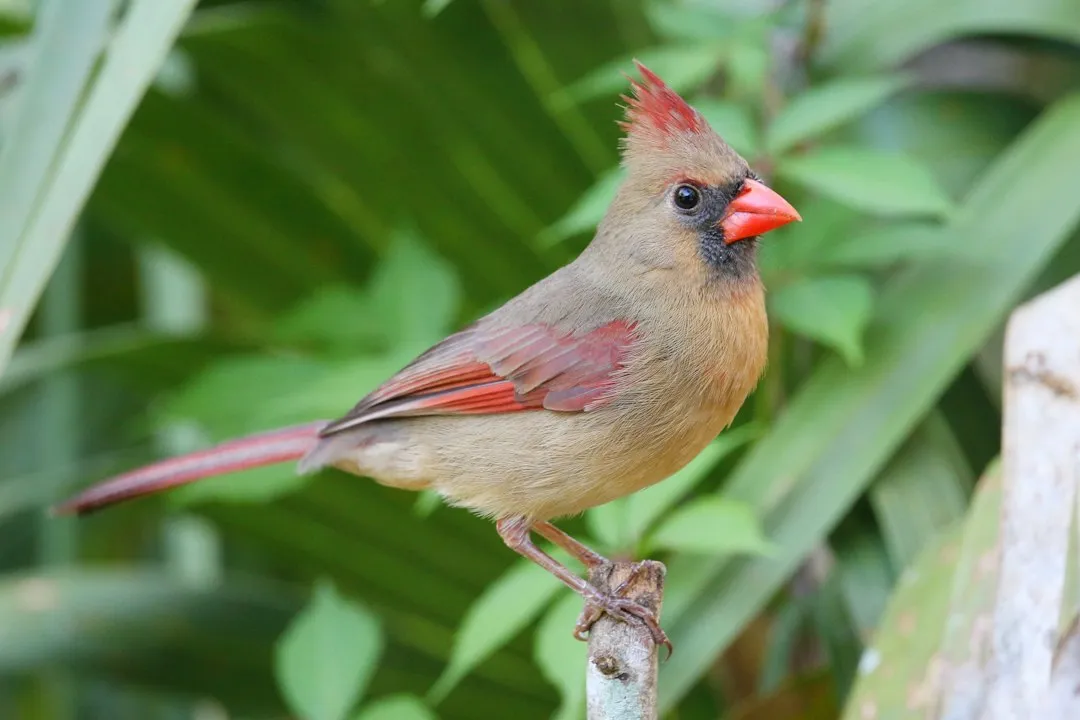
On truly brutal nights, cardinals seek out very specific microclimates: dense evergreens like spruce, pine, cedar, and arborvitae; thick, unpruned hedges with wind-blocking interior branches; even scraggly bramble patches and brush piles most homeowners would clear away.
What veteran gardeners eventually learn is almost eerie – the exact same clumps get reused winter after winter. Once a roost has proven it can keep a bird alive through a cold snap, that cardinal sticks with it out of loyalty born from necessity. Gardeners who tidy up a favorite roost in autumn, thinning a hedge or clearing a wild-looking thicket, often notice a mysterious drop in cardinal numbers all winter and never connect the dots.
Watch near dusk on a bitter evening and you’ll see them slip silently into the same corners and vanish. If your yard has a truly safe roost, that’s where you’ll hear the first chip of the morning – coming from inside the shrub, before the bird even shows itself.
#8 – They Use Your Yard as a Winter Highway, Not a Destination
🔥 Would you like to save this?
We'll email this post to you, so you can come back to it later!
This one stings a little, but master gardeners accept it: for a lot of cardinals, your yard is just a rest stop, not a home.
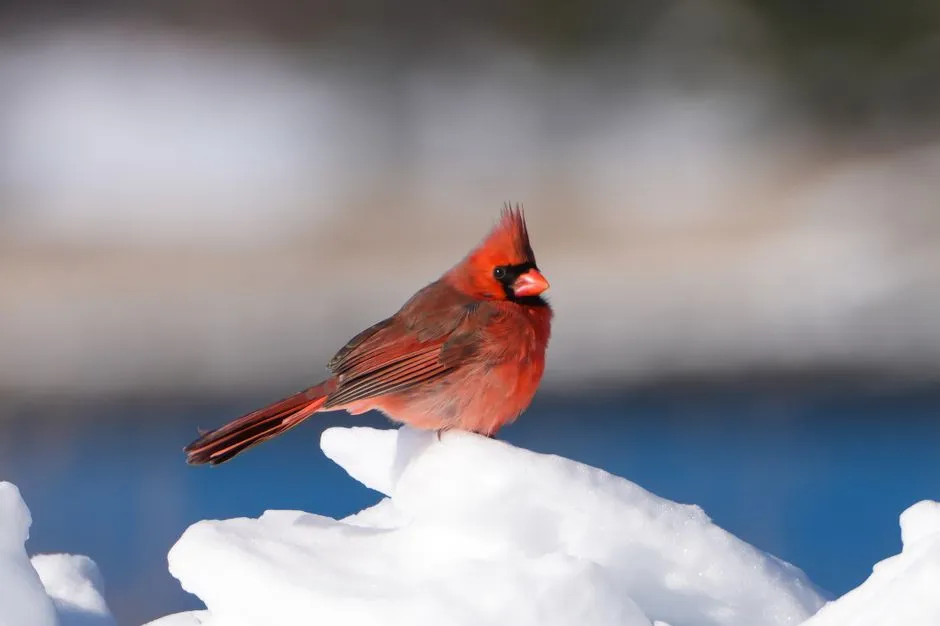
Cardinals rarely stay in one tiny yard all day during winter. They run loose routes that stretch across several neighboring properties, field edges, and patches of woodland, looping through on a schedule only they understand.
At a Glance
- Winter home ranges can span several connected yards, not just one property.
- Established loops tend to repeat daily, at roughly the same times.
- Yards with layered habitat and multiple food sources become regular stops on the route.
- A bare lawn with a single feeder is usually just a pass-through, not a destination.
Gardeners who track this over multiple seasons start mapping the pattern – what time cardinals typically show up, and which direction they arrive from and leave toward. The takeaway is blunt: yards with layered habitat and multiple food sources become major stops on the route, while a bare lawn with one lonely feeder is a pass-through at best.
That’s why one household swears “our cardinals disappeared this winter” while the neighbor two houses down is out there with a camera. People blame hawks or roaming cats first, when really the birds just found a better corridor. Cardinals vote with their wings, and they reward the yards that do the most work for them.
#7 – They Quietly Reveal Which Plants You Chose Correctly
🔥 Would you like to save this?
We'll email this post to you, so you can come back to it later!
Pinterest gardens impress humans. Winter cardinals grade on a completely different rubric.
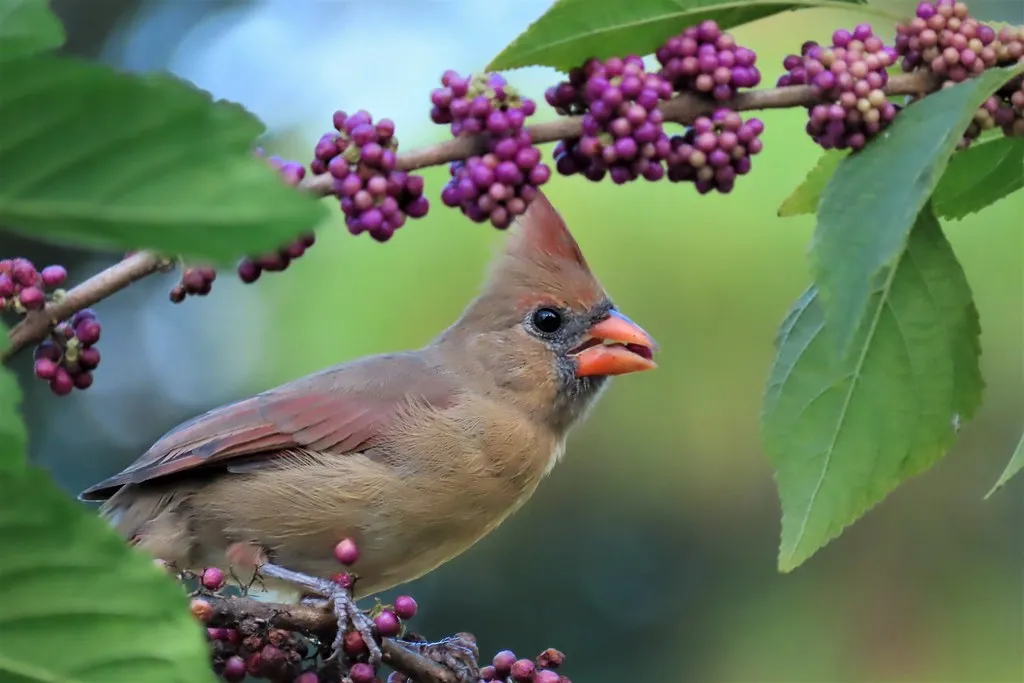
Every seasoned gardener eventually learns some plants are pretty and some are productive – and cardinals draw that line without apology. They flock to native shrubs with persistent berries like dogwood, viburnum, and winterberry holly; to perennials left standing with seed heads like coneflower, black-eyed Susan, and sedum; and to grasses with dense seed plumes that double as shelter.
The pattern is almost embarrassing for gardeners who chased trends instead of function: cardinals overwhelmingly favor native, structurally diverse beds over decorative imports. That gorgeous hybrid shrub that never fruits? Functionally invisible. That “messy” native grass stand left uncut all winter? Prime real estate.
Master gardeners watch cardinals return to the same fruiting shrub year after year, right when snow blankets everything else, because the birds remember exactly where the calories live. Let that shrub fail to fruit one season, and cardinal activity there drops like a stone. You don’t need a lecture on which plants work. The birds already told you.
#6 – They Sing in the Dead of Winter (And It’s Not Just Practice)
🔥 Would you like to save this?
We'll email this post to you, so you can come back to it later!
Most people assume bird song means spring has arrived. Gardeners who actually listen know cardinals start early, and for a real reason.
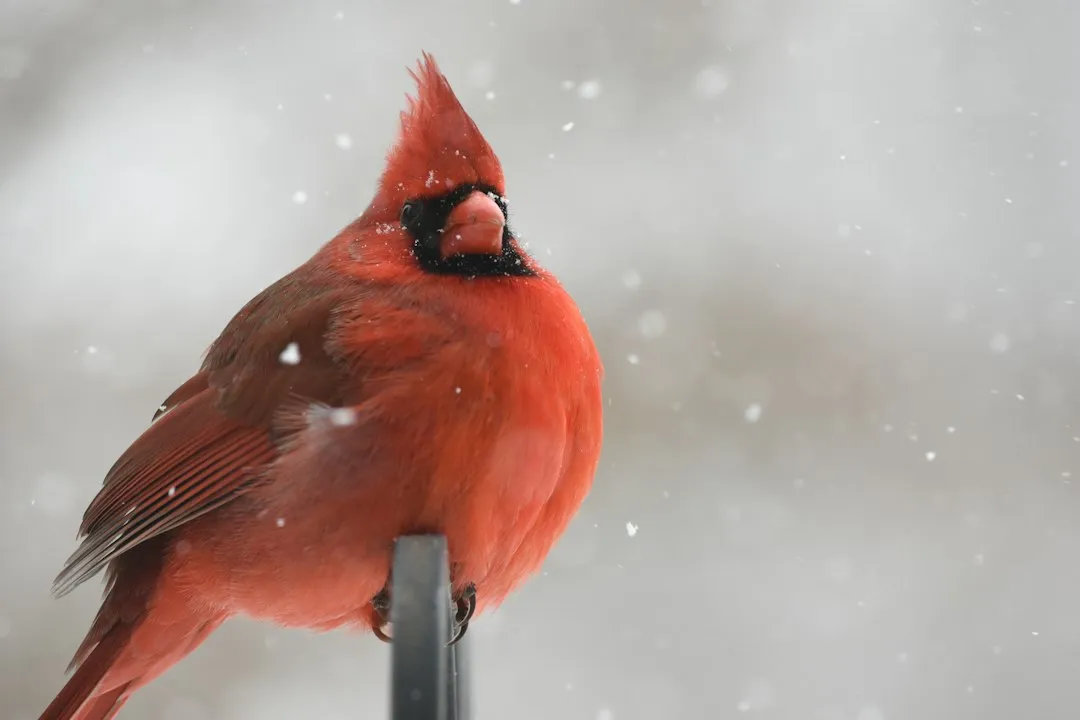
Cardinals are among the first birds to resume full song, sometimes belting out their clear “cheer-cheer-cheer” from a high perch on a bright, brutally cold day with snow still on the ground. Females answer back from lower, more concealed spots. This isn’t a warm-up. It’s territory being re-established ahead of the breeding season, and pair bonds being reinforced after surviving the worst of winter together.
Birds are indicators of the environment. If they are in trouble, we know we’ll soon be in trouble.
Roger Tory Peterson
For gardeners who’ve been listening for years, that first burst of winter song is one of the most emotional sounds the yard makes all season. It’s the first real hint that things are turning, long before the calendar admits it. Some cardinals will even sing sporadically during a mid-winter thaw, reacting to a few extra minutes of daylight. That sudden song on a cold, sunny morning isn’t your imagination – it’s a bird announcing, “We made it this far. This is still ours.”
#5 – They Expose Every Predator You Pretend Not to Have
🔥 Would you like to save this?
We'll email this post to you, so you can come back to it later!
Most homeowners underestimate exactly how dangerous their own yard is for a bird. Master gardeners don’t, because cardinals snitch.
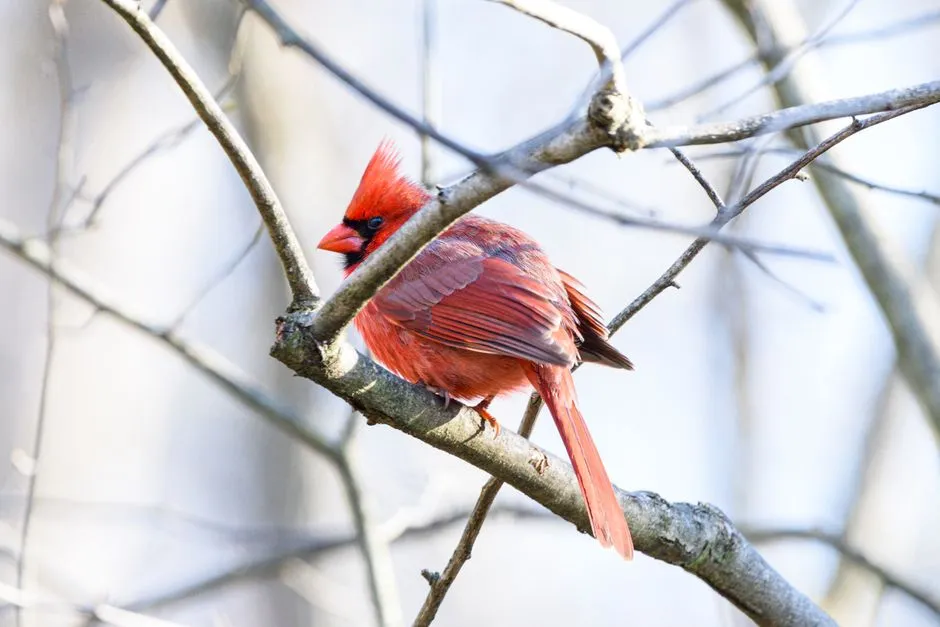
Cardinals behave like classic sentinel species – nervous, conspicuous, and extremely alert to anything that shouldn’t be there. When a hawk drifts overhead, a cat crouches under a shrub, or a raccoon lurks near the feeder, the reaction is impossible to miss if you’re actually watching: sudden total silence where there was feeding seconds earlier, birds freezing in place inside shrubs for long, tense minutes, and sharp, repeated chip calls that sound noticeably more urgent than usual.
Worth Knowing
- Sudden silence after active feeding almost always signals a nearby predator.
- Rapid, sharp chip calls carry more urgency than the normal contact chip.
- Repeated avoidance of one yard corner often points to an ambush spot or a window hazard.
- Freezing motionless inside a shrub is a defensive reaction, not the bird resting.
Here’s the uncomfortable truth gardeners eventually learn: when cardinals repeatedly avoid one specific corner of the yard, something is wrong there. It might be a neighbor’s roaming cat, a feeder placed in a perfect ambush spot, or a reflective window causing fatal collisions nobody noticed.
Serious gardeners use that avoidance as a diagnostic tool – moving feeders, adding brush cover, marking windows – instead of shrugging and blaming “mysterious disappearances” on everything except their own layout.
#4 – They Form Loose Winter Flocks (But Still Refuse to Share)
🔥 Would you like to save this?
We'll email this post to you, so you can come back to it later!
Most people picture cardinals as solitary pairs. Gardeners who watch through winter know that’s only half the story.
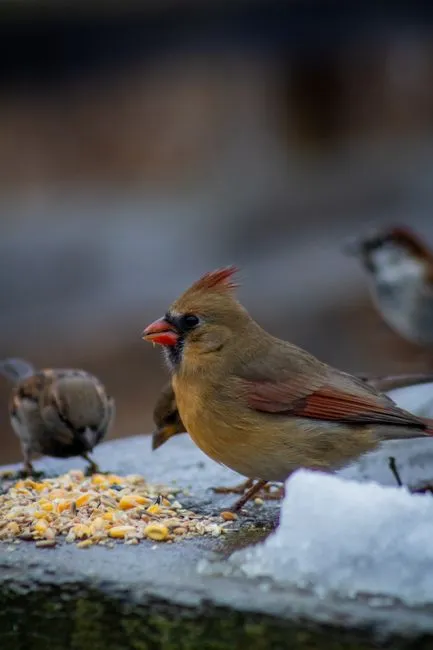
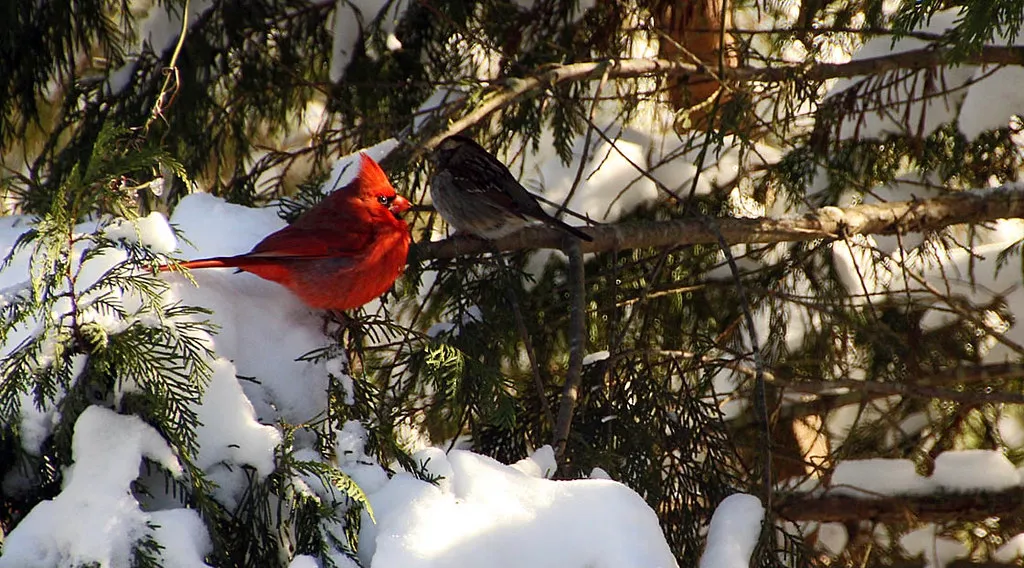
In cold weather, cardinals often join loose, mixed-species flocks alongside sparrows, chickadees, titmice, and nuthatches. The upside is obvious – more eyes on the lookout for predators, more chances to stumble onto food. But cardinals don’t magically turn into social butterflies just because they’re standing in a group.
At feeders and prime perches, the pecking order stays brutally intact: dominant individuals shove others off repeatedly, and short, sharp chases break out even among birds that arrived together minutes earlier. It’s a strange contradiction – using group living to survive winter while enforcing a hierarchy that never actually relaxes.
Gardeners can even tell when a new cardinal joins mid-season, because the chasing spikes noticeably until the social order resettles. And you’ll notice groups form most often right at first light and last dusk – the riskiest hours of the day – because there’s safety in numbers, even when everyone’s still arguing about who gets the good branch.
#3 – They Change Color More Than You’d Think (Especially in Bad Yards)
🔥 Would you like to save this?
We'll email this post to you, so you can come back to it later!
Ask most people, and they’ll tell you male cardinals are just “bright red, obviously.” Gardeners who watch through an entire winter know it’s not that simple.
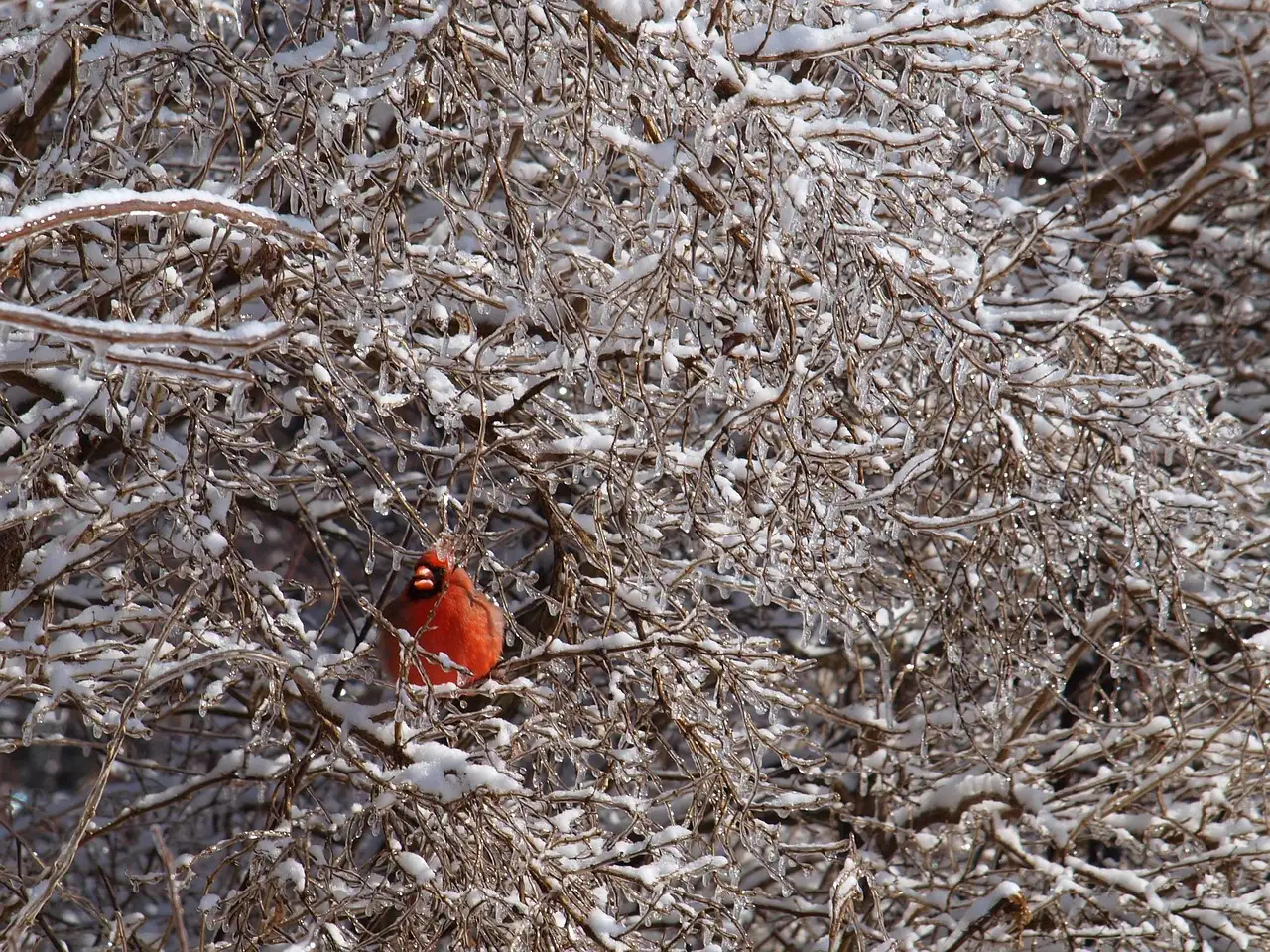
Feather wear, diet, and age all shape how a cardinal actually looks in the cold months. A first-winter male may still carry patchy, dull plumage with brown-tinted feathers mixed in, and a poor diet low in carotenoids – the pigments found in many red and orange berries – can leave a grown male looking washed out compared to his deep-red neighbors.
Quick Compare
- Well-fed male: vivid, deep red plumage that holds strong through late winter.
- Poorly-fed male: duller, orange-tinted or patchy red by February.
- Well-fed female: warm tan and buff tones with a soft rosy tinge.
- Poorly-fed female: flatter, grayish-brown coloring with little warmth left.
The blunt observation gardeners make: yards with weak winter food sources tend to produce softer-colored males by late winter, while berry-rich, native-heavy landscapes keep their birds vividly red all season. Some of the fading is even mechanical, as feather tips wear down and expose more or less pigment underneath.
Even females shift subtly, their soft tan and buff tones warming up when diet and health are strong. Plumage isn’t just pretty. It’s a visible scoreboard of how well the land is actually feeding the birds living on it.
#2 – They Turn Dusk into a Precision Feeding Sprint
🔥 Would you like to save this?
We'll email this post to you, so you can come back to it later!
For a cardinal, winter sunset isn’t “vibe time.” It’s a hard deadline.
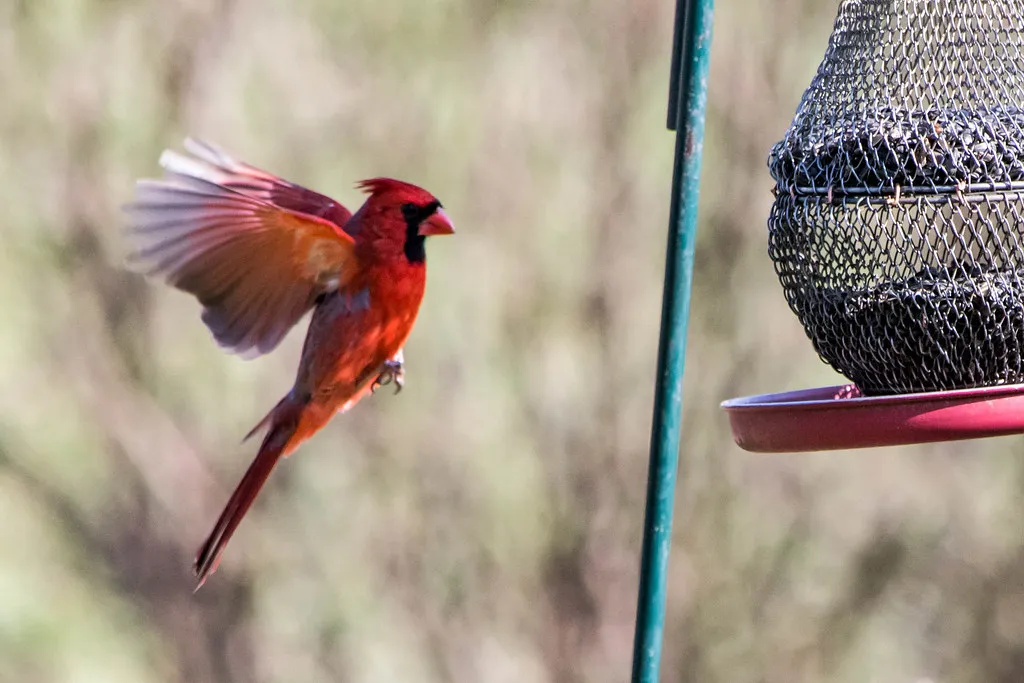
Experienced gardeners notice that in the last 30 to 60 minutes of daylight on a cold day, feeder activity spikes sharply. The birds aren’t casually snacking – they’re topping off the tank before a long, energy-draining night, which is exactly why cardinals are often some of the very last birds still visible as the sky fades to gray.
What’s striking is how efficient it gets: minimal wandering, maximum time locked onto the highest-calorie seed, with quick repeated trips from cover to feeder and short pauses to watch for danger.
If a feeder runs dry during that critical twilight window, master gardeners don’t shrug it off – they treat it as a real failure. A cardinal heading into a sub-freezing night with a half-empty crop of low-fat seed may genuinely not survive it. That’s how thin the margin actually is, and it’s why seasoned bird-focused gardeners think twice before bringing a feeder in early just to avoid raccoons.
#1 – They Use Your Winter Yard as an Audition for Where They’ll Raise Young
🔥 Would you like to save this?
We'll email this post to you, so you can come back to it later!
Here’s the part most casual bird lovers miss completely: winter isn’t separate from nesting season. It’s the audition.
Cardinals don’t randomly pick a place to breed once spring shows up. The pair hunkered down in your landscape all winter has been quietly interviewing it the entire time – Is there enough dense cover? Multiple reliable food sources? Safe roosts? Manageable predator pressure? Winter is the test your yard either passes or fails.
Master gardeners see the pattern repeat with almost unnerving consistency: pairs that spend the whole winter in a yard tend to nest within or just beyond its boundaries once spring arrives. Yards that only get brief, inconsistent winter visits almost never host a nest, no matter how good the landscaping looks by May.
That’s exactly why experienced gardeners are ruthless about winter structure. If a cardinal can survive January in your yard, it will likely trust that same space with its most vulnerable chicks come June. If it can’t, the pair quietly shifts territory and simply treats you as a snack stop next winter. Cardinals aren’t just surviving your yard. They’re judging it – harshly, and honestly.
Winter cardinals were never decorative accents. They’re field testers, critics, and survivalists running the same demanding circuit through your garden every single year, and the ones who stick around have already decided you passed some test you didn’t know you were taking. A lingering male at dusk means your feeder is pulling its weight. A sudden retreat into deep shrubs means a storm is closer than your phone thinks. Dull plumage and vanishing footprints aren’t mysteries – they’re warnings about weak habitat, spoken in a language most people never bothered to learn.
Your yard is either helping these birds survive winter, or it’s quietly forcing them to gamble somewhere else. Their loyalty next spring isn’t luck. It’s earned months earlier, in the cold and the dark, while almost everyone else had already stopped looking.

From exploring the marine wonders in the Azores and witnessing the vast savannas of Kenya, to delving deep into the rich biodiversity of South Africa and traversing iconic landscapes in Australia and the US like Yellowstone, Chris's experiences are vast.
With a penchant for diving alongside sharks, the ocean holds a special place in his heart.
Through his academic insights, he champions wildlife conservation, striving with 'Animals Around The Globe' to cultivate a profound connection between humans and animals, enhancing our mutual appreciation.
Connect with him at Feedback@animalsaroundtheglobe.com.
- 15 Wild Animals You Might Spot in U.S. National Parks - November 5, 2026
- Top 10 Animals and Wildlife in Hawaii - November 4, 2026
- Top 10 Animal Encounters in Europe - November 3, 2026