

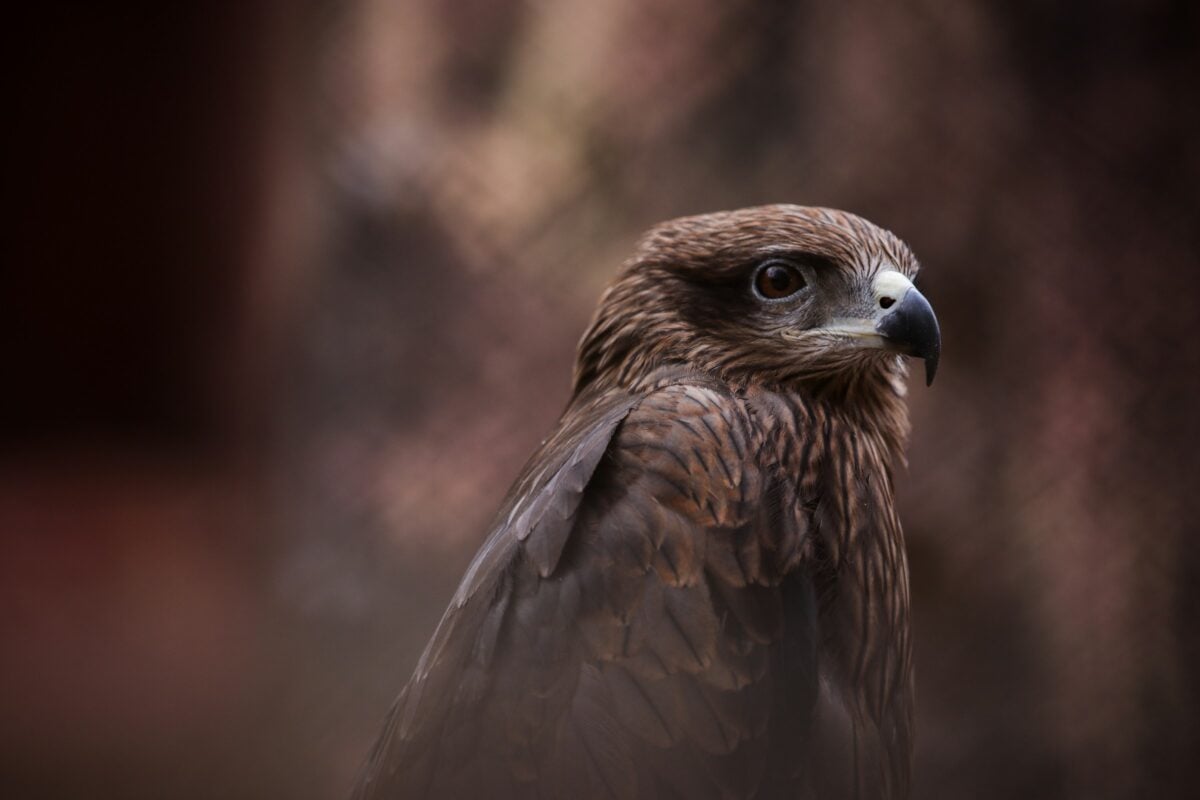
Most people think a hawk nesting in their yard is dumb luck – like winning a small, feathered lottery. It isn’t. Long before a single twig gets placed, that bird has been quietly running background checks on you, your dog, your kids, and every noise coming out of your garage.
Miss even one test and the hawk just vanishes to a better block without ever telling you why. Here’s the full checklist raptors work through, in roughly the order that decides whether you end up with a nest overhead or just an occasional hunting perch.
#18 – Scanning the Neighborhood for Human Patterns
🔥 Would you like to save this?
We'll email this post to you, so you can come back to it later!
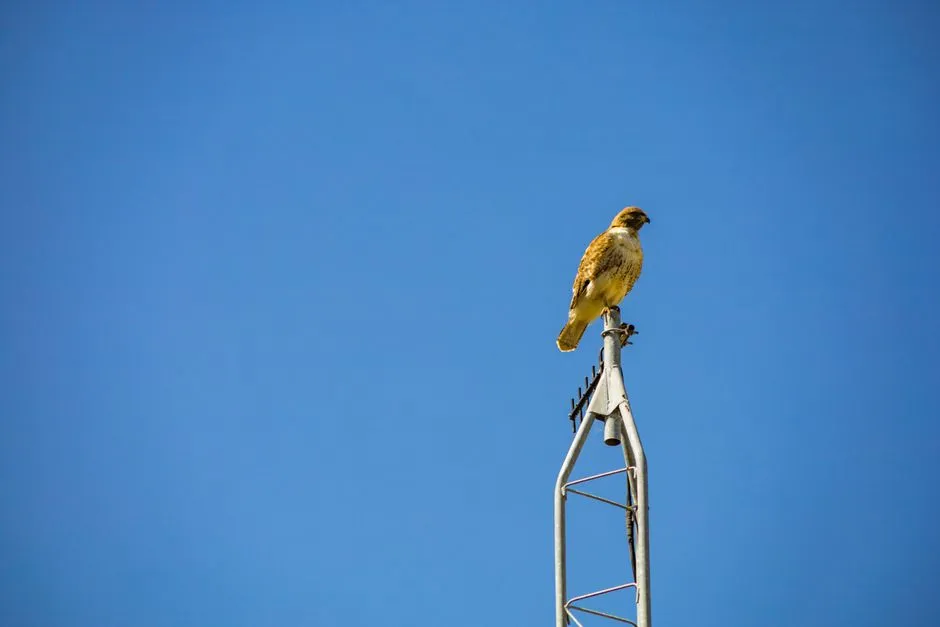
Before a hawk even considers bringing a twig to a tree, it spends days or weeks simply watching you. It isn’t being friendly. It’s running a risk assessment from a tall perch.
It’s mapping your world in detail:
- When people walk dogs
- Where kids play or shout
- How often loud machines like mowers and blowers fire up
Researchers call this “habituation with evaluation”: the bird gets used to humans, but never stops scoring how dangerous they look. If your yard has constant, chaotic movement, a hawk will almost always skip it as a nesting site.
Hawks notice patterns most people ignore. A quiet cul-de-sac with predictable morning traffic can feel safer than a noisy park where people appear at random – which is why hawks sometimes nest above a busy parking lot but avoid a backyard with unsupervised kids and off-leash dogs every afternoon.
#17 – Testing the Perch Network and Escape Routes
🔥 Would you like to save this?
We'll email this post to you, so you can come back to it later!
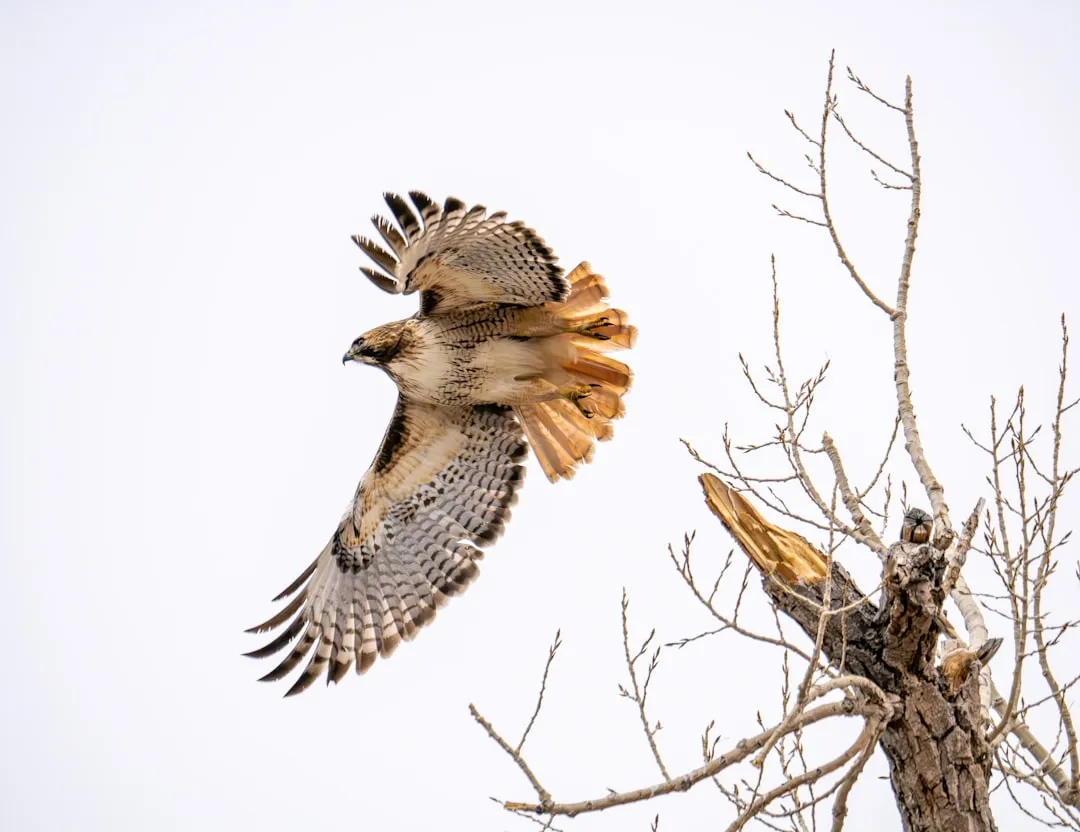
A hawk will not nest near humans if it can’t leave in a split second. Before committing, it tests the local “perch network” – telephone poles, roof peaks, mature trees, tall shrubs.
The bird hops or flies between these perches repeatedly, almost like running a drill. It’s measuring one thing: can I launch, pivot, and disappear if a human, dog, or raccoon gets too close?
If there’s no clean escape path from the would-be nest tree to higher ground, that tree gets downgraded immediately. You might notice a hawk landing on the same three or four spots every day for a week – that’s not random, it’s route rehearsal.
Biologists have documented hawks abandoning great food areas simply because the escape angles were bad: low wires, cluttered branches, blind corners near buildings. Humans ask, “Is there a tree?” Hawks ask, “Is there a ladder of exits?”
#16 – Quietly Scoring Your Noise Level
🔥 Would you like to save this?
We'll email this post to you, so you can come back to it later!
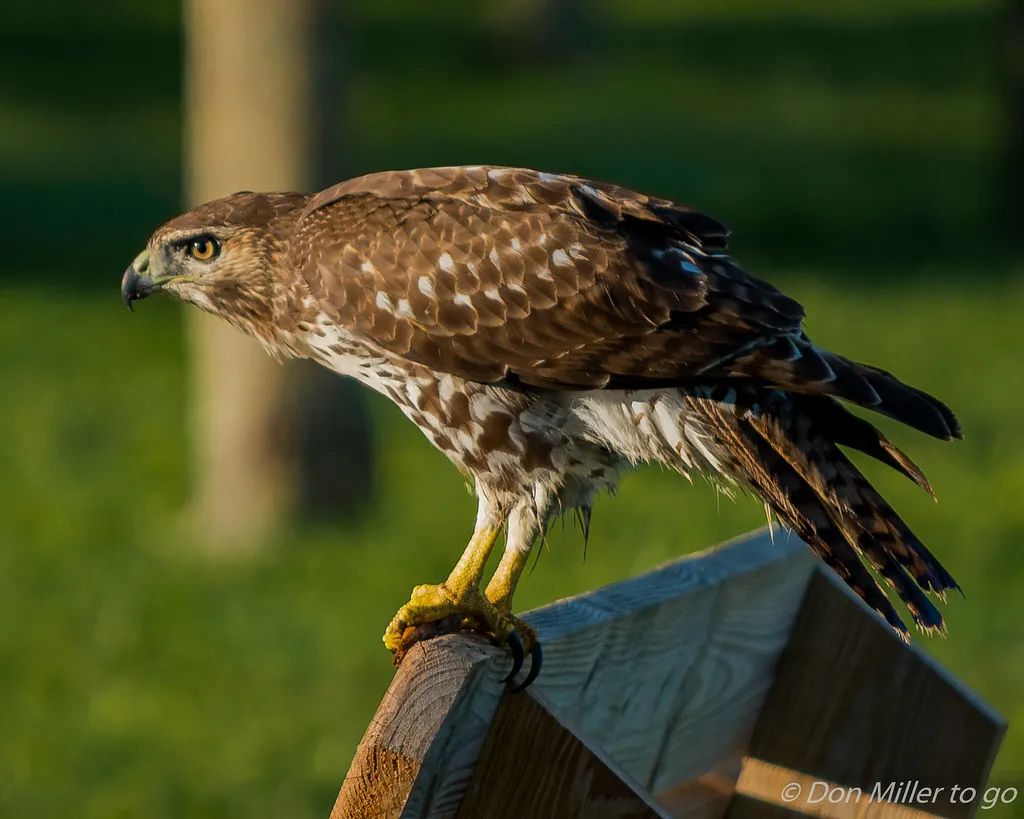
Most people assume hawks are tough enough to tune out noise. They’re not. Chronic human noise can spike stress hormones in birds, especially during nesting season.
Before building nearby, a hawk sits within earshot of your property and just listens. Mowers, chainsaws, leaf blowers, loud music, kids screaming by the trampoline – these sounds don’t just annoy hawks, they measurably lower nesting success.
Field observations show some species, like Red-tailed Hawks, tolerate steady background noise such as traffic far better than sudden, unpredictable blasts. That’s why a nest can survive above a busy road but fail in a “quiet” suburb where someone fires up a gas blower every other day.
Fast Facts
- Chronic yard noise can raise stress hormones during nesting season
- Sudden blasts like chainsaws matter more than steady background sound
- Red-tailed Hawks often tolerate traffic noise better than random yard racket
- A slow head-bob toward a loud sound is a real risk recalculation, not curiosity
You’ll often catch a hawk flinch at a loud burst, then stare hard toward the source with its head bobbing slowly. That’s not curiosity – it’s a recalculation of whether the chicks can sleep, and whether predators might move in under the cover of noise.
#15 – Timing the Human Routine Against Predator Activity
🔥 Would you like to save this?
We'll email this post to you, so you can come back to it later!
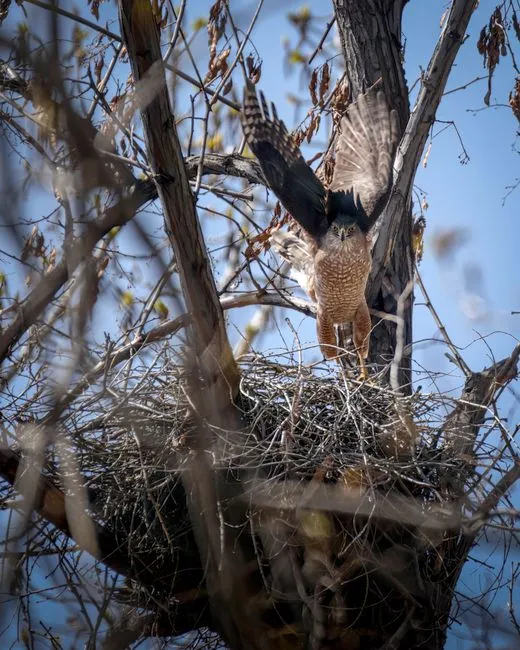
Hawks don’t just watch humans. They watch what follows humans. Trash, bird feeders, and outdoor pets attract raccoons, skunks, opossums, crows, and feral cats – all capable nest raiders.
Before nesting, a hawk quietly compares your daily schedule with these nocturnal and crepuscular predators. It notices things you probably never register:
- Crows gathering on trash day
- Raccoons using the fence line after dark
- Neighborhood cats slipping under hedges at dawn
If human activity keeps the worst nest predators slightly pushed back during the day but not at night, some hawks adjust – doing more intense night vigilance or picking a nest tree that’s simply harder to climb. But if predator traffic is heavy in a tight radius, even tolerant hawks often walk away entirely.
This is why one neighbor swears “hawks love our yard” while the house next door, same trees, same street, never sees a nest. You’re not the only thing being judged – your entire backyard food chain is under review.
#14 – Watching Your Pets Like They’re Another Apex Predator
🔥 Would you like to save this?
We'll email this post to you, so you can come back to it later!
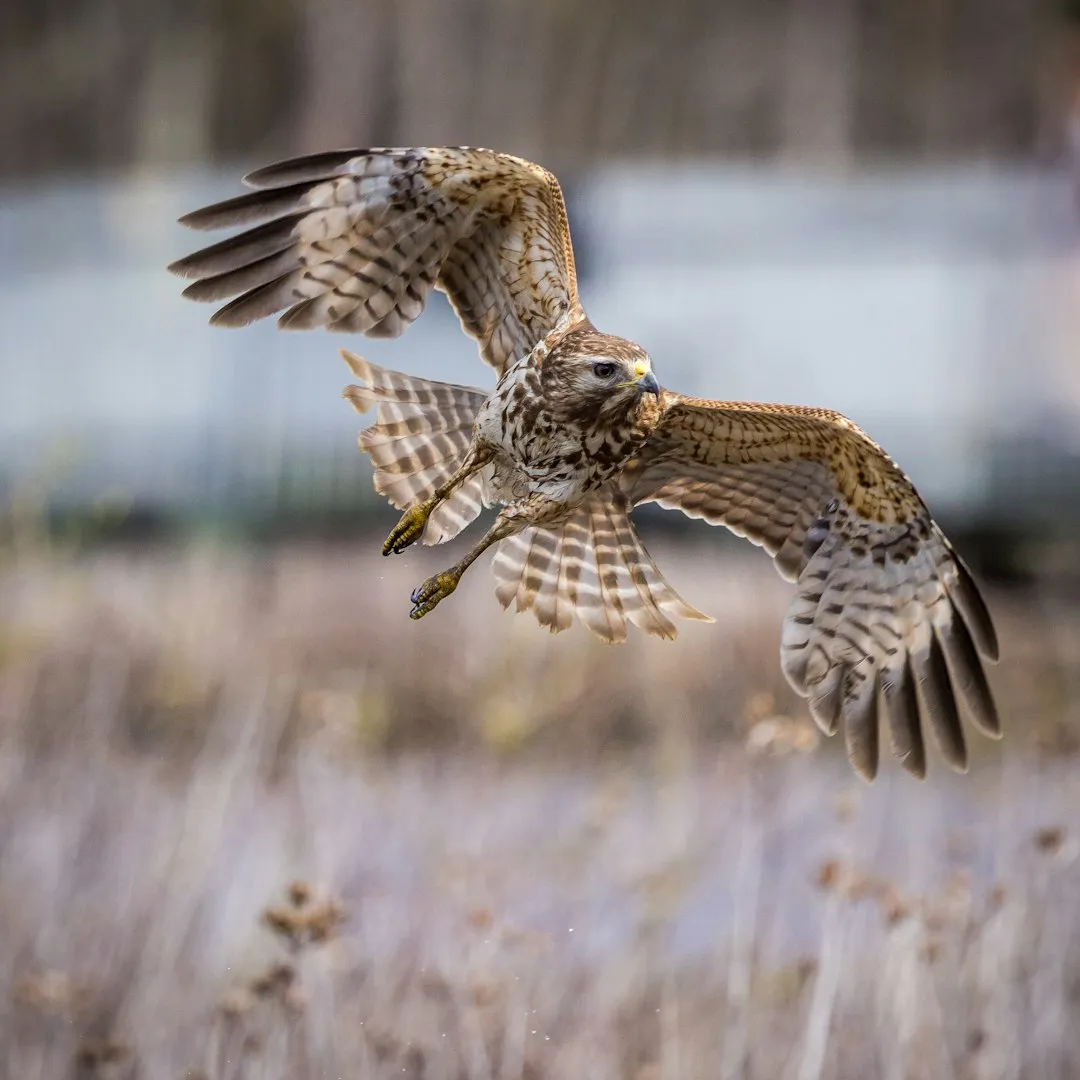
Dog owners often assume, “My dog’s small, it can’t bother a hawk.” The hawk disagrees. Before nesting near people, it clocks dog size and breed, off-leash versus on-leash habits, and how close dogs are allowed to get to trees and fences.
Even if a dog could never physically reach the nest, repeated barking and chasing at the base of a tree can be enough to push a hawk elsewhere. Cats are worse – outdoor cats are notorious nest predators, and hawks treat them as a genuine threat, not a nuisance.
Watch closely and you’ll sometimes see a hawk freeze and lean forward when a dog appears, feathers slightly puffed. That’s not curiosity. That’s a threat assessment happening in real time.
Some hawks will still nest above yards with calm, predictable, leashed dogs. Others avoid any yard where pets rush the fence or the tree line several times a day. Your dog’s personality can, quite literally, decide whether a hawk ever nests near you.
#13 – Running a Food Availability Audit
🔥 Would you like to save this?
We'll email this post to you, so you can come back to it later!
Before a hawk even thinks about chicks, it asks a harder question: can I actually feed them here? Nesting is expensive, and adult hawks need a steady supply of mice, voles, small birds, squirrels, and sometimes small rabbits.
For weeks beforehand, a potential nesting pair will silently sample-hunt the area. They test different hunting perches, strike into lawns and fields, and keep an eye on your bird feeders and compost pile. If the hit rate is too low, the whole area gets downgraded as a nesting site.
Studies repeatedly show that prey density is one of the strongest predictors of where raptors choose to nest – stronger, in many cases, than how safe or quiet the spot feels. Hawks are ruthless about this. A place can feel completely secure and still get abandoned if the food just isn’t reliable.
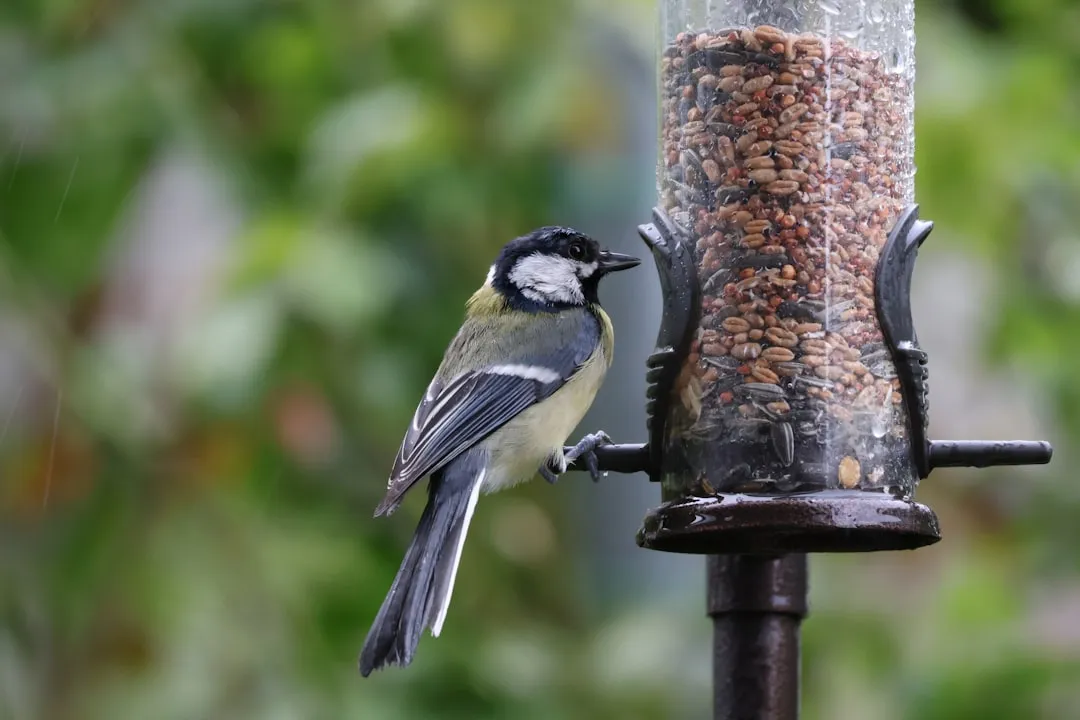
Ironically, plenty of people help hawks without realizing it. Sloppy bird feeders that spill seed attract rodents. Unsecured trash feeds rats. To a hawk, that messy, slightly neglected yard next door is basically a 24-hour buffet.
#12 – Testing Human Distance Tolerance
🔥 Would you like to save this?
We'll email this post to you, so you can come back to it later!
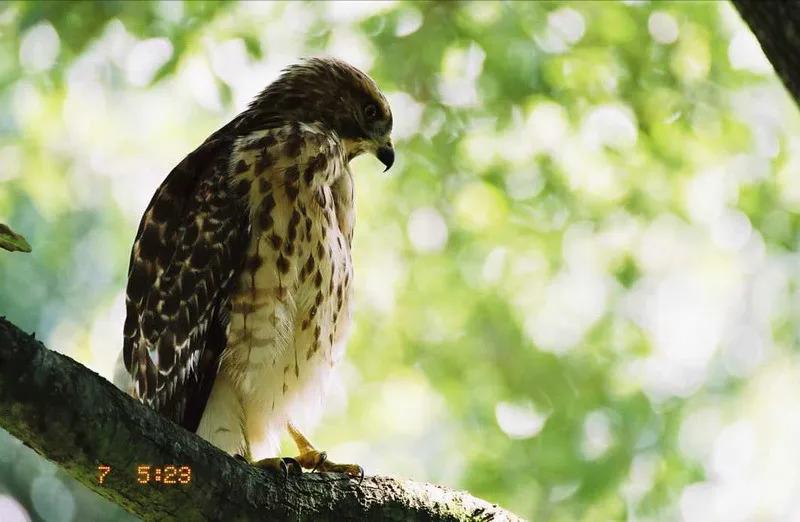
Hawks don’t guess how close you’ll come to their nest. They test it directly. Before nesting, a hawk picks a perch closer than usual to your path – near the driveway, above the sidewalk, over the back porch rail – and waits to see what you do.
It’s watching for specific behaviors:
- Do you stare directly at it or ignore it?
- Do you try to take photos and move closer?
- Do you rush at it, throw objects, or wave your arms?
If you consistently keep a respectful buffer – walking underneath without stopping, not staring, not trying to “make friends” – the hawk logs that as predictable, low-risk behavior. If you or your neighbors keep pushing closer for a better photo, it learns humans here cannot be trusted with a tight distance.
Some of the most surprising urban nests appear directly over sidewalks where humans almost never look up. The hawks have simply learned that at that particular distance, we’re basically blind to them.
#11 – Checking Structure Height and Vantage Points
🔥 Would you like to save this?
We'll email this post to you, so you can come back to it later!
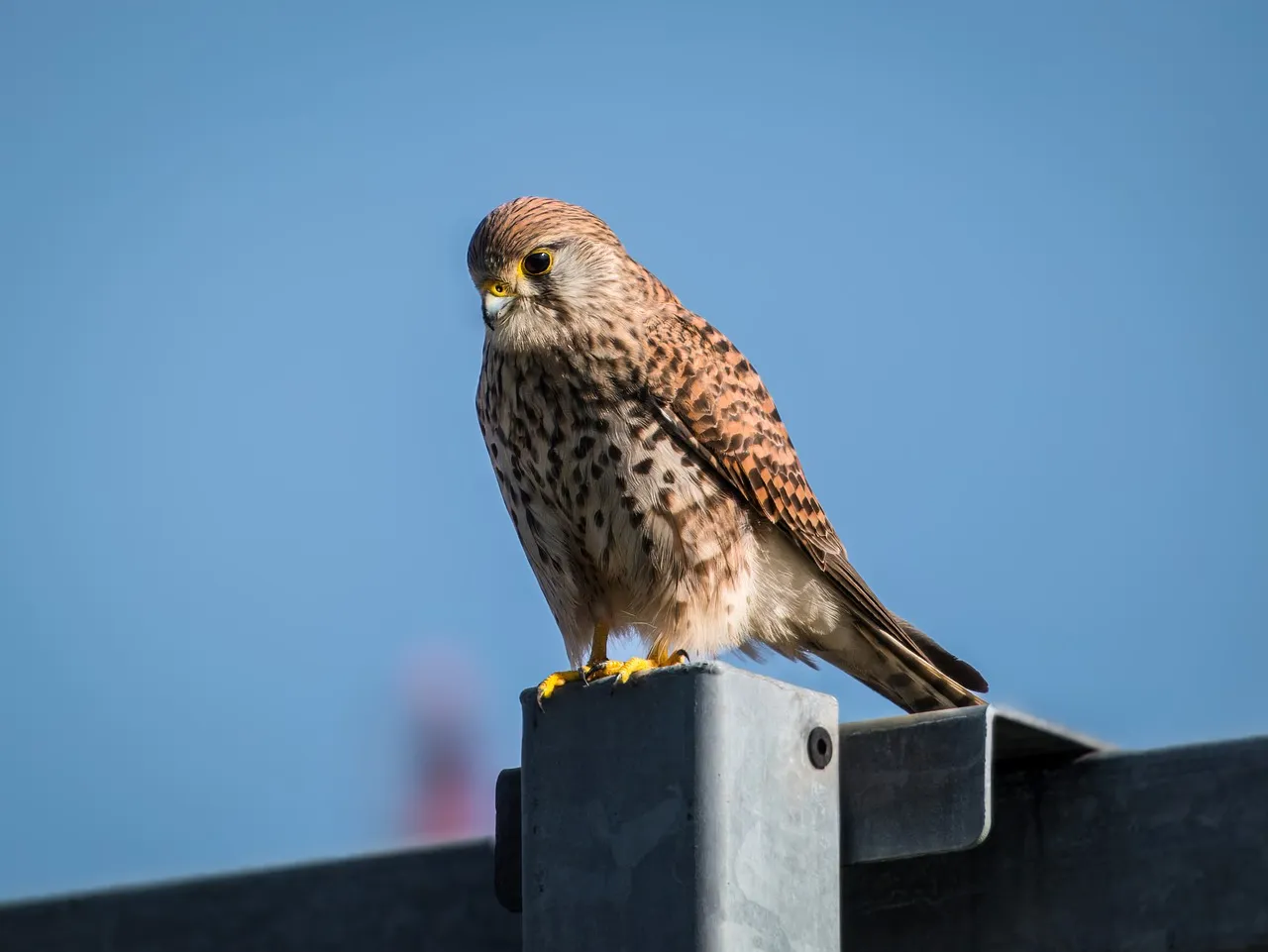
A hawk won’t nest just anywhere there’s a branch. Height and line of sight are non-negotiable requirements, not preferences.
Raptors want a nest that sits high enough to deter most ground predators, offers a clear view in at least one or two directions, and isn’t fully exposed to wind on every side. They test this by landing on candidate branches or ledges and doing slow, deliberate head sweeps.
Quick Compare
- Urban hawks: often choose building ledges, stadium lights, or cell towers for unmatched sightlines
- Rural hawks: usually prefer tall, older trees with broken tops or heavy forked limbs
- Both: will reject a site if an approaching threat can’t be spotted in time
A location that looks perfect to us – a big tree right over the patio – can get rejected outright if the hawk can’t see an approaching threat until it’s too late. In cities, that’s exactly why hawks nest on building ledges, stadium lights, and cell towers: the sightlines beat any nearby tree.
Rural hawks tend to be pickier, often sticking to tall, older trees with broken tops or heavy forked limbs. If your property only has ornamental trees under power-line height, a hawk might use it to hunt from – but almost never to nest in.
#10 – Stress-Testing the Wind and Weather Exposure
🔥 Would you like to save this?
We'll email this post to you, so you can come back to it later!
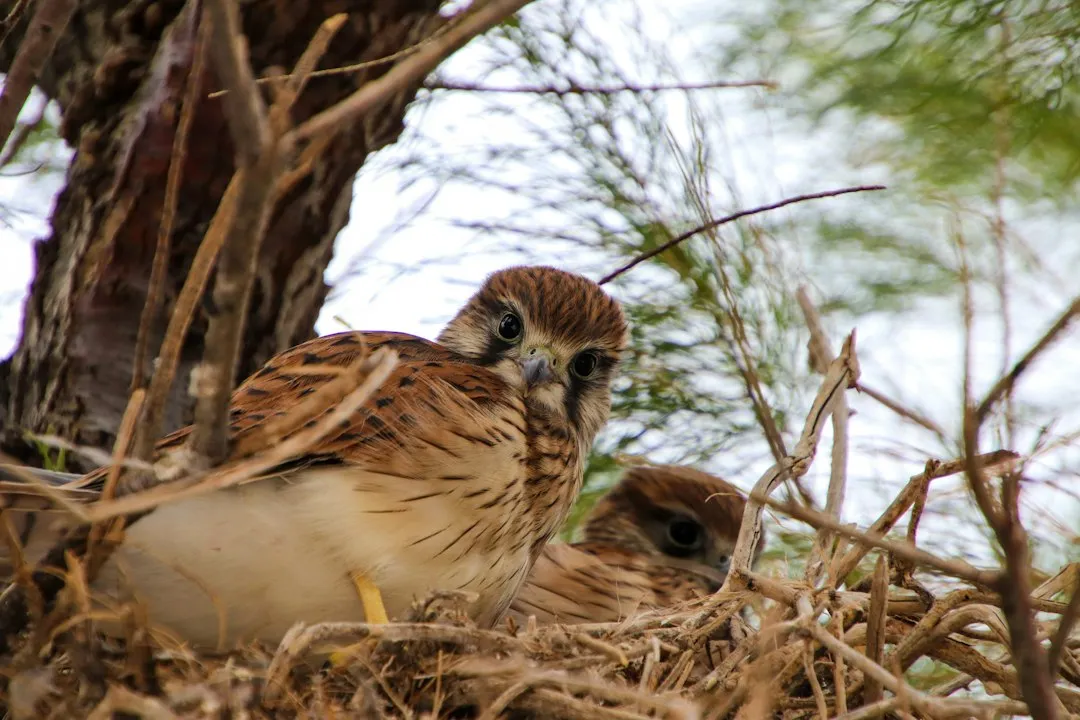
Hawks don’t need a coat, but they care deeply about microclimate. Before picking a site near people, they experience it across different conditions – windy afternoons, sudden rain showers, early-morning chill.
They’re essentially checking whether the nest will get blasted by prevailing winds, whether rain will pool or blow sideways into the cup, and whether there’s any shade during the hottest part of the day. You might see a hawk shift perches repeatedly around one candidate tree, especially on gusty days.
Some hawks favor the leeward side of a tree relative to the strongest winds, even if that puts them closer to human windows or decks. A stable, wind-buffered nest can mean the difference between chicks surviving a storm and a total nest failure.
Ironically, human structures sometimes create better microclimates than nature does – windbreaks from houses, heat radiating off roofs, sheltered courtyards. It’s one reason hawks occasionally choose spots that look almost absurd to us, like balconies.
#9 – Studying Other Birds’ Reactions to You
🔥 Would you like to save this?
We'll email this post to you, so you can come back to it later!
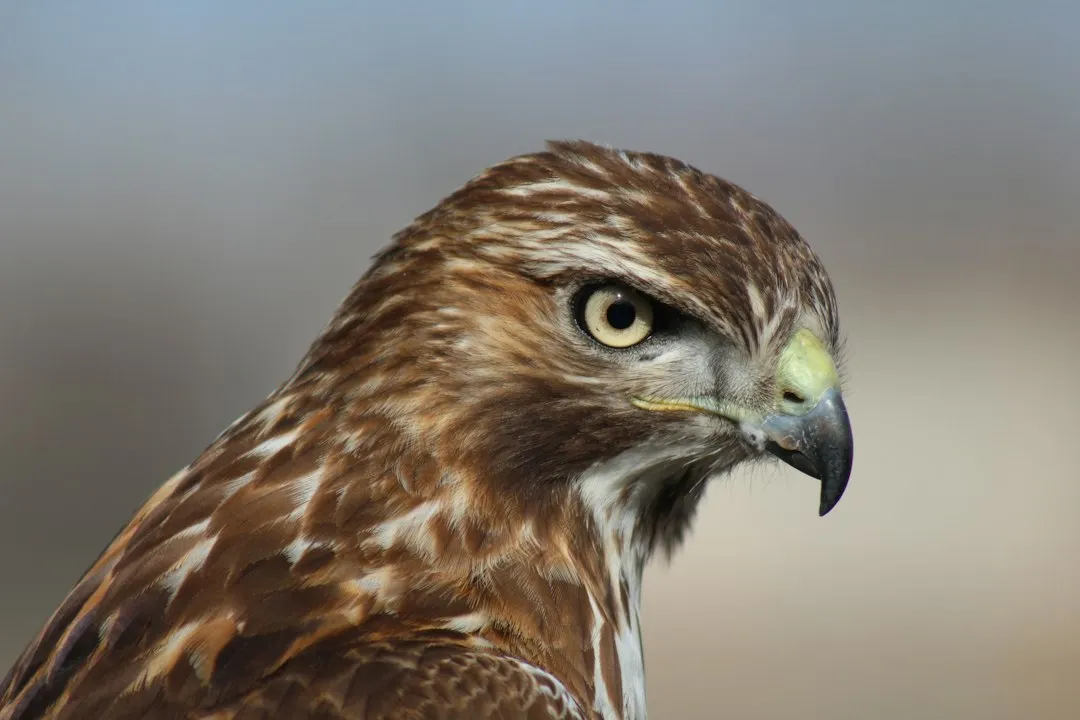
Hawks don’t just judge humans directly. They watch how other birds react around you, and that reaction is treated as real intelligence.
If songbirds and squirrels keep feeding calmly when you step outside, that tells the hawk something valuable: the locals aren’t panicking around this human, so maybe they’re safe. If every appearance sends birds exploding off the feeders, the hawk registers that spike of panic as a warning sign.
In many neighborhoods, crows function like an alarm system, mobbing anything they don’t like – owls, unfamiliar hawks, even certain humans. If crows repeatedly harass a hawk every time it perches near your yard, the hawk may simply decide the social environment isn’t worth the hassle.
This indirect reading of your “reputation” through other wildlife is remarkably efficient. Hawks get a free risk summary just by watching who stays relaxed when you walk past.
#8 – Running “Fake Nest” Trials and Abandoned Starts
🔥 Would you like to save this?
We'll email this post to you, so you can come back to it later!
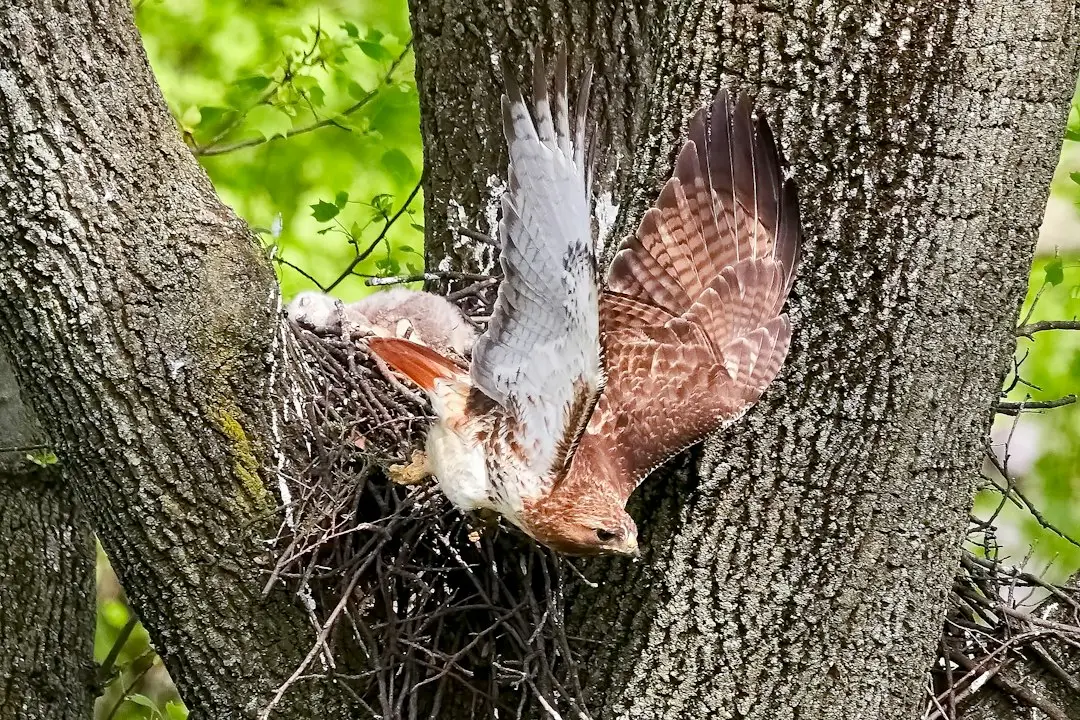
Hawks don’t always build once and commit. They frequently start small, half-hearted nest structures and then walk away from them entirely.
These “fake nests” or trial platforms are a way to test how the area feels once real investment begins. You might notice a loose bundle of sticks in a tree fork that never gets any bigger – that’s not laziness, it’s a deliberate test.
During this phase, the hawk is tracking whether humans notice and start looking up more, whether predators investigate the new structure, and how stable the branch feels under different wind conditions. If something feels off – too much new attention, too much sway in a storm – the hawk simply stops adding material and moves to a better site nearby.
Some homeowners feel oddly “rejected” when this happens, but it’s completely normal. Hawks often build several partial nests in one territory before ever signing the lease on a final spot.
#7 – Assessing Nighttime Light and Human After-Dark Habits
🔥 Would you like to save this?
We'll email this post to you, so you can come back to it later!
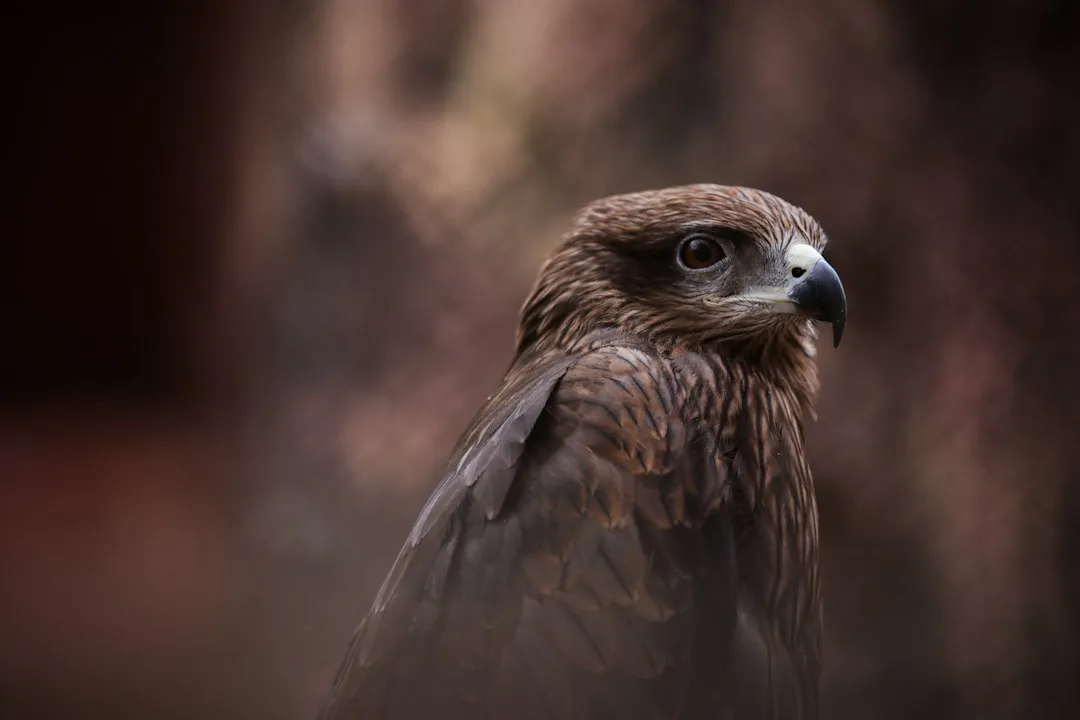
People forget that nesting hawks have to live with our behavior at night too. They’re mostly daytime hunters, but they still sleep, guard, and defend nests in the dark.
Before nesting near people, hawks experience your property at dusk and after sunset, usually from a higher perch, watching for motion-activated floodlights, porch and yard lights left on all night, and noisy hot tubs, outdoor TVs, or late-night parties.
Worth Knowing
- Hawks sleep, guard, and defend nests after dark even though they hunt by day
- Steady, dim porch light bothers hawks less than sudden motion-triggered floodlights
- Hot tubs, outdoor TVs, and late-night gatherings can disrupt chick rest patterns
- A calmer, darker yard consistently reads as safer than one lit for hours nightly
Constant or sudden bright light isn’t just annoying to a hawk – it can disrupt the resting pattern of both adults and chicks. A nest lit up for hours every night is far less attractive than one with calmer, darker surroundings.
Interestingly, some hawks tolerate a low, consistent urban glow but hate sudden flares. A porch light that stays dim all evening bothers them less than a high-powered sensor light that slams on every time a raccoon walks under the nest tree. Turn your property into a nightly light-and-noise festival, and don’t expect a hawk to gamble on raising chicks overhead.
#6 – Checking for Water Sources and Heat Stress Risks
🔥 Would you like to save this?
We'll email this post to you, so you can come back to it later!
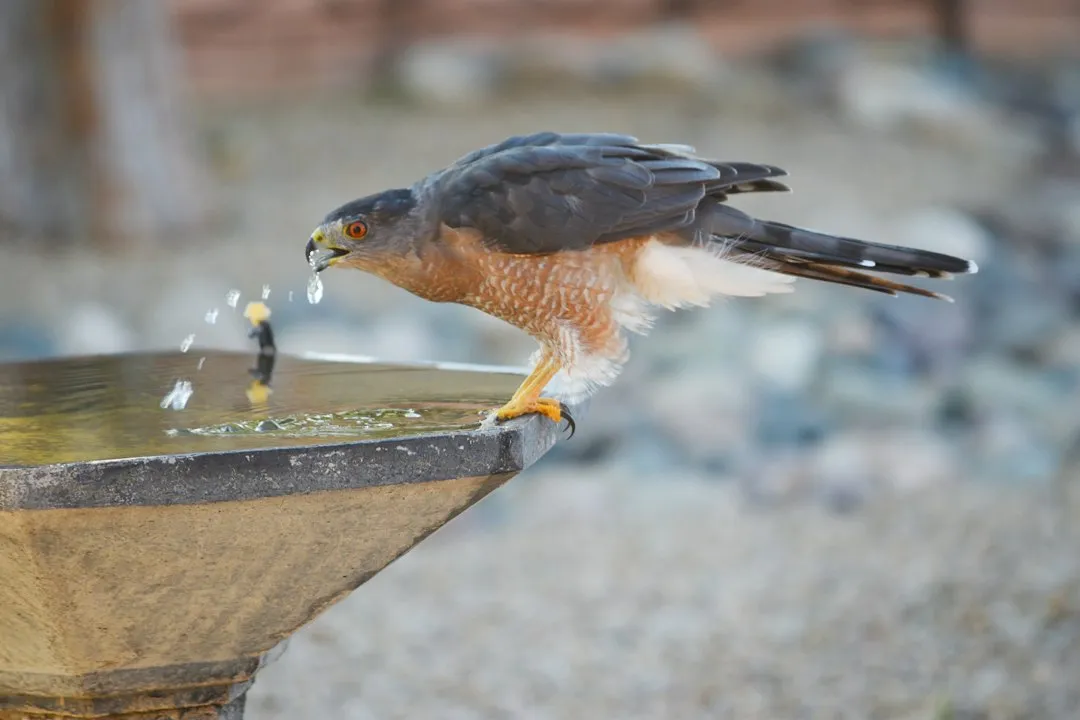
Food isn’t the only resource that matters. Water and heat play a bigger role than most people assume. In many regions, hawks nesting near people benefit from bird baths, decorative ponds, and irrigation systems that create cooler, greener micro-patches.
Before nesting, a hawk pays close attention to where water collects and how the landscape holds up during a heat wave. In very hot spells, shaded, slightly moister yards can be dramatically safer for eggs and chicks – the adults can cool themselves by panting and drooping their wings, but they can’t relocate the nest after it’s built.
You may notice hawks loafing longer near properties with mature shade trees and nearby water, simply resting between hunts. That loitering is partly a comfort test: can I sit here through midday heat without roasting?
Stripped, baked-dry yards with no mature shade and glaring, heat-blasting surfaces are far less attractive for nesting, even when prey is abundant nearby.
#5 – Evaluating Human Vertical Intrusions (Ladders, Roof Work, Tree Trimming)
🔥 Would you like to save this?
We'll email this post to you, so you can come back to it later!
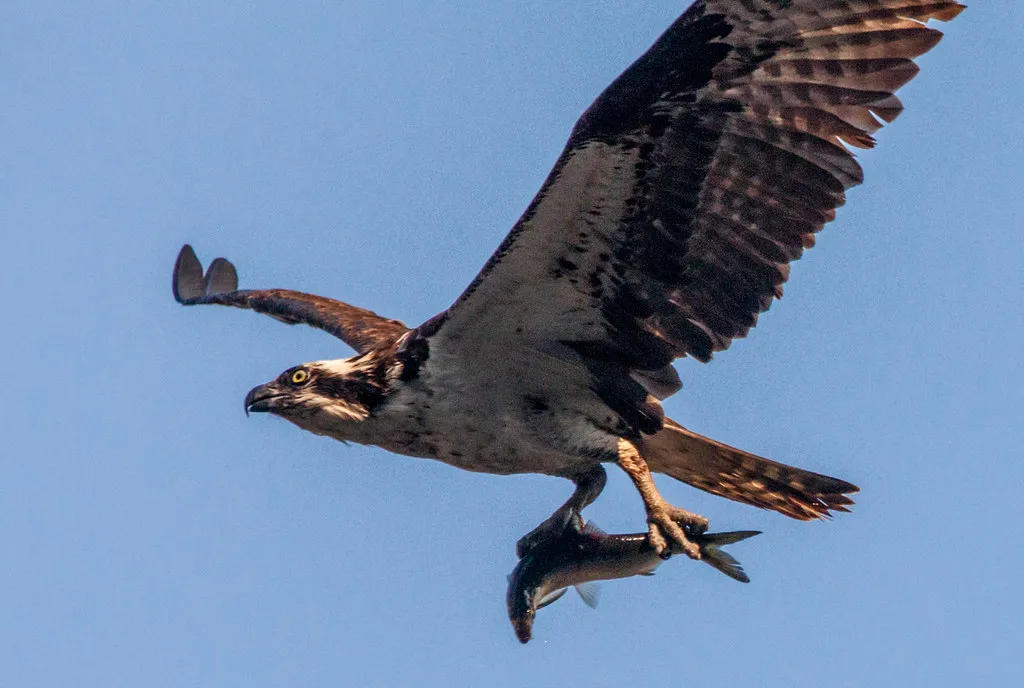
Most people only think about normal, ground-level behavior. Hawks pay special attention to how often you go up.
If, during early breeding season, you or your neighbors spend a lot of time on roofs repairing shingles, trimming branches with a bucket truck, or cleaning gutters with tall ladders, a hawk notices immediately. Vertical human movement is far more threatening to a tree-nesting raptor than people simply walking below, because someone climbing into the canopy looks dangerously similar to a predator heading straight for the nest.
Many apparently “random” nest abandonments happen right after a major tree-trimming job near a hawk’s chosen site. In preparation, hawks track how often big vehicles, ladders, or lift buckets show up in your yard or street during late winter and early spring.
If heavy work seems frequent or unpredictable, the birds look for a quieter block – sometimes just one street over, out of sight of the sawdust and the noise.
#4 – Monitoring Child Density and Play Zones
🔥 Would you like to save this?
We'll email this post to you, so you can come back to it later!
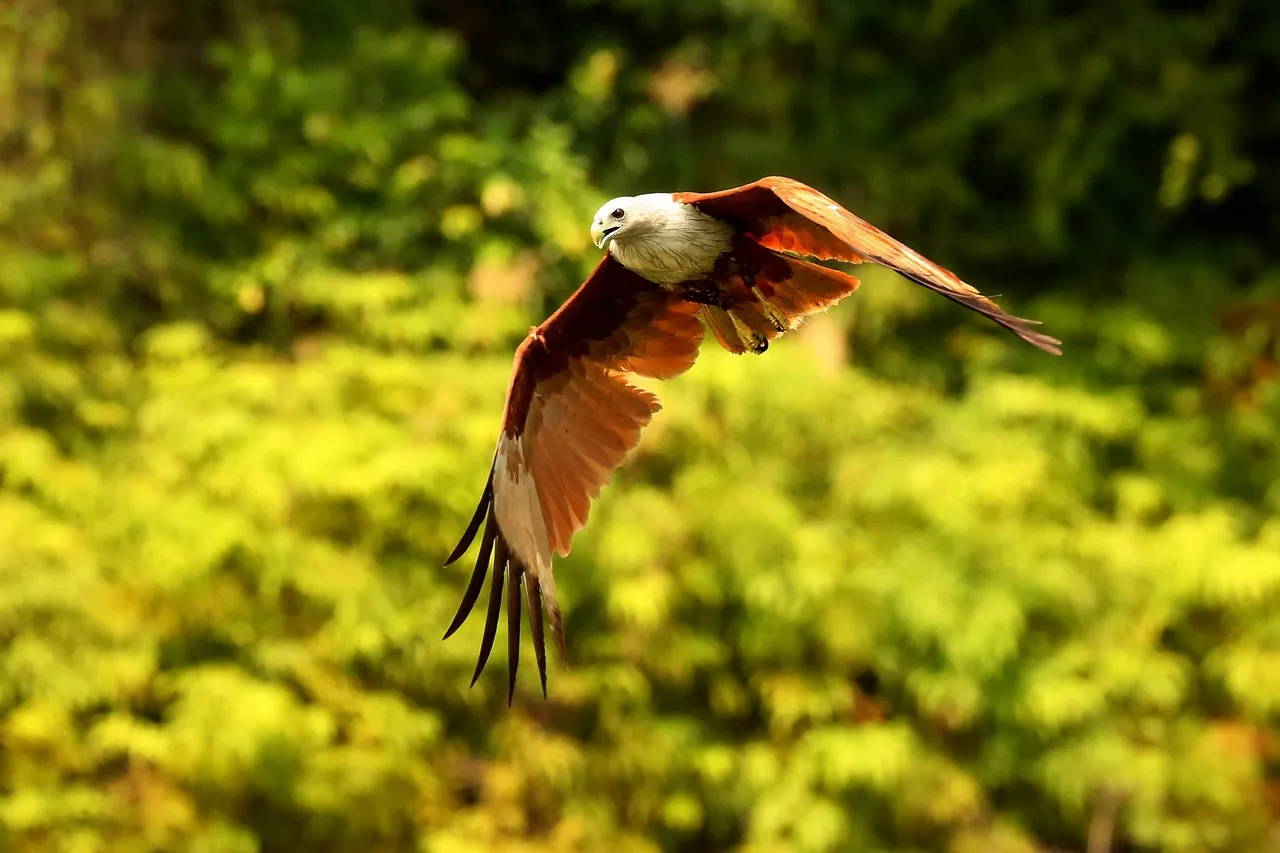
This is the part people don’t love hearing. From a hawk’s perspective, small children are loud, fast, and erratic – exactly the kind of disturbance you don’t want anywhere near fragile eggs and chicks.
Before nesting near people, hawks pay close attention to where kids usually play: trampolines, swing sets, playhouses, ball courts, or open lawns where games and parties happen. If kids are present but mostly confined to one corner at predictable times, a hawk might still nest on the opposite edge of the property or in a tree across the street.
But if the entire area is a roaming zone of shrieking, chasing, and thrown objects, many hawks simply will not risk it. No amount of good hunting fixes that.
Ironically, the “family-friendly” yards packed with play equipment are often the least attractive nesting sites, while the boring, low-traffic yard two houses down gets the raptor family instead. It feels unfair, but from the hawk’s side of the equation, noise and chaos always equal risk.
#3 – Tracking Seasonal Human Swings (Mowers, Parties, Construction)
🔥 Would you like to save this?
We'll email this post to you, so you can come back to it later!
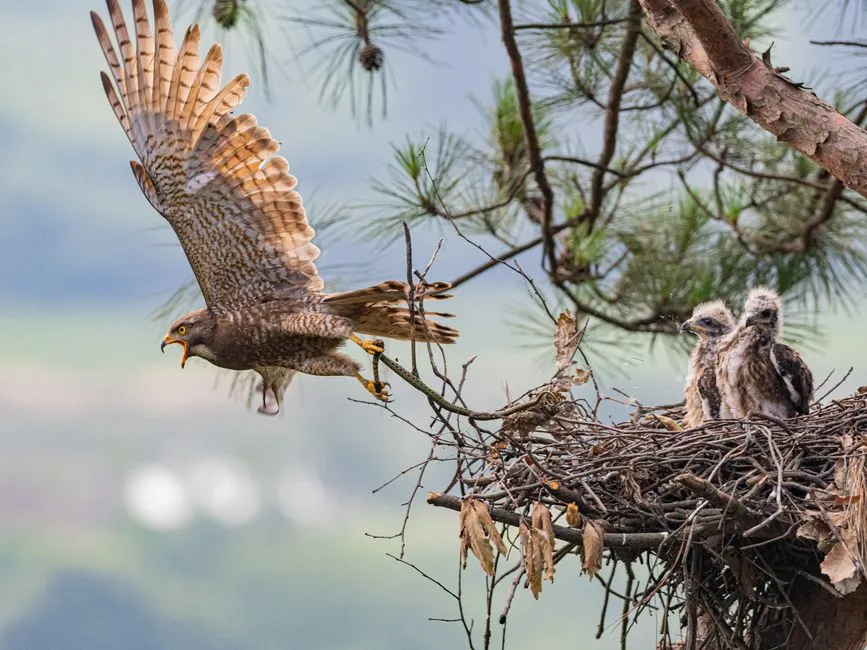
Hawks think in seasons, not days. They know your yard in February won’t behave the same way it does in May, and they’re already predicting what’s coming based on last year’s patterns.
They pay attention to when mowing typically starts, whether spring brings big construction projects or deck parties, and whether sports seasons mean more people showing up in nearby fields or parks. Some hawks will nest surprisingly close to humans if they’ve learned that major disturbances arrive as short, predictable bursts – a Saturday morning mowing routine is far less threatening than random late-night yard work.
At a Glance
- Predictable bursts, like Saturday morning mowing, feel safer than random late-night work
- Sudden renovations or new landscaping after nesting starts can trigger abandonment
- Hawks track seasonal patterns like construction timing and sports schedules year over year
- Unpredictable disturbances outweigh even loud but consistent ones
Where humans usually get it wrong is assuming their own behavior is stable. If you suddenly launch a major renovation or new landscaping project right after a hawk starts nesting, you’ve changed the rules mid-game.
That kind of surprise can trigger aggressive dive-bombing, extreme stress, or outright nest abandonment. Hawks that detect big, unpredictable seasonal swings ahead of time often just choose a different block entirely, sparing themselves the gamble.
#2 – Gauging Human Curiosity and Respect (The “Stare Test”)
🔥 Would you like to save this?
We'll email this post to you, so you can come back to it later!
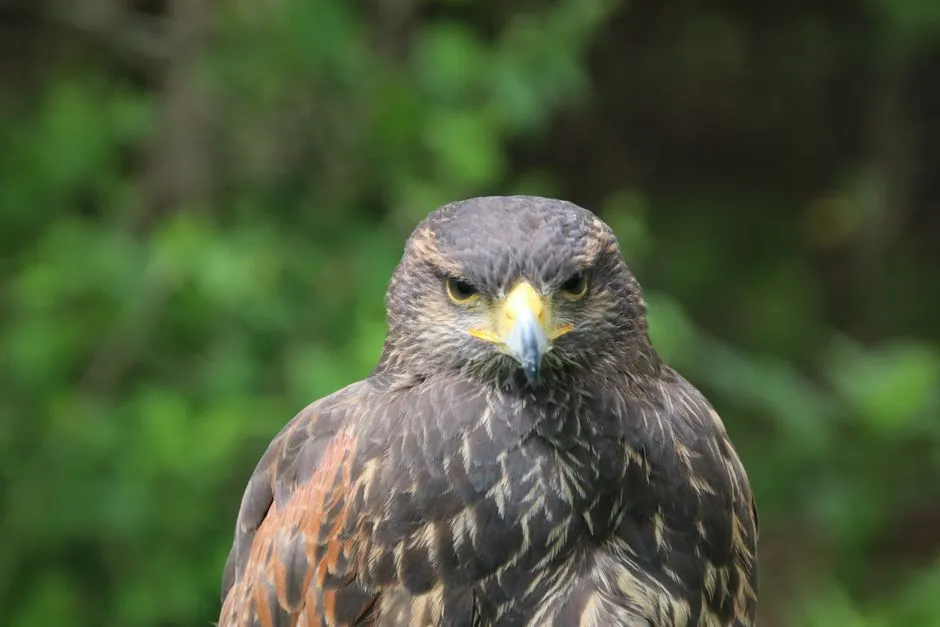
Before trusting humans as neighbors, hawks run a simple psychological experiment: they see how obsessed you are with them.
At first, they’ll perch somewhere visible and let you notice them, then watch closely to see what happens next. Do you casually glance and move on, or do you stare for long periods, point and shout and gather the whole family, or walk closer for photos every single time?
To a hawk, intense, repeated human focus is a serious red flag. Predators stare. Safe animals glance and carry on. People who constantly close the distance, crane their necks, and point phones are signaling that they might escalate later, once eggs or chicks appear.
Wild things have a certain fixity of purpose and integrity of self that is disturbed by too much attention.
Sigurd F. Olson
Ironically, the households that gush the most about “our hawk” and race outside for every sighting often push the bird toward a quieter neighbor’s yard. Neighborhoods where people mostly leave the bird alone tend to keep their hawk nests longer, with far fewer aggressive incidents.
#1 – Testing Whether You’ll Back Off Once They Commit
🔥 Would you like to save this?
We'll email this post to you, so you can come back to it later!
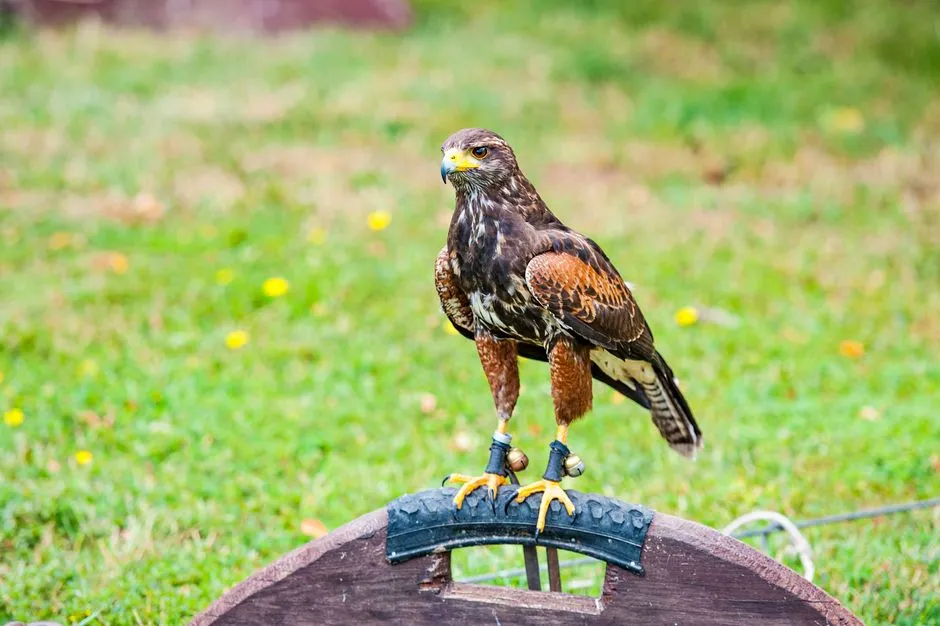
The final, most decisive test happens right before nesting truly begins. Hawks will often make one or two bold, close approaches – perching near a window, sitting low on a nearby branch, or landing on a fence post in plain view.
This is not the bird saying hello. It’s a deliberate pressure test: if I move in and get more protective, will these humans respect the boundary, or push against it?
In this phase, the hawk watches whether you back off when it vocalizes or flares its wings, whether you keep pushing for a closer photo anyway, or whether you complain, call wildlife control, or throw objects at it.
If your response to these early warning signs is to give the bird space – adjusting your path slightly, keeping kids and pets back, staying away from the nest tree – the hawk learns you can be negotiated with. Do the opposite, and it assumes future conflict is inevitable, often abandoning the site before a single egg is laid. This is the quiet contract hawks make with tolerant humans: we’ll raise our family here, if you prove you can share the airspace without constantly pushing the limit.
The Bottom Line
🔥 Would you like to save this?
We'll email this post to you, so you can come back to it later!
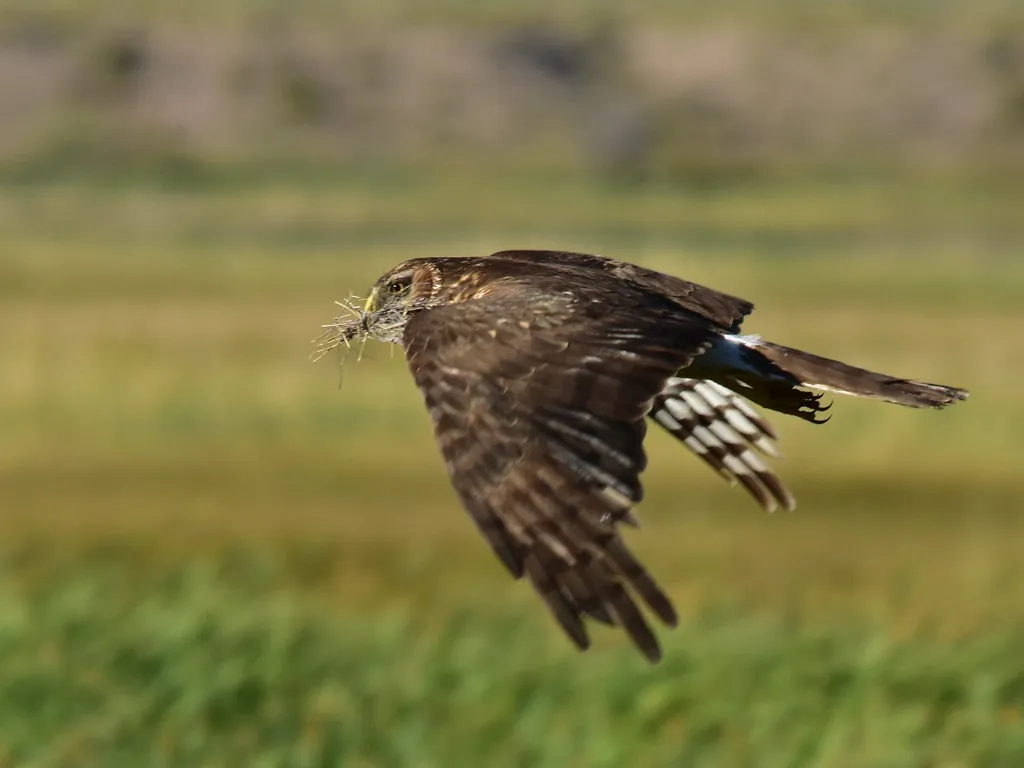
When a hawk chooses to nest near people, it isn’t random, and it definitely isn’t because it “likes” you. It has already run an invisible checklist covering escape routes, noise levels, predator traffic, pet behavior, kids’ play zones, food supply, light pollution, and exactly how obsessed you seem with watching it.
Most yards fail that checklist long before a single twig ever gets placed. And honestly, that’s the part worth sitting with: hawks want the easy hunting our neighborhoods provide, but most of them don’t trust us enough to raise chicks directly over our heads.
If you’re lucky enough to host a nest, you didn’t get chosen by accident or charm – you accidentally passed dozens of behavioral tests you never even knew you were taking. That’s not a compliment to your yard. It’s a compliment to your restraint.
So, do you think a hawk would ever nest near your place, or did one of these points just explain exactly why it never has? Did we miss a behavior you’ve seen firsthand? Drop it in the comments.

- 14 Wildlife Permits Waived for Americans the Year They Turn 62 - November 5, 2026
- Machu Picchu’s Engineering Feats Were Far Ahead of Its Time - November 5, 2026
- 12 Most Beautiful American Cities To See Before You Die - November 4, 2026