

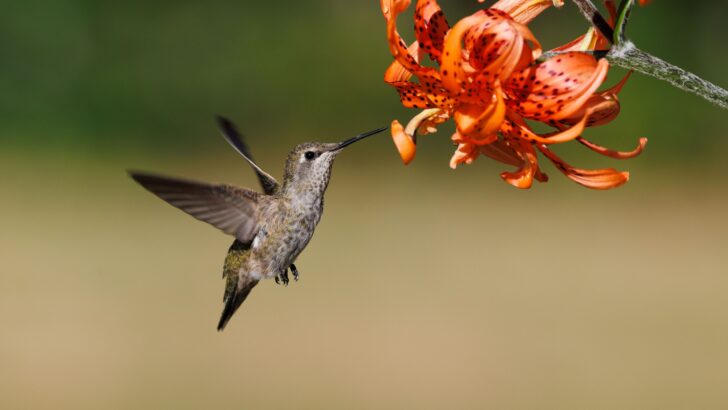
From a lawn chair, backyard hummingbird feeders look like tiny buffets where everyone’s invited. Bright wings hover, dip, and drink in what should be a peaceful little ecosystem of sugar water and goodwill. Then one bird shows up, and the whole scene turns into a one-sided turf war.
People assume a full feeder means happy sharing, but one dominant hummingbird can turn a backyard into its personal battlefield, chasing off anything with wings that dares get close. If you’ve ever wondered why only one hummingbird ever seems to visit your feeder while a dozen others just watch from the trees, you’re about to find out exactly how that tiny tyrant pulls it off – and why it’s willing to burn itself out defending sugar water it never needed to fight for in the first place.
#18 – Claiming the Highest Perch as a Lookout Tower
🔥 Would you like to save this?
We'll email this post to you, so you can come back to it later!
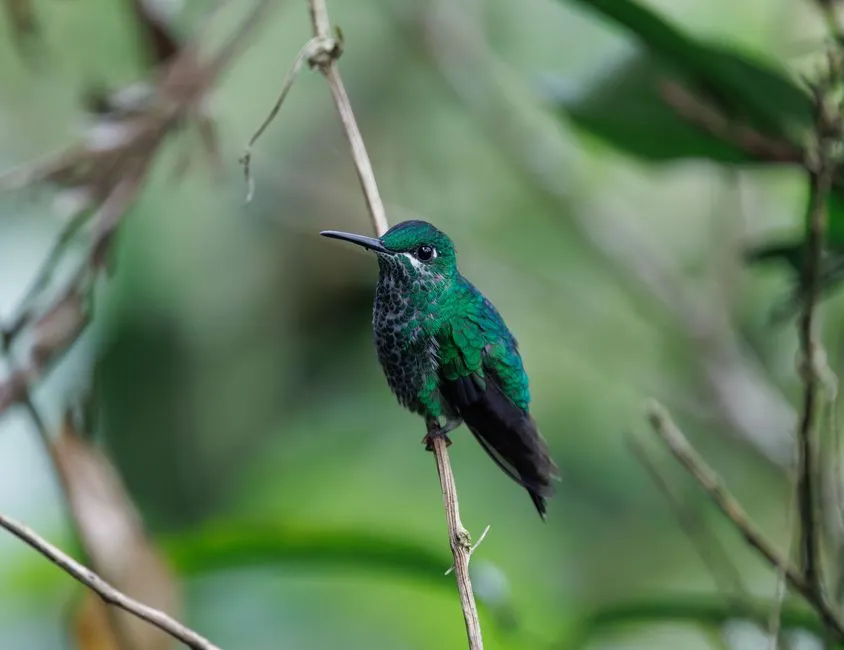
The first move a dominant hummingbird makes isn’t at the feeder at all – it happens above it. A true boss bird almost always claims the highest, most exposed perch in the area: the tip of a dead branch, the peak of a shepherd’s hook, the very top wire on a fence. From up there, it has a clear sightline over the feeder and most of the yard around it.
Most casual birdwatchers miss this completely. They see an “empty” feeder and assume no birds are around, when really the guard is sitting quietly a few feet away, watching everything.
Hummingbirds process visual motion at speeds far beyond human eyesight, so a rival barely peeking around a leaf gets noticed instantly. That’s the genius of the strategy: instead of burning fuel hovering by the ports all day, the dominant bird turns a twig into a free surveillance tower.
- High perch = watching the whole yard without spending energy
- Clear sightlines = spotting rivals before they’re anywhere near the nectar
#17 – Launching Sudden Dive-Bomb Attacks
🔥 Would you like to save this?
We'll email this post to you, so you can come back to it later!
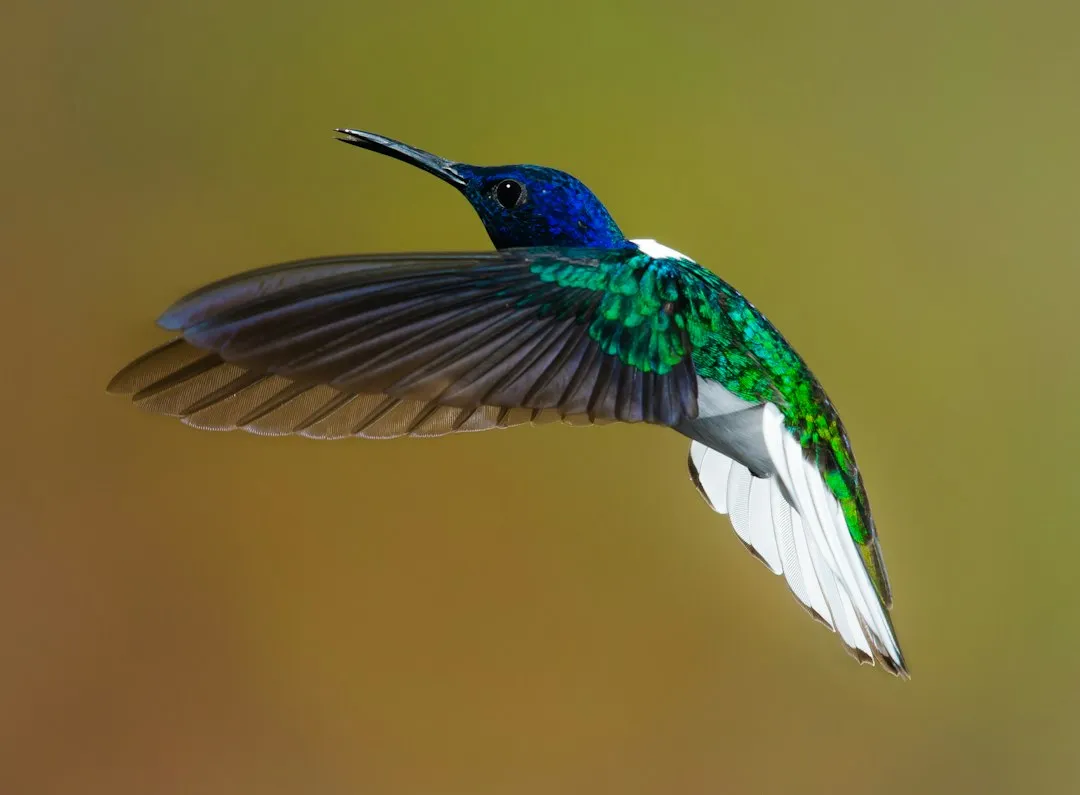
Once a rival slips into view, the lookout instantly becomes a guided missile. The dominant bird drops from its perch in a steep, screaming dive, wings buzzing loud enough to hear from a porch. These aren’t clumsy warning swoops – they’re precise attack runs meant to terrify, not necessarily to make contact.
The strike usually comes from above or behind, catching the intruder off guard and forcing it to peel away immediately. It’s easy to mistake this for playful chasing, but the physics say otherwise: hummingbirds can hit speeds over 30 mph in a dive, pulling g-forces that would knock out a human pilot.
What’s strange is how unnecessary it all looks from the porch. The feeder is full. There’s more than enough nectar for everyone. But for a hummingbird, even the smallest perceived threat to its food supply reads as a five-alarm emergency, a leftover instinct from a world where birds that didn’t fight for food often didn’t survive it.
Fast Facts
- Dive attacks can push speeds beyond 30 mph in under two seconds
- Pullout forces have been measured approaching levels fighter pilots would struggle to handle
- Most dives are bluffs – contact is rare, intimidation is the real weapon
- Attacks typically launch from a perch within a few feet of the feeder
#16 – Guarding “Invisible” Airspace Around the Feeder
🔥 Would you like to save this?
We'll email this post to you, so you can come back to it later!
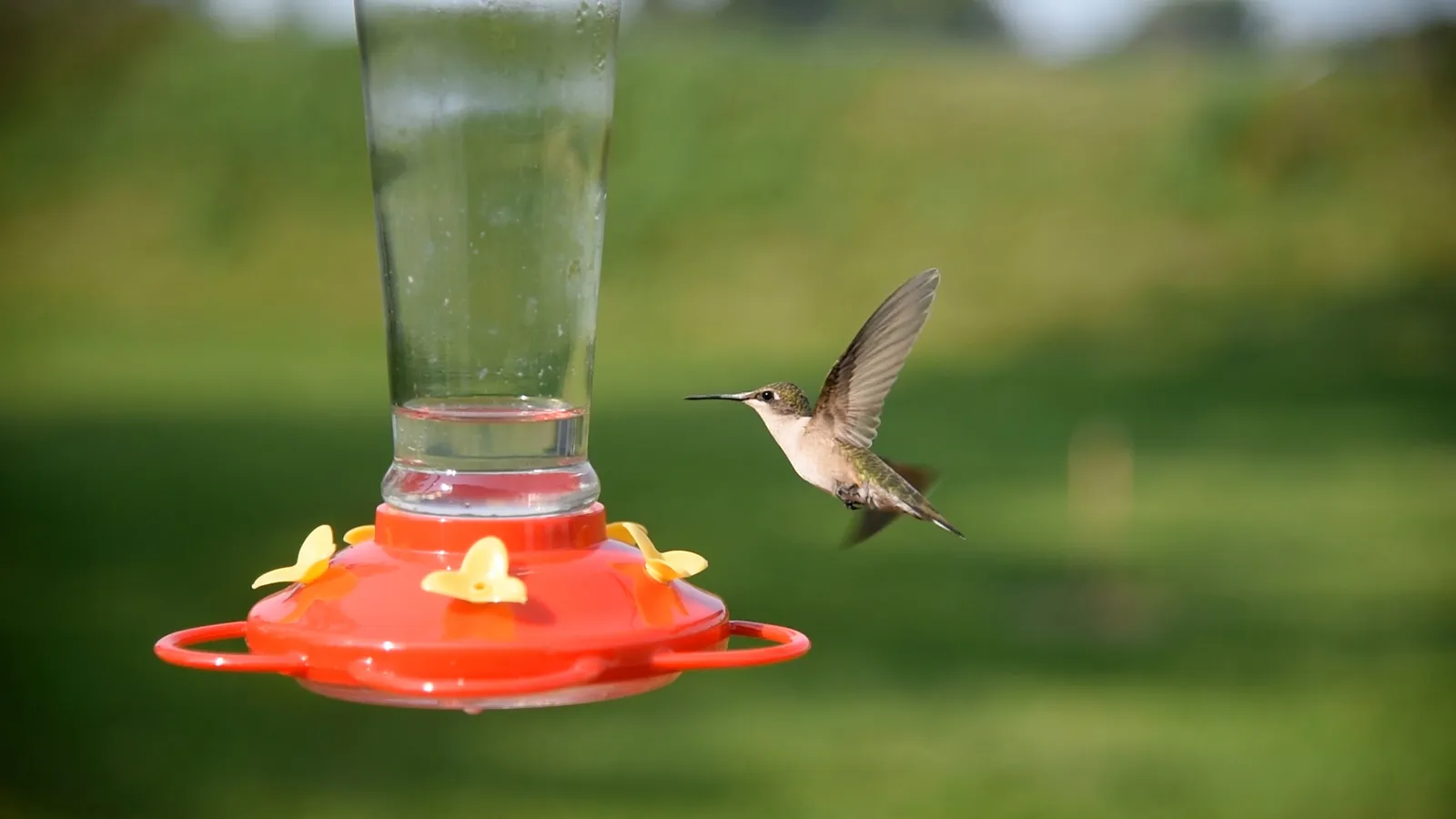
Most people assume the plastic feeder itself is the prize being defended. In reality, the real territory is mostly empty air. A dominant hummingbird builds an invisible bubble around the feeder that can stretch ten to twenty feet in every direction, sometimes farther if flowers are nearby.
Cross that line – even just flying past on your way somewhere else – and you’ll get chased. That’s why you’ll sometimes watch a hummingbird rocket off its perch and pursue a stranger clear across the yard for no obvious reason. To the dominant bird, that stranger just crossed a border only it can see.
Researchers describe this setup as a core feeding zone surrounded by a looser patrol zone the bird is willing to defend but not fight to the death over. It explains why hanging a second feeder right next to the first almost never solves the aggression problem – it’s still sitting inside one bird’s personal airspace.
#15 – Using Alarm Calls and Angry Chatter
🔥 Would you like to save this?
We'll email this post to you, so you can come back to it later!
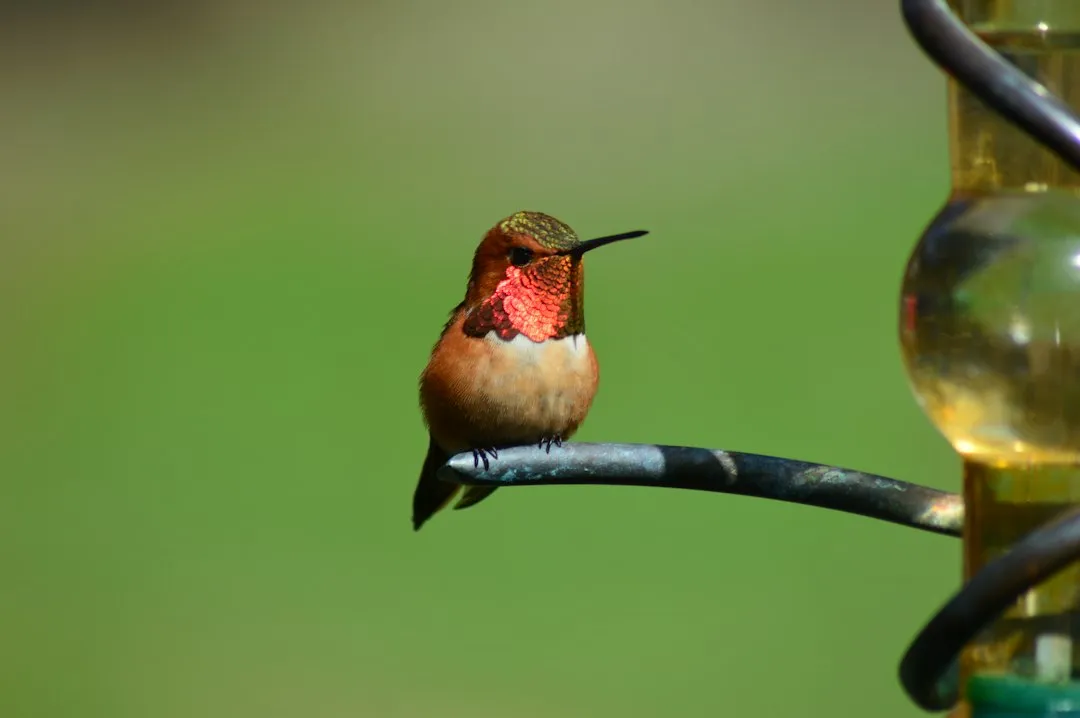
Hummingbirds have a reputation for being silent little jewels, but a dominant bird uses its voice like a car alarm. Listen closely near a contested feeder and you’ll hear sharp metallic chips, rapid-fire tik-tik-tik calls, and an irritated buzzing whenever a rival gets close.
None of that noise is random. It’s a broadcast message that translates roughly to “I see you, this is mine, back off.” Rufous Hummingbirds in particular are famous for being loud during these standoffs, filling the yard with tiny, furious sirens.
The sound does double duty. It warns off timid rivals before a fight even starts, and it seems to pump up the defender itself, ramping its own aggression and readiness. Backyard watchers often notice the chatter gets louder in late summer, when migration crowds the sky with extra competition fighting for the same few feeders.
#14 – Chasing Rivals Far Beyond the Feeder
🔥 Would you like to save this?
We'll email this post to you, so you can come back to it later!
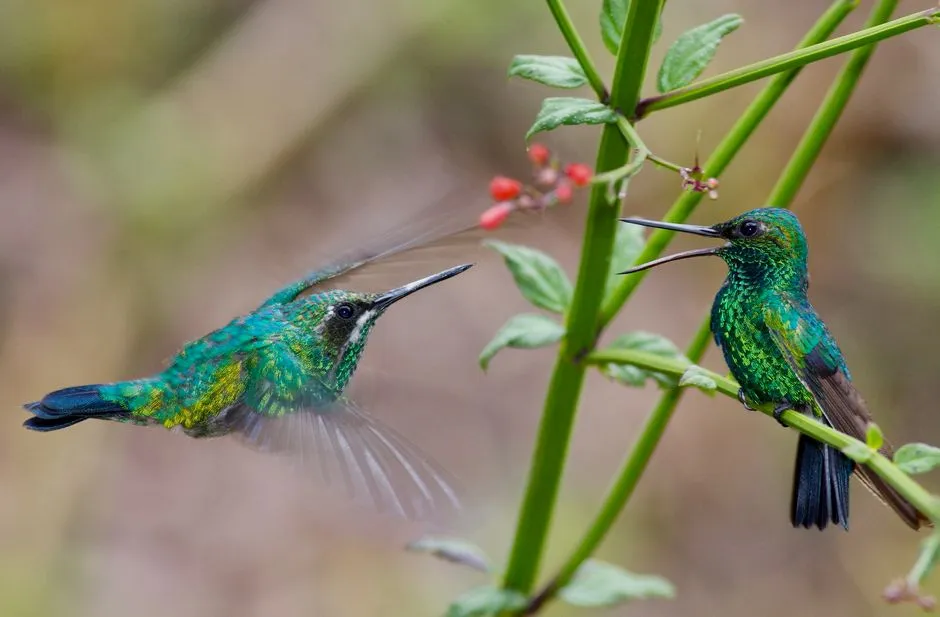
Sometimes scaring a rival off the perch isn’t enough. A dominant hummingbird will chase an intruder across the yard, over the roofline, and completely out of sight – a full escort mission well past the edge of its own territory.
These chases look like dogfights: sharp turns, spirals, sudden reversals, both birds pushing their bodies to the limit. The pursuer keeps pressing until the rival drops altitude, changes direction hard, or vanishes behind the trees.
It’s an expensive move. A three-gram hummingbird already runs one of the highest metabolisms of any warm-blooded animal on Earth, so why burn extra fuel on a chase that could’ve ended at the fence line? Because the payoff isn’t just physical – it’s psychological. A bird that gets run off hard learns fast that this particular feeder isn’t worth the trouble, and that lesson can keep it away for days.
#13 – Timing Its Own Feeding for Maximum Control
🔥 Would you like to save this?
We'll email this post to you, so you can come back to it later!
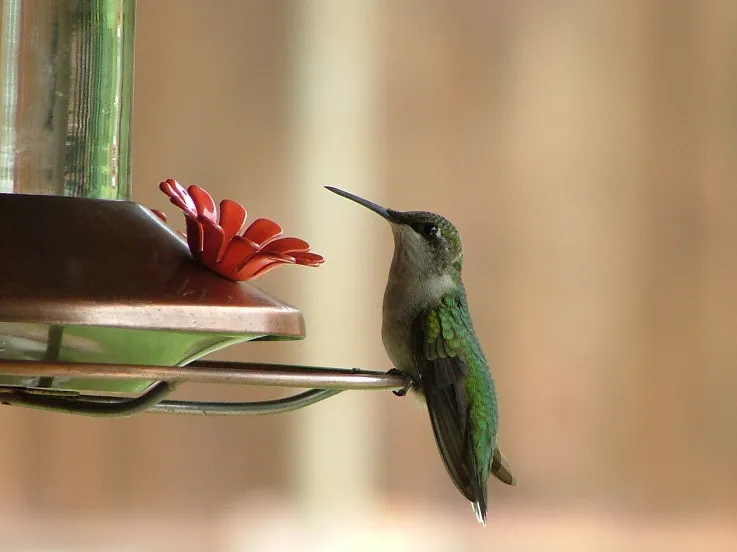
A boss hummingbird doesn’t just guard the feeder, it schedules around it. Instead of settling in for one long drink, it takes short, frequent sips and darts right back to its lookout perch between visits. Think of it as micro-snacking to stay combat-ready.
That pattern keeps it close enough to react the second a rival shows up, without ever getting so full it needs to sit somewhere far away to digest. Notice how aggression tends to spike at dawn and dusk? That’s not a coincidence.
Hummingbirds go to sleep with limited fuel reserves and can wake up having lost ten percent or more of their body weight overnight, according to banding research. Those early and late hours aren’t just busy – they’re desperate, and a dominant bird defends them like its life depends on it, because it genuinely might.
- Short, frequent sips keep the boss bird alert and nearby
- Dawn and dusk aggression spikes are tied directly to survival math
#12 – Choosing Feeder Spots That Favor Ambush
🔥 Would you like to save this?
We'll email this post to you, so you can come back to it later!
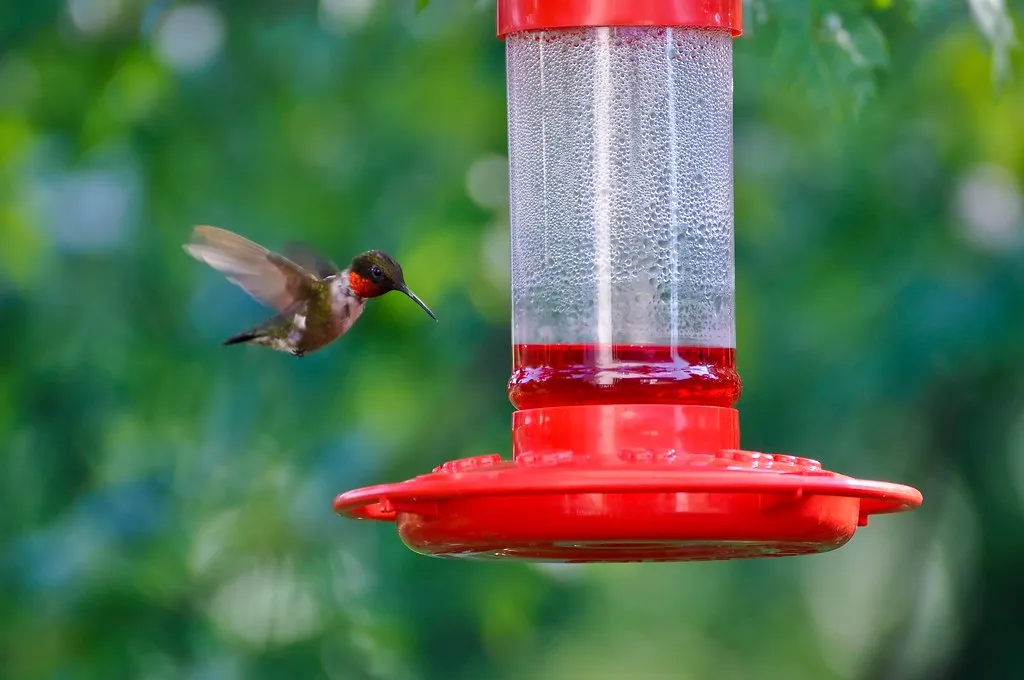
Not every feeder location is equally easy to dominate, and a smart bully knows the difference. Given the choice, a dominant hummingbird prefers a feeder positioned near cover – close to shrubs, low branches, or wires – where it can sit half-hidden and launch surprise attacks.
A feeder hung in the wide-open middle of a bare lawn, with no nearby perches, is much harder for a single bird to fully control. There’s nowhere to hide and wait, and nowhere close enough to react instantly.
That’s basically why some experienced backyard birders say the location you choose decides the whole outcome. Put a feeder next to a “perfect” ambush perch and you’re handing one bird the throne. Spread multiple feeders around corners, out of each other’s sightline, and that same bird’s control starts falling apart fast.
#11 – Flashing Throat and Tail Feathers as Threat Displays
🔥 Would you like to save this?
We'll email this post to you, so you can come back to it later!
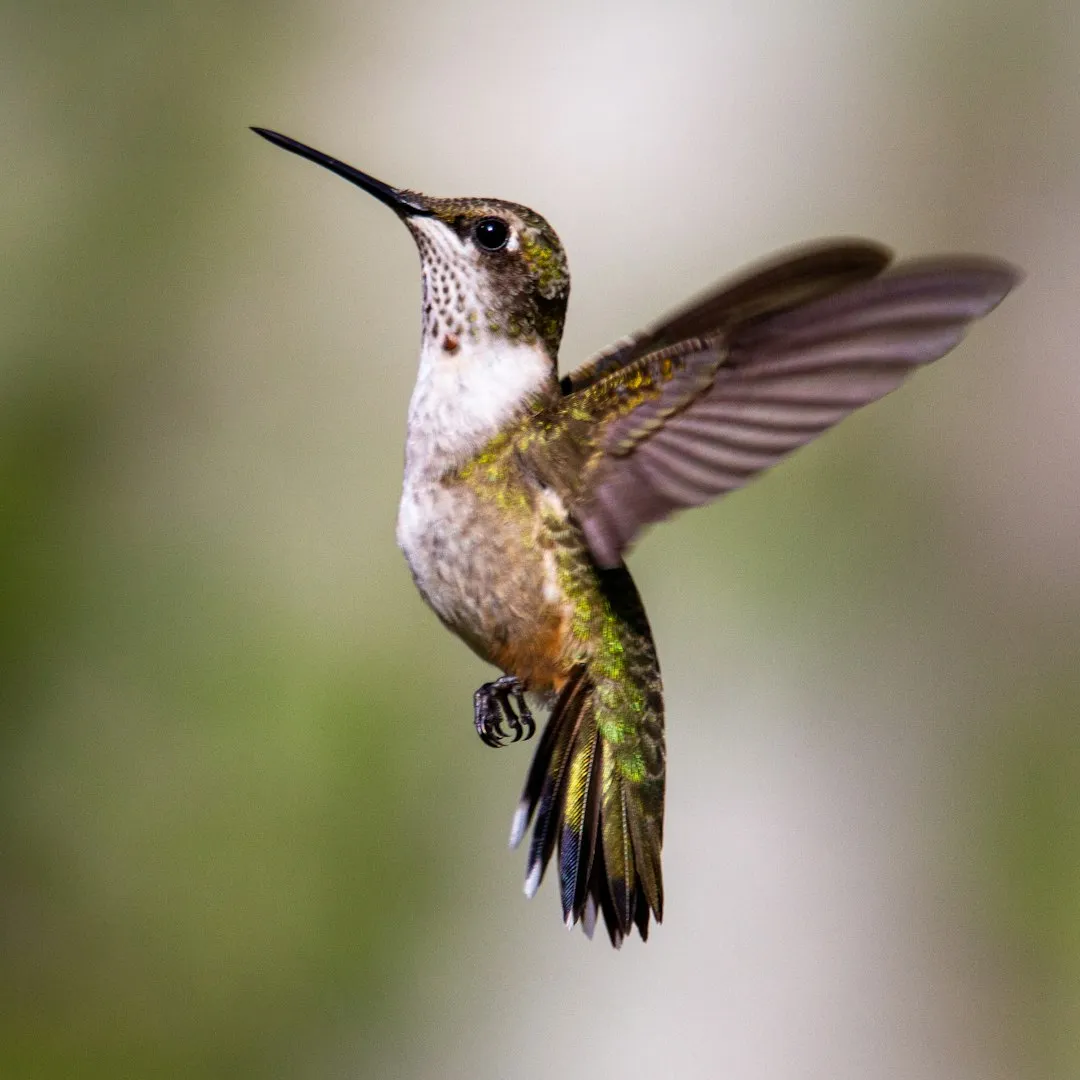
Dominance isn’t only about speed – it’s also theater. When a rival gets close, the dominant bird often flares its gorget, the iridescent throat patch that shifts color depending on the angle of light, and fans its tail wide. Those flashes of red, violet, or orange aren’t just gorgeous – they’re a warning shot.
The sudden burst of shimmering color makes the bird look bigger and more dangerous than it actually is, like a glowing shield snapping open mid-air. Body posture matters too: wings held out, tail twisted toward the sun, the whole silhouette puffed up to look as intimidating as possible.
In some species, the tail feathers even produce a sharp mechanical sound during these displays, doing double duty as both a mating signal and an aggressive one. Color, sound, and motion combine into one unmistakable message: don’t test me. What looks like pure beauty to a casual observer reads as a territorial billboard to every other hummingbird nearby.
#10 – Remembering Exactly Who Tried to Steal a Sip
🔥 Would you like to save this?
We'll email this post to you, so you can come back to it later!
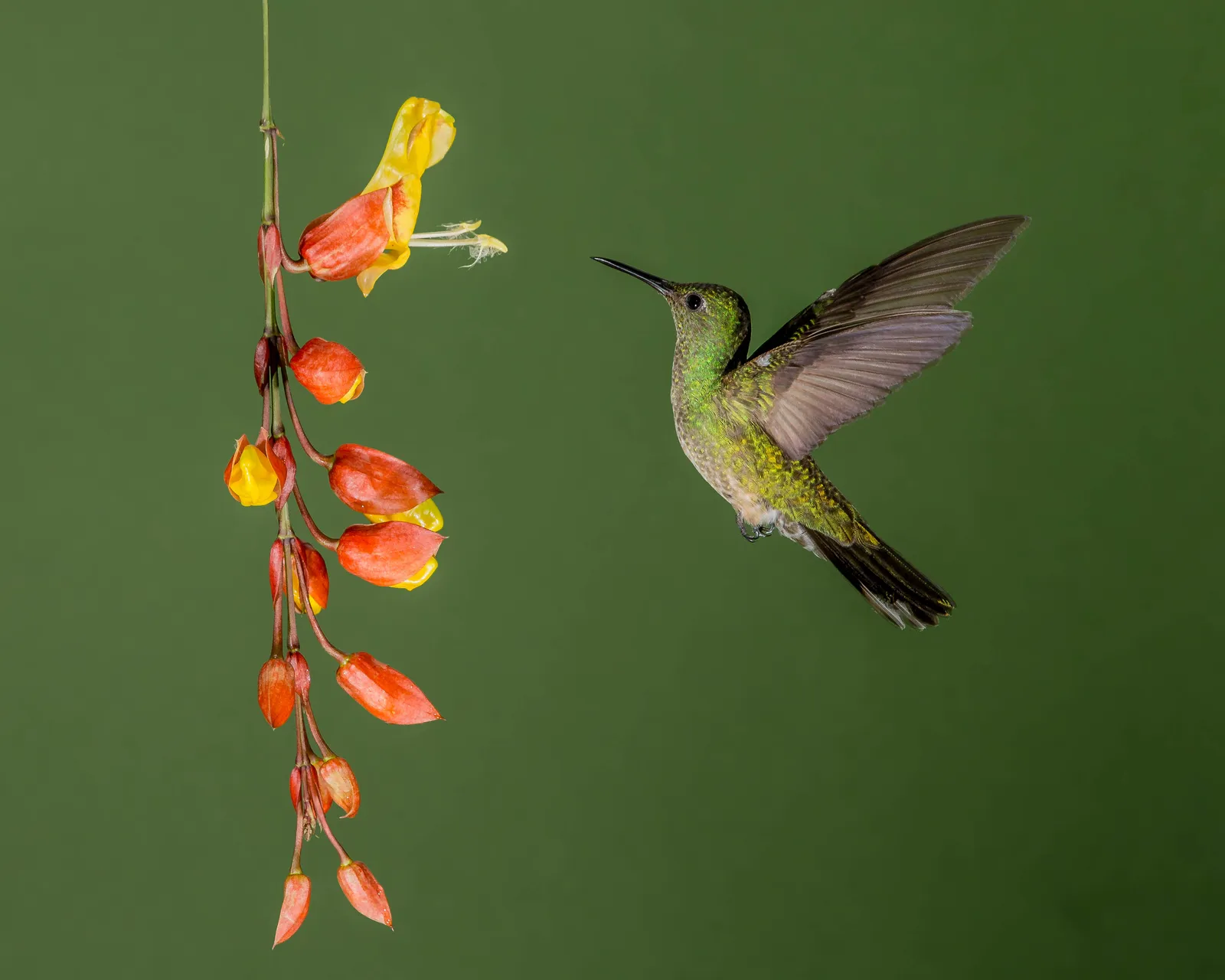
Hummingbirds have tiny bodies, but their memory for detail is surprisingly sharp. Studies show they track which flowers they’ve already visited, how long it takes each one to refill with nectar, and which locations are worth revisiting later – a mental map most people wouldn’t expect from something the size of a thumb.
That same memory seems to apply to rivals. Over time, a dominant bird appears to learn which neighbors back down easily and which ones keep sneaking back for more. You’ll sometimes watch the boss ignore one meek visitor entirely while launching straight at another that’s caused trouble before.
Bird banders half-jokingly say certain birds “hold grudges,” and while that’s a stretch, the underlying pattern is real: repeat offenders get chased harder and more often than first-timers. It’s a smart energy-saving strategy – the worst thieves earn the harshest response, while everyone else gets a lighter touch.
#9 – Positioning Its Body to Block Nectar Ports
🔥 Would you like to save this?
We'll email this post to you, so you can come back to it later!
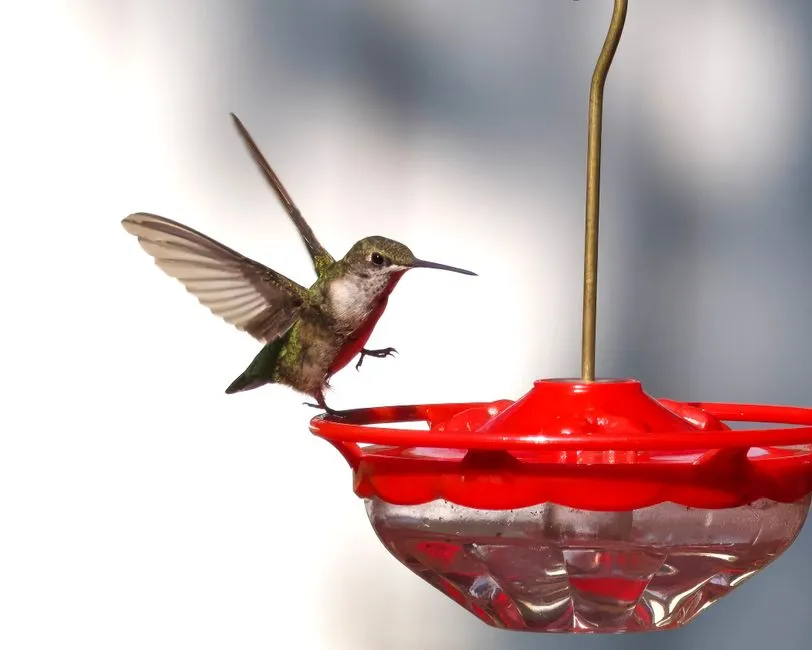
Not every dominance move is a high-speed chase. Sometimes it’s pure crowd control. A dominant hummingbird will sit sideways across a feeder, wings spread, tail fanned, physically blocking multiple ports so another bird can’t sneak in without getting uncomfortably close.
It’s a low-effort tactic: no chase required, just an inconvenient body in exactly the wrong spot. If a rival tries to slip around the edge, the boss can pivot fast, snap its bill in the air, or flick a wing as a warning shot.
For a bird lighter than a nickel, that small gesture is usually enough to send an intruder backing off without any actual contact. It’s the hummingbird version of spreading out at a crowded bar so nobody else can squeeze in – and if it doesn’t work, the fight escalates straight back to full aerial combat.
Worth Knowing
- Body-blocking costs far less energy than a full aerial chase
- It works best against shy, first-time visitors testing the feeder
- Bill-snaps and wing-flicks often back up the physical block
- Bold repeat visitors can force the standoff into a real chase
#8 – Burning Massive Energy in Short, Violent Bursts
🔥 Would you like to save this?
We'll email this post to you, so you can come back to it later!
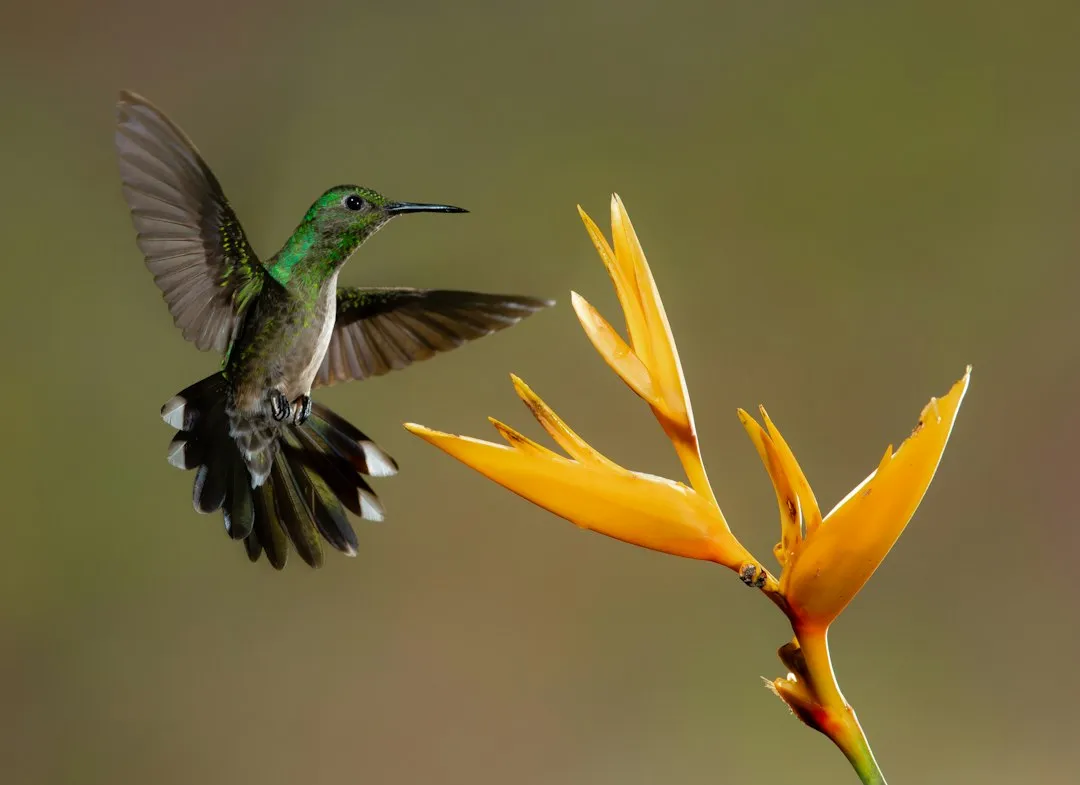
Here’s the paradox at the heart of all this aggression: the harder a hummingbird defends its feeder, the more it risks running itself into the ground. A resting hummingbird’s heart beats around 250 times a minute, but during a chase, that number can spike past 1,200 beats per minute, paired with wings flapping 50 to 80 times per second.
That’s a creature living permanently in the red zone. Hours of chasing rivals means hours of redlining a metabolism that’s already one of the fastest in the animal kingdom.
So why keep doing it? Because backing down used to mean losing the best feeding spots – and over evolutionary time, losing spots meant losing genetic ground. Modern feeders offer nectar that never runs out, but the instinct driving all this chaos was shaped by scarce, scattered wildflowers. The behavior is ancient. The plastic feeder is brand new, and nobody told the hummingbird the rules changed.
#7 – Exploiting Vertical Space: Up, Down, and Behind
🔥 Would you like to save this?
We'll email this post to you, so you can come back to it later!
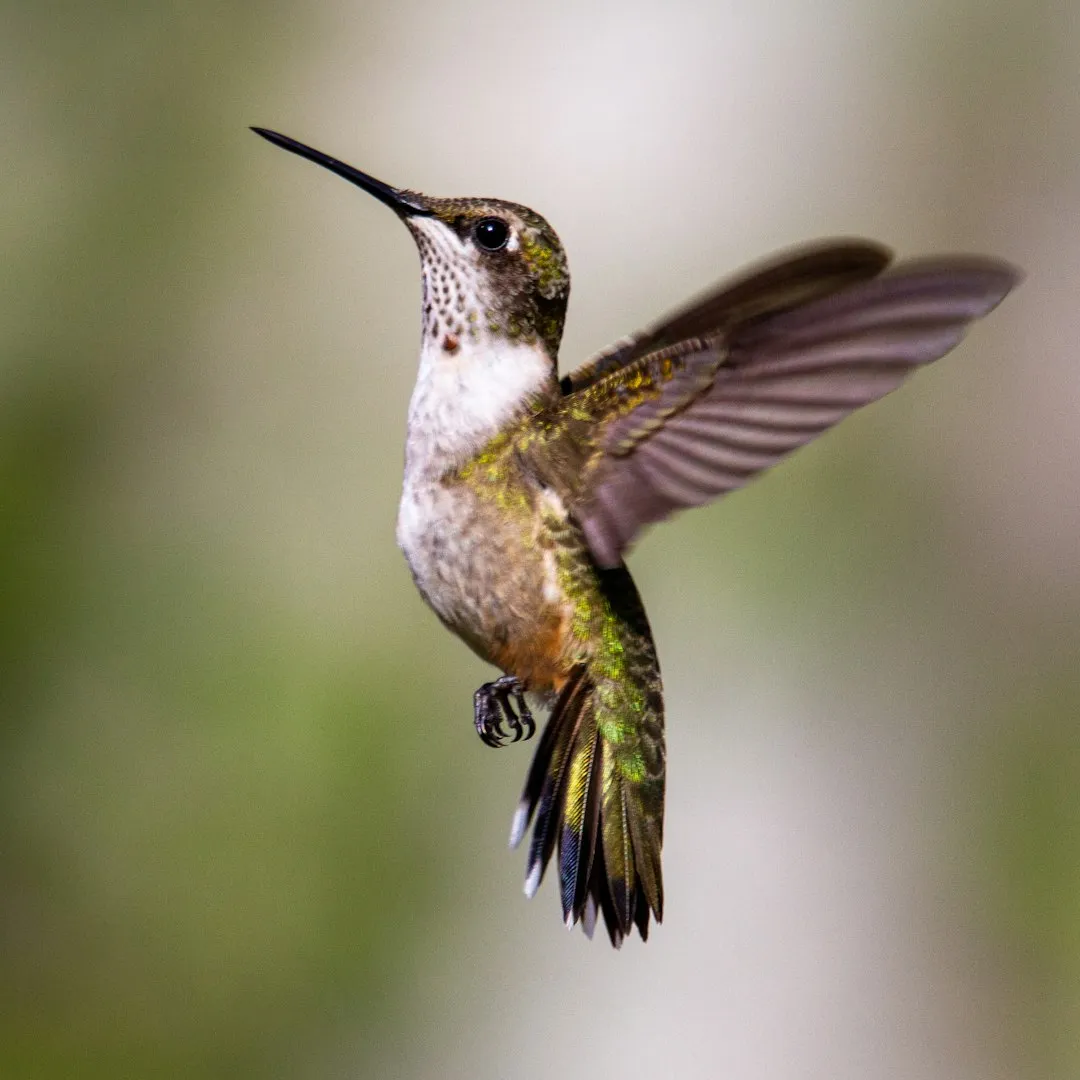
What looks like total chaos in the air is actually calculated strategy in three dimensions. A dominant hummingbird rarely attacks in a straight, flat line. Instead it dives from above, rises from underneath, or cuts in from behind foliage, using vertical angles that are much harder for a rival to predict.
A bird approaching the feeder head-on is easy to intercept. One weaving in low or ducking behind a branch is a much tougher target – so the dominant bird adjusts its patrol accordingly, constantly scanning multiple layers of airspace instead of just one.
That vertical awareness isn’t only about controlling rivals, either. Perching high and striking downward also gives the bird a better view of real danger – cats, snakes, hawks circling above. Dominance and self-preservation go hand in hand here; the smartest bullies in the yard are the ones managing risk just as actively as they manage rivals.
#6 – Timing Patrols with Flower Richness Nearby
🔥 Would you like to save this?
We'll email this post to you, so you can come back to it later!
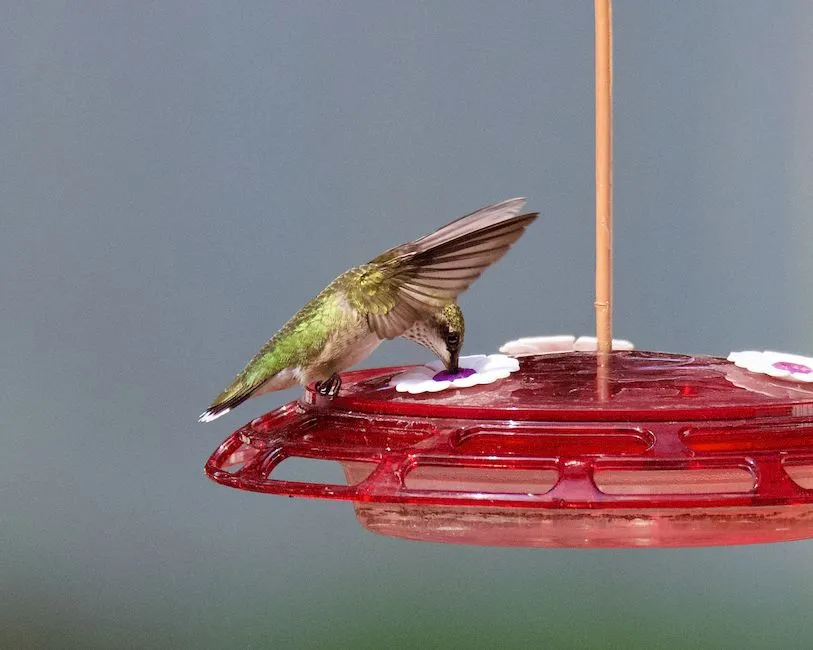
A feeder never exists in isolation – the whole yard factors into how hard a bird defends it. When natural flowers are blooming heavily nearby, some dominant hummingbirds actually ease up on patrols, since rivals have plenty of other places to eat. But when blossoms fade or gardens die back, the pressure around the feeder spikes fast.
That’s when you’ll see the boss bird widen its territory, chase harder, and return to its perch far more often, because the feeder has suddenly become the single most valuable resource for blocks in every direction.
Backyard regulars start to recognize distinct seasonal moods around the feeder:
- Early spring – tension builds as returning birds compete for the best spots
- Peak bloom – aggression eases while flowers offer backup options
- Late summer – migration plus fading blooms means full-scale feeder warfare
The dominant bird is constantly recalculating how valuable that feeder is compared to everything else nearby – and when the rest of the neighborhood dries up, it starts guarding the feeder like the last gas station on a deserted highway.
#5 – Targeting Specific Species and Sizes of Rivals
🔥 Would you like to save this?
We'll email this post to you, so you can come back to it later!
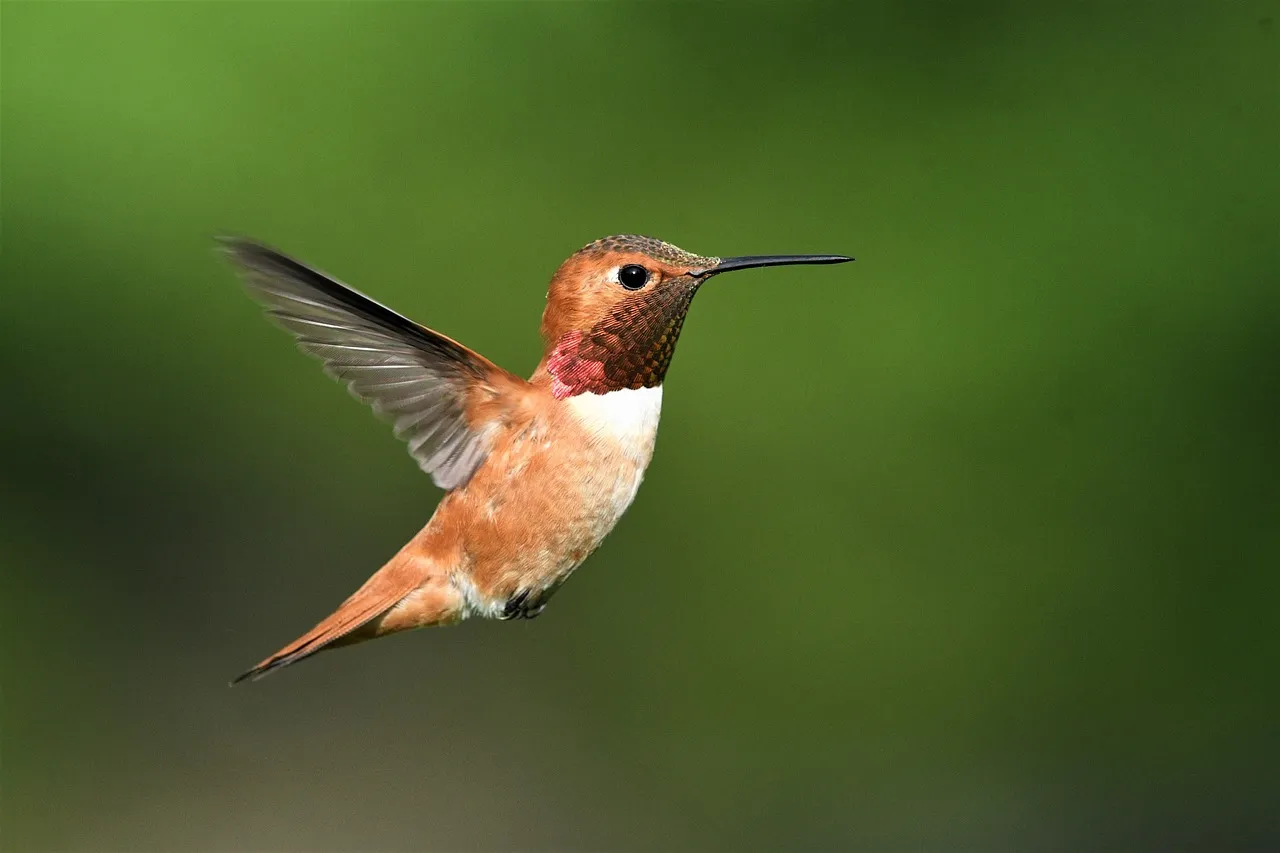
Not every intruder gets treated the same way. Some species are simply wired more aggressive than others – Rufous Hummingbirds out West are infamous for ruling feeders like tiny tyrants, bullying species twice their size without hesitation. A dominant bird quickly figures out which neighbors are easy to push around and which ones are more trouble than they’re worth.
Smaller or shyer species often get chased relentlessly, while bigger or equally feisty rivals tend to trigger shorter, sharper confrontations instead of a full pursuit. Attitude, it turns out, often matters more than size.
Occasionally a smaller bird that simply refuses to back down earns something like an uneasy truce – tolerated as long as it doesn’t linger too long at the ports. Birders see this play out constantly: the boss hummer explodes at every stranger except one particular rival it’s apparently decided to live with. That’s social structure, hummingbird-style.
Quick Compare
- Rufous Hummingbird – famously fearless, often bullies species twice its size
- Ruby-throated Hummingbird – aggressive at feeders but frequently yields to bigger rivals
- Anna’s Hummingbird – highly territorial, sometimes tolerates one steady “regular”
#4 – Using Feeder Ownership to Attract Mates
🔥 Would you like to save this?
We'll email this post to you, so you can come back to it later!
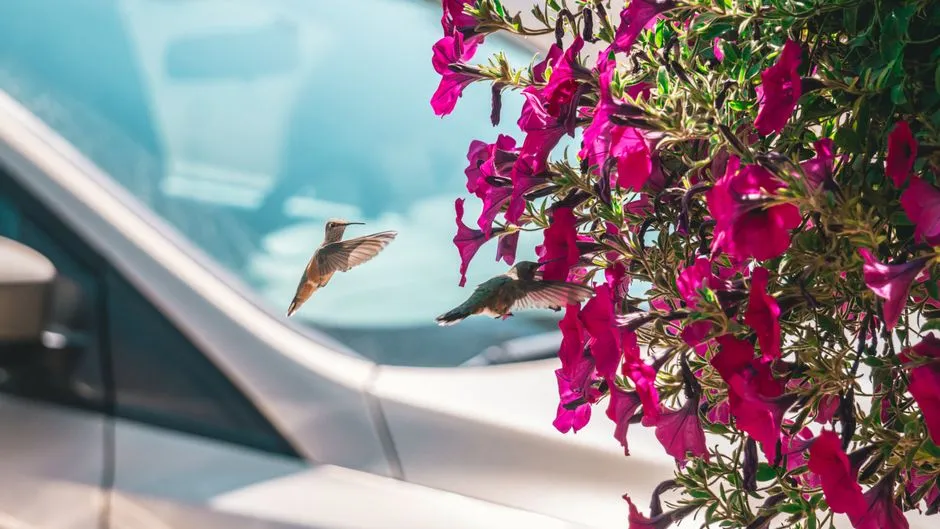
Here’s where the story gets a little scandalous: some of that relentless bullying is really about romance. A hummingbird that controls a rich, reliable nectar source gains a real edge in courtship, because a male defending an abundant territory can offer visiting females a dependable energy boost that supports nesting and raising young.
In that light, the dominant bird isn’t just hoarding sugar water for the fun of it – it’s advertising fitness. The message to every female flying past is simple: I’m strong enough to hold this spot, which means I’m strong enough to be worth choosing.
Backyard observers often notice males get noticeably more territorial during peak breeding season, while females stay focused on efficient, low-drama feeding and nest-building. Critics like to say feeders “distort” natural hummingbird behavior, but the pattern underneath it – males defending food-rich turf to impress mates – is exactly as old as flowers themselves.
#3 – Adapting Its Strategy When New Feeders Appear
🔥 Would you like to save this?
We'll email this post to you, so you can come back to it later!
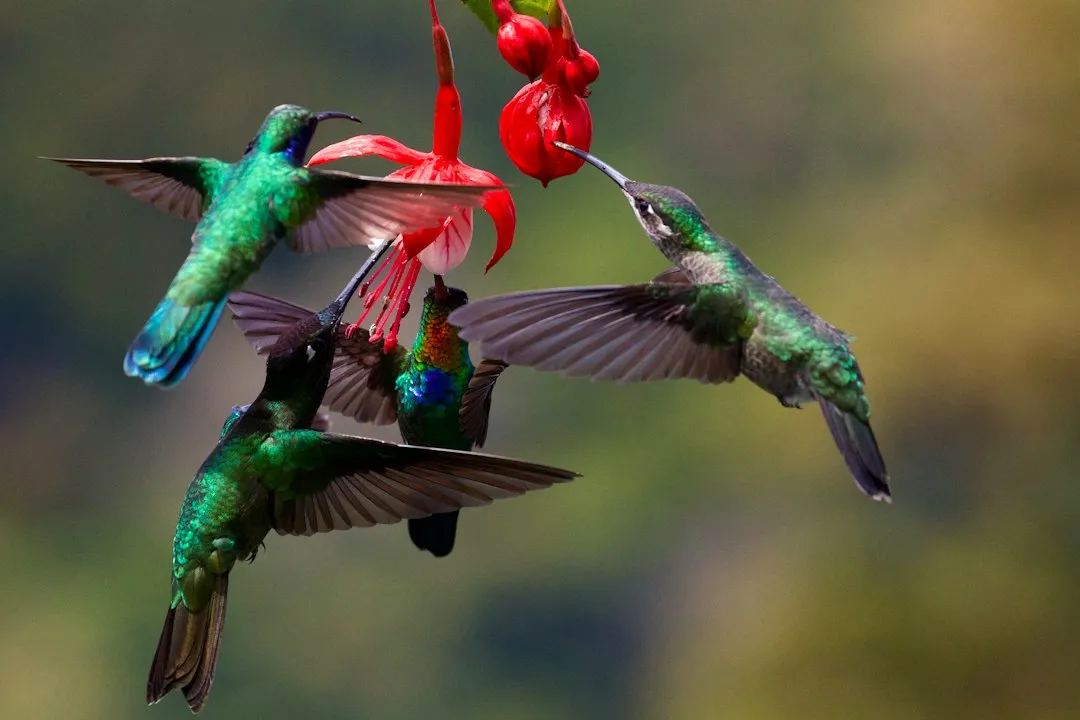
People assume hanging a second feeder will finally force some peace onto the yard. The dominant hummingbird usually has other plans. Add a new feeder just a few feet from the first one, and the boss bird typically expands its patrol to cover both, moving between them like a guard walking two doors down the hall.
From its perspective, nothing has actually changed – it still owns the entire nectar zone, just with a slightly longer commute. That’s exactly why so many backyard owners get frustrated when a second or third feeder does nothing to calm the chaos.
The fix only works when feeders go far apart or out of direct line of sight – opposite corners of the yard, around the side of the house, behind a fence line. Once the dominant bird physically can’t see or reach everything fast enough, subordinate birds finally get safe pockets to feed in. The bird adapts as best it can, but physics puts a hard limit on how much airspace one tiny body can actually patrol.
#2 – Pushing Subordinate Birds Into a Stealth Lifestyle
🔥 Would you like to save this?
We'll email this post to you, so you can come back to it later!
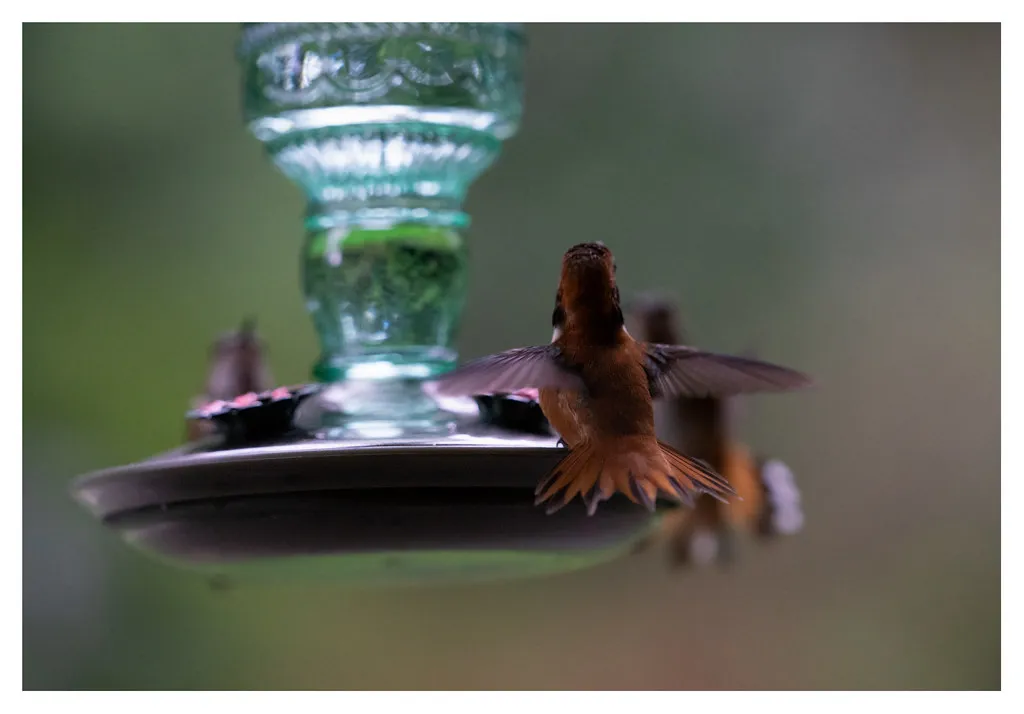
The boss bird’s aggression doesn’t just scare rivals away for a minute – it reshapes their entire daily routine. Subordinate hummingbirds learn to fly low, hug cover, and time their visits between patrols, moving almost like thieves dodging security cameras.
They’ll approach from the blind side of a tree, dart in the instant the dominant bird is busy chasing someone else, or only visit in the narrow windows right after sunrise and before sunset when the boss is running low on energy too. Sit and watch long enough and the pattern becomes obvious: one loud, obvious ruler, and a rotating cast of quiet “ghost” visitors stealing sips whenever they can.
Behavioral ecologists frame this as a split between “owner” strategies and “sneaker” strategies, and both can actually work. In some yards, the sneaky birds end up with more total feeding time than the dominant one, simply because they skip the costly fights and save every bit of energy for eating. The boss wins nearly every battle – and sometimes still loses the bigger war of calorie balance.
Why It Stands Out
- Skips costly fights that drain fat reserves needed for survival
- Uses blind spots and timing gaps the dominant bird can’t watch at once
- Can log more total feeding time than the bird guarding the feeder
- Avoids becoming a repeat target, so it draws lighter retaliation
#1 – Redefining the Whole Backyard as “Mine”
🔥 Would you like to save this?
We'll email this post to you, so you can come back to it later!
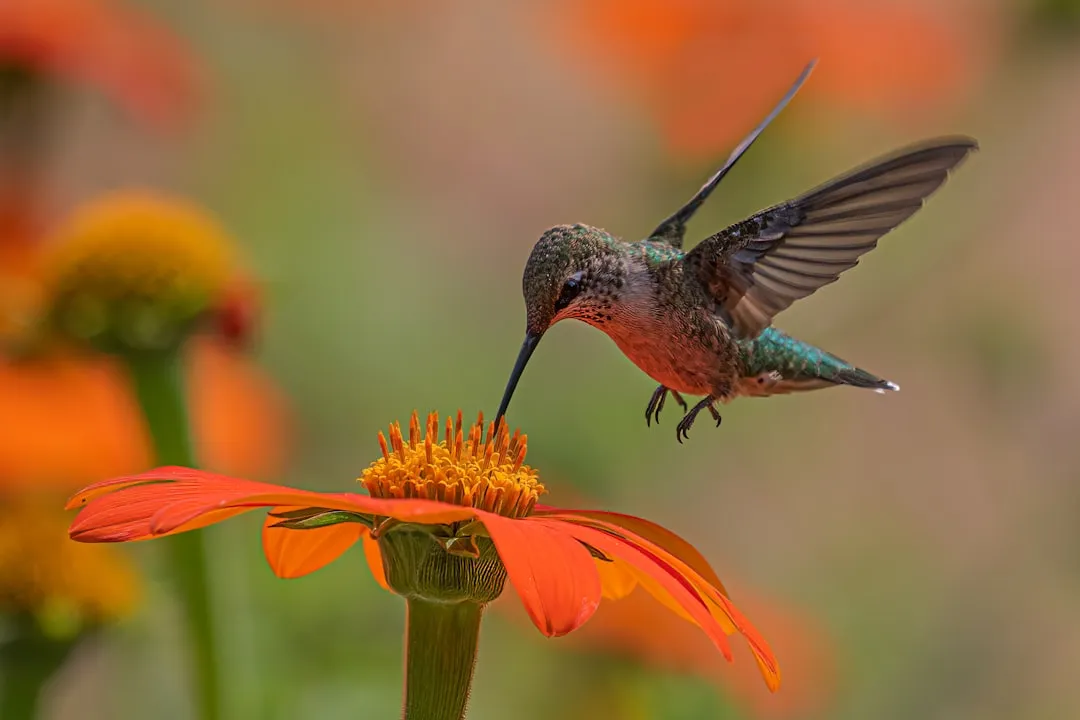
At the extreme end, one dominant hummingbird stops defending just the feeder and starts mentally rewriting the entire yard as its private kingdom. These are the birds that chase absolutely everything – bees, butterflies, finches, even much larger birds that pose zero real competition for nectar.
They’ll strafe a chickadee, buzz a blue jay, or dive on a warbler simply for landing too close to their claimed airspace. To a human watching from the porch, it looks completely over the top. To the hummingbird’s brain, though, anything near the feeder is a potential threat to its food supply, and the safest move is always to drive it away first and ask questions never.
In yards like this, the bully’s patrol routes stretch far beyond the feeder itself, covering favorite shrubs, flowerbeds, and treetops in one nonstop rotation. It’s burning an enormous amount of energy enforcing a rule that exists only inside its own head – this entire space is mine – and ironically, that sheer intensity is exactly what keeps people glued to their windows, filming, and arguing about whether this tiny dictator is impressive or just plain unhinged.
The Bottom Line
🔥 Would you like to save this?
We'll email this post to you, so you can come back to it later!
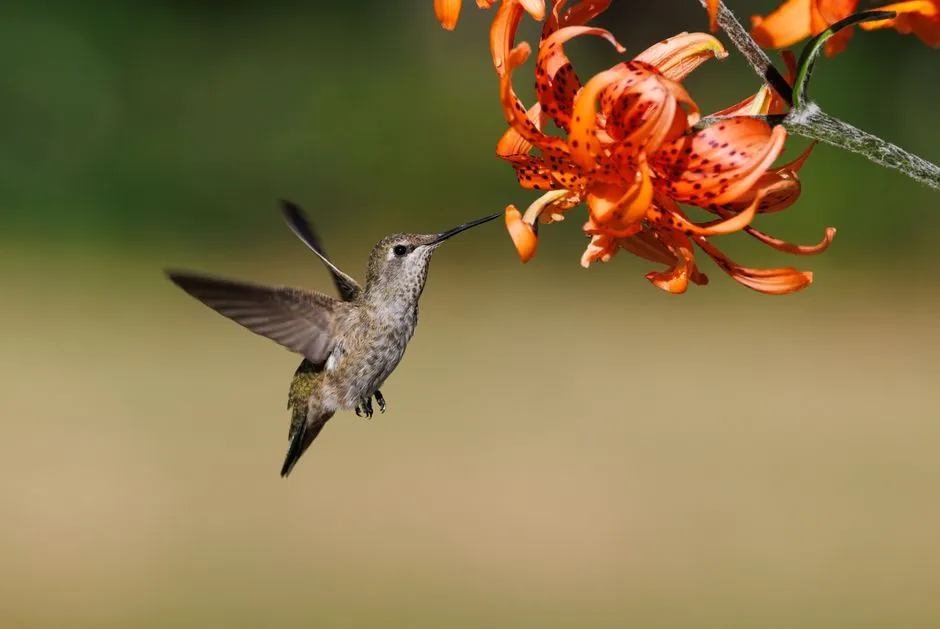
For something that weighs less than a coin, one dominant hummingbird can completely hijack the personality of an entire backyard. From high perches and screaming dive-bombs to subtle body blocks and long-game psychological warfare, every single move on this list is about turning a plastic feeder into a private empire – whether it needs to or not.
Here’s the opinion part: the “boss” bird gets too much credit. Watching one furious hummingbird burn itself into exhaustion guarding sugar water that will never run out isn’t really strength, it’s an ancient instinct stuck on repeat in a world that no longer requires it. The sneaky underdogs slipping in between chases, saving their energy, avoiding every fight they don’t need – those are the ones actually winning.
Human feeders didn’t invent this drama; they just gave us front-row seats to something that’s been happening in wildflower patches for millions of years. So the next time one furious little bird claims your entire yard as its personal kingdom, remember it’s not cruelty – it’s a three-gram animal running on a survival script it can’t turn off. Whether you find that impressive or exhausting probably says more about you than the bird.

- 14 Wildlife Permits Waived for Americans the Year They Turn 62 - November 5, 2026
- Machu Picchu’s Engineering Feats Were Far Ahead of Its Time - November 5, 2026
- 12 Most Beautiful American Cities To See Before You Die - November 4, 2026