

There’s something genuinely mind-blowing about holding a fragment of the past that predates our entire species. Picture this: half a million years ago, someone who wasn’t quite like us walked through southern England with a carefully crafted tool tucked in their hand. That tool, recently analyzed by researchers, turns out to be Europe’s oldest known elephant bone implement, and it’s rewriting what we thought we knew about early human ingenuity.
What makes this discovery even more remarkable is that the object sat in storage for decades after being dug up in the 1990s, initially mistaken for just another bone fragment. Yet advanced microscopic techniques have now revealed its true purpose, offering a fascinating window into the sophisticated minds of our distant relatives.
An Ancient Tool Hidden in Plain Sight
The ancient artifact was found at an archaeological site in Boxgrove, near Chichester in West Sussex, in the 1990s, but it wasn’t until recently that it was identified as more than just a fragment of bone. It took modern technology like 3D scanning and electron microscopes to finally unmask what ancient hands had actually created. Dated to 480,000 years ago, it’s more than 30,000 years older than any similar artifact in Europe.
The hammer itself was fashioned from elephant bone, a material that would’ve been exceptionally rare in the prehistoric English landscape. This suggests that Boxgrove’s inhabitants recognized the benefits of elephant bone and then made it into tools they could carry around. That’s the kind of forward thinking you don’t expect from creatures living nearly half a million years before smartphones.
Who Actually Made This Thing?
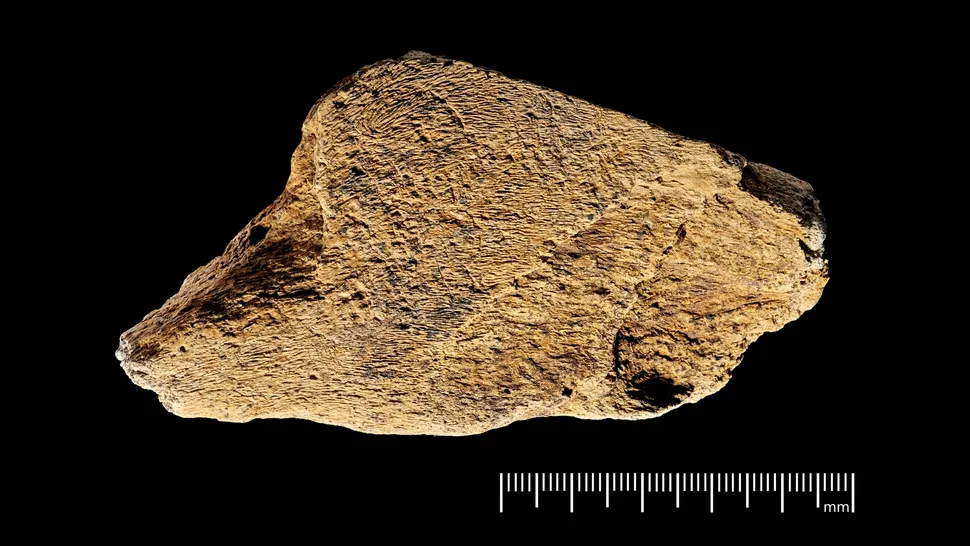
The research, published in Science Advances, describes the roughly 500,000-year-old tool, and reveals the unexpectedly sophisticated craftsmanship and skill of the species responsible for making it, likely either early Neanderthals or another species known as Homo heidelbergensis. These weren’t modern humans, that’s for certain. At 500,000 years old, it’s roughly 200,000 years older than the origin of Homo sapiens, which indicates it was made by an earlier species of human.
Honestly, it’s humbling to realize that beings who weren’t even our direct species possessed such remarkable problem-solving capabilities. They saw a need, identified the perfect material for the job, and executed their plan with precision. The skill required to make and use such a tool shows that these people had real foresight, an ability essential for planning their hunts and other complex activities.
The Science Behind the Soft Hammer
The hand-held implement served as a soft hammer, used to sharpen ancient handaxes and other stone tools that became dulled through repeated use. The researchers believe that this bone tool served as a retoucher, used to strike the edges of dulled stone tools to detach flakes to restore their shape and sharpness, a process known as knapping. The bone’s softer texture compared to stone made it perfect for precision work.
Using 3D scanning methods and electron microscopes to look more closely at these marks, the researchers found they were embedded with tiny fragments of flint, suggesting it was used as a soft hammer to strike, shape, and sharpen stone tools. Those embedded flint pieces are like ancient fingerprints, concrete proof of how the tool was wielded. With its thick outer layer of hard tissue, elephant bone would have been more resilient as a hammer than other available animal bones, making it a preferred tool material.
Why Elephant Bone Was Worth the Effort
Let’s be real: elephants weren’t exactly wandering around ancient England like pigeons in a park. Mammoths and elephants were uncommon in the local landscape of prehistoric southern England, and the tool reveals the resourcefulness and cognitive capabilities of the early prehistoric human ancestors in the region. Getting your hands on this material required either incredible hunting skills or the luck to stumble upon a dead carcass at just the right time.
Elephant bone is rare at Boxgrove, with no other pieces found in the immediate area surrounding the retoucher. That scarcity made it valuable, something worth keeping and carrying from place to place. They were able to recognize that elephant bone was a preferable yet rare material that was worth seeking out and saving. It’s hard to say for sure, but the intentional selection of this material speaks volumes about their understanding of the world around them.
What This Tells Us About Ancient Minds
Here’s the thing that really gets me: this wasn’t just about making a tool work. It was about making it work better. Collecting and shaping an elephant bone fragment and then using it on multiple occasions to shape and sharpen stone tools shows an advanced level of complex thinking and abstract thought. These ancient humans weren’t mindlessly banging rocks together. They were planning, experimenting, and optimizing.
The hammer would have been used to sharpen handaxes and other stone tools as Boxgrove’s residents butchered a wide variety of animals including giant deer, horses and rhinos. Maintaining sharp butchery tools wasn’t a luxury; it was survival. As the pattern of impacts on the bone are grouped together in certain areas it suggests that the retoucher was used many times to sharpen flint tools. However, it only seems to have been used for a relatively short amount of time. Why it was abandoned remains one of those tantalizing mysteries that archaeology loves to dangle in front of us.
Boxgrove’s Place in Prehistory
The Boxgrove site has been under excavation since the 1970s and ranks amongst the world’s most significant locations for understanding human life from half a million years ago. Previous discoveries there include the earliest human remains found in Britain, Europe’s oldest bone tools, and thousands of butchered animal remains. Every artifact pulled from that English soil adds another piece to the puzzle of who we once were.
It’s an extensively excavated site, and numerous tools made of flint, bone, and antler have been discovered there; however, this is the first tool made from elephant bone. That makes this discovery stand out even in a location already brimming with prehistoric treasures. Other tools made from elephant bones have previously been found in Europe, but they’re all less than 450,000 years old and most were found much further south in warmer climates. The oldest elephant bone tools so far discovered were found in Olduvai Gorge in Tanzania and date as far back as 1.5 million years ago.
Looking Forward by Looking Back
This discovery forces us to reconsider the capabilities of our prehistoric relatives. They weren’t brutish cave dwellers stumbling through existence. They were strategic, resourceful, and remarkably adaptive individuals navigating a world far harsher than anything most of us will ever experience. The elephant bone hammer is more than just an archaeological curiosity; it’s a testament to the enduring human drive to innovate and improve.
It’s unclear whether the animal was hunted or whether the bone was scavenged from an already dead carcass, but some of the deformation of the bone tool indicates that it was shaped and used while the bone was relatively fresh. That detail suggests a level of timing and planning that’s almost poetic when you think about it.
The next time you pick up a tool, any tool, consider the lineage behind that simple act. Someone nearly half a million years ago understood the same principle: the right instrument makes all the difference. What else might be hiding in museum storage rooms, waiting for the right technology to reveal its secrets?

- Beavers Are Nature’s Engineers, Creating Vital Habitats for Other Wildlife Species - July 21, 2026
- The Recovery of the California Condor Offers Hope for Other Critically Endangered Birds - July 21, 2026
- Bats Play a Crucial Role in Controlling Insect Populations Across the United States - July 21, 2026