
There’s something quietly humbling about standing on ground that was once molten rock. Volcanoes are not merely geological features – they are the planet’s most dramatic storytellers, each one holding within its layers a chapter of Earth’s deepest past. Some eruptions ended empires. Others reshaped the atmosphere entirely, altering what lived and what died on a global scale.
What makes these ancient events so striking is their reach. They didn’t just reshape landscapes – they rewrote evolutionary history, collapsed civilizations, poisoned oceans, and cooled the sun itself. The seven volcanoes below are not the most famous. They are the most consequential. Their stories are stranger, and frankly more important, than most people realize.
1. The Siberian Traps: The Great Dying Machine
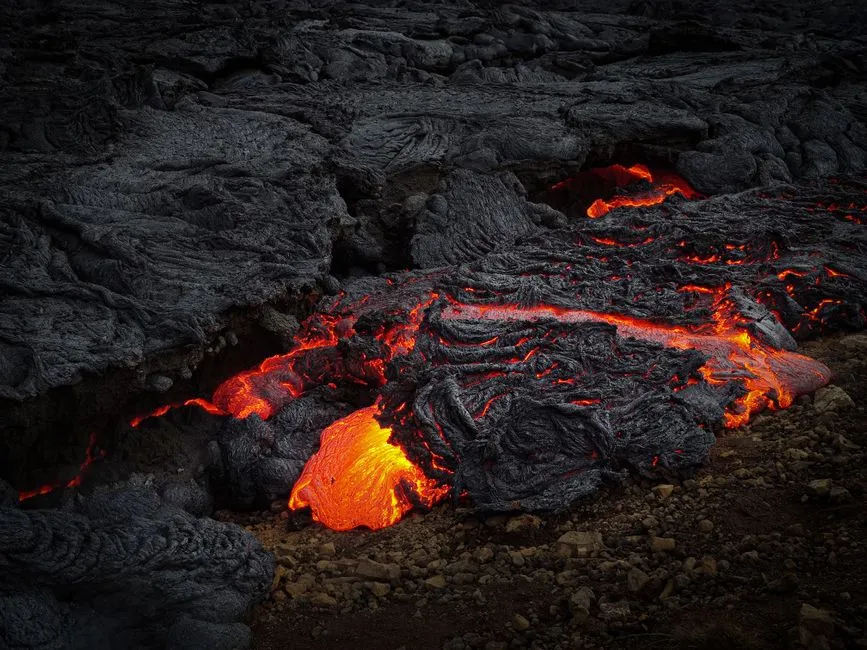
The massive eruptive event that formed the Siberian Traps is one of the largest known volcanic events in the last 500 million years. The eruptions continued for roughly two million years and spanned the Permian–Triassic boundary, which occurred around 251.9 million years ago. To put that in perspective: this wasn’t a single catastrophic blast, but a prolonged geological nightmare playing out across an entire continent.
Around 252 million years ago, life on Earth collapsed in spectacular and unprecedented fashion, as more than 96 percent of marine species and 70 percent of land species disappeared in a geological instant. This so-called end-Permian mass extinction, or more commonly the “Great Dying,” remains the most severe extinction event in Earth’s history. The emission of large magnitudes of carbon dioxide, sulfur dioxide, halogens, and metals led to global warming, oceanic anoxia, oceanic acidification, ozone reduction, acid rain, and metal poisoning, triggering major extinctions in terrestrial and marine ecosystems.
The most plausible explanation for the marine kill mechanism is that nickel from the volcanic terrain was carried by aerosol particles and deposited in the ocean, dramatically changing the chemistry of seawater. Nickel is an essential trace metal for many organisms, but an increase in nickel abundance would have driven an unusual surge in productivity of methanogens – microorganisms that produce methane gas. In other words, the Siberian Traps didn’t just erupt. They chemically rewired the entire planet.
2. Lake Toba, Sumatra: The Volcano That May Have Shaped Humanity
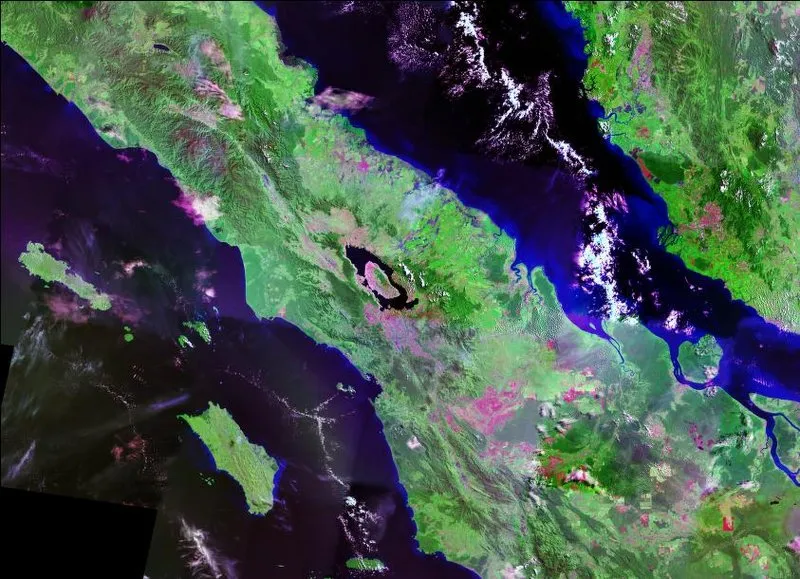
The explosion of the Toba supervolcano, located on the modern island of Sumatra, some 74,000 years ago was Earth’s largest volcanic eruption in the past 28 million years. Parts of Indonesia, India, and the Indian Ocean were covered by 15 centimeters of volcanic debris. An estimated 1,700 cubic miles of rock – a volume comparable to almost 3 million Empire State Buildings – erupted, forming a crater lake visible even from space.
Ash and volcanic gases released into the atmosphere partially blocked the sunlight, causing a volcanic winter where temperatures dropped worldwide by 3 to 5 degrees. For much of the past 30 years, the so-called Toba catastrophe theory held that our species was nearly wiped out in the eruption and the climate chaos that followed. Yet more recent evidence tells a more nuanced story. At archaeological site Pinnacle Point 5-6, evidence shows that humans occupied the site before, during, and after the eruption – and in fact human activity increased and new technological innovations appeared shortly after, demonstrating humans’ remarkable adaptability.
Past humans in Ethiopia adapted to changes in the local environment by following seasonal rivers and fishing in small, shallow waterholes during long dry seasons. Around the time of the Toba supereruption, humans in this region also adopted bow-and-arrow technology. This behavioral flexibility allowed people to survive the intense arid conditions and other potential effects of the Toba supereruption.
3. The Minoan Eruption of Thera: When a Civilization Vanished
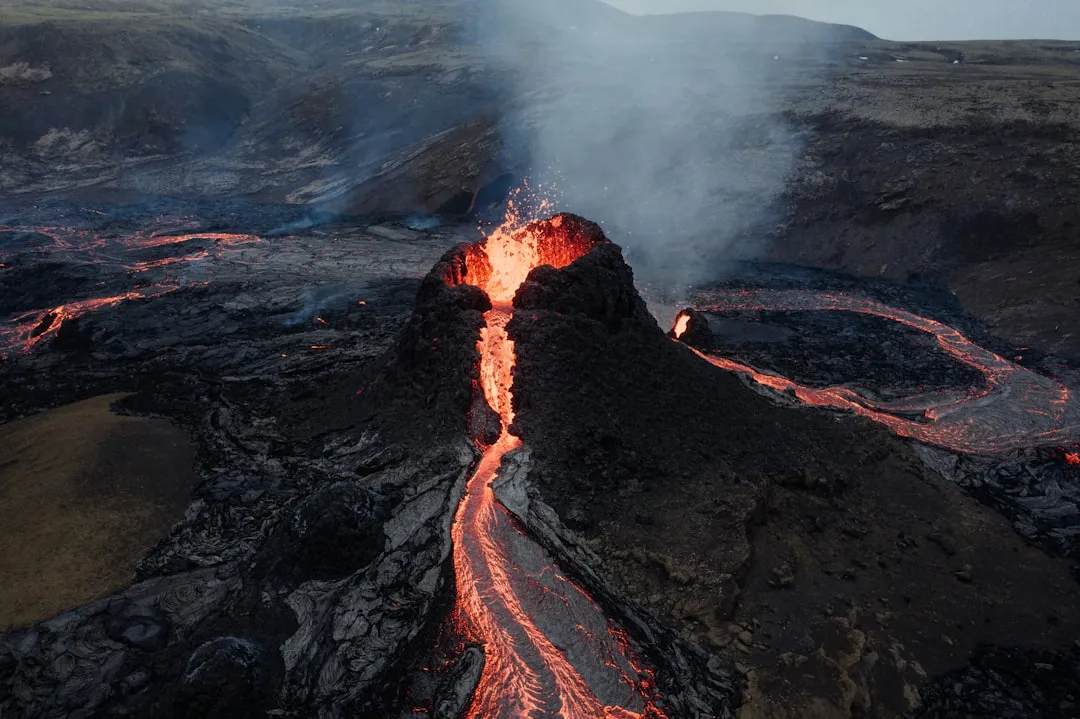
The Greek island of Santorini, named Thera in ancient times, is located in the Aegean Sea and experienced a massive volcanic eruption some 3,600 years ago, around 1600 BCE. With a Volcanic Explosivity Index of 7, it resulted in the ejection of approximately 28 to 41 cubic kilometers of dense-rock equivalent material, making it one of the largest volcanic events in human history. The eruption didn’t just destroy buildings – it effectively ended a way of life.
The Minoan eruption was a catastrophic volcanic eruption that devastated the Aegean island of Thera around 1600 BCE. It destroyed the Minoan settlement at Akrotiri, as well as communities and agricultural areas on nearby islands and the coast of Crete, with subsequent earthquakes and tsunamis. For almost 1,500 years the Minoans had ruled over the eastern Mediterranean Sea, but around 1600 BCE, sites outside Crete related to Minoan culture almost disappear from the record. The demise of the Minoans enabled cities on the Greek mainland to rise to power – a date now considered the beginning of the golden age of ancient Greece, important for its later influences on European history.
4. The Deccan Traps: A Second Blow to the Dinosaurs
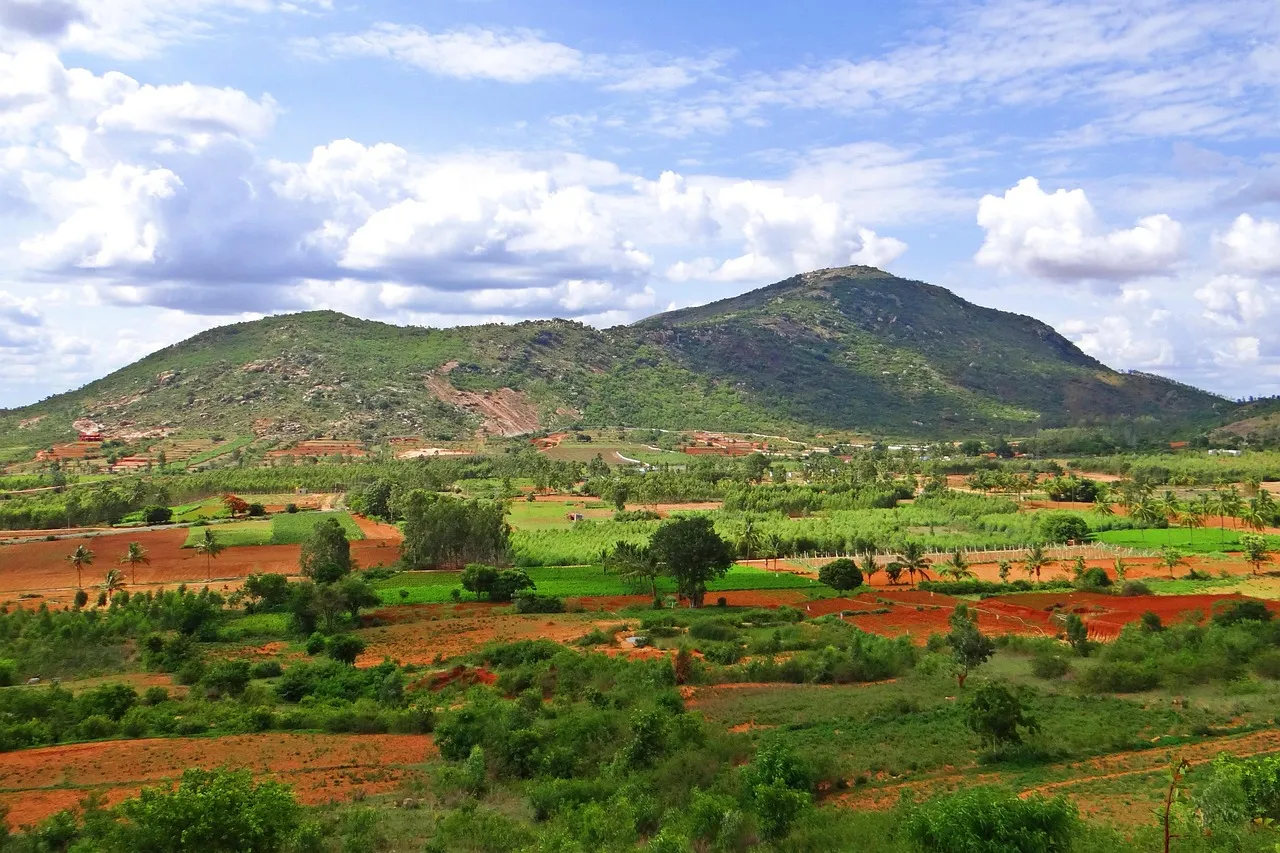
Nearly one million years of semi-continuous Deccan eruptive activity spanned the Cretaceous-Paleogene boundary, which is renowned for the extinction of most dinosaur groups. Whereas the Chicxulub impactor is acknowledged as the principal cause of these extinctions, the Deccan Traps eruptions are believed to have contributed to extinction patterns and enhanced ecological pressures on biota during this interval of geologic time. The asteroid gets the headline, but the volcanism had already been stressing the planet long before the impact.
Volcanic activity of this magnitude would have spewed out huge amounts of carbon dioxide into the atmosphere, causing greenhouse warming. Coupled records of paleothermometry and mercury concentrations measured from a broad geographic distribution of marine mollusk fossils preserve evidence of simultaneous increases in coastal marine temperatures and mercury concentrations at a global scale, which appear attributable to volcanic CO2 and mercury emissions. What the Deccan Traps demonstrate, perhaps more clearly than any other event, is that mass extinction rarely has a single cause – it tends to be a slow accumulation of pressures until the system finally breaks.
5. Mount Tambora, Indonesia: The Year the Sun Disappeared
![5. Mount Tambora, Indonesia: The Year the Sun Disappeared (The base map was taken from NASA picture Image:Indonesia_BMNG.png and the isopach maps were traced from Oppenheimer (2003).[1], CC BY-SA 3.0)](https://nvmwebsites-budwg5g9avh3epea.z03.azurefd.net/aatg/a0d626f07a53240e5e810d8fb58c6d5f.webp)
The Mount Tambora eruption of April 1815 was a catastrophic volcanic event on the island of Sumbawa, Indonesia, known for its immense environmental impact and historical significance. This eruption released approximately 100 cubic kilometers of ash and sulfur dioxide into the atmosphere, drastically affecting global climate. The ensuing year, 1816, was marked by severe weather anomalies, leading to what became known as the “Year Without a Summer,” characterized by unusually cold temperatures and failed crops across Europe and North America.
The eruption claimed the lives of around 40,000 people immediately, with an estimated 107,000 additional deaths attributed to subsequent famine and disease due to crop destruction. Gases and dust particles ejected into the atmosphere changed weather patterns around the world, resulting in the infamous “year without a summer” in North America, food riots in Europe, and a widespread cholera epidemic. The gloomy weather also inspired Mary Shelley to write the gothic novel Frankenstein. Even literature was not immune to the reach of a volcano on the other side of the world.
6. Ancient Volcanic Activity and Earth’s First Breath of Oxygen
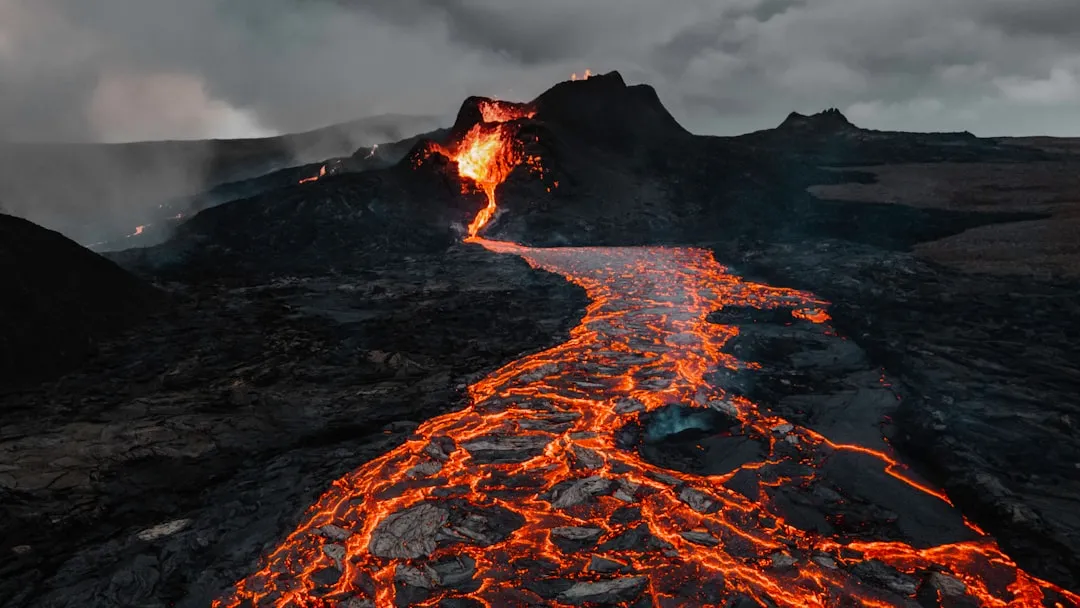
Previous analysis showed a “whiff” of atmospheric oxygen preceding the Great Oxidation Event, 2.4 billion years ago. New analyses show a slightly earlier spike in minerals produced by volcanoes, which may have fertilized early communities of microbes to produce that oxygen. This is one of the most profound links in Earth’s history – the possibility that volcanic activity essentially created the conditions for complex life to exist at all.
The presence of oxygen in the atmosphere is fundamental – it’s the biggest driver for the evolution of large, complex life. Researchers analyzed ancient rocks for the concentration and number of neutrons in the element mercury, which volcanic eruptions emit. Large volcanic eruptions blast mercury gas into the upper atmosphere, where it circulates for a year or two before raining out onto Earth’s surface. The chain of events – volcano erupts, mercury enters atmosphere, microbes bloom, oxygen rises – is almost elegantly simple for something that took billions of years to unfold.
7. The Yellowstone Supervolcano System: A Rewriter of Continents
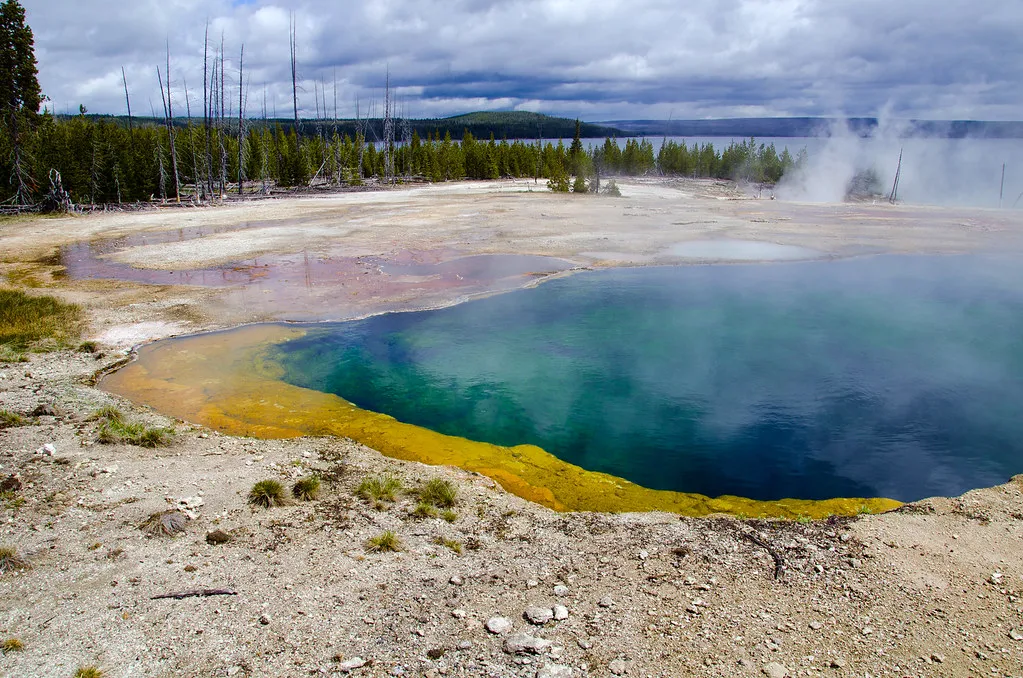
Yellowstone’s ancient eruptions are in a category almost entirely their own. An earlier Yellowstone eruption produced at least 480 cubic miles of ash – a volume that dwarfs nearly every other eruption in recent geological memory. This was not a single cone-shaped mountain exploding dramatically; it was an entire region of the Earth’s crust collapsing in on itself after expelling a staggering amount of material.
Volcanoes started erupting long before there was any such thing as a dinosaur; 3.8 billion-year-old zircon crystals are now thought to be the earliest evidence of subduction, which sets off volcanoes, tsunamis, earthquakes, and other phenomena. Older zircons do exist, but what they reveal is that the era during which they formed was most likely when tectonic activity first caused earthquakes to tremble and volcanoes to erupt. Earth’s protocrust was much more stable before plate tectonics shook the planet. Yellowstone sits atop a mantle plume that has been persistently reshaping the North American continent for millions of years, and geologists continue studying it as a live system, not merely an ancient one.
Final Thoughts
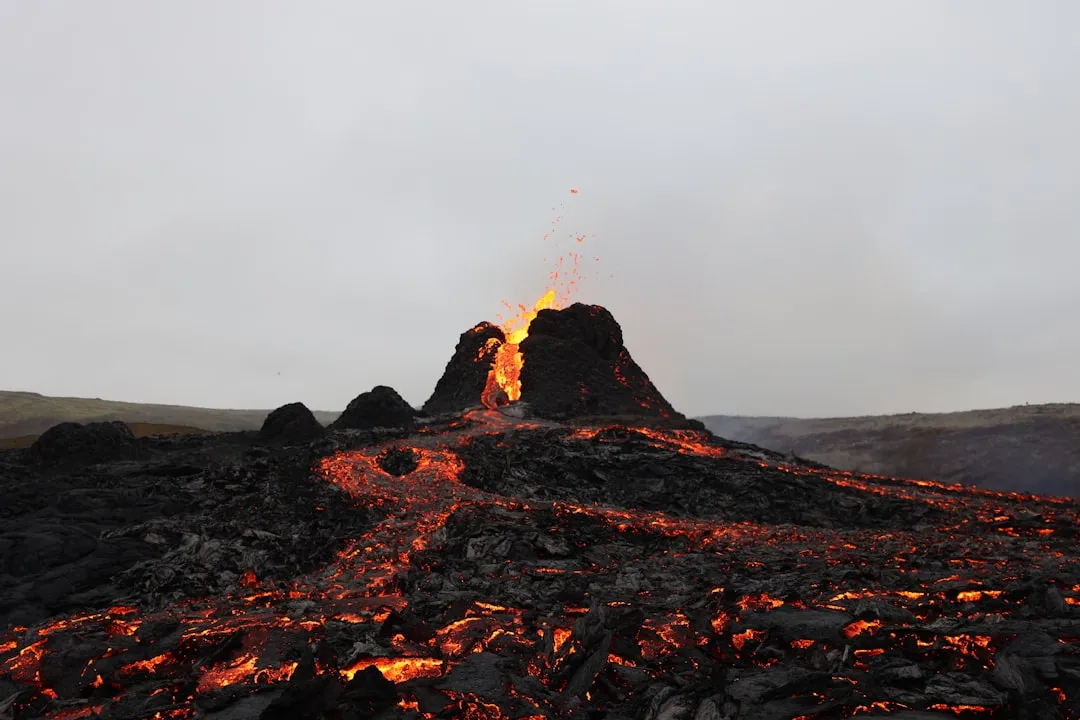
It’s tempting to treat ancient volcanic events as distant curiosities – geological footnotes in an impossibly long story. The reality is more unsettling and more interesting. These eruptions shaped the air we breathe, the oceans we depend on, and the evolutionary pressures that produced us. Without Toba, humanity may have developed very differently. Without the Siberian Traps clearing the biological slate, the evolutionary lineages that eventually led to mammals – and to us – might never have gained a foothold.
What all seven of these volcanoes share is scale that defies easy comprehension, and consequences that echo across millions of years. Earth is not a passive backdrop to the story of life. It is an active, volatile participant – one that has repeatedly hit a reset button and watched what grows back. That should probably inspire more humility than it typically does.

- Which Wild Horse Are You According to Your Zodiac Sign - July 12, 2026
- 7 Ancient Volcanoes That Changed Earth Forever - July 12, 2026
- 10 Ice Age Facts Most People Don't Know - July 12, 2026