

Space has never been short on wonder. From the first time humans gazed up at a starry sky, we’ve wanted to know what’s out there and how it all works. The strange thing is, the more powerful our telescopes become and the deeper we peer into the cosmos, the more baffling it gets.
Sure, we’ve figured out a lot. We know how stars form and die. We understand gravity well enough to land robots on Mars. Yet some of the most fundamental questions remain completely unanswered. Honestly, it’s kind of humbling. Scientists have built machines that can detect ripples in spacetime itself, mapped billions of galaxies, and calculated the age of the universe to within tens of millions of years. Still, when you ask them what roughly ninety five percent of the cosmos is actually made of, they’ll shrug and admit they haven’t got a clue.
Let’s dive into seven cosmic puzzles that continue to baffle even the brightest minds in astronomy. These aren’t just minor details waiting to be ironed out. These are gaping holes in our understanding that could reshape everything we think we know about reality.
The Invisible Scaffolding: What Is Dark Matter?
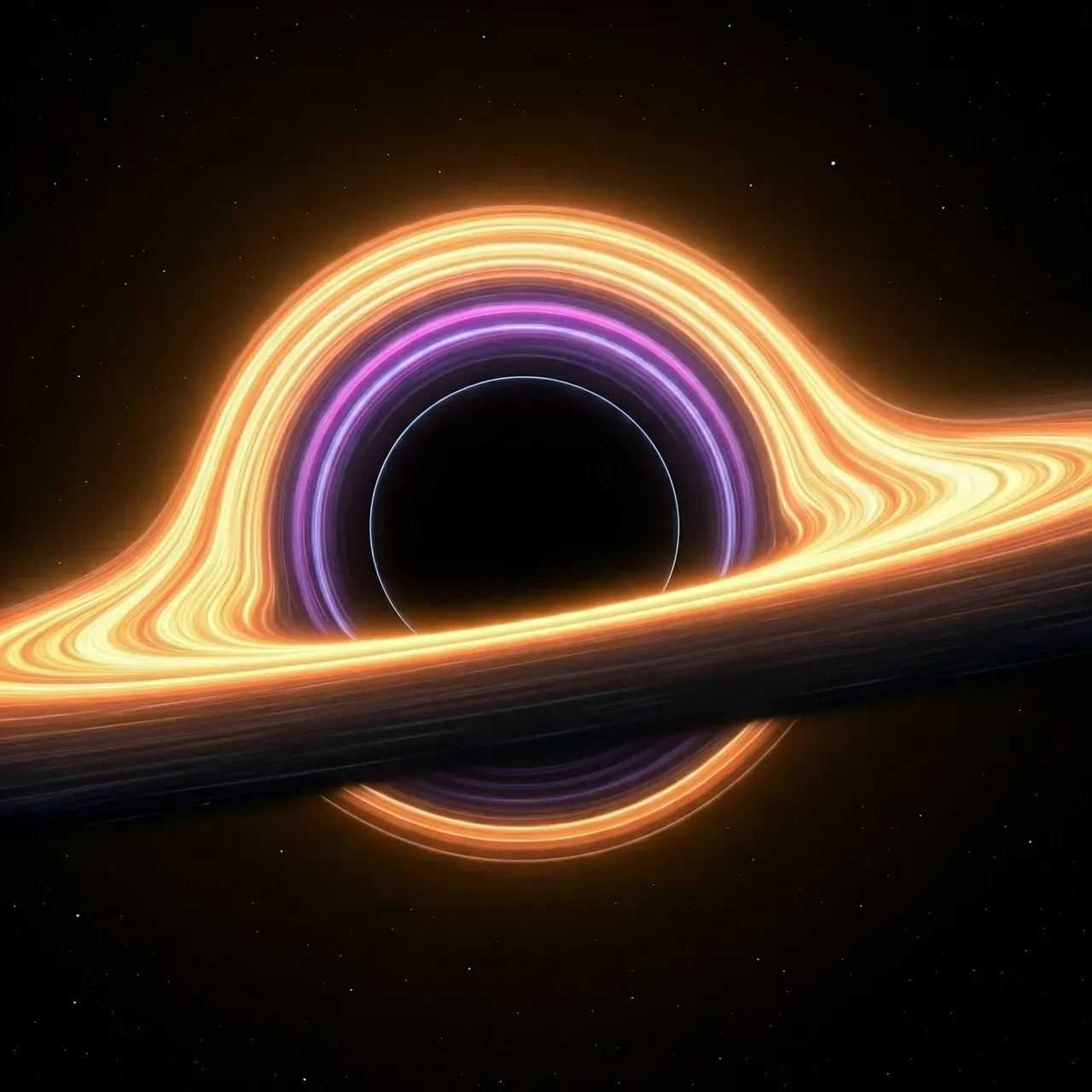
Think about everything you’ve ever seen, touched, or measured. Every star twinkling above you, every planet, every speck of dust drifting through space. All of that accounts for less than five percent of the universe. The rest? It’s invisible.
Dark matter makes up most of the mass in galaxies and galaxy clusters, organizing them on a large scale. Without it, galaxies would spin so fast they’d tear themselves apart. Yet we can’t see it, touch it, or detect it with any instrument we’ve built.
In the 1930s, Swiss astronomer Fritz Zwicky noticed galaxies in the Coma Cluster moving way too quickly. The visible matter couldn’t account for the gravitational pull needed to hold them together. Since then, astronomers have seen this pattern everywhere. Dark matter doesn’t interact with light at all, meaning it doesn’t absorb, reflect, or emit any radiation.
Scientists have proposed candidates like WIMPs, or weakly interacting massive particles, and axions, particles with incredibly tiny mass. Experiments include massive underground detectors cooled to near absolute zero and space telescopes mapping gravitational lensing. Despite decades of ingenious experiments and bold theories, the true nature of dark matter remains one of the greatest unsolved mysteries in science.
The Force Pushing Everything Apart: Dark Energy
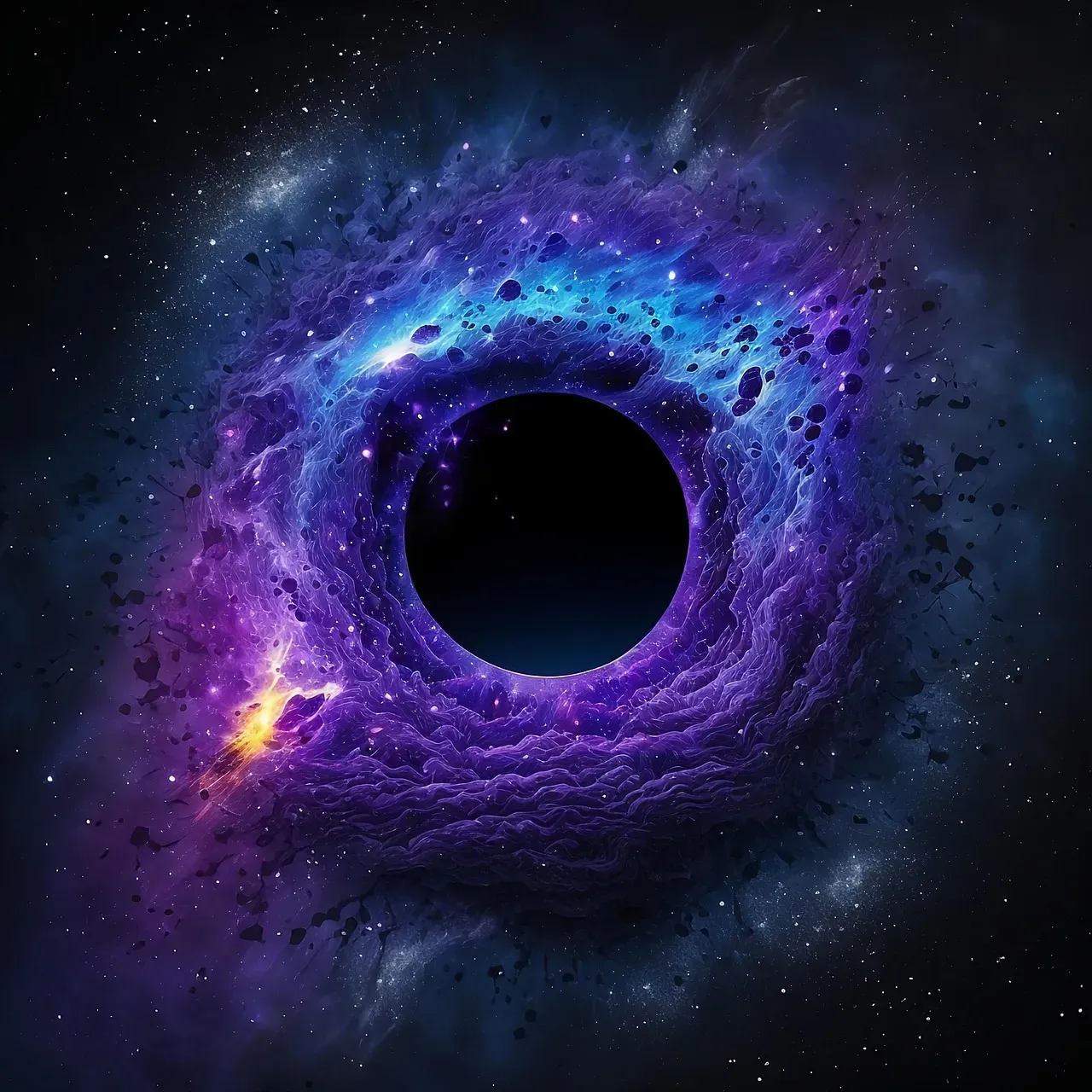
If dark matter is strange, dark energy is downright bizarre. Imagine throwing a ball into the air. You’d expect gravity to slow it down, right? Now imagine the ball suddenly speeding up instead, flying faster and faster toward the sky. That’s basically what’s happening to the universe.
In 1998, astronomers discovered that the universe’s expansion is accelerating. Something invisible is pushing galaxies apart at an ever-increasing rate. Dark energy makes up roughly sixty eight to seventy percent of all energy and matter in the universe. Let’s be real, that’s a staggering amount of “stuff” we know absolutely nothing about.
Dark energy couldn’t have dominated too early, because matter needed time to clump together and form galaxies and stars. Around five billion years ago, the expansion sped up again. Nobody knows why.
One theory suggests it’s a cosmological constant, meaning the energy of empty space itself drives expansion, while another proposes evolving dark energy or quintessence, an unknown field with opposite effects to matter. Scientists have no plausible explanation for dark energy. It might be the most profound mystery in all of science, determining whether the universe will expand forever or eventually collapse.
Cosmic Radio Flashes: What Are Fast Radio Bursts?

Imagine detecting a radio signal that releases as much energy in a millisecond as the Sun puts out in three days. These explosions, called fast radio bursts, are among the most perplexing phenomena astronomers have ever encountered.
The first FRB was discovered in 2007 when Duncan Lorimer found it in archival pulsar data, and since then many have been recorded, including several that repeat. Thousands of FRBs have now been detected, ranging from within our own galaxy to as far as eight billion light years away. The bizarre part? We still don’t know what causes them.
Recent research provides conclusive evidence that at least some FRBs originate from the magnetosphere, the highly magnetic environment surrounding neutron stars called magnetars. This established magnetars as one source of FRBs, although the exact mechanism remains unknown, with further studies supporting this connection.
Here’s where it gets weirder. One recent FRB challenges existing theories by originating from the distant outskirts of an old, dead elliptical galaxy, possibly in a globular cluster of ancient stars. The disparate origins of signals suggest FRBs may come in different flavors and originate in various ways. Honestly, every time we think we’re getting close to an answer, the universe throws us a curveball.
Where Information Goes to Die: The Black Hole Information Paradox
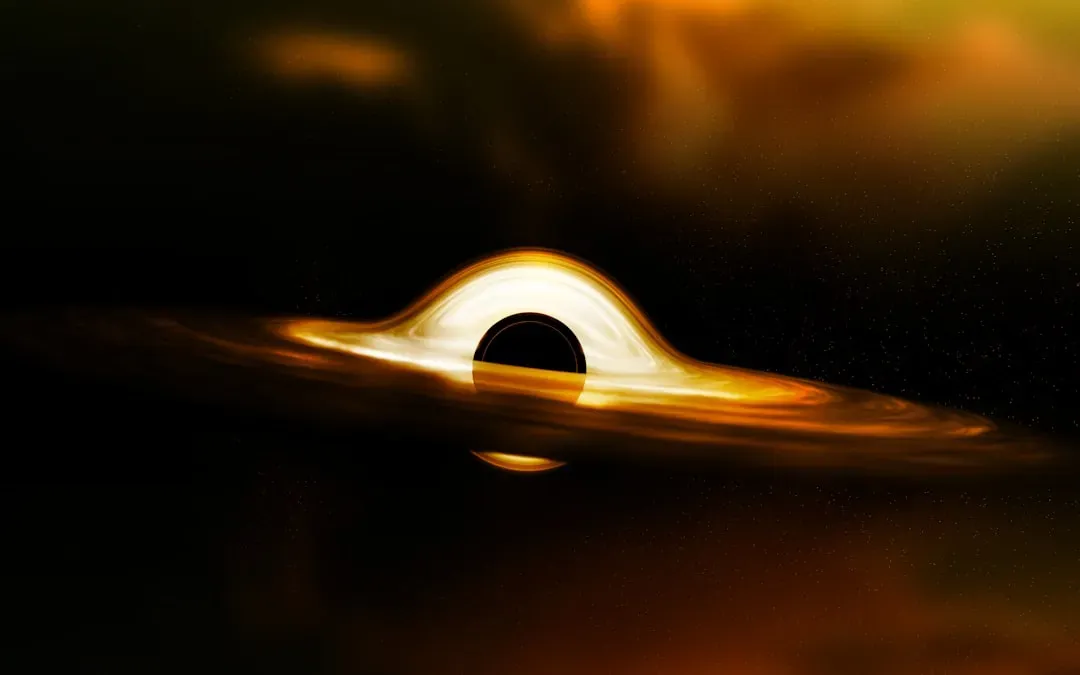
Black holes are famous for swallowing everything that comes near them, including light. In the 1970s, Stephen Hawking discovered that black holes emit radiation and argued that this radiation would be independent of the initial state of the black hole, creating a paradox when a black hole evaporates entirely.
Here’s the problem. Modern physics assumes that if we have perfect knowledge about a system, we can predict its future and infer its past, but Hawking’s result would mean this basic tenet is incorrect. If you throw a book into a black hole, all its information gets added to the mass and event horizon, but when the black hole decays via Hawking radiation, that energy comes back out as totally random radiation, as though the book’s information has been erased.
The black hole information paradox appears when the predictions of quantum mechanics and general relativity are combined. Hawking particles originate outside the event horizon, which is why scientists assumed they can’t carry information about the black hole’s interior.
Recent revelations alleviate the paradox, but many details still need to be worked out, with some researchers saying they don’t call it solved. In 2019, researchers found that for some simplified hypothetical black holes, information might be detectable in entanglement islands at the event horizon, surfaces that could even extend slightly beyond it. I think that’s fascinating, but the jury’s still out.
The Expansion Rate Discrepancy: The Hubble Tension
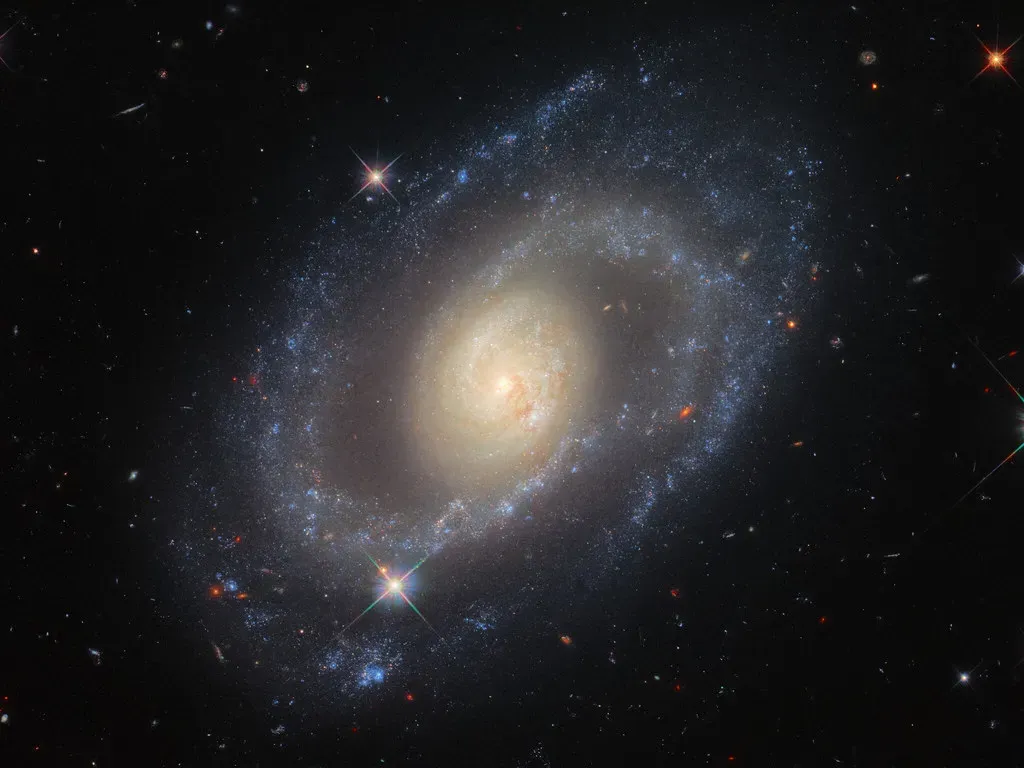
How fast is the universe expanding? You’d think astronomers could answer that with confidence by now. They can’t.
The Hubble Tension refers to the puzzle that the current expansion rate is faster than what astronomers expect based on the universe’s initial conditions, with scientists using multiple telescopes consistently finding a number that doesn’t match predictions from the Planck mission. Measurements based on the nearby universe differ from predictions drawn from the early universe.
Recent measurements confirm that the universe is expanding faster than predicted by theoretical models, faster than can be explained by our current understanding of physics. Using data from multiple telescopes including the James Webb Space Telescope and Keck Observatory, researchers independently confirmed the mismatch, strengthening the Hubble tension.
Dan Scolnic, who led recent research, stated that the tension now turns into a crisis. Confirming this tension would force scientists to rethink the very makeup of the cosmos, perhaps revealing new particles or evidence for an early dark energy phase. Adam Riess noted that with measurement errors negated, what remains is the real and exciting possibility we have misunderstood the universe. It’s hard to say for sure, but this could reshape cosmology entirely.
The Universe’s Architecture: Is the Cosmos Really Uniform?
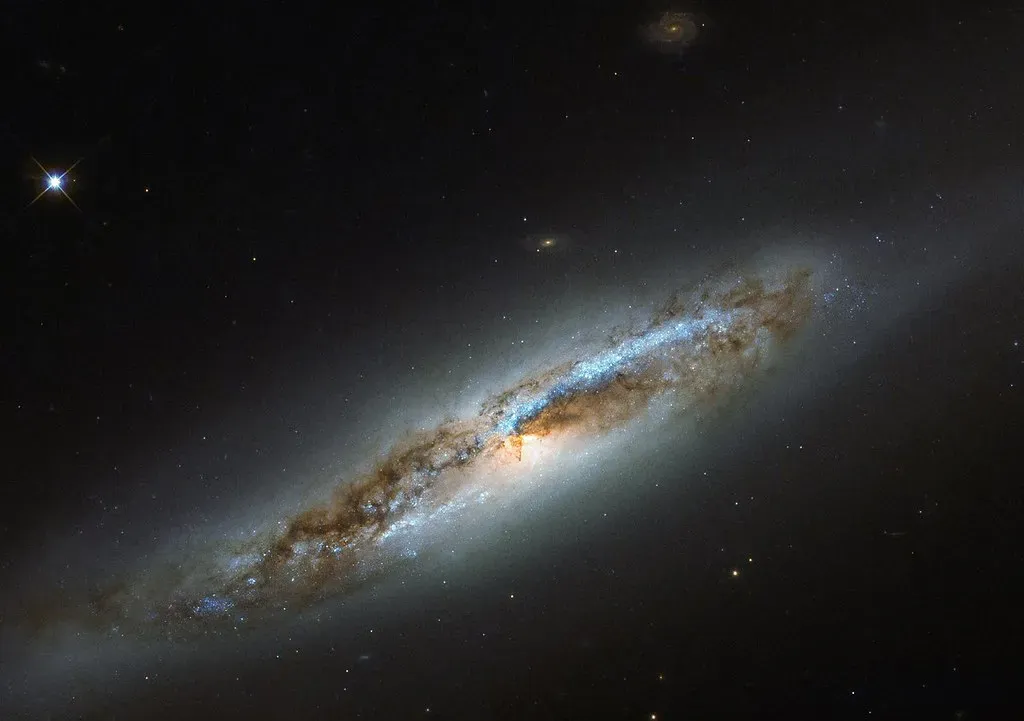
Stand anywhere in the universe, look around, and it should look roughly the same in all directions. At least, that’s what the cosmological principle says. The principle claims the universe is homogeneous and isotropic at large scales, but questions arise about whether the CMB dipole signals anisotropy, resulting in breakdown of standard metrics.
Fresh analyses in 2025 argue that the Milky Way may sit within a billion light year scale underdensity, about twenty percent less matter than average, which could help explain the Hubble tension because galaxies inside a low density region would recede faster. Here’s the thing: that’s a mind bender.
If true, some cosmology anomalies might be geography, not new physics. Questions persist about whether the Hubble tension itself is evidence that the cosmological principle is false.
The standard model expects near uniformity at such large scales. The idea is controversial, with independent galaxy counts and alternative fits pushing back, though upcoming surveys will test whether we’re in a special bubble or seeing statistical mirages. If the universe isn’t as uniform as we thought, textbooks will need serious rewriting.
Supermassive Black Holes Too Soon: The Early Universe Problem

The James Webb Space Telescope has revealed something that shouldn’t exist: supermassive black holes in the early universe. These cosmic monsters typically take billions of years to form, yet we’re seeing them when the universe was practically a baby.
FRB 20220610A erupted halfway across the universe, making it the farthest and most powerful example detected to date. Yet that’s not even the weirdest discovery. Hubble’s images suggest this FRB originated in an environment where as many as seven galaxies may be on a path to merging, which existed when the universe was only about five billion years old.
Though astronomers lack consensus on the mechanism behind these phenomena, it’s generally thought FRBs involve compact objects like black holes or neutron stars, with one extreme type being magnetars. Supernova mechanisms and the process by which a dying star’s implosion becomes an explosion remain unclear.
The mystery isn’t just about formation. It’s about time. These objects appeared impossibly early in cosmic history. If they grew that massive that quickly, either our timeline is wrong or something about black hole physics needs a serious rethink. Scientists are scratching their heads over this one.
Conclusion
Here we are, living in the twenty first century with technology that would seem like magic to people just a hundred years ago. We’ve split atoms, decoded DNA, and sent probes beyond our solar system. Yet when we look up at the night sky, the universe reminds us how little we actually understand.
This is a list of notable unsolved problems in astronomy, with questions about whether there’s potentially an infinite amount of unknown astronomical phenomena throughout our entire universe. These seven mysteries aren’t just puzzles waiting for clever solutions. They’re fundamental gaps in our knowledge that could overturn everything we think we know about reality.
What makes this exciting rather than frustrating is that every mystery represents an opportunity. Each unanswered question is a doorway to discoveries we can’t even imagine yet. Dark matter might reveal new particles. The Hubble tension could point to entirely new physics. Black holes might teach us how spacetime itself works at the deepest level.
So what do you think? Could dark matter be something completely different from what we’ve imagined? Might the universe’s expansion hide secrets about dimensions we can’t perceive? Share your thoughts, because honestly, when it comes to cosmic mysteries, we’re all just beginning to ask the right questions.

- Why Veterinarians Say If Your Cat Sleeps With Their Back to You, It's the Highest Form of Trust in Feline Behavior - July 20, 2026
- The Zodiac Signs That Owls Avoid Completely (And What Folklore Says It Means About Your Energy) - July 20, 2026
- 13 Animals With the Most Incredible Camouflage Skills in Nature - July 20, 2026