
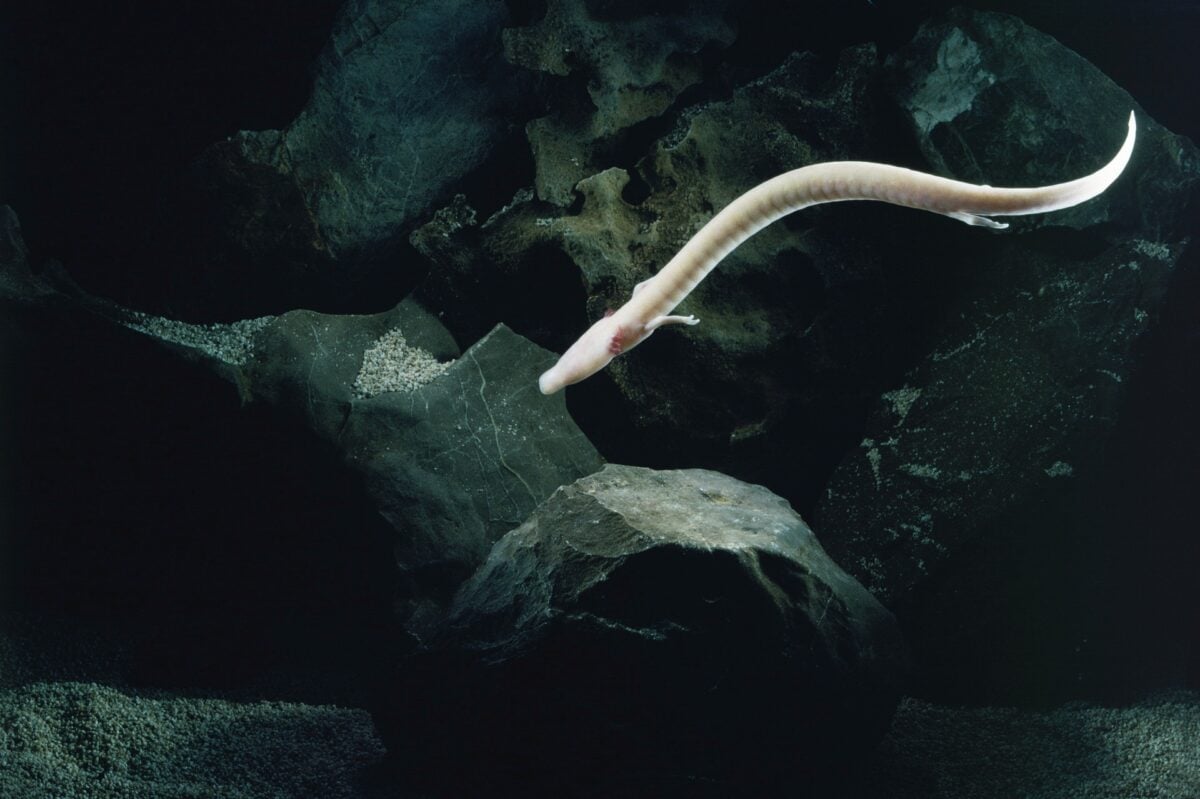
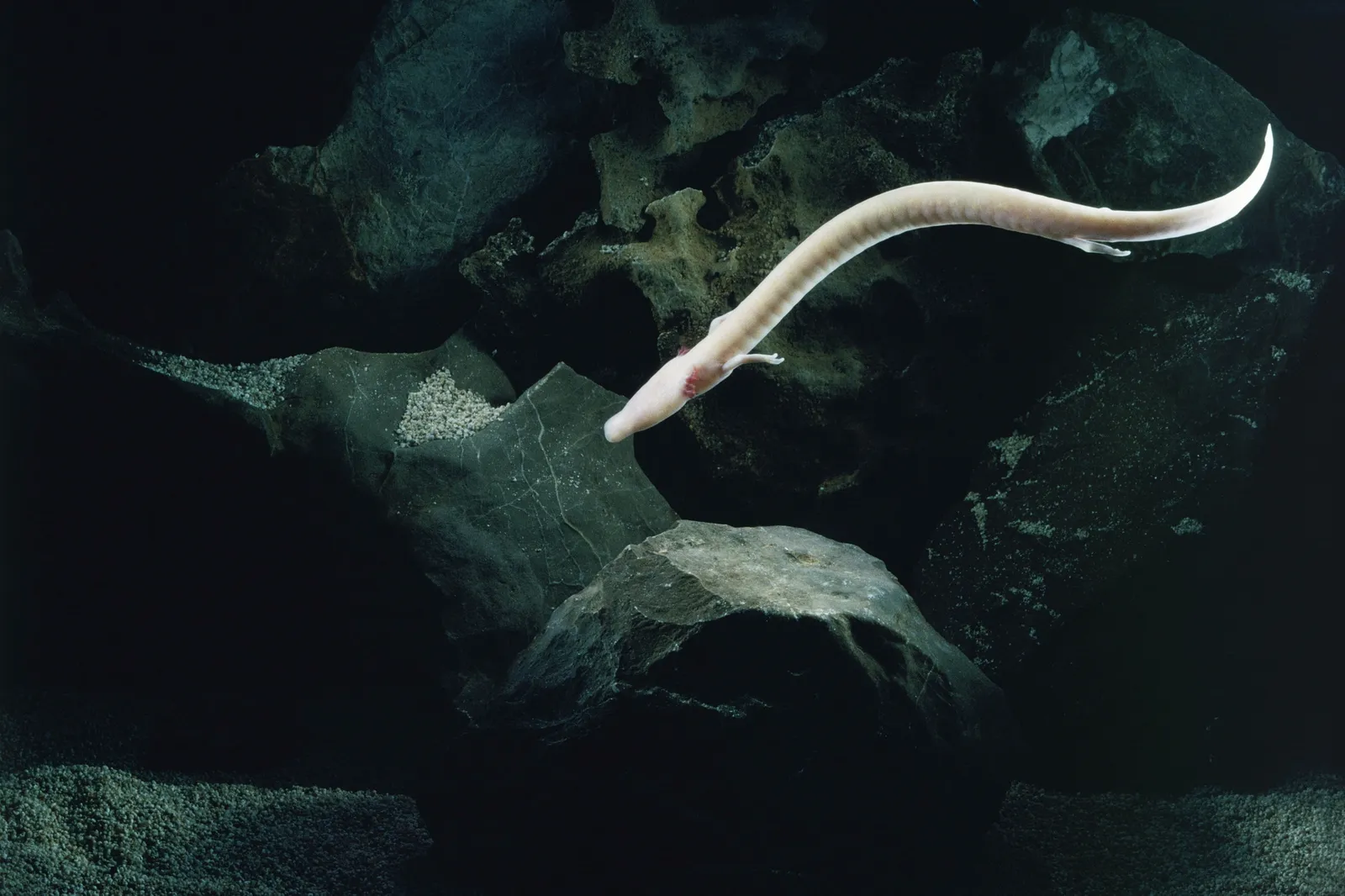
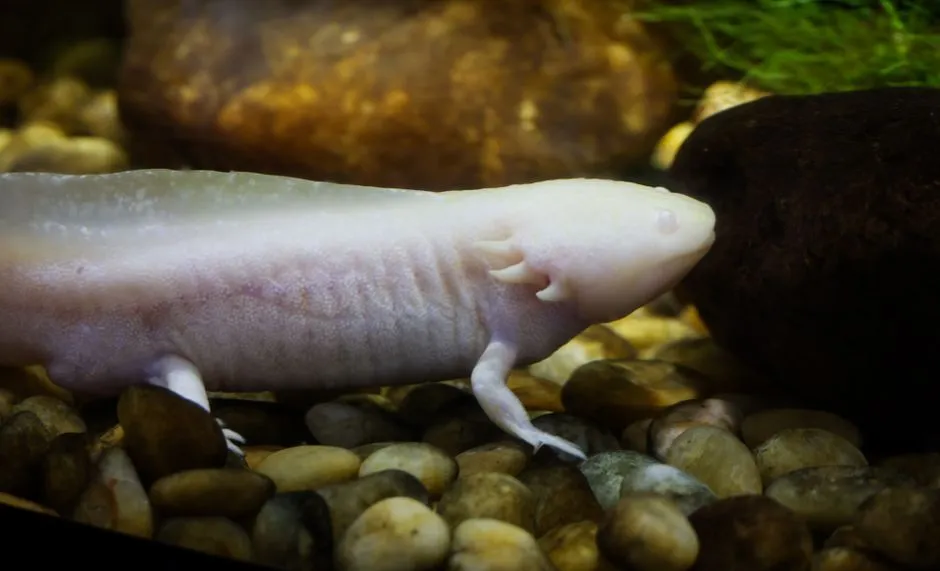
Deep in the flooded caves of the Dinaric Alps, there’s a pale, pinkish animal that looks a bit like a small eel with legs. It has no working eyes to speak of, it barely moves, and it has spent its whole life in the dark. Yet it may outlive many dogs, cats and even some people’s pet tortoises.
The olm, sometimes called the “human fish” in local folklore because of its skin tone, is one of the strangest vertebrates in Europe. Its habits are quiet, but the biology behind them is anything but dull. Here are eight facts that help explain how it manages to thrive in a place most animals would never survive.
1. It Lives in a World of Permanent Darkness
🔥 Would you like to save this?
We'll email this post to you, so you can come back to it later!
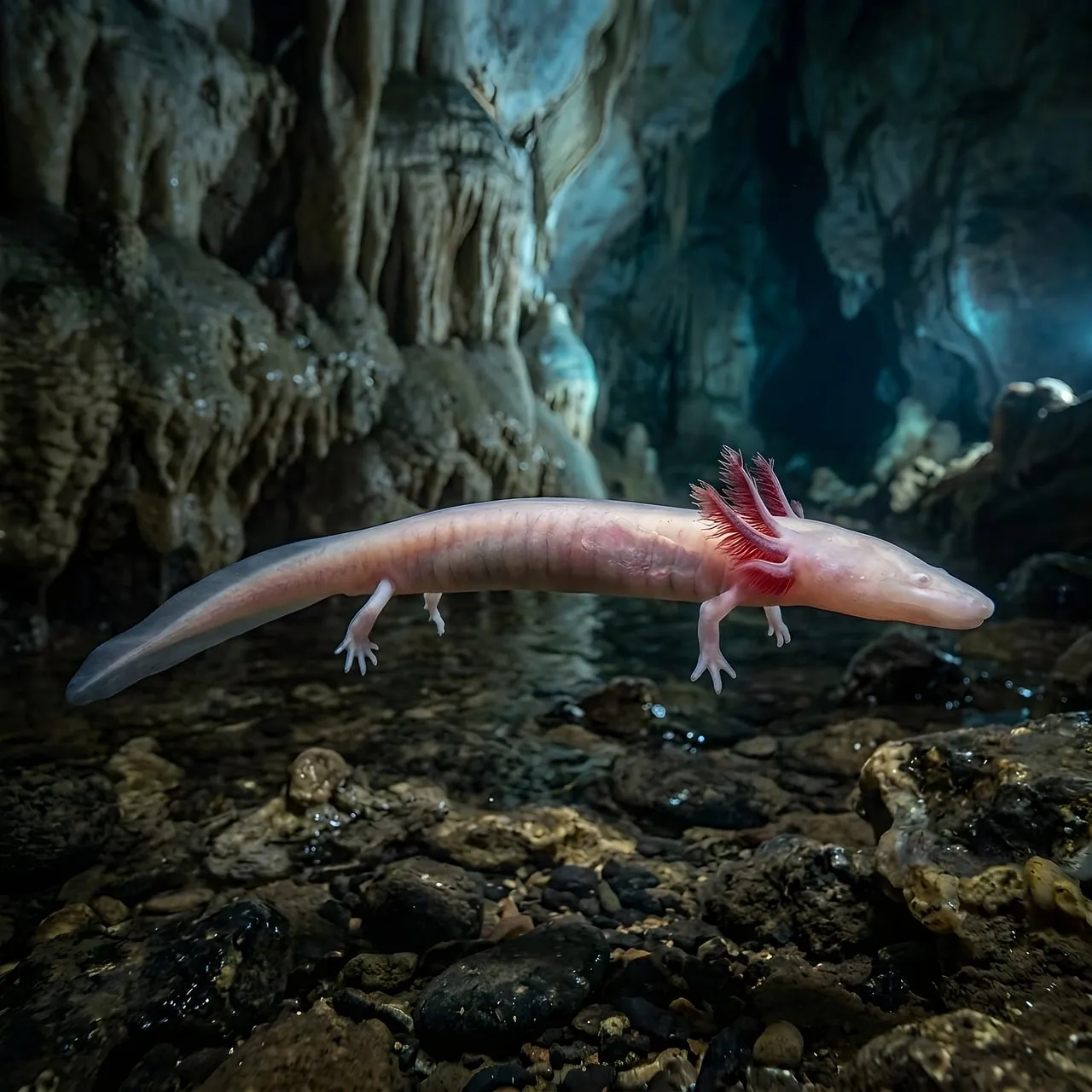
The olm (Proteus anguinus) is native to underground waters in the karst regions of southeastern Europe, including Slovenia, Croatia, Bosnia and Herzegovina, and a small part of northeastern Italy. These caves are cold, wet and completely lightless. Water filters through limestone and collects in hidden channels and pools that people rarely see.
Living there means no sunrise, no seasons in the usual sense and no plants. The olm has adapted to this steady, stable setting, which is part of why it can afford to live slowly. When the environment barely changes, an animal doesn’t have to spend much energy reacting to it.
2. Its Eyes Are Hidden Beneath the Skin
🔥 Would you like to save this?
We'll email this post to you, so you can come back to it later!
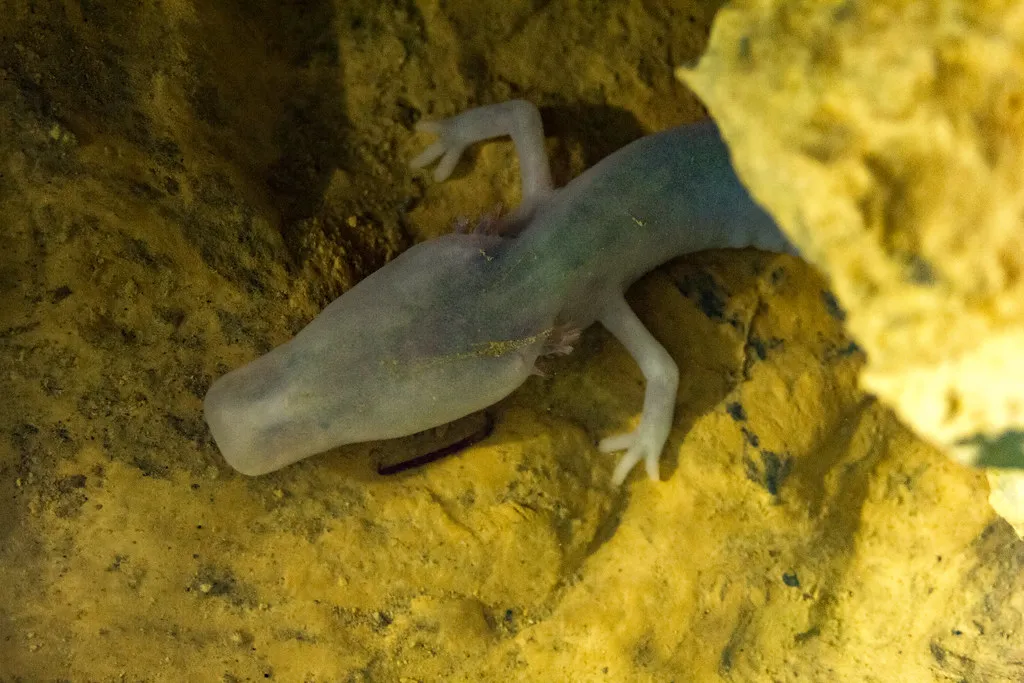
Olm larvae start out with small eye buds, but as the animal develops, the eyes stop growing and end up covered by skin. Adults are effectively blind in the usual sense. Researchers have noted that the skin may still be somewhat sensitive to light, though that’s a far cry from real vision.
Losing sight might sound like a disadvantage, yet in total darkness eyes are costly tissue that doesn’t pay off. Letting them shrink saves energy. Evolution tends to be practical like that, trimming what isn’t being used.
3. Other Senses Do the Heavy Lifting
🔥 Would you like to save this?
We'll email this post to you, so you can come back to it later!
To make up for what it can’t see, the olm leans on its other senses. Its sense of smell is sharp, and it can detect chemical traces in the water to find food. It also has sensory cells that pick up tiny vibrations and pressure changes, helping it notice nearby movement.
Studies have also suggested the olm can sense weak electric fields, which is rare among amphibians. Some research has even explored whether it can detect magnetic fields to orient itself. That last part is still an active area of study, so it’s best treated as promising rather than settled.
4. It Can Go Years Without a Meal
🔥 Would you like to save this?
We'll email this post to you, so you can come back to it later!
Food is scarce in caves. Olms eat small invertebrates such as tiny crustaceans, snails and insects that wash into the water, and meals can be few and far between. To cope, the olm has an astonishing tolerance for hunger.
Research on captive animals has shown that olms can survive for years without eating, which is a record-level fast for a vertebrate. They manage this by storing energy in the liver and other tissues, and by keeping their metabolism very low. It’s a lifestyle built around patience.
5. A Slow Metabolism Sets the Pace of Life
🔥 Would you like to save this?
We'll email this post to you, so you can come back to it later!
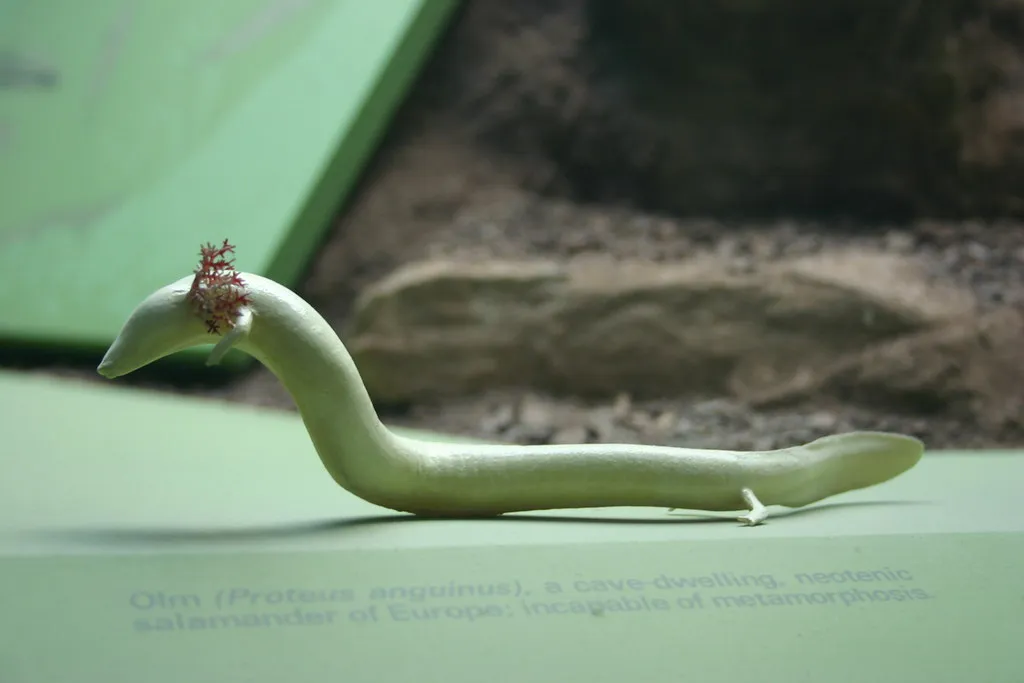
Everything about the olm seems to run in slow motion. Its metabolic rate is low compared with many similar amphibians, and it spends much of its time barely moving. Less energy burned means less food needed, which suits a habitat where food is unpredictable.
This slow pace is widely thought to be tied to its long lifespan. Many animals that live at a gentle tempo, with little stress from predators or temperature swings, tend to age more slowly. The olm doesn’t prove that rule, but it fits the pattern nicely.
6. Its Lifespan May Stretch Past a Century
🔥 Would you like to save this?
We'll email this post to you, so you can come back to it later!
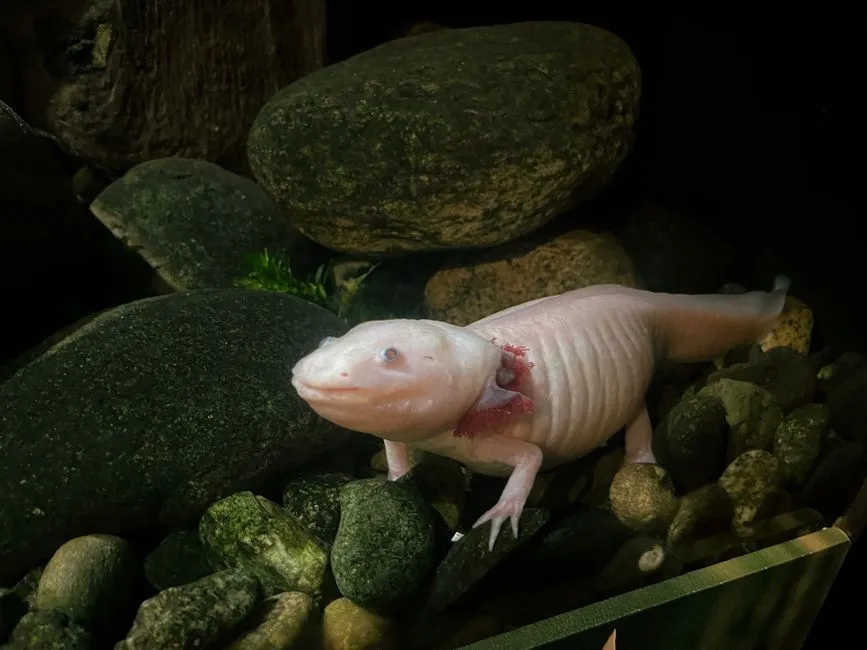
Olms are famous for their longevity. A well-known study from Slovenian and French researchers estimated, based on a long-running breeding colony in a French cave laboratory, that the species may live about a hundred years. That’s an estimate rather than a directly observed lifespan, but it’s strikingly long for an animal of its size.
For comparison, most amphibians of similar size live only a handful of years. The olm also matures very late, reaching adulthood after well over a decade. Scientists are now curious whether its biology could offer clues about aging, though that work is still at an early stage.
7. It Reproduces Slowly and Carefully

🔥 Would you like to save this?
We'll email this post to you, so you can come back to it later!
Olms don’t rush into reproduction. Females lay eggs only occasionally, and in some cases the species has been observed to give birth to live young, though egg laying is the more typical pattern. Eggs and larvae develop slowly, and survival depends on stable water conditions.
A well-documented moment came in recent years in Slovenia’s Postojna Cave, where an olm egg was observed developing and hatching under careful watch by researchers. Events like that are rare and valuable, because wild olms are so hard to study. Each observation fills in a small piece of a very large puzzle.
8. Its Quiet Life Is Under Threat
🔥 Would you like to save this?
We'll email this post to you, so you can come back to it later!
For all its toughness, the olm is vulnerable. It’s listed as vulnerable by the International Union for Conservation of Nature, and it depends on clean, cool groundwater. Pollution from farms, sewage and industry can seep through the porous limestone and reach its home.
Because it’s so specialized, the olm can’t simply move somewhere else if things go wrong. Changes to groundwater, along with habitat disturbance and illegal collecting, add pressure. Protecting the species really means protecting the hidden water systems beneath whole regions.
Final Thoughts
🔥 Would you like to save this?
We'll email this post to you, so you can come back to it later!
I find the olm oddly reassuring. In a world that rewards speed and noise, it has done well by being slow, quiet and frugal, and it may be around long after we’ve forgotten what we were rushing toward.
Still, its calm life depends on something we control: clean water. If we can’t look after the groundwater that feeds a creature this remarkable, that says more about us than about the olm. Admiring it is easy, but protecting it is the part that counts.

- 7 Everyday Habits That Can Make Your Senior Dog Happier - November 5, 2026
- 10 Enigmatic Structures That Continue to Puzzle Scientists Today - November 5, 2026
- 10 Strange Ruins in the Americas That Challenge What We Know About Early History - November 5, 2026