

Alaska is not just America’s last frontier. It is, for thousands of wild creatures, the only frontier that matters. The sheer scale of the place is almost impossible to process – a landmass so vast, so unyielding, so magnificently untouched that it shelters wildlife found nowhere else on the planet. And nowhere is that more true than in its skies.
Alaska, a land of pristine wilderness and breathtaking landscapes, is a true haven for bird enthusiasts. Its diverse ecosystems range from coastal shores to sprawling forests and towering mountain ranges, offering a unique opportunity to observe a wide variety of bird species in their natural habitats. But some of these birds are not just rare. They are extraordinary. They are the kind of creatures that stop seasoned naturalists cold and send amateur birdwatchers into quiet, reverent awe. So let’s dive in – because what you’re about to discover might genuinely surprise you.
1. McKay’s Bunting: The Rarest Bird in North America
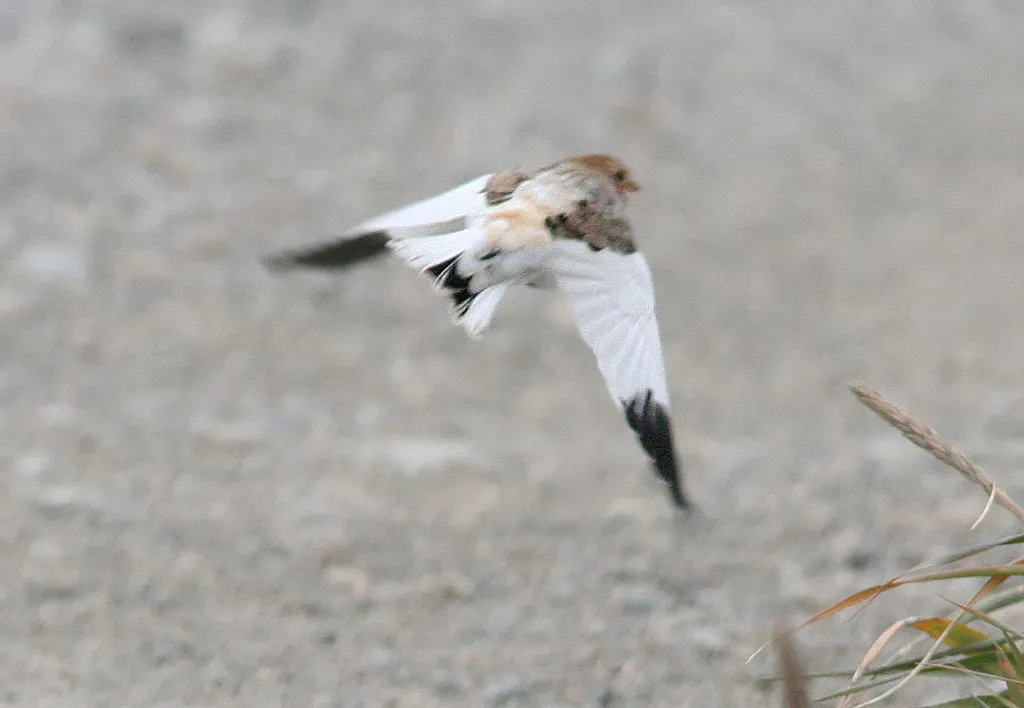
Imagine a bird so elusive, so isolated, that scientists went two full decades without visiting its only breeding ground. The island wilderness is so isolated that two decades passed between expeditions to the McKay’s buntings’ breeding grounds. That is not a metaphor. That is the very real, very remarkable story of a bird that most Americans have never even heard of.
The songs come from male McKay’s buntings – brilliantly white birds that drift to the earth in graceful, sweeping arcs. Named after naturalist Charles McKay, who first collected specimens of the bird, these buntings are so evocative of winter flurries that for years they were known as “McKay’s snowflakes.” Honestly, I think that original name is better too.
McKay’s buntings could be the rarest bird in North America, and the birds are potentially vulnerable, given that they depend on such a small island area for breeding. These buntings, previously referred to as “snowflakes” due to their pure white feathers and distinctive flight displays, nest in rock crevices along talus slopes. A one-of-a-kind species, clinging to life on one of the most remote islands in the world.
2. Spectacled Eider: The Duck That Wears Goggles
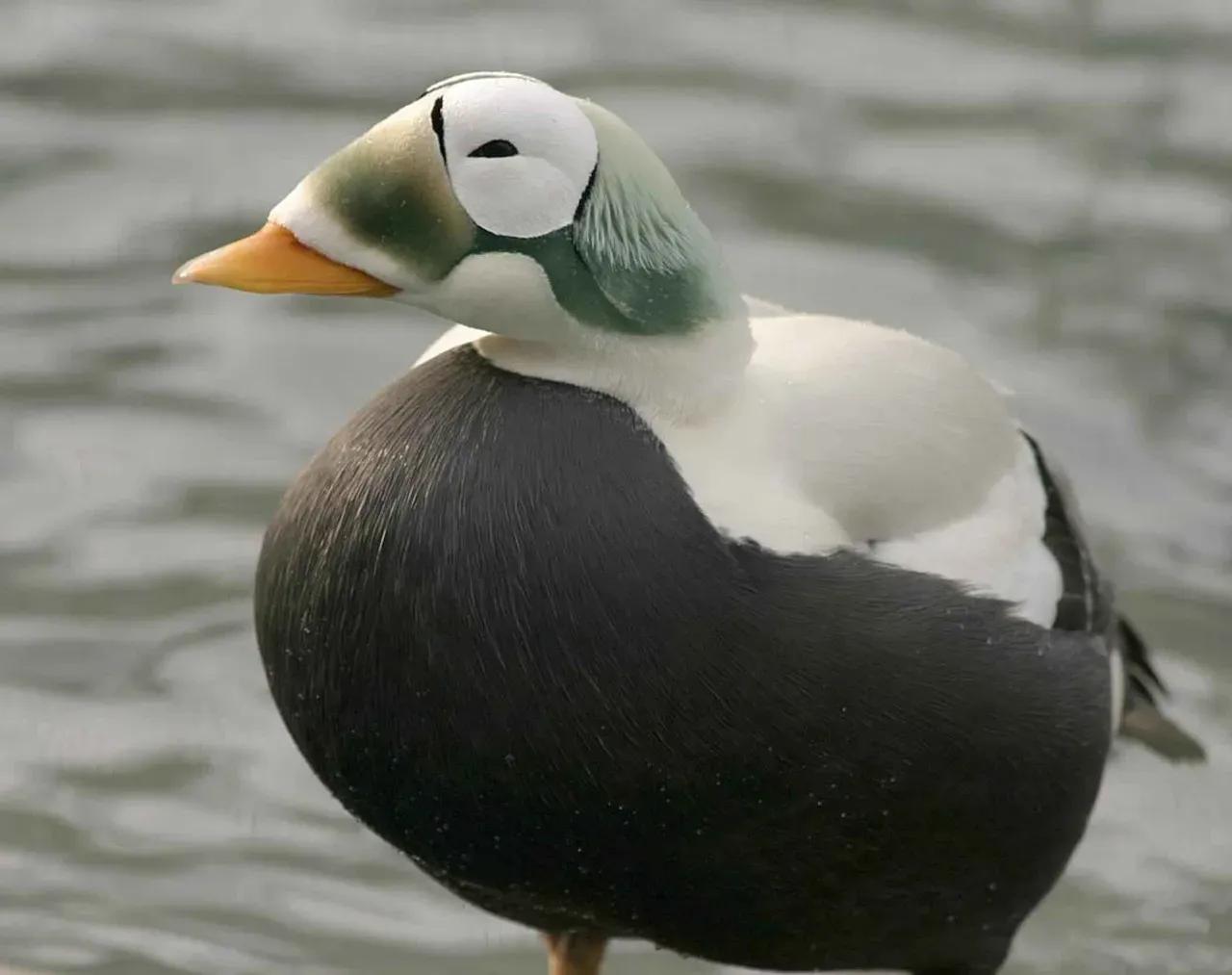
Here’s the thing – if you described this bird to someone who had never seen it, they probably wouldn’t believe you. The spectacled eider breeds on Arctic tundra in Western Alaska on the Yukon-Kuskokwim Delta, along the northern Alaskan coast, and both sexes have markings that resemble huge pale goggles, or spectacles, around their eyes. Nature, apparently, has a sense of humor.
In the winter, the entire global population of spectacled eiders congregates in gaps in the sea ice in the Bering Sea between St. Lawrence and St. Matthew Islands. The wintering habitat of spectacled eiders was unknown until the 1990s. They use these gaps in the ice to dive down and collect mollusks and other crustaceans from the sea floor.
The current population level of spectacled eiders is significantly lower than historical levels, and the species is listed as threatened under the Endangered Species Act. A strikingly beautiful bird, hiding in plain sight beneath Arctic ice – and fighting for its future at the same time.
3. Gyrfalcon: The King of All Falcons
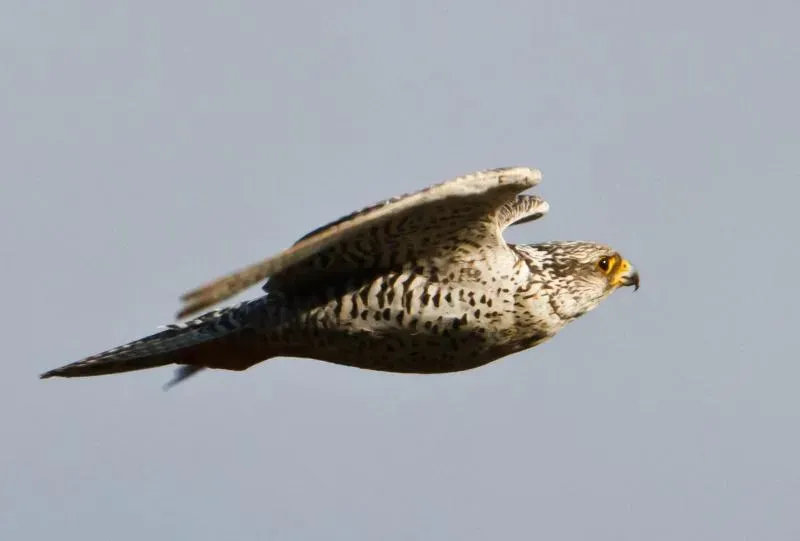
Some birds are impressive. The Gyrfalcon is genuinely intimidating. This formidable bird is the largest of all falcons with a wingspan stretching as much as four feet across. The gyrfalcon has three color phases: black, gray and white, although gray is most common in Alaska. It looks like something designed in a lab for maximum aerial dominance.
Soaring through the icy skies, the Gyrfalcon is a true master of its domain. As the largest falcon in the world, this formidable bird commands attention with its sheer size and elegance. Unlike other falcons, the Gyrfalcon’s elusive nature makes it a rare sight, adding to its mystique. Found primarily in the Arctic and subarctic regions of Alaska, it thrives in the cold, hunting small mammals and birds with precision.
Gyrfalcons prey on large birds, mostly ptarmigan, and some mammals ranging in size from voles to hares. They are capable of flying at tremendous speeds and usually dive down onto prey on the ground. Breeding pairs do not build their own nests and often use a bare cliff ledge or the abandoned nest of other birds, particularly golden eagles and common ravens. Resourceful, ruthless, and breathtaking to watch.
4. Willow Ptarmigan: Alaska’s Shape-Shifting State Bird
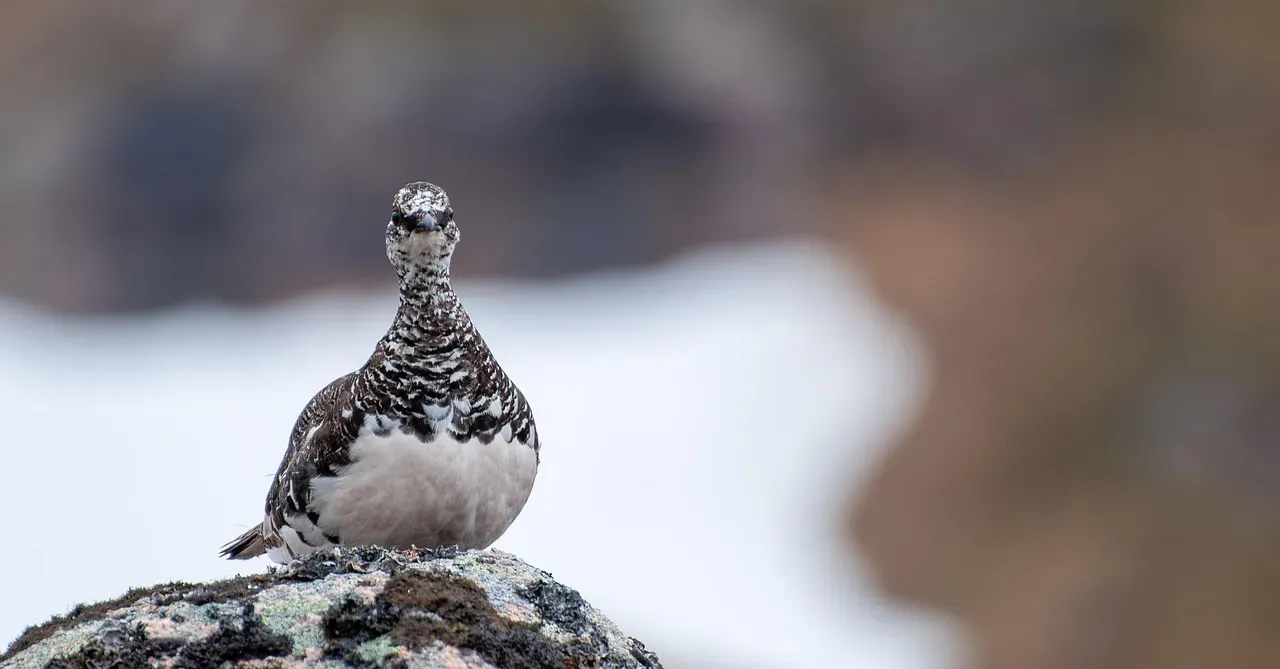
Most state birds are chosen for their beauty or their song. Alaska chose a shape-shifter. Alaska’s state bird is a true chameleon, turning white in the winter and brown in the summer to camouflage itself from predators. It is one of the most visually striking natural transformations you’ll witness in the animal kingdom – like watching someone change their entire wardrobe every six months.
Willow ptarmigan are found nearly everywhere in Alaska’s high, treeless country, and sometimes they’re also found in the willows and alders near the tree line. There are actually three species of ptarmigans in Alaska, with a population that fluctuates between superabundant to nearly nonexistent in just a few years. Those swings in population are genuinely shocking – imagine millions of birds one decade and almost none a few years later.
5. Steller’s Eider: The Tiniest and Most Threatened Sea Duck
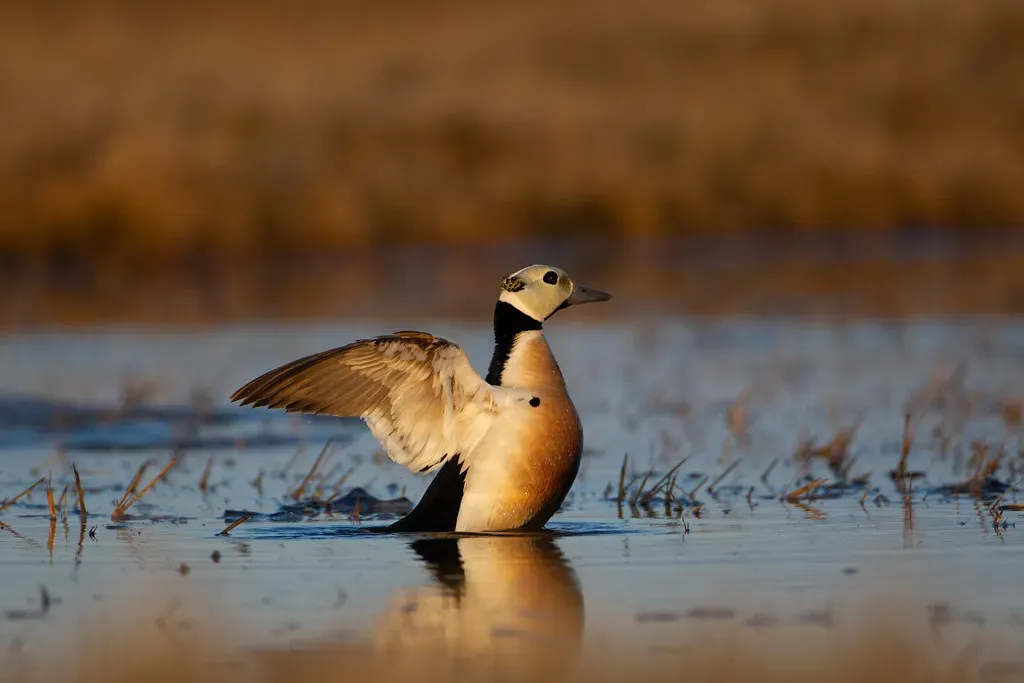
The Steller’s eider is the smallest of the four eider species. Males are unusually colorful, and both sexes have an iridescent blue wing patch, lined above and below by white, which is unique for a sea duck and more similar to a dabbling duck such as a mallard. For something so small and seemingly delicate, its story is one of quiet, ongoing struggle.
The Alaska breeding population of Steller’s eiders was listed as threatened under the Endangered Species Act in June 1997. Because Barrow is the only known regular nesting location for Steller’s eiders in North America, a plan is needed to provide protection for these birds. Think about that for a second – the entire North American nesting population of a species reduced to essentially one location.
Steller’s eiders migrate long distances each year, up to 4,800 kilometers, between their breeding and wintering grounds. Studies have shown that Steller’s eider reproduce most successfully when lemmings are abundant, most likely resulting from predators transitioning between prey during years of lemming decline. Their survival is tied to an entire ecosystem chain in ways that are still being understood.
6. Kittlitz’s Murrelet: The Ghost of the Glacier
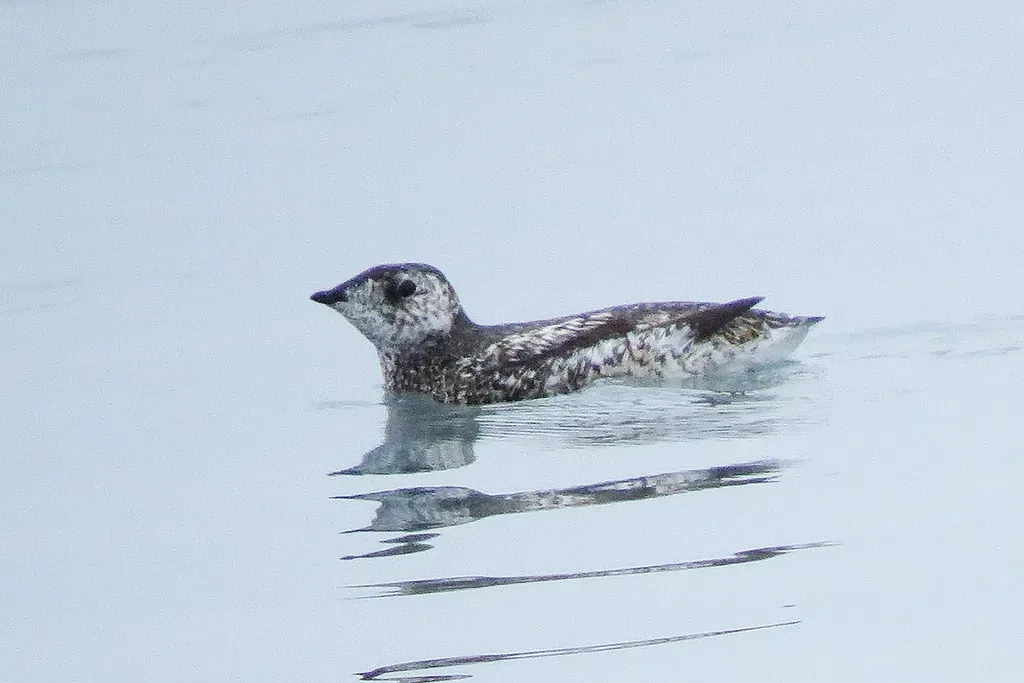
This one is called the “Glacier Murrelet” for a reason, and once you learn why, you’ll never forget it. Related to puffins and murres, this small diving bird is one of the rarest and least known seabirds in North America. The Kittlitz’s Murrelet nests in rugged mountains on bare rock or scree slopes, sometimes near glaciers or in previously glaciated areas further inland. During summer, it usually feeds on fish and zooplankton in turbid waters, often near tidewater glaciers, earning its nickname “Glacier Murrelet.”
Unlike most seabirds, Kittlitz’s Murrelets do not nest in colonies but rely on camouflage and secretive behavior to escape predation. They will lay a single egg in a small scrape, often on the downhill side of a large rock. Their nests are extremely hard to find. That is a bird practically designed to be invisible – a master of disappearing into the landscape, one single egg at a time.
7. Tufted Puffin & Horned Puffin: Alaska’s Sea Clowns
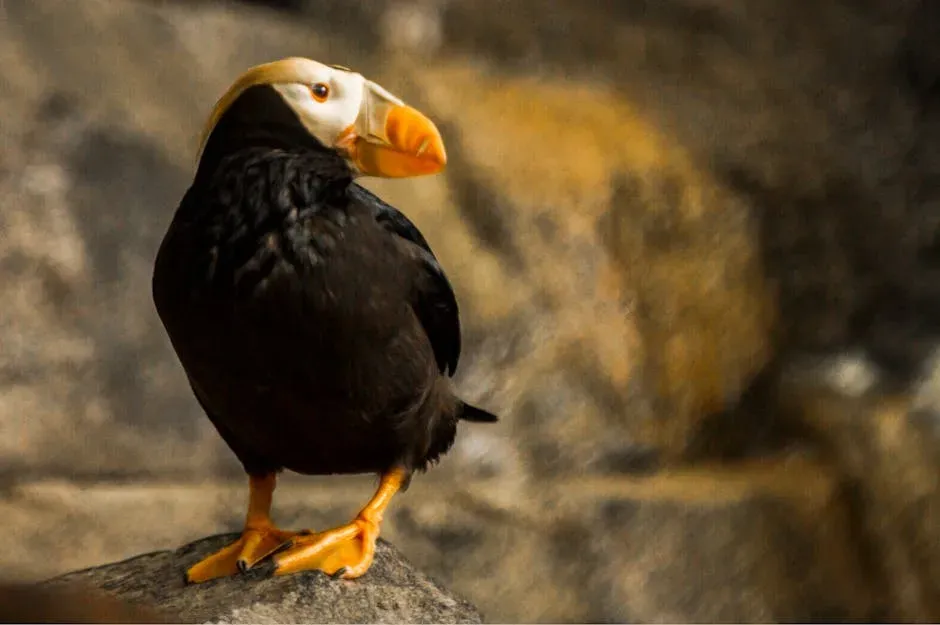
Few birds on earth generate as much instant joy as a puffin. The most striking puffin feature is the large colorful bill. Early sailors dubbed them the “sea parrot” from their stout bodies, short wings, and their orange or red webbed feet which are placed far back on their body. They look, honestly, like they were designed by a committee that couldn’t agree on anything.
Tufted Puffins are named for tufts of feathers that curl back from each side of the head. They have dark, black bodies and white faces, and their bills are red and yellow. In Alaska, puffins breed on coastal islands and headlands from Forrester Island in southeastern Alaska to Cape Lisburne on the Chukchi Sea Coast. Horned Puffins are more prevalent farther north than Tufted Puffins.
Puffins are best observed during the summer months when they come ashore to breed. The Alaska Maritime National Wildlife Refuge, particularly around the Pribilof Islands and Kenai Fjords National Park, is an excellent location to spot these seabirds. If you only ever see one Alaskan bird in your lifetime, make it a puffin. You won’t regret it.
8. Bald Eagle: Alaska’s Ultimate Sky Ruler
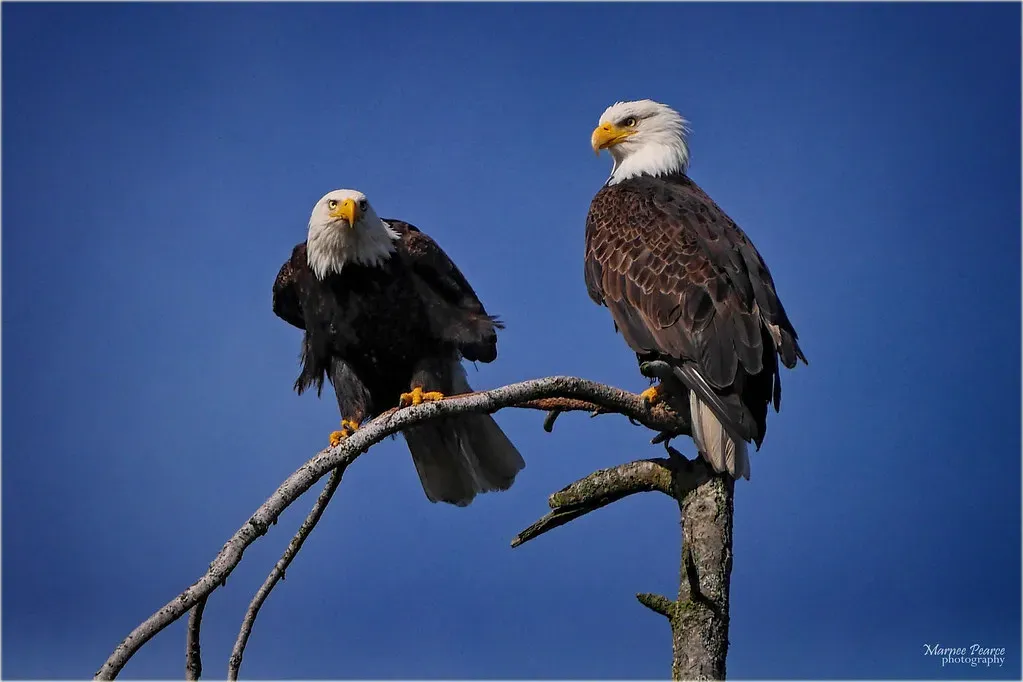
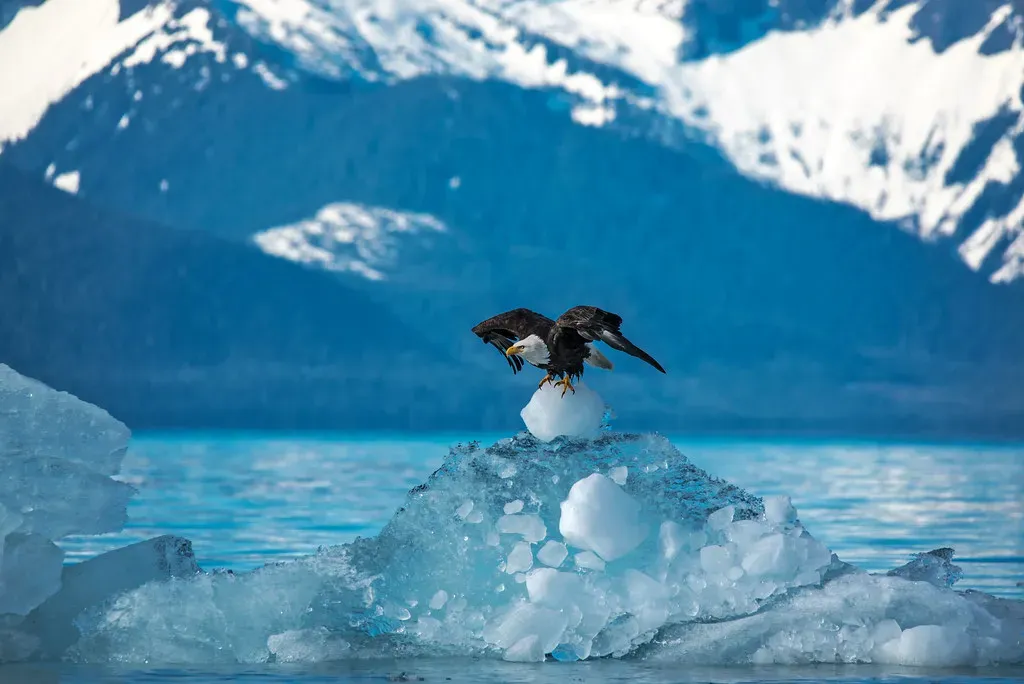
Most people know the bald eagle as a symbol. In Alaska, it’s a staggering reality. Alaska is home to the largest population of bald eagles in the world, with approximately 50,000 birds living across the state. That is not a small number – that’s a population that dwarfs what exists in the entire lower 48 states combined.
While the bald eagle remains a threatened species in the lower 48 states, this majestic bird thrives in Alaska. Not only is this raptor big, measuring 32 to 40 inches long with a wingspan of up to seven feet, but it’s fast, reaching flight speeds between 35 and 44 miles per hour.
The salmon streams, mountains, forests and seashores provide steady food for bald and golden eagles. Alaska gives the bald eagle everything it needs – space, prey, freedom, and wilderness. Let’s be real: seeing one perched above a glacial river, unafraid and unhurried, is one of the most powerful experiences any birdwatcher can have.
Conclusion: A Wilderness That Demands to Be Witnessed
The list of birds of Alaska includes every wild bird species recorded in the state, and as of 2022, there were 534 species on the official list. That alone is a staggering number. Yet the 15 species woven through this article represent something even more profound – they represent the kind of biological uniqueness that only an untouched wilderness can produce.
From the ghostly white McKay’s Bunting drifting like a living snowflake over a deserted Arctic island, to the goggle-wearing Spectacled Eider diving beneath Bering Sea ice, Alaska’s birds defy expectation at every turn. They are survivors, specialists, and spectacles all at once.
Alaska’s immensity means that human encroachment doesn’t play a major role in species’ survival, making a minimal impact in the state’s impenetrable wilderness and the creatures who live in it. That is a privilege we should never take for granted. These birds exist not despite Alaska’s harshness, but because of it – shaped by ice, wind, and isolation into something the rest of the world simply cannot replicate.
If even one of these species sparked something in you – curiosity, wonder, maybe a desire to actually book that trip north – then the wilderness has already done its job. Which of these extraordinary birds surprised you most? Tell us in the comments.

- How Did Reindeer Become a Symbol of Christmas? - July 19, 2026
- 10 Facts About The Endangered Jaguarundi - July 19, 2026
- Why Labrador Retrievers Remain a Southern Favorite in Georgia and the Carolinas - July 19, 2026