
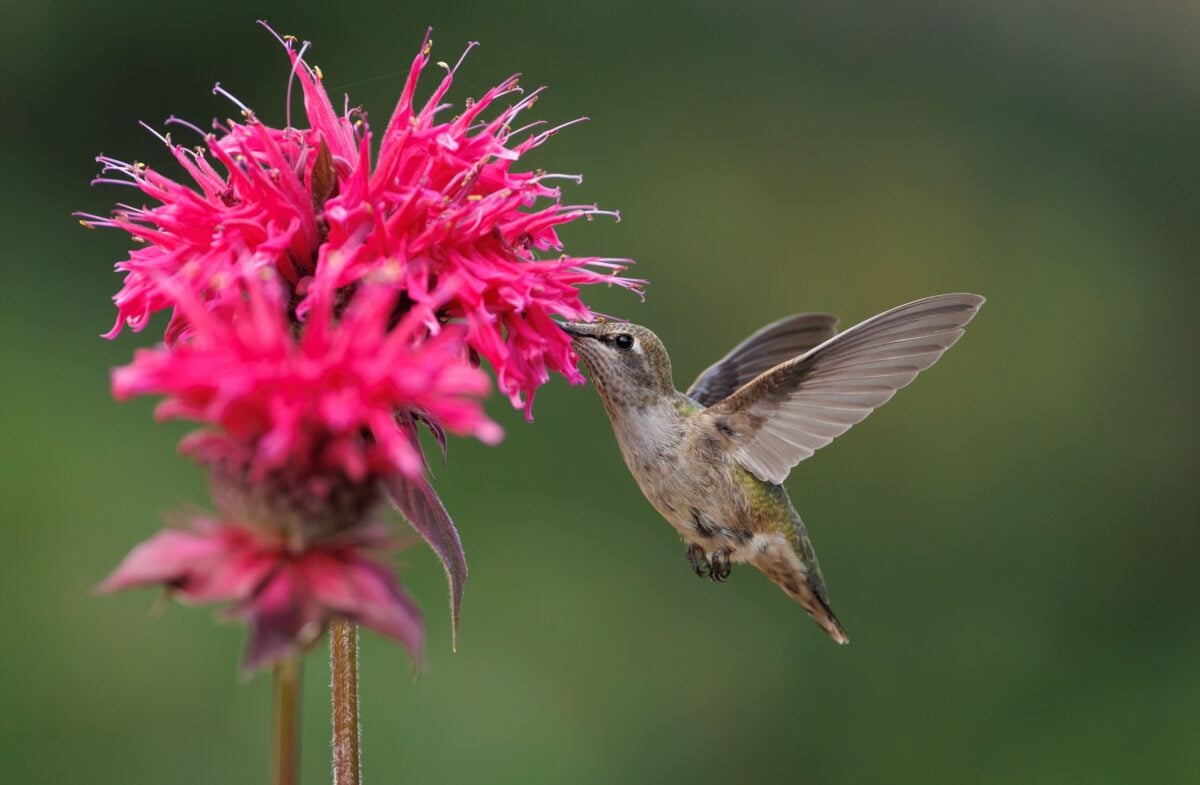
#1 Trumpet Honeysuckle (Lonicera sempervirens)
Trumpet honeysuckle is one of those plants that seems almost engineered for hummingbirds, and in a sense, evolution did exactly that. The tubular red and orange flowers are shaped precisely for a long, curved bill, and they produce nectar concentrated enough to make the trip worthwhile. Unlike its more aggressive Japanese cousin, this native vine climbs politely along fences and trellises without swallowing the garden whole.
What makes it especially valuable is timing. Trumpet honeysuckle often blooms in flushes from late spring through summer, giving hummingbirds a reliable stop during migration as well as the nesting season. Gardeners in the eastern and central United States tend to have the best luck with it, since it’s native to that range and already adapted to local pollinator schedules.
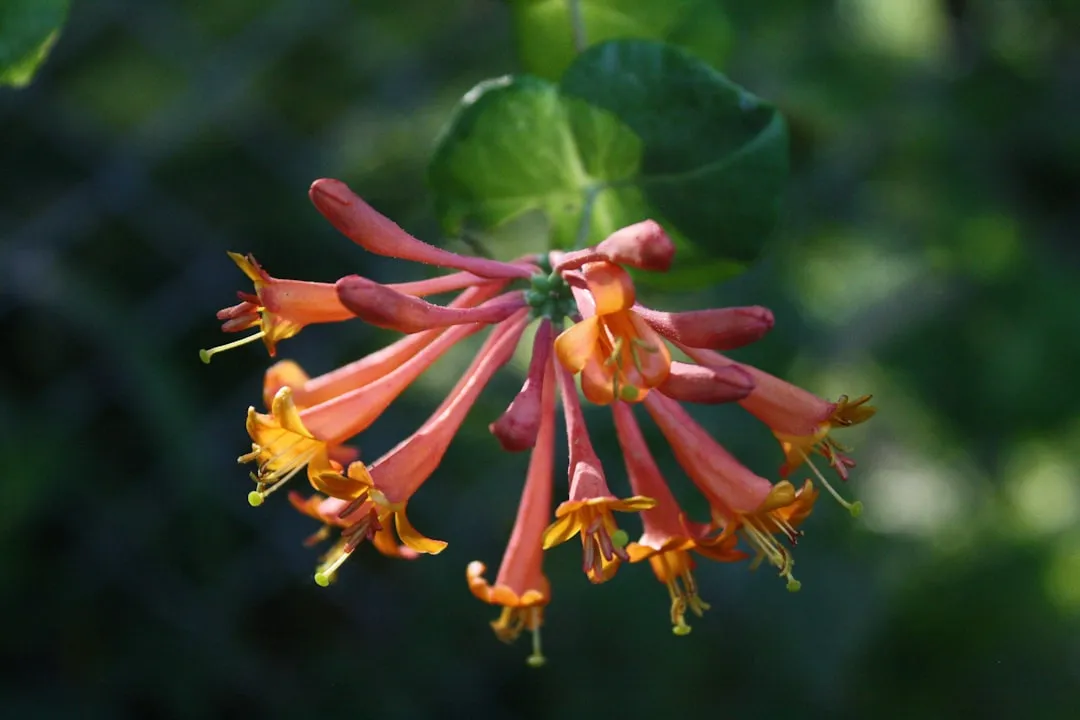
#2 Bee Balm (Monarda didyma)
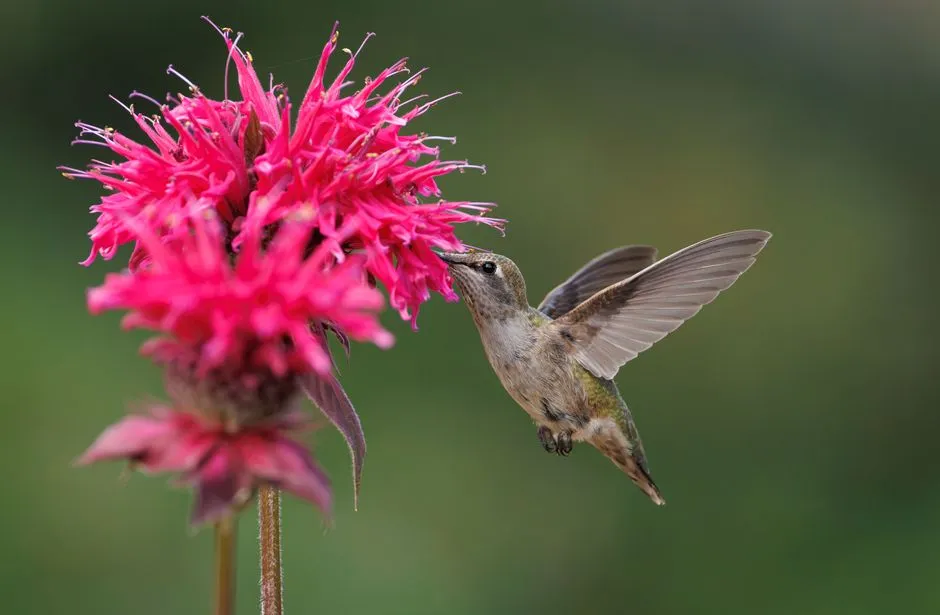
Bee balm looks a little wild, almost shaggy, with its spiky crimson or purple blooms sitting atop square stems. That untamed appearance is deceiving, because the plant is remarkably efficient at doing one job: producing nectar that hummingbirds can detect from a distance. It belongs to the mint family, which explains both its vigorous spreading habit and the faintly citrusy scent that rises when the leaves are brushed.
Hummingbirds seem to favor bee balm partly because of the flower’s structure, which allows easy access without much maneuvering. It also blooms during the hotter stretch of summer when many other perennials have already faded, filling a gap that matters more than gardeners often realize. Given a sunny spot with decent air circulation, it’s a low-maintenance plant that rewards very little effort with a lot of visits.
#3 Cardinal Flower (Lobelia cardinalis)
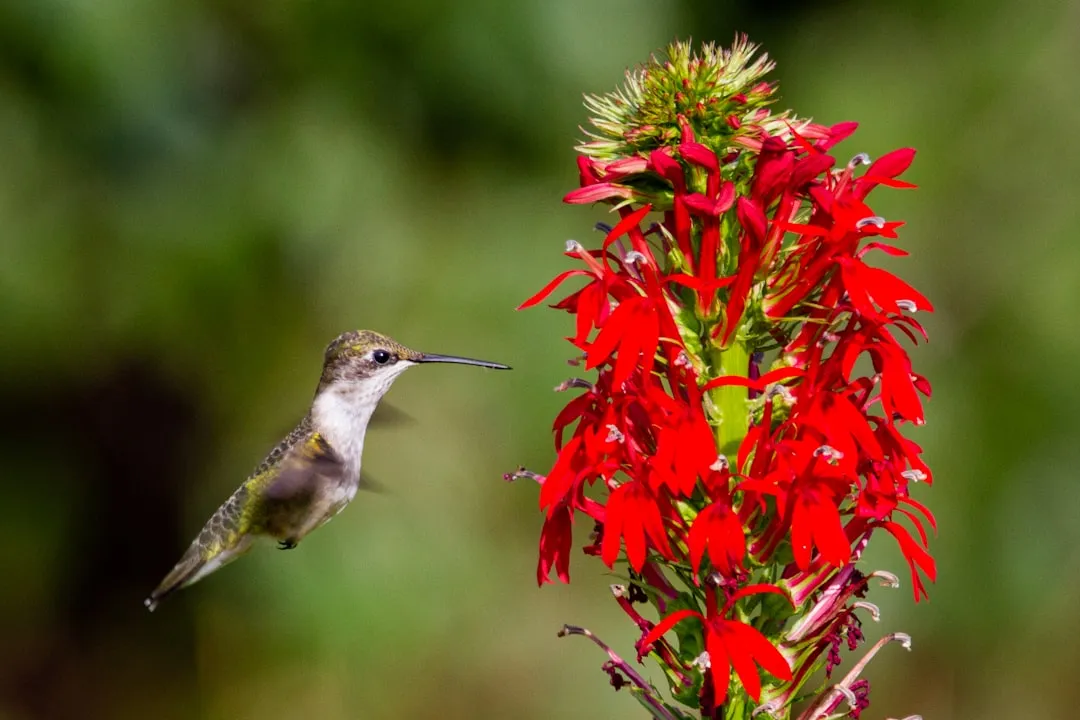
Cardinal flower earns its name from blooms so intensely red they almost look painted on. That color isn’t incidental. Hummingbirds see red exceptionally well, and this native wildflower has essentially built its entire survival strategy around catching their attention first, before bees or other competitors get there.
It thrives in moist soil, often along stream banks or the edges of ponds, which makes it a great choice for gardeners dealing with a soggier corner of the yard. The tall spikes of flowers open from the bottom upward over several weeks in late summer, stretching out the bloom period rather than delivering everything at once. That slow unfolding is part of what keeps hummingbirds returning day after day rather than just passing through.
#4 Salvia (Salvia spp.)
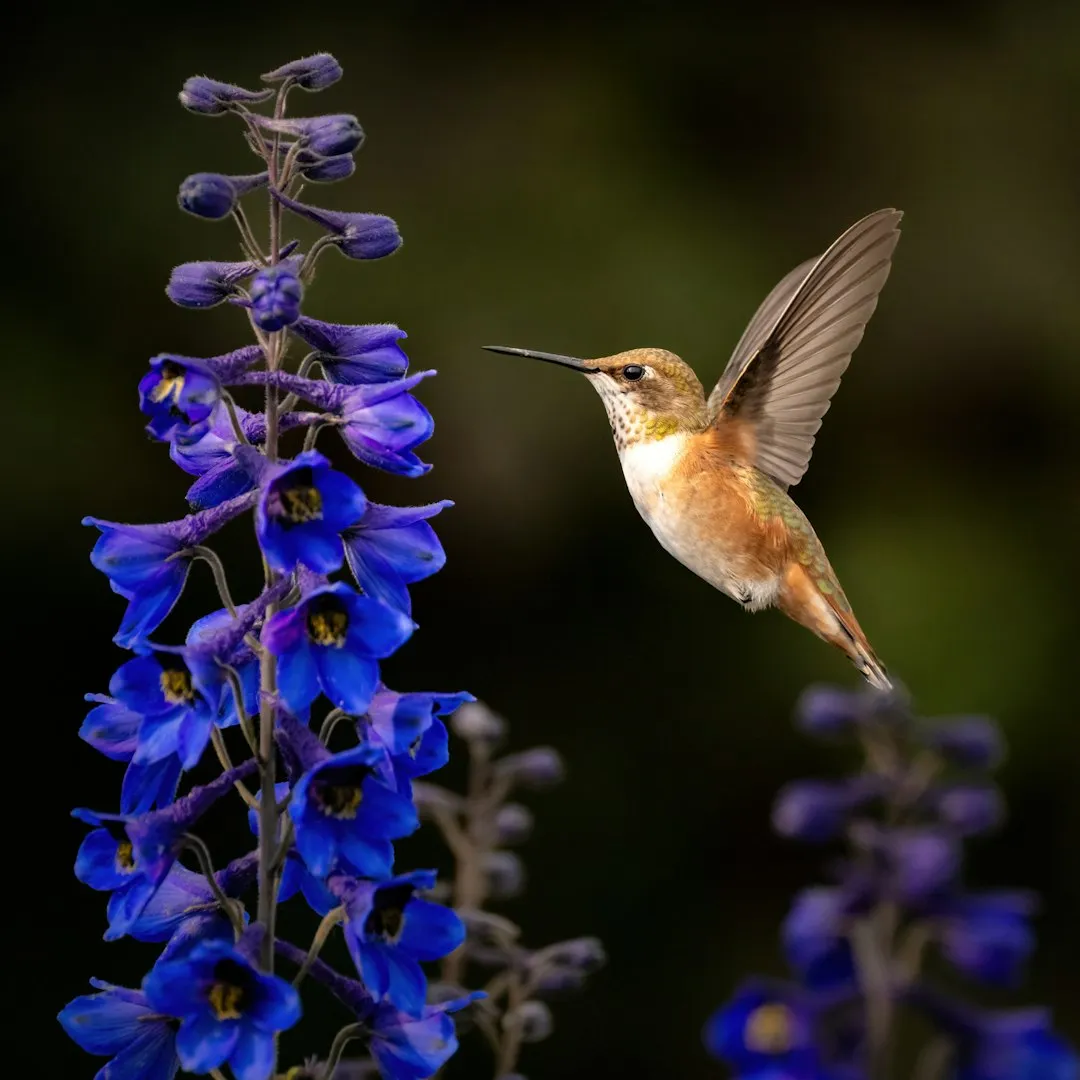
Few plant families offer as much variety for hummingbird gardening as salvia. From the deep blue spires of Salvia guaranitica to the fiery red of pineapple sage, there’s a salvia suited to nearly every climate and color preference. The tubular blossoms are a near-perfect match for a hummingbird’s bill, and the nectar reward tends to be generous.
Salvias are also appreciated by gardeners for their toughness. Many varieties tolerate heat and drought once established, which means they keep blooming steadily through the dog days of summer when other plants start to struggle. That consistency, more than any single flower’s beauty, is often what turns a salvia patch into a regular hummingbird stop rather than an occasional detour.
#5 Fuchsia
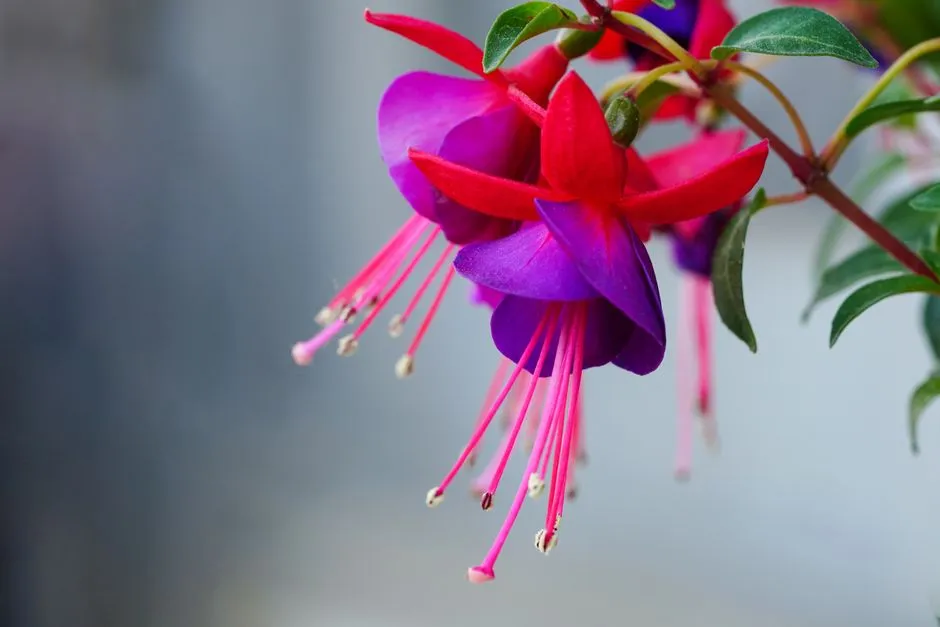
Fuchsia flowers hang like tiny lanterns, and the resemblance isn’t just visual. Their pendant shape, deep pink and purple coloring, and dangling stamens all seem purpose-built to attract a hovering feeder rather than a crawling insect. It’s a plant genuinely shaped by its pollinators over a long evolutionary relationship.
The tradeoff is that fuchsia prefers cooler, slightly shaded conditions, which makes it a better fit for coastal or northern gardens than for scorching inland heat. In hanging baskets or shaded borders, though, it can bloom continuously from early summer into fall. That extended flowering window is exactly why hummingbirds tend to treat a well-placed fuchsia as a dependable feeding station rather than a one-time stop.
#6 Butterfly Bush (Buddleja davidii)
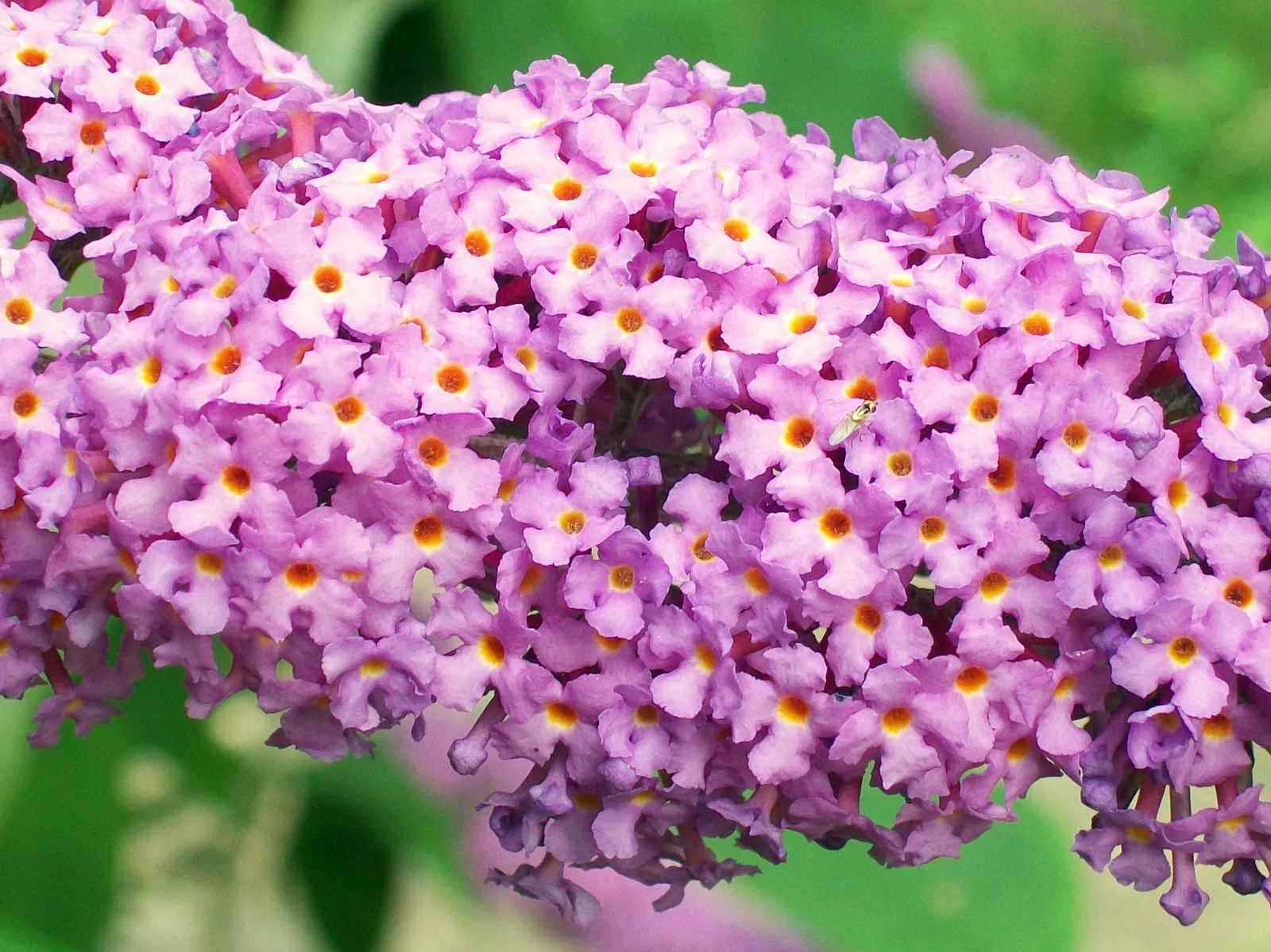
Butterfly bush gets its name from one pollinator but draws a surprising number of others, hummingbirds included. The long, cone-shaped flower clusters come in shades of purple, pink, and white, and they produce nectar in enough quantity to attract a whole rotation of visitors throughout the day. It’s a fast grower, often reaching six feet or more in a single season.
That vigor is worth noting, since butterfly bush has become invasive in parts of the Pacific Northwest and elsewhere, so it’s worth checking local guidance before planting it. Where it’s not a concern, though, few shrubs deliver as much bloom time for as little care, often flowering from early summer straight through the first frost. For hummingbirds establishing a summer territory, that kind of reliability is hard to overstate.
#7 Zinnias
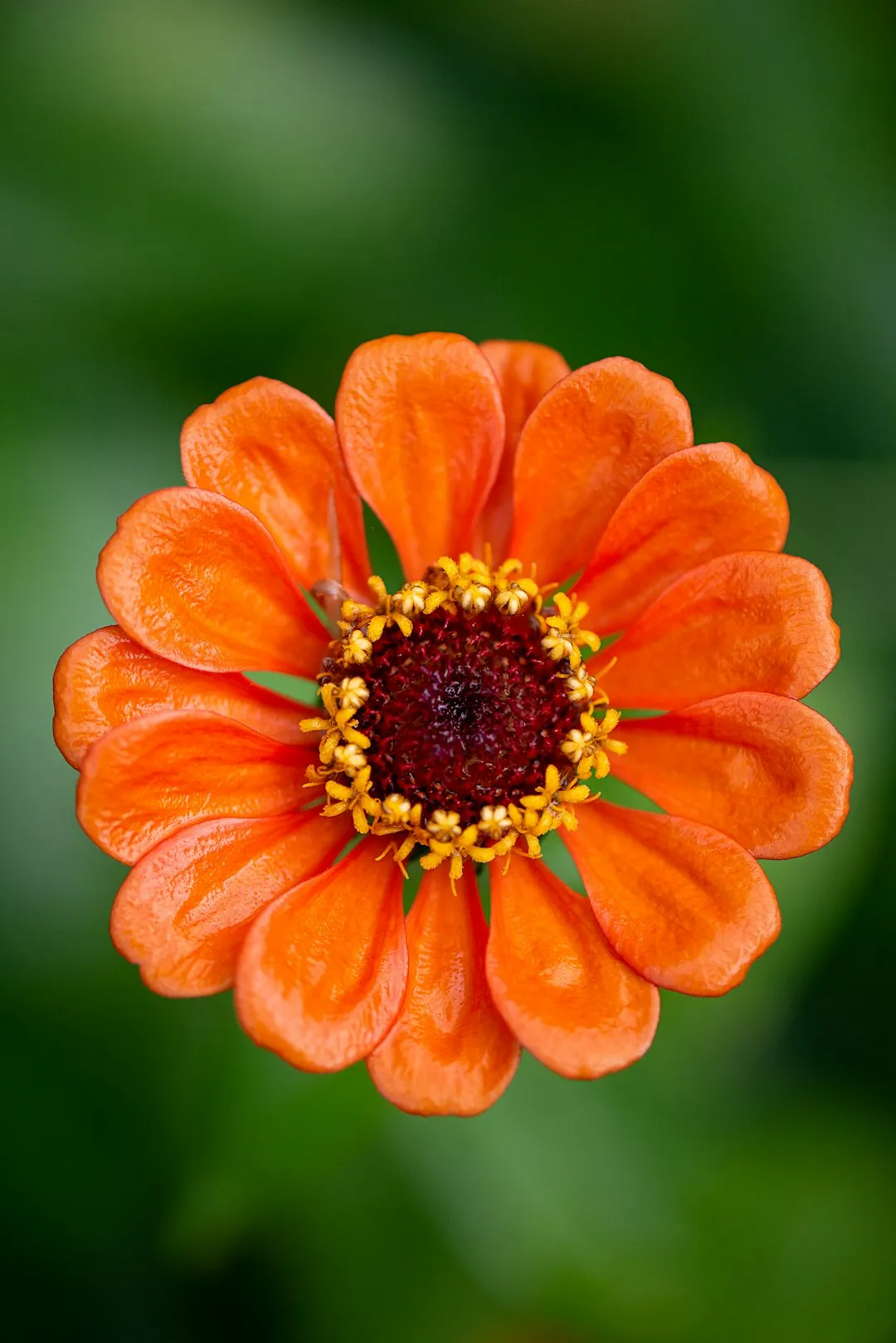
Zinnias might not look like classic hummingbird flowers at first glance, since they lack the tubular shape many nectar feeders prefer. Still, their sheer abundance of blooms and long flowering season make them a practical addition to any hummingbird garden. Bright reds, oranges, and pinks in particular seem to catch a hummingbird’s eye from a distance.
Part of the appeal is convenience. Zinnias are annuals that grow quickly from seed, bloom within weeks, and keep producing new flowers as old ones are cut or fade, which means a steady nectar supply from midsummer until frost. They’re also refreshingly low-maintenance, tolerating heat and mediocre soil far better than fussier perennials, making them a smart filler between the showier hummingbird favorites.
#8 Trumpet Vine (Campsis radicans)
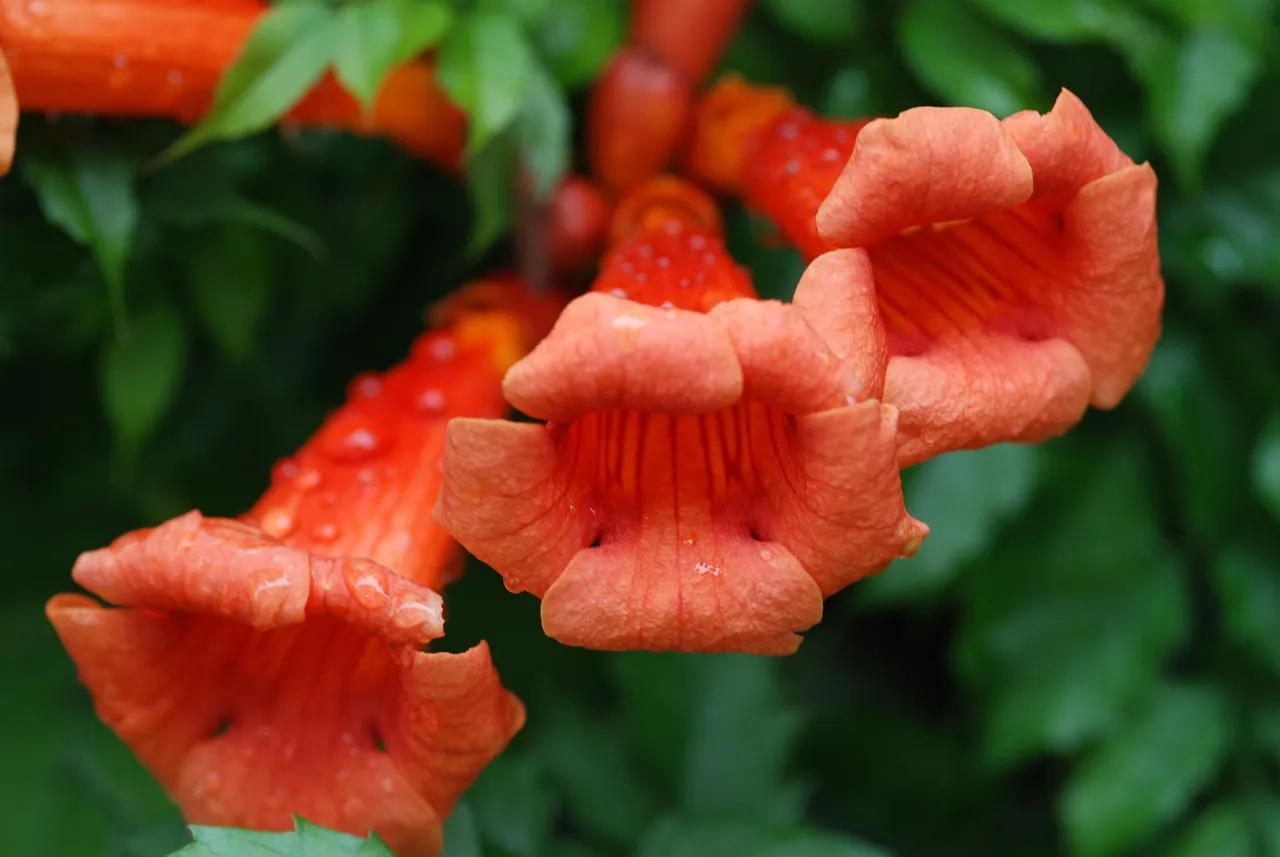
Trumpet vine is not a subtle plant. Its orange and red flowers are large, abundant, and shaped like small horns, practically advertising themselves to any hummingbird within sight. This North American native has a reputation for vigorous, sometimes aggressive growth, climbing walls, fences, and trees with equal enthusiasm.
That same vigor is exactly why it works so well for attracting hummingbirds in large numbers, since a mature vine can produce hundreds of blooms across a single summer. Gardeners with limited space should approach it carefully, perhaps in a container or against a sturdy structure, since it can spread aggressively if left unchecked. Handled with a bit of caution, though, it’s one of the most reliable summer-long nectar sources a yard can offer.
Final Thoughts
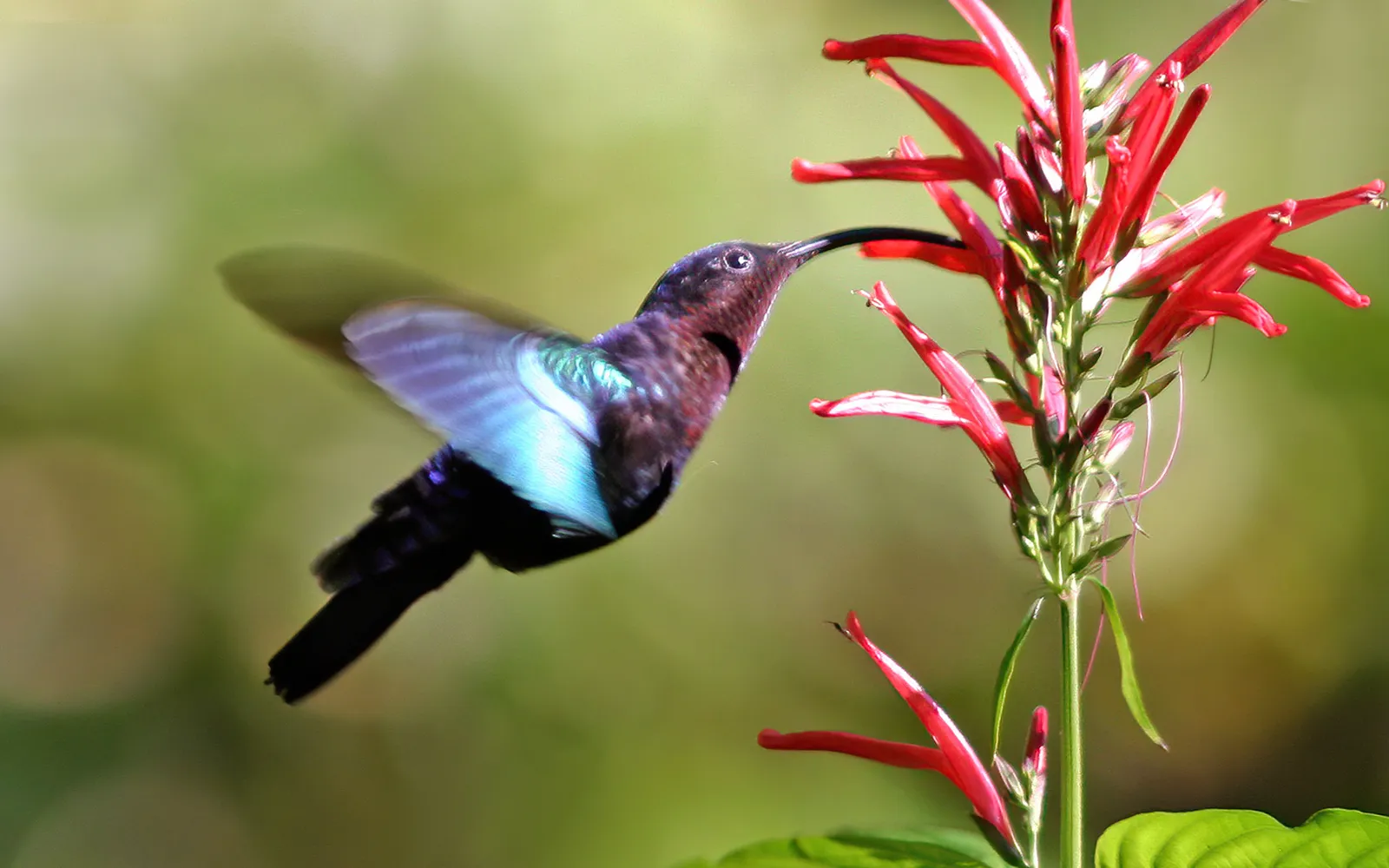
After looking closely at what actually draws hummingbirds back year after year, it’s hard not to conclude that sugar feeders are the convenient shortcut, not the real solution. Plants offer nectar in natural concentrations, along with the insects hummingbirds also need for protein, something a feeder simply can’t replicate. A garden built around a mix of these eight plants, staggered so something is always blooming, does more for local hummingbird populations than any store-bought feeder ever could.
If there’s one takeaway worth holding onto, it’s that variety and timing matter more than any single showstopper flower. A yard with even three or four of these plants, chosen to bloom in overlapping waves from late spring through fall, will likely see more consistent hummingbird activity than one relying on a single spectacular but short-lived bloom. That’s the kind of gardening decision that pays off quietly, one summer visit at a time.

- 8 Plants That Bring Hummingbirds Back Every Summer - August 8, 2026
- How Protecting Bees in Your Garden Helps the Entire Ecosystem - August 8, 2026
- 11 Historic US Bridges That Are Engineering Marvels - August 8, 2026