


Worried about unexpected vet bills?
Pet insurance can cover thousands in unexpected vet costs. Get a free quote from Lemonade in under 2 minutes.
Get My Free Quote →Sponsored · Opens Lemonade.com
The Komodo dragon, the world’s largest lizard, evokes both fascination and fear with its prehistoric appearance and predatory prowess. These apex predators of Indonesia’s islands have developed a fearsome reputation, and for good reason. Understanding what provokes these magnificent reptiles to charge—and what might make them back down—isn’t just fascinating zoology; it could be vital knowledge for researchers, conservationists, and the rare tourist who might encounter these formidable creatures in their natural habitat. Komodo dragons can reach lengths of up to 10 feet and weights exceeding 300 pounds, making their aggressive behaviors particularly dangerous. Their hunting strategy often involves patience and ambush, but certain triggers can provoke immediate and potentially deadly charges. Let’s explore what awakens the dragon’s wrath and, perhaps more importantly, what might calm it.
Territorial Intrusion The Primary Trigger
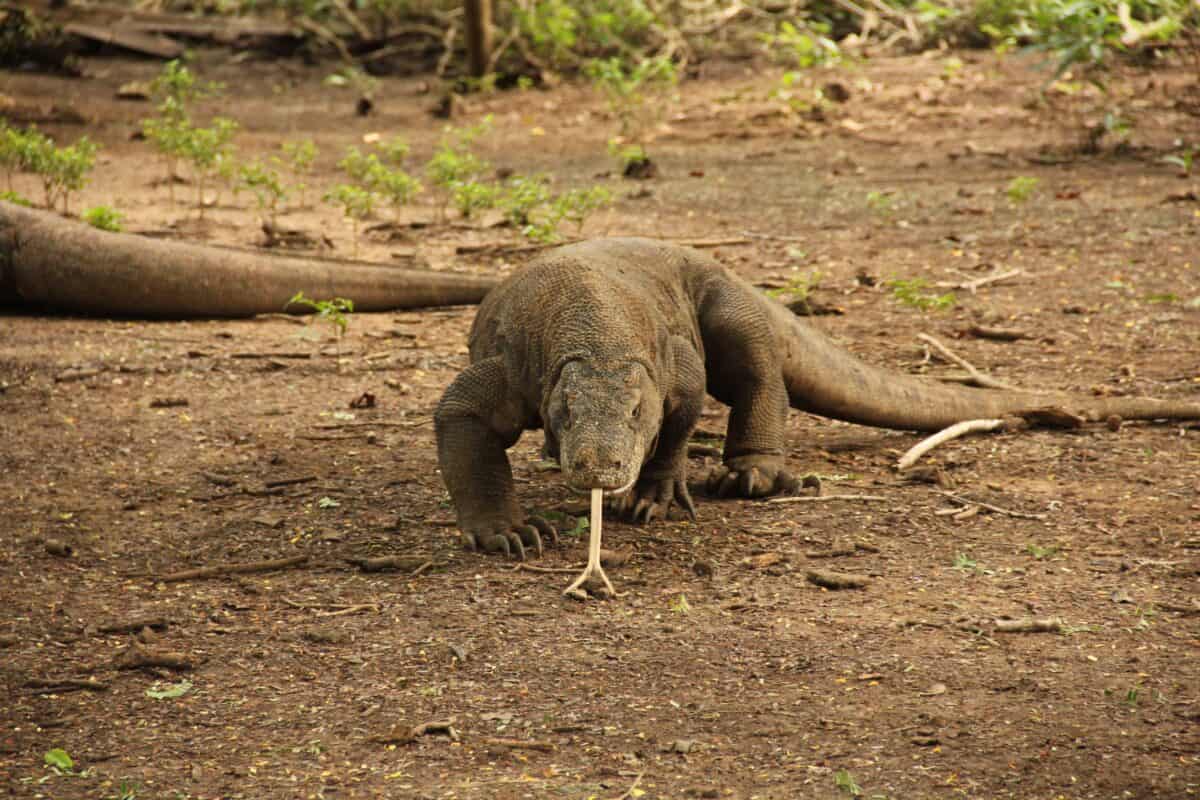
Like many predators, Komodo dragons are fiercely territorial, especially during breeding season. Males establish and defend specific territories against rivals and intruders. When humans or other animals encroach upon a dragon’s territory, particularly if that dragon is a dominant male, it may interpret this as a challenge requiring immediate response. The territorial response is often swift and aggressive, beginning with warning signs like hissing and gular pumping (throat inflation) before potentially escalating to a full charge.
Research conducted at Komodo National Park has documented that territorial disputes account for approximately 65% of aggressive charges observed in wild Komodo populations. The dragons can recognize the boundaries of their territories through scent markings and will patrol these areas regularly. Conservation efforts now include mapping dragon territories to minimize human-dragon conflict in areas where their habitats overlap with human settlements or tourist pathways.
The Scent of Blood An Irresistible Lure

Komodo dragons possess an extraordinary sense of smell, capable of detecting blood from several miles away. This remarkable ability serves them well as predators, but it also means that any blood scent can trigger a hunting response and potential charge. The dragons have specialized olfactory (smell) receptors that are particularly sensitive to proteins found in blood and decaying flesh. When they detect these scents, their hunting instincts activate almost instantaneously.
Researchers have documented cases where dragons traveled over 7 miles following a blood trail. For humans, this means that any open wound, however small, can attract unwanted attention from these reptiles. Women menstruating have been advised to take extra precautions when in Komodo territory, as even this natural blood scent can potentially trigger the dragons’ predatory response. The National Park authorities maintain strict guidelines about not entering dragon habitats with any bleeding wounds.
Protecting Young Maternal Defense
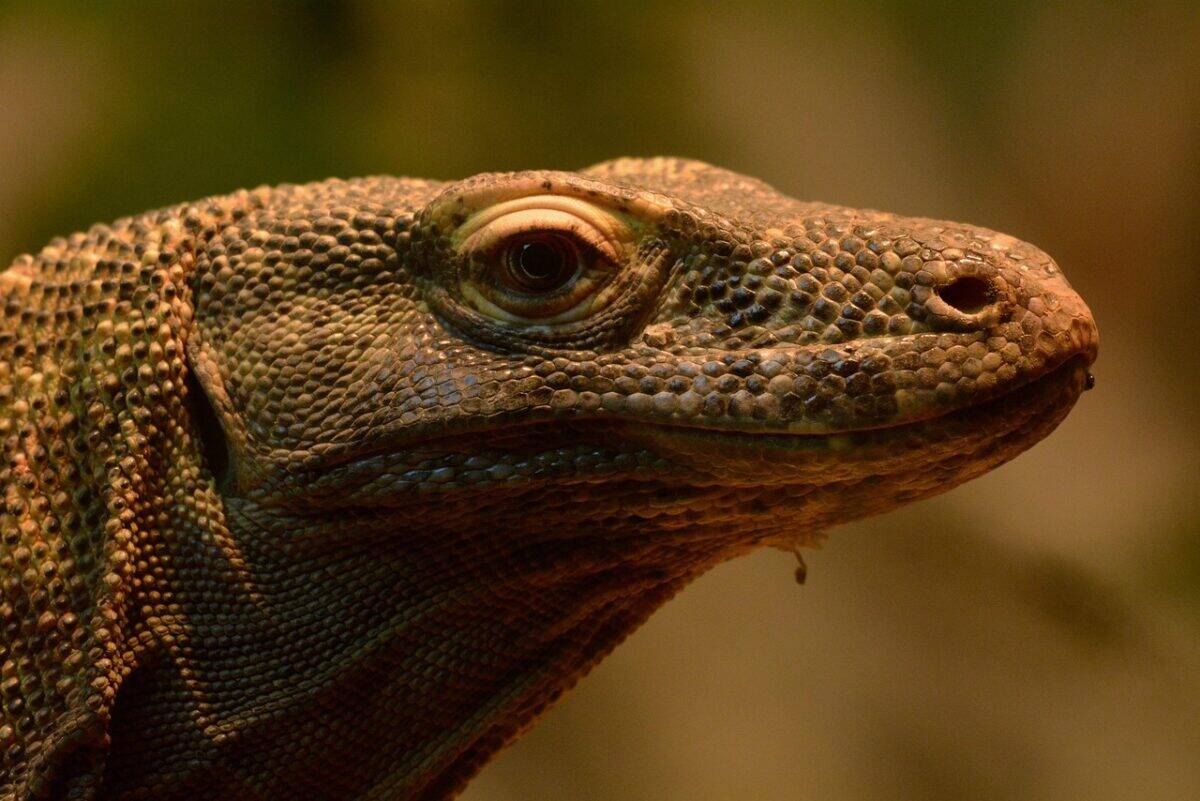
Despite their reputation for occasionally consuming their own young, female Komodo dragons can display surprising maternal instincts, particularly in the period shortly after hatching. Female Komodos invest considerable energy in nest construction and may guard their nests for months. When the young dragons emerge, mother dragons have been observed defending them against threats, including other adult Komodos seeking an easy meal. This protective behavior can manifest as aggressive charging toward anything perceived as threatening their offspring.
A 2018 study in the Journal of Zoology documented a female Komodo charging at researchers who approached too close to her recently hatched young, despite the species’ general reputation for limited parental care. This maternal defense response appears to diminish as the young dragons mature and develop climbing abilities that allow them to escape into trees, typically within a few weeks of hatching. Nevertheless, during this brief window, a female Komodo with young nearby represents one of the most unpredictable and potentially dangerous encounter scenarios.
Sudden Movements The Predator’s Trigger

Komodo dragons, like many predators, have visual systems highly attuned to movement. Sudden, rapid movements can trigger their predatory instincts, prompting them to charge. Their eyes are particularly sensitive to detecting motion, which makes evolutionary sense for a predator that often hunts by ambush. While they may seem sluggish during their notorious “sit and wait” hunting periods, Komodos can accelerate with surprising speed when stimulated by movement, reaching bursts of up to 12 miles per hour over short distances.
This sensitivity to motion presents particular dangers for humans encountering Komodos in the wild. Park rangers advise visitors to move slowly and deliberately when dragons are present. Running is especially dangerous, as it not only triggers the dragon’s chase instinct but also makes it nearly impossible to monitor the reptile’s position. Wildlife photographers working with Komodos must develop techniques to operate their equipment with minimal sudden movements, often using tripods and remote triggers to avoid stimulating the dragons’ predatory response.
Competition for Food Feeding Frenzy Aggression
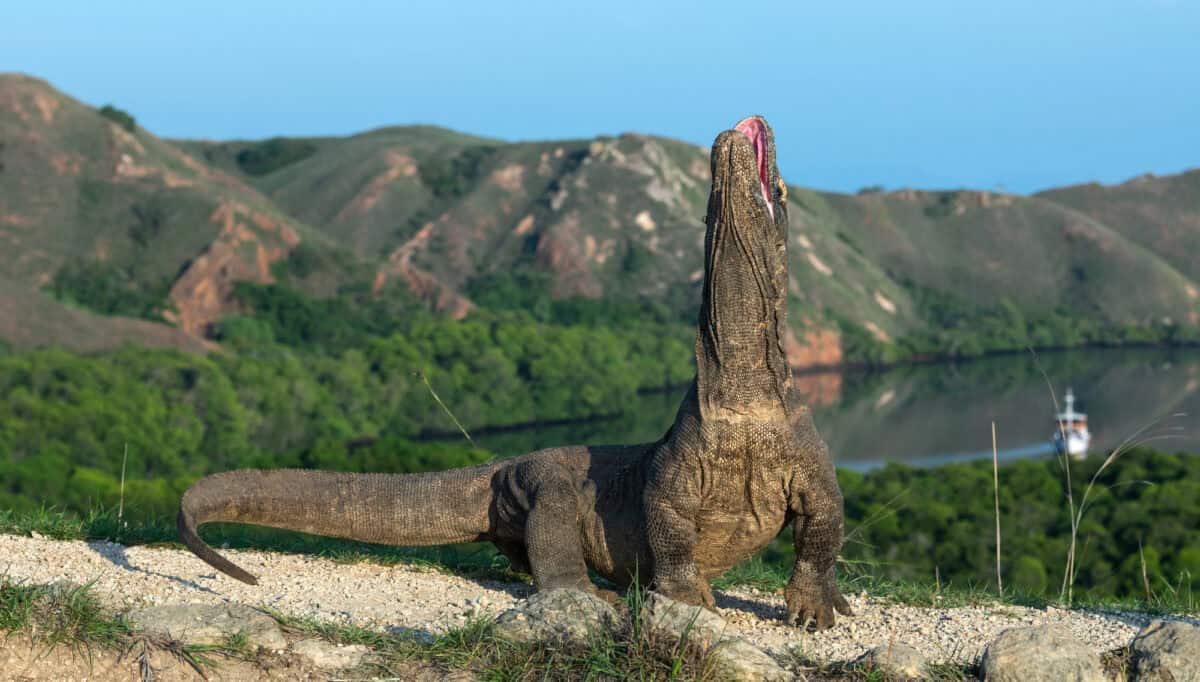
When food resources are present, particularly large carcasses, Komodo dragons can become extraordinarily aggressive toward any perceived competitors. These feeding frenzies reveal the dragons’ surprising social complexity, with dominance hierarchies quickly established around valuable food sources. Larger dragons will charge smaller individuals to assert their feeding priority, and even massive adults may charge humans who approach while they’re feeding. The dragons can consume up to 80% of their body weight in a single feeding, making access to large prey an evolutionary priority worth fighting for.
Researchers have observed that feeding-related charges account for many of the most serious Komodo attacks on humans. In 2007, a group of divers stranded on Rinca Island faced repeated charges from Komodos attracted by the scent of food in their provisions. The incident highlighted how protective dragons become around potential meals. Park regulations now strictly prohibit feeding dragons or carrying exposed food when touring their habitat, as these practices have been directly linked to increased charging behavior and human-dragon conflicts.
Mating Season Aggression Hormonal Charges

During breeding season, typically between May and August, male Komodo dragons undergo significant behavioral changes driven by hormonal shifts. Testosterone levels spike dramatically, increasing aggressive tendencies and territorial defense behaviors. Males engage in ritual combat with other males, standing on their hind legs and wrestling to establish dominance and mating rights. These heightened aggressive states make males particularly prone to charging during this season, even without the other triggers being present.
The reproductive drive appears to lower the dragons’ normal charging thresholds, making them more reactive to minor provocations. Data collected by the Komodo Survival Program indicates that human-dragon incidents increase by approximately 30% during breeding season. Park management responds by implementing additional safety measures during these months, including expanded restricted zones and requirements for additional ranger escorts. Researchers studying the dragons must also adapt their field protocols during this period to account for the increased unpredictability and aggression of male dragons.
Direct Eye Contact A Challenge They Can’t Ignore

Komodo dragons, like many predatory animals, interpret direct eye contact as a challenge or threat. Sustained eye contact from humans or other animals can provoke defensive aggression and trigger charging behavior. This response appears to be instinctual and deeply ingrained in the dragons’ behavioral repertoire. While some researchers theorize this response evolved as part of intraspecies communication and dominance displays, others suggest it relates to the dragons’ predatory nature, where staring indicates hunting intent.
Park rangers train visitors to avoid direct eye contact with Komodos, instead watching them peripherally or briefly. Conservation photographer Ulet Ifansasti documented an incident where a dragon charged immediately after a tourist briefly locked eyes with it, despite maintaining the recommended distance. The dragon’s reaction was instantaneous, highlighting how powerful this trigger can be. When Komodo researchers must observe the animals closely, they often use specialized mirrored visors or observation blinds to prevent triggering this aggressive response through accidental eye contact.
Mistaken Identity The Prey Silhouette Response

Komodo dragons have evolved to recognize certain shapes and silhouettes as potential prey. Human forms, particularly when viewed from certain angles or when humans adopt positions that resemble vulnerable prey animals, can trigger predatory charges. This “prey silhouette response” is particularly dangerous because it can occur without any of the other triggers being present. A human bending down to tie a shoe or crouching to take a photograph may inadvertently present a profile similar to a young deer or pig—common Komodo prey animals.
Behavioral studies have revealed that Komodos respond more aggressively to human silhouettes in certain positions than others. Standing tall with arms extended to appear larger can reduce the likelihood of being identified as prey, while crouching or hunching makes humans more targetable. Park safety protocols now include specific guidelines about body positioning when in dragon territory. Visitors are instructed to remain standing upright and to avoid crouching, sitting on the ground, or bending over for extended periods when dragons are visible.
Perceived Threat to Escape Routes Cornered Dragon Syndrome
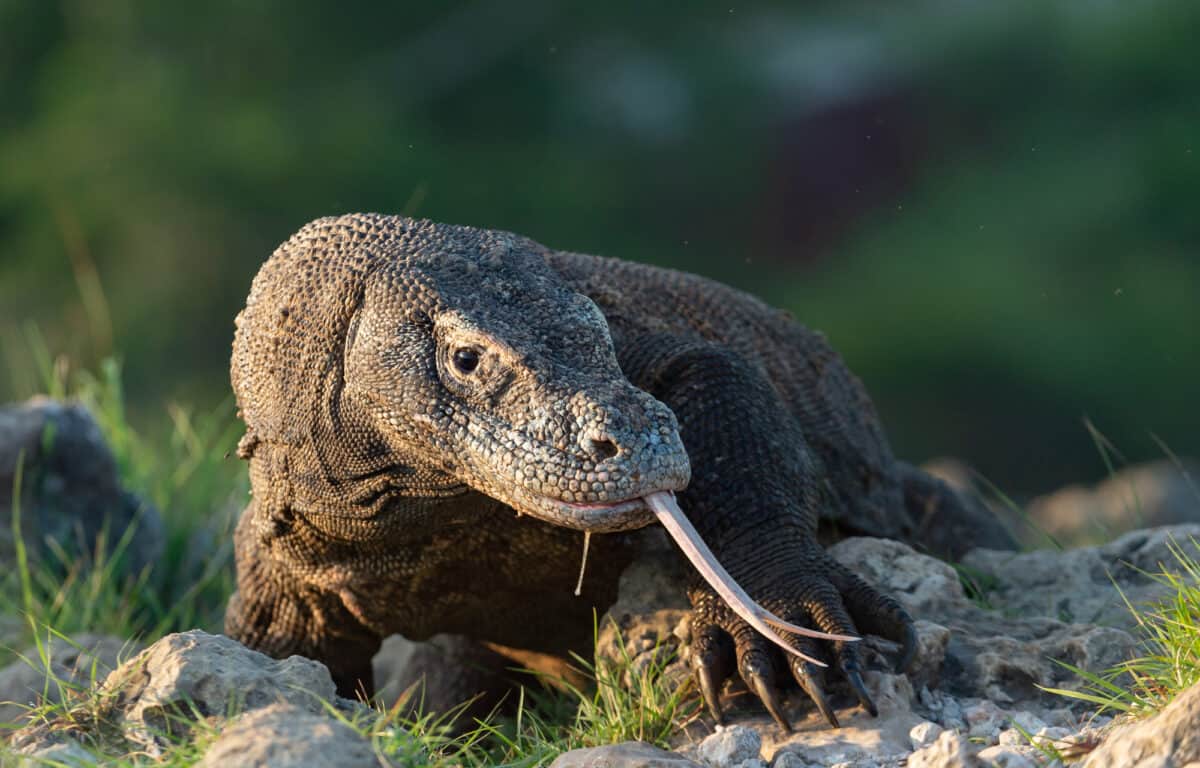
Despite their formidable size and reputation, Komodo dragons maintain strong self-preservation instincts. When they perceive their escape routes are blocked or limited, their stress response can trigger aggressive charging as a defensive mechanism. This “cornered dragon syndrome” can make an otherwise tolerant dragon suddenly dangerous. The dragons appear to continuously monitor potential pathways to safety, and when humans or other potential threats position themselves in ways that block these routes, the dragons may preemptively charge to clear a path.
Field researchers working with Komodos are trained to always leave clear escape paths when approaching or observing the animals. Documentation from the Komodo National Park ranger program reveals that many charges occur when dragons feel hemmed in by tourist groups or research teams. Conservation efforts now include designing viewing platforms and pathways that allow visitors to observe dragons without inadvertently blocking their perceived escape routes, significantly reducing charging incidents in managed tourism areas.
Retreat Trigger Heavy Rainfall

Despite their fearsome reputation, Komodo dragons show a strong aversion to heavy rainfall that can override many of their aggressive tendencies. When substantial rain begins to fall, dragons typically seek shelter rather than maintain aggressive stances or continue charges they may have initiated. This behavior likely relates to the dragons’ thermoregulatory needs and discomfort in cold, wet conditions. Their semi-permeable skin doesn’t provide effective insulation against the cooling effect of rain, making rain avoidance an important survival behavior.
Researchers have documented numerous instances where potentially dangerous dragon encounters were defused by sudden rainstorms. During the 2013 expedition led by herpetologist Claudio Ciofi, his team witnessed three separate occasions where aggressive dragons retreated to shelter when rain began, abandoning territorial displays or food-guarding behaviors. While not a recommended safety strategy (as rain timing cannot be controlled), this knowledge has helped explain seasonal variations in dragon aggression patterns and contributed to safer research protocols during Indonesia’s wet season.
Retreat Trigger Fire and Smoke

Komodo dragons demonstrate a strong aversion to fire and smoke, which can cause them to retreat even when highly agitated. This response appears to be instinctual rather than learned, as even dragons with no prior exposure to fire show immediate retreat behaviors when confronted with flames or dense smoke. Evolutionary biologists theorize this response may have developed from the dragons’ experience with natural wildfires in their habitat, establishing a genetic predisposition to avoid these potentially lethal phenomena.
This knowledge has practical applications for both researchers and local villagers living near dragon habitats. Park rangers carry smoke flares for emergency use in dragon encounters that escalate to dangerous levels. Local communities on Komodo, Rinca, and Flores islands have traditionally maintained fire pits at the perimeters of settlements to discourage dragon incursions. However, conservation authorities discourage the deliberate use of fire as a dragon deterrent except in life-threatening situations, as it can damage sensitive habitat and potentially harm other wildlife.
Retreat Trigger Elevated Positions

Perhaps the most reliable way to cause a Komodo dragon to retreat is to ascend to an elevated position beyond their climbing capabilities. While juvenile Komodos are excellent climbers, adults become too heavy to climb efficiently. Their body mass and structure limit their ability to ascend anything but gentle slopes or trees with substantial low branches. When confronted with humans or other potential threats that move to positions approximately 10 feet or more above ground level, adult Komodos typically cease aggressive behaviors and retreat.
This knowledge has shaped both safety infrastructure and emergency protocols in Komodo dragon territories. Observation towers and elevated walkways constructed throughout Komodo National Park provide safe viewing areas that eliminate most charging risks. Field researchers working in areas without permanent structures often carry lightweight, rapidly deployable climbing steps that can be secured to sturdy trees in emergencies. Park safety briefings emphasize that in worst-case scenarios where no other options exist, climbing is the most effective last-resort safety strategy, with height being the key factor in dissuading dragon pursuit.
Conclusion: Understanding Dragon Behavior Critical for Conservation and Safety
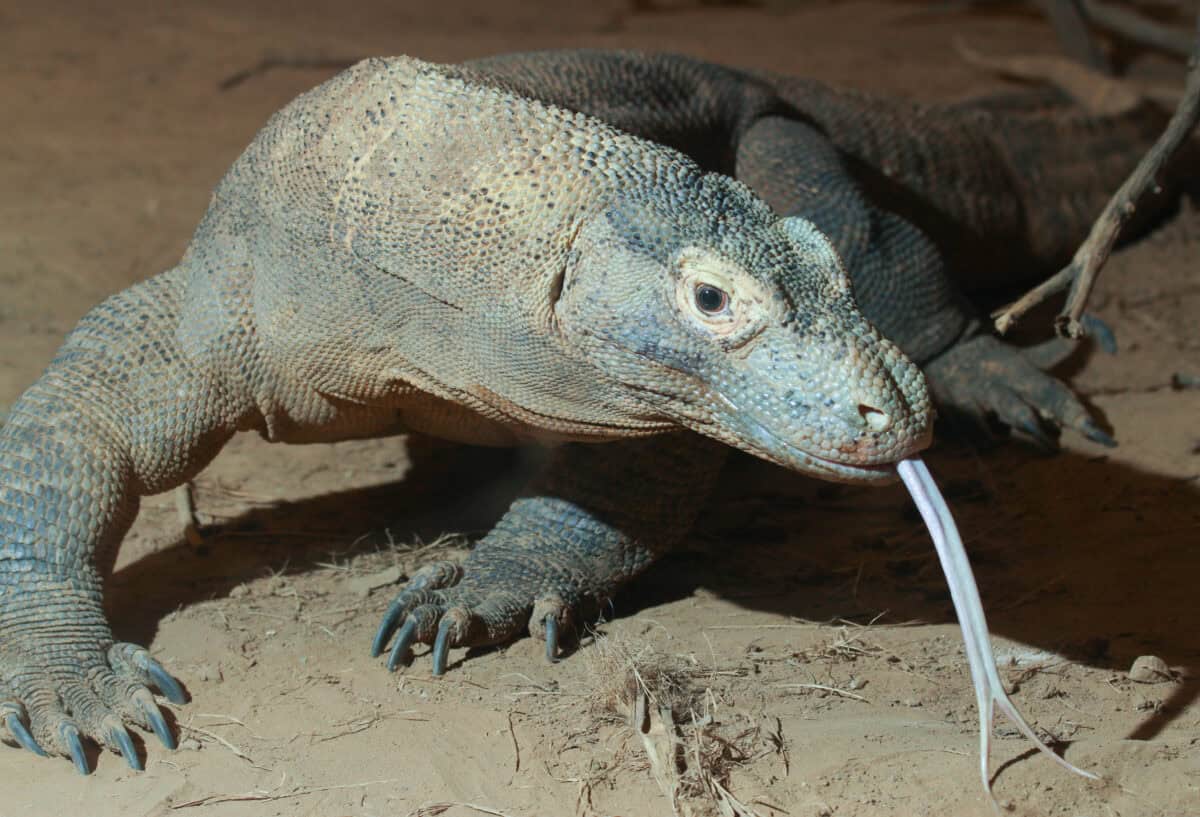
Understanding what triggers Komodo dragons to charge—and what causes them to retreat—serves multiple critical purposes beyond mere curiosity. This knowledge forms the foundation of effective conservation strategies that protect both the endangered reptiles and the humans who share their ecosystem. With fewer than 3,000 Komodo dragons remaining in the wild, developing non-lethal management techniques is essential for species survival. By identifying and mitigating the nine key charge triggers while leveraging the three retreat triggers when necessary, conservation teams can minimize dangerous encounters without harming these remarkable creatures.
As climate change and human development continue to pressure the dragons’ limited habitat, this behavioral knowledge becomes increasingly valuable. Safety protocols based on scientific understanding rather than myths enable sustainable ecotourism that supports local economies while protecting visitors. For researchers continuing to study these magnificent reptiles, these behavioral insights provide the framework for safe field methodologies. The Komodo dragon, having evolved in isolation over millions of years, remains one of our planet’s most remarkable evolutionary success stories—a living dragon that commands both our respect and our commitment to ensure its continued survival through informed conservation practices.
Worried about unexpected vet bills?
Pet insurance can cover thousands in unexpected vet costs. Get a free quote from Lemonade in under 2 minutes.
Get My Free Quote →Sponsored · Opens Lemonade.com

As a little kid, I fell in love with nature, wildlife, and animals. Living in the USA, South Africa, Italy, China and Germany gave me the opportunity to discover the world's Wildlife. My favorite animals are Mountain Gorillas, Siberian Tigers, and Great White Sharks.
I'm a certified PADI Open Water Diver, went to Everest Base Camp and Trekked Gorillas in Uganda. I hold a Master of Science in Economics and Finance.
Please send any feedback to feedback@animalsaroundtheglobe.com
- 15 Places in the U.S. That Feel Like Another Planet - June 5, 2026
- The Prehistoric Slowness of the Crocodile - June 5, 2026
- 15 Snake Species That Make Surprisingly Good Pets - June 5, 2026