

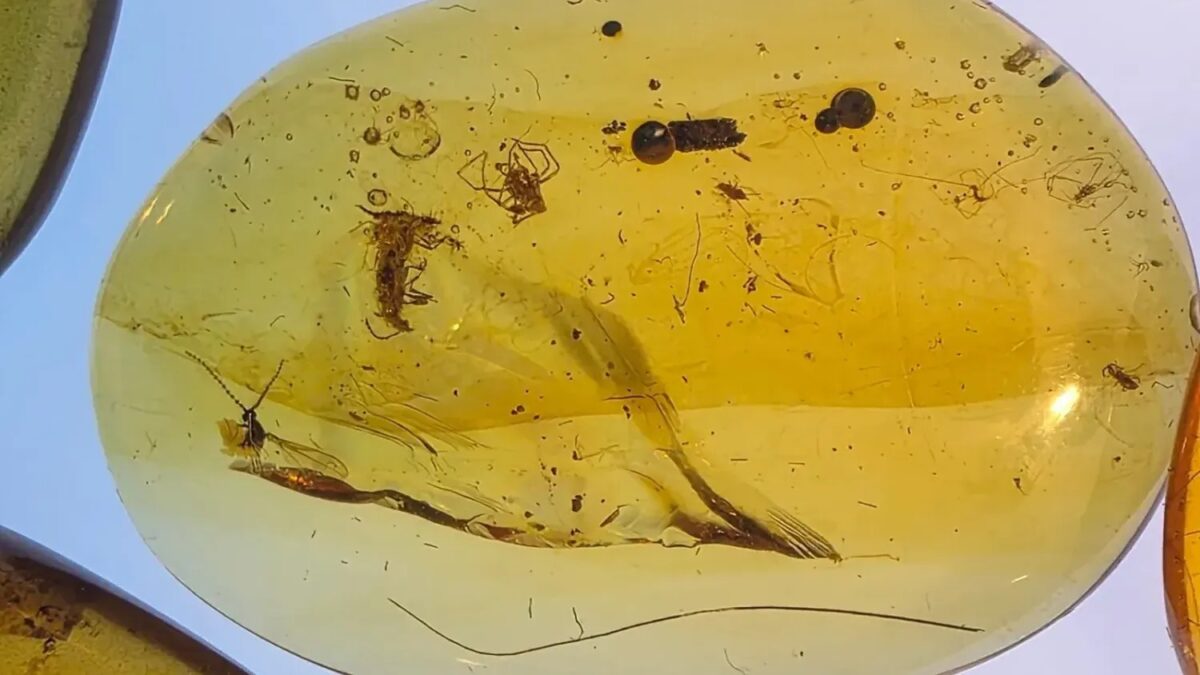
Imagine holding a golden, glass-like stone in your hand, knowing that frozen inside it is a moment from a world that vanished nearly 100 million years ago. No photograph, no fossil impression in rock, just a perfect, crystallized snapshot of life as it actually was. That’s exactly what a remarkable piece of Cretaceous amber has given scientists – and the details it contains are genuinely jaw-dropping.
This discovery is rewriting what we thought we knew about plant life, insect behavior, and ecosystems during one of Earth’s most dramatic chapters. The amber came from Myanmar, a region that has produced some of the most extraordinary fossil specimens ever found, and this latest find is no exception. Buckle up, because this one is a wild ride into deep time.
A Window Frozen in Resin
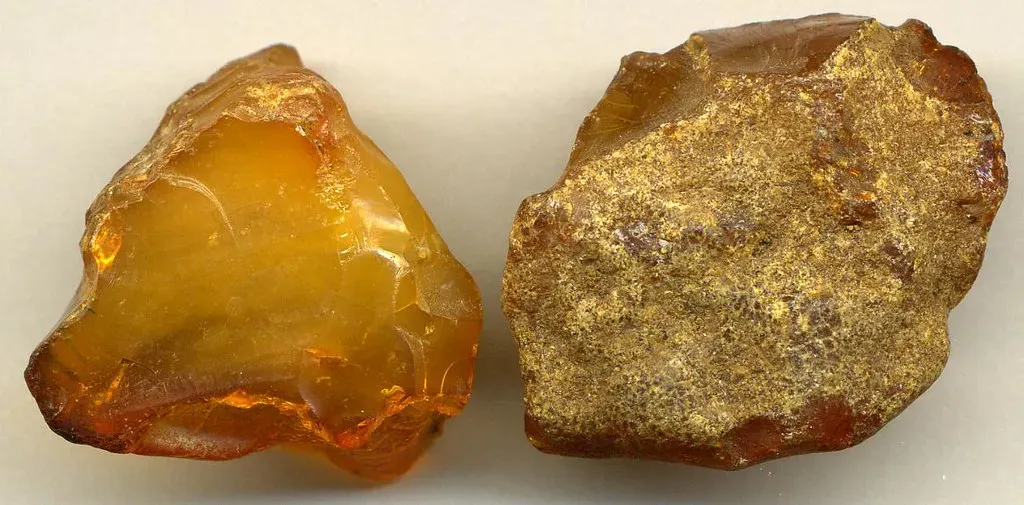
Here’s the thing about amber – it’s essentially tree resin that hardened over millions of years, and anything unfortunate enough to get caught in it becomes preserved in extraordinary detail. We’re talking about structures so fine that modern microscopes can still read them clearly. It’s nature’s version of hitting pause on a moment that should have been lost forever.
The amber specimen at the center of this story dates back roughly 99 million years, placing it squarely in the mid-Cretaceous period. This was a time when flowering plants were just beginning their takeover of the planet, dinosaurs still ruled the land, and the world looked nothing like the one we live in today. Honestly, the idea that a piece of sticky tree resin survived all of that is almost more astonishing than what’s inside it.
Flowers Caught in the Act
What makes this amber truly special is what’s preserved inside – flowering plant material, captured in extraordinary anatomical detail. Researchers were able to examine the structure of the flowers with a level of precision that would simply be impossible from a typical rock fossil. The preservation is so complete it borders on the unbelievable.
The flowers belong to what scientists believe is a previously unknown species, one that adds a new branch to our understanding of early angiosperm evolution. Angiosperms, for those who haven’t thought about plant biology since school, are flowering plants – the group that today dominates nearly every ecosystem on Earth. Finding them preserved like this during such an early period of their development is genuinely significant, a rare chance to study their anatomy almost as if they were fresh specimens.
The Insect Connection That Changes Everything
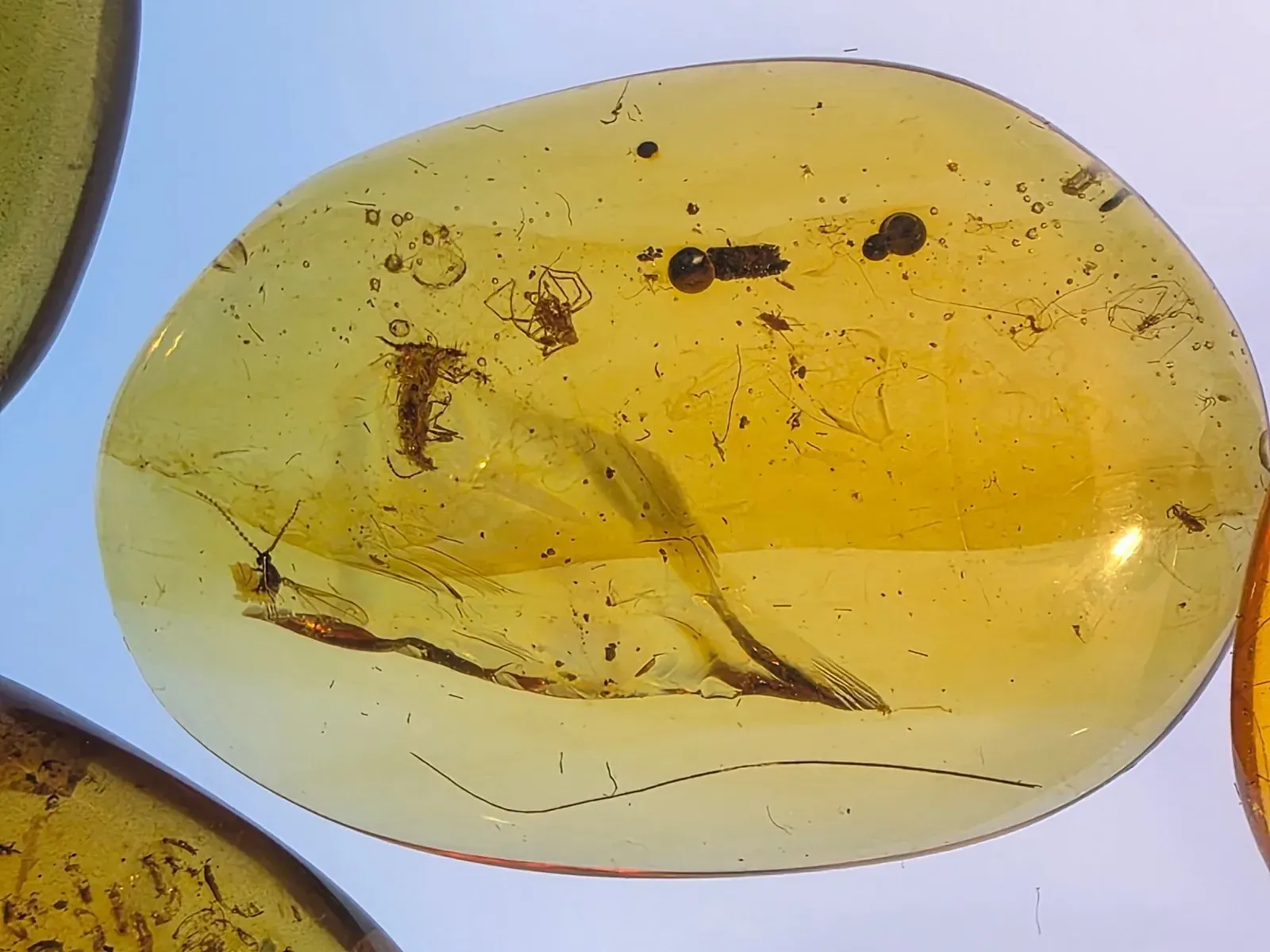
Now here’s where things get really interesting. The amber didn’t just preserve the flowers – it captured insects interacting with those flowers at the same time. This kind of co-preservation is extraordinarily rare, and it provides direct evidence of a relationship that scientists have long theorized but rarely been able to prove with such clarity.
The evidence suggests early pollination relationships were already well established during the Cretaceous, far earlier than some researchers had assumed. Think of it like finding a photograph of the very first handshake between two parties who went on to shape the entire course of history together. Insects and flowering plants co-evolving together is one of the most consequential ecological partnerships in the history of life on Earth, and this amber just gave us a front-row seat to its early days.
The Role of Myanmar’s Amber Deposits
Myanmar’s Hukawng Valley has become something of a legendary source for Cretaceous amber, and it’s worth pausing to appreciate just how scientifically valuable that region has been. Over the past couple of decades, specimens from this area have included feathered dinosaur tails, ancient birds, lizards, frogs, and now this stunning floral discovery. The sheer variety is staggering.
It’s hard to say for sure exactly why this particular region produced such exceptional preservation conditions, but scientists believe the specific tree species growing there at the time created resin with unusual trapping and hardening properties. Whatever the reason, the world is incredibly lucky this geological lottery ticket paid off. These specimens are essentially irreplaceable records of a lost world.
Challenges and Controversies Around Burmese Amber
Let’s be real, though – the scientific community has not engaged with Burmese amber without friction. There have been serious ethical concerns raised about the sourcing of specimens from Myanmar, particularly given the country’s political instability and conflict in the Hukawng Valley region. Some researchers have chosen to step back from publishing studies based on newly acquired Burmese amber specimens out of ethical caution.
This tension creates a genuinely difficult situation for paleontology. The scientific value of these fossils is undeniable, yet the circumstances under which some specimens reach researchers can be murky at best. It’s a debate that the field hasn’t fully resolved, and probably won’t anytime soon. The discovery itself is extraordinary, but the broader context surrounding Burmese amber remains complicated and worth acknowledging.
What This Tells Us About Cretaceous Ecosystems
Setting aside the controversies for a moment, the ecological implications of this find are profound. A mid-Cretaceous ecosystem supporting diverse flowering plants and their insect pollinators suggests that angiosperm diversification was accelerating even faster than previously modeled. This has knock-on effects for how we understand food webs, climate feedbacks, and even the diets of herbivorous dinosaurs during that era.
Some researchers now believe that the rapid spread of flowering plants during the Cretaceous may have fundamentally altered atmospheric oxygen levels and global temperatures in ways that shaped the trajectory of life for millions of years afterward. Discovering evidence of early and complex plant-insect relationships pushes that story back further and makes it richer. It’s like finding out that a revolution you thought started in chapter five actually began in chapter two.
Why Ancient Amber Keeps Surprising Us
Every few years, a piece of amber emerges from some collection or excavation that fundamentally shifts a piece of the puzzle. I think that’s part of what makes paleontology so endlessly compelling – just when you think you’ve mapped out a period of prehistory with reasonable confidence, nature drops something on the table that demands a rethink. This latest find is a perfect example of that pattern.
The sophistication of what’s been preserved here, from flower anatomy to insect behavior frozen mid-interaction, suggests we have barely scratched the surface of what amber can tell us. Collections held in museums and private hands around the world may still contain specimens that haven’t been studied with modern imaging techniques. With tools like synchrotron scanning and micro-CT imaging now available, revisiting old amber collections might yield discoveries just as startling as any new find. The past, it turns out, is still very much alive in these golden stones.
Conclusion: A 99-Million-Year-Old Reminder That Nature Always Has More to Say
This discovery isn’t just a beautiful curiosity. It’s a reminder that the story of life on Earth is vastly more intricate and interconnected than any textbook has ever fully captured. A piece of resin, no bigger than a fist, carried a secret for 99 million years before anyone was around to read it.
Honestly, I find that humbling. We spend so much time focused on the present that it’s easy to forget how deep and layered the history beneath our feet really is. The Cretaceous was not a static backdrop for dinosaurs. It was a dynamic, evolving world of chemical signals, ecological partnerships, and biological innovation. This amber just brought us one step closer to truly understanding it.
What other secrets do you think are still locked inside ancient amber deposits waiting to be discovered? Tell us in the comments.

- Urban Coyotes Show Remarkable Adaptability, Learning to Thrive in City Environments - July 22, 2026
- Beavers Are Nature’s Engineers, Creating Vital Habitats for Other Wildlife Species - July 21, 2026
- The Recovery of the California Condor Offers Hope for Other Critically Endangered Birds - July 21, 2026