

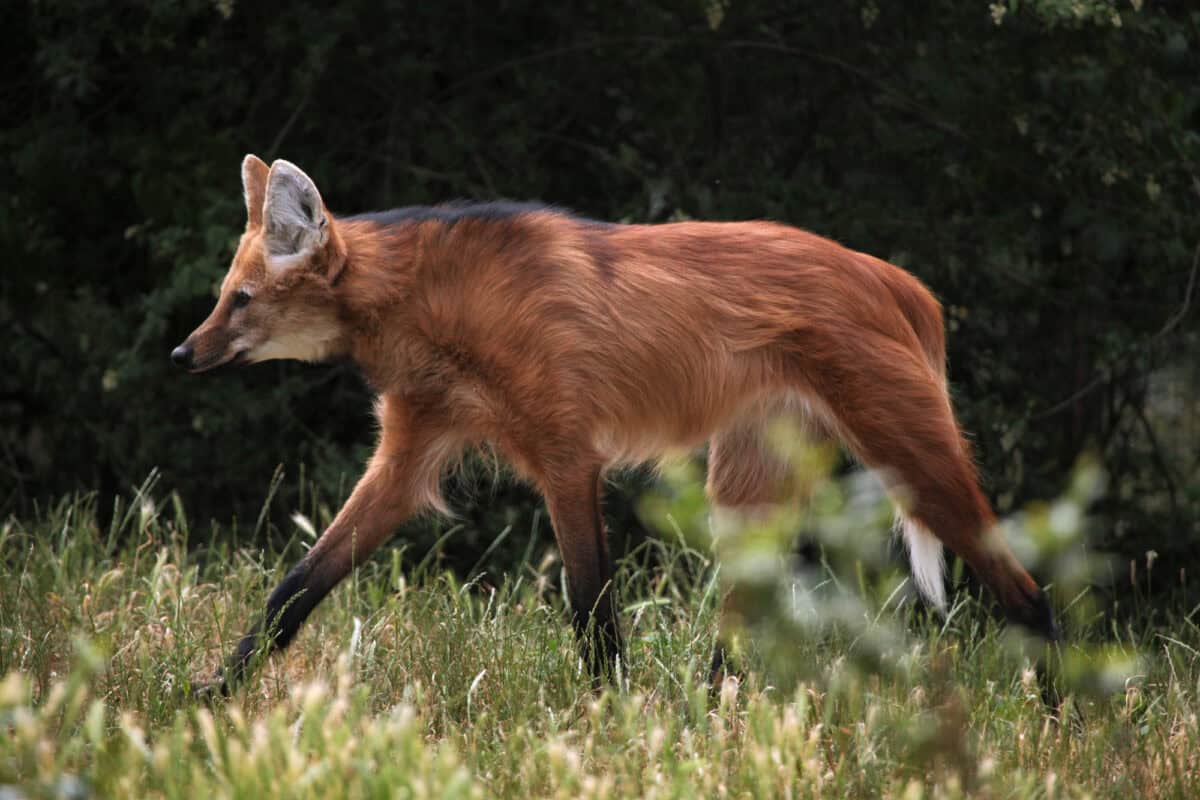
The maned wolf (Chrysocyon brachyurus) is a unique and intriguing species known for its striking appearance and elusive behavior. It is recognized as the tallest wild canid and is often mistaken for a fox or a wolf, yet it belongs to neither. Instead, it occupies its distinct taxonomic genus, highlighting its singularity in the wild. In this article, we’ll delve into what makes the maned wolf so remarkable, including its physical traits, ecology, behavior, and conservation status.
Physical Characteristics

Standing at an impressive average height of 90 centimeters (about 35 inches) at the shoulder, the maned wolf is easily the tallest of all wild canids. Much of this height is attributable to its long, slender legs, which are adapted for navigating the tall grasses of its native habitat. These legs give the wolf a distinctive, almost stilt-like appearance as it moves gracefully through the savannas and grasslands of South America.
Unlike other canids, the maned wolf has a striking coloration. Its coat is predominantly reddish-orange, providing excellent camouflage in the grassy landscape. The “mane,” comprised of longer black-tipped hair along its neck and shoulders, can be raised in a display of aggression or excitement, reminiscent of a wolf’s ruff. Its large, erect ears enhance its acute sense of hearing and play a vital role in thermoregulation.
Ecology and Habitat
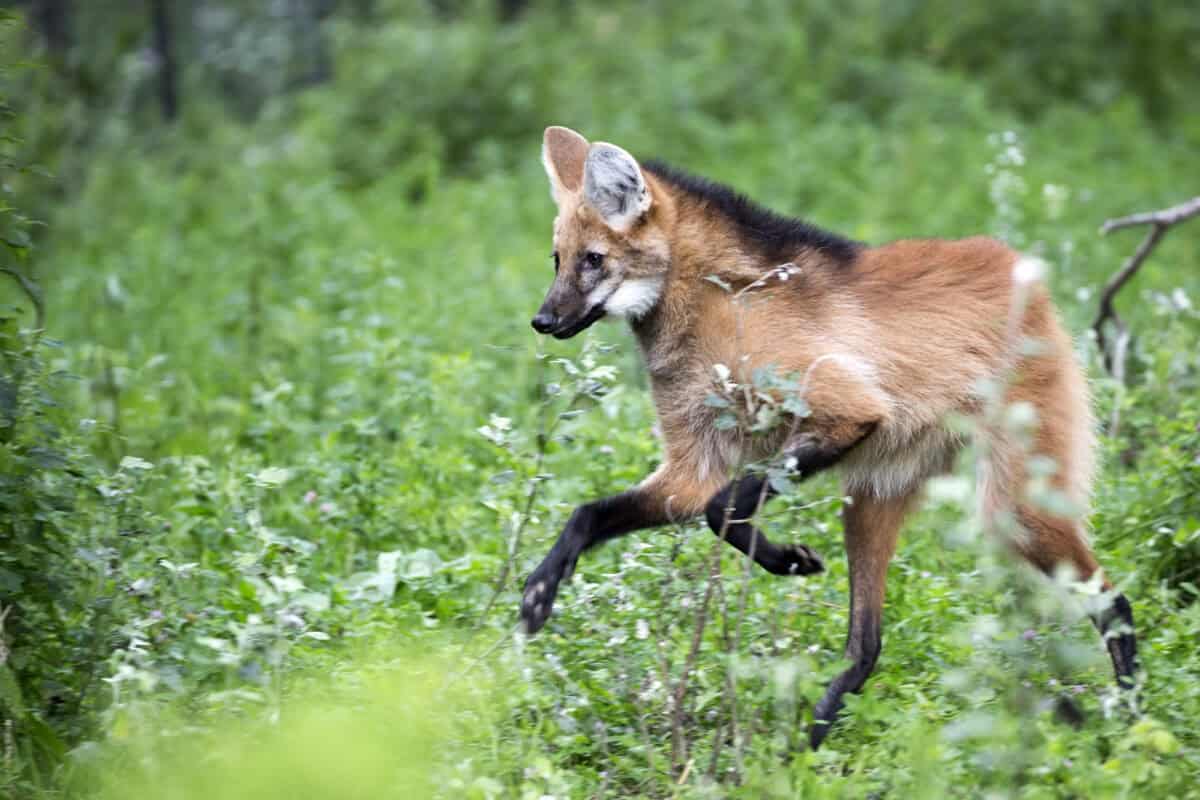
The maned wolf primarily inhabits the open and semi-open landscapes of central and eastern South America, predominantly in Brazil. However, its range extends into parts of Argentina, Bolivia, Paraguay, and Peru. These expansive regions, known as the “cerrado,” are one of the world’s biodiversity hotspots, rich in unique flora and fauna.
As an omnivore, the maned wolf’s diet is versatile, consisting of various fruits, vegetables, and small animals. One of its dietary staples is the “wolf apple” (Solanum lycocarpum), a fruit that shares a symbiotic relationship with this canid and assists in seed dispersal. The maned wolf’s diet allows it to play a significant ecological role as both predator and seed disperser, which is essential for maintaining the health of its ecosystem.
Behavior and Social Structure

Despite their wolf-like appearance, maned wolves are solitary creatures. Unlike pack-living gray wolves, they come together only during the breeding season and may occasionally share their territory with a mate. They communicate through a series of vocalizations, the most notable of which is a loud, roaring bark used for long-distance communication.
The maned wolf is primarily crepuscular, most active during the twilight hours of dawn and dusk. This behavior is likely an adaptation to avoid larger predators and human disturbance. Its solitary nature and elusive behavior have made studying this species a challenging task for scientists.
Conservation Status and Challenges

The maned wolf is currently classified as “Near Threatened” by the International Union for Conservation of Nature (IUCN). Major threats include habitat loss due to agricultural expansion, road mortality, and diseases transmitted by domestic animals. Preservation of the Cerrado ecosystem is vital to the survival of this species, highlighting the need for sustainable land management practices.
Conservation efforts are underway, focusing on habitat protection, corridor establishment to connect fragmented populations, and raising public awareness. Initiatives also include studying maned wolf genetics and its ecological role to determine more accurate information for conservation decisions.
Conclusion
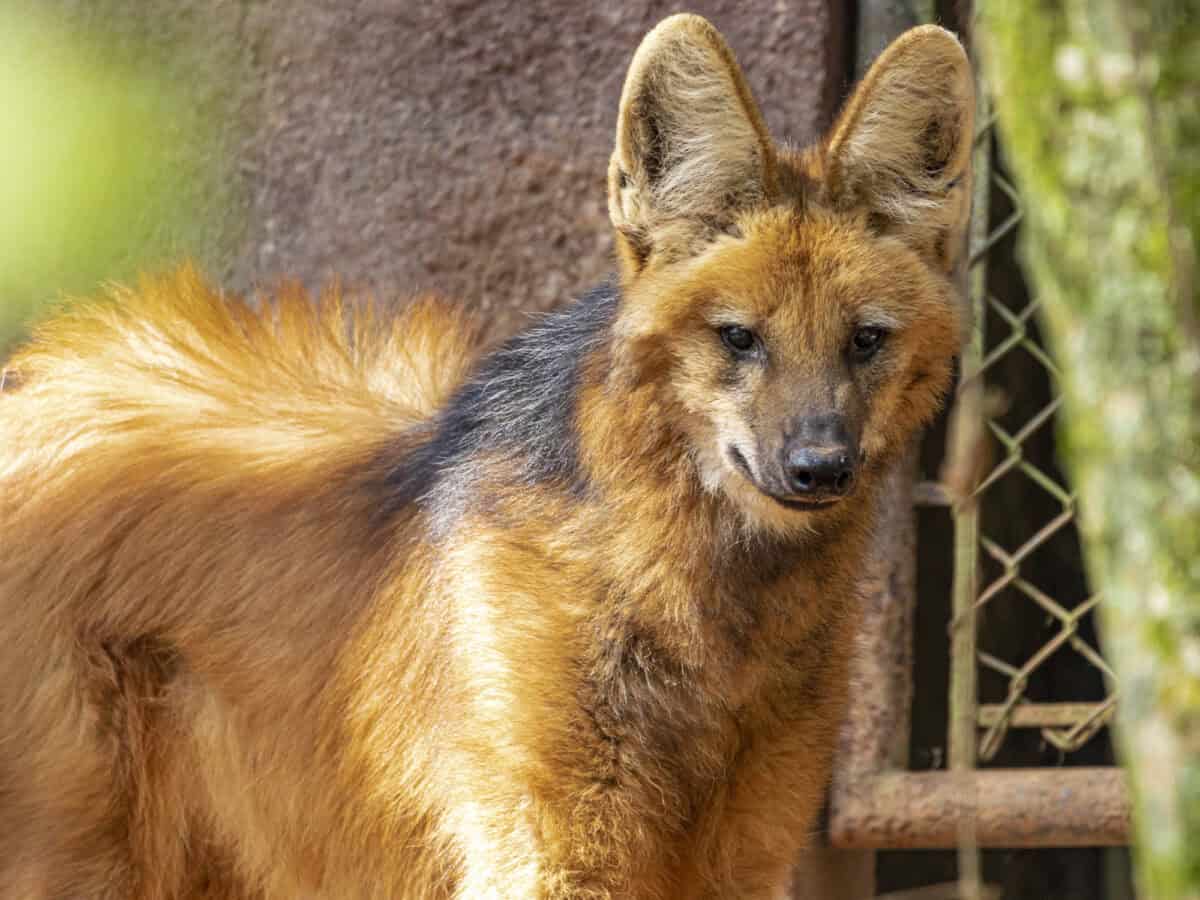
The maned wolf stands as a testament to the unique biodiversity of South America, captivating the attention of scientists and nature enthusiasts alike. Its distinct characteristics not only make it a remarkable species in the world of canids but also spotlight its ecological importance and the urgent need for its conservation. By understanding and protecting the maned wolf, we also protect a wider array of life within one of the most diverse ecosystems on our planet.

As a little kid, I fell in love with nature, wildlife, and animals. Living in the USA, South Africa, Italy, China and Germany gave me the opportunity to discover the world's Wildlife. My favorite animals are Mountain Gorillas, Siberian Tigers, and Great White Sharks.
I'm a certified PADI Open Water Diver, went to Everest Base Camp and Trekked Gorillas in Uganda. I hold a Master of Science in Economics and Finance.
Please send any feedback to feedback@animalsaroundtheglobe.com
- 13 Cat Breeds That Get Along with Dogs - July 20, 2026
- The 12 Largest Dog Breeds That Still Love to Cuddle - July 20, 2026
- 12 Pet Habits That Secretly Mean They Love You - July 20, 2026