


The Komodo dragon, scientifically known as Varanus komodoensis, stands as Earth’s largest living lizard, a formidable predator native to a small number of Indonesian islands. Revered for its size, strength, and fearsome reputation, the Komodo dragon has intrigued scientists and enthusiasts alike. These magnificent reptiles occupy a unique niche in the ecosystem, and their survival offers crucial insights into biodiversity and evolutionary biology.
Anatomy and Physical Characteristics
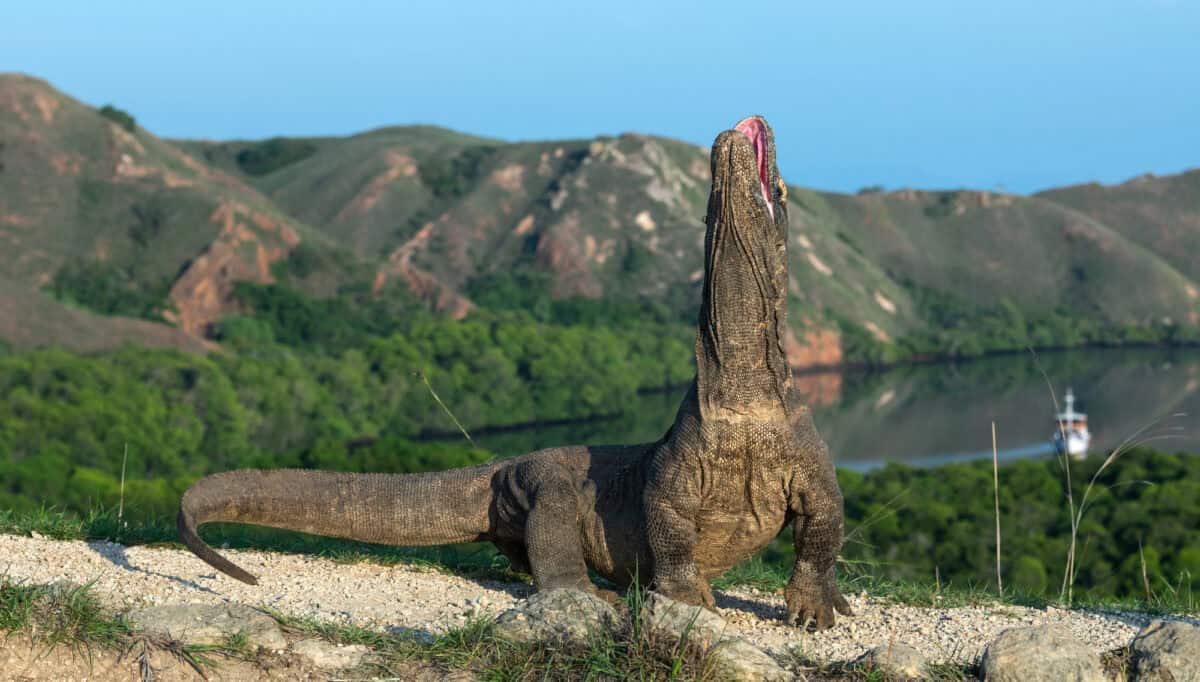
Komodo dragons are impressive creatures, with adult males typically measuring between 8 to 10 feet (2.4 to 3 meters) in length and weighing up to 150 pounds (70 kilograms) or more. Females, while smaller, still reach considerable sizes. Their sturdy, powerful build is complemented by their thick, scaly skin, which provides protection and camouflage against the rugged terrain of their natural habitat.
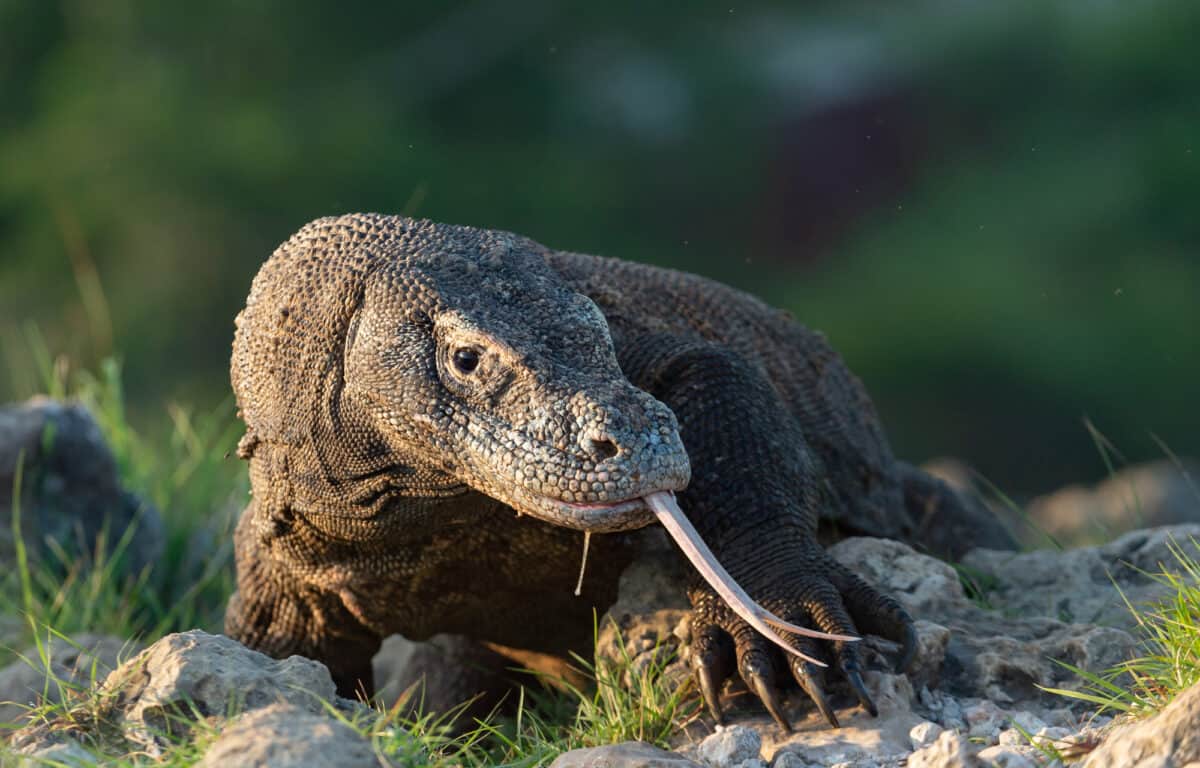
These lizards possess strong limbs and sharp claws, which aid in climbing, digging, and capturing prey. Their forked tongues, reminiscent of those seen in snakes, help them detect scents and locate food from miles away. A distinctive feature of the Komodo dragon is its serrated teeth, which are perfectly adapted for slicing through flesh.
Habitat and Distribution

The Komodo dragon is endemic to a few islands in Indonesia, including Komodo, Rinca, Flores, and Gili Motang. These islands are characterized by their hot and arid climates, with savanna-like grasslands and forests that provide a suitable environment for these giant reptiles. The dragons are often found basking in the sun as they regulate their body temperature through thermoregulation.
Despite their limited geographic range, Komodo dragons have adapted well to their surroundings, thriving in both dry grassland and forested areas. Their ability to swim short distances allows them to navigate between islands, contributing to their distribution within this specific region.
Diet and Hunting Strategies

Komodo dragons are carnivorous apex predators with a diet that primarily consists of large mammals such as deer, boar, and water buffalo. They are also known to scavenge carrion. Their hunting strategy involves a combination of stealth, power, and patience. Using their keen sense of smell, they locate and stalk their prey, remaining undetected until they strike with astonishing speed and force.
One of the most fascinating aspects of the Komodo dragon’s hunting prowess is its venomous bite. Once thought to rely solely on bacterial infection from its saliva, recent studies have revealed that Komodo dragons possess venom glands that contain toxins capable of inducing shock and lowering blood pressure in their prey. This venom, coupled with their physical dominance, makes them highly effective hunters.
Reproduction and Life Cycle

Komodo dragons have a fascinating reproductive process. Mating occurs once a year, typically between May and August. Males engage in fierce battles to win over females, often standing on their hind legs and wrestling in a display of strength. Once mating is over, females lay clutches of approximately 20 eggs, which they carefully bury in the warm soil or pre-existing burrows.
The incubation period for Komodo dragon eggs is approximately 8 to 9 months. Upon hatching, the young dragons are vulnerable and must fend for themselves from the start. Juveniles are adept climbers, spending much of their early life in trees to avoid predation by adult dragons and other threats. As they grow, they gradually transition to a more terrestrial lifestyle.
Conservation Status and Challenges
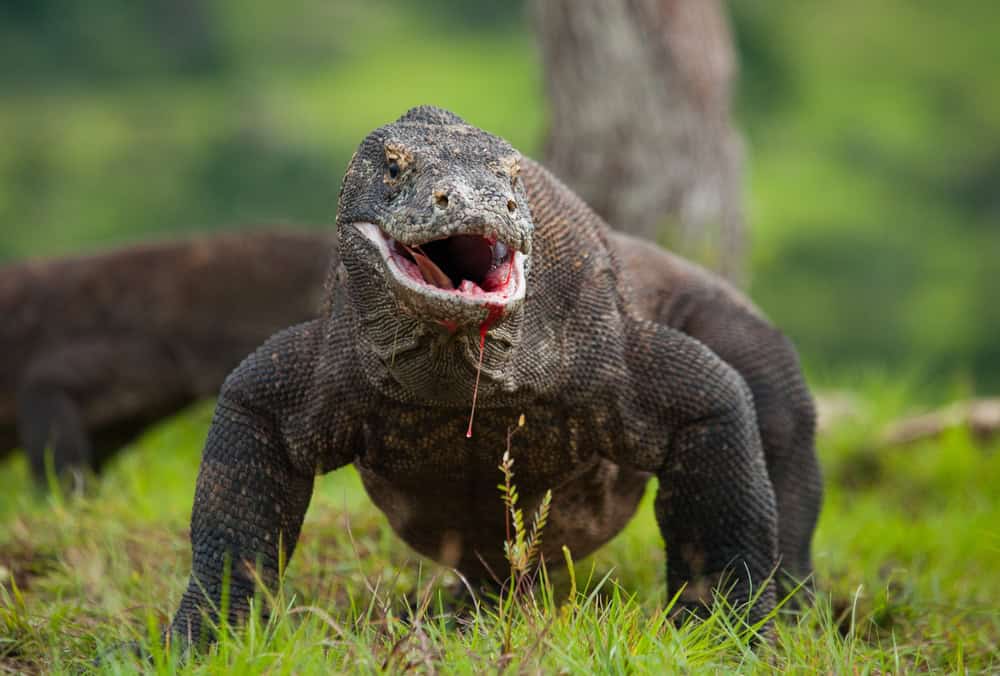
Despite their fierce reputation, Komodo dragons are classified as a vulnerable species, primarily due to human activities such as habitat destruction, poaching, and climate change. The limited range of these lizards makes them particularly susceptible to these threats. Conservation efforts have been implemented to protect their natural habitat within Komodo National Park and surrounding areas.
Researchers and conservationists continually study Komodo dragons to better understand their ecology and devise strategies for their preservation. Ecotourism, when managed responsibly, provides additional funding for conservation initiatives and raises awareness about the importance of protecting this unique species.
Conclusion
The Komodo dragon remains one of nature’s most awe-inspiring animals, epitomizing the diversity and intricacy of life on Earth. Through understanding and conserving these incredible reptiles, we not only preserve a critical component of Indonesia’s ecological heritage but also contribute to the safeguarding of our planet’s rich biodiversity for future generations. By protecting the Komodo dragon, we take a step towards ensuring the health and balance of ecosystems worldwide.

As a little kid, I fell in love with nature, wildlife, and animals. Living in the USA, South Africa, Italy, China and Germany gave me the opportunity to discover the world's Wildlife. My favorite animals are Mountain Gorillas, Siberian Tigers, and Great White Sharks.
I'm a certified PADI Open Water Diver, went to Everest Base Camp and Trekked Gorillas in Uganda. I hold a Master of Science in Economics and Finance.
Please send any feedback to feedback@animalsaroundtheglobe.com
- The Fearsome Komodo Dragon Earth’s Largest Lizard - August 18, 2026
- How Bears Are Adapting to Urban Life in the U.S. - August 18, 2026
- Animals and Wildlife in North America - August 18, 2026
Leave a comment
You must be logged in to post a comment.