

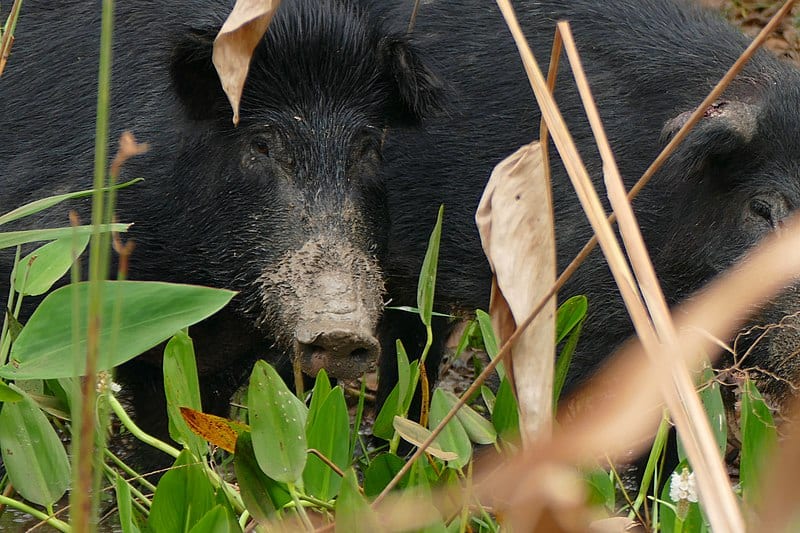
Across the United States, a disruption is unfolding driven by an unlikely culprit: feral pigs. These animals, descendants of domesticated pigs that have gone wild and Eurasian wild boar hybrids, are now recognized as one of the most destructive invasive species in the country. Their ever-expanding population presents a unique set of challenges that affect agriculture, ecosystems, and even public health.
A Growing Problem

Feral pigs are prolific breeders, with females capable of producing two litters of up to 12 piglets each year. This remarkable reproductive rate has contributed to their rapid population growth, with current estimates suggesting there are over six million feral pigs across more than 35 states. Primarily concentrated in the South, including Texas, Florida, and Georgia, their range continues to expand northward and westward, prompting urgent calls for management and control measures.
Ecological Impact

The impact of feral pigs on native ecosystems is profound. As opportunistic omnivores, they consume a wide variety of foods, from plant matter to insects and even small vertebrates. This diet not only reduces the availability of resources for native species but also disrupts food webs and alters habitat structures. Their rooting behaviour, which they use to forage for underground food, leads to significant soil disturbance, erosion, and the destruction of native plant communities. This, in turn, can lead to the loss of biodiversity and the degradation of natural habitats.
Agricultural Damage
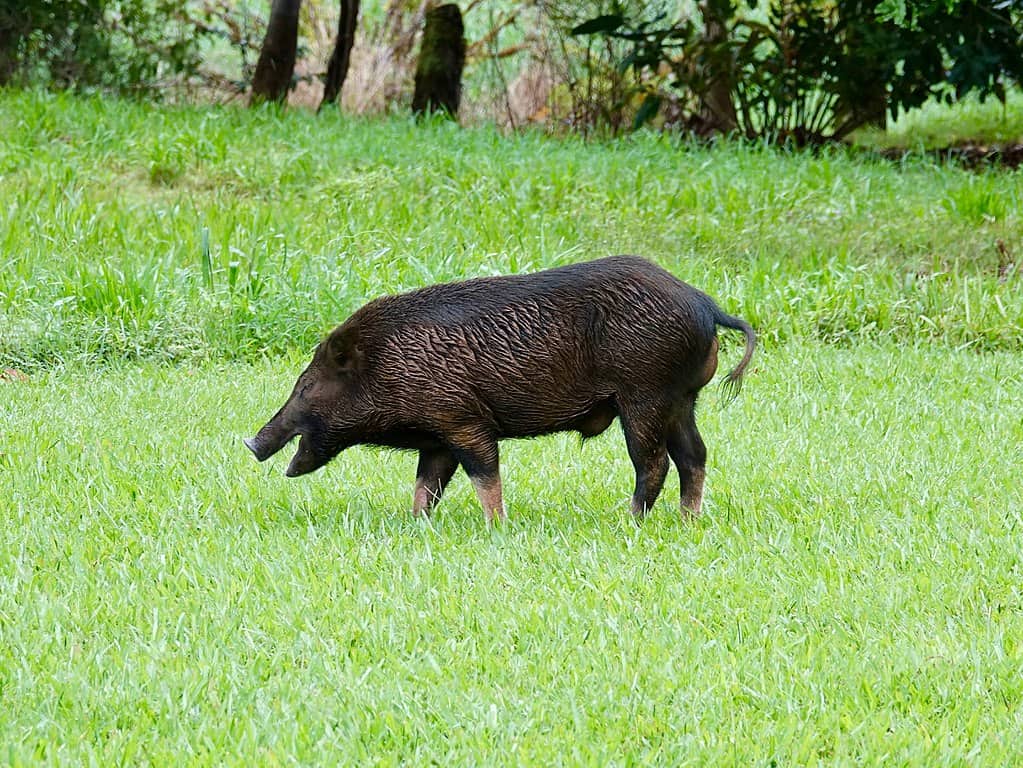
Feral pigs are a farmer’s nightmare. They cause extensive damage to crops and pastures, costing the U.S. agricultural industry more than $1.5 billion annually. Their rooting and trampling can devastate fields of corn, soybeans, and other crops, while their consumption of seeds and saplings affects reforestation efforts and tree farming. Livestock farms aren’t immune either, as feral pigs can destroy fences, cause injury or disease to domestic animals, and consume feed meant for livestock.
Public and Animal Health Concerns

In addition to ecological and economic damage, feral pigs pose significant risks to public health. They are carriers of numerous diseases that can affect humans, livestock, and wildlife. Diseases such as brucellosis, pseudorabies, and leptospirosis have been linked to feral pigs and can have severe implications if transmitted to humans or agricultural animals. Additionally, the presence of feral pigs increases the potential for vehicle collisions and can threaten public safety in areas where humans and pigs interact.
Efforts to Control the Population
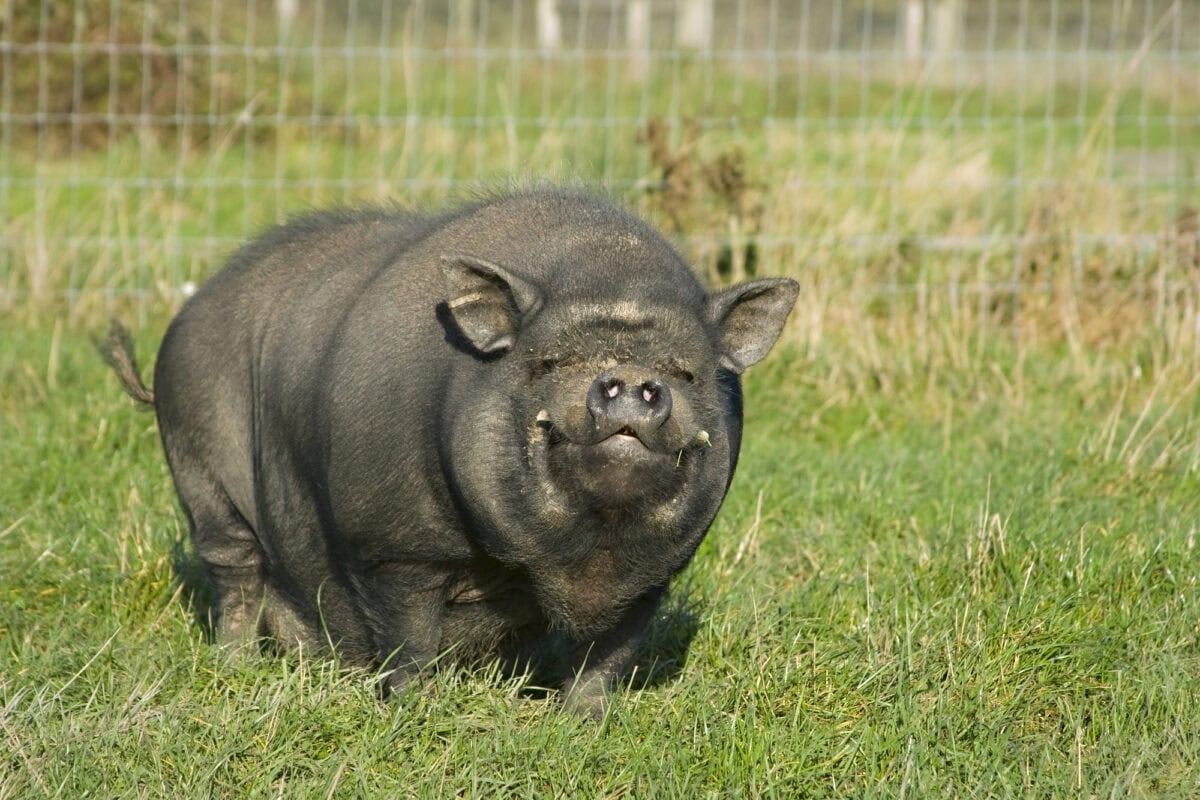
Addressing the feral pig problem requires a multifaceted approach involving federal, state, and local agencies. Management strategies include trapping, aerial gunning, and even controlled hunting. However, these methods have had limited success in curbing the overall population due to the pigs’ high reproductive rate and adaptability. There is growing interest in research focused on fertility control as a more sustainable solution, although such methods are still in the development stages.
The Path Forward

The challenges posed by feral pigs in the U.S. are significant, and finding effective solutions requires ongoing collaboration among conservationists, scientists, policymakers, and landowners. Public awareness campaigns can also play a crucial role in informing the general public about the impacts of feral pigs and the importance of preventative measures. As this invasive species continues to spread, it is imperative to adopt innovative management strategies to mitigate their impacts and protect the nation’s ecosystems and economies.
Conclusion
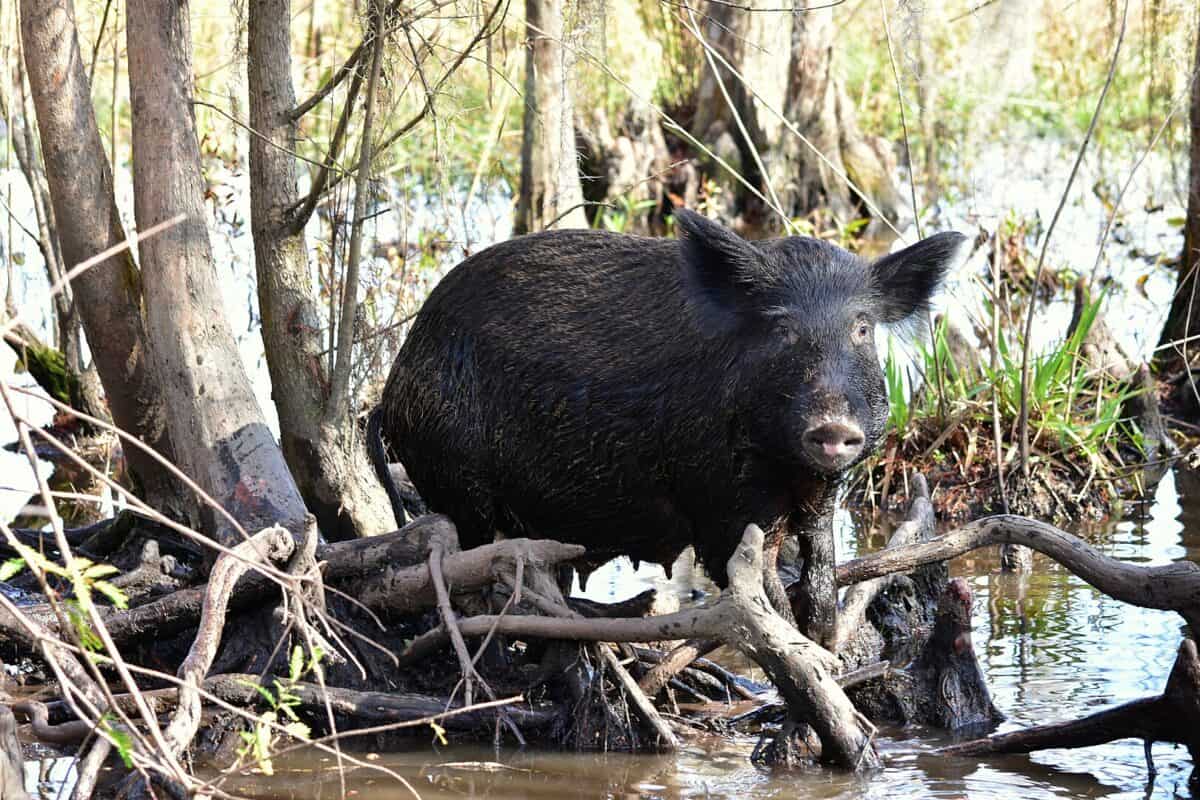
Feral pigs have firmly established themselves as an invasive force in the U.S., bringing with them a myriad of ecological, agricultural, and health-related challenges. By understanding their impact and exploring comprehensive control strategies, there is hope of mitigating the damages and restoring balance to affected regions. As these efforts evolve, ongoing research and community involvement will be key in preventing the further spread of these formidable invaders.

As a little kid, I fell in love with nature, wildlife, and animals. Living in the USA, South Africa, Italy, China and Germany gave me the opportunity to discover the world's Wildlife. My favorite animals are Mountain Gorillas, Siberian Tigers, and Great White Sharks.
I'm a certified PADI Open Water Diver, went to Everest Base Camp and Trekked Gorillas in Uganda. I hold a Master of Science in Economics and Finance.
Please send any feedback to feedback@animalsaroundtheglobe.com
- 10 Dogs That Love to Run And 3 That Prefer the Couch - July 21, 2026
- 15 Spider Adaptations That Defy Logic - July 21, 2026
- 13 Cat Breeds That Get Along with Dogs - July 20, 2026