


Space has always been a realm of intrigue and wonder. Vast and largely uncharted, the cosmos presents enigmas that continue to baffle even the brightest minds. From the peculiar behaviors of celestial bodies to strange cosmic phenomena, the universe remains a puzzle with many pieces still missing. In this article, we delve into 11 space mysteries that continue to stump scientists, shedding light on our limited understanding of the universe.
1. The Enigma of Dark Matter

Dark matter is one of the most perplexing cosmic puzzles. Although it makes up about 27% of the universe, it cannot be directly observed because it doesn’t emit, absorb, or reflect light. Its existence is inferred from gravitational effects on visible matter, such as stars and galaxies. Despite extensive research, its true nature remains a mystery, leaving scientists with only hypotheses about what dark matter could be.
2. The Secret Behind Dark Energy

Outshining even dark matter in its enigmatic nature is dark energy, a force thought to be responsible for the accelerating expansion of the universe. Accounting for roughly 68% of the cosmos, dark energy challenges our understanding of gravity and physics. What causes this mysterious force? Scientists are still scratching their heads, with theories ranging from a new energy field to modifications in Einstein’s theory of gravity.
3. Unraveling Fast Radio Bursts

Fast Radio Bursts (FRBs) are intense bursts of radio waves that last mere milliseconds, yet they emit as much energy as the Sun does in a day. First discovered in 2007, these elusive cosmic signals originate from distant galaxies. Despite numerous detections, their exact cause remains elusive, with theories suggesting everything from neutron stars to alien technology.
4. The Unsung Mystery of Cosmic Rays

Cosmic rays are high-energy particles from outer space that bombard Earth from all directions. Although widely studied, their origins and the mechanisms accelerating them to nearly the speed of light are still debated. Proposals include supernovae and potentially unknown, more exotic sources, making cosmic rays a persistent mystery for astrophysicists.
5. The Puzzling Great Attractor

The Great Attractor is a gravitational anomaly in intergalactic space pulling galaxies, including our own, towards a specific region of the universe. This concentration of mass affects the motion of galaxies over 200 million light-years away. Unfortunately, its exact makeup and what lies within remain hidden behind the Milky Way’s thick disk of stars and dust.
6. The Conundrum of Galactic Rotation Curves

Galactic rotation curves present another cosmic quandary. Observations show that stars at the edges of galaxies rotate just as fast as those near the center, defying the traditional gravitational expectations derived from visible matter. This anomaly implies the presence of additional unseen mass, propelling the search for answers into the realm of dark matter or revisions in gravitational theories.
7. The Anomalous Pioneer Anomaly

The Pioneer 10 and 11 spacecraft, launched in the 1970s, experienced unexplained deviations from their expected trajectories once they passed a certain distance from the Sun. Dubbed the Pioneer anomaly, this oddity sparked debates about the possibility of new physics or unaccounted forces. While some suggest mechanical explanations, the exact cause remains a subject of ongoing investigation.
8. The Curious Case of Magnetars

Magnetars are neutron stars with extraordinarily powerful magnetic fields, up to a thousand trillion times stronger than Earth’s. These fields can produce bursts of X-rays and gamma rays, and their intense energy can warp the surface of the star. Despite their intense study, the origin of such strong magnetic fields and their sporadic emissions is not fully understood.
9. Exploring the Kuiper Cliff
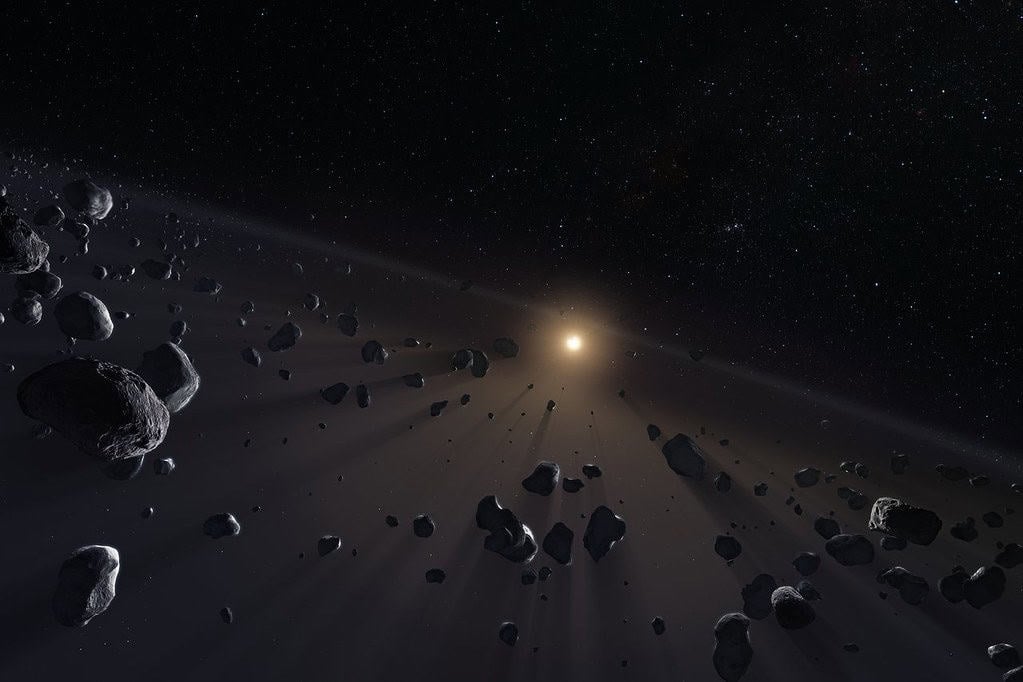
Beyond Pluto lies the Kuiper Belt, a region of space filled with icy bodies. However, astronomers have noticed an unexpected drop-off, or “cliff,” in the number of objects beyond a certain point. This contradiction to theoretical predictions about the Belt’s population density raises questions about the processes shaping our solar system’s outer edges.
10. The Rift of Missing Baryons

Baryons, the particles that make up protons and neutrons, are a fundamental component of matter, yet an accounting discrepancy exists: researchers have been unable to locate approximately half of the predicted baryons in the universe. Proposed solutions include vast stretches of intergalactic space containing dilute clouds of baryonic matter, but the search for definitive evidence continues.
11. The Paradox of The BICEP2 Results

In 2014, data from the BICEP2 experiment suggested the detection of cosmic inflation evidence shortly after the Big Bang. However, subsequent analysis proposed that dust in our galaxy might account for the signals. This retraction illustrates the challenges inherent in distinguishing cosmic signals from local phenomena, leaving the question of cosmic inflation still open for debate.
Concluding Thoughts on Cosmic Mysteries

Although our understanding of the universe has grown by leaps and bounds, numerous mysteries remain unexplained. Each mystery presents an opportunity for scientific advancement, inspiring new technologies and methods as we strive to unveil the universe’s secrets. As research progresses, perhaps these puzzles will eventually be solved, leading to a deeper understanding of the complex and magnificent cosmos we inhabit.

From exploring the marine wonders in the Azores and witnessing the vast savannas of Kenya, to delving deep into the rich biodiversity of South Africa and traversing iconic landscapes in Australia and the US like Yellowstone, Chris's experiences are vast.
With a penchant for diving alongside sharks, the ocean holds a special place in his heart.
Through his academic insights, he champions wildlife conservation, striving with 'Animals Around The Globe' to cultivate a profound connection between humans and animals, enhancing our mutual appreciation.
Connect with him at Feedback@animalsaroundtheglobe.com.
- This Monkey Has a Mustache - July 21, 2026
- How Steve Irwin Changed the World’s View of Wildlife - July 21, 2026
- The Catfish That Caused Earthquakes in Japanese Folklore - July 21, 2026