

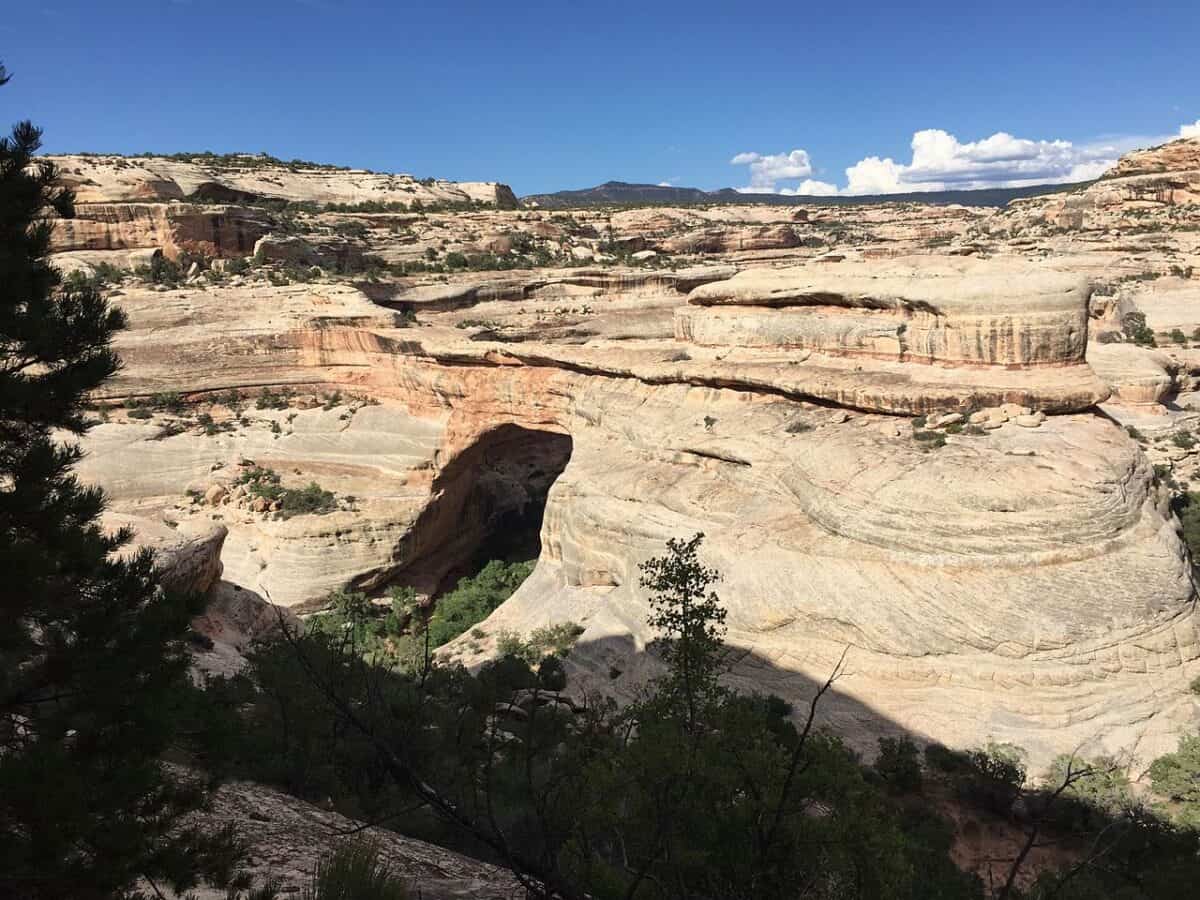
Natural bridges stand as testaments to nature’s artistry, sculpted over millennia by the persistent forces of wind, water, and time. Unlike arches, which can form through various erosional processes, natural bridges specifically form when flowing water carves through rock, creating magnificent spans that inspire awe in all who behold them. The United States boasts some of the world’s most spectacular natural bridges, each with its own unique story and geological significance. From the red rock country of the Southwest to the verdant landscapes of the Appalachians, these 15 incredible natural bridges showcase America’s diverse and dramatic geological heritage, offering visitors breathtaking experiences and photographers dream-worthy subjects.
Rainbow Bridge Utah’s Sacred Monument
Standing as one of the world’s largest natural bridges, Rainbow Bridge rises 290 feet tall with a span of 275 feet—nearly the length of a football field. Located within the Navajo Nation near Lake Powell, this massive sandstone structure has been formed over millions of years as Bridge Creek carved through the red Navajo sandstone. Before becoming a National Monument in 1910, Rainbow Bridge held sacred significance for several Native American tribes, including the Navajo, Hopi, and San Juan Southern Paiute people, who consider it a religious site. Today, visitors can access this magnificent formation by boat across Lake Powell followed by a moderate hike, or via a strenuous 14-mile trail from Navajo Mountain—both journeys rewarding travelers with views of what many consider the most magnificent natural bridge on Earth.
Natural Bridge, Virginia America’s Original Natural Wonder

Before Niagara Falls or the Grand Canyon captured the American imagination, Natural Bridge in Virginia stood as the young nation’s premier natural attraction. Towering 215 feet above Cedar Creek with a span of 90 feet, this massive limestone formation was once surveyed by George Washington, who carved his initials into the rock wall (still visible today). Thomas Jefferson was so enamored with the bridge that he purchased the land surrounding it in 1774 for 20 shillings from King George III. This historic natural wonder was formed as acidic groundwater dissolved the limestone over millions of years, eventually creating the dramatic arch we see today. Now protected as a Virginia State Park, the bridge continues to inspire visitors just as it did the founding fathers over two centuries ago.
Owachomo Bridge Ancient Guardian of Natural Bridges National Monument

The most delicate of Utah’s three famous spans at Natural Bridges National Monument, Owachomo Bridge stretches 180 feet across a canyon while standing just 27 feet thick at its center. This graceful formation represents the final stage in a natural bridge’s life cycle, as thousands of years of erosion have worn it to a slender ribbon of stone. The name “Owachomo” means “rock mound” in Hopi, referring to the distinctive feature atop one end of the bridge. Geologists estimate Owachomo to be among the oldest bridges in the monument, likely over 100,000 years old and slowly approaching eventual collapse. Its thinness allows for spectacular photography opportunities, particularly at night when the Milky Way appears to flow through the opening, making it a favorite subject for astrophotographers from around the world.
Sipapu Bridge The Second Largest Natural Bridge in America
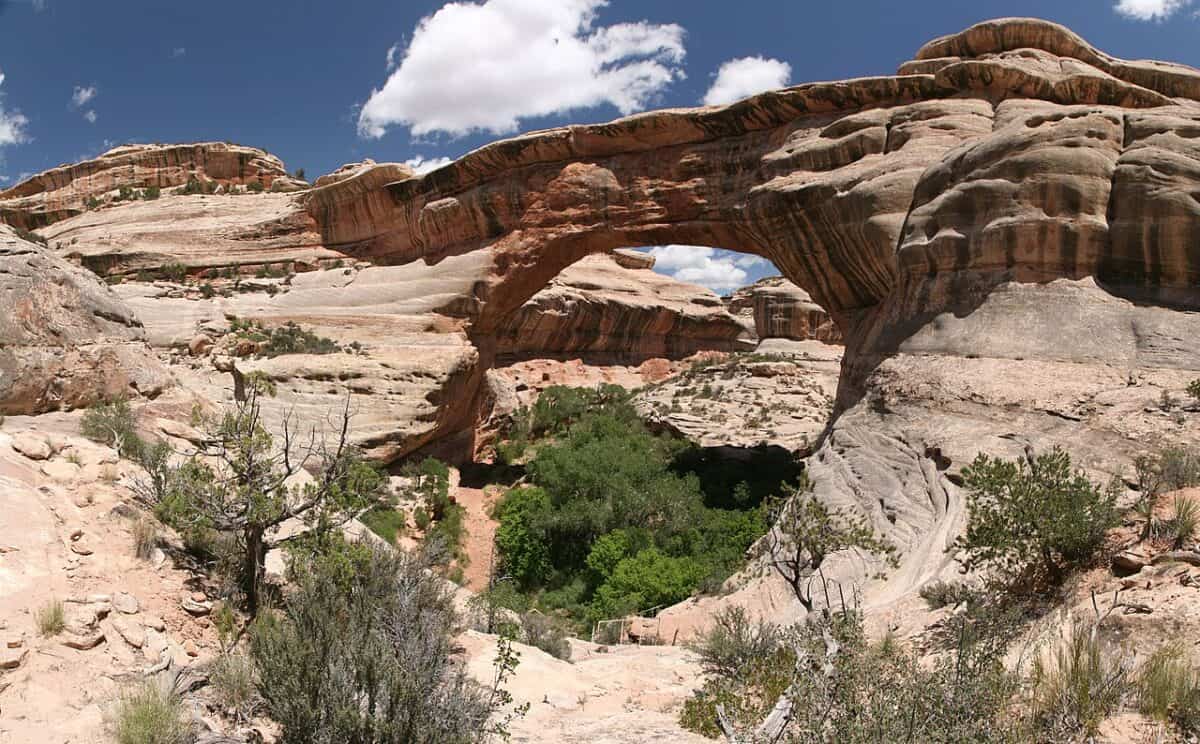
With an impressive span of 268 feet and soaring 220 feet above the canyon floor, the Sipapu Bridge ranks as the second-largest natural bridge in the United States. Located within Natural Bridges National Monument in southeastern Utah, this massive formation was named after the Hopi word for the gateway through which souls pass into the spirit world. The bridge took shape over countless millennia as White Canyon Creek cut through the Cedar Mesa Sandstone, gradually carving away the stone until this magnificent span remained. Unlike many natural bridges that require strenuous hikes to view, Sipapu is accessible via a moderately challenging one-mile trail featuring wooden ladders and steps. From certain angles, the bridge appears almost perfectly symmetrical, creating a striking silhouette against the red rock landscape that has made it a favorite subject for photographers and artists.
Kolob Arch The Elusive Giant of Zion National Park
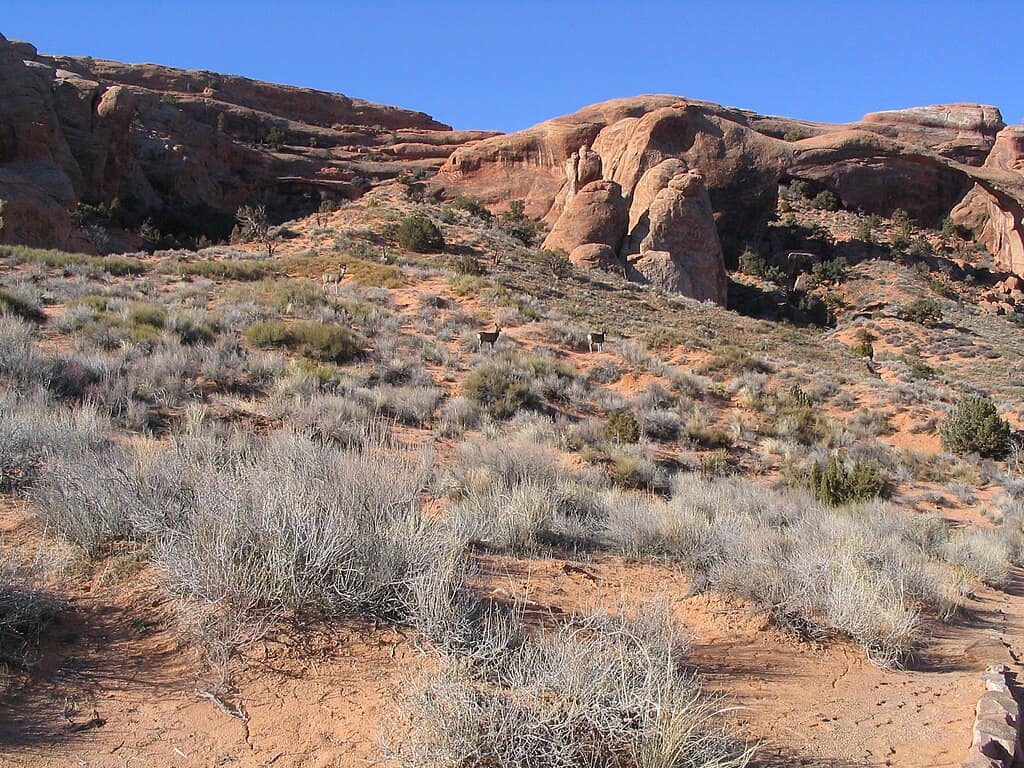
Hidden within the remote Kolob Canyons section of Zion National Park, Kolob Arch remains one of America’s most impressive yet least-visited natural spans. With a measured length of 287 feet, it competes with Landscape Arch in Arches National Park for the title of the longest natural arch in the world, though debate exists among geologists about whether it qualifies as a true natural bridge. Accessing this magnificent formation requires a strenuous 14-mile round-trip hike through the La Verkin Creek Trail, effectively limiting visitors to committed hikers and backpackers. Formed from Navajo Sandstone, the arch stands as a testament to the extraordinary erosive power of water and wind working in tandem over millions of years. Unlike many arches that frame dramatic views, Kolob Arch clings to a canyon wall, making photography challenging but rewarding for those willing to make the journey to witness this geological marvel.
Kachina Bridge The “New” Giant of Bears Ears
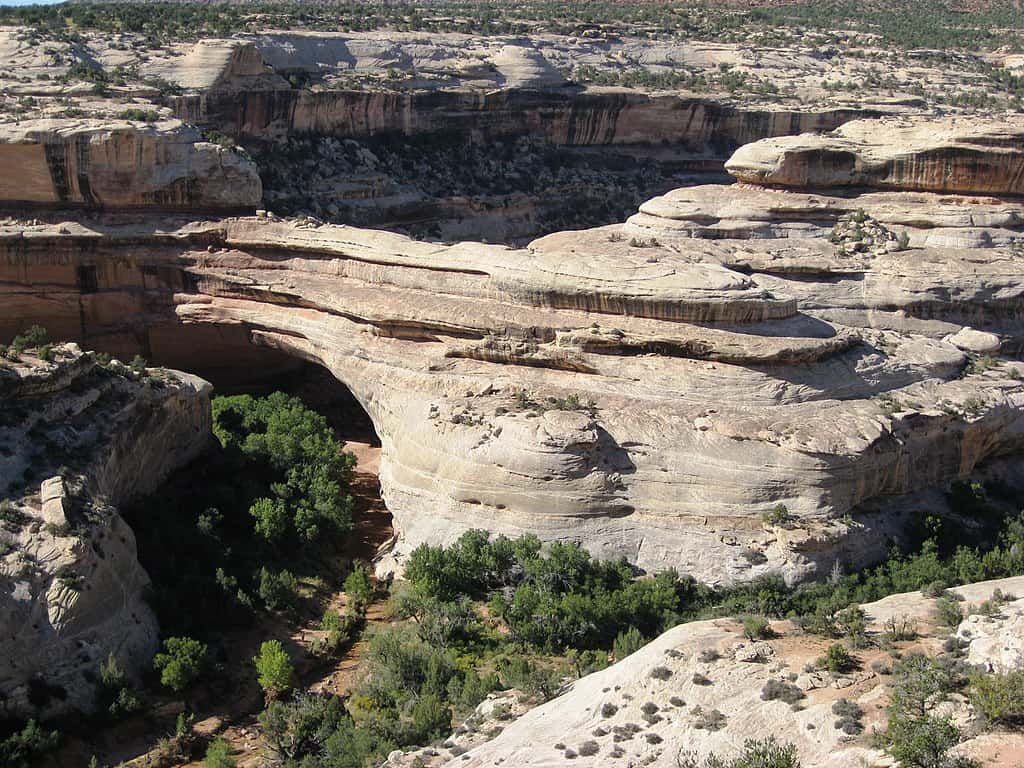
Often described as the “youngest” of Utah’s major natural bridges, the Kachina Bridge in Natural Bridges National Monument showcases the raw power of ongoing erosion. With a massive span of 204 feet and a thickness of 93 feet, this robust formation demonstrates the earlier stages of bridge formation, with substantial mass remaining compared to its more delicate neighbors. The bridge derives its name from rock art figures resembling Hopi kachina dancers that can be found on its surface, though these have faded considerably over time. In 1992, visitors witnessed a geological change in action when approximately 4,000 tons of sandstone fell from the bridge’s underside during a storm, illustrating how these formations continue to evolve. Despite this substantial loss of material, Kachina remains structurally sound and provides a rare opportunity for visitors to witness the ongoing processes that shape our planet’s most impressive geological features.
Augusta Natural Bridge Kentucky’s Hidden Marvel
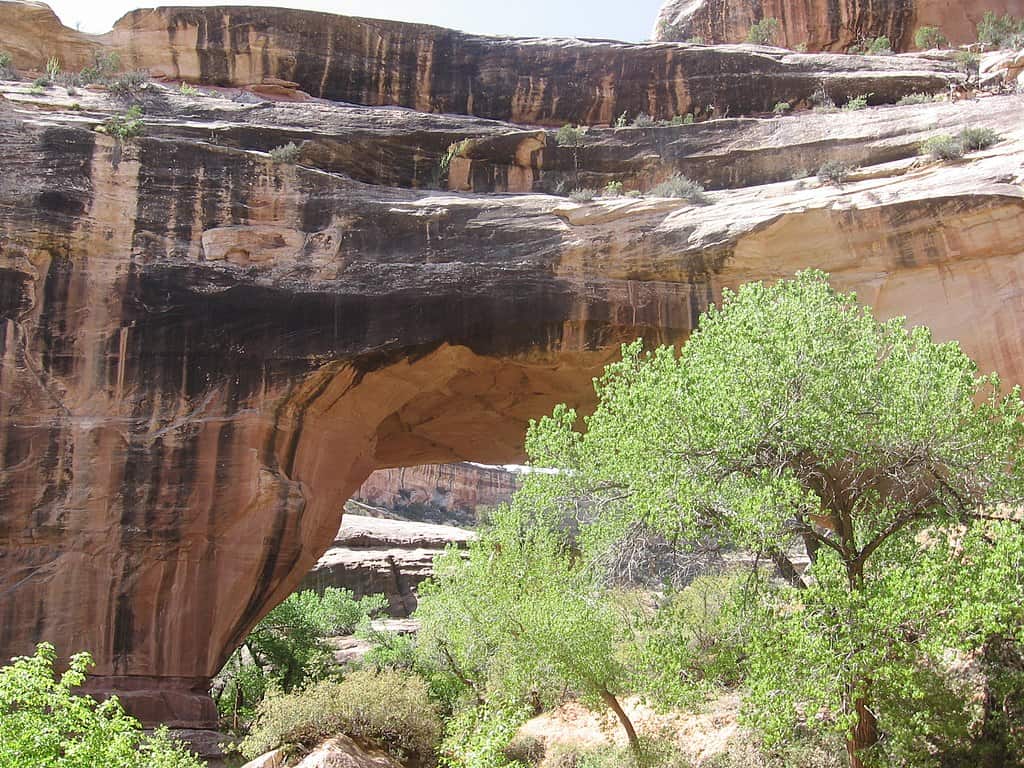
Tucked away in the northern Kentucky countryside, Augusta Natural Bridge stands as one of the Bluegrass State’s best-kept natural secrets. This sandstone formation spans approximately 75 feet and rises 20 feet above the forest floor in Bracken County, offering a dramatic contrast to the lush surrounding woodlands. Unlike the desert bridges of the Southwest, Augusta Natural Bridge exists in a temperate forest ecosystem, with moss and ferns clinging to its surfaces and hardwood trees growing atop it, creating a fairy-tale atmosphere that varies dramatically with the seasons. The bridge formed through a different process than many western counterparts—here, groundwater seeped through fractures in the sandstone, gradually dissolving and weakening the rock until a hole formed and expanded. Local conservation efforts have recently improved trail access to this geological wonder, bringing more attention to a formation that represents the eastern United States’ distinct approach to natural bridge formation.
Stevens Arch The Remote Giant of Escalante
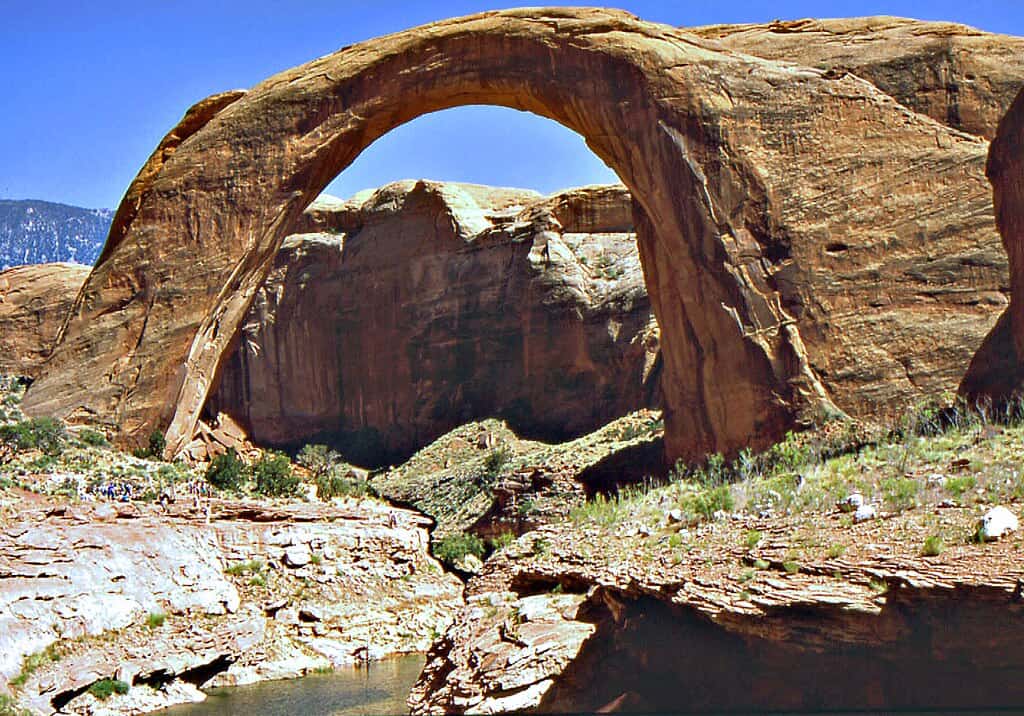
Spanning an incredible 220 feet with a height of 160 feet, Stevens Arch looms dramatically over Coyote Gulch in the Grand Staircase-Escalante National Monument. This massive formation remains one of America’s most difficult natural bridges to access, requiring either a multi-day backpacking trip through the Escalante River’s winding canyons or technical canyoneering skills to view up close. The arch formed as flash floods carved through the Navajo Sandstone, eventually breaking through a meander in the canyon wall. First documented by government surveyors in the 1930s, Stevens Arch was named after USGS topographer R.H. Stevens. The challenging access has helped preserve the pristine nature of the surrounding environment, with few signs of human visitation near the arch itself. When witnessed in late afternoon light, the bridge glows with rich orange and red hues that illuminate the entire canyon, creating one of the most spectacular natural displays in the American Southwest.
Tonto Natural Bridge Arizona’s Limestone Wonder
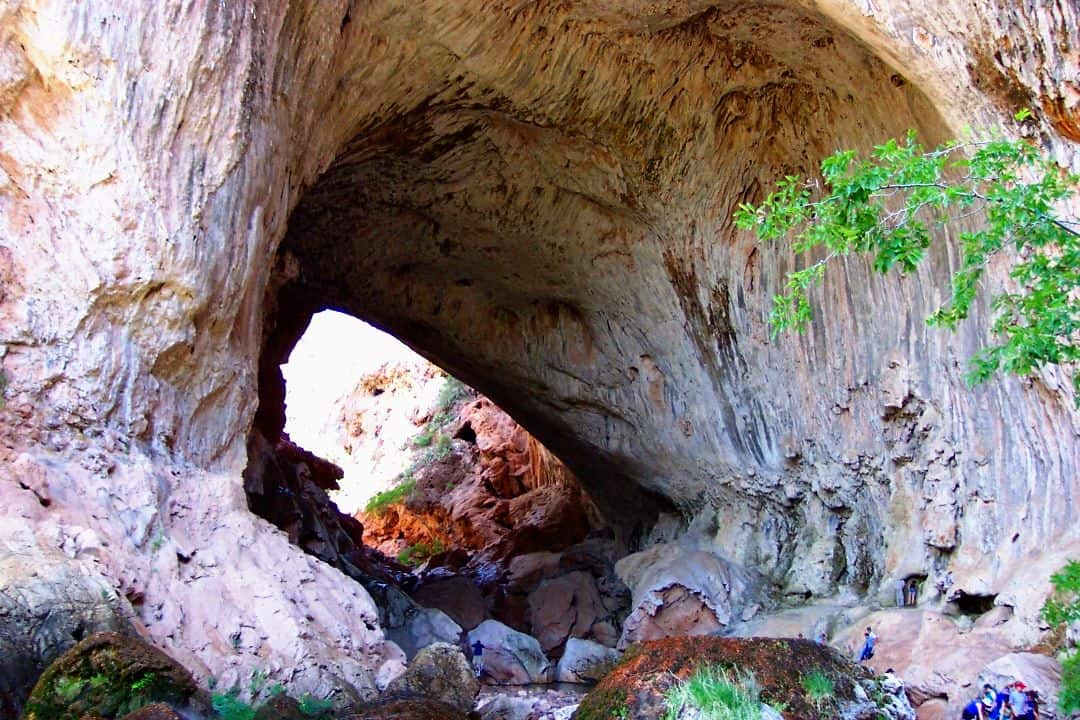
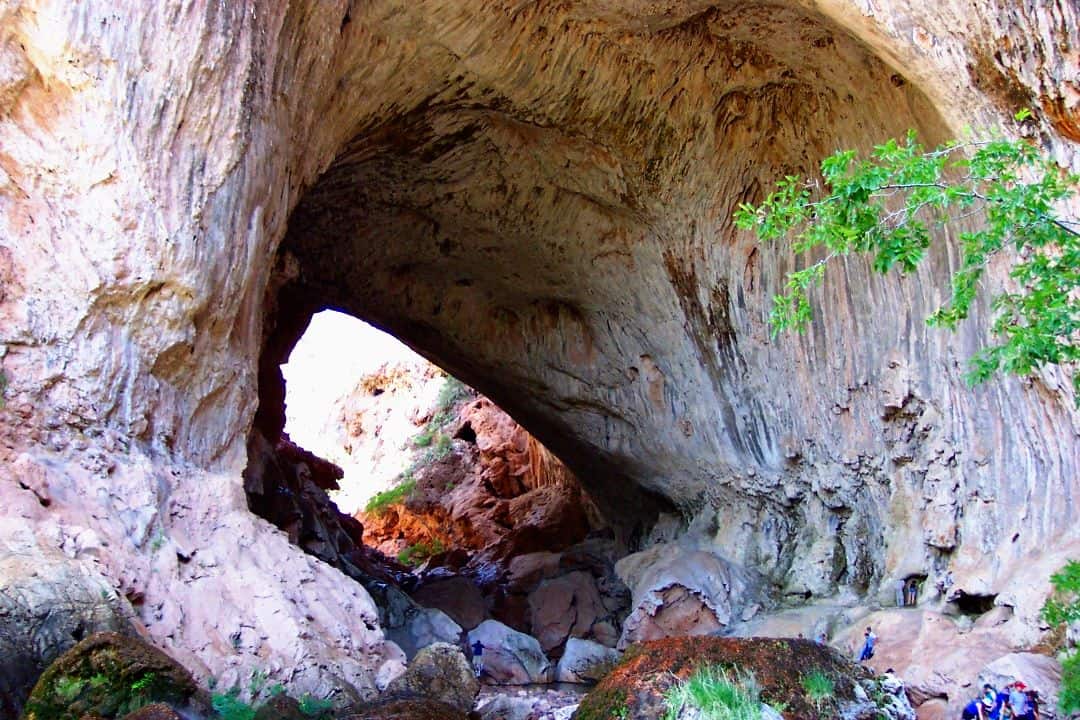
Claiming the title of the world’s largest natural travertine bridge, Tonto Natural Bridge in central Arizona presents an extraordinary geological phenomenon. This massive formation stands 183 feet high with a span of 150 feet and a thickness of 400 feet, creating a tunnel-like passage that Pine Creek flows through year-round. Unlike most natural bridges formed from sandstone, Tonto developed through a distinct process involving travertine—a form of limestone deposited by mineral springs. Over thousands of years, calcium carbonate gradually built up while simultaneously being carved by the creek, creating this unique structure. Discovered by David Gowan, a prospector hiding from Apache pursuers in 1877, the bridge remained little-known until Gowan’s family established a lodge for visitors in the early 1900s. Today, protected as a state park, visitors can experience the cool, moss-draped microclimate beneath the bridge that stands in stark contrast to the surrounding arid landscape, making it one of Arizona’s most distinctive natural treasures.
Natural Bridge of Arkansas The Ozark Legacy
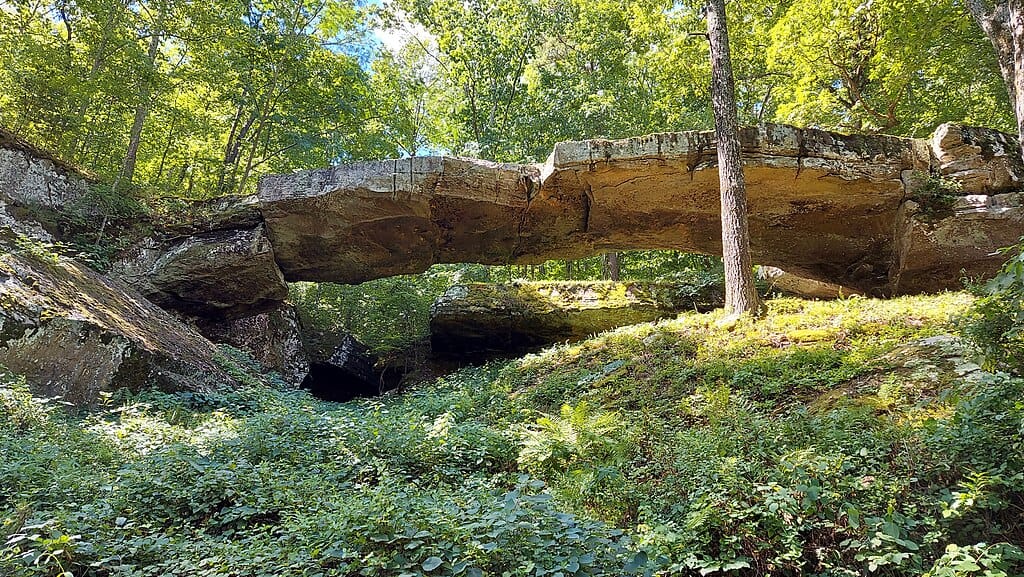
Standing as Arkansas’s largest natural bridge, this remarkable formation in the Ozark Mountains stretches approximately 100 feet across Newton County’s rugged terrain. Formed from sandstone deposits laid down over 300 million years ago, the bridge features a distinctive three-chambered cave beneath its span, adding to its geological complexity. This formation served practical purposes for early settlers, who used the natural roadway it provided to transport logs and livestock across the challenging terrain. Unlike many natural bridges that form through water erosion, the Natural Bridge of Arkansas likely developed through a combination of groundwater seepage and differential weathering of various rock layers. Now preserved within a privately owned park, the bridge is surrounded by mature hardwood forest that creates spectacular seasonal displays, particularly during autumn when the surrounding maples and oaks burst into brilliant colors. Historical records indicate the bridge was an important landmark for both Native Americans and early European settlers navigating the difficult Ozark landscape.
Ayres Natural Bridge Wyoming’s Pioneer Monument
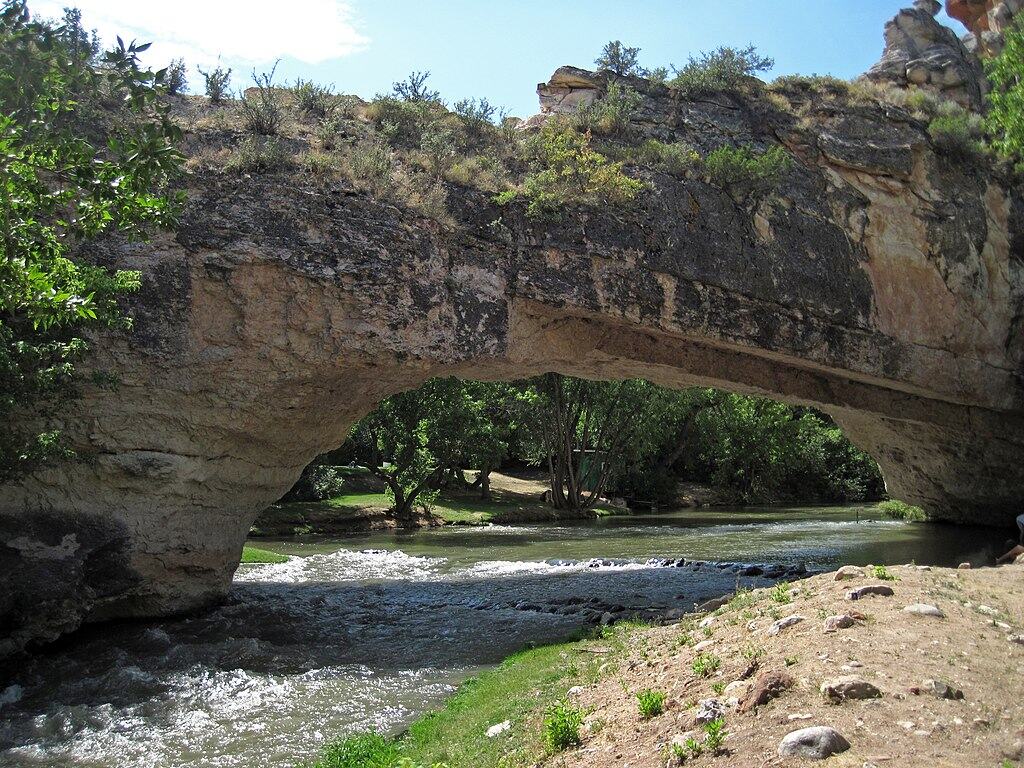
Situated just outside Casper, Wyoming, Ayres Natural Bridge stands as one of the few natural bridges in America with a river still actively flowing beneath it. Spanning approximately 50 feet and rising 30 feet above LaPrele Creek, this remarkable red sandstone formation was one of the first major landmarks noted by pioneers traveling the Oregon Trail in the mid-19th century. Many travelers would divert from their westward journey specifically to witness this natural wonder, leaving behind graffiti that dates back to the 1850s. The bridge formed when the creek gradually eroded through the narrow wall of a meander, creating a shortcut for the water flow while leaving the natural span intact. Local history records that the bridge served as a refuge for early settlers during conflicts with Native American tribes. Now protected as a county park, the surrounding area features lush green lawns and picnic areas that contrast beautifully with the red sandstone bridge, making it a popular destination for Wyoming residents seeking outdoor recreation.
Needle’s Eye South Dakota’s Granite Bridge
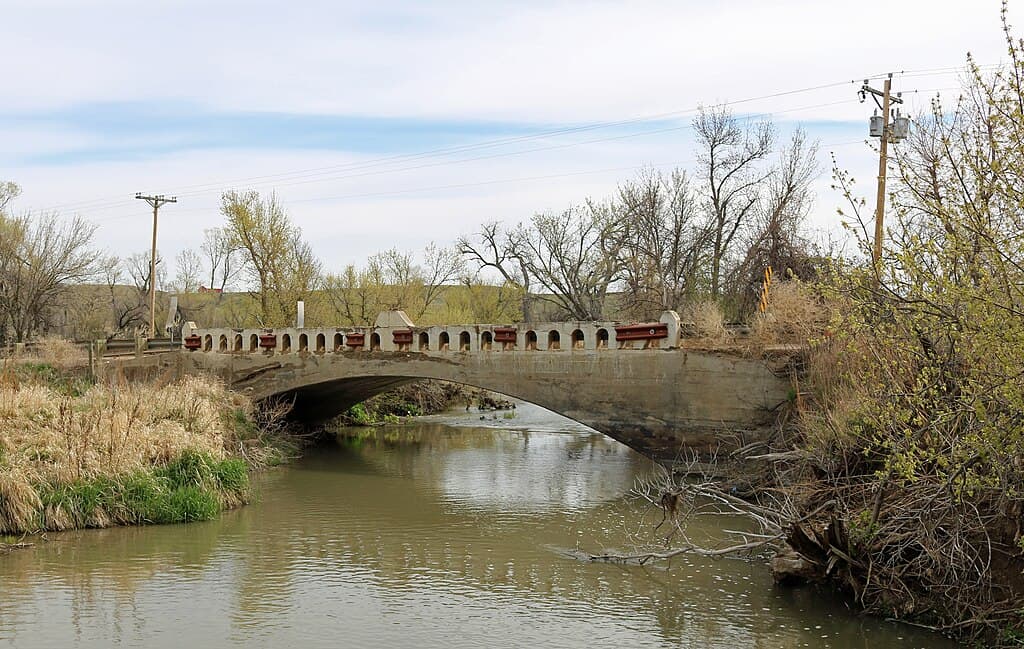
Unlike most natural bridges formed from sedimentary rock, the Needle’s Eye in South Dakota’s Black Hills stands as a rare example of a granite natural bridge. Located along the famous Needles Highway in Custer State Park, this distinctive formation features a narrow vertical opening approximately 30 feet tall and just wide enough for a person to pass through. The bridge formed through a completely different geological process than its sandstone counterparts—here, the granite underwent spheroidal weathering, where corners and edges erode faster than flat surfaces, gradually rounding and creating openings in the rock. Estimated to be over 2 billion years old, the granite making up the Needle’s Eye ranks among the oldest exposed rocks in North America. The surrounding area features dozens of granite spires and formations that create a landscape, unlike any other natural bridge setting in America. Particularly striking at sunrise and sunset when the light penetrates directly through the opening, the Needle’s Eye represents a photographer’s favorite along the already scenic Needles Highway.
Natural Bridge of Alabama Woodland Wonder
Standing as Alabama’s largest natural bridge, this impressive 148-foot span reaches 60 feet high and represents one of the longest natural bridges east of the Rocky Mountains. Composed of sandstone from the Pottsville Formation, the bridge dates back approximately 200 million years to the Coal Age, when the area was part of an ancient swamp ecosystem. Unlike many natural bridges, the Alabama formation developed primarily through wind erosion rather than flowing water, creating its distinctive broad, flat undersurface. The surrounding 27-acre park preserves a unique microclimate beneath the bridge, where temperatures remain notably cooler than the surrounding area, supporting unusual plant communities including rare ferns and mosses typically found much further north. Local legends claim the bridge served as a hideout for both Native Americans and later for Confederate soldiers during the Civil War. Today, the site offers visitors a fascinating glimpse into Alabama’s geological history while providing a peaceful woodland sanctuary just 60 miles northwest of Birmingham.
Triple Arch California’s Coastal Marvel’
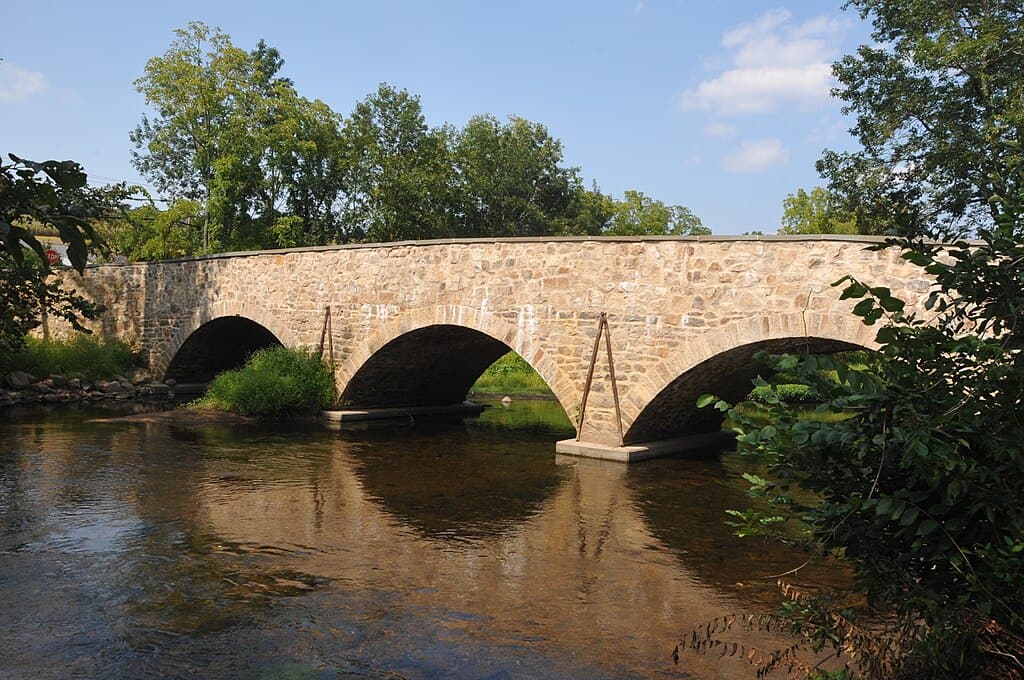
Located within Natural Bridges State Beach near Santa Cruz, California, the Triple Arch represents one of America’s few coastal natural bridges. Formed from mudstone rather than the sandstone common to most inland bridges, these dramatic sea arches have been shaped by the relentless action of Pacific Ocean waves. Originally a formation of six connected arches when first documented by Spanish explorers in the 1700s, only three remain today after coastal erosion claimed the others—a sobering reminder of the temporary nature of even the most massive stone formations. The bridges serve as critical habitat for migrating monarch butterflies, who cluster by the thousands in the protected eucalyptus groves nearby each winter. During low tide, visitors can explore tide pools beneath and around the arches, discovering diverse marine ecosystems including sea stars, anemones, and crabs. Scientists monitoring the remaining arches have documented accelerating erosion in recent decades, suggesting these spectacular formations may not survive another century against the increasingly powerful storms affecting California’s coast.
The Marvels of America’s Natural Bridges
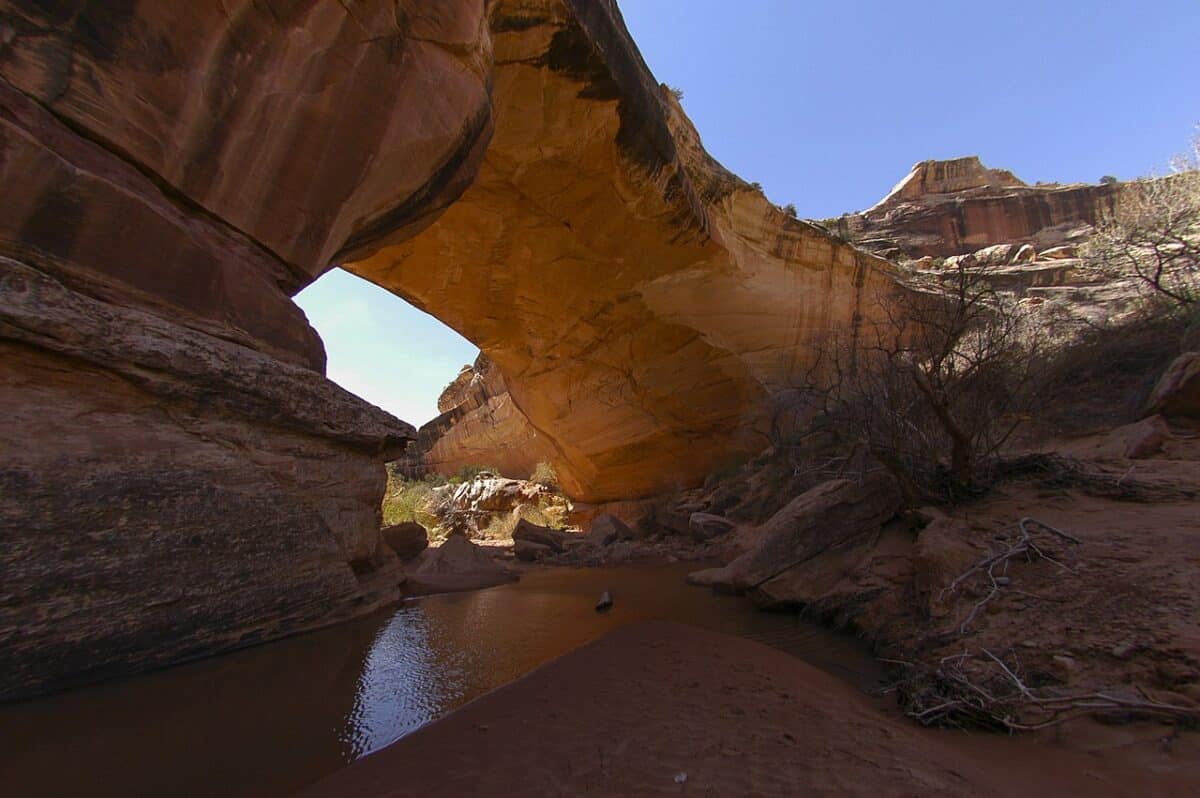
America’s natural bridges represent some of the most awe-inspiring geological formations on the planet, each telling a unique story of our dynamic Earth. From the massive sandstone spans of the Southwest to the verdant woodland bridges of the Appalachians, these natural wonders showcase the incredible diversity of America’s landscapes and the powerful geological forces that have shaped them over millions of years. Beyond their scientific significance, these bridges have played important roles in human history—serving as landmarks for indigenous peoples, pioneers, and modern travelers alike, while inspiring art, literature, and a deeper connection to the natural world. As climate change and increased visitation present new challenges to these fragile formations, conservation efforts become increasingly vital to ensure future generations can experience the wonder of standing beneath these monumental stone spans and contemplating the immense timescales they represent.
Conclusion:
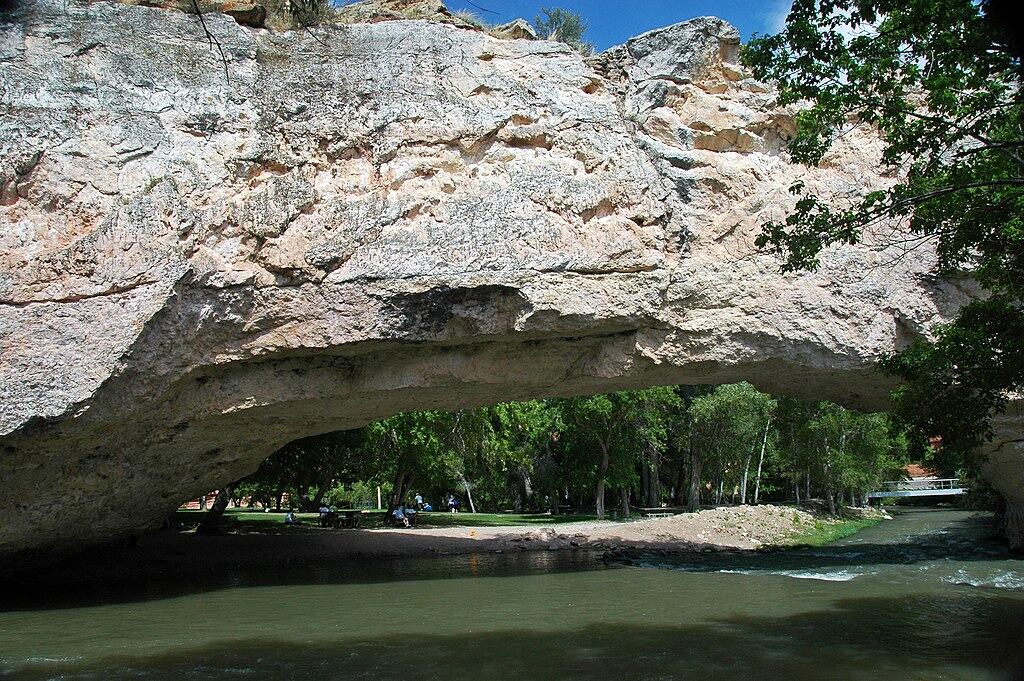
From ancient sandstone giants carved by desert rivers to lush, moss-draped spans hidden in temperate forests, America’s natural bridges are more than just breathtaking landmarks—they are living records of geological time. Each bridge stands as a reminder of the patient, persistent power of nature, sculpting beauty from stone over thousands or even millions of years. These natural wonders connect not only landscapes but also generations, carrying stories from Indigenous traditions, pioneer journeys, and modern conservation efforts. As we continue to explore and appreciate these geological masterpieces, it’s vital that we also protect them—ensuring that their silent stories and awe-inspiring forms endure for centuries to come.

As a little kid, I fell in love with nature, wildlife, and animals. Living in the USA, South Africa, Italy, China and Germany gave me the opportunity to discover the world's Wildlife. My favorite animals are Mountain Gorillas, Siberian Tigers, and Great White Sharks.
I'm a certified PADI Open Water Diver, went to Everest Base Camp and Trekked Gorillas in Uganda. I hold a Master of Science in Economics and Finance.
Please send any feedback to feedback@animalsaroundtheglobe.com
- 10 Times Nature Disrupted Major Events - July 26, 2026
- 11 Sharks So Strange You’d Think They’re Mythical - July 26, 2026
- 12 Dog Breeds That Hate Being Alone - July 26, 2026