

In the vast expanses of our planet, birds perform some of the most incredible feats of navigation known in the animal kingdom. From Arctic Terns that migrate over 44,000 miles annually to homing pigeons that can find their way back to a specific location from nearly anywhere, birds’ navigational abilities have fascinated scientists and bird enthusiasts alike for centuries. Among their navigational tools, one of the most remarkable is their ability to detect and use Earth’s magnetic field—a sense known as magnetoreception. This article explores the fascinating mechanisms behind avian magnetoreception, the current scientific understanding of this phenomenon, and its implications for bird migration and navigation.
The Marvel of Avian Navigation

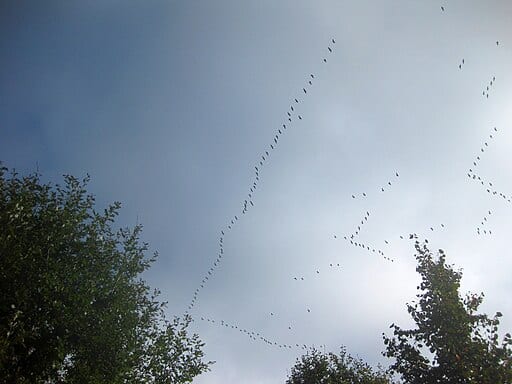
Birds possess an extraordinary ability to navigate across vast distances with remarkable precision. Take the Bar-tailed Godwit, which can fly non-stop for over 7,000 miles across the Pacific Ocean from Alaska to New Zealand without a single landing. Or consider the Golden Plover, which makes a direct flight over the Atlantic Ocean from the Arctic to South America. These migrations are not random wanderings but precisely targeted journeys to specific destinations, often returning to the exact same breeding and wintering grounds year after year. Such precision requires sophisticated navigational systems that go beyond simple visual cues or landmarks. While birds use multiple methods to navigate, including star patterns, sun position, landscape features, and even scent, their ability to detect Earth’s magnetic field provides a crucial compass that functions regardless of weather conditions or time of day.
Understanding Earth’s Magnetic Field

Before delving into how birds sense magnetism, it’s important to understand what they’re sensing. Earth’s magnetic field is generated by the movement of molten iron in our planet’s outer core, creating a vast magnetic bubble that surrounds the Earth and extends far into space. This field has two important properties that are useful for navigation: direction and inclination. The directional component points roughly toward the magnetic north and south poles (which differ slightly from the geographic poles). The inclination or dip is the angle at which the magnetic field lines intersect Earth’s surface—horizontal at the equator and vertical at the magnetic poles. This combination of properties creates a three-dimensional magnetic map that varies predictably across the globe, offering a reliable framework for navigation.
The Discovery of Magnetoreception in Birds

The scientific journey to understand birds’ magnetic sense began in the mid-20th century. In 1968, German scientist Wolfgang Wiltschko conducted groundbreaking experiments with European Robins, demonstrating that these birds could orient properly during migration season even in a windowless room where they could see neither the sun nor stars. When exposed to an artificial magnetic field that mimicked Earth’s natural one, the birds oriented as expected. However, when the magnetic field was altered, the birds changed their orientation accordingly. This was the first conclusive evidence that birds could detect and use magnetic fields for navigation. In the decades since, researchers have confirmed magnetoreception in numerous bird species, from pigeons and chickens to migratory songbirds, seabirds, and even some non-migratory species, suggesting this ability is widespread throughout the avian world.
The Cryptochrome Hypothesis: Light-Dependent Magnetoreception

One of the leading theories about how birds sense magnetic fields involves special proteins called cryptochromes, found in the birds’ retinas. According to this model, when light strikes these cryptochromes, it creates pairs of molecules with unpaired electrons (known as radical pairs). The alignment of these electrons’ spins is affected by Earth’s magnetic field, potentially altering the chemical reactions that follow. This change could create signals that the bird’s brain interprets as directional information. Fascinatingly, this mechanism means that birds would literally “see” the magnetic field as a visual pattern superimposed on their normal vision—perhaps as light or dark areas in their field of view that indicate magnetic north. This theory is supported by evidence that many birds require light (specifically blue wavelengths) to detect magnetic fields and that certain eye areas contain high concentrations of cryptochromes. Recent studies have even found that cryptochrome 4, particularly in migratory birds, shows properties consistent with magnetic sensitivity.
Magnetite-Based Magnetoreception: The Compass in the Beak

A second potential mechanism for magnetoreception involves tiny crystals of magnetite (iron oxide) found in various tissues in birds’ bodies. Magnetite is naturally magnetic, and these microscopic crystals could act like miniature compass needles, physically rotating in response to Earth’s magnetic field. This movement could then trigger adjacent nerve endings, sending directional signals to the brain. Research has identified clusters of magnetite in birds’ upper beaks, specifically in the ethmoid region where there’s a high concentration of nerve endings. This system appears to be particularly important for detecting the strength and inclination of magnetic field lines, potentially allowing birds to determine not just direction but also their approximate latitude. Unlike the cryptochrome system, magnetite-based magnetoreception would work regardless of light conditions, providing birds with navigational abilities even at night or in cloudy weather. However, recent research suggests these systems may work in tandem, with each providing different aspects of magnetic information.
The Brain’s Role in Processing Magnetic Information

Detecting the magnetic field is only the first step; birds must also process this information in their brains to translate it into navigational decisions. Neurobiological studies have identified several brain regions involved in processing magnetic information, particularly within the visual processing system. In night-migratory songbirds, a brain region called Cluster N becomes highly active when the birds are using magnetic cues for orientation. This region receives input from the eyes and shows reduced activity when the eyes are covered, supporting the cryptochrome hypothesis. Other studies using advanced imaging techniques have revealed that magnetic stimuli activate multiple brain pathways, suggesting that magnetic information is integrated with other sensory inputs to create a comprehensive navigational map. This neural integration may explain how birds can switch between or combine different navigational methods depending on conditions, demonstrating remarkable adaptability in their navigation strategies.
Magnetic Maps vs. Magnetic Compasses

Scientists distinguish between two aspects of magnetic navigation in birds: the compass sense and the map sense. The magnetic compass allows birds to determine direction, functioning like a traditional compass that indicates north, south, east, and west. This compass seems primarily based on the inclination of magnetic field lines rather than polarity, meaning birds detect whether field lines are pointing toward or away from Earth’s surface. The map sense, which is more complex, may allow birds to determine their position on Earth based on subtle variations in the magnetic field’s strength and inclination at different locations. This would function like a GPS, telling birds not just which direction to fly but where they are relative to their destination. Evidence suggests that experienced adult birds develop this map sense over time, which explains why juvenile birds on their first migration often rely more heavily on innate compass directions and other navigation cues until they develop a more sophisticated navigational map through experience.
Calibration with Other Navigational Systems

While magnetic navigation is remarkable, it doesn’t operate in isolation. Birds calibrate and cross-reference their magnetic sense with other navigational tools. Research shows that birds use celestial cues from the sun and stars to calibrate their magnetic compass, especially during twilight periods when both systems are simultaneously available. This integration creates a robust navigational system that can function across various conditions. For instance, if cloud cover obscures celestial cues, birds can rely on their magnetic sense. Conversely, in areas with magnetic anomalies (such as iron-rich geological formations that distort the local magnetic field), birds can switch to solar, stellar, or landscape-based navigation. Some species even use olfactory cues, particularly over familiar territory, to further refine their navigation. This redundancy in navigational systems ensures birds can maintain accurate orientation even when individual systems are compromised, representing an evolutionary adaptation to the challenges of long-distance migration and homing.
Experimental Evidence and Laboratory Studies
The scientific understanding of avian magnetoreception has been advanced through ingenious experimental designs. In classic “Emlen funnel” experiments, migratory birds placed in funnel-shaped cages lined with ink or scratch-sensitive paper leave marks as they attempt to move in their preferred migratory direction, allowing researchers to quantify their orientation behavior under various magnetic conditions. More sophisticated experiments use radio transmitters to track birds flying in altered magnetic fields or helmets generating localized magnetic fields around birds’ heads. In laboratory settings, researchers have identified specific neurons that respond to magnetic stimuli and have used genetic techniques to study the expression of magnetoreception-related genes like cryptochromes. Recent advances in neuroimaging allow scientists to observe brain activity in real-time as birds process magnetic information. Each of these experimental approaches has contributed critical pieces to our understanding of this remarkable sense, though the full picture remains incomplete and actively researched.
Magnetic Field Disruptions and Their Impact

In our modern world, birds face unprecedented challenges to their magnetic navigation. Human-made electromagnetic fields from power lines, radio transmitters, radar installations, and even everyday electronic devices can potentially interfere with birds’ ability to detect Earth’s natural magnetic field. Several studies have documented disorientation in birds near strong electromagnetic sources, particularly during migration. Solar storms and geomagnetic disturbances can also temporarily alter Earth’s magnetic field, potentially affecting bird navigation. Long-term shifts in Earth’s magnetic field, including the ongoing movement of the magnetic poles and periodic polarity reversals over geological time, present evolutionary challenges for migratory species. While birds have likely adapted to gradual changes over evolutionary time, the rapid introduction of artificial electromagnetic interference represents a novel challenge. Conservation efforts increasingly consider electromagnetic pollution as a potential threat to migratory birds, particularly near critical stopover sites and migration corridors where accurate navigation is essential.
Evolutionary Origins of Magnetoreception

The ability to detect magnetic fields is not unique to birds but appears across diverse animal groups, suggesting deep evolutionary roots for this sensory system. Magnetoreception has been documented in sea turtles, salmon, bats, mole rats, and even some insects and bacteria. This widespread distribution indicates that magnetic sensing may have evolved independently multiple times or represents an ancient sensory capability inherited from common ancestors. For birds specifically, magnetoreception likely evolved in response to the selective pressures of migration and homing. Species that could accurately navigate would have significant advantages in finding food resources, suitable breeding grounds, and avoiding harsh weather conditions. The presence of magnetoreception in some non-migratory bird species suggests the sense may serve additional functions beyond long-distance navigation, perhaps in local mapping or orientation within territories. Understanding the evolutionary history of magnetoreception not only illuminates how birds developed this remarkable ability but also provides insights into the broader evolution of sensory systems across the animal kingdom.
Implications for Conservation and Bird Migration

Understanding how birds use Earth’s magnetic field has important implications for conservation. As climate change alters traditional habitats and food availability, migratory birds must adapt their routes and timing. Their reliance on magnetic cues, which remain constant despite climate shifts, may create mismatches between their navigational instincts and optimal migration patterns in changing environments. Additionally, light pollution can interfere with the cryptochrome mechanism of magnetoreception by drowning out the blue light wavelengths needed for this system to function properly. Conservation strategies increasingly incorporate this knowledge, creating protected corridors along traditional migration routes and reducing electromagnetic and light pollution in critical areas. Some conservation programs even use knowledge of magnetic navigation to guide restoration efforts for endangered bird populations, using techniques like imprinting young birds on specific magnetic signatures associated with safe migration routes. As human development continues to transform landscapes, protecting birds’ ability to navigate effectively will be crucial for maintaining healthy populations and migration patterns.
Conclusion: The Continuing Mystery of Avian Magnetoreception

The ability of birds to navigate using Earth’s magnetic field stands as one of nature’s most fascinating adaptations, representing a sense that humans can barely comprehend through our own sensory experiences. While significant progress has been made in understanding the mechanisms and neural pathways involved in magnetoreception, many questions remain unanswered and continue to drive research in this field. The dual systems of cryptochrome-based and magnetite-based magnetoreception demonstrate nature’s elegant solutions to the challenges of navigation, providing birds with remarkable precision in their movements across the globe. As technology advances, allowing for more sophisticated experimental approaches and imaging techniques, our understanding of avian magnetoreception will continue to deepen, potentially inspiring new technologies for human navigation and revealing further insights into how animals perceive their world in ways fundamentally different from our own experience.

- 7 Animals That Can Survive Extreme Environments You Couldn’t - July 20, 2026
- The Longest Snake Ever Found in the U.S. - July 20, 2026
- The Top 10 Animal Escapes That Shocked the World - July 20, 2026