

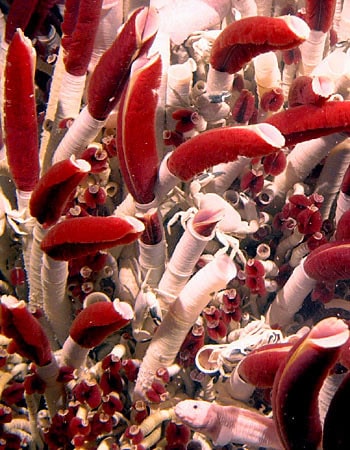
Along the coastal seafloors of our planet, an ancient architect has been silently building elaborate tube-like structures for over 500 million years. Lacking a brain yet displaying remarkable engineering prowess, these marine creatures construct protective homes that have withstood the test of time through countless geological epochs. They are the tube-building annelids, often called “sea worms,” and their underwater castles represent one of the most enduring examples of animal architecture on Earth. From the spiral-shaped calcareous tubes of serpulid worms to the ornate sandy fortresses of sabellariids, these marine engineers continue to shape underwater landscapes today just as they did in prehistoric oceans. Their constructions serve not only as shelters but as the foundation for diverse marine ecosystems, highlighting the profound ecological influence these ancient builders maintain in modern seas.
The Evolutionary History of Marine Tube-Builders

Tube-building polychaete worms first appeared during the early Cambrian period, approximately 540 million years ago. Fossil evidence reveals their presence in ancient seas long before dinosaurs walked the Earth, making them among the most evolutionarily persistent animal architects. Their long evolutionary history has allowed for remarkable specialization and diversification in tube-building techniques. The fossil record provides compelling evidence that the basic tube-building behavior we observe today was established hundreds of millions of years ago, with surprisingly little fundamental change in their construction methods. These ancient sea architects have survived through all five major mass extinction events, adapting their tube-building techniques to changing ocean conditions while maintaining their essential ecological role as substrate creators and ecosystem engineers.
The Master Architects: Diverse Worm Species and Their Unique Constructions

The marine world hosts several families of tube-building worms, each with their specialized construction techniques and materials. Serpulid worms create rigid calcareous tubes that permanently attach to hard surfaces, often forming spiral or winding patterns. Sabellid or “feather duster” worms build flexible tubes using secreted mucus reinforced with sand and debris. Perhaps most impressive are the sabellariid worms, commonly known as “honeycomb worms,” which construct massive colonial reefs by cementing sand grains together with specialized secretions. The parchment worms (Chaetopteridae) create U-shaped parchment-like tubes buried in sediment, while bamboo worms (Maldanidae) build straight tubes that stand vertically in soft substrates. Each species has evolved unique adaptations for gathering materials, cementing them together, and maintaining their tubular fortresses in diverse marine environments.
Engineering Marvels: The Construction Process Revealed

The tube construction process varies among species but generally follows a sophisticated sequence of behaviors. Most tube-building worms begin by secreting a mucus template that forms the foundation of their structure. Special glands in their bodies produce a cement-like substance that hardens upon contact with seawater. For species that incorporate environmental materials, the worms use specialized appendages to selectively gather sand grains, shell fragments, or other particles of specific sizes from their surroundings. What makes this process remarkable is the precision with which the worms place each particle, creating uniformly strong structures despite having no central nervous system to coordinate such complex behavior. The construction is typically completed in layers, with the worm continuously adding to and repairing its tube throughout its lifetime. Some species can rebuild damaged sections within hours, demonstrating remarkable efficiency in their construction capabilities.
Reef Builders: The Honeycomb Worms of Intertidal Zones
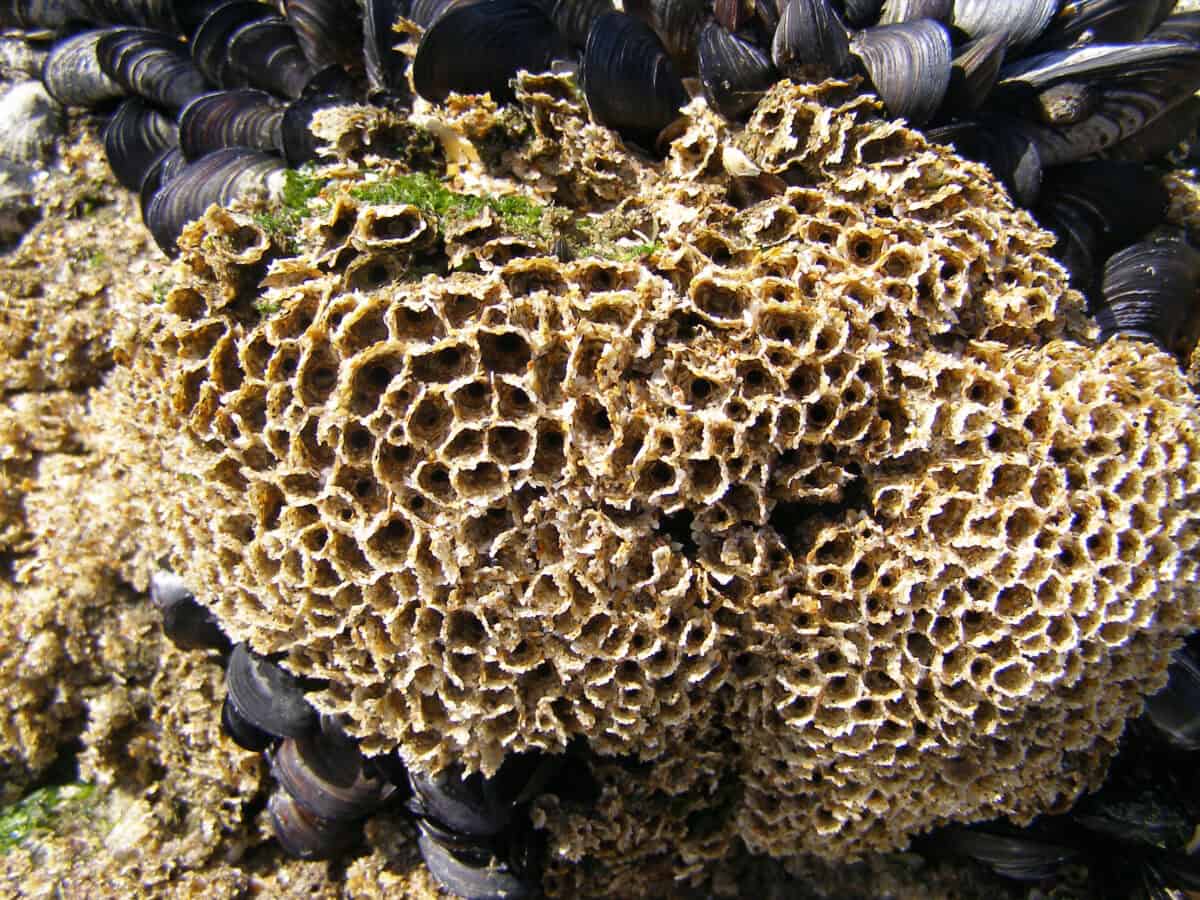
Among the most spectacular tube-building worms are the Sabellariidae, commonly known as honeycomb worms. Species like Sabellaria alveolata in European waters and Phragmatopoma californica along the Pacific coast of North America create massive colonial structures that can span hundreds of square meters. These biogenic reefs form when millions of individual tubes are built adjacent to one another, creating honeycomb-like structures that can rise up to two meters from the seafloor. The worms carefully select sand grains of specific sizes and shapes, cementing them together with a specialized protein glue that has remarkable adhesive properties even in wet environments. Scientists have studied this natural adhesive for potential applications in medicine and engineering. These reefs typically form in intertidal zones where they must withstand powerful wave action, demonstrating the extraordinary structural integrity of these animal-built formations. Honeycomb worm reefs are now recognized as critical marine habitats, providing shelter for hundreds of other species and earning protected status in many coastal regions.
The Calcium Architects: Serpulid Worms and Their Stone Fortresses

Serpulid worms represent another extraordinary group of marine architects, distinguished by their ability to create rigid calcareous tubes. Unlike their relatives that gather building materials from the environment, serpulids extract calcium from seawater and metabolically convert it into calcium carbonate, which they use to construct hard, white tubes that can last long after the worm has died. These tubes are often adorned with ridges, flanges, and other structural elements that enhance their strength and stability in high-energy environments. Many serpulid species add distinctive features to their tube openings, such as flared entrances or protective spines that deter predators. Some species, like Spirobranchus giganteus (the Christmas tree worm), create colorful spiral tubes that embed in coral reefs, becoming permanent fixtures in these ecosystems. The calcareous nature of serpulid tubes makes them particularly valuable in paleontological studies, as they fossilize readily and provide insights into ancient marine ecosystems dating back hundreds of millions of years.
Ecological Impact: How Tube Worm Colonies Create Biodiversity Hotspots

The ecological significance of tube-building worms extends far beyond their individual shelters. Their constructions fundamentally alter marine habitats, creating complex three-dimensional structures in what might otherwise be flat, homogeneous seafloor. These biogenic habitats dramatically increase surface area and spatial complexity, creating countless microhabitats that support diverse marine life. Research has documented significantly higher biodiversity in and around tube worm colonies compared to adjacent areas without them. The tubes provide attachment points for sessile organisms like sponges, bryozoans, and algae, while the interstitial spaces between tubes offer shelter for mobile creatures including crustaceans, mollusks, and juvenile fish. In some ecosystems, tube worm reefs function as nursery habitats for commercially important fish species. Additionally, the filtering activity of the worms improves local water quality by removing suspended particles and organic matter. Through these multiple mechanisms, tube-building worms function as ecosystem engineers, creating and maintaining biodiversity hotspots that would not exist without their architectural activities.
Life Inside the Tube: Adaptation and Specialization

Life within a tube has driven remarkable evolutionary adaptations in these marine architects. Most tube-dwelling worms have evolved specialized tentacular crowns or radioles that extend from their tubes to filter-feed on suspended particles in the water column. These feathery appendages are often brightly colored and can be rapidly retracted into the tube when danger threatens. The worms’ bodies have become highly modified for tube living, with specialized regions for different functions: anterior segments bear structures for feeding and tube building, while posterior segments manage reproduction and waste elimination. Many species have developed unique locomotory strategies for moving within their tubes, including specialized parapodia (leg-like appendages) or bristles that grip the tube walls. Some species have evolved the ability to turn around within their tubes, while others can only move forward and backward. Perhaps most remarkably, many tube-dwelling worms have developed specialized operculum—protective “doors” that can seal their tubes when they retreat inside, protecting them from predators, desiccation during low tides, or unfavorable water conditions.
Reproduction and Colonization Strategies
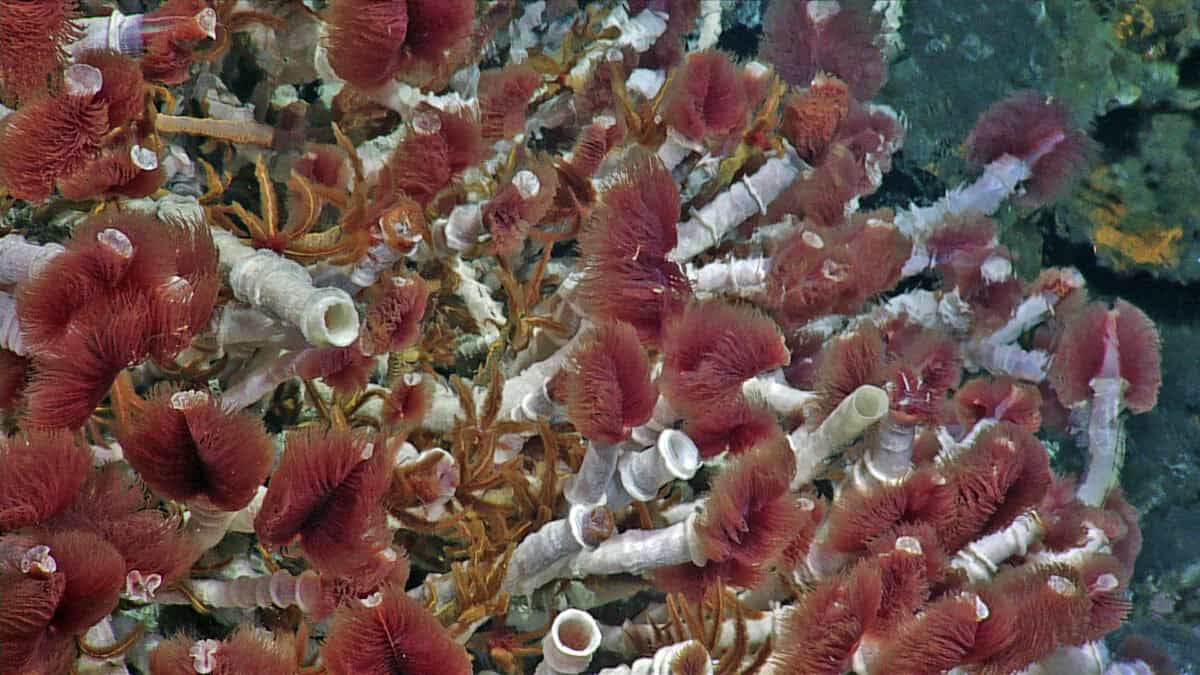
The reproductive strategies of tube-building worms have evolved to ensure successful colonization of suitable habitats across vast oceanic distances. Most species reproduce sexually, with males and females releasing gametes into the water column where fertilization occurs. The resulting larvae typically go through a planktonic phase, drifting with ocean currents for periods ranging from days to weeks before settling and beginning tube construction. This planktonic larval stage is crucial for dispersal, allowing these sedentary adults to colonize new areas. The settlement of larvae is not random—research has shown that the larvae of many species can detect chemical cues that indicate suitable habitat, including signals from established adult colonies, which explains why tube worm constructions often grow in dense aggregations. Once settled, juveniles begin building their tubes immediately, a critical period when they are most vulnerable to predation. Some species exhibit remarkable growth rates, with tubes extending several millimeters per day during initial construction. In established colonies, many species also reproduce asexually through fragmentation or budding, allowing rapid expansion of existing structures and efficient recovery following disturbances.
Threats to Ancient Architects: Human Impacts and Climate Change

Despite surviving for hundreds of millions of years, many tube-building worm species face unprecedented threats from human activities and climate change. Coastal development, dredging, and bottom trawling fishing practices can physically destroy tube worm colonies that took decades to form. Pollution, particularly from agricultural runoff, industrial discharge, and sewage, can impair the worms’ ability to build and maintain their tubes. Ocean acidification presents a particular threat to calcifying species like serpulids, as lower pH levels make it more energetically costly to extract calcium from seawater and form calcium carbonate structures. Rising sea temperatures can disrupt reproductive timing and success, while increasing storm intensity threatens the structural integrity of tube worm reefs in shallow waters. Invasive species have also impacted native tube worm populations in some regions. Conservation efforts increasingly recognize the ecological importance of these ancient builders, with some regions implementing special protections for areas with significant tube worm colonies. Recovery studies offer some hope, demonstrating that with proper protection, damaged colonies can regenerate, though this process often takes years to decades.
Biomimicry and Innovation: Learning from Nature’s Engineers

The remarkable engineering capabilities of tube-building worms have inspired scientists and engineers seeking sustainable solutions to human challenges. The adhesive proteins produced by honeycomb worms have drawn particular attention, as they can bond surfaces underwater—a feat that remains challenging for synthetic adhesives. Researchers are studying these natural glues for potential applications in medicine, including wound closure and surgical adhesives that work in wet environments. The structural design of tube worm colonies has inspired architectural concepts for resilient coastal structures that can dissipate wave energy more effectively than traditional seawalls. Materials scientists are examining how these worms select and arrange particles to create structures with optimal strength-to-weight ratios and resilience to dynamic forces. The calcium carbonate production process in serpulid worms has informed research into carbon sequestration technologies and sustainable building materials. Additionally, the self-healing properties of tube worm constructions offer insights for developing infrastructure that can repair minor damage without human intervention. These biomimetic approaches acknowledge the sophisticated engineering solutions that these brainless creatures have refined over hundreds of millions of years of evolution.
Famous Tube Worm Formations Around the World

Remarkable tube worm constructions can be found in coastal areas worldwide, some achieving protected status for their ecological and geological significance. The Sabellaria alveolata reefs of Mont Saint-Michel Bay in France form one of Europe’s largest biogenic reefs, spanning several square kilometers and reaching heights of nearly two meters. Along the Welsh and English coasts, honeycomb worm reefs create distinctive intertidal features that attract both scientists and tourists. In California’s Monterey Bay, colonies of Schizobranchia insignis form lush underwater “gardens” of white spiral tubes attached to rocky substrates, creating spectacles for divers and underwater photographers. Australia’s Great Barrier Reef hosts vibrant communities of Spirobranchus giganteus, whose multicolored radioles emerging from calcium carbonate tubes embedded in coral create some of the reef’s most photogenic features. In the Mediterranean, dense aggregations of Sabella spallanzanii create undulating “fields” of filter-feeding fans that markedly enhance local biodiversity. While most famous tube worm formations occur in relatively shallow waters accessible to human observation, deep-sea expeditions continue to discover remarkable tube worm constructions in hadal trenches and abyssal plains, suggesting these ancient architects have conquered virtually every marine environment on Earth.
The tube-building worms represent one of nature’s most enduring success stories, showcasing how seemingly simple organisms can engineer complex structures that transform entire ecosystems. Their 500-million-year evolutionary history speaks to the effectiveness of their architectural strategy, allowing these ancient builders to persist through geological upheavals that eliminated countless other lineages. As we continue to explore and understand marine environments, the ecological significance of these underwater castles becomes increasingly apparent, highlighting the need for conservation efforts that recognize and protect these living structures. The architectural innovations of tube-building worms—from their remarkable adhesives to their efficient use of materials and adaptation to dynamic environments—offer valuable lessons for human engineering challenges, particularly as we seek sustainable solutions for a changing world. These ancient marine architects remind us that innovation need not be complex to be effective, and that nature’s time-tested designs often hold solutions to problems we are only beginning to understand.

- This Lizard Can Breathe Underwater - July 22, 2026
- The Wild Horses of North Carolina’s Coast - July 22, 2026
- These Creatures Can Freeze Themselves to Survive - July 22, 2026