

In a remarkable discovery that challenges our understanding of evolution, scientists have identified a living bird species that has remained virtually unchanged for approximately 10 million years. This extraordinary finding provides a rare glimpse into the prehistoric past and presents scientists with a living window into ancient avian biology. The South American hoatzin, sometimes called the “stinkbird” or “canja,” has maintained its distinctive characteristics and genetic makeup since the Miocene epoch, making it one of the most evolutionarily stable bird species ever documented. This article explores this fascinating discovery, its implications for evolutionary biology, and what it tells us about the forces that drive—or in this case, don’t drive—evolutionary change.
The Remarkable Discovery
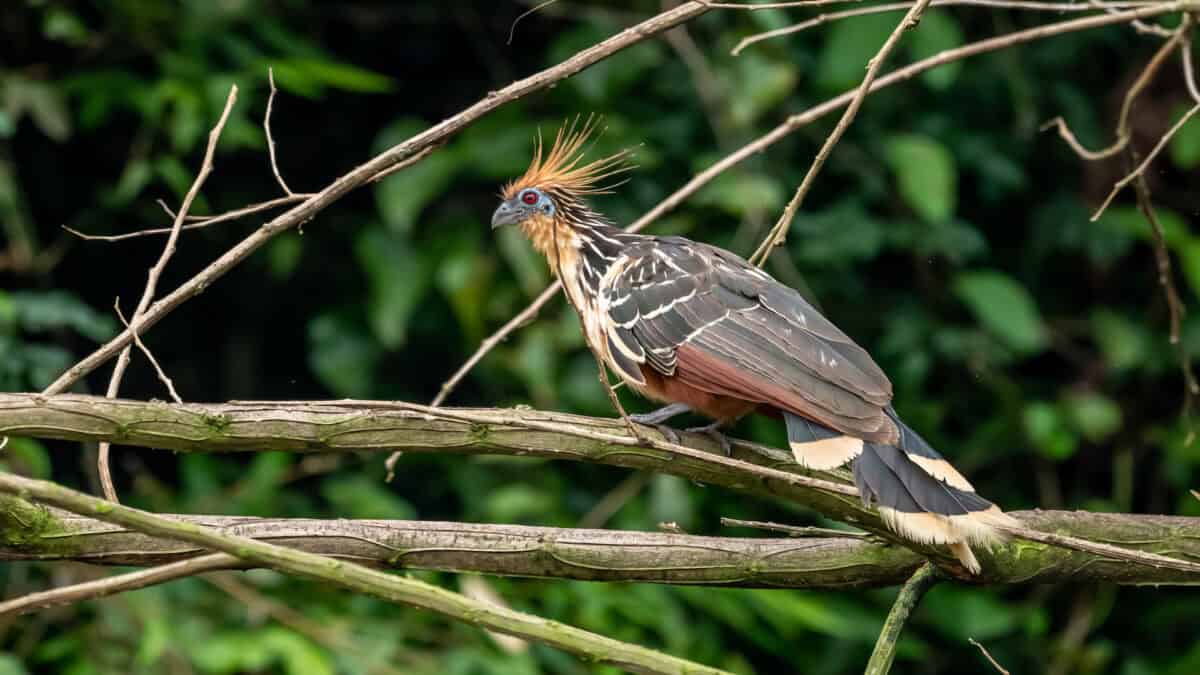
The identification of the hoatzin (Opisthocomus hoazin) as an evolutionary time capsule came after extensive genetic analysis and fossil comparisons conducted by an international team of researchers. By examining ancient fossils found in northwestern Argentina dating back to the late Miocene epoch (approximately 10 million years ago) and comparing them with modern hoatzin specimens, scientists were stunned to find virtually no significant anatomical differences.
This level of morphological stasis—remaining unchanged over millions of years—is extremely rare in vertebrate species. The study, published in the prestigious journal Nature Ecology & Evolution, utilized advanced DNA sequencing and comparative anatomy techniques to confirm that the modern hoatzin is essentially identical to its ancient ancestors, making it a living fossil in the truest sense.
Meet the Hoatzin: The Prehistoric Bird

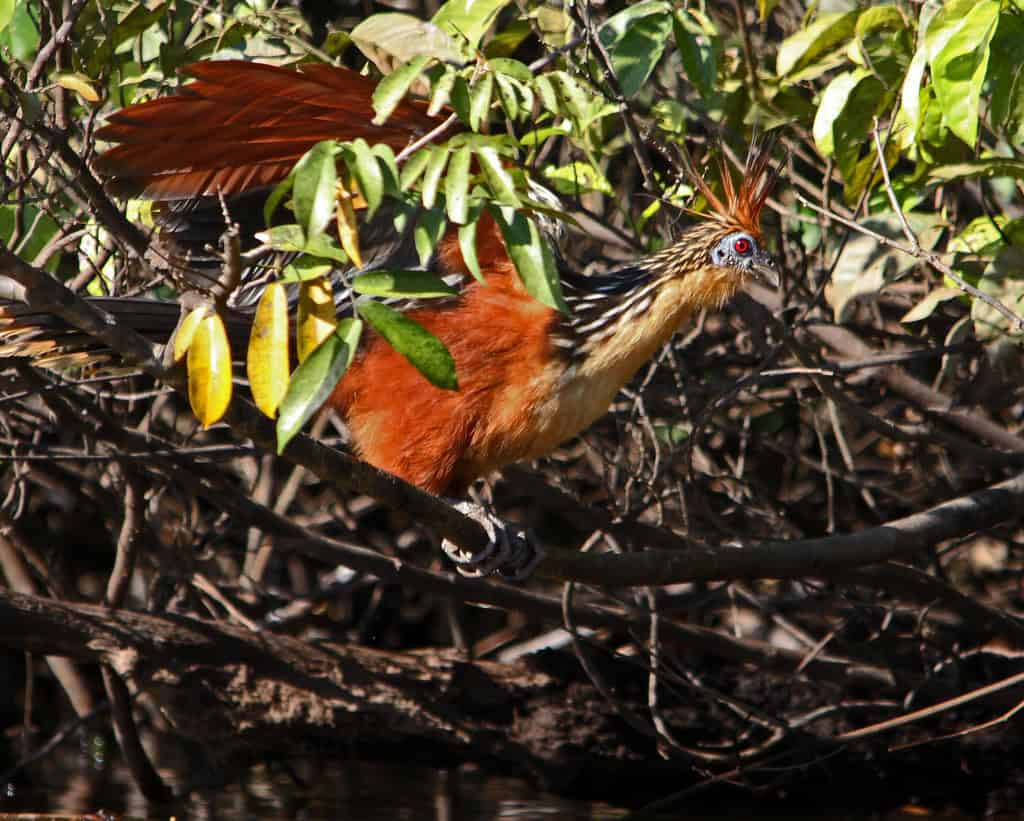
The hoatzin is a peculiar bird native to the Amazon and Orinoco basins of South America. Adults typically measure about 25 inches (65 cm) in length and weigh around 1.8 pounds (800 grams). Their distinctive features include a spiky, rust-colored crest on their heads, bright blue facial skin, and maroon eyes. Perhaps most famously, hoatzins are known for their unusual digestive system—they’re the only birds with a foregut fermentation process similar to cows, earning them the nickname “flying cow.” This unique adaptation allows them to consume leaves that would be toxic or indigestible to most other birds. The hoatzin’s most prehistoric feature, however, is found in their young: hoatzin chicks possess claws on their wings that they use to climb trees, a trait reminiscent of Archaeopteryx, the famous transitional fossil between dinosaurs and birds.
The Evolutionary Standstill

Martinshields, CC BY-SA 4.0 https://creativecommons.org/licenses/by-sa/4.0, via Wikimedia Commons.
Evolutionary biology typically shows that species change over time in response to environmental pressures, competition, and random genetic mutations. However, the hoatzin appears to defy this pattern. For 10 million years—a period during which countless other species have evolved significantly or gone extinct—the hoatzin has remained remarkably stable. This phenomenon, known as evolutionary stasis, occurs when a species reaches an adaptive peak so well-suited to its ecological niche that there’s little selective pressure for change.
The hoatzin found its perfect niche in the swampy, forested regions of South America, where its leaf-eating diet and unique digestive system gave it access to abundant food resources with minimal competition from other birds. Additionally, researchers speculate that the bird’s unpleasant taste and odor (hence the name “stinkbird”) has provided effective protection against predators for millions of years, further reducing evolutionary pressure.
Evidence from Fossil Records
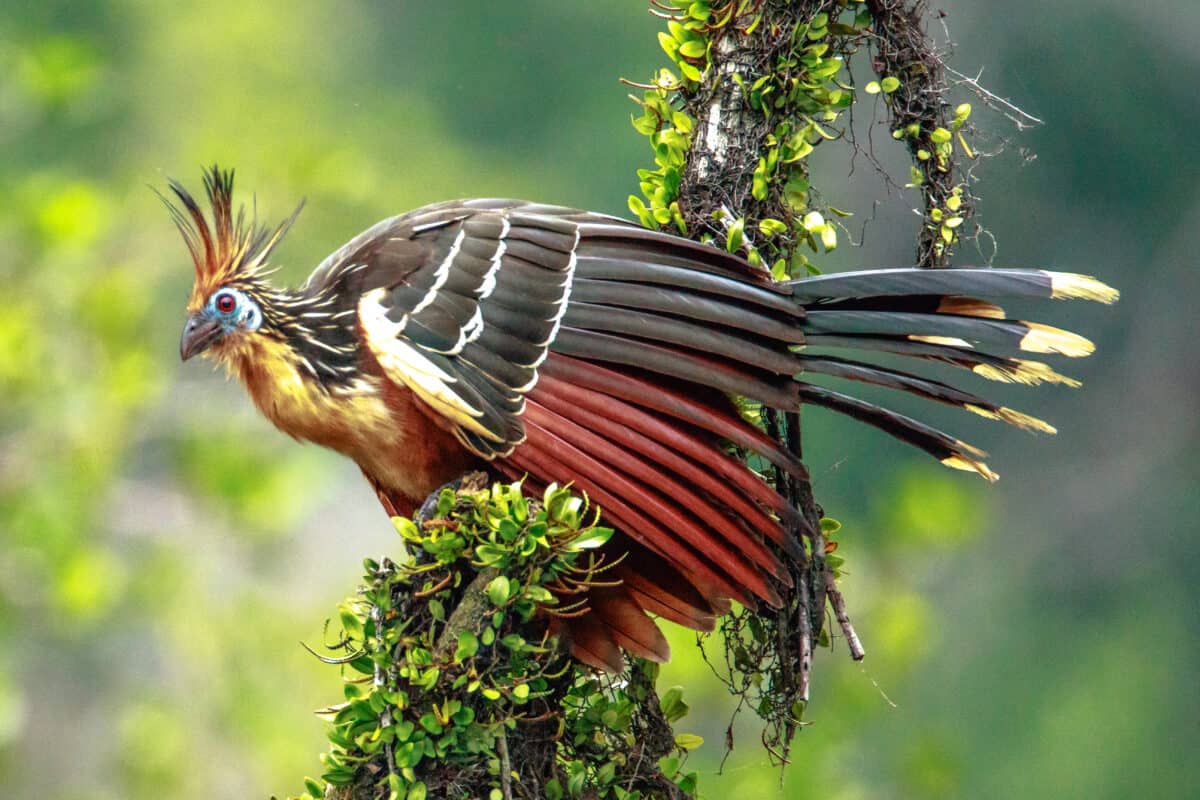
The key to confirming the hoatzin’s evolutionary stasis came from remarkably well-preserved fossils discovered in Argentina’s Salta Province. These fossils, dating to approximately 9-10 million years ago, include partial skeletons with intact skull structures, wing bones, and even impressions of feathers. When compared with modern specimens, researchers found that 13 critical anatomical measurements—including the unique keel structure of the sternum, wing proportions, and skull morphology—showed differences of less than 4% between the ancient and modern birds. For context, most bird species show variations of 10-40% in these same measurements over similar time spans. Additionally, molecular clock analysis of the hoatzin’s genome revealed extraordinarily low rates of genetic change compared to other avian lineages, confirming at the genetic level what the fossils suggested morphologically: this bird has been frozen in evolutionary time.
The Mysterious Origins
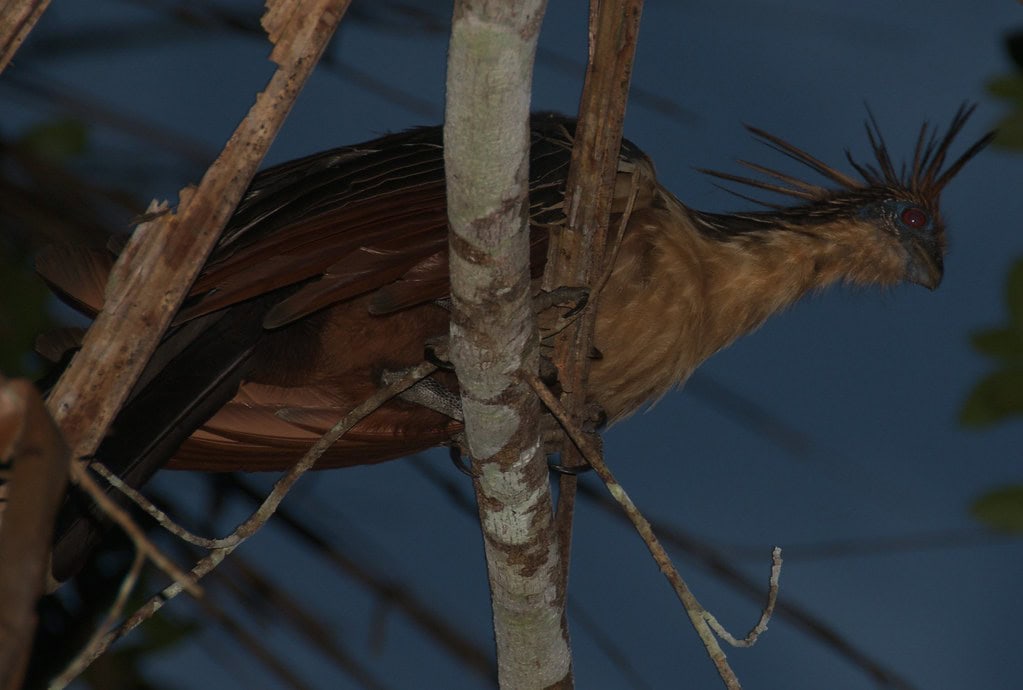
Despite extensive research, the evolutionary origins of the hoatzin remain one of ornithology’s greatest mysteries. The bird possesses such a unique combination of characteristics that scientists have struggled to place it precisely on the avian family tree. At various times, it has been classified as related to cuckoos, gallinaceous birds (like chickens), and certain waterfowl. Modern genomic studies suggest the hoatzin represents a very early branch of the avian evolutionary tree that split off around 64 million years ago, shortly after the dinosaur extinction event.
This early divergence—followed by 10 million years of documented stasis—makes the hoatzin not just a living fossil but potentially one of the most ancient bird lineages still in existence. Its unusual characteristics, like wing claws in juveniles and its unique digestive system, may represent ancestral traits that have been lost in most modern birds rather than specialized adaptations that evolved recently.
The Hoatzin’s Unique Adaptations
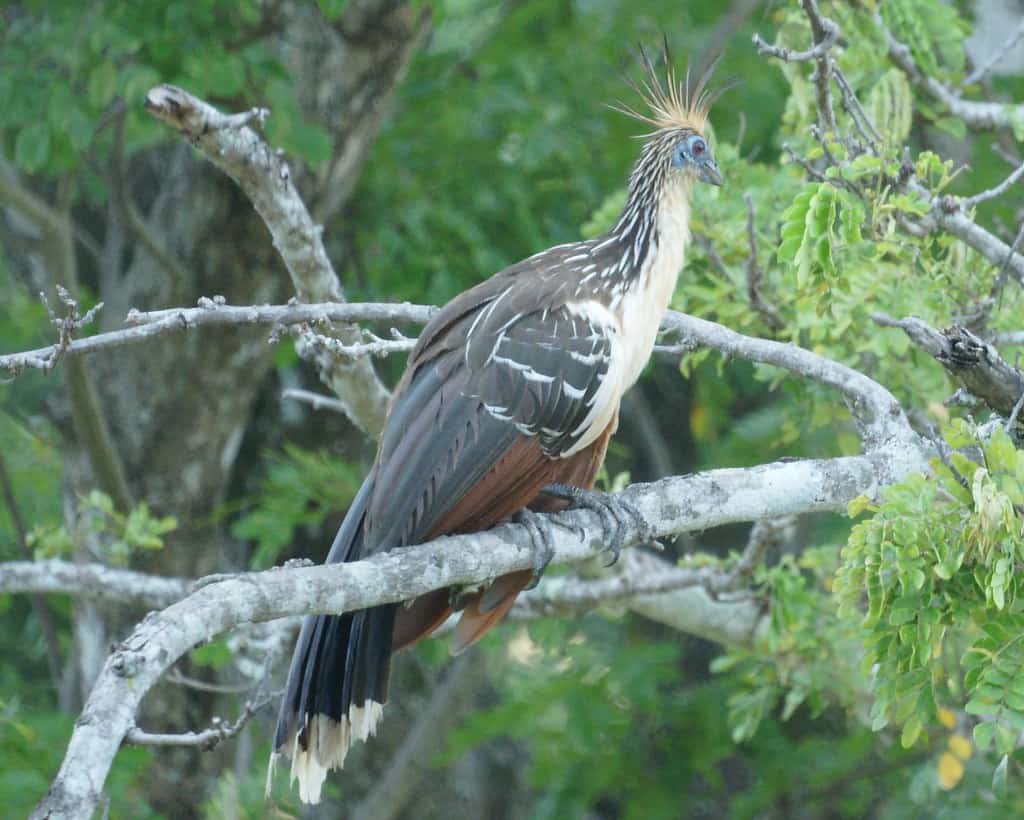
The hoatzin possesses several adaptations that make it truly unique among modern birds. Most notably, it has evolved an enlarged crop (a muscular pouch in the throat) equipped with specialized bacteria that ferment vegetation, similar to a cow’s rumen. This foregut fermentation system—found nowhere else in the avian world—allows hoatzins to detoxify and digest the otherwise poisonous leaves that form the bulk of their diet.
The fermentation process produces a distinctive odor reminiscent of manure, earning the bird its “stinkbird” nickname. Another remarkable feature is the presence of functional claws on the wings of juvenile hoatzins. When threatened, chicks can drop from their nests into the water below, then use these claws to climb back up to safety—a behavior that has remained unchanged for millions of years. These adaptations appear to have been so successful that natural selection has favored their preservation rather than modification over evolutionary time.
Implications for Evolutionary Theory
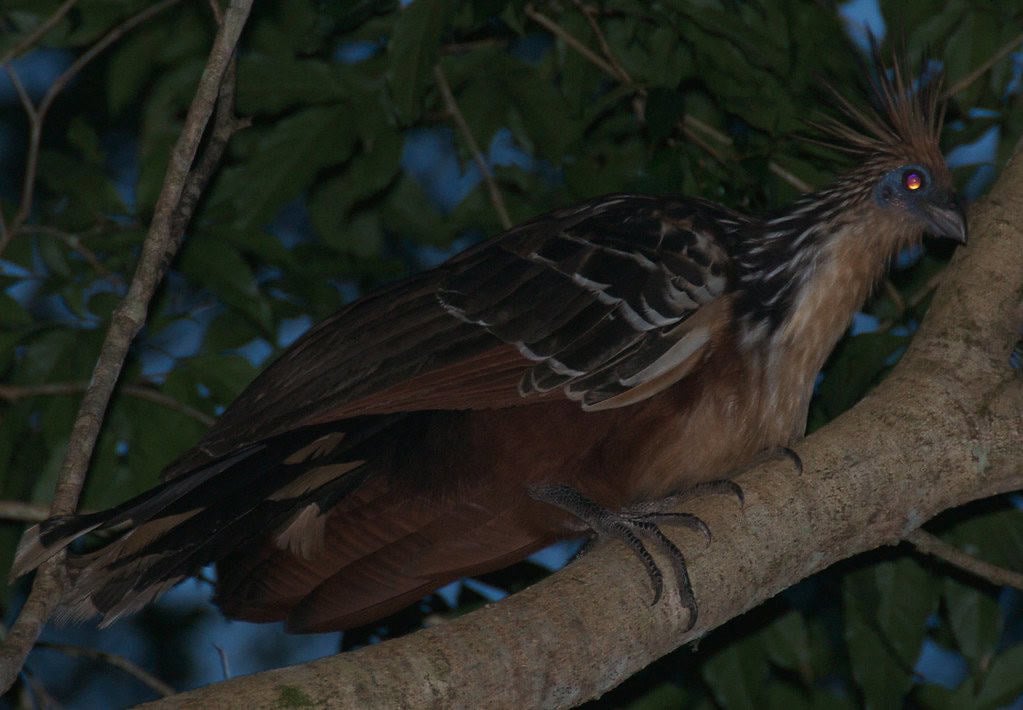
The discovery of a bird virtually unchanged for 10 million years has significant implications for evolutionary theory. While Darwin’s concept of natural selection emphasizes change over time, the hoatzin demonstrates that evolutionary stasis can be just as important a phenomenon. This finding supports the theory of punctuated equilibrium proposed by paleontologists Stephen Jay Gould and Niles Eldredge, which suggests that most species show little change for most of their existence, with evolutionary changes occurring relatively rapidly during brief periods of environmental change or other selective pressures. The hoatzin appears to have experienced an exceptionally long equilibrium phase with no significant “punctuations.” This case study challenges scientists to better understand the conditions that promote evolutionary stability versus change, and it demonstrates that evolution doesn’t always follow a steady, gradual pace as was once widely believed.
Habitat and Ecological Stability
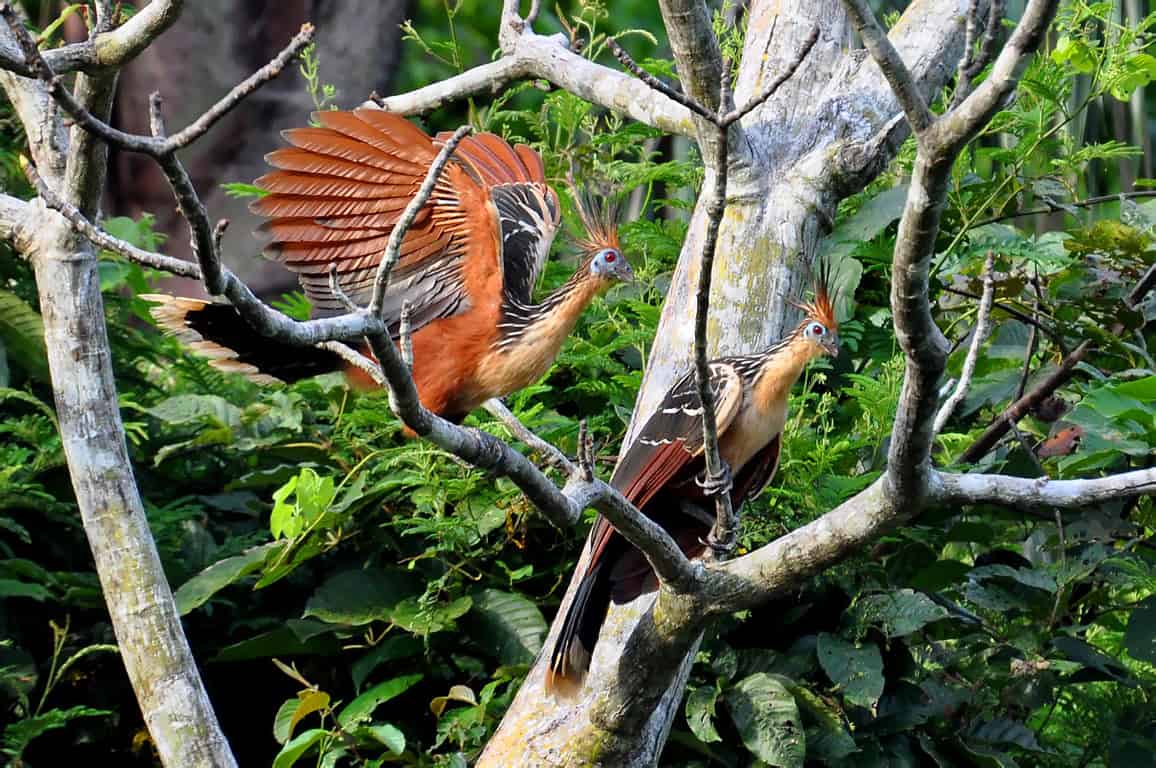
One key factor in the hoatzin’s evolutionary stasis appears to be the remarkable stability of its preferred habitat over geological time. The bird inhabits swampy, forested areas along slow-moving rivers and oxbow lakes in the Amazon basin—ecosystems that, despite some climatic fluctuations, have remained relatively stable in structure and plant composition for millions of years. The hoatzin’s specialized diet of toxic leaves from plants like mangroves, arums, and certain trees found in these environments means it faces little competition for its food resources.
Paleobotanical evidence suggests that many of the plant species the hoatzin feeds on today have themselves remained relatively unchanged over the same time period, creating a stable ecological niche. This habitat stability, combined with the bird’s unique adaptations, has created what scientists call an “evolutionary sanctuary”—conditions so favorable and consistent that there has been little selective pressure for change.
The “Living Fossil” Phenomenon
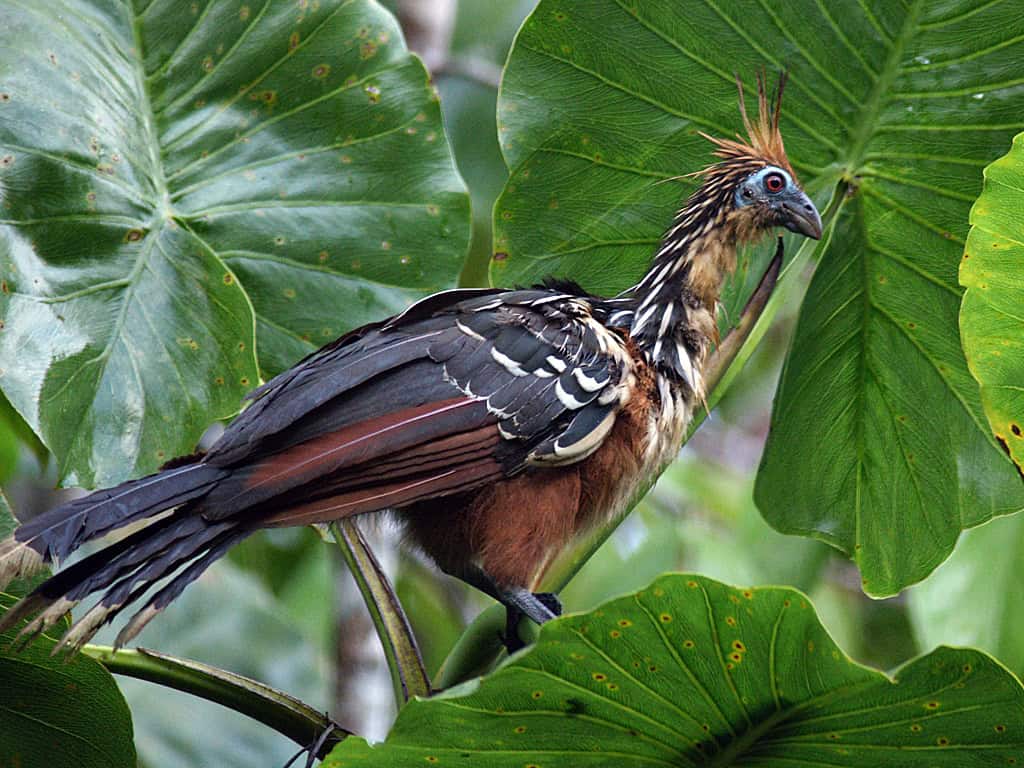
The hoatzin joins a select group of organisms known as “living fossils”—species that have remained largely unchanged for millions of years and closely resemble their ancient ancestors. Other notable examples include the horseshoe crab (unchanged for 450 million years), the coelacanth fish (thought extinct until rediscovered in 1938), and the ginkgo tree (unchanged for over 200 million years). However, the hoatzin is particularly significant because birds typically evolve more rapidly than many other vertebrates due to their diverse habitats and specialized niches.
While most bird lineages have undergone substantial evolution over the past 10 million years—with many modern species only arising within the last 2-3 million years—the hoatzin stands as a remarkable exception. This evolutionary conservatism makes it an invaluable subject for understanding the factors that drive or inhibit evolutionary change in vertebrates.
Conservation Significance

The discovery of the hoatzin’s ancient lineage and evolutionary stability significantly elevates its conservation importance. Currently classified as “Least Concern” on the IUCN Red List, the hoatzin nonetheless faces growing threats from deforestation and habitat destruction throughout its range in the Amazon basin. Given its status as a living window into the avian past, conservation biologists argue that preserving the hoatzin and its habitat should be prioritized. The bird represents not just a single species but an entire evolutionary branch that has survived unchanged since the Miocene epoch.
Furthermore, the hoatzin’s unique digestive system hosts microbial communities that may be of scientific and potentially medical value, particularly for understanding cellulose digestion and plant toxin neutralization. Conservation efforts have recently expanded in several South American countries to create protected areas specifically designed to preserve hoatzin habitat, recognizing the bird’s special evolutionary significance.
Research Challenges and Future Studies
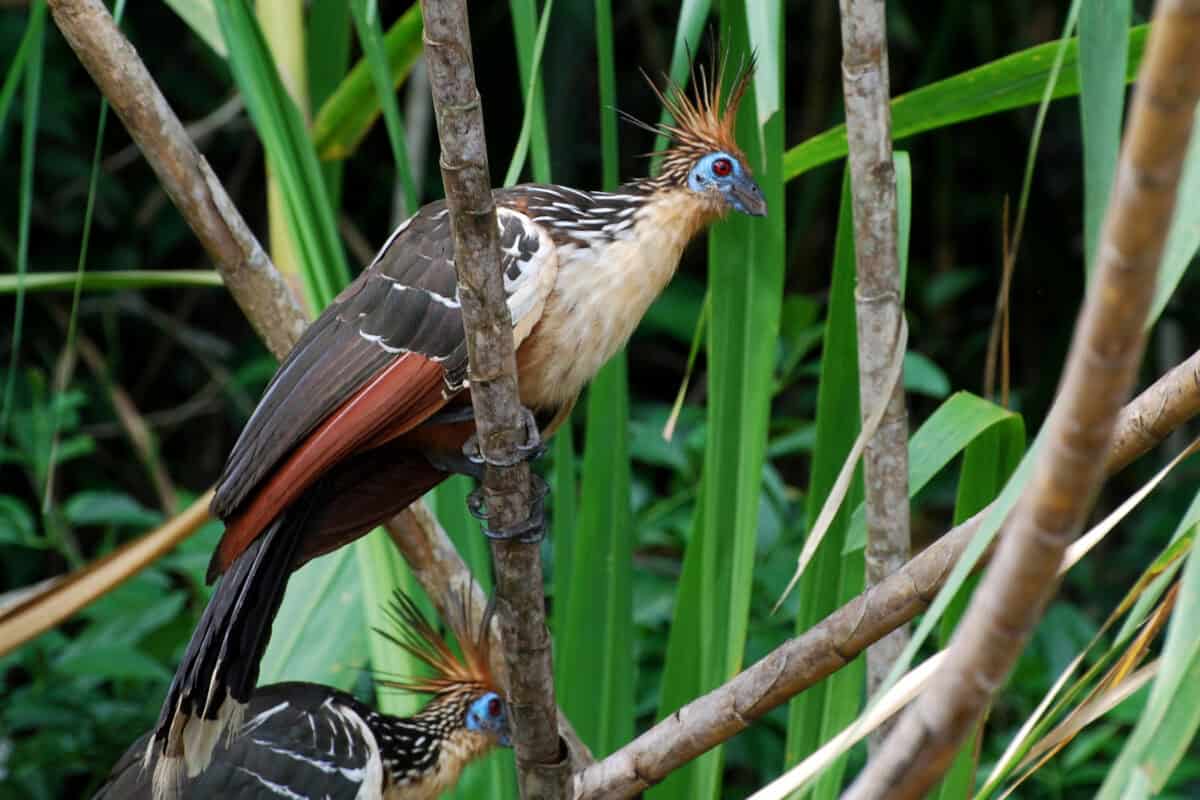
Studying the hoatzin presents several unique challenges for scientists. The birds inhabit remote, often difficult-to-access regions of South American rainforests, and their tendency to remain in dense vegetation makes field observation challenging. Additionally, their unusual digestive system makes them difficult to maintain in captivity, limiting certain types of research. Despite these challenges, several ongoing research initiatives are focusing on the hoatzin.
These include more detailed genomic studies to pinpoint exactly how and why the bird’s DNA has remained so stable over time, investigations into the microbiome of its unique digestive system, and more extensive fossil searches to potentially find even older hoatzin ancestors. One particularly promising area is using the hoatzin as a model for understanding evolutionary rate change—why some species evolve rapidly while others remain static for millions of years. This research may eventually help scientists develop more accurate models of how evolution works across different animal groups and environments.
Conclusion: Time Traveler from the Miocene
The discovery that the hoatzin has remained virtually unchanged for 10 million years offers a remarkable window into our planet’s biological past. This extraordinary bird, with its unique adaptations and prehistoric features, represents one of nature’s most successful evolutionary experiments—so perfectly adapted to its niche that change has been unnecessary for millions of years.
The hoatzin challenges our understanding of evolution, demonstrating that sometimes remaining the same is as evolutionarily successful as changing. As research continues, the hoatzin will likely provide even more insights into the complex factors that drive—or inhibit—evolutionary change. In a rapidly changing world where countless species are adapting or going extinct due to environmental pressures, the hoatzin stands as a living reminder of Earth’s ancient past—a time traveler from the Miocene that continues to thrive using a biological blueprint 10 million years in the making.

- The Perfect Pet for Each Zodiac Sign - July 7, 2026
- The Wild Animal That Embodies Your Zodiac Sign’s Spirit - July 6, 2026
- 7 Steps to Planting Admirably Beautiful Bluebonnets - July 6, 2026