

Mexico’s extraordinary biodiversity is under threat. Home to approximately 10% of all species on our planet, this North American nation boasts diverse ecosystems ranging from arid deserts to lush rainforests. However, habitat destruction, climate change, illegal trafficking, and human encroachment have pushed many of Mexico’s unique animals to the brink of extinction. This article explores the most critically endangered Mexican wildlife species that urgently require conservation efforts and highlights what’s being done to save them – and what more we can do before it’s too late.
The Vaquita: World’s Most Endangered Marine Mammal

The vaquita (Phocoena sinus) is arguably Mexico’s most critically endangered species and the most endangered marine mammal on Earth. These small porpoises, found exclusively in the northern Gulf of California, have faced catastrophic population decline. From approximately 600 individuals in 1997, their numbers have plummeted to fewer than 10 today. The primary cause of their decline is entanglement in illegal gillnets set for the totoaba fish, whose swim bladder fetches enormous prices in black markets. Despite the Mexican government’s efforts to ban gillnet fishing in vaquita habitat, illegal fishing continues. Conservation groups warn that without immediate and enforced protection, the vaquita could become extinct within a few years, making it the second cetacean species lost to human activities in the 21st century after the Yangtze River dolphin.
Mexican Gray Wolf: Fighting for Comeback
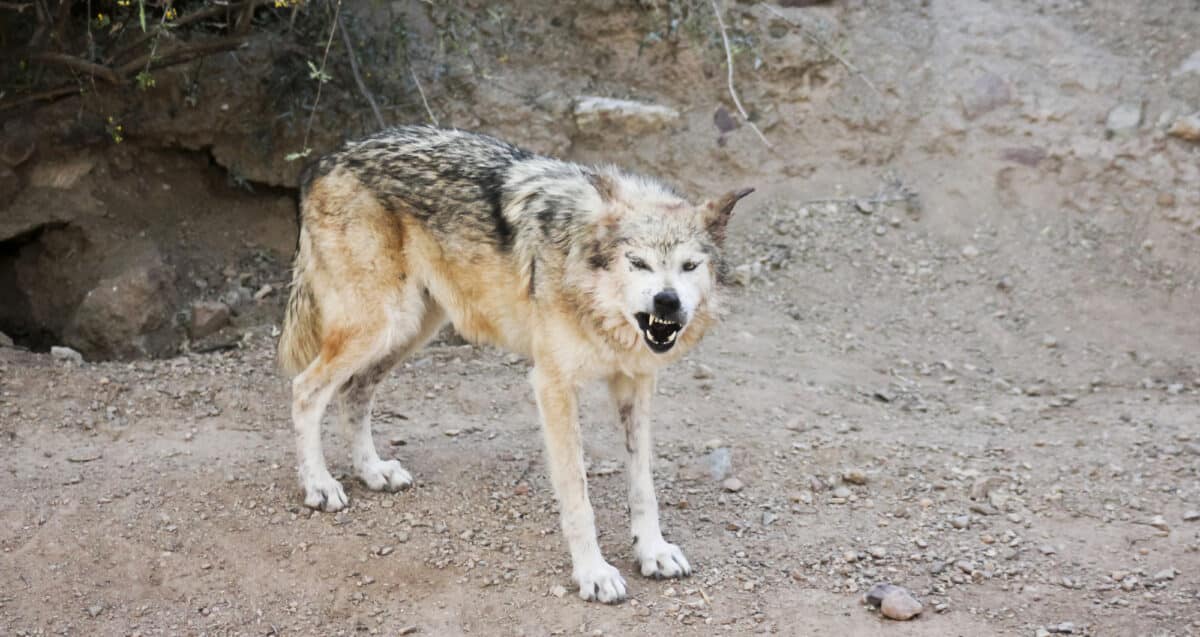
The Mexican gray wolf (Canis lupus baileyi), or “lobo,” is the most genetically distinct and smallest subspecies of gray wolf in North America. Once ranging throughout the southwestern United States and central Mexico, it was nearly exterminated by the 1970s due to government-sponsored predator control programs. In 1976, it was listed as endangered, and a captive breeding program began with just seven wolves. Reintroduction efforts started in 1998, but recovery has been challenging. Today, approximately 186 Mexican wolves live in the wild in the United States, with a small reintroduced population in Mexico. Threats continue to include illegal killings, limited genetic diversity, and human-wildlife conflict. Recovery plans aim to establish multiple populations totaling at least 320 wolves, but political opposition from ranching interests remains a significant obstacle to achieving sustainable populations across their historical range.
Ajolote: Mexico’s Remarkable Salamander

The axolotl or ajolote (Ambystoma mexicanum) is perhaps Mexico’s most recognizable endangered species. This neotenic salamander, which retains its larval features throughout its life, is native solely to Lake Xochimilco and Lake Chalco in the Valley of Mexico. Once revered by the Aztecs as the embodiment of the god Xolotl, the axolotl now faces extinction in the wild due to urbanization of Mexico City, water pollution, and introduced predatory fish species. Scientists estimate that fewer than 1,000 axolotls remain in their natural habitat, with population densities dropping from 6,000 per square kilometer in the 1980s to fewer than 35 per square kilometer today. While axolotls thrive in captivity worldwide due to their remarkable regenerative abilities and importance in scientific research, wild populations continue to decline. Conservation efforts include habitat restoration in Xochimilco’s canals and captive breeding programs designed to maintain genetic diversity.
Monarch Butterfly: A Migration Under Threat

The monarch butterfly (Danaus plexippus) undertakes one of nature’s most spectacular migrations, traveling up to 3,000 miles from Canada and the United States to overwinter in Mexico’s oyamel fir forests of Michoacán and the State of Mexico. This natural phenomenon, recognized as a UNESCO World Heritage Site, is increasingly threatened. Monarch population overwintering in Mexico has declined by approximately 80% since the mid-1990s due to multiple factors: loss of milkweed (the only plant monarch caterpillars can eat) due to herbicide use in North America, illegal logging of their overwintering forests in Mexico, and climate change disrupting migration patterns. While not yet officially endangered, the monarch was denied protection under the U.S. Endangered Species Act in 2020 despite qualifying scientifically. In Mexico, conservation efforts focus on protecting the Monarch Butterfly Biosphere Reserve from illegal logging, but climate change presents an existential threat as warming temperatures may make the reserve unsuitable for butterflies within decades.
Jaguar: Mexico’s Largest Feline Fighting for Territory

The jaguar (Panthera onca), the largest cat in the Americas and the third-largest in the world, once roamed throughout Mexico. Today, fewer than 4,000 jaguars remain in the country, with populations fragmented across the Yucatán Peninsula, the Sierra Madre Occidental, and other isolated forests. Habitat loss due to agricultural expansion, ranch development, and infrastructure projects represents the primary threat to jaguar survival. Additionally, retaliatory killings when jaguars prey on livestock and poaching for their body parts continue to reduce numbers. Since 2005, the Mexican government has implemented the National Jaguar Conservation Strategy, establishing protected corridors to connect isolated populations. One success story is Mexico’s northern Sonoran region, where jaguars have naturally recolonized parts of their former range, occasionally crossing into the southwestern United States. Conservation organizations are working with rural communities to implement predator-friendly ranching practices and develop ecotourism as an economic alternative that values living jaguars.
Mexican Prairie Dog: Ecosystem Engineers in Peril

The Mexican prairie dog (Cynomys mexicanus) is an endemic species found only in north-central Mexico across parts of Coahuila, Nuevo León, and San Luis Potosí. These highly social rodents play a crucial role as ecosystem engineers, creating burrow systems that aerate soil, prevent erosion, and provide habitat for many other species, including the endangered burrowing owl. Mexican prairie dogs have lost more than 80% of their historical range, primarily due to agricultural conversion, urban development, and poisoning campaigns. Currently listed as endangered, their population continues to decline despite being legally protected in Mexico since 1994. Recent conservation efforts include the establishment of the Llano de La Soledad grassland reserve in Nuevo León and programs compensating landowners who protect prairie dog colonies on their property. Scientists emphasize that saving this species is essential not just for biodiversity but for maintaining healthy grassland ecosystems that benefit sustainable ranching and agriculture.
Kemp’s Ridley Sea Turtle: Fighting Back from the Edge

The Kemp’s ridley sea turtle (Lepidochelys kempii) is the world’s most endangered sea turtle species and conducts one of the most remarkable nesting phenomena in nature. Nearly the entire world population nests on a single beach near Rancho Nuevo, Tamaulipas, in what Mexicans call “arribada” (arrival), where thousands of turtles come ashore simultaneously to lay eggs. In the 1940s, as many as 40,000 turtles nested in a single day. By the 1980s, fewer than 300 females nested annually due to egg harvesting, fishing bycatch, and coastal development. A binational conservation program between Mexico and the United States has helped the population slowly recover to approximately 7,000-9,000 nesting females by 2017. However, the 2010 Deepwater Horizon oil spill in the Gulf of Mexico dealt a serious setback to the population. Current protection efforts include strict beach monitoring during nesting season, use of turtle excluder devices in fishing nets, and hatchling release programs. Climate change presents a new threat, as warming sand temperatures produce predominantly female hatchlings, potentially disrupting future reproduction.
Mexican Spotted Owl: Guardian of Ancient Forests

The Mexican spotted owl (Strix occidentalis lucida) is the southernmost subspecies of spotted owl, inhabiting the canyon forests of the Sierra Madre Occidental and Oriental mountain ranges. Listed as threatened in both the United States and Mexico, fewer than 2,000 breeding pairs are estimated to remain. The primary threats to their survival include habitat loss from logging, especially of the old-growth forests they prefer for nesting, forest fires exacerbated by climate change, and competition with invasive species. Unlike other spotted owl subspecies that primarily inhabit dense forests, Mexican spotted owls have adapted to the canyon environments of Mexico’s arid regions, making them uniquely important for conservation. Research indicates they require protected areas of at least 600 hectares surrounding each nesting site. Conservation efforts focus on sustainable forestry practices that maintain the multi-layered canopy these owls require and fire management strategies that prevent catastrophic blazes while allowing for natural forest regeneration.
Volcano Rabbit: Tiny Mountain Dweller

The volcano rabbit (Romerolagus diazi), or teporingo, is one of the world’s smallest rabbits and among its most endangered. Endemic to the high-elevation pine forests on the slopes of four volcanoes in the Trans-Mexican Volcanic Belt near Mexico City, these rabbits live at altitudes between 2,800 and 4,250 meters. With a global population estimated at fewer than 7,000 individuals, they face severe habitat fragmentation due to agriculture, livestock grazing, human settlements, and forest fires. Their specialized habitat requirements make them particularly vulnerable to climate change, as warming temperatures force them to move higher up mountain slopes with increasingly limited space. Conservation efforts include the establishment of protected areas within the Corredor Biológico Chichinautzin and parts of Izta-Popo National Park. Scientists are working with local communities to implement sustainable farming practices compatible with rabbit habitat and monitoring population trends through non-invasive methods like camera trapping and scat collection for DNA analysis.
Peninsular Pronghorn: Racing Against Extinction

The peninsular pronghorn (Antilocapra americana peninsularis), known locally as berrendo, is a critically endangered subspecies of the American pronghorn found only in Baja California Sur. Once abundant across the peninsula, this distinctive ungulate – capable of sustained speeds up to 60 mph, making it North America’s fastest land mammal – now numbers fewer than 500 individuals. Threats include habitat fragmentation from highway development, competition with livestock for forage and water, predation on fawns by coyotes and feral dogs, and periodic droughts intensified by climate change. The Mexican government established the Valle de los Cirios Protected Area partly to conserve pronghorn habitat, and a captive breeding facility at La Choya has successfully increased numbers from a low of approximately 170 animals in the 1990s. Conservation strategies include working with local ranchers to develop wildlife-friendly fencing that allows pronghorns to move freely while containing cattle, habitat restoration projects restoring native vegetation, and the creation of artificial water sources to help animals survive increasingly severe drought periods.
Mexican Long-nosed Bat: Vital Pollinator

The Mexican long-nosed bat (Leptonycteris nivalis) plays a crucial ecological role as the primary pollinator of agave plants, including those used to produce tequila and mezcal – making it economically as well as ecologically significant. These migratory bats travel from central Mexico to the southwestern United States each year following the blooming of agave and cactus species. Listed as endangered, their population has declined by more than 50% over the past decade due to multiple threats: destruction of roosting caves, disturbance of maternity colonies, and the practice of harvesting agave before it blooms to increase sugar content for alcohol production, which eliminates the bats’ food source. Conservation efforts include the “Bat Friendly” tequila certification program, which encourages producers to allow at least 5% of their agave plants to flower, the protection of key cave sites along migration routes, and educational programs highlighting the economic importance of bat pollination services. Scientists estimate that without these bats, wild agave populations would decline by up to 80%, threatening the genetic diversity needed for the tequila industry’s long-term sustainability.
Scarlet Macaw: Tropical Icon

The scarlet macaw (Ara macao), with its brilliant red, yellow and blue plumage, once ranged throughout Mexico’s tropical forests from Tamaulipas to Chiapas. Today, wild populations are reduced to small, isolated groups in the Lacandon jungle of Chiapas and parts of Oaxaca, with their total Mexican population estimated at fewer than 400 individuals. Habitat destruction through deforestation for agriculture and cattle ranching represents their primary threat, along with capture for the illegal pet trade where a single bird can fetch thousands of dollars. These intelligent parrots require large, mature trees for nesting and typically produce only one or two chicks per year, making population recovery slow. Conservation initiatives include a successful reintroduction program in Los Tuxtlas Biosphere Reserve where captive-bred macaws have established a new population, nest box provision in areas where suitable nesting trees are scarce, and community-based conservation that trains former poachers as eco-guides, providing economic incentives to protect rather than capture the birds. The preservation of mature tropical forest corridors remains essential for enabling genetic exchange between isolated populations.
What We Can Do: Conservation Action Plan

Saving Mexico’s endangered wildlife requires coordinated action from government agencies, conservation organizations, local communities, and individuals worldwide. Strengthening and enforcing wildlife protection laws is crucial, particularly targeting illegal trafficking networks that continue to deplete vulnerable populations. Supporting sustainable development programs that provide economic alternatives to environmentally destructive activities offers a practical pathway for communities living near critical habitats. For international visitors and consumers, making informed choices about products and tourism experiences that impact Mexican ecosystems can make a difference – from choosing certified wildlife-friendly tequila to avoiding souvenirs made from endangered species. Finally, addressing climate change through both global emissions reductions and local adaptation strategies is essential for long-term species survival, as many of Mexico’s endangered species face habitat shifts that may exceed their ability to adapt. The fate of Mexico’s extraordinary biodiversity depends on recognizing that these species represent not just national but global treasures worthy of immediate and sustained protection efforts before they disappear forever.

- 10 Animals That Cheat Death in the Most Unexpected Ways - July 19, 2026
- The Shrimp That Punches Like a Bullet - July 19, 2026
- This Tiny Mammal Can Slow Its Heartbeat to One Beat Per Minute - July 19, 2026