


Worried about unexpected vet bills?
Pet insurance can cover thousands in unexpected vet costs. Get a free quote from Lemonade in under 2 minutes.
Get My Free Quote →Sponsored · Opens Lemonade.com
The bond between humans and their animal companions has existed for millennia, with domesticated animals becoming integral parts of our families and homes. While we may believe we know our pets thoroughly, these remarkable creatures continue to surprise not only their owners but also scientific researchers who study them. From unexpected cognitive abilities to extraordinary sensory perception, the world of companion animals is filled with astonishing discoveries that challenge our understanding of animal intelligence and behavior. This article explores fifteen remarkable instances where pets have stunned the scientific community, revealing capabilities and traits that expand our knowledge of the animals that share our lives.
Dogs Detecting Cancer Before Medical Diagnosis

One of the most remarkable pet abilities that has stunned scientists is dogs’ capacity to detect cancer in humans before medical diagnosis. Research conducted at the University of Pennsylvania found that specially trained dogs could identify the presence of ovarian cancer in blood samples with an accuracy rate of 97%. In a particularly notable case from 2013, a Labrador named Daisy was credited with detecting breast cancer in her owner by repeatedly pawing at a specific area of the woman’s chest, prompting her to seek medical attention. Subsequent studies at institutions including the Medical Detection Dogs charity in the UK have confirmed that dogs can detect volatile organic compounds released by cancer cells through their extraordinary olfactory system, which contains up to 300 million scent receptors compared to humans’ mere 5-6 million. This natural ability has led to the development of formal medical detection dog programs worldwide, demonstrating how pets’ innate capabilities can potentially transform early cancer detection protocols.
Cats’ Complex Vocal Communication with Humans

Scientists have been astonished to discover that domestic cats have developed specific vocalizations exclusively for communicating with humans. A 2019 study from Sweden’s Lund University revealed that cats produce unique “solicitation purrs” that contain embedded high-frequency sounds similar to human infant cries, making them particularly difficult for humans to ignore. Researchers documented that cats intentionally modify their normal purring to incorporate these attention-grabbing frequencies when attempting to solicit food or care from their owners. Even more surprising, a 2020 study published in Animal Cognition found that cats recognize their names and can distinguish them from other similar-sounding words, demonstrating sophisticated auditory discrimination. Further research has shown that domestic cats maintain distinct vocalization patterns with different household members, effectively creating personalized “languages” with their human companions. These findings have revolutionized scientific understanding of feline-human communication, suggesting much more complex social cognition than previously attributed to cats.
Parrots Demonstrating Advanced Mathematical Skills
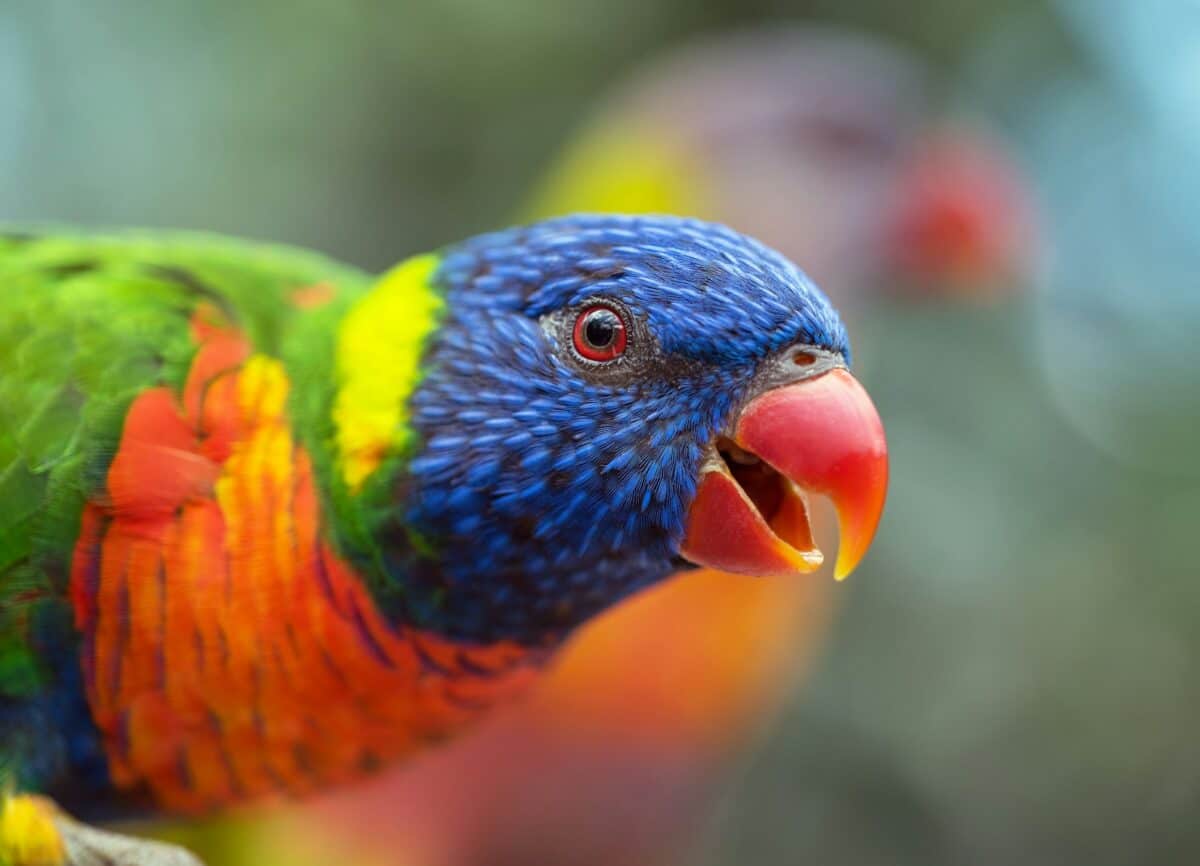
Pet parrots have shocked researchers by exhibiting mathematical abilities once thought exclusive to primates and humans. The groundbreaking case of Alex, an African Grey parrot studied by Dr. Irene Pepperberg at Harvard University, demonstrated that parrots could understand numerical concepts, including zero—a sophisticated abstract concept. Alex could identify quantities up to six, understand the concept of “none” or zero, and even perform basic addition. In more recent studies, researchers at the University of York documented pet parrots spontaneously sorting objects by number without training, suggesting an innate numerical capability. What particularly surprised scientists was that these abilities emerged in captive pet parrots who had received no specific training in mathematical concepts, indicating that these cognitive skills may be widespread in psittacines. The discovery challenged long-held beliefs about the uniqueness of primate numerical cognition and opened new avenues for exploring the evolution of mathematical thinking across species.
Goldfish Recognizing Human Faces
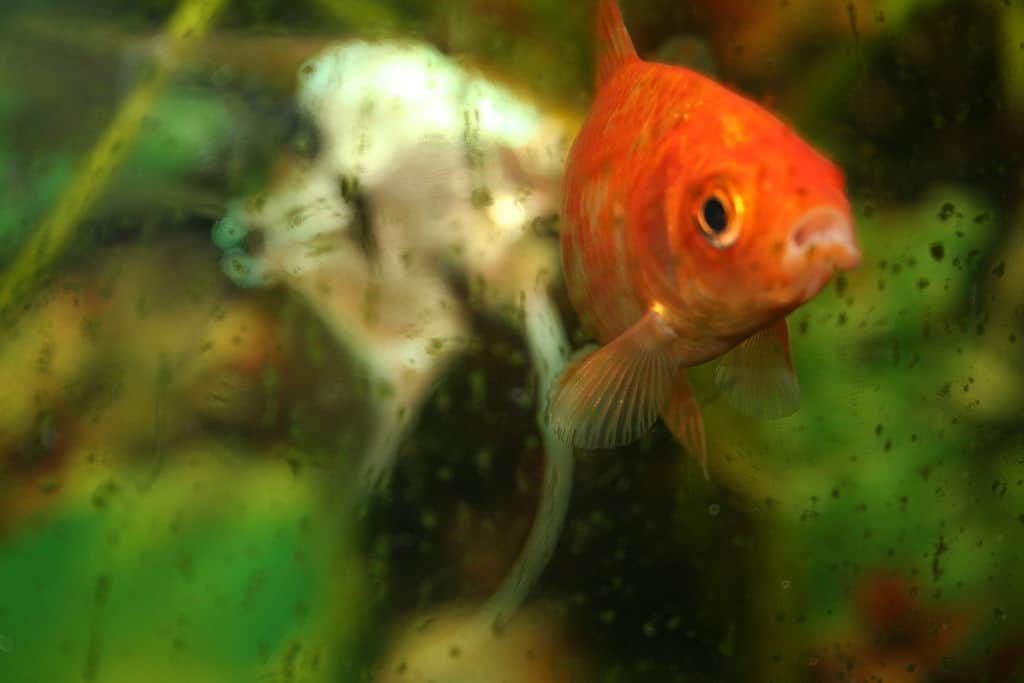
Contrary to the popular myth about goldfish having a three-second memory, these common household pets stunned scientists by demonstrating sophisticated facial recognition abilities. Research conducted at Oxford University revealed that goldfish can distinguish between human faces with 85% accuracy and can retain this memory for months, far exceeding previous estimates of their cognitive capabilities. In the experiments, goldfish were able to recognize their primary caretakers even when viewed from different angles or when the humans wore different clothing, suggesting a complex visual processing system previously unrecognized in these creatures. What made this discovery particularly surprising was the evolutionary distance between humans and fish, indicating that facial recognition may have evolved independently in multiple animal lineages. Additional studies have shown that goldfish can also recognize other fish individuals, remember feeding schedules, and navigate complex mazes—cognitive abilities that have forced a complete reevaluation of fish intelligence within the scientific community.
Rabbits Exhibiting Self-Awareness in Mirror Tests

The scientific community was astonished when pet rabbits demonstrated signs of self-awareness during modified mirror tests, a capability previously documented primarily in great apes, dolphins, and elephants. Researchers at the University of Padua developed rabbit-appropriate modifications to the classic mirror self-recognition test, which traditionally involves placing marks on animals and observing whether they notice these marks when seeing their reflection. In these adapted tests, a significant percentage of domestic rabbits showed behaviors consistent with mirror self-recognition, including increased grooming of marked areas only visible in mirrors and decreased interest in their reflection over time (suggesting they recognized it was not another rabbit). What particularly surprised scientists was that these capabilities appeared more pronounced in pet rabbits than in laboratory counterparts, indicating that regular social interaction with humans might enhance cognitive development in these animals. This finding challenged conventional understandings of consciousness in mammals and suggested that the cognitive abilities of common household pets may be substantially underestimated.
Guinea Pigs Displaying Empathetic Responses

Scientists were taken aback when research revealed that pet guinea pigs exhibit empathetic responses toward both their animal companions and human caretakers. A groundbreaking study at Washington State University documented guinea pigs showing physiological stress responses when observing other guinea pigs in distress, with heart rate and stress hormone levels increasing significantly. Even more surprisingly, guinea pigs demonstrated what researchers termed “emotional contagion”—a primitive form of empathy—by mirroring the emotional states of their human caretakers. When owners displayed signs of distress, their guinea pigs showed increased alertness, comfort-seeking behaviors, and physiological stress markers. The study also revealed that guinea pigs with stronger bonds to their owners showed more pronounced empathetic responses, suggesting a sophisticated emotional connection that had not previously been documented in rodent pets. These findings challenged long-held assumptions about the cognitive and emotional capabilities of small mammalian pets and suggested a biological basis for the therapeutic benefits reported by guinea pig owners.
Hamsters Showing Time-Keeping Abilities Without External Cues

Pet hamsters astounded researchers by demonstrating remarkable chronobiological abilities, maintaining precise internal timekeeping even when deprived of all external cues. In studies conducted at Northwestern University’s Center for Sleep and Circadian Biology, hamsters maintained in constant darkness for extended periods continued to follow nearly exact 24-hour activity cycles, with deviations of less than 10 minutes per day. Even more surprisingly, researchers discovered that pet hamsters could adjust their internal clocks to anticipate regular feeding times with precision within minutes, regardless of lighting conditions. The most unexpected finding came when scientists identified that hamsters possess specialized cells in their suprachiasmatic nucleus (the brain’s master clock) that are more densely packed and sensitive than those found in much larger mammals, including humans. This biological precision enables hamsters to navigate seasonal changes and optimize their survival strategies despite their small size. These discoveries have transformed scientific understanding of how body clocks function across species and offered new insights into treating human circadian rhythm disorders.
Dogs Understanding Human Pointing Gestures From Birth

One of the most surprising discoveries about pet dogs came when researchers at the Max Planck Institute for Evolutionary Anthropology found that puppies understand human pointing gestures from as young as six weeks of age—without any training. Unlike even our closest primate relatives who struggle with interpreting human pointing, puppies innately comprehend that when a human points, they are communicating about something in the environment. In controlled experiments, puppies successfully followed human pointing to locate hidden food at rates far exceeding chance, even on their first exposure to the gesture. What particularly stunned scientists was that this ability appeared fully formed before significant human contact, suggesting it represents a case of convergent evolution specifically adapted for dog-human communication. Further research revealed that this capability likely developed over thousands of years of domestication, creating a unique form of interspecies communication not seen in any other animal-human relationship. This discovery has profound implications for understanding the co-evolution of humans and dogs, suggesting that dogs may have been genetically selected for their ability to read human communicative signals.
Ferrets Solving Complex Multi-Step Puzzles

The scientific community was astounded when pet ferrets demonstrated remarkable problem-solving abilities in multi-step puzzles that exceeded expectations for animals their size. Research conducted at the University of Cambridge revealed that ferrets could solve sequential puzzles requiring up to five distinct steps in the correct order, displaying causal reasoning comparable to that observed in some primates. In one particularly striking experiment, ferrets learned to manipulate a series of levers, buttons, and sliding mechanisms in sequence to release a food reward, with some animals completing the task in under 30 seconds after only a few exposures. What most surprised researchers was the ferrets’ ability to create mental maps of puzzle solutions and develop alternative strategies when familiar approaches were blocked. Neuroscientific investigations subsequently revealed that despite their small brain size, ferrets possess neural structures in their prefrontal cortex specialized for sequential planning—a feature previously thought to be developed only in larger mammals. These findings have led to a significant reevaluation of cognitive capabilities in small carnivores and highlighted the importance of environmental enrichment for pet ferrets.
Horses Recognizing Themselves in Mirrors

Scientists were astonished when research confirmed that domestic horses can recognize themselves in mirrors, joining an elite group of animals demonstrating self-awareness. In a modified version of the classic mirror mark test conducted by researchers at the University of Pisa, horses were observed touching marks placed on their bodies that were only visible via reflection, suggesting an understanding that the reflection represented themselves rather than another horse. What particularly surprised researchers was that horses with more human interaction—especially those kept as companion animals rather than working animals—showed higher rates of self-recognition, suggesting that regular socialization with different species might enhance self-awareness development. Follow-up studies revealed that self-aware horses also demonstrated superior performance in other cognitive tasks, including emotional recognition in both horses and humans. This discovery has profound implications for equine welfare, as it suggests horses may possess a level of self-consciousness that necessitates consideration of their psychological needs in addition to physical care. The finding has prompted a reevaluation of cognitive capabilities across domestic animals and raised important ethical questions about how we house and interact with horses.
Budgerigars Creating and Following Grammatical Rules

Pet budgerigars (commonly known as budgies or parakeets) shocked linguists and animal cognition researchers by demonstrating the ability to recognize and follow artificial grammatical structures. Studies at MIT’s Department of Brain and Cognitive Sciences revealed that budgerigars could distinguish between sound sequences that followed specific grammatical patterns and those that violated these patterns—a capability once thought unique to humans. In controlled experiments, budgies were trained to respond to sequences following a simple grammar (such as A-B-A patterns), then spontaneously recognized violations when elements were improperly ordered, demonstrating abstract pattern recognition. What particularly amazed scientists was that these birds could transfer this grammatical knowledge to entirely new sounds they had never heard before, suggesting true rule abstraction rather than mere memorization. Further research revealed that pet budgies exposed to varied human speech showed enhanced grammatical abilities compared to those with limited human interaction, indicating that environmental exposure shapes these capabilities. These findings have revolutionized understanding of avian cognition and suggested that the fundamental building blocks of language processing may be more widespread across species than previously believed.
Reptiles Forming Emotional Bonds with Owners

The scientific community was stunned when research confirmed that pet reptiles, including bearded dragons and certain species of turtles, form genuine emotional attachments to their human caretakers. Studies at the University of Lincoln’s School of Life Sciences used heart rate variability, stress hormone levels, and approach behaviors to document that reptiles show physiological and behavioral responses to their regular caretakers that differ significantly from their reactions to strangers. In bearded dragons, researchers observed pupil dilation (a sign of positive arousal) when reunited with their owners after separation, along with preferential approach behaviors and reduced defensive posturing. What particularly surprised researchers was the discovery of oxytocin-like peptides activated in reptile brains during positive interactions with familiar humans, suggesting a neurochemical basis for attachment that parallels that found in mammals. These findings contradicted long-held assumptions that reptiles were incapable of forming social bonds due to their evolutionary distance from mammals and simpler brain structures. The discovery has led to significant revisions in reptile care guidelines, emphasizing the importance of consistent handling and social interaction for captive reptiles’ psychological well-being.
Cats Navigating Home Over Incredible Distances

Scientists were astounded by documented cases of pet cats finding their way home over extraordinary distances, demonstrating navigational abilities that defy conventional explanation. In one well-studied case, a domestic cat named Sugar traveled over 1,500 miles across the Australian outback to return to her family’s former home, a journey that took approximately 15 months. Researchers at the Max Planck Institute for Animal Behavior conducted controlled experiments that confirmed cats possess a sophisticated internal compass that allows them to maintain directional awareness even when transported in closed containers that block visual cues. Even more surprisingly, studies using GPS tracking collars revealed that cats create detailed mental maps that incorporate not just spatial information but temporal patterns of neighborhood activity, allowing them to navigate efficiently through constantly changing urban environments. The most unexpected discovery came from neurological research showing that cats possess specialized cells in their hippocampus that function similarly to the “grid cells” that give humans and other mammals spatial awareness, but with adaptations that provide enhanced sensitivity to geomagnetic fields. These findings have transformed understanding of feline cognition and suggested that cats possess navigational capabilities that in some ways exceed those of humans.
Dogs Detecting Epileptic Seizures Before Onset

The scientific community was astounded when rigorous studies confirmed that some pet dogs can detect impending epileptic seizures in their owners up to 45 minutes before clinical onset. Research at the University of Rennes in France documented dogs alerting to pre-seizure states with accuracy rates exceeding 80%, often before the patients themselves experienced any noticeable symptoms. Using specialized collection equipment, scientists identified that these dogs were detecting subtle changes in their owners’ body odor caused by alterations in volatile organic compounds released during the pre-ictal (pre-seizure) phase. What particularly surprised researchers was that many of these dogs were not specially trained as service animals but rather family pets who spontaneously developed this detection capability through close bonds with their epileptic owners. Subsequent neuroimaging studies revealed that these dogs showed enhanced activation in specific regions of their olfactory bulbs when exposed to pre-seizure scent samples, suggesting a biological specialization for this detection ability. The discovery has led to specialized breeding and training programs for seizure-alert dogs and opened new avenues for understanding the biochemical changes that occur before seizures, potentially leading to improved early warning systems for epilepsy management.
Conclusion: The Continuing Evolution of Our Understanding of Pet Cognition

The fifteen surprising discoveries outlined in this article represent just a fraction of what our animal companions have taught the scientific community in recent decades. Each revelation challenges previous assumptions about animal cognition and the emotional capacities of the creatures with whom we share our homes. As research methodologies become more sophisticated and scientists approach animal studies with fewer anthropocentric biases, we continue to uncover remarkable capabilities that blur the once-clear distinctions between human and animal minds. These findings not only enhance our scientific understanding but also carry profound implications for how we care for, train, and interact with our pets. Perhaps most importantly, these discoveries remind us that the animals we consider companions are complex beings worthy of our respect and consideration—capable of thoughts, feelings, and abilities that continue to surprise even those who study them most closely.
Worried about unexpected vet bills?
Pet insurance can cover thousands in unexpected vet costs. Get a free quote from Lemonade in under 2 minutes.
Get My Free Quote →Sponsored · Opens Lemonade.com

As a little kid, I fell in love with nature, wildlife, and animals. Living in the USA, South Africa, Italy, China and Germany gave me the opportunity to discover the world's Wildlife. My favorite animals are Mountain Gorillas, Siberian Tigers, and Great White Sharks.
I'm a certified PADI Open Water Diver, went to Everest Base Camp and Trekked Gorillas in Uganda. I hold a Master of Science in Economics and Finance.
Please send any feedback to feedback@animalsaroundtheglobe.com
- 10 Ways Wolves Work Together Like Tactical Geniuses - June 4, 2026
- 11 Rainforests Where You Will Find Exotic Frogs and Birds - June 4, 2026
- 15 Dog Breeds That Could Survive in the Wild Without Help - June 4, 2026