

In the vast oceans where most fish species reproduce by laying eggs, one remarkable group of sharks stands apart with a reproductive strategy that more closely resembles mammals than their fishy relatives. These unusual sharks carry their young inside their bodies, nourishing them directly through a placenta-like structure, and giving birth to live, fully-formed pups. This phenomenon, known as placental viviparity, represents one of the most fascinating evolutionary adaptations in the marine world and offers a compelling glimpse into the diverse reproductive strategies that have evolved across different animal groups.
The Evolutionary Marvel of Placental Viviparity

Placental viviparity in sharks represents an extraordinary evolutionary convergence with mammals. This reproductive strategy evolved independently in these sharks approximately 150 million years ago, long after sharks and mammals diverged from their common ancestor. Among the roughly 500 known shark species, about 30% give birth to live young, but only a subset of these—primarily members of the Carcharhiniformes order (requiem sharks)—have developed true placental connections. This reproductive method provides significant advantages in harsh marine environments, allowing mother sharks to protect their developing embryos from predators and environmental stresses while ensuring they’re born at a more advanced developmental stage than egg-laying species.
Meet the Hammerhead: A Prime Example

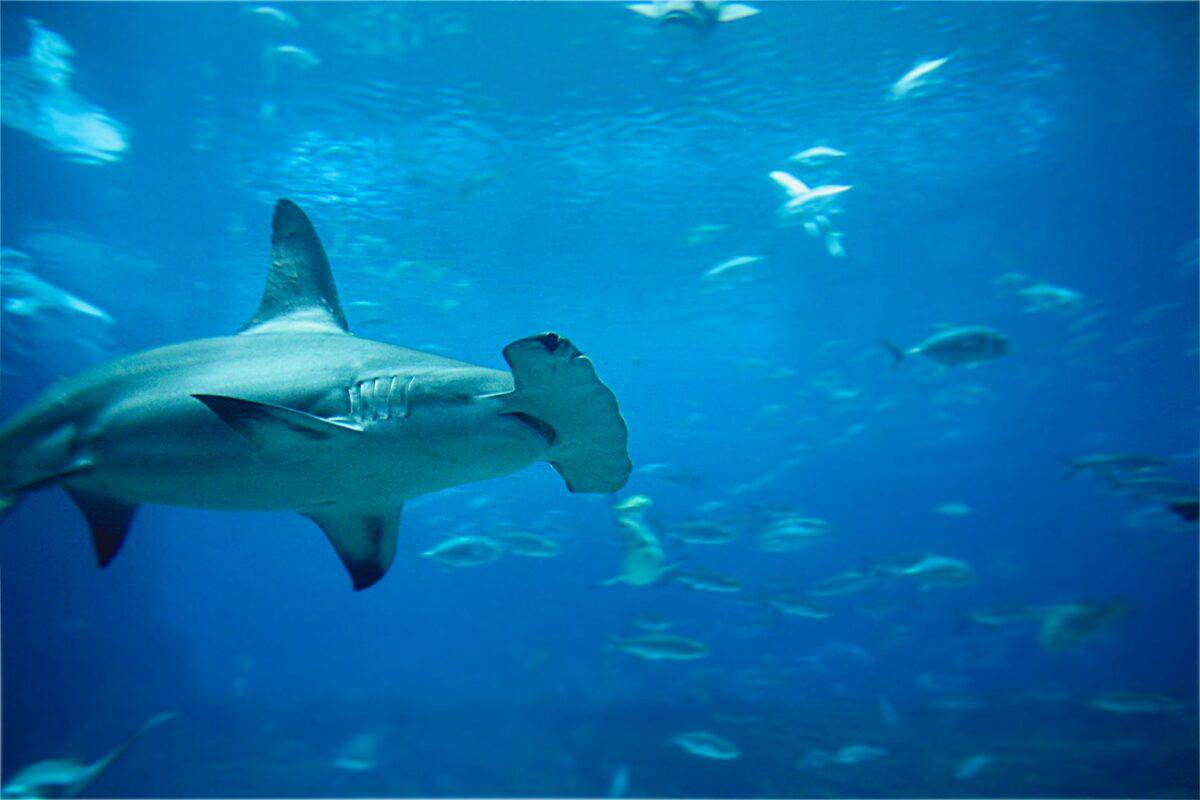
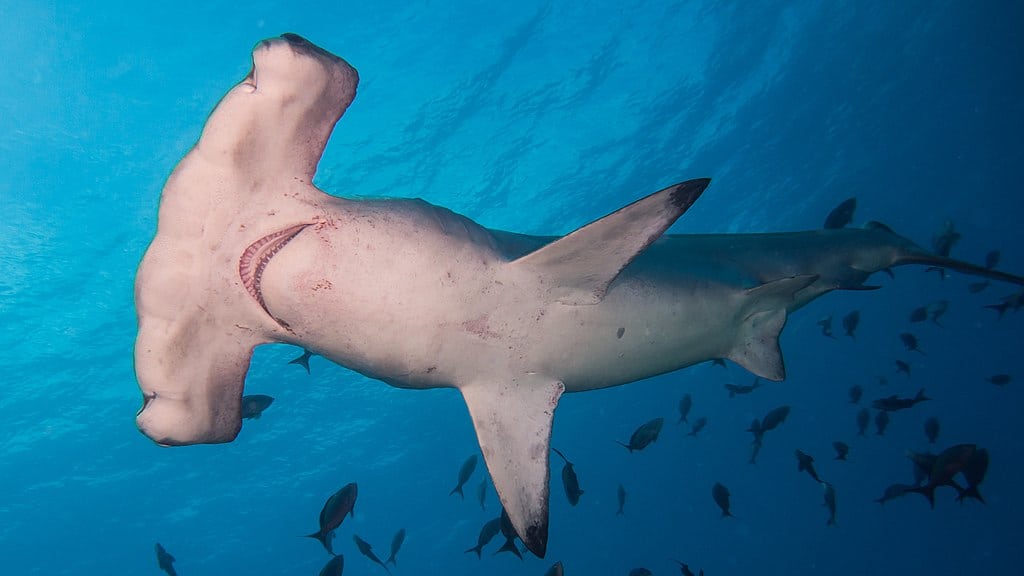
The hammerhead shark family (Sphyrnidae) offers some of the most well-studied examples of placental viviparity among sharks. The great hammerhead (Sphyrna mokarran), scalloped hammerhead (Sphyrna lewini), and smooth hammerhead (Sphyrna zygaena) all utilize this reproductive strategy. Female hammerheads can carry litters ranging from 6 to 42 pups, depending on the species and the mother’s size. During their 10-12 month gestation period, the developing embryos initially rely on a yolk sac for nourishment, but as this supply depletes, they develop a placental connection to the mother’s uterine wall, allowing for direct nutrient transfer from mother to pup—remarkably similar to the process in humans and other mammals.
The Biological Mechanics of Shark Placentas

Though termed a “placenta,” the structure in viviparous sharks differs somewhat from mammalian placentas in its development and structure. The shark placenta forms when the emptied yolk sac attaches to the mother’s uterine wall, creating what scientists call a “yolk sac placenta.” This structure facilitates the exchange of nutrients, oxygen, and waste products between the mother’s bloodstream and the developing embryos. Unlike mammalian placentas, there is typically less intimate intermingling of maternal and embryonic tissues, with the connection being somewhat simpler. Nevertheless, the functional parallels are striking—both systems evolved to solve the same biological challenge of nurturing developing offspring inside the mother’s body.
Pregnancy and Birth in Placental Sharks

Pregnancy in placental sharks can last anywhere from several months to over a year, depending on the species. The bull shark (Carcharhinus leucas), for instance, has a gestation period of 10-11 months, while the blue shark (Prionace glauca) carries its young for 9-12 months. When birth time arrives, female sharks seek out protected nursery areas in shallow coastal waters, estuaries, or mangroves to deliver their pups. The birth process itself is remarkably similar to mammalian birth, with pups emerging one at a time from the mother’s cloaca (the common opening for the intestinal, reproductive, and urinary tracts). The number of pups varies widely among species—hammerheads may produce up to 40 pups per litter, while others like the sandbar shark typically have 8-12 pups.
Why Placental Reproduction in Sharks Matters
The evolution of placental viviparity represents a significant reproductive investment for female sharks. By providing extended maternal care during gestation, these sharks produce fewer offspring than egg-laying species but give their pups a higher survival probability. Newborn placental shark pups are typically larger and more developed than those of other reproductive modes, giving them immediate advantages in hunting and avoiding predation. This reproductive strategy has ecological implications too—species with this reproductive approach tend to have lower population growth rates and longer recovery times from overfishing, making them particularly vulnerable to human fishing pressure and environmental changes.
Other Shark Reproductive Strategies: A Comparison

Placental viviparity represents just one of several reproductive strategies employed by sharks. Approximately 40% of shark species are oviparous (egg-laying), with females depositing tough, leathery egg cases often called “mermaid’s purses” on the seafloor. Another 30% exhibit aplacental viviparity, where embryos develop inside the mother but without forming placental connections—instead either consuming unfertilized eggs (oophagy) or, in rare cases like the sand tiger shark, engaging in intrauterine cannibalism where embryos consume their siblings. When compared to these alternatives, placental viviparity represents an evolutionary middle ground, balancing reproductive investment with offspring survival probability in a way that has proven highly successful for species like the hammerhead and tiger sharks.
Famous Placental Sharks: Beyond the Hammerhead

While hammerheads are perhaps the most recognized placental sharks, several other well-known species employ this reproductive strategy. The tiger shark (Galeocerdo cuvier), notorious for its voracious appetite and willingness to eat almost anything, nurtures its young through a placental connection. The bull shark (Carcharhinus leucas), famous for its ability to tolerate freshwater environments, also reproduces via placental viviparity, as does the oceanic whitetip shark (Carcharhinus longimanus), once described by Jacques Cousteau as “the most dangerous of all sharks.” Even the familiar reef shark (Carcharhinus perezi) that many divers encounter belongs to this specialized reproductive group.
The Evolutionary Path to Shark Live Birth

Scientists believe that viviparity in sharks evolved from oviparity through a series of transitional steps. The earliest shift likely involved the retention of fertilized eggs within the female’s body until just before hatching (a strategy still seen in some modern species). This extended retention gradually evolved into full internal development with embryos initially relying solely on yolk reserves. The final evolutionary step—the development of placental connections—appears to have occurred multiple times independently within different shark lineages. This progression demonstrates how natural selection can gradually modify reproductive strategies over millions of years, producing complex adaptations that parallel those found in completely unrelated animal groups like mammals.
Conservation Challenges for Placental Sharks

The reproductive biology of placental sharks creates unique conservation challenges. Because these species invest heavily in each reproductive event—producing relatively few, well-developed offspring after long gestation periods—they are particularly vulnerable to population depletion through fishing pressure. Many placental shark species, including several hammerhead species, have experienced significant population declines of 80% or more in recent decades. Their slow reproductive rate means that even with complete protection, recovery could take decades. The scalloped hammerhead shark, a placental species, is now listed as Critically Endangered on the IUCN Red List, highlighting the conservation concerns for sharks with this reproductive strategy.
Scientific Research and New Discoveries

Recent scientific advances have shed new light on placental sharks’ reproductive biology. Genetic studies have revealed that some female sharks can store sperm for extended periods—sometimes months or even years—before fertilization occurs, allowing them to reproduce even when males are scarce. Research using hormone analysis now enables scientists to identify pregnant females non-invasively through blood samples. Perhaps most intriguingly, studies of the immune system in placental sharks have revealed specialized adaptations that prevent mothers from rejecting their embryos despite their different genetic makeup—solving the same immunological “problem” that mammals faced in evolving placental reproduction. These discoveries not only enhance our understanding of shark biology but also highlight the remarkable parallels between these evolutionarily distant animal groups.
The Future of Placental Shark Research

As marine research technologies advance, scientists have unprecedented opportunities to study placental shark reproduction in detail. The development of minimally invasive ultrasound techniques allows researchers to monitor shark pregnancies in the wild without harming the animals. Satellite tagging studies are revealing the migration patterns of pregnant females, helping identify critical pupping grounds that merit protection. Genetic techniques now enable researchers to determine paternity in shark litters, revealing that females of many species mate with multiple males, producing litters with mixed paternity. These research directions promise to further unravel the mysteries of shark reproduction while informing conservation strategies for these vulnerable marine predators.
Conclusion: Nature’s Convergent Solutions
The placental viviparity observed in certain shark species represents one of nature’s most fascinating examples of convergent evolution—where unrelated groups independently evolve similar traits to solve common challenges. That sharks and mammals, separated by hundreds of millions of years of evolution, would develop such similar reproductive strategies highlights the power of natural selection to shape life’s diversity. These sharks offer a compelling window into evolutionary processes, demonstrating how complex biological adaptations can arise through gradual refinement over time. For marine conservationists, understanding the unique reproductive biology of these sharks remains crucial to developing effective protection measures that could ensure these extraordinary animals continue their ancient lineage far into the future.

- The Fastest Horse Breeds in the World — Ranked - June 24, 2026
- How Baby Dolphins Learn Through Play and Mimicry - June 23, 2026
- How Sharks Use Electroreception to Hunt in Murky Water - June 23, 2026