

The American Southwest’s harsh desert landscapes may appear inhospitable at first glance, but they teem with remarkably adapted life forms. From the iconic Sonoran Desert spanning Arizona and California to the vast Chihuahuan Desert extending through New Mexico and Texas, these arid ecosystems host a stunning array of wildlife that has evolved specialized traits to thrive where water is scarce and temperatures fluctuate dramatically. These desert specialists employ fascinating survival strategies, from nocturnal lifestyles to water-conserving physiologies, demonstrating nature’s incredible adaptability. Let’s explore twelve remarkable species that call the American Southwest’s deserts home, each representing a triumph of evolution in one of Earth’s most challenging environments.
Desert Bighorn Sheep
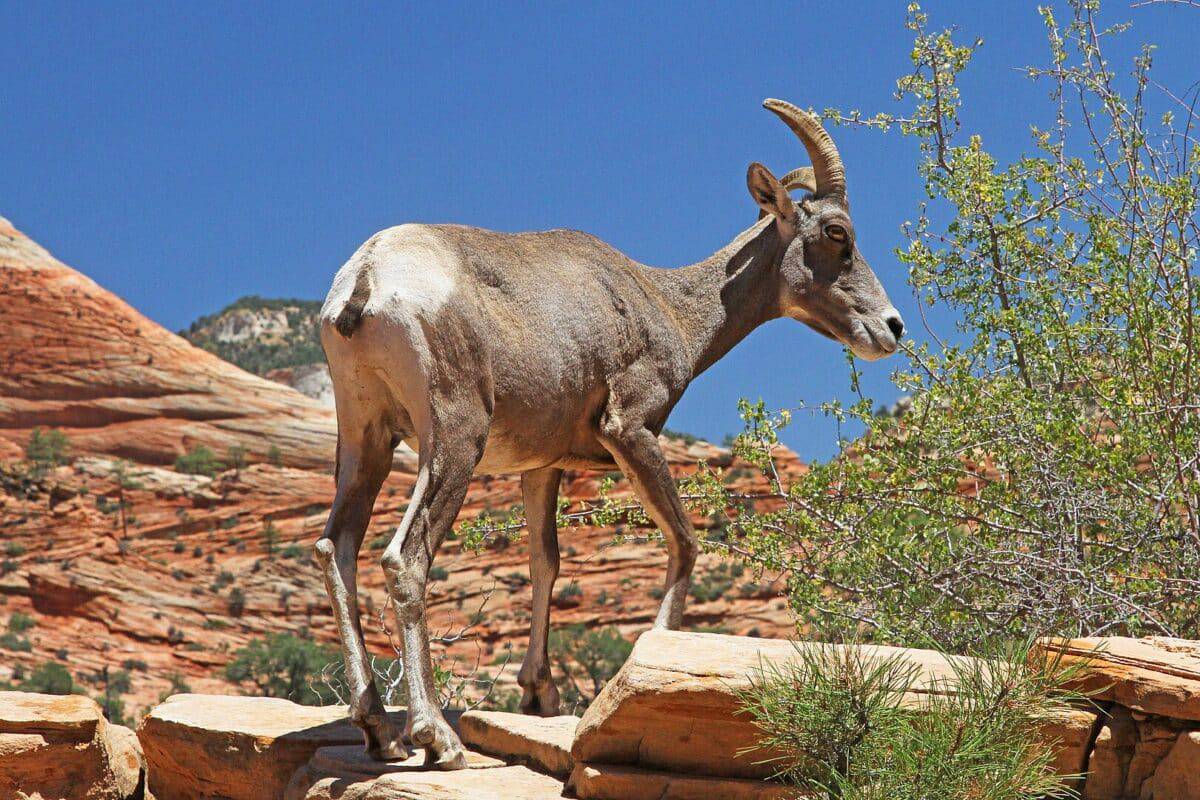
The desert bighorn sheep (Ovis canadensis nelsoni) stands as an icon of rugged survival in the American Southwest. These magnificent mammals are perfectly adapted to the region’s rocky mountain ranges and canyon lands, possessing specialized hooves with rough, textured pads that provide exceptional traction on steep, rocky terrain. Males, known as rams, display impressive curved horns that can weigh up to 30 pounds—nearly 10% of their body weight—which they use in dramatic head-butting contests during mating season.
These resilient ungulates have evolved remarkable adaptations for desert life. Their specialized digestive systems can extract moisture from seemingly dry vegetation, while their efficient kidneys produce highly concentrated urine to conserve water. Desert bighorns can lose up to 30% of their body weight to dehydration and rapidly rehydrate when water becomes available. Their population faced severe decline in the 20th century due to diseases transmitted from domestic sheep, hunting, and habitat fragmentation. While conservation efforts have helped stabilize some populations, the desert bighorn remains vulnerable, with approximately 13,000 individuals currently inhabiting the desert mountains of the Southwest.
Gila Monster
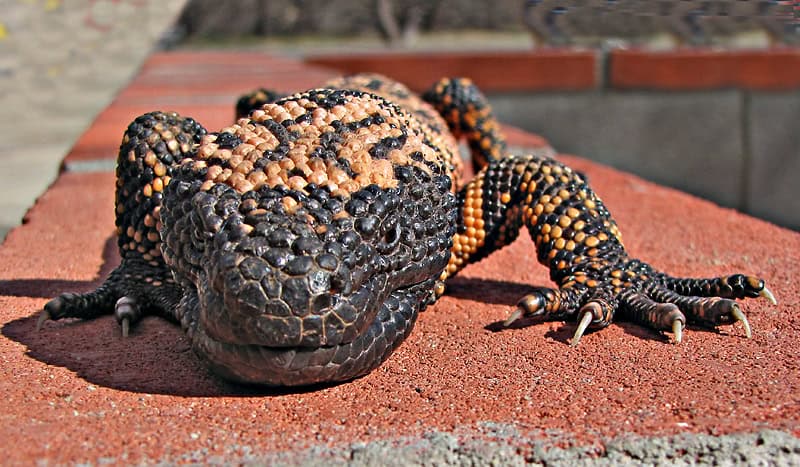
The Gila monster (Heloderma suspectum) holds the distinction of being one of only two venomous lizard species native to North America. With its distinctive black body adorned with striking patterns of pink, orange, or yellow, this hefty reptile—typically measuring 1.5 to 2 feet in length—moves with deliberate slowness across the desert floor. Its venom, delivered through a chewing motion rather than the quick strike of venomous snakes, is primarily used for defense rather than hunting.
Perfectly adapted to the harsh desert environment, Gila monsters spend up to 95% of their lives underground or in burrows, emerging primarily during the spring breeding season. These remarkable reptiles can store fat in their tails and large bodies, allowing them to go months between meals. Their diet consists mainly of bird and reptile eggs, small mammals, and other lizards. A fascinating adaptation allows Gila monsters to store water in special bladder reservoirs, which they can access during drought conditions. Despite their fearsome reputation, these lizards are typically shy and reclusive, avoiding human contact whenever possible. Protected by law throughout their range, Gila monsters face threats from habitat destruction and illegal collection for the exotic pet trade.
Kangaroo Rat

The kangaroo rat (genus Dipodomys) represents one of the most extraordinary examples of desert adaptation in the animal kingdom. Named for their kangaroo-like movement—using their powerful hind legs to make impressive leaps of up to 9 feet horizontally—these small rodents are masters of water conservation. Most incredibly, kangaroo rats can survive without ever drinking water, instead deriving all necessary moisture from the seeds and plants they consume through a metabolic process called oxidative water production.
These nocturnal creatures possess specialized kidneys that produce extremely concentrated urine, while their nasal passages recapture moisture from exhaled breath. With large eyes and acute hearing, kangaroo rats are well-equipped to detect and evade predators like owls, snakes, and coyotes in the darkness. Their cheek pouches allow them to transport seeds to underground burrow systems, where they create elaborate chambers for sleeping, nesting, and food storage. These burrows maintain relatively stable temperatures and humidity levels, providing refuge from the desert’s temperature extremes. Despite their remarkable adaptations, several kangaroo rat species have become endangered due to habitat loss and fragmentation, highlighting the fragility of desert ecosystems despite the resilience of their inhabitants.
Cactus Wren

The cactus wren (Campylorhynchus brunneicapillus), Arizona’s state bird, embodies desert adaptability with its resourceful nesting habits and specialized diet. These charismatic birds, the largest wren species in the United States at 7-8 inches long, construct their distinctive football-shaped nests primarily in chollas, prickly pears, and other thorny vegetation. This strategic placement provides critical protection from predators. Unlike many songbirds, cactus wrens build multiple nests within their territory—some for breeding and others for roosting throughout the year.
These vocal desert dwellers communicate through harsh, chattering calls that carry across the arid landscape. Their diet showcases impressive adaptability, shifting seasonally between insects, spiders, and small reptiles during warmer months to fruits, seeds, and nectar during cooler periods. Cactus wrens have evolved behavioral adaptations to desert life, including foraging during cooler morning hours and seeking shade during midday heat. Their specialized physiology allows them to conserve water by producing concentrated waste and extracting moisture efficiently from their food. While not currently endangered, cactus wren populations face pressure from habitat loss as urban development encroaches on their desert homeland, particularly impacting the coastal populations in southern California.
Desert Tortoise

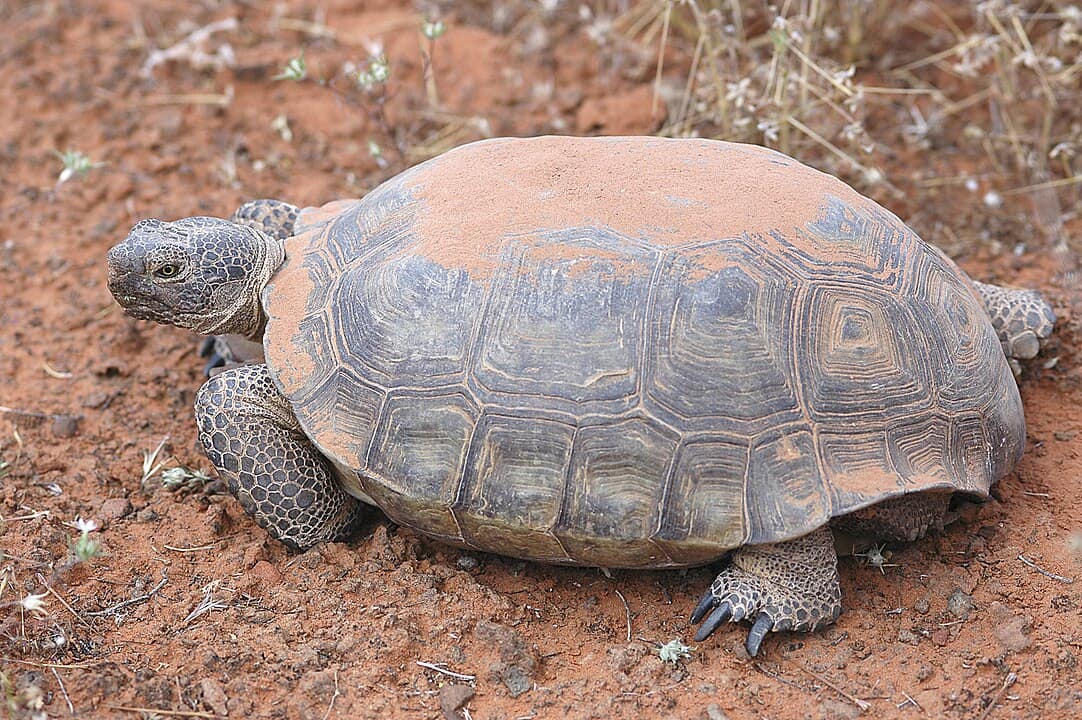
The desert tortoise (Gopherus agassizii) stands as a living symbol of the Mojave Desert’s ancient resilience, with individuals capable of living 50-80 years in the wild. These remarkable reptiles have evolved a suite of adaptations allowing them to thrive in one of North America’s harshest environments. Their high-domed shells provide protection from predators and the intense desert sun, while their powerful, elephant-like legs enable them to dig elaborate burrows up to 30 feet long. These burrows serve as critical microhabitats, maintaining stable temperatures that shield tortoises from extreme heat and cold.
Desert tortoises practice extraordinary water conservation, storing reserves in their bladders that can constitute up to 40% of their body weight during rainy periods. When drought conditions persist, they can reabsorb this stored water. Their metabolism slows dramatically during inactive periods, allowing them to survive on minimal resources. These herbivores consume a varied diet of desert wildflowers, grasses, and cacti, obtaining most of their moisture from their food. Unfortunately, desert tortoise populations have declined by approximately 90% since the 1980s, leading to their classification as threatened under the Endangered Species Act. Major threats include habitat fragmentation, off-road vehicle use, disease, and predation by ravens, whose populations have increased due to human development. Conservation efforts focus on habitat protection and captive breeding programs to preserve this iconic desert species.
Roadrunner
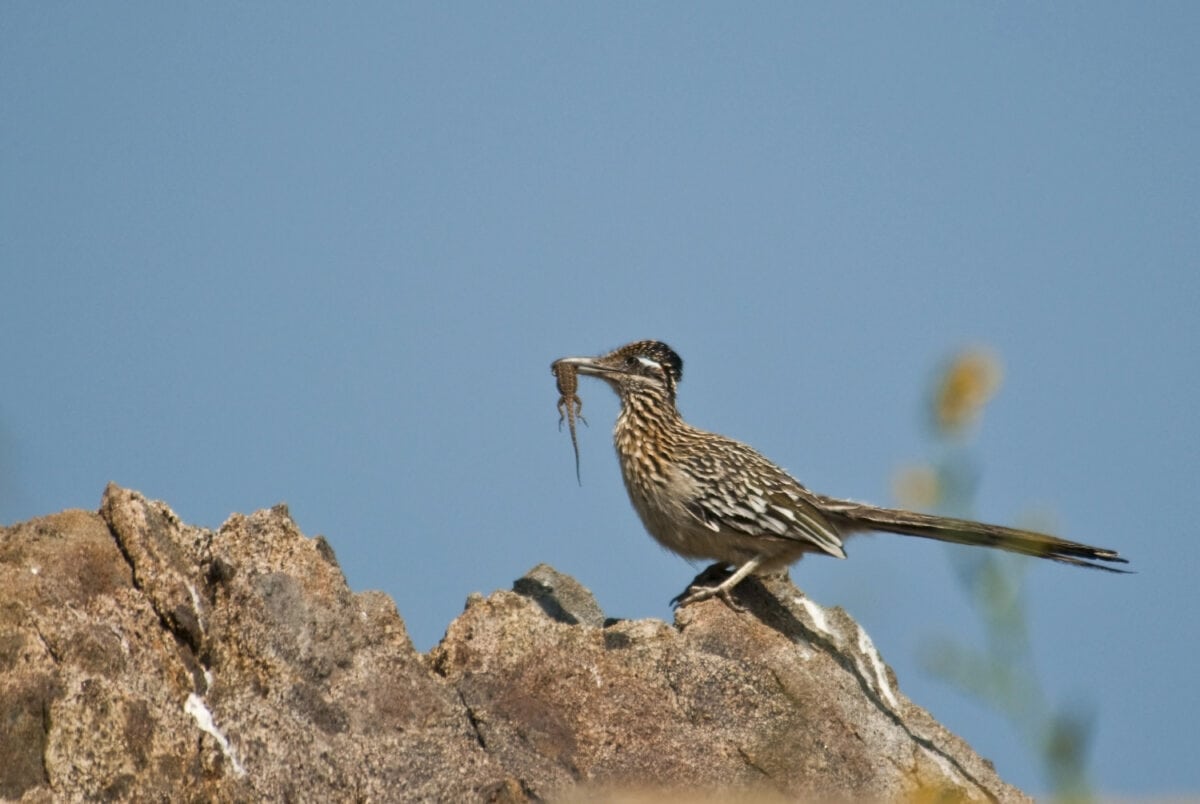
The greater roadrunner (Geococcyx californianus), immortalized in popular culture but even more impressive in reality, represents one of the Southwest’s most distinctive birds. These ground-dwelling members of the cuckoo family can sprint at speeds up to 20 miles per hour—a pace that, while not matching their cartoon counterpart’s velocity, makes them remarkably swift desert hunters. Their distinctive appearance includes a long tail, streaked plumage, and a prominent crest, while their tracks form a characteristic X-shape as their zygodactyl feet (with two toes pointing forward and two backward) press into the sand.
Roadrunners display remarkable hunting versatility, preying on everything from insects and scorpions to small mammals, reptiles, and other birds. They’re among the few predators capable of catching and killing rattlesnakes, using coordinated team tactics when hunting larger serpents. To conserve energy in their harsh habitat, roadrunners elevate their body temperature during inactive periods and warm themselves by exposing a patch of dark skin on their backs to absorb morning sunlight. While not currently threatened, roadrunners face challenges from habitat fragmentation due to urban development and vehicle collisions. Their presence in an area often indicates a healthy, diverse desert ecosystem with abundant prey resources and minimal disturbance.
Black-tailed Jackrabbit
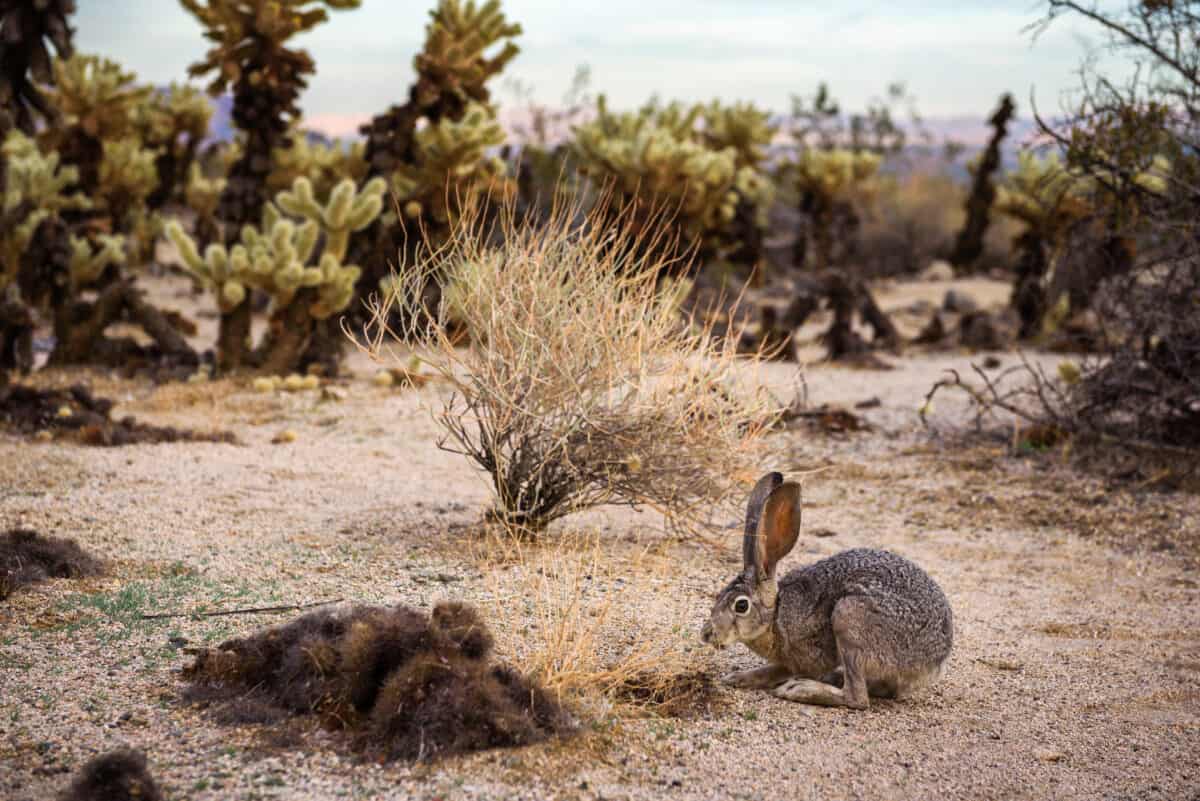
The black-tailed jackrabbit (Lepus californicus), despite its name, isn’t actually a rabbit but a hare, born fully furred with eyes open and capable of movement shortly after birth. These iconic desert mammals are immediately recognizable by their enormous ears, which serve multiple critical functions. Reaching lengths of up to 7 inches, these oversized auditory organs act as efficient heat radiators, containing a network of blood vessels that dissipate excess body heat in the scorching desert environment. Additionally, these sensitive ears can detect predators from considerable distances, providing valuable early warnings.
Built for speed, black-tailed jackrabbits can reach 40 miles per hour in short bursts and maintain impressive zigzag patterns to evade predators like coyotes, foxes, and raptors. Their large hind feet not only propel these powerful jumps but also serve as effective adaptations for traversing loose sand. Highly efficient herbivores, jackrabbits extract maximum nutrition and moisture from desert vegetation, with their specialized digestive systems producing two types of fecal pellets—one of which is re-ingested to extract additional nutrients in a process called coprophagy. While common throughout the Southwest, these hares face ongoing threats from habitat loss, vehicle collisions, and disease. Their population densities fluctuate naturally in approximately 10-year cycles, creating important ripple effects throughout desert food webs, as they serve as crucial prey for numerous predator species.
Collared Lizard

The common collared lizard (Crotaphytus collaris), also known as the “mountain boomer,” adds vibrant color to the desert landscape with its striking appearance. Males display spectacular breeding coloration of bright turquoise bodies contrasted with yellow heads and the distinctive black neck bands that give the species its name. Females and juveniles exhibit more subdued brownish coloration with white spots and the characteristic dark collars. These medium-sized lizards typically measure 8-14 inches including their long tail, which comprises about two-thirds of their total length.
Perhaps most remarkable is the collared lizard’s bipedal running ability—when reaching top speeds of up to 16 miles per hour, they rise up on their hind legs, holding their forelimbs against their bodies in a dinosaur-like posture. This adaptation allows them to move more efficiently over hot desert surfaces while hunting prey. As sit-and-wait predators, they perch on rocks scanning for insects, smaller lizards, and occasionally small mammals and birds. Their powerful jaws deliver a surprisingly strong bite for their size. Collared lizards are territorial, with males defending areas that typically include several females’ territories. While not currently threatened throughout their range, localized populations face pressure from habitat destruction and fragmentation, particularly in rapidly developing areas of the Southwest.
Kit Fox
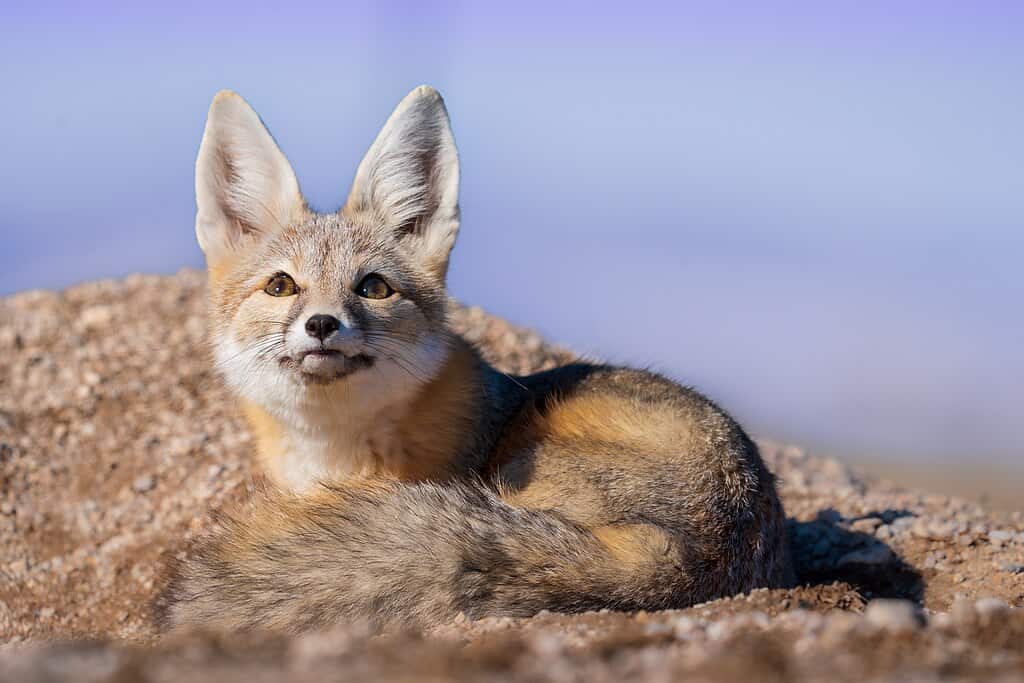
The kit fox (Vulpes macrotis), one of North America’s smallest canids, embodies elegant desert adaptation with its distinctive oversized ears and compact frame. Weighing just 3-6 pounds and standing about 12 inches tall at the shoulder, these diminutive foxes rely on their disproportionately large ears not only for detecting prey but also for radiating excess body heat—a critical adaptation in their arid habitat. Their pale, sandy-colored coats reflect sunlight and provide excellent camouflage against desert soils, while their thick, insulating fur helps them withstand cold desert nights.
Kit foxes have evolved a primarily nocturnal lifestyle to avoid daytime heat, emerging at dusk to hunt kangaroo rats, rabbits, insects, and small birds. Their water-efficient metabolism allows them to derive most needed moisture directly from their prey. Complex underground den systems, which may contain multiple entrances and chambers extending up to 40 feet, provide crucial shelter from temperature extremes. These family-oriented canids typically mate for life, with both parents participating in pup-rearing. The subspecies found in California’s San Joaquin Valley, known as the San Joaquin kit fox, is listed as endangered due to extensive habitat loss from agricultural and urban development. Throughout their range, kit foxes face threats from habitat fragmentation, vehicle collisions, and competition with the more adaptable coyote, making conservation efforts increasingly important for their survival.
Javelina
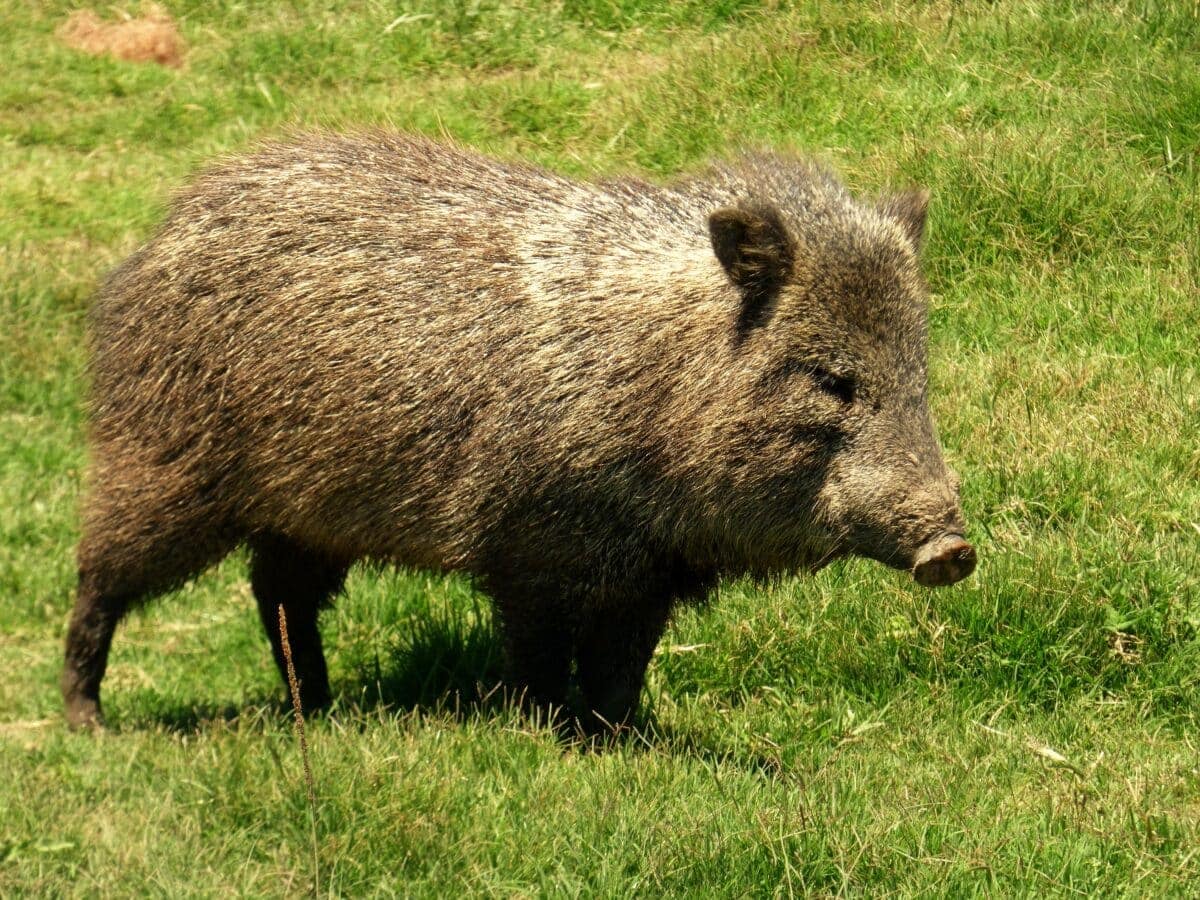
The javelina or collared peccary (Pecari tajacu), despite superficial similarities to wild pigs, belongs to a distinct family native to the Americas. These stocky, pig-like mammals stand about 20-24 inches tall at the shoulder and weigh 35-60 pounds, with grayish-black coarse hair and a distinctive white collar around the neck. Their specialized scent glands located on their backs produce a musky odor that serves multiple functions: marking territory, recognizing herd members, and deterring predators. This distinctive scent has earned javelinas the unflattering nickname “skunk pigs” among some locals.
Highly social animals, javelinas live in family groups of 8-12 individuals that maintain close physical contact and communicate through a variety of vocalizations, from soft grunts to alarm barks. Unlike true pigs, they possess complex, multi-chambered stomachs adapted for processing fibrous desert vegetation, particularly prickly pear cacti, which provide both nutrition and moisture. Their specialized jaws and teeth efficiently strip the protective spines from cacti before consumption. Though primarily herbivorous, javelinas occasionally supplement their diet with insects, small vertebrates, and carrion. Once heavily hunted, javelinas now face different human-related challenges, including habitat fragmentation and urban conflicts as development encroaches on their territories. Despite these pressures, javelina populations remain relatively stable throughout the Southwest, where they play important ecological roles as seed dispersers and prey for larger predators like mountain lions.
Bark Scorpion
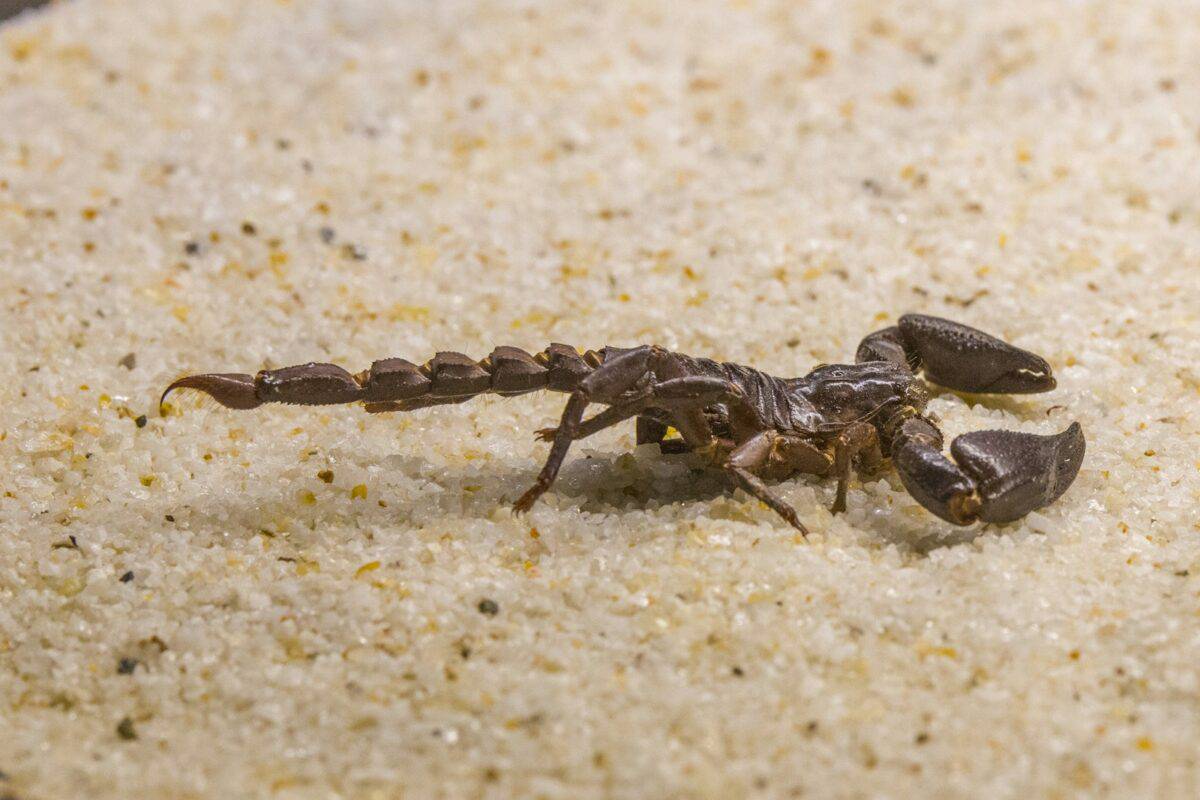
The Arizona bark scorpion (Centruroides sculpturatus) holds the distinction of being the most venomous scorpion in North America, capable of delivering painful stings that, while rarely fatal to healthy adults, can cause severe symptoms including intense pain, numbness, vomiting, and temporary breathing difficulties. These small arachnids, typically measuring 2-3 inches in length, display a yellowish-brown coloration that provides excellent camouflage against desert soil and vegetation. Their slender pincers and relatively long, thin tails distinguish them from other scorpion species in the region.
Perfectly adapted to desert living, bark scorpions possess several remarkable characteristics. They’re one of few scorpion species capable of climbing vertical surfaces, including trees and the walls of homes. This ability, combined with their propensity to seek cool, dark spaces, frequently brings them into unwanted contact with humans. Bark scorpions exhibit fluorescence under ultraviolet light, glowing a bright cyan-green that makes them easier to detect during nighttime searches. Primarily nocturnal hunters, they prey on insects and other small invertebrates, using sensory hairs on their legs and pedipalps to detect prey vibrations. Highly resistant to extreme conditions, bark scorpions can slow their metabolism drastically, surviving on just one or two meals annually when necessary. While their venom has evolved primarily for prey capture and defense, it has attracted scientific interest for potential medical applications, particularly in pain management research. Throughout the Southwest, these adaptable arachnids persist despite urbanization, often finding suitable habitats in developed areas.
Harris’s Hawk
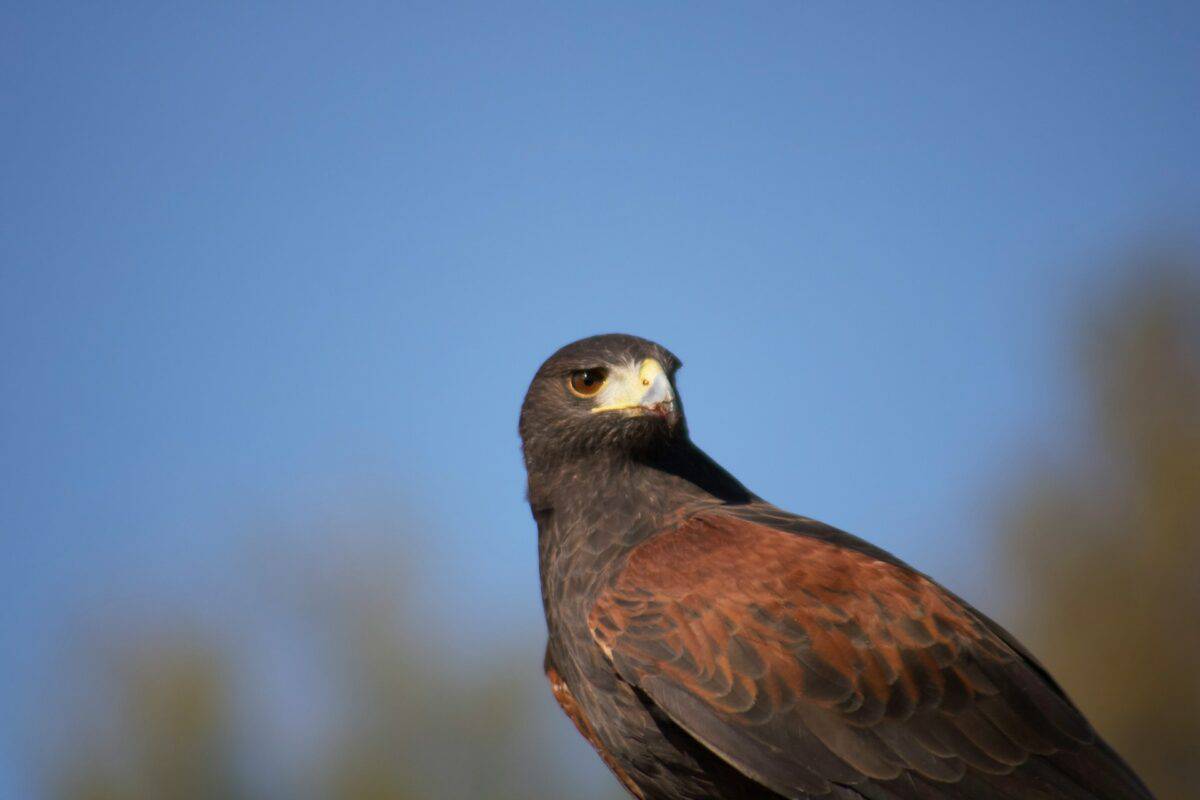
The Harris’s hawk (Parabuteo unicinctus) stands apart in the raptor world for its extraordinary social behavior, often described as “wolves with wings.” Unlike most raptors that hunt solitarily, these medium-sized hawks frequently hunt in coordinated groups of two to seven individuals, employing sophisticated cooperative strategies to pursue prey through desert vegetation. This social hunting behavior allows them to capture larger prey than would be possible individually, including jackrabbits that may outweigh an individual hawk. Their distinctive appearance features rich, dark brown plumage with chestnut shoulders and leg feathers, contrasting white-tipped tails, and bright yellow legs and facial skin.
Harris’s hawks have adapted uniquely to the structural challenges of desert habitats, which often lack sufficient perching sites for traditional hunting
Conclusion:

The American Southwest’s deserts, though seemingly barren at first glance, are in fact vibrant ecosystems teeming with life uniquely adapted to extreme conditions. From the venomous Gila monster and the elusive kit fox to the agile roadrunner and the majestic desert bighorn sheep, each species highlighted here showcases nature’s resilience and ingenuity. These animals have evolved extraordinary physiological and behavioral traits—such as water conservation, nocturnality, and specialized diets—that allow them not only to survive, but to thrive in environments marked by searing heat, scarce water, and rugged terrain. However, these remarkable adaptations are not enough to shield desert wildlife from modern threats like habitat loss, climate change, and human encroachment. As stewards of the environment, it is our responsibility to ensure that the delicate balance of these ecosystems is preserved. By understanding and appreciating the unique species of the American Southwest, we are better positioned to support conservation efforts that protect this extraordinary natural heritage for generations to come.

As a little kid, I fell in love with nature, wildlife, and animals. Living in the USA, South Africa, Italy, China and Germany gave me the opportunity to discover the world's Wildlife. My favorite animals are Mountain Gorillas, Siberian Tigers, and Great White Sharks.
I'm a certified PADI Open Water Diver, went to Everest Base Camp and Trekked Gorillas in Uganda. I hold a Master of Science in Economics and Finance.
Please send any feedback to feedback@animalsaroundtheglobe.com
- 14 Stunning Animals You Can See in India - July 18, 2026
- The Most Enormous Lobster Ever Pulled From Maine Waters - July 18, 2026
- The Most Dangerous Waters for Sharks in North America - July 18, 2026