

In the vast expanse of our skies, nature has engineered extraordinary feats of biological adaptation. Perhaps none is more remarkable than the ability of certain birds to sleep while flying across continents and oceans. The common swift (Apus apus) stands out as one of these aerial marvels, capable of remaining airborne for up to ten months without ever touching ground, sleeping on the wing as it traverses thousands of miles during migration. This astonishing ability challenges our fundamental understanding of sleep and demonstrates the incredible evolutionary adaptations that allow birds to navigate the challenges of long-distance flight. This article explores the fascinating world of aerial sleep, the birds capable of this remarkable feat, and the science behind how they achieve what seems impossible to us ground-dwelling humans.
The Marvel of Aerial Sleep

The concept of sleeping while flying might seem counterintuitive or even dangerous to humans—imagine dozing off while driving a car or piloting an airplane! Yet for certain bird species, this ability represents one of nature’s most sophisticated adaptations. Unlike mammals who require extended periods of unconsciousness, these birds have evolved a unique form of sleep that allows them to rest parts of their brain while maintaining enough awareness to continue flying. This phenomenon, known as unihemispheric slow-wave sleep (USWS), enables birds to literally sleep with one eye open and one half of their brain alert while the other half rests. This remarkable adaptation ensures they can continue essential functions like wing-beating and navigation while still obtaining necessary restorative sleep during marathon migrations that can span continents and oceans.
The Common Swift: Aviation Champion

The common swift holds the record as nature’s ultimate aviator, spending almost its entire life on the wing. Scientific studies tracking these birds have confirmed they can remain airborne for up to ten consecutive months during their non-breeding period. Their annual migration between Europe and sub-Saharan Africa covers distances exceeding 10,000 miles round trip. What makes this journey even more remarkable is that swifts accomplish this without landing to rest, feed, or drink. They catch insects, collect nesting material, and even mate in flight. Their entire physiology is optimized for an aerial lifestyle—from their streamlined bodies and long, curved wings to their ability to enter a state of torpor (lowered metabolism) during challenging weather conditions. While migrating, they ascend to altitudes of 10,000 feet each evening, where they can glide more efficiently and catch brief periods of sleep before descending at dawn to feed.
The Science of Unihemispheric Sleep

The key to understanding how birds can sleep while flying lies in unihemispheric slow-wave sleep (USWS). Unlike humans who generally require both cerebral hemispheres to shut down simultaneously for sleep, birds can allow one brain hemisphere to sleep while the other remains awake. During USWS, electroencephalogram (EEG) recordings show slow-wave activity (characteristic of deep sleep) in one hemisphere while the contralateral hemisphere exhibits patterns consistent with wakefulness. The eye connected to the sleeping hemisphere closes, while the eye connected to the awake hemisphere remains open and vigilant. This remarkable neurological adaptation serves multiple purposes beyond flight—it also helps birds stay alert for predators while resting and allows aquatic birds to maintain thermoregulation while sleeping in cold water. The complexity of this system showcases the incredible neuroplasticity of avian brains and represents one of the most fascinating adaptations in the animal kingdom.
Frigatebirds: Ocean Marathon Sleepers

While the common swift may hold records for continuous flight, the great frigatebird (Fregata minor) provides the most compelling scientific evidence for sleep during flight. In a groundbreaking 2016 study published in Nature Communications, researchers attached miniature electroencephalogram (EEG) recorders to frigatebirds to monitor their brain activity during non-stop flights over the Indian Ocean. The results were astonishing—the birds slept for an average of 42 minutes per day in short bursts of approximately 12 seconds each, often using both USWS and brief periods of bihemispheric sleep (when both hemispheres rest simultaneously). Most remarkably, these birds sometimes entered into REM sleep, the deepest form of sleep associated with dreaming in humans, for seconds at a time while maintaining flight. This study provided the first direct neurophysiological evidence of sleep during flight and revealed that frigatebirds can remain aloft for up to two months during foraging trips, sleeping a fraction of what they would on land yet still performing complex flight maneuvers.
Alpine Swifts and Their Remarkable Endurance
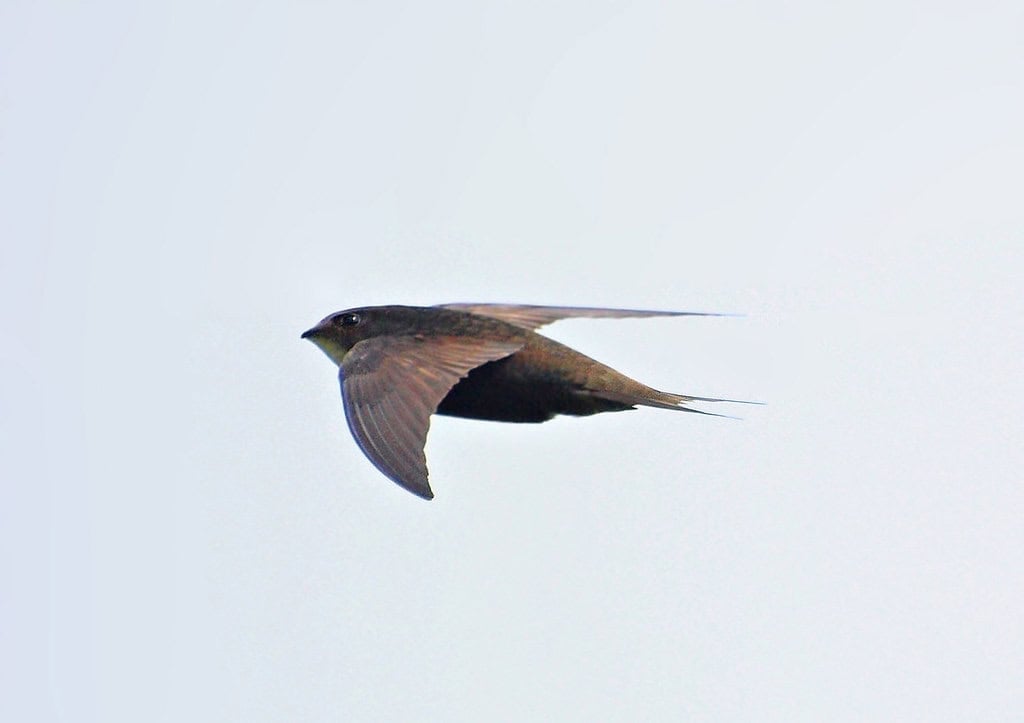
The alpine swift (Tachymarptis melba), a relative of the common swift, has also demonstrated extraordinary flight endurance coupled with the ability to sleep on the wing. Research published in Nature Communications tracked these birds using lightweight sensors that monitored acceleration and geolocation during their migration between Switzerland and West Africa. The data revealed that alpine swifts remained continuously airborne for periods exceeding 200 days during migration and wintering. During these marathon flights, the birds must obtain sleep through brief microsleeps or unihemispheric sleep while maintaining sustained flight patterns. The study showed distinctive flight patterns during day and night, with the birds engaging in active flapping during daylight hours for feeding and more efficient gliding flight at night—potentially periods when they enter sleep states while maintaining aerial balance and forward momentum. Their ability to process environmental information while sleeping allows them to adjust to changing air currents and maintain orientation during transcontinental journeys covering over 3,900 miles.
How Birds Maintain Flight While Sleeping

The mechanics of maintaining flight during sleep involve a complex interplay of adaptations. Unlike human sleep, which requires a complete surrender to unconsciousness, birds capable of aerial sleep maintain essential motor functions through several mechanisms. Their wing muscles develop a form of “muscle memory” that allows for sustained rhythmic movement without conscious control—similar to how humans breathe while sleeping. Many of these birds also excel at soaring and gliding, using rising thermal air currents to stay aloft with minimal energy expenditure during sleep periods. Their neurological wiring creates a partial separation between brain regions controlling alertness and those managing wing movements, allowing the latter to function semi-autonomously. Additionally, these birds often fly at higher altitudes during presumed sleep periods where air is typically smoother and requires fewer navigational adjustments. The combination of these adaptations—specialized brain wiring, efficient flight techniques, and environmental exploitation—makes aerial sleep possible without crashing or straying from migration routes.
Sleep Deprivation and Adaptation

Despite their ability to sleep while flying, birds engaging in long-distance migration still face significant sleep deficits compared to their normal patterns. Research indicates that migratory birds operating on dramatically reduced sleep schedules would typically experience serious cognitive impairment if they were subject to the same neurological constraints as mammals. However, these birds have developed physiological adaptations to function effectively with minimal sleep during migration periods. Some species appear capable of temporarily suspending their sleep requirements during peak migration, entering a state of migration-specific physiology where normal sleep patterns are altered. Once they reach their destination, many migratory birds exhibit “rebound sleep”—sleeping longer than normal to recover from their sleep debt. The white-crowned sparrow, for example, has been shown to function normally with just one-third of its usual sleep during migratory periods. This suggests profound differences in how avian brains process sleep needs compared to mammals, with potentially valuable insights for human sleep research.
Energy Conservation Strategies

Sleeping while flying serves a critical energy conservation function. Long-distance migration represents one of the most energetically demanding activities in the animal kingdom, requiring birds to balance the high metabolic costs of sustained flight with limited opportunities for refueling. By entering states of unihemispheric sleep during flight, birds can maintain essential biological repair processes that sleep provides while continuing their journey. This dual-purpose approach optimizes both time and energy efficiency. Many aerial sleepers also employ additional strategies to minimize energy expenditure, including flying at optimal altitudes to reduce air resistance, forming V-shaped formations that decrease wind drag, and timing flights to coincide with favorable wind patterns. Their bodies undergo remarkable pre-migration changes, developing enlarged flight muscles and accumulating fat stores that can constitute up to 50% of their body weight. These physiological and behavioral adaptations work in concert with aerial sleep capabilities to make seemingly impossible journeys energetically feasible.
Other Birds With Aerial Sleep Abilities

While common swifts and frigatebirds represent the most extreme examples of aerial sleepers, several other bird species demonstrate varying degrees of this remarkable ability. Albatrosses, with their enormous wingspans reaching up to 11 feet, can soar over oceans for months using dynamic soaring techniques that exploit wind gradients above waves, likely employing unihemispheric sleep during these extended journeys. Barn swallows, renowned for their intercontinental migrations between Europe and Africa, show evidence of aerial sleep during their 6,000-mile journeys. Arctic terns hold the record for longest migration—traveling from Arctic breeding grounds to Antarctic feeding areas and back annually, covering approximately 44,000 miles. During these extreme journeys, they almost certainly utilize aerial sleep strategies. Even common birds like mallard ducks exhibit unihemispheric sleep when resting in groups, with outer birds keeping the eye facing away from the group open to watch for predators. This suggests the neurological mechanisms for split-brain sleep may be more widespread among birds than previously recognized, with various species employing this ability in different contexts and to different degrees.
Evolutionary Advantages of Aerial Sleep

The evolution of aerial sleep represents a profound example of natural selection creating solutions to seemingly insurmountable biological challenges. For birds that specialize in aerial lifestyles, the ability to sleep while flying confers numerous evolutionary advantages. It dramatically expands potential foraging territories, allowing birds to exploit food resources across continents and oceans. It provides escape from land-based predators and harsh weather conditions that might otherwise threaten survival. For birds like swifts with poor terrestrial mobility due to their specialized anatomy, remaining airborne minimizes vulnerability during rest periods. From an energy perspective, continuous flight without stopping to find safe roosting locations can actually be more efficient for certain species, particularly over open oceans or inhospitable terrain. This adaptation also allows for precise timing of migrations to coincide with optimal breeding conditions or resource availability at distant locations. The convergent evolution of this ability across multiple bird families suggests it represents a highly advantageous trait that has independently emerged multiple times throughout avian evolutionary history.
Research Challenges and Technological Breakthroughs

Studying sleep in flying birds presents extraordinary scientific challenges. Unlike laboratory settings where brain activity can be monitored with sophisticated equipment, tracking neurological patterns in birds during transcontinental flights requires innovative approaches. Recent breakthroughs have come through miniaturization of technology—researchers now use ultra-lightweight EEG recorders weighing less than 3% of a bird’s body weight, sophisticated accelerometers that can detect subtle changes in flight patterns indicative of sleep states, and GPS tracking devices capable of logging location data for over a year on a single charge. The frigatebird study represented a landmark achievement, with researchers developing custom-designed devices that recorded brain activity, head movements, and flight trajectory simultaneously. Future research directions include developing even smaller neural recording devices, implementing remote download capabilities to eliminate recapture requirements, and utilizing machine learning algorithms to identify sleep signatures in flight pattern data. These technological innovations not only advance our understanding of avian sleep but also have applications in human sleep research, neuroscience, and biomimetic engineering.
Implications for Human Sleep Science

The remarkable ability of birds to sleep while flying has significant implications for human sleep research and potential applications. The unihemispheric sleep capabilities of birds demonstrate that the traditional mammalian model of sleep—where consciousness is completely suspended—is not the only viable biological approach to meeting the brain’s rest requirements. This insight has prompted researchers to investigate whether humans might possess dormant or vestigial capabilities for partial sleep states that could be therapeutically activated. The study of birds that can function effectively with dramatically reduced sleep during migration periods may offer clues for addressing human sleep disorders or developing protocols for situations requiring extended wakefulness, such as military operations or emergency response scenarios. Some researchers speculate that better understanding how birds maintain cognitive function during sleep deprivation could lead to treatments for conditions like insomnia or sleep apnea. Additionally, the neurological mechanisms that allow birds to perform complex motor functions during partial sleep states might inform research into human somnambulism (sleepwalking) and potentially help treat its dangerous manifestations.
Conclusion: Nature’s Extraordinary Solution to a Biological Challenge

The ability of birds to sleep while flying thousands of miles represents one of nature’s most elegant solutions to the competing demands of migration and neurological maintenance. Through specialized adaptations like unihemispheric slow-wave sleep, birds like the common swift and great frigatebird have transcended what seemed like insurmountable biological limitations, remaining airborne for months while still obtaining essential restorative sleep. This remarkable capability showcases the incredible plasticity of the avian brain and the power of evolutionary processes to develop solutions that defy our intuitive understanding of biological necessities. As technology advances and allows researchers to peer more deeply into the neurological underpinnings of aerial sleep, we continue to gain not only a greater appreciation for these extraordinary creatures but also valuable insights that may someday transform our understanding of human sleep and consciousness. In the meantime, we can look to the skies with renewed wonder, knowing that among the birds soaring overhead, some may be simultaneously navigating, flying, and sleeping—a truly extraordinary feat of natural engineering.

- The 10 Most Dangerous Predators You’ve Never Heard Of - July 23, 2026
- This Bird Can Sleep While Flying Thousands of Miles - July 23, 2026
- What to Do If You Encounter a Bear (And What NOT to Do) - July 23, 2026
Leave a comment
You must be logged in to post a comment.