

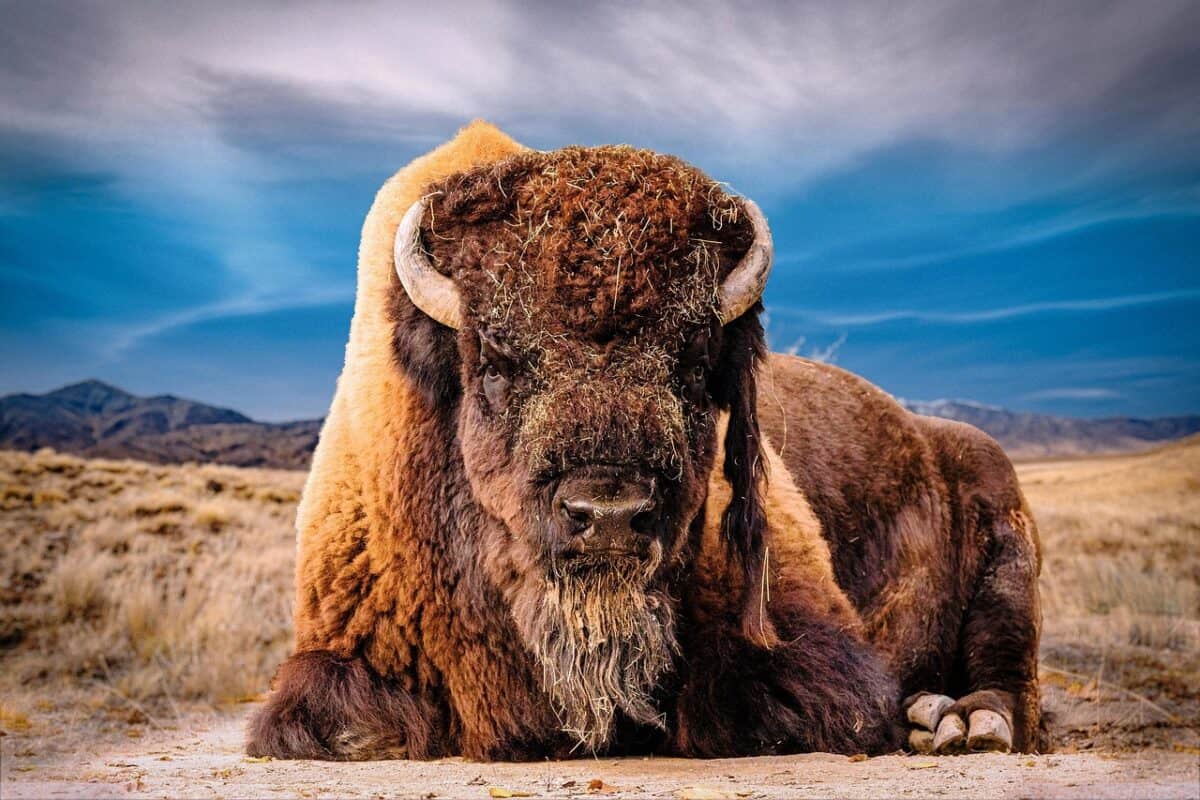
Bison, the magnificent giants of North American grasslands, are often viewed through a romantic lens – symbols of the wild west and conservation success stories. However, these massive creatures are wild animals with complex behaviors that demand respect. Standing up to 6.5 feet tall at the shoulder and weighing up to 2,000 pounds, bison are not only impressive but potentially dangerous. Each year, more people are injured by bison than by bears in Yellowstone National Park. Understanding bison behavior isn’t just fascinating—it could save your life. This guide explores 13 critical bison behaviors that should never be ignored, whether you’re a wildlife enthusiast, photographer, hiker, or park visitor.
13. Tail Raising The Warning Flag

A bison’s tail is one of its most important communication tools. In their natural state, bison tails typically hang down loosely. However, when a bison raises its tail and holds it upright like a flag, consider this a serious warning sign. This behavior indicates agitation, irritation, or that the animal feels threatened. The raised tail often precedes more aggressive actions and serves as an early alert system for other bison in the herd. Wildlife experts view this as one of the most reliable indicators that a bison is preparing to charge. If you observe a bison’s tail suddenly elevate from its normal position, increase your distance immediately. This simple visual cue gives you precious seconds to retreat before the situation escalates.
12. Head Bobbing and Pawing the Ground

When a bison begins bobbing its head up and down while simultaneously pawing at the ground with its front hooves, it’s displaying classic pre-charge behavior. This combination of actions serves multiple purposes: it’s partly a threat display, partly preparation for potential movement, and partly an expression of agitation. The pawing behavior, which can create dust clouds and tear up vegetation, demonstrates the animal’s strength and serves as a visual warning. Head bobbing allows the bison to better assess potential threats through its somewhat limited field of vision. Research by bison specialists indicates these behaviors may begin subtly before becoming more pronounced, giving attentive observers time to retreat. These warning signs typically appear 30-60 seconds before a potential charge, making them critical indicators for anyone in bison territory.
11. Snorting and Making Vocal Sounds

Bison are not typically vocal animals, which makes any audible communication particularly significant. When a bison begins snorting, grunting, or making low bellowing sounds, it’s expressing discomfort, aggression, or issuing a warning. These vocalizations often accompany other warning signs and indicate heightened stress levels. The snorting sound, created by forceful exhalation through the nostrils, can be heard up to 100 yards away in quiet conditions. During mating season (July through August), bulls become especially vocal, producing deep, resonant bellows that signal dominance and territorial claims. Any unexpected vocalization from a bison should be treated as a serious communication attempt. Unlike domestic cattle, bison rarely vocalize without purpose, making these sounds reliable indicators of their emotional state and intentions.
10. False Charges Testing Your Reaction

A particularly unnerving bison behavior is the false charge—a bluff where the animal runs toward a perceived threat but stops short of making contact. This behavior serves as a test of the potential threat and a serious warning. Bison can reach speeds of 35 mph, making even a false charge terrifying and dangerous. During a false charge, the bison typically runs a short distance (10-20 yards) before stopping or changing direction. Wildlife biologists note that false charges often escalate to real charges if the perceived threat doesn’t retreat or shows signs of panic. The appropriate response is not to run (which can trigger pursuit instincts) but to slowly back away while maintaining awareness of your surroundings. False charges are particularly common when humans approach too closely or when bison are protecting calves during spring and early summer.
9. Herd Clustering and Formation Changes

Bison are highly social animals with complex herd dynamics. When a herd suddenly begins to cluster tightly together or shifts its formation, it’s responding to a perceived threat or preparing for defensive action. This behavior is especially noticeable when the herd forms a protective circle around calves and younger animals, with adults facing outward. Research from the American Prairie Reserve documents how bison herds can rapidly reorganize in response to threats, with dominant animals taking protective positions. These formation changes may precede larger herd movements or defensive charges. For observers, sudden changes in herd configuration indicate rising tension levels and potential danger. The cohesion of the herd serves both protective and communicative functions, allowing information about threats to spread quickly throughout the group.
8. Isolation of Bulls from the Herd
When mature bulls separate themselves from the main herd, they’re often exhibiting a behavior that demands extra caution from observers. Outside of breeding season, adult male bison frequently live in small bachelor groups or as solitary individuals. These isolated bulls can be more unpredictable and territorial than their herd-bound counterparts. Research conducted at Yellowstone National Park found that lone bulls account for a disproportionate number of human injuries. Their separation from the moderating social influences of the herd can make them more aggressive and less tolerant of disturbances. The spatial disconnect between bulls and the main herd is most pronounced from September through June. During these periods, maintaining greater distances (at least 100 yards) from solitary bulls is essential for safety. Their isolation doesn’t mean they’re less dangerous—quite the opposite.
7. Sudden Freezing or Staring Behavior

When a bison suddenly stops all movement and fixes its gaze intently in one direction, it’s assessing a potential threat and deciding how to respond. This frozen posture, sometimes lasting 30 seconds or more, indicates heightened alertness and should be taken as a serious warning. During this assessment phase, the bison’s powerful sensory systems—including acute hearing and an excellent sense of smell—are gathering information. Bison have poor eyesight for detail but excellent motion detection, which explains why they sometimes appear to stare directly at observers who think they’re well-hidden. Studies of bison cognition suggest this pause represents a complex threat evaluation process. If a bison freezes and stares in your direction, you’ve already been detected, and the animal is determining whether you represent a threat. This is a critical moment to slowly increase your distance from the animal.
6. Rutting Season Aggression

During the summer breeding season (typically mid-July through September), bison bulls undergo dramatic behavioral changes that significantly increase danger to humans. This period, known as the rut, is characterized by elevated testosterone levels, increased aggression, and fierce competition between males. Bulls engage in dominance displays including head shaking, wallowing in dust, and bellowing deep vocalizations that can be heard for over a mile. The most dangerous aspect of rutting behavior is fighting between bulls, which involves charging, head-butting, and potentially goring with their horns. According to National Park Service data, human injuries from bison increase by approximately 50% during rutting season. Bulls become less predictable, have shorter tempers, and may perceive humans as competitors or threats to their breeding status. During this period, maintaining even greater distances (150+ yards) from bulls is essential.
5. Wallowing and Dust Bathing

When bison engage in wallowing—rolling vigorously in dirt depressions to create dust clouds around their bodies—they’re not just cooling off or removing parasites. This behavior also serves important social and territorial functions. Wallowing creates distinctive depressions in the landscape called “buffalo wallows” that can persist for decades. During breeding season, bulls wallow more frequently, covering themselves with dirt and often urinating in the wallow to mark territory and advertise their presence to females. While wallowing itself isn’t aggressive, it indicates heightened territorial awareness and potential aggression, especially in males. Biologists at the Konza Prairie Biological Station have documented how wallowing increases in frequency just before aggressive encounters between bulls. For observers, a bison that has recently wallowed (appearing dustier than others) may be more territorial and aggressive. Fresh wallows with disturbed earth are signs of recent bison activity and potential territorial behavior.
4. Mothers Protecting Calves

Perhaps the most dangerous bison encounter involves a mother (cow) protecting her calf. Bison cows become extraordinarily protective from April through June when most calves are born. The protective radius of a mother bison can extend 50-70 yards around her calf, and any perceived threats within this zone may trigger immediate defensive aggression. Cows with calves will charge with little warning if they feel their offspring are threatened. These charges are rarely false and can result in serious injuries. According to the journal Human–Wildlife Interactions, approximately 40% of bison-related injuries involve cows protecting calves. The protective instinct is so strong that other female bison often join in defense, creating a multi-animal threat. Calves can be identified by their distinctive orange-cinnamon coloration, which darkens to brown as they mature. If you observe calves in a herd, maintain especially large distances and remain alert for protective maternal behavior.
3. Shaking the Head from Side to Side

When a bison begins shaking its massive head from side to side, it’s displaying one of the most direct pre-charge warning signals. This behavior serves multiple purposes: it helps the animal assess the threat through its limited peripheral vision, demonstrates the power of its neck muscles, and signals aggressive intent. The head shake often intensifies in speed and vigor as aggression increases. Bison specialists note that this behavior typically occurs 10-15 seconds before a charge, making it one of the last warnings you’ll receive. The massive weight of a bison’s head (up to 200 pounds with the skull, muscles, and horns) makes this motion particularly intimidating and signals the tremendous force that could be directed at a perceived threat. When combined with other warning signs like pawing the ground or raising the tail, head shaking indicates imminent danger and demands immediate but controlled retreat.
2. Changes in Movement Patterns

Subtle changes in how bison move can provide early warning of potential aggression or discomfort. In their relaxed state, bison move with deliberate, relatively slow movements while grazing. When their walking pattern suddenly becomes more purposeful, direct, or rapid, they’ve shifted into an alert or potentially aggressive state. Before charging, bison often adjust their stance to lower their head slightly while broadening their stance for better stability. Research from the University of Calgary’s bison behavior studies indicates that movement changes often begin subtly—a shift in weight, repositioning of feet, or turning to face a potential threat directly. Particular attention should be paid when a previously grazing animal stops eating and begins moving with purpose. This transition from passive to active behavior often precedes more obvious warning signs. For photographers and wildlife viewers, these subtle movement changes should trigger increased vigilance and preparation for a controlled retreat.
1. Respecting Safety Guidelines The Most Critical Behavior

The most dangerous behavior around bison isn’t exhibited by the animals but by humans who fail to respect safety guidelines. National Park Service regulations require visitors to maintain at least 25 yards (75 feet) from bison at all times, though wildlife experts recommend 50-100 yards as a safer minimum. According to Yellowstone National Park statistics, approximately 60 visitors have been injured by bison in the past 20 years—almost all cases involved people approaching too closely. Bison are wild animals that appear deceptively docile while grazing but can switch to aggressive behavior instantly. Their speed (faster than humans), unpredictability, and massive size make close encounters potentially deadly. The false perception that bison are slow, domesticated cattle-like animals contributes significantly to dangerous human behaviors. Park rangers emphasize the “rule of thumb”—if you can cover a bison with your extended thumb, you’re at a safe distance. Understanding that respect and distance are the most critical factors in bison safety could save your life.
Conclusion: Understanding Bison Behavior Saves Lives

Bison are magnificent creatures that deserve our admiration and respect, but this respect must be informed by a clear understanding of their behavior and potential dangers. The 13 behaviors outlined above represent critical knowledge for anyone who might encounter these impressive animals in the wild. By learning to recognize warning signs like tail raising, head bobbing, vocalizations, and changes in movement patterns, observers can make informed decisions that protect both humans and bison. Remember that wild animals communicate primarily through body language, and our ability to read these signals directly impacts our safety. Despite their size and power, bison don’t seek confrontation with humans—they simply respond to perceived threats according to their instincts and social structures. By maintaining appropriate distances, recognizing warning behaviors, and approaching bison viewing with knowledge rather than assumptions, we can ensure these iconic American mammals remain a source of wonder rather than danger.

As a little kid, I fell in love with nature, wildlife, and animals. Living in the USA, South Africa, Italy, China and Germany gave me the opportunity to discover the world's Wildlife. My favorite animals are Mountain Gorillas, Siberian Tigers, and Great White Sharks.
I'm a certified PADI Open Water Diver, went to Everest Base Camp and Trekked Gorillas in Uganda. I hold a Master of Science in Economics and Finance.
Please send any feedback to feedback@animalsaroundtheglobe.com
- 14 Stunning Animals You Can See in India - July 18, 2026
- The Most Enormous Lobster Ever Pulled From Maine Waters - July 18, 2026
- The Most Dangerous Waters for Sharks in North America - July 18, 2026