

Worried about unexpected vet bills?
Pet insurance can cover thousands in unexpected vet costs. Get a free quote from Lemonade in under 2 minutes.
Get My Free Quote →Sponsored · Opens Lemonade.com
Orcas, or killer whales, are apex predators known for their intelligence, social complexity, and hunting prowess. These magnificent marine mammals employ sophisticated cooperative hunting strategies to capture prey ranging from fish to seals and even other whales. But what happens when too many orcas focus their predatory attention on the same prey species or population? This ecological scenario creates a fascinating cascade of consequences that can reshape entire marine ecosystems. From prey population crashes to behavioral adaptations, resource competition among orcas themselves, and even broader ecosystem shifts, the concentration of orca predation pressure can trigger profound changes throughout the food web. This article explores the multifaceted ecological implications when multiple orca pods target the same prey resources.
The Hunting Efficiency of Orca Pods

Orcas hunt with remarkable efficiency, especially when operating in cohesive family units called pods. A typical pod consists of 5-30 individuals with sophisticated communication systems and division of roles during hunts. Their coordinated hunting techniques include wave-washing (creating waves to knock prey off ice floes), carousel feeding (herding fish into tight balls), and intentional beaching (temporarily stranding themselves to capture seals on shorelines).
With success rates often exceeding 50% during coordinated hunts—far higher than most terrestrial predators—a single pod can consume substantial quantities of prey. When multiple pods target the same prey species in the same area, their combined hunting pressure can quickly intensify beyond sustainable levels for prey populations.
Immediate Prey Population Decline

When too many orcas target the same prey, the most immediate consequence is a rapid decline in prey numbers. Research in the Aleutian Islands demonstrated this effect when increased orca predation on sea otters in the 1990s caused otter populations to plummet by over 90% in some areas. Similarly, studies in the Southern Ocean have documented intensive predation by multiple orca pods on minke whales, dramatically reducing their numbers in localized hunting grounds.
The mathematical reality of predator-prey dynamics becomes stark: if the combined consumption rate of multiple orca pods exceeds the reproductive capacity of the prey population, the result is inevitable population collapse. Unlike some predator-prey relationships where declining prey numbers lead to predator reductions before complete collapse, orcas’ mobility and dietary flexibility means they can often maintain intense hunting pressure until prey are functionally extinct in an area.
Prey Behavioral Adaptations

Prey species respond to increased predation pressure from multiple orca pods with dramatic behavioral changes. Harbor seals in areas with high orca activity significantly reduce their foraging time, remaining closer to quick escape routes onto land and becoming more vigilant. Gray whales with calves have been observed shifting migration routes closer to shore—sometimes into dangerously shallow water—to avoid orca predation, despite the increased energy expenditure and navigation hazards this entails.
Fish species targeted by multiple orca pods often form tighter, more cohesive schools and alter their vertical distribution in the water column. While these behavioral adaptations may reduce immediate predation risk, they typically come with significant energetic costs. Reduced foraging time, suboptimal habitat use, and constant vigilance can lead to decreased reproductive output, malnutrition, and stress-related health issues in prey populations, creating indirect mortality that compounds direct predation effects.
Competition Among Orca Pods

When multiple orca pods converge on the same limited prey resource, competition among the pods themselves becomes inevitable. This competition manifests in various ways, from territorial defense of prime hunting grounds to adjustments in hunting strategies and schedules. Researchers in Norway have documented larger orca pods actively displacing smaller ones from herring aggregations during winter feeding.
In the waters around Antarctica, studies have shown distinct hunting time partitioning among different orca ecotypes targeting the same seal colonies, with pods hunting at different times to avoid direct competition. In extreme cases, aggressive interactions between pods can occur, though these rarely escalate to serious physical confrontations due to the strong social bonds within orca society. Instead, competition typically drives spatial or temporal partitioning of resources, with subordinate pods often forced to hunt in suboptimal conditions or target less preferred prey.
Dietary Shifts and Prey Switching

As preferred prey populations decline under heavy predation pressure from multiple orca pods, dietary shifts often occur. Orcas demonstrate remarkable adaptability in their feeding strategies, and when faced with resource limitations, they typically expand their dietary breadth rather than starving. In the North Pacific, researchers documented orcas shifting from predation on harbor seals to sea lions and then to sea otters as each prey population successively declined.
In the Southern Ocean, some orca pods have been observed expanding from specialized hunting of Weddell seals to include crabeater seals and even emperor penguins when seal populations became depleted. These dietary shifts reflect the adaptability of orcas but also create new ecological pressures on previously unexploited prey populations. The ability of orcas to switch prey allows them to maintain their population levels even as they deplete certain prey species, potentially creating a “predator pit” scenario where recovery of the original prey species becomes extremely difficult.
Ecosystem-Wide Trophic Cascades
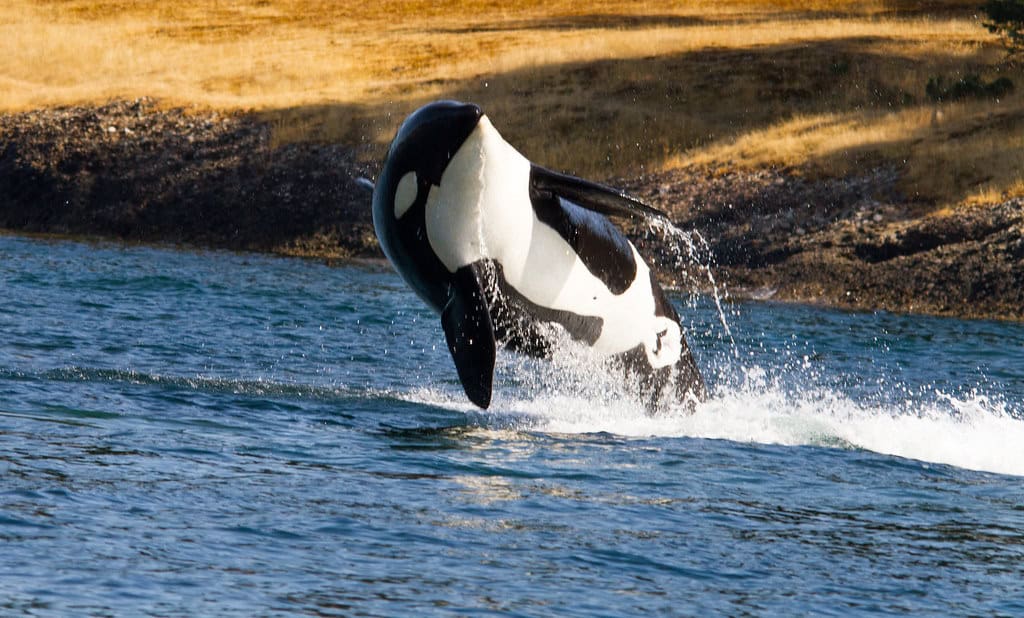
When multiple orca pods intensively hunt the same prey, the effects can cascade throughout the ecosystem in surprising ways. The classic example comes from the Aleutian Islands, where increased orca predation on sea otters triggered a trophic cascade: with fewer sea otters, sea urchin populations exploded, leading to the destruction of kelp forests as the unchecked urchins consumed the kelp. This habitat transformation affected numerous other species dependent on kelp forests, from fish to invertebrates.
Similar cascades have been documented in other systems: when orcas heavily predate seals, smaller fish populations often increase as they’re released from seal predation, which can then affect plankton distribution and even nutrient cycling. These trophic cascades demonstrate how concentrated predation by multiple orca pods can restructure entire ecosystems, often with effects extending far beyond the direct prey species, ultimately altering biodiversity patterns, habitat structure, and ecosystem functioning.
Spatial Redistribution of Prey Populations

Heavy predation pressure from multiple orca pods often forces prey populations to redistribute spatially, abandoning traditional habitats for safer, if less optimal, areas. Harbor seals in the North Pacific have abandoned historical haul-out sites in areas with intense orca predation, consolidating into fewer, more defensible locations. Gray whale mother-calf pairs have shifted their migration routes in response to predation pressure, sometimes traveling hundreds of kilometers out of their traditional path to avoid areas with high orca concentration.
This spatial redistribution can create “ecological dead zones” where prey species completely abandon otherwise suitable habitat solely due to predation risk. Such redistribution often forces prey into suboptimal habitats with less food, more competition, or other predators. In the North Atlantic, studies have shown that seals avoiding coastal areas with high orca activity often experience decreased reproductive success due to poorer foraging opportunities in their new refugia habitats.
Long-Term Evolutionary Consequences

Intense, sustained predation pressure from multiple orca pods can drive evolutionary changes in prey populations over time. When predation patterns are consistent and intense, natural selection strongly favors individuals with traits that enhance survival. In seal populations heavily targeted by orcas, research has documented selection for more cryptic coloration patterns, enhanced vigilance behaviors, and altered life history strategies like earlier maturation. Fish populations under intense orca predation often evolve smaller body sizes and enhanced schooling behaviors.
Perhaps most interestingly, genetic studies of marine mammals in areas with high orca predation have found signatures of selection in genes related to diving physiology, suggesting evolution of enhanced deep-diving capabilities to avoid surface predation. These evolutionary responses represent a biological arms race, with prey adaptations potentially triggering counter-adaptations in orca hunting strategies, creating a dynamic evolutionary tension that shapes both predator and prey over ecological time.
Impacts on Orca Social Structure

Resource competition resulting from too many orcas targeting the same prey can reshape orca social dynamics themselves. Under conditions of prey abundance, orca pods maintain stable, multi-generational family structures. However, research in areas with intensive competition shows that food stress can fragment traditional pod structures. Studies in the North Pacific documented larger pods splitting into smaller units during periods of prey scarcity, allowing more efficient foraging but weakening the social bonds that facilitate cooperative hunting of larger prey.
In extreme cases, nutritional stress from competition can impact reproduction, with female orcas experiencing longer intervals between calving and higher calf mortality. The complex vocal dialects that characterize orca cultural traditions can also be affected, as pods that must range more widely in search of food have fewer opportunities for cultural transmission of pod-specific calls and hunting techniques, potentially eroding the distinctive cultural identities that make orca societies so remarkable.
Human Management Considerations

The ecological consequences of multiple orca pods targeting the same prey create complex challenges for conservation and management. Marine protected areas designed to benefit prey species can inadvertently create predation hotspots where orcas concentrate their hunting efforts, potentially undermining conservation goals. Fisheries managers must consider not only direct human harvests but also variable orca predation pressure when setting sustainable catch limits.
In some regions, such as Alaska’s Prince William Sound, recovery plans for threatened seal populations have had to incorporate the impact of concentrated orca predation, sometimes leading to controversial discussions about predator control. Scientists and managers increasingly recognize the need for ecosystem-based management approaches that account for these dynamic predator-prey interactions. This includes developing predation models that incorporate the complex social dynamics of orca pods and monitoring programs that can detect early signs of unsustainable predation pressure before ecosystem-wide impacts occur.
Geographic Case Studies of Concentrated Orca Predation

Different marine regions provide instructive examples of what happens when too many orcas target the same prey. In the Bering Sea, a documented case occurred in the 1980s when multiple transient orca pods converged on northern fur seal rookeries, contributing to a 50% population decline within just three years. The waters around New Zealand’s southern islands experienced a dramatic scenario in the early 2000s when at least five orca pods began specializing in hunting the local New Zealand sea lion, contributing to the species’ endangered status.
Perhaps the most thoroughly studied case comes from Antarctica’s Ross Sea, where researchers documented the intensive predation by multiple orca ecotypes on Weddell seals, forcing the seals to dramatically alter their ice-use patterns and leading to localized population declines despite the vast seal population in the broader region. Each case study reveals how local geography, prey behavior, and orca hunting techniques interact to determine the severity and scope of impacts when multiple orca pods converge on the same prey resource.
Recovery Dynamics After Predation Pressure Decreases

When orca predation pressure eventually decreases—either because orcas shift to other prey or relocate—prey populations face a complex recovery trajectory. Studies of harbor seal populations in Alaska showed that even after orcas reduced their predation pressure, recovery was slow due to an altered age structure in the remaining population and continued behavioral adjustments that limited reproductive potential. In contrast, some fish populations demonstrate remarkable resilience, with herring schools in Norway recovering rapidly after intensive orca predation periods due to their high reproductive rates.
The presence of refugia—areas inaccessible to orcas—plays a critical role in recovery dynamics. Seal populations with access to protected haul-out sites typically maintain a breeding nucleus that can recolonize depleted areas, while prey species without such refuges face a much more challenging recovery path. Additionally, the ecological changes triggered by the initial predation pressure—such as habitat alterations or competitive species interactions—can create persistent “ecological ghosts” that continue to suppress prey recovery long after direct predation pressure has subsided.
Conclusion: Balancing Nature’s Complex Predator-Prey Dynamics

When too many orcas target the same prey, the resulting ecological drama reveals the intricate balance of nature’s predator-prey relationships. From immediate population crashes to evolutionary adaptations, trophic cascades, and altered ecosystem functioning, the effects ripple through marine environments in ways that scientists are still working to fully understand. These dynamics highlight the remarkable adaptability of both orcas and their prey, showcasing the evolutionary arms race that has shaped marine life for millions of years.
As climate change and human activities continue to alter marine ecosystems, understanding these complex predator-prey interactions becomes increasingly important for conservation and management efforts. The story of orcas and their prey reminds us that in nature, no species exists in isolation—each is part of an interconnected web where changes in one population inevitably affect many others, creating a dynamic balance that has sustained ocean ecosystems throughout evolutionary time.
Worried about unexpected vet bills?
Pet insurance can cover thousands in unexpected vet costs. Get a free quote from Lemonade in under 2 minutes.
Get My Free Quote →Sponsored · Opens Lemonade.com

From exploring the marine wonders in the Azores and witnessing the vast savannas of Kenya, to delving deep into the rich biodiversity of South Africa and traversing iconic landscapes in Australia and the US like Yellowstone, Chris's experiences are vast.
With a penchant for diving alongside sharks, the ocean holds a special place in his heart.
Through his academic insights, he champions wildlife conservation, striving with 'Animals Around The Globe' to cultivate a profound connection between humans and animals, enhancing our mutual appreciation.
Connect with him at Feedback@animalsaroundtheglobe.com.
- Why Pangolins Are the Most Trafficked Mammals on Earth - June 10, 2026
- 10 Animals with the Craziest Defensive Mechanisms in the Wild - June 10, 2026
- The Most Magical Forests to See Orangutans in the Wild - June 10, 2026